
All hands to the pumps: rescuing an Oxford college barge
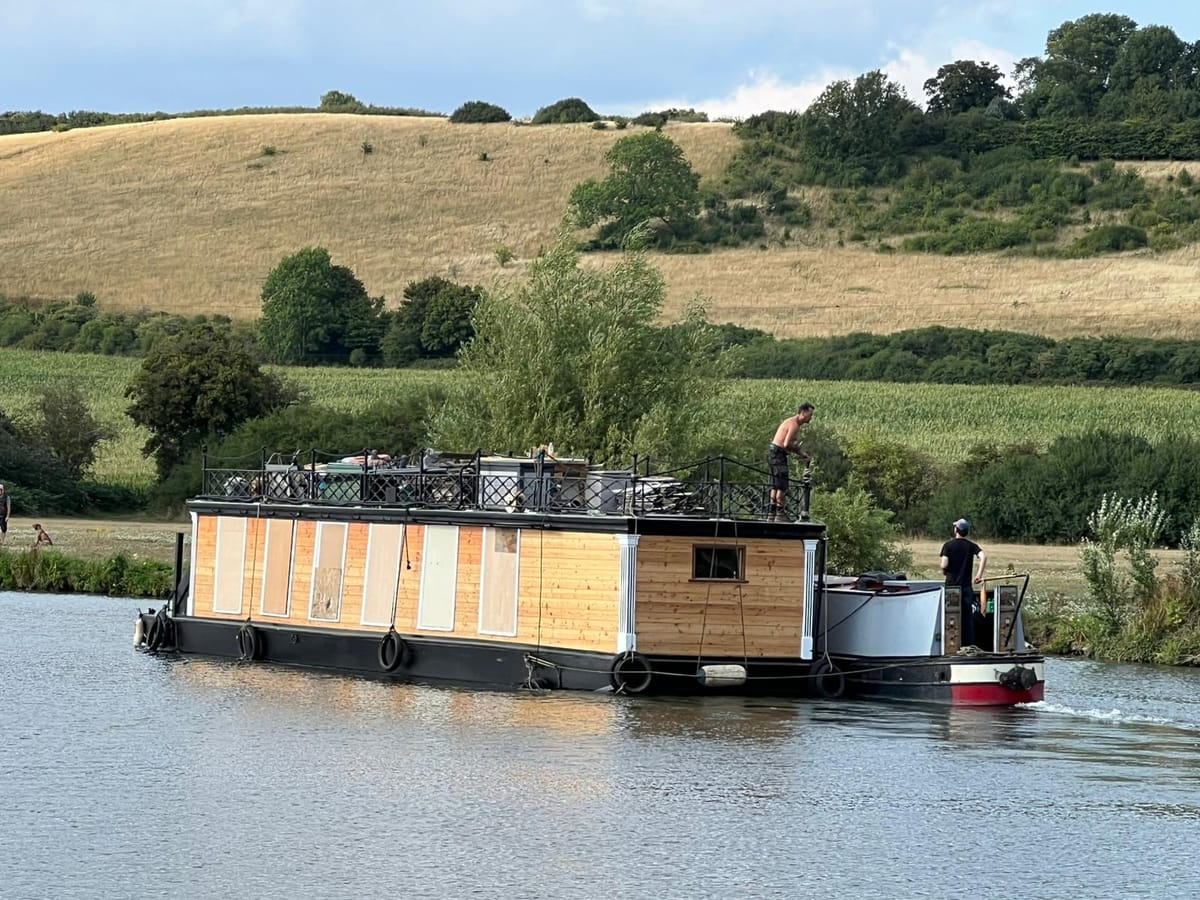
After a meticulous restoration and a challenging tow up the Thames, Eddy, the oldest surviving Oxford college barge, is back on the city’s waterways and in search of a permanent home. We spoke to its owner, Bruce Heagerty.
For all their importance in Oxford’s river history, the surviving college barges have long lacked the protection given to the city’s architecture. The St John’s barge, for example, was broken up in 2022 at the age of 131. Around 27 barges were built: today, only six survive.
Determined to prevent the loss of any more of the city’s riverine history, the Oxford College Barge Preservation Trust reached out to remaining college barge owners. This initiative prompted boater Bruce Heagerty to travel to Reading, and to purchase Eddy from its then owner, Sheila Finney.
A potted history
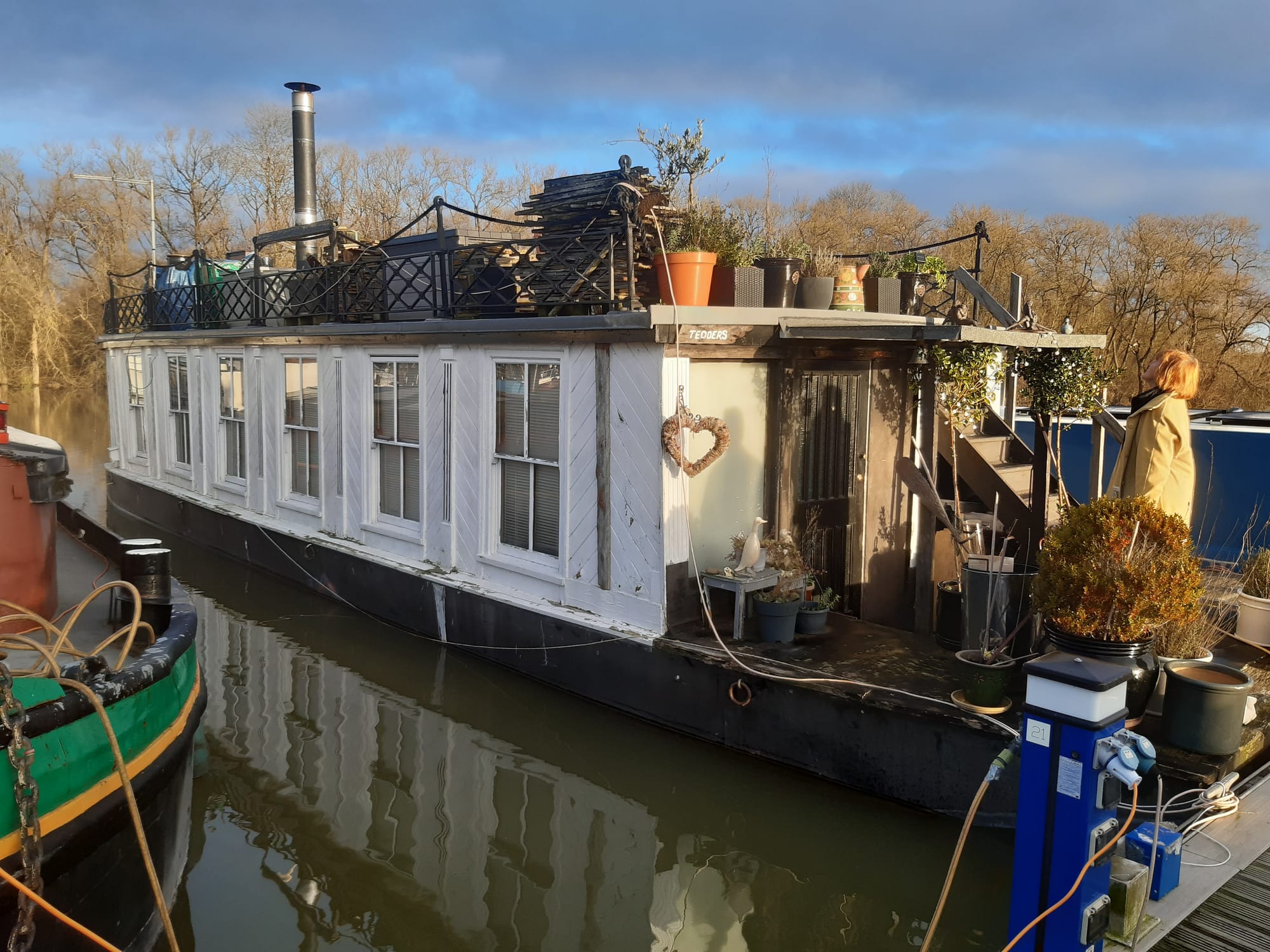
Originally built as a horse-drawn haulage vessel, Eddy pre-dates the next oldest surviving college barge by 26 years. It was originally built in 1882, and was adapted by Salters for St Edmund Hall, serving as their college barge from 1898 to 1938. During its tenure with St Edmund Hall, rowers used the space to change, perform pre-row exercises, and (presumably) celebrate or commiserate after races.
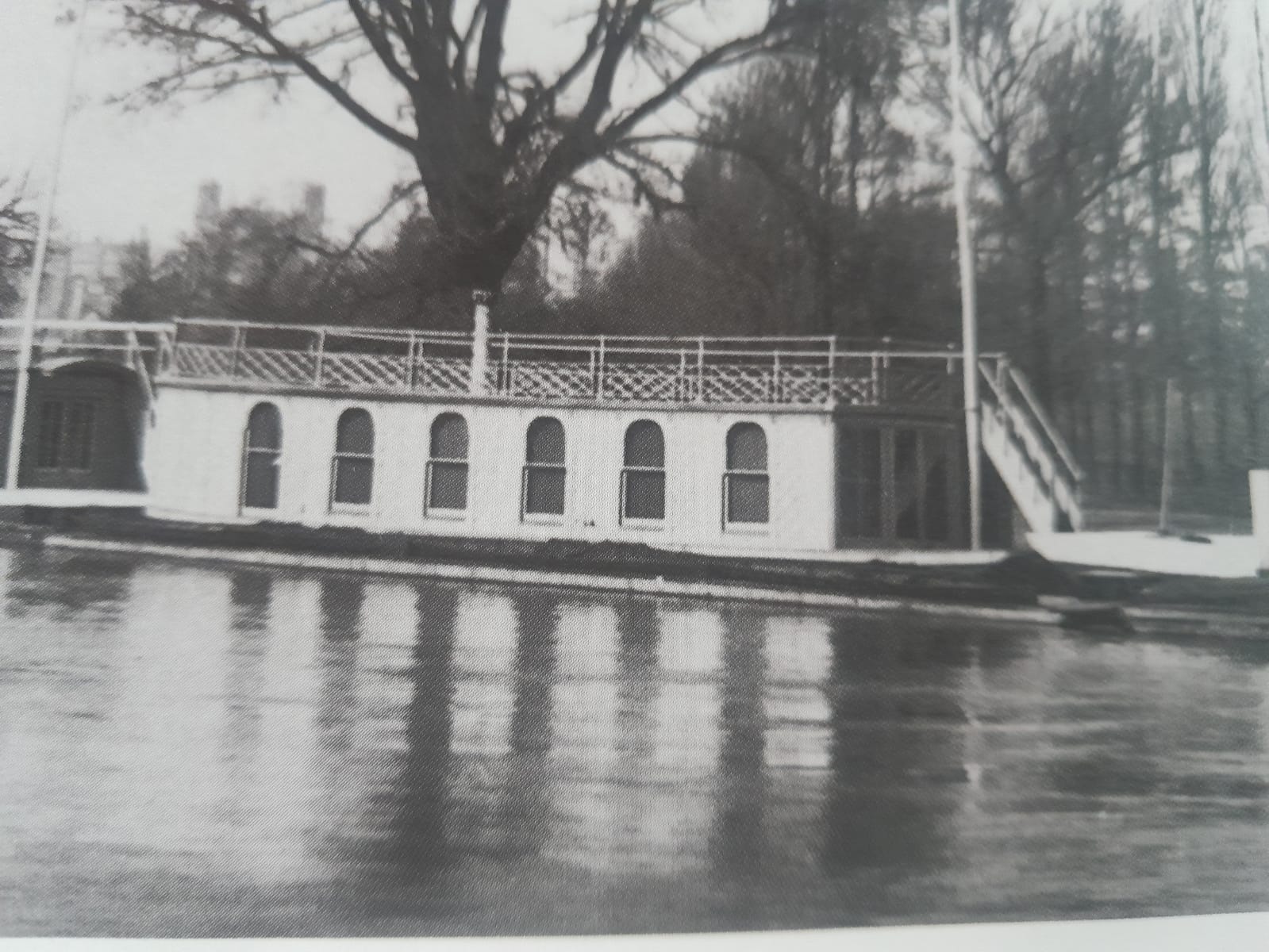
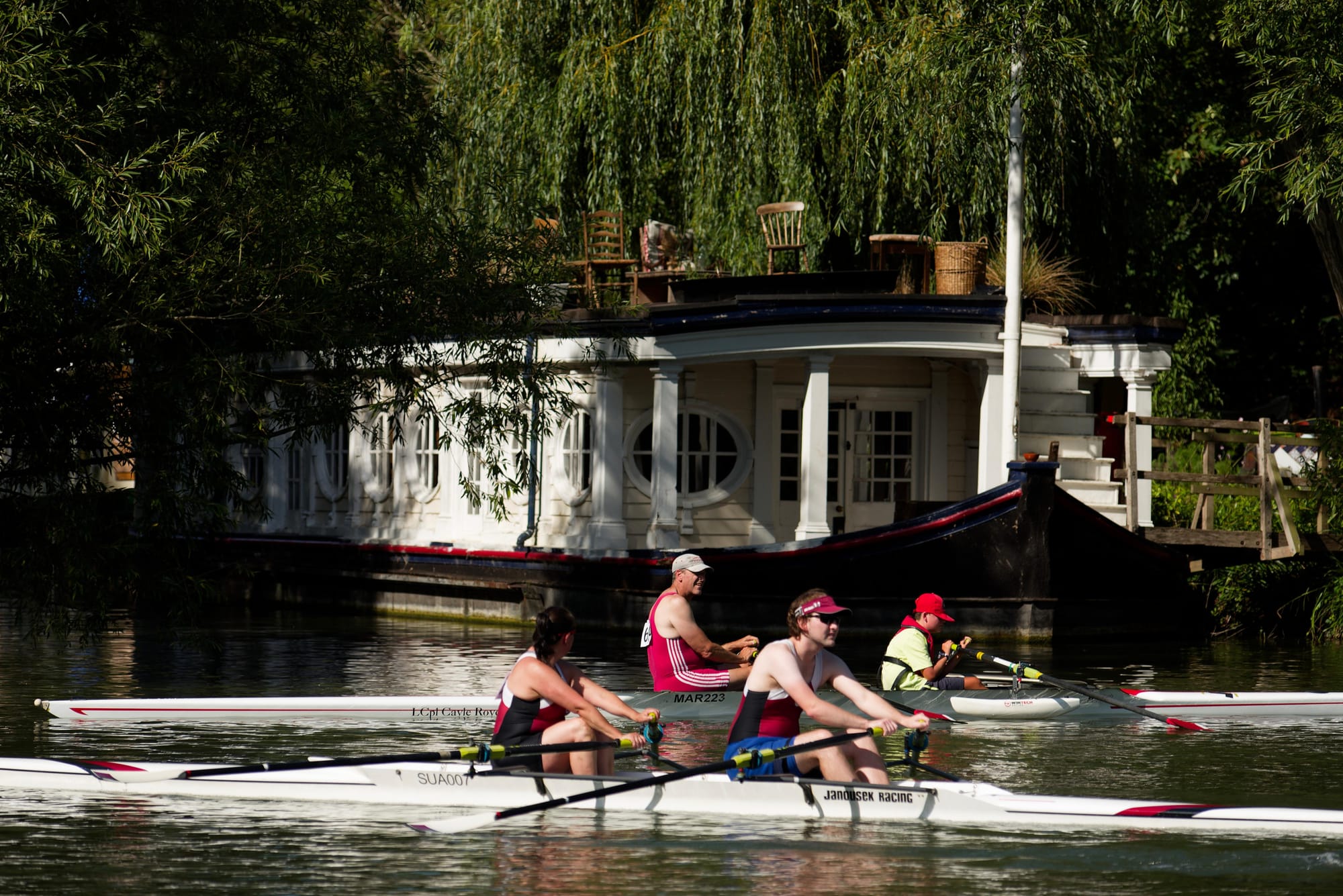
Eddy on Christ Church Meadow in line with the other barges c.1900; the Corpus Christi Barge (photo by Roger Close).
Although Eddy lacks the ornate details of vessels like the Corpus Christi Barge, historical photographs show it originally featured six arched windows on either side.
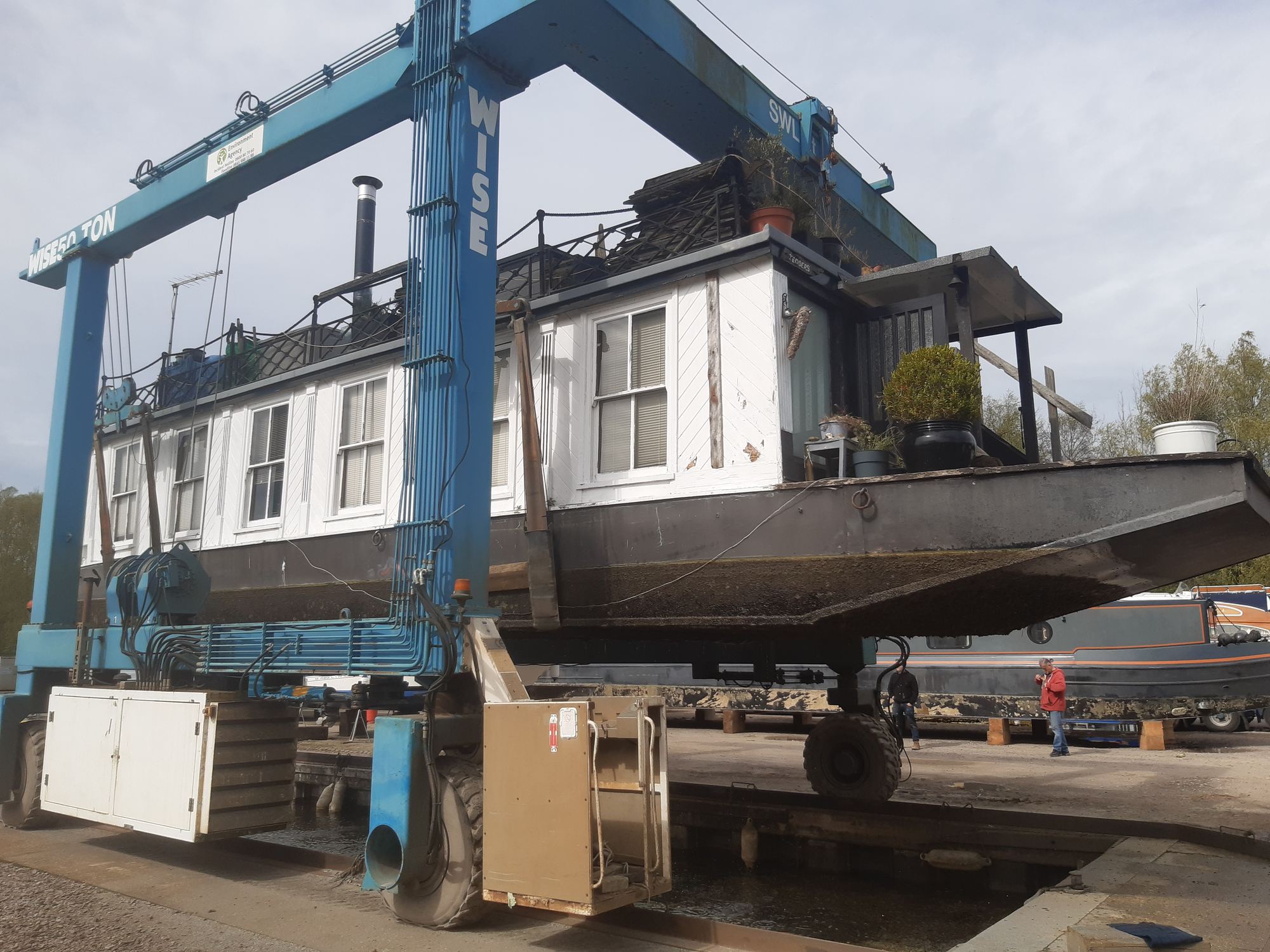
After decommissioning, the barge spent time in Mapledurham, where it sunk more than once. To save it from sinking, Sheila and Doug Finney commissioned a new aluminium hull and a fibreglass roof, after which it spent the next 20 years in a marina in Reading.
A new lease of life
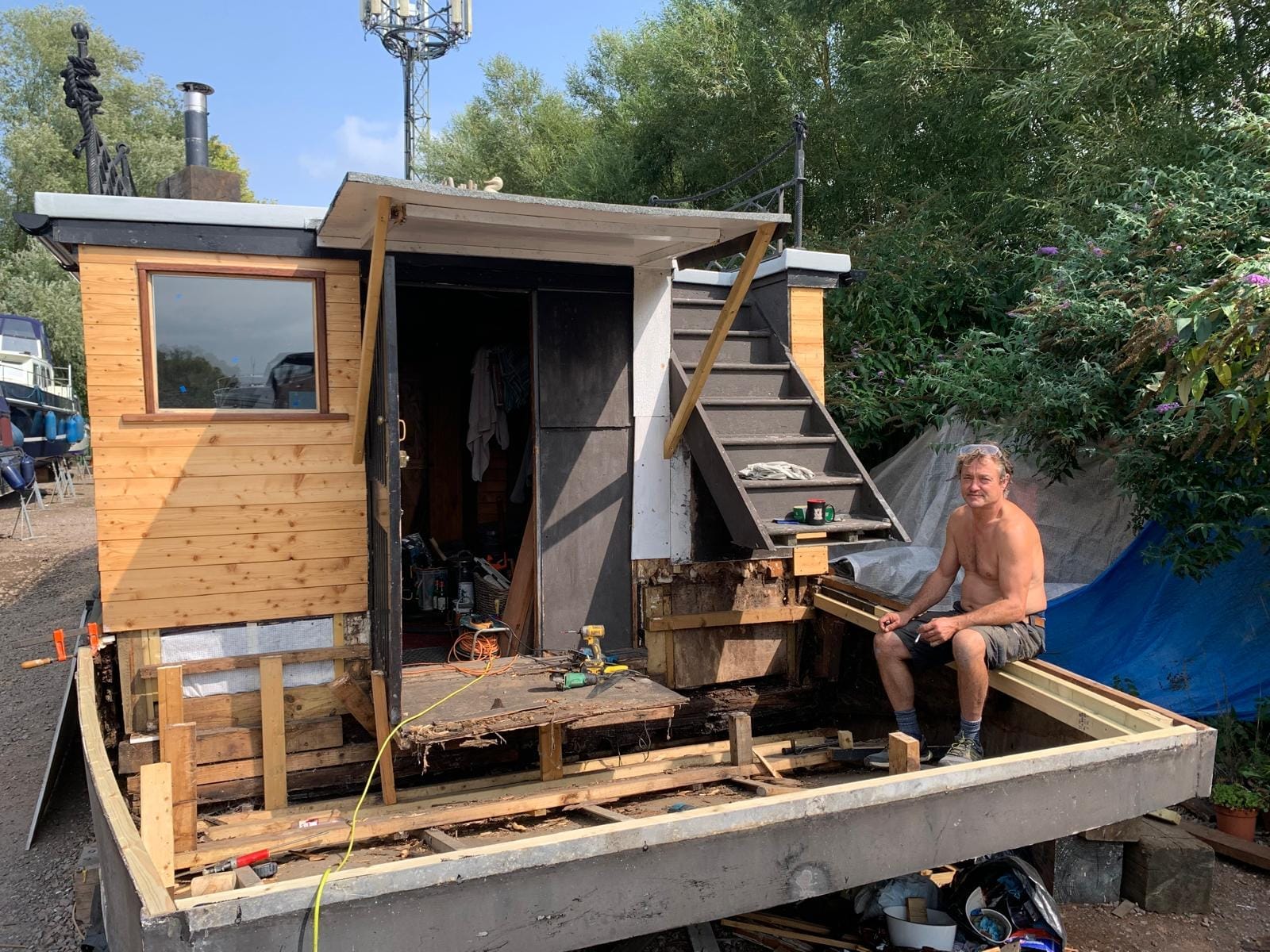
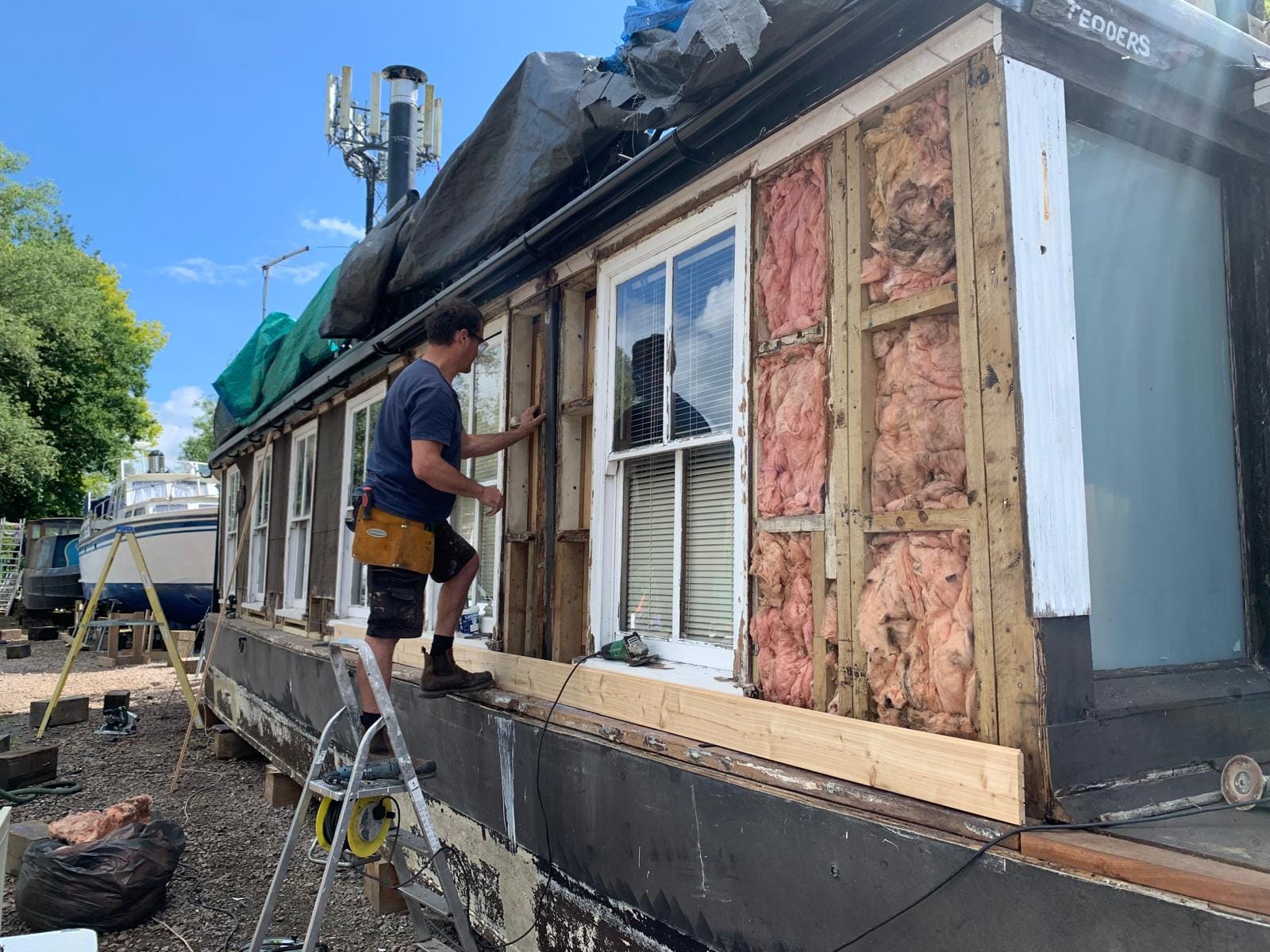
In 2024, Bruce Heagerty took on ownership and renovation of Eddy. The vessel spent 15 months out of the water, and a stream of people helped him with the renovations, most importantly Darren Crane of DC Woodwork. Although the hull and roof were sound, the team discovered that the chevron-grooved plywood sides were entirely rotten and supporting plant growth. In fact, they were funnelling rainwater into the boat, rather than keeping it out.
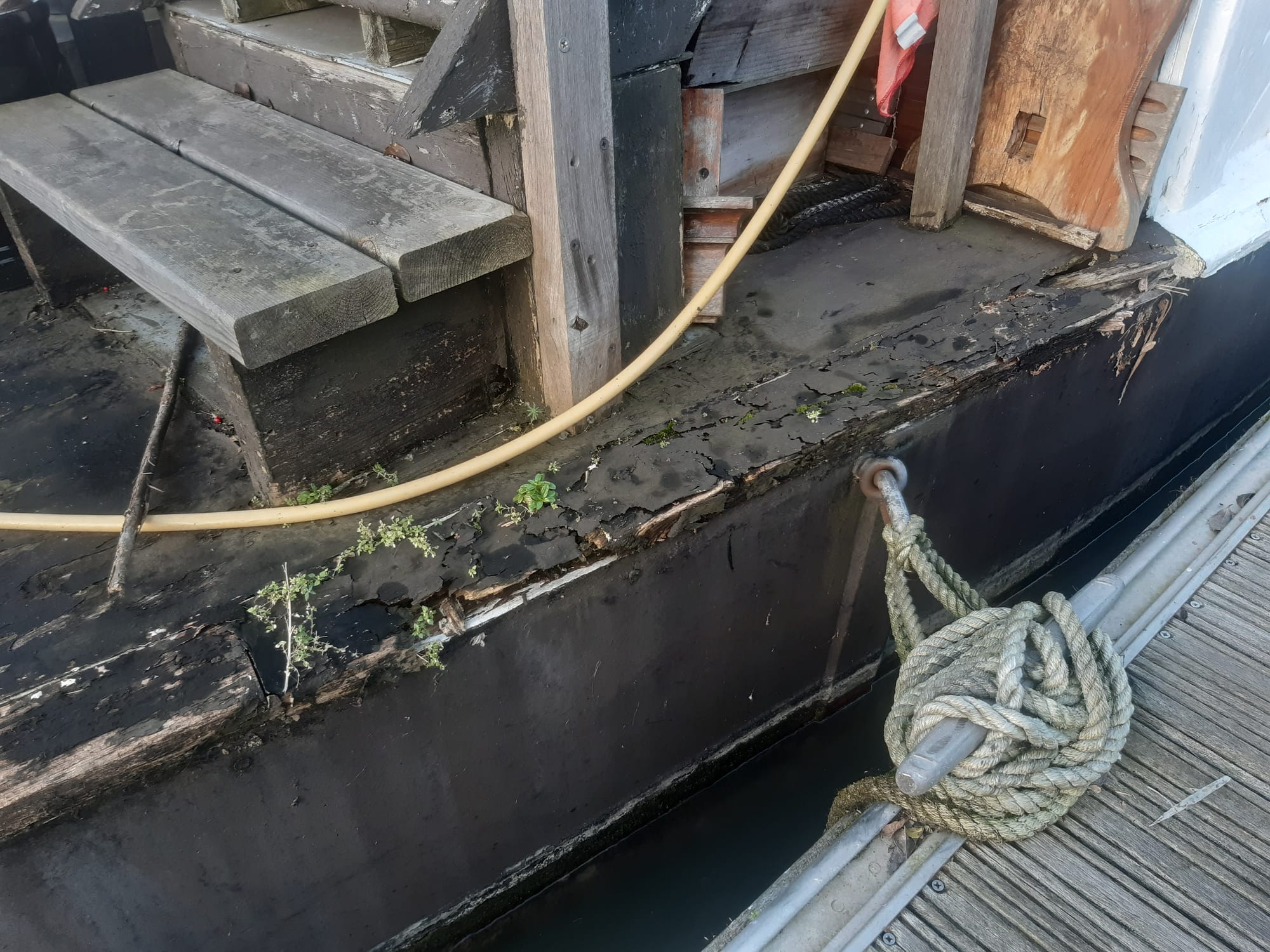
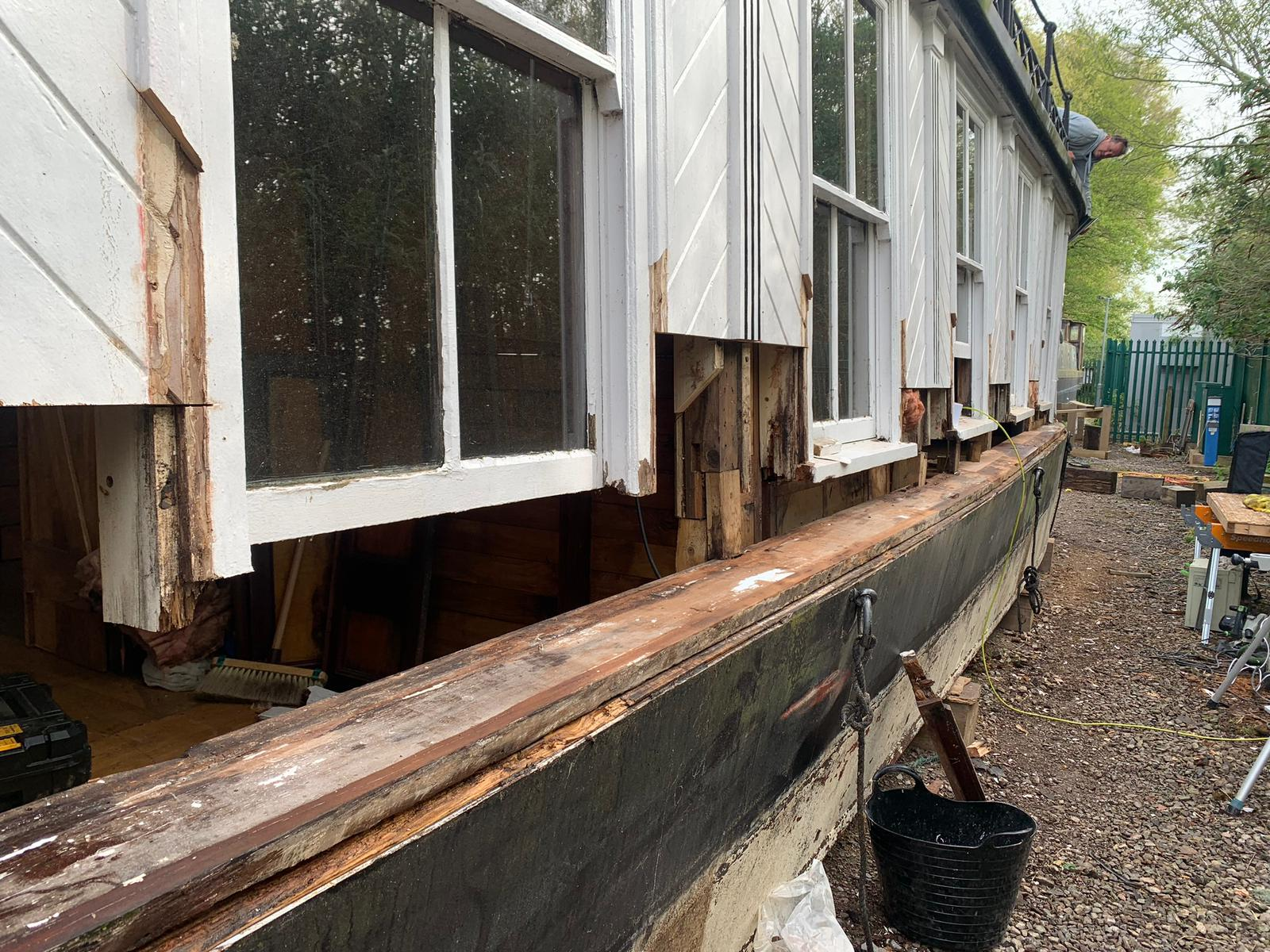
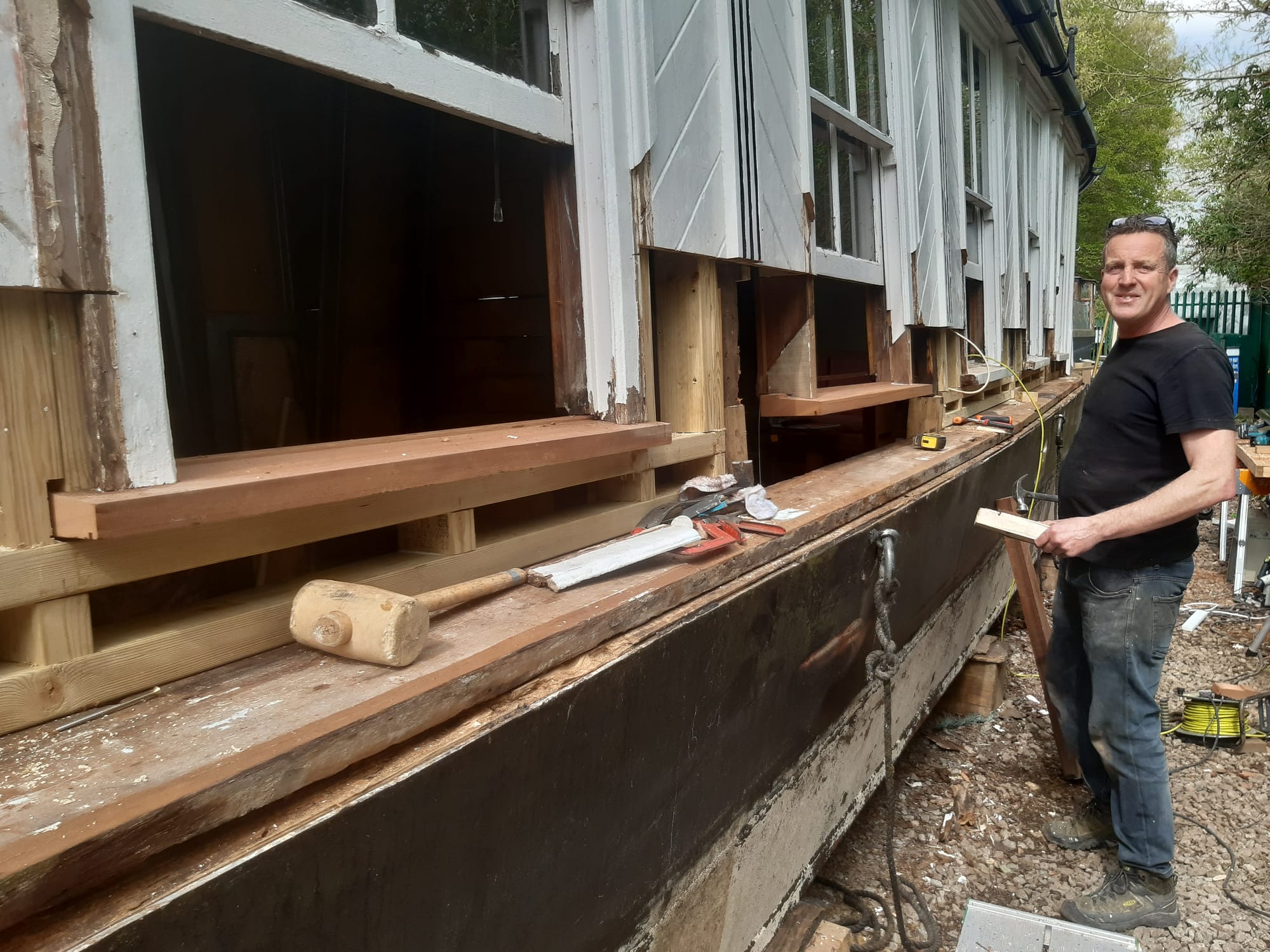
Darren Crane doing restoration work on Eddy.
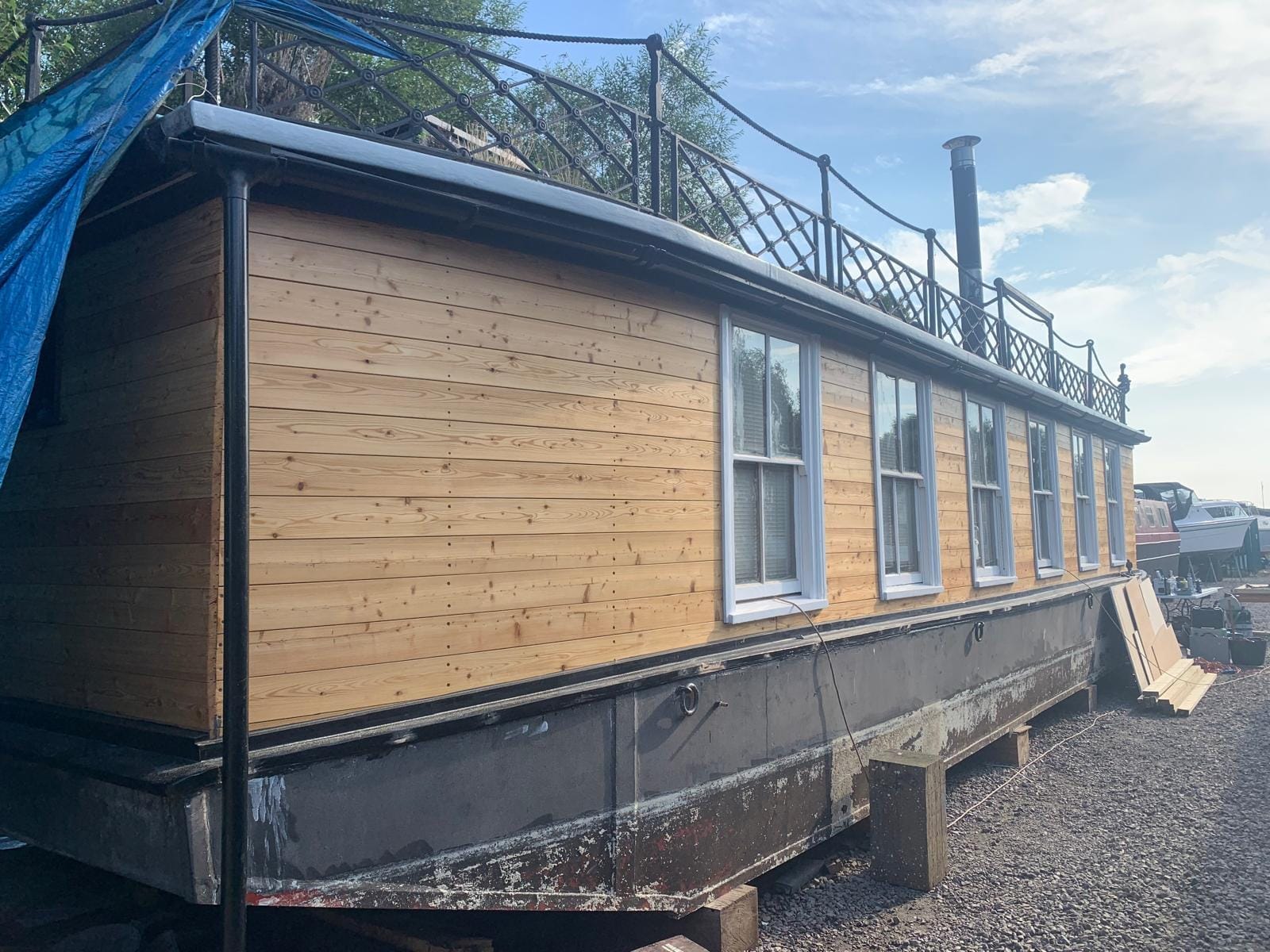
The entire refit prioritised sustainability. The exterior was reclad in Douglas fir; this reddish timber will gradually age to a dignified grey, negating the need for bi-yearly painting. The eight surviving false pillars were relocated to the four corners of the structure.
The interior walls were completely rebuilt while keeping most of the original panelling in situ. Four 400W solar panels now provide all power, with a backup generator available for winter use, along with stainless steel water tanks and a system that filters water directly from the Thames.
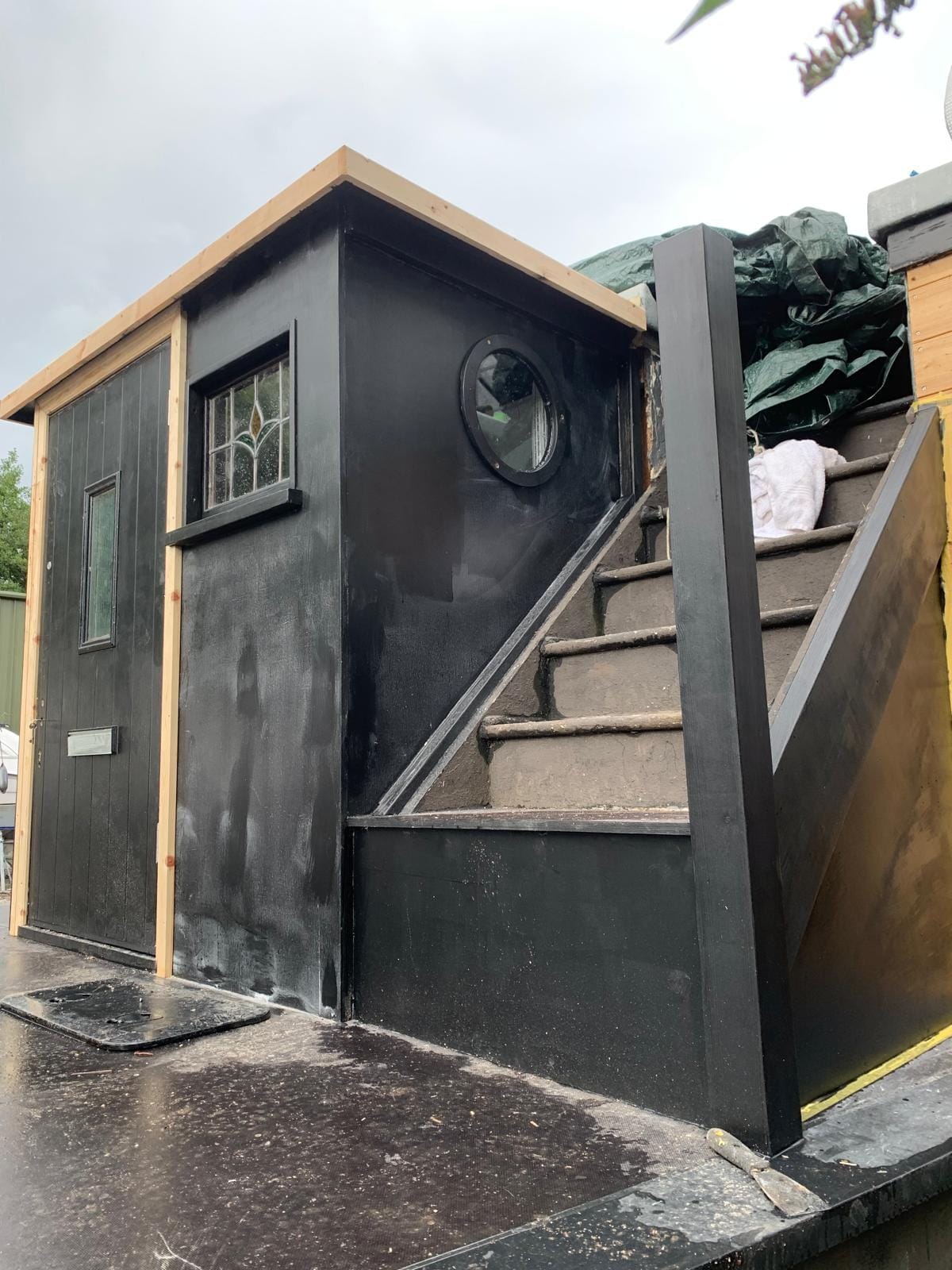
The electrics were completely replaced and the kitchen now has cupboards, shelves, an electric hob, and an oven. A calorifier was added to provide hot water for a new shower – the rowers of old might have taken cold showers, but no longer!
Eddy was craned back into the water in July 2025. But returning the engine-less barge from Reading to Oxford was a complex logistical feat. Eventually, Salters Steamers captain Joe Allan towed the vessel using his narrowboat Lydia, while Phil Mann navigated ahead in his Broads cruiser to ward off and warn oncoming river traffic.
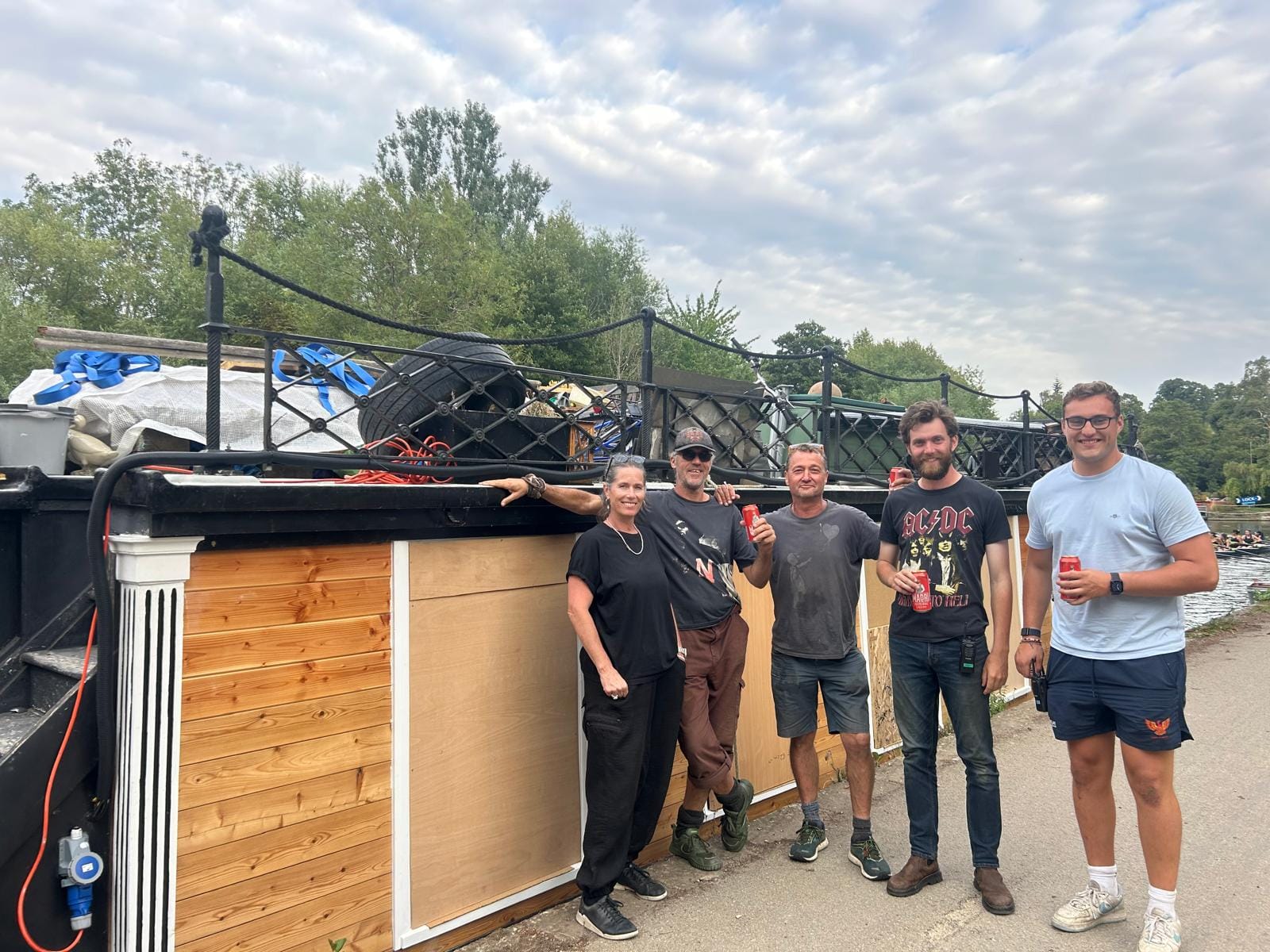
Having boarded up the windows, the crew negotiated every lock by hand to protect the new wooden sides, and adapted their towing formation between wide and narrow stretches of the river. Despite these precautions, Eddy slewed into branches, narrowly avoided Culham Bridge, and barely made it under the one at Clifton Hampden. And then there was the fig roll incident, about which 'crew rules' forbid us to say more.
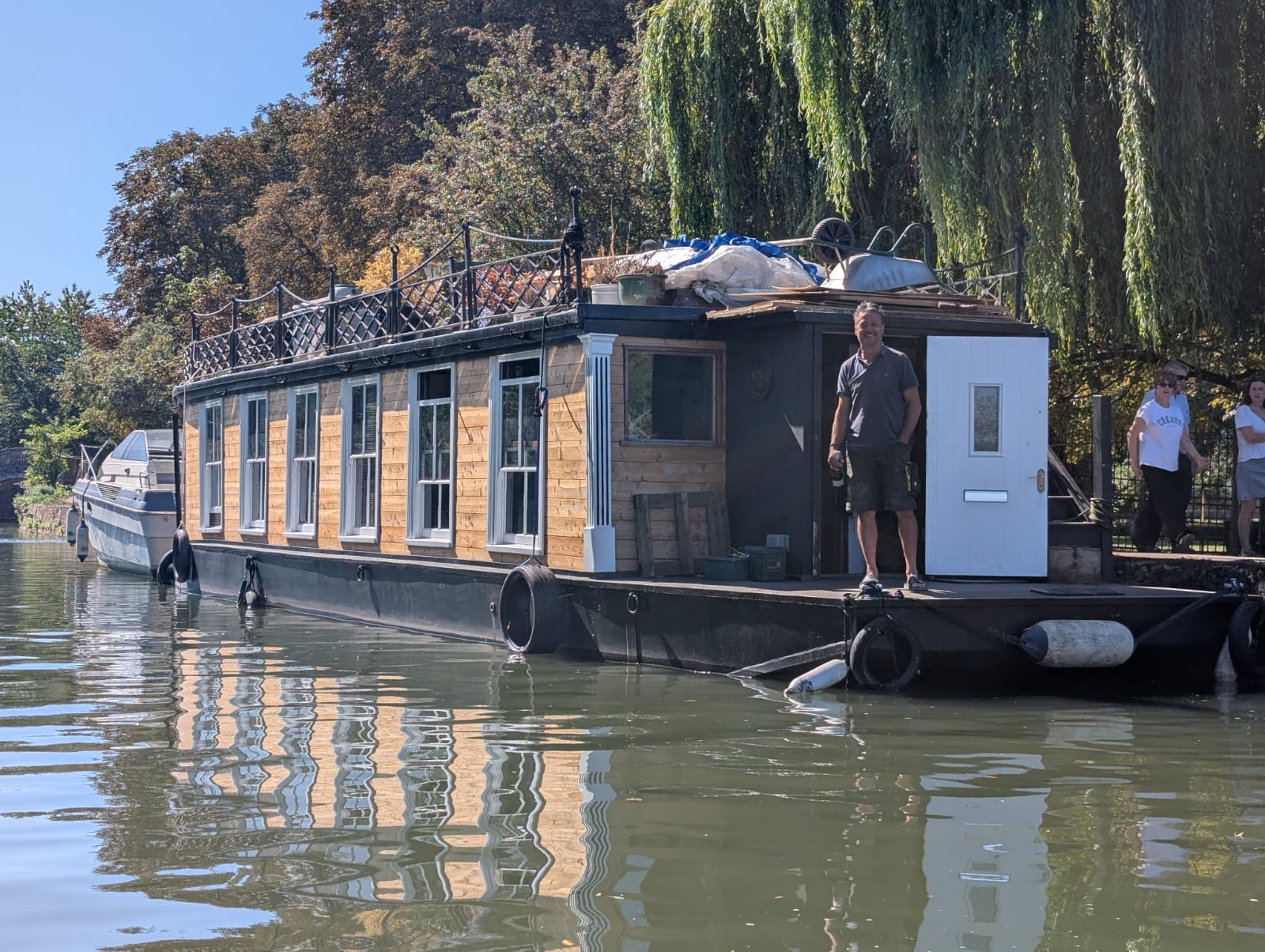
Mooring woes
Upon returning to Oxford, Eddy was temporarily moored outside the Isis Farmhouse pub with the permission of the proprietors. It then spent last winter at a private mooring behind Rose Island – but that berth is no longer available. Since the spring, Eddy has been moored up on the bank of Kennington Meadows, land owned by the Oxford Preservation Trust; but this isn’t a long-term solution either, particularly as it floods.
Moorings are in short supply in Oxford. Demand is increasing while supply, if anything, is diminishing. The Hartley Trust are changing the arrangements on the riverbank between the city centre and the Isis Farmhouse; the visitor moorings between Osney Lock and Osney Bridge remain closed, pushing travelling boats elsewhere; and there has been an increase in small cruisers taking up valuable mooring spots. It has become increasingly harder for liveaboards to find a space to moor. Eddy’s options are particularly limited: its height means it would never fit under Osney Bridge or even Folly Bridge.
This historic barge is once again without a home, and it is on the hunt for a secure winter mooring. If you, or someone you know, might be able to help with mooring, please reach out at bargeeddy1882@gmail.com.