The volunteers helping children find their voice through books
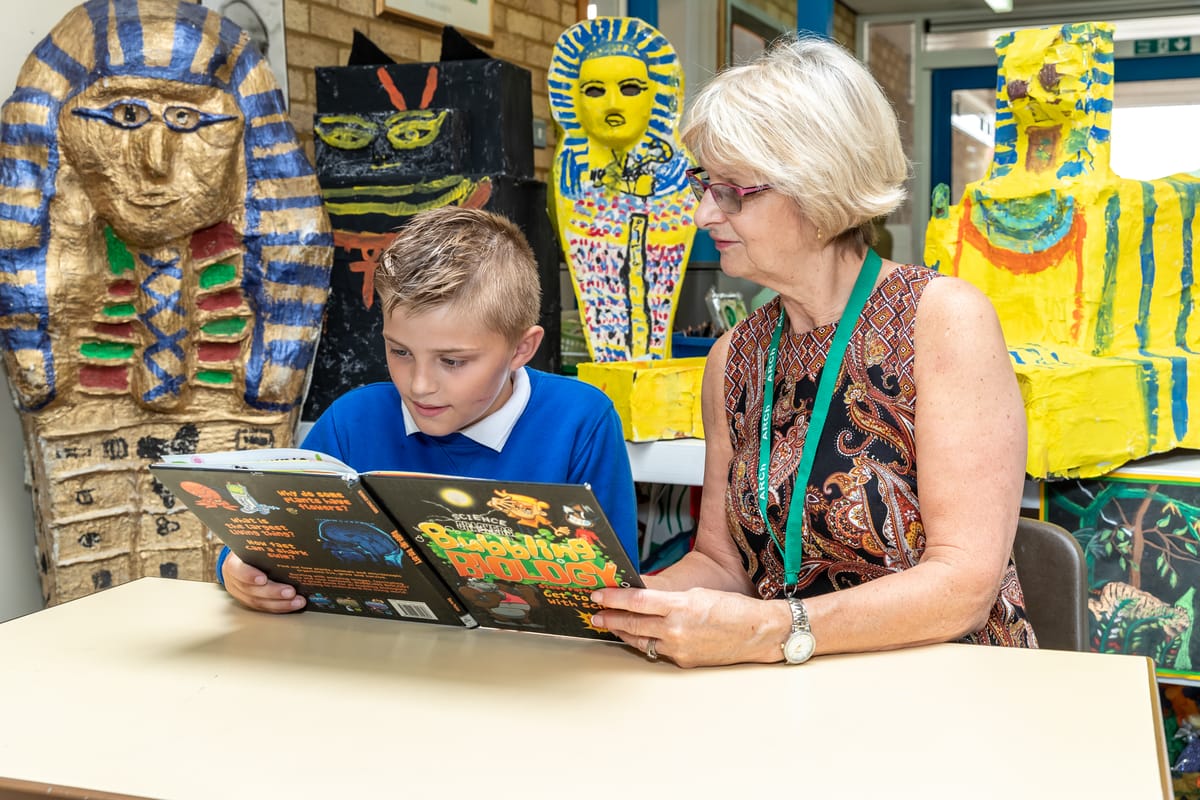
“It’s three minutes past one,” announced B, as we walked from his Year 4 classroom, down the corridor and to our normal reading space outside of the school library.
“So it is B, you did a super job telling the time,” I replied encouragingly.
“But you’re meant to start reading with me at one o’clock. Next week come at one o’clock, okay?”
That was me told off. Punctuality has always been my superpower, so I wasn’t used to being reprimanded for lateness.
“Okay – I promise to do my best. One o’clock it is next Monday!” I peered down at his sincere little face, which eventually cracked into a cheeky grin. (Extract from ARCh Case Study with an ARCh Volunteer.)
Across Oxfordshire, children are being empowered to speak, question, and take ownership of their learning, by a team of volunteers who give them time, attention, and the confidence to be heard.
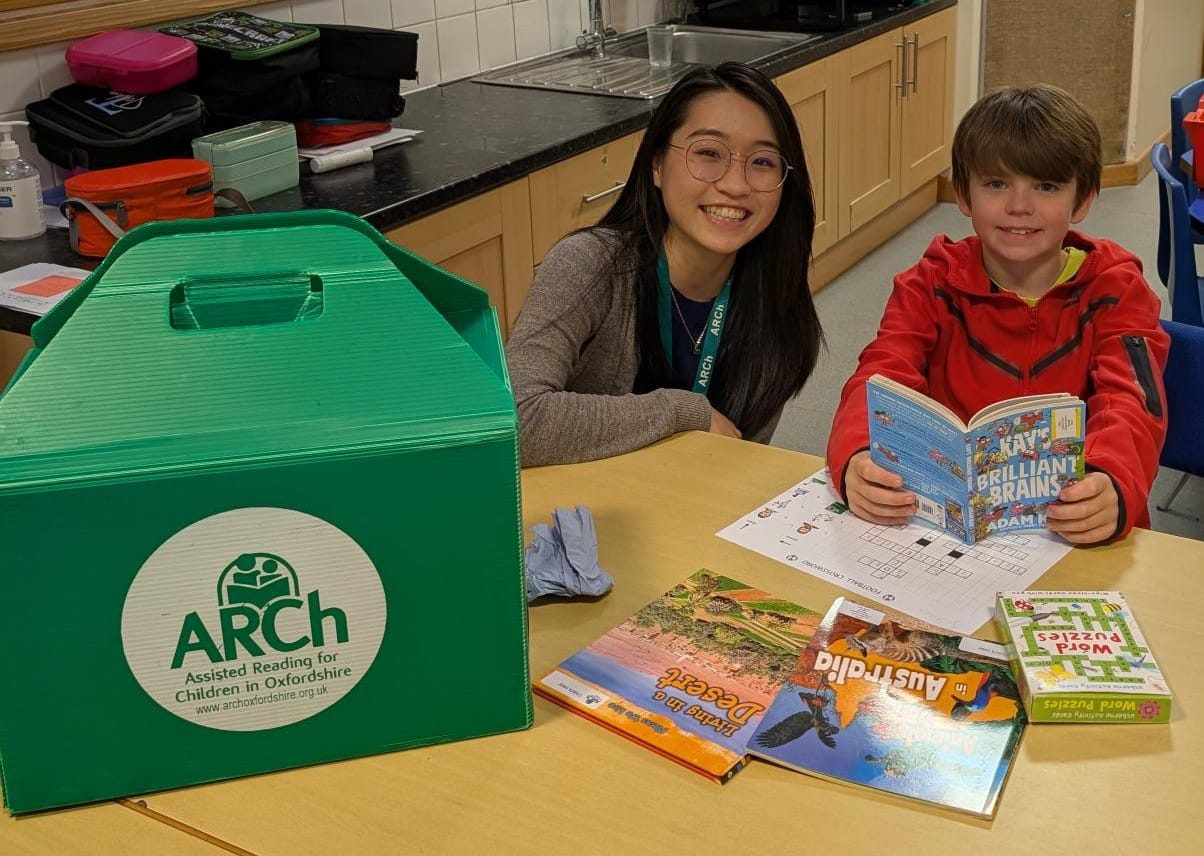
ARCh (Assisted Reading for Children), an Oxfordshire literacy charity, is working every day across Oxfordshire’s primary schools. It sends trained volunteers into classrooms for weekly, one-to-one reading sessions, pairing each adult with up to three children for a year of consistent, sustained support.
ARCh began in 2008, born out of a previous reading charity, Volunteer Reading Help (VRH). Elaine Adams and Jane Rendle, joint ARCh CEOs, both worked for VRH when the Oxfordshire branch was closed along with four other branches across the South of England as a result of the 2007/8 financial crisis in the UK. They then decided to continue with their important work, setting up ARCh as an independent charity. Jane says:
“We had tremendous support locally. Everyone we consulted agreed we couldn’t let the service end, so thanks to some generous supporters ARCh was born! Every one of our 100 volunteers at the time signed to transfer to the new charity, testament to how much they benefited themselves from their work (and some are still with us to this day!), as did our schools who of course valued the service and needed it to continue. As a small local charity, we were able to reduce our costs and from there on we have never looked back!”
From then, ARCh has grown to into an organisation that in 2025 alone had over 300 active volunteers, supporting 910 individual children across Oxfordshire in 111 schools.
The need behind the pages
Across the county, many children struggle with reading – not always because of lack of ability, but because they missed vital learning time during the pandemic, face limited literacy support at home, or lack confidence in the classroom. One in four children (25%) in Oxfordshire leave primary school not meeting the expected standard in reading. In some disadvantaged areas of the county, that figure climbs to as high as three in five (60%).
“It affects everything,” says one teacher at an ARCh partner school. “Children who can’t read well find it hard to engage in every subject, and then they start to believe they aren’t good at learning at all.”
School budget-cuts over the years have seen a reduction in the number of additional adults within schools, and without Teaching Assistants and support staff, there just aren’t enough people to hear children read regularly. That’s where ARCh steps in.
A year of connection
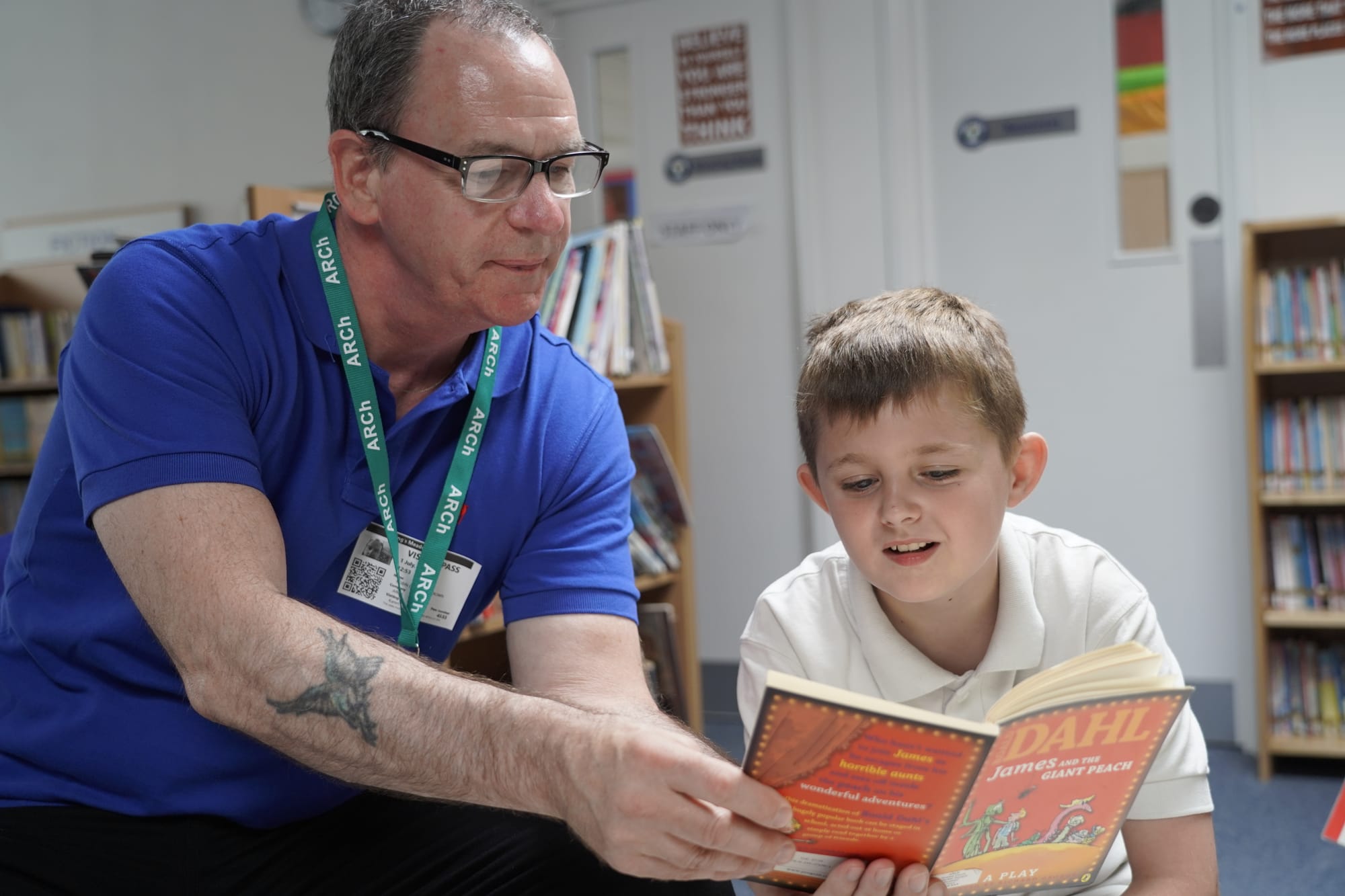
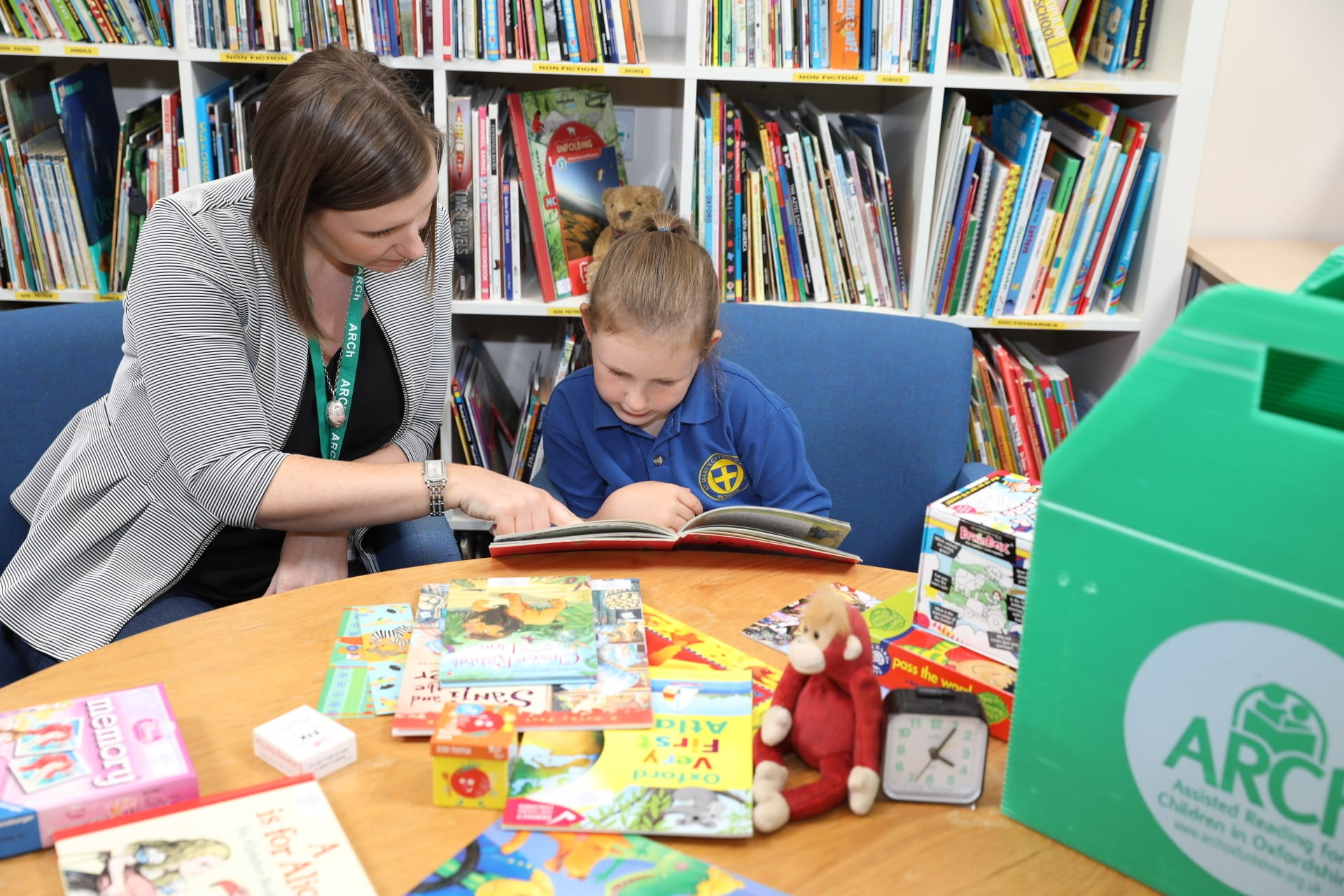
ARCh Reading Helpers – all volunteers – commit to at least one school year of reading support. They usually spend two 90 minute sessions in school each week, building a supportive relationship with their young readers. ARCh Reading Helpers see the same three children each time they go into a school, meaning that over time they can really build up a relationship with them and tailor their reading sessions to perfectly meet each child’s interests and needs. The sessions aren’t designed to be another reading lesson; they’re about making reading joyful, and inspiring a love of reading.
ARCh provides boxes of books and games selected to match each child’s interests, from poetry and picture books to quirky novelty stories, fact books, even puzzles and comics, so there’s always something new to enjoy. The sessions are child-led, with children choosing which books they’d like to explore. There is a lot of conversation, giving the child a chance to have 30 minutes of undivided adult attention; something which is simply not possible in any other part of the school day.
One ARCh volunteer, Kate, describes what the ARCh sessions involve:
“The sessions are fun, but with structure. I always have a catchup with each of them. Then we do the reading. I tailor each session to the individual. That’s the great thing with ARCh – it is one-to-one and therefore gives the time and space to get to know what sparks each child’s imagination or interest. We did plays (huge hit), Diary of a Wimpy Kid (also a big hit), jokes, animals, science etc, then we have a time for a game. The boys each really liked hangman, charades, and hot/cold.”
This personalised attention matters. Schools involved in the programme report sharp improvements not just in reading skills but in children’s confidence, communication and overall attitude toward learning. In 2025, schools with ARCh Reading Helpers reported that of the children receiving ARCh support, 98% increased their reading confidence, 96% improved their general attitude towards reading, and 95% saw an improvement in their reading comprehension.
“We have had children who have been completely switched off reading and they have transformed in the time they have been doing ARCh,” said a headteacher from a primary school in East Oxford. “The kids all love them without fail and the sessions make them happy which is the most important thing to us. We have had children who are selectively mute but will happily chat away to their ARCh reader! It is my absolute favourite of all our interventions as it is so fun and engaging but also gets results!”
More than reading
Whilst reading is the key focus, the relationship between the ARCh Reading Helper and the child is the real key to success. Each volunteer sees the same children for an entire year, meaning that they really get to know the children, build up a positive relationship with them, and see them thrive over time.
A community effort
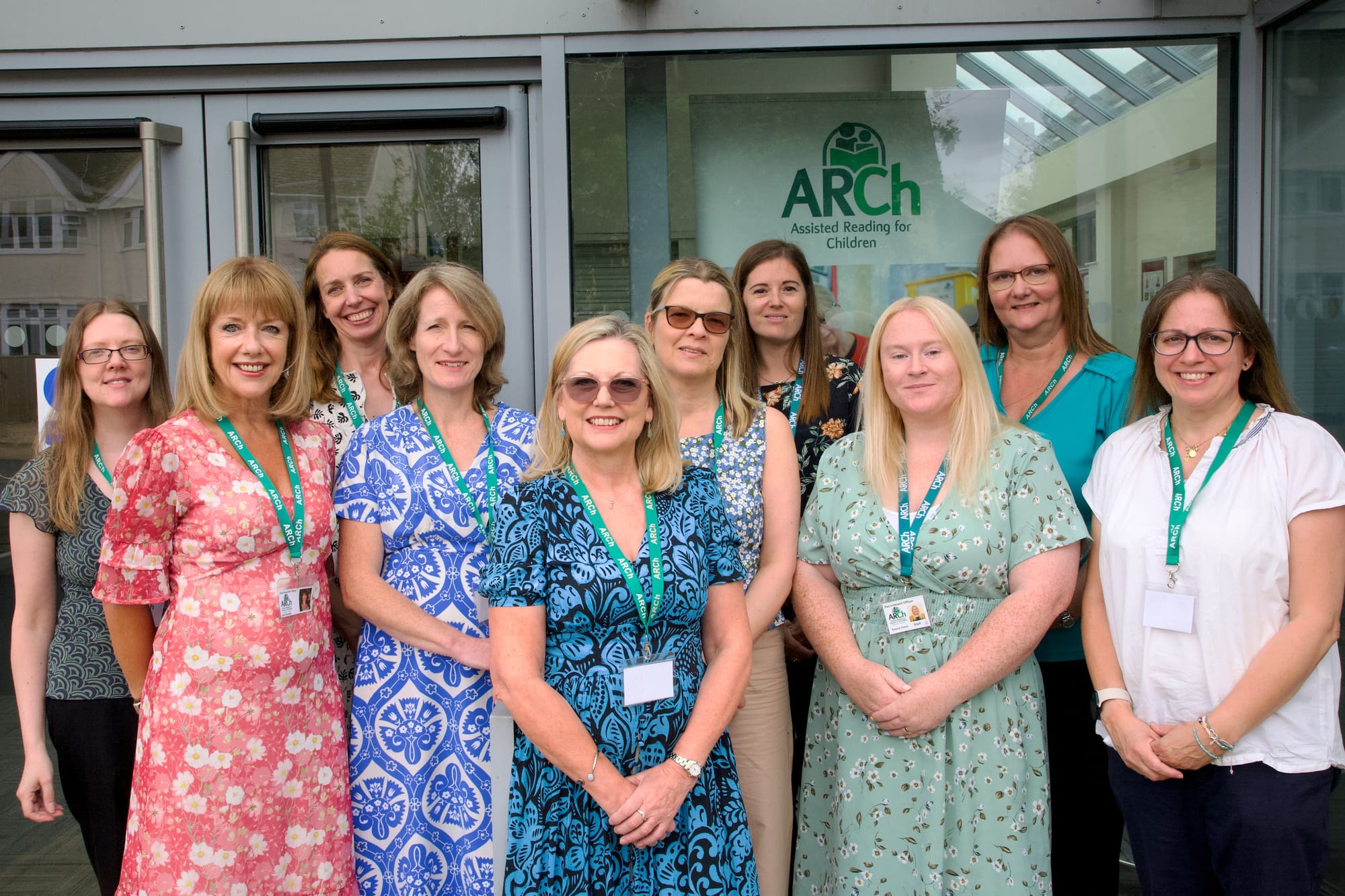
ARCh itself is a community of volunteers, people who love reading and want to make a difference. No qualifications are needed, just patience, a love of stories and the willingness to listen. Volunteers receive training, ongoing support, and opportunities to meet fellow helpers at book exchanges and coffee mornings. ARCh also puts on opportunities to attend on-going training on topics such as Oracy, Neurodiversity and Youth Mental Health.
Most ARCh volunteers are from the community, people with time within their schedule to spend two afternoons per week in schools. “It has given me something of an insight into how other people live their lives, a respect for the resilience and loyalty of children, and an understanding of the pressures and demands on teachers. It has also given me a great deal of joy and fun, and it has strengthened my patience!” said Inga, ARCh volunteer.
There are also ARCh Company Volunteers – people in work given the time by their employer to volunteer each week, for one hour, in a local primary school close to work or home. Emma is one such:
“I have benefited greatly from becoming an ARCh volunteer, I look forward to my Friday sessions, it’s fantastic to step away from my desk and go to do something completely different. I come back to work feeling refreshed and invigorated. Volunteering for ARCh provides you with a great feeling, hopefully benefiting the children and making a difference. It has been lovely to hear from teachers that the children really enjoy their time with me.”
The company volunteering programme has been a long-running success with local organisations such as OUP, Unipart House, Elsevier, and many others.
“As a company volunteer, my employer allows me to dedicate an hour a week to volunteering. I have a busy job, so the commitment is manageable without being overwhelming. What’s more, it’s such a nice thing to break up the working day with an ARCh session – if anything, it benefits me just as much as it benefits the children! During stressful moments, the chance to move away from my computer screen for a short period, forget about emails and meetings, and read something silly with a laughing child is really restorative.”
Local businesses and community groups have also contributed, from book box sponsorships to donations for new games and reading materials, helping the charity reach hundreds of pupils across more than 100 schools.
Why it matters
In a county known for academic achievement, there’s a literacy gap that often goes unseen. ARCh doesn’t just help children learn to read, it helps them find joy in reading, and in themselves.
As the National Year of Reading 2026 invites us to look again at how children learn to read and why it matters, ARCh reminds us that reading is never just about words on a page. It is about time, trust, and the power of being listened to. In small, consistent moments each week, ARCh Reading Helpers help children build not only fluency, but confidence, curiosity, and a sense of self-belief that reaches far beyond the school corridors. When a child feels heard, valued, and capable, reading becomes more than a skill: it becomes a gateway to learning, connection, and possibility. That is why ARCh matters, not just during the National Year of Reading but every year and for every child.
If you would like to support ARCh either through volunteering or through donations, fundraising or other support, please visit archoxfordshire.org.uk. You can visit their Localgiving website to make a donation or, if you’d like to speak to the team about volunteering or the Employer Supported Volunteering scheme, please email info@archoxfordshire.org.uk.
This was a guest post by Emma Orton from ARCh Oxfordshire, and we thank her for working with us.