
Behind the scenes at Braziers Park
Deep in the South Oxfordshire countryside lies a country estate which makes regular, intriguing appearances in the Clarion’s event listings. Song weekends. International film festivals. Art exhibitions. “Experiences out of the mainstream.” What, exactly, is going on at the mysterious Braziers Park? Anand Madhvani tells all.
When a member of the Clarion reached out to say they were ‘Braziers-curious’ that resonated with me. I’d only lived and worked in the community for a month. I’m also figuring it out.
We’re not the only people to be puzzled. One of our longer-term residents raised these questions in her first visits. She begins her 1998 Masters dissertation:
“What is the place? Is it a college? What is its message? Does it have one? Why has no-one, even in the next village, heard of Braziers?”
– Sarah Wood – MA Art as Environment dissertation – 1998
It’s easy to get lost in complex answers. Residents have offered up ideas like genius loci, the Roman concept of spiritual energy in a place, or the ‘magical dimension’ of ‘Psycho-Symbolic Landscape’ using Jean Gebser’s model of consciousness. But as someone from a culturally Indian background via East Africa, childhood exposure to superstitious cults and irrational beliefs have inoculated me to vague Western woo-woo. The magical dimension? Seriously!?
However, even I can sense there is something unusual about this place.
It's not just a single unusual thing either. As you start pulling on one strand, more intriguing rabbit-holes begin to open up, threatening to swallow you whole. (Or apply for one of our Academic & Creative Residencies, to fully immerse yourself/start your own warren!) Braziers Park is a curiously curious place. But let me back up and take you on a tour of the basic facts. You’ll soon see what I mean...
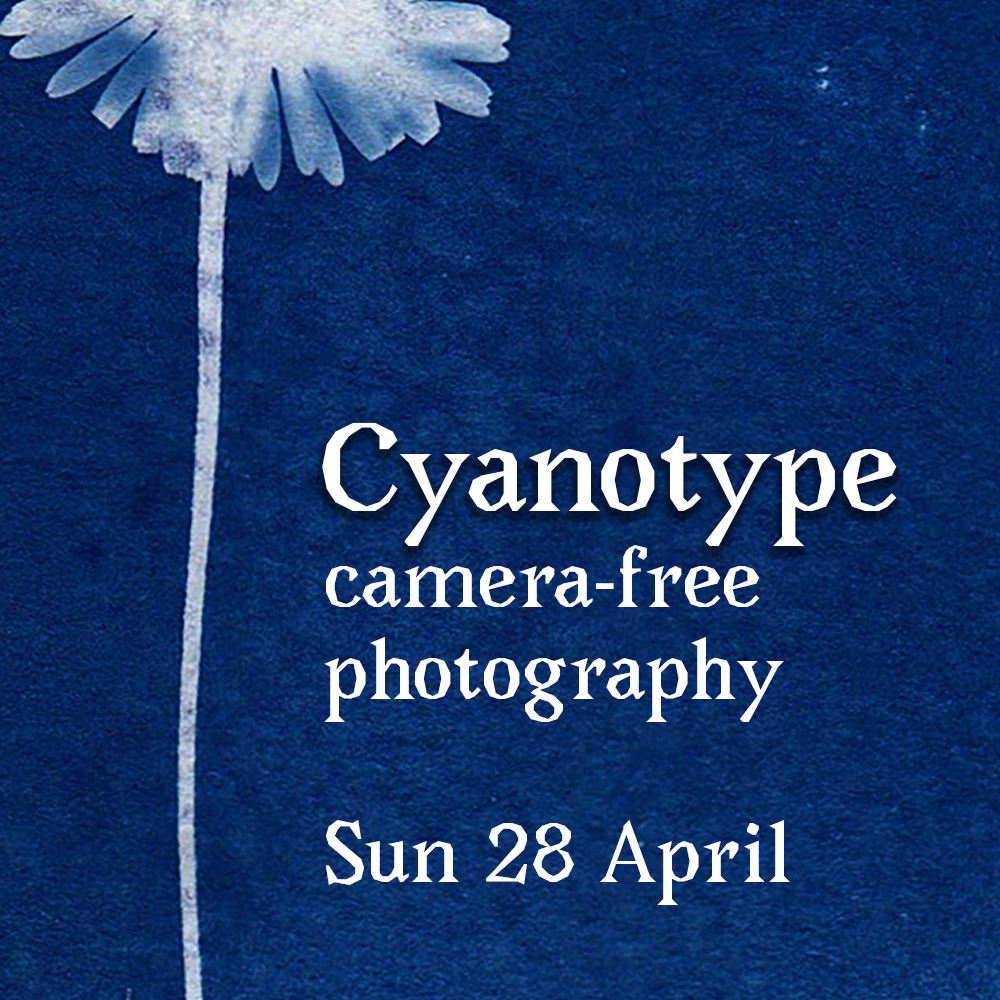
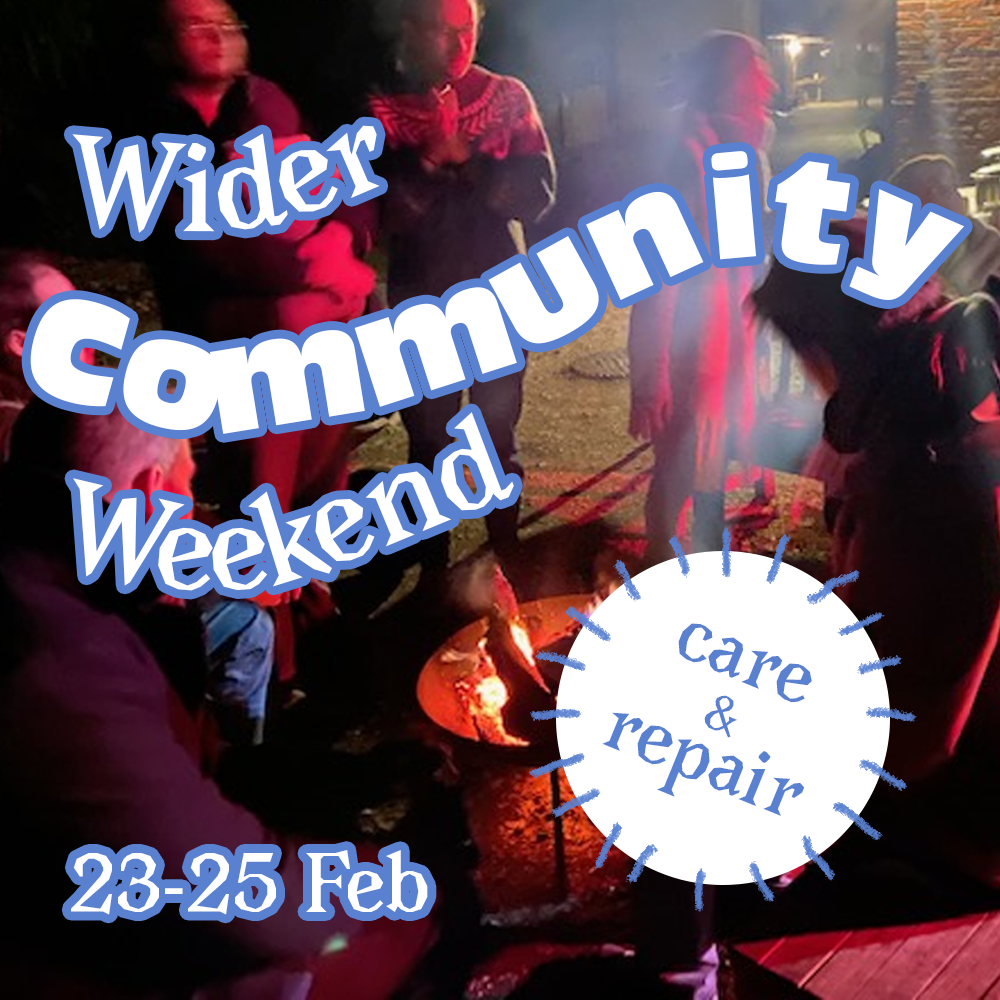
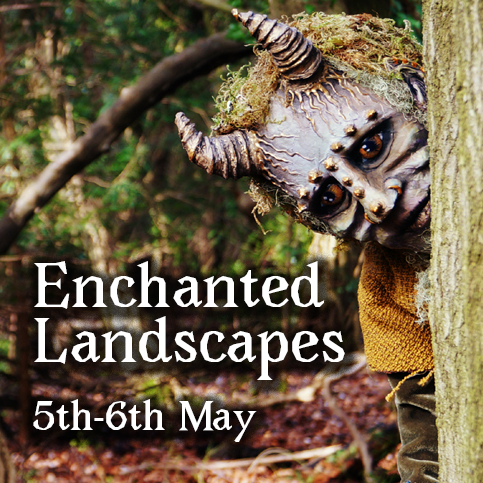
Events at Braziers Park.
“What is the place? Is it a college?”
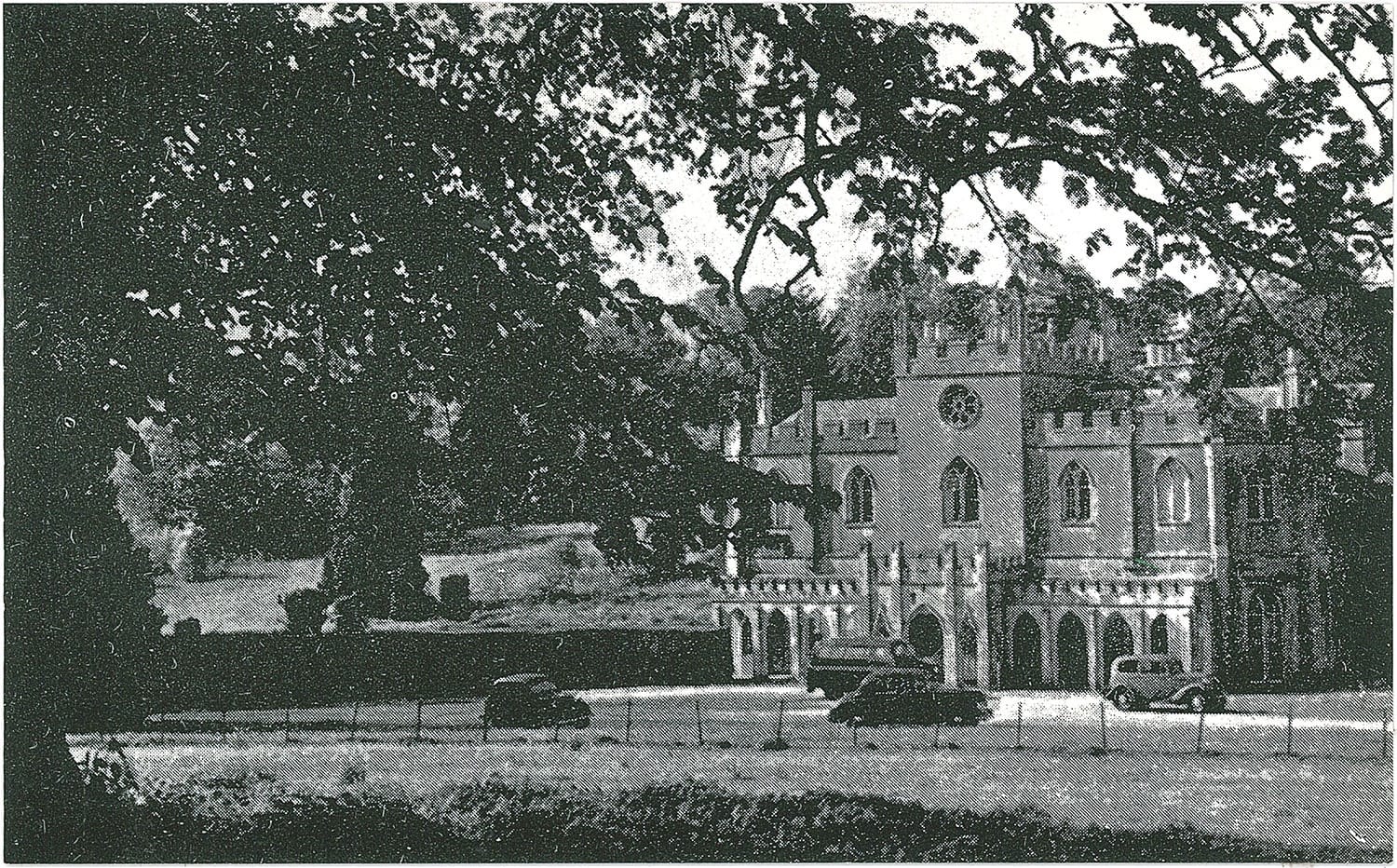
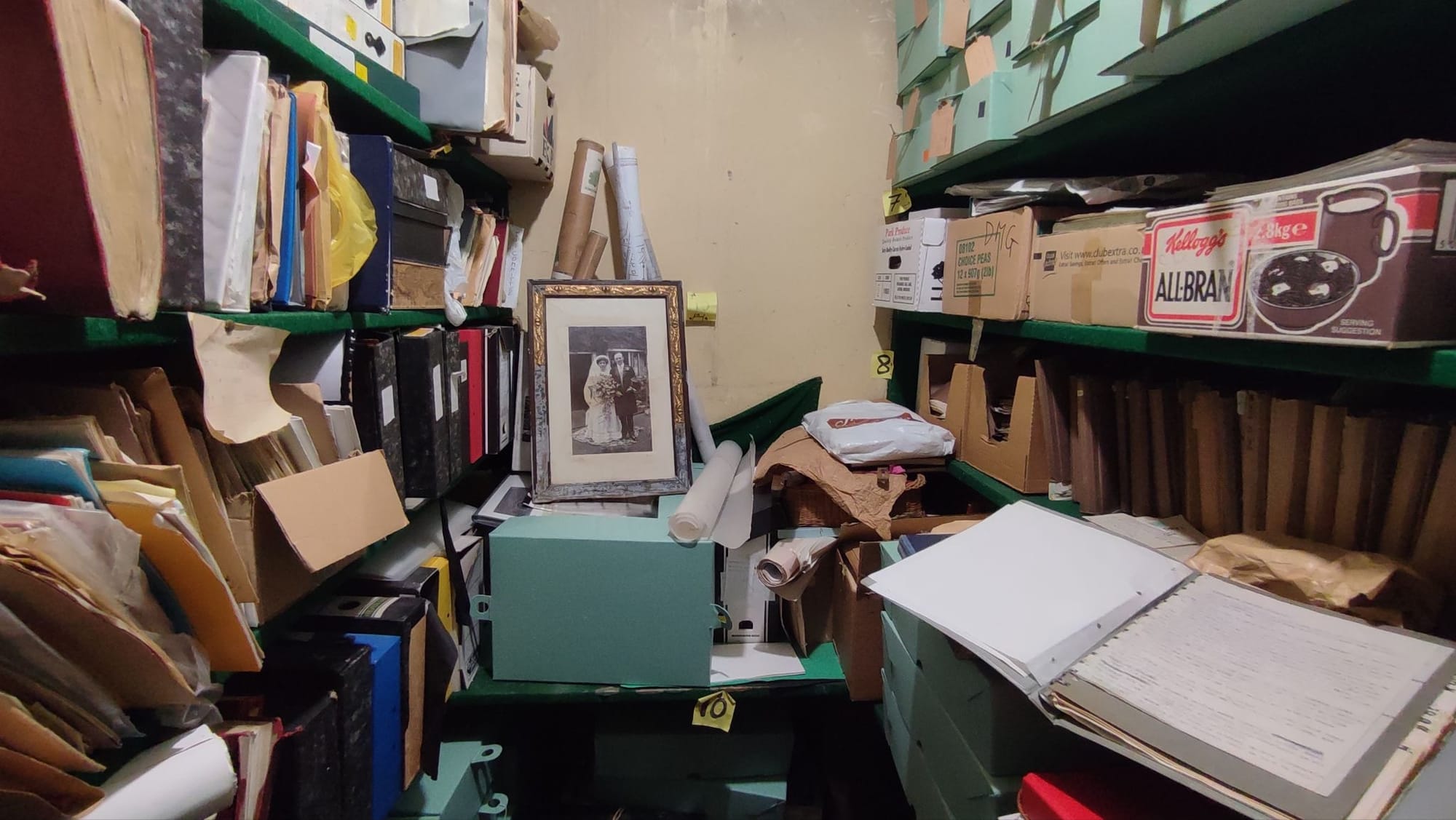
Braziers Park is the home of one of the oldest secular intentional communities in Europe – “groups of people living together by choice, sharing values, resources, and responsibility”. It was founded in 1950, and celebrated its 75th birthday last year. There are records and black and white pictures in our archive. We’re officially registered as a Community Benefit Society with charitable status. (We slightly pre-date the Charity Commission, so we occupy a special category.)
Braziers occupies 56 acres of land near Wallingford, including an 18th century walled garden and early 20th century greenhouse, where the community grows food using organic and no-till practices. The woods and hedgerows on site are notable for biodiversity, and there are annual open days to see the snowdrops. As well as newts, our nesting swallows just migrated, and the owls are very shouty at the moment. Our estate manager has run tours to listen to badgers snoring in their setts.
Our full name is Braziers Park School for Integrative Social Research, which simply rolls off the tongue (BPSIRS is not much better). A school which perhaps models itself on an Oxford college; a research institution which doesn’t publish research, employ teachers, or award qualifications.
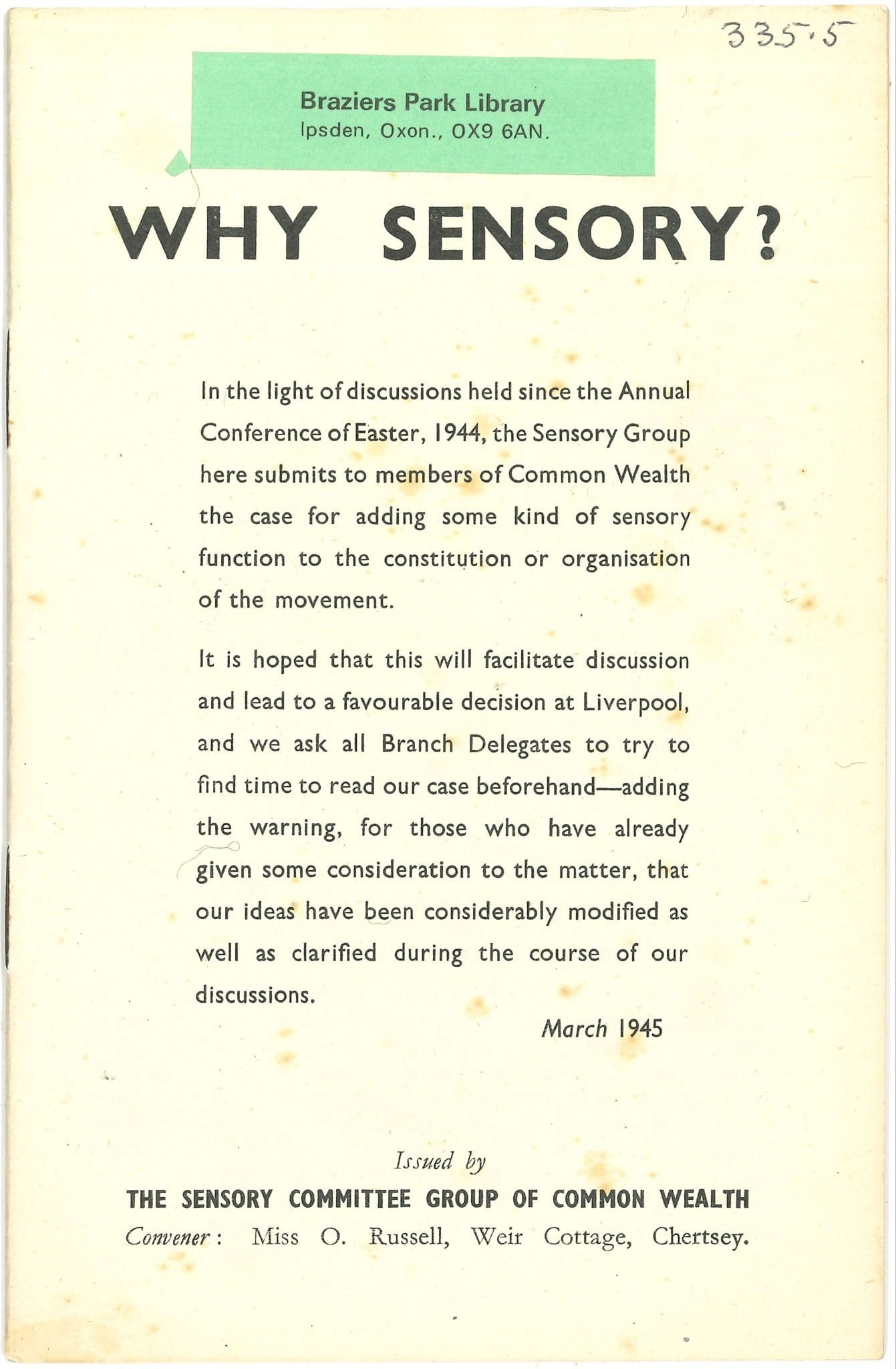

Glaister’s ideas about coming to our collective senses were a reaction to the horrors of war.
A psychiatrist called Norman Glaister, and his wife Dorothy (née Revel), a teacher and educationist, founded Braziers Park as an educational trust and a laboratory for community life. The recent horror of war, and the terrifying new threat of mass destruction of nuclear weapons as the Cold War unfolded, was a clear motivation.
20th century peace movements such as No More War Youth Section and Moral Re-Armament (now Initiatives of Change) called for greater international cooperation and understanding, as the key to world peace. Braziers answered that call – indeed, it was one of the first British institutions to accept German students after World War II. (An intriguing box about post-War Japanese kibbutzim is waiting to waylay me in the Library.)
Note the biological themes. (Ignore the creepy vibe.)
Norman was also inspired by biological ideas about specialisation and social organisation. He believed humans needed to evolve beyond atomised individuals into what he called a ‘multi-mental’ organism or community – what we might now call a hive mind, or Wikipedia brain. Drawing on earlier ideas from Wilfred Trotter, Norman thought ‘the human herd’ (his words, not mine) were divided into two fundamentally different personality types. Roughly speaking, he believed some people are action-minded, while others are perceptive. The action-minded ones are more ‘executive’ (what some might call ‘right brain’ now) while the more perceptive people are ‘sensitive’ (left brain). Although some of his thinking seems archaic now, and worryingly rigid, these are reflected in modern terms for similar, and more complex forms of neurodiversity.
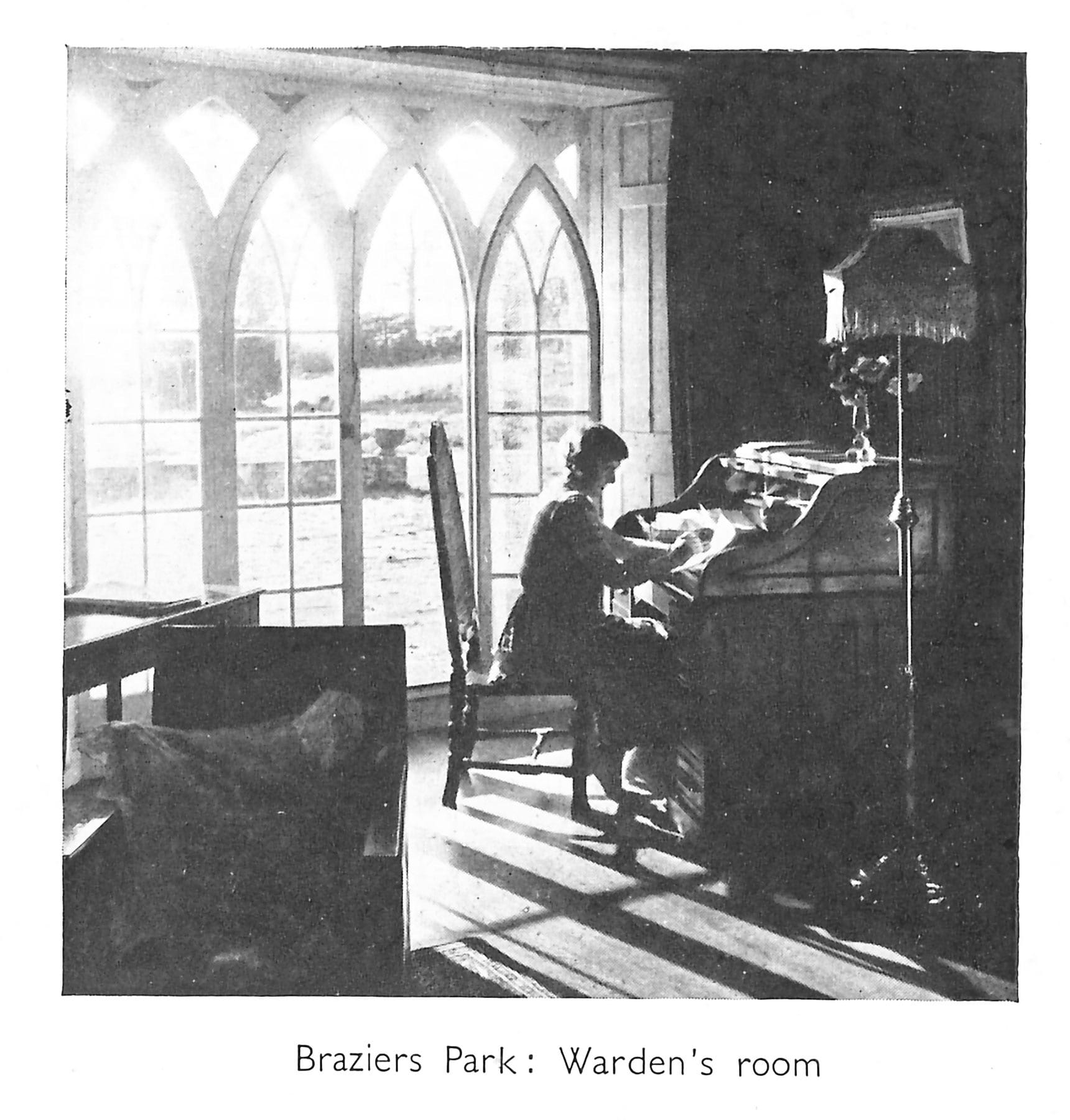
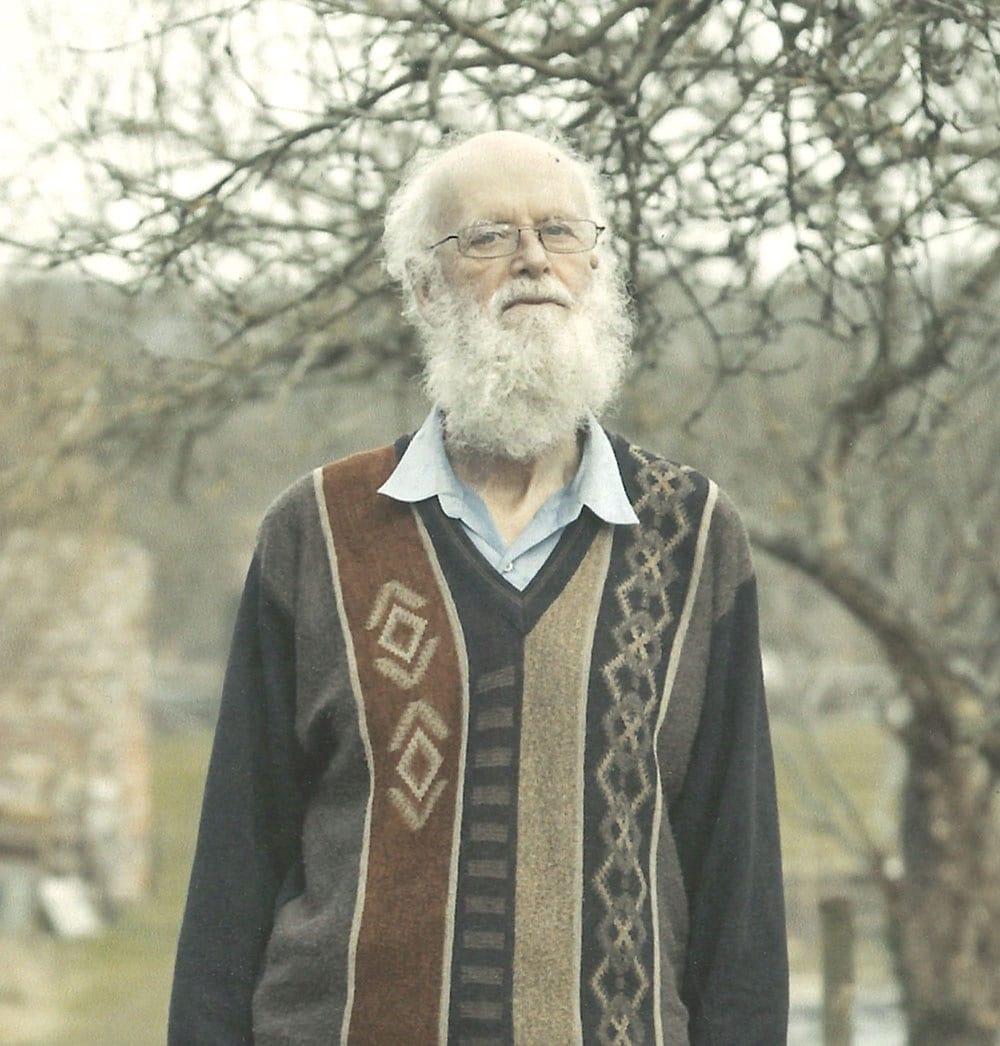
An early view of our Office, and Hugh Makins, our oldest resident (1930-2026).
Crucially for Norman Glaister, healthy communities needed both types of people, working smoothly together. One innovation still used by Braziers is splitting key meetings between these two types of activities. In one type of meeting, participants share their thoughts and ideas, without making any actual decisions. Such ‘Sensory’ meetings feed into later ‘Executive’ ones, where decisions and plans are made. These two types of meetings are typically held on different days.
This pattern remains the main engine of group decision-making 76 years later, although people are not separated into two types any more, and many attend both meetings. It can be slow – with echoes of Quaker processes the Glaisters were familiar with, and traditional English Entmoots with impatient young Hobbits wriggling in their seats.
It can also be exceptionally rich. Participants gradually learn to recognise their own perspectives as partial, and to value other people’s insights, deepening the fabric of an interdependent community.
Other experiments in dealing with ‘maladjusted’ or ‘wayward’ children and young people, such as those of Steiner, Pestalozzi, Montessori and Lane, also informed the formation of Braziers Park. The Glaisters were also influenced by the experiments of radical therapists such as the Scottish psychiatrist R.D. Laing who, in 1965, moved his patients out of a traditional psychiatric hospital to an anarchic therapeutic community called Kingsley Hall.
There were also older movements which fed into the ideology of Braziers, including the Order of Woodcraft Chivalry, and the Kindred of the Kibbo Kift. This created a strong connection with land and the environment, which remains present in our work today – even if some of the more natural and mystical traditions were downplayed at a time when there was push-back against spiritual movements.
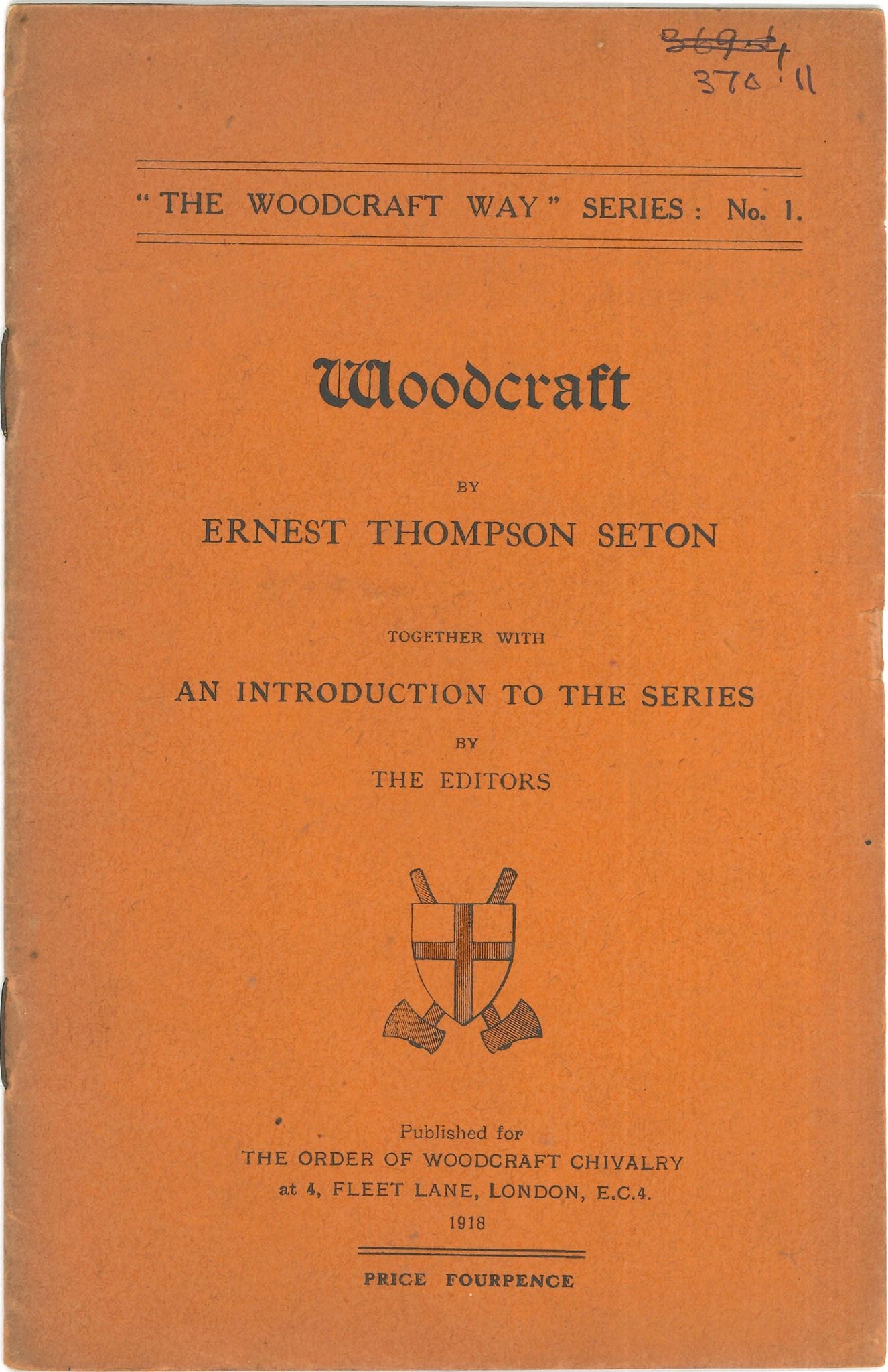
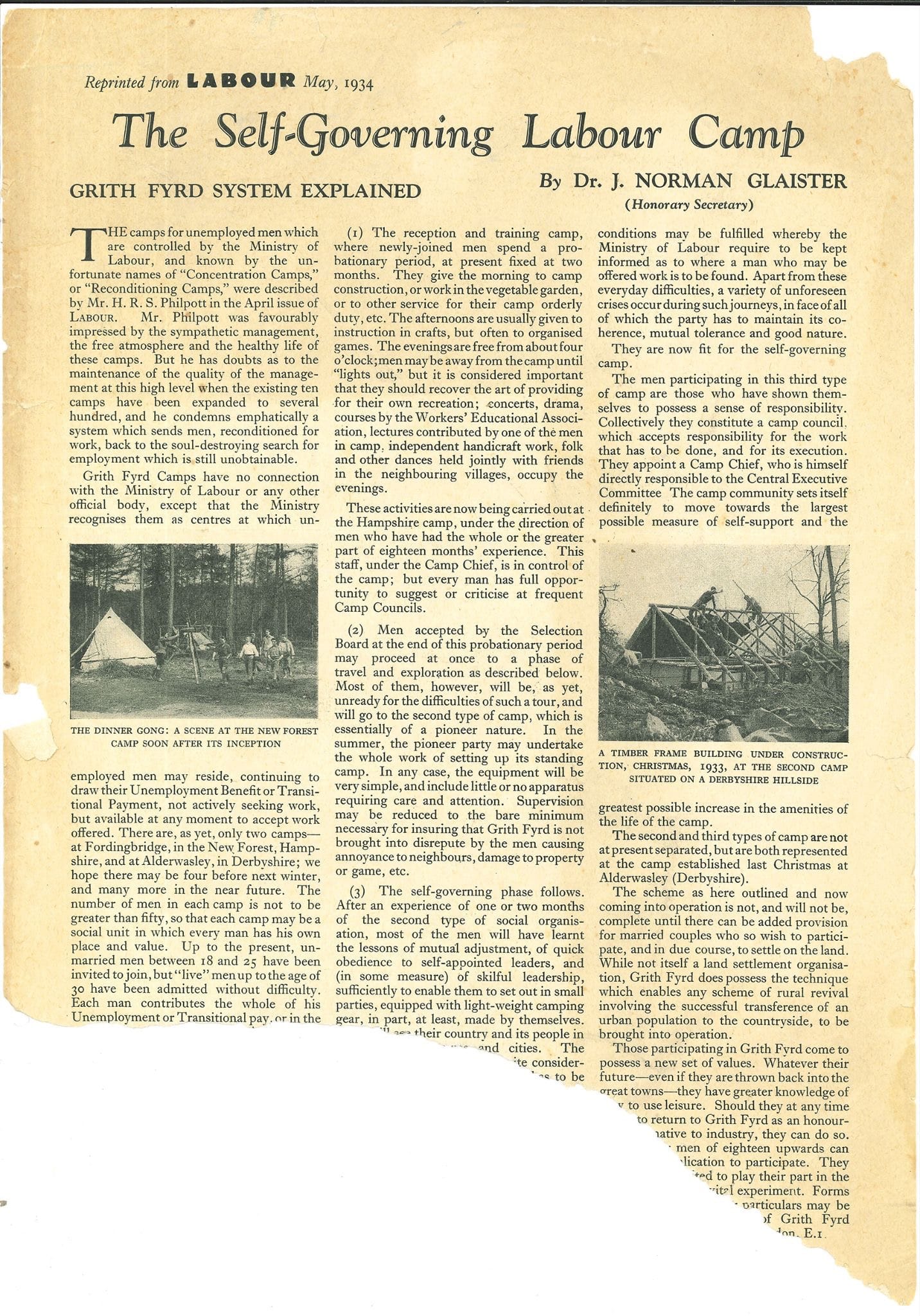
Early key influences included the Woodcraft Chivalry movement and Grith Fryd.
Indeed, there was a lasting tension between how Braziers saw its own radical roots, and more conservative strands of thinking. In its early days, there were divisions in the community between whether Braziers should be more art-oriented, or continue as a philosophical and social experiment. There were tensions between more socially progressive and traditional residents. As one of our trustees commented during an interview:
“[...] in fact, there used to be a book in the library which has probably been pinched, called something like Groovy Communes, which is from the late ’60s, early ’70s and Braziers was in it and they said Braziers is not a groovy commune in the slightest. ‘They don't do co-parenting, there's no free love.’ ‘They're all middle-class and middle-aged and stuffy.’
Despite the explicit goal of fostering connection and better communication, the community experienced conflicts. There were two major schisms, which deeply shocked Dorothy Glaister.
“One of the major activities of our life and work here is to try and discover how to cope with schism. In other words, we need to find out how to integrate opposites […] In the cases I have described we did not integrate the two opposites. Instead a break was made and one side walked out. That denotes a failure.”
– Dorothy Glaister, Braziers: A Personal Story (1973)
The house and grounds
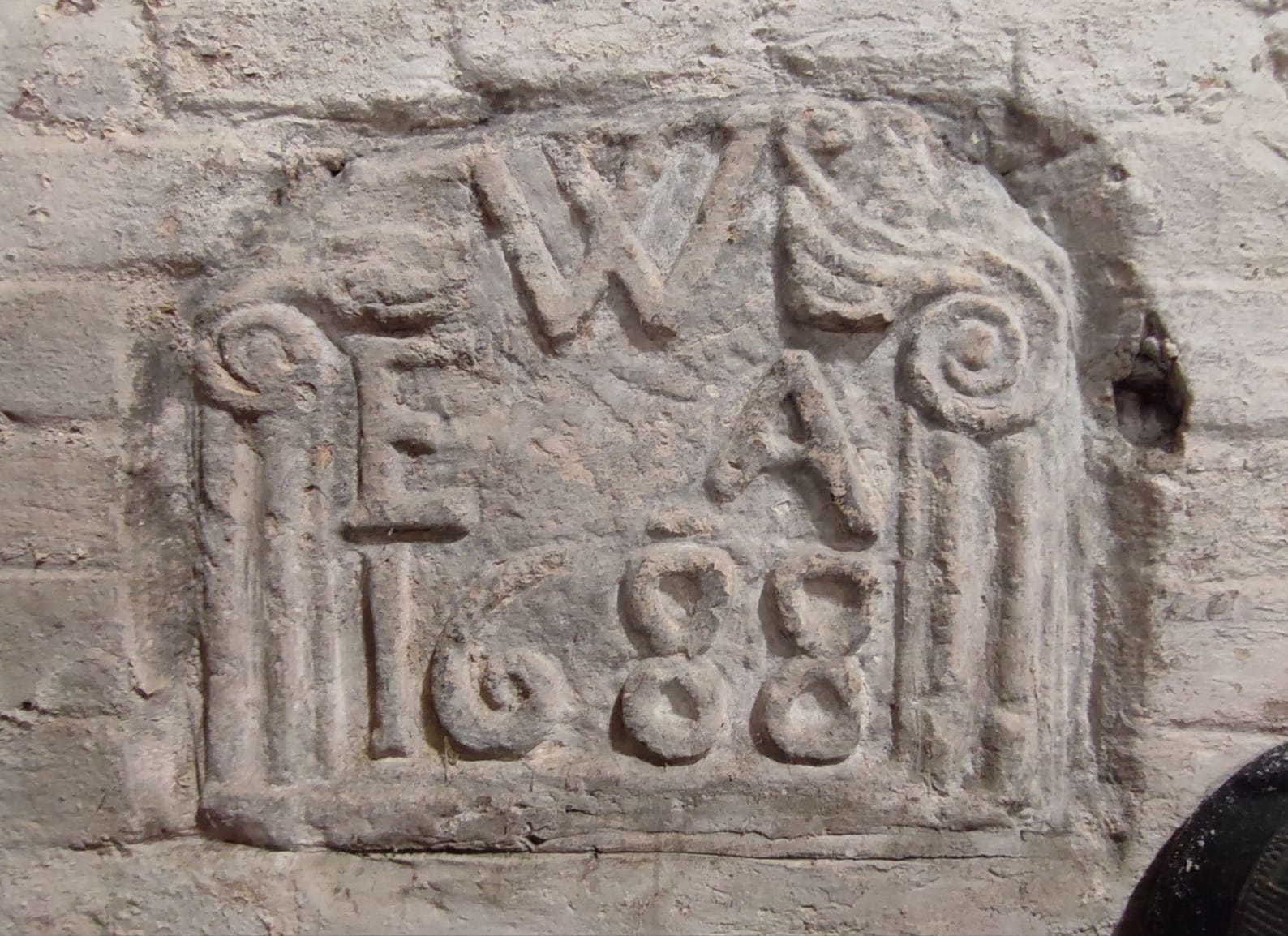
There are no records of the property in Domesday, or on the massive Elizabethan tapestry maps of Oxfordshire. A datestone in a cellar suggests the house was founded in 1688, a tumultous time in British history, but this raises more questions than answers: nobody has discovered what the initials WEA on the stone stood for, and they seem unrelated to the Blackall family who may have built the original farmhouse.
Change is the only consistent pattern. No family appears to have stayed at Braziers Park for more than a single generation. For significant periods, census records suggest Braziers was sustained more by servants than by the owning family. The house does not feel haunted in a bad way, but more like an open vessel, as a Wim Hof breathing instructor told me in the Pantry one morning. Someone running a tranquillity course, from a druidic family background, echoed the same thing, a few weekends later. People pick up the energy, and feel at home here. People come bringing different things to Braziers Park, and often leave having gained something profound.
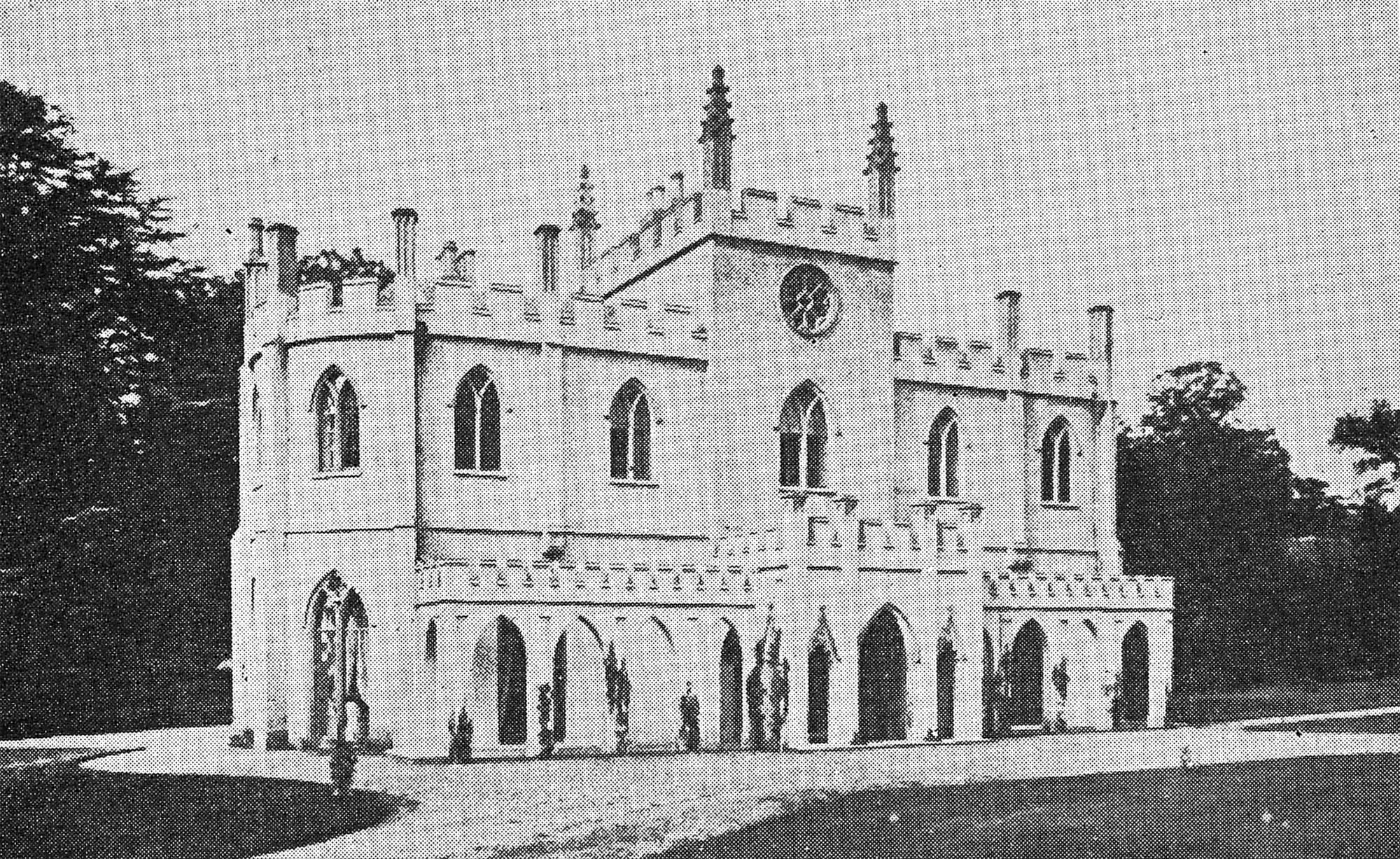
Its history is peppered with intriguing characters, including Admiral Isaac George Manley, who voyaged with Captain Cook around the world, and remodelled the house. This is when the main house acquired a quirky and eccentric look, adorned with what Christopher Wren would have called ‘Saracen arches’.
Ian Fleming, author of the James Bond series, slept in a crib hung from hooks visible in our Library, when it was his nursery. His father, Valentine Fleming, remodelled the house at great expense. But despite a massive investment in the property, the Fleming family moved away after just eight years. Ownership then passed to Sir Ernest Moon and Emma Moon in 1914. Ernest died in 1930, but Lady Moon lived here as a widow for another 17 years. She was loved locally: her painting hung in a local Ipsden pub, and now benevolently haunts our landing. It is hard not to imagine her lonely, for all those years, in this huge house. No families have renewed themselves at Braziers for a very long time.
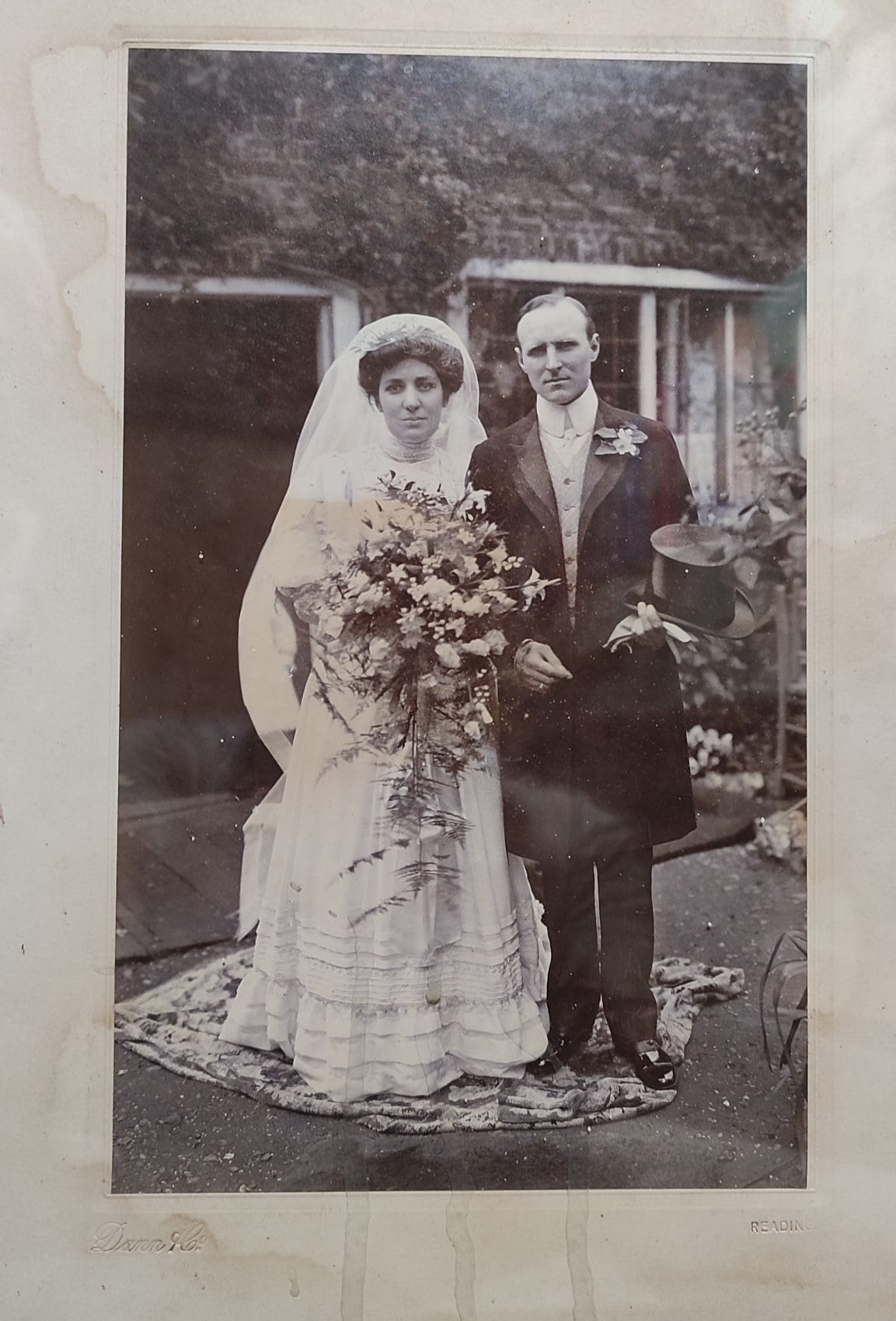
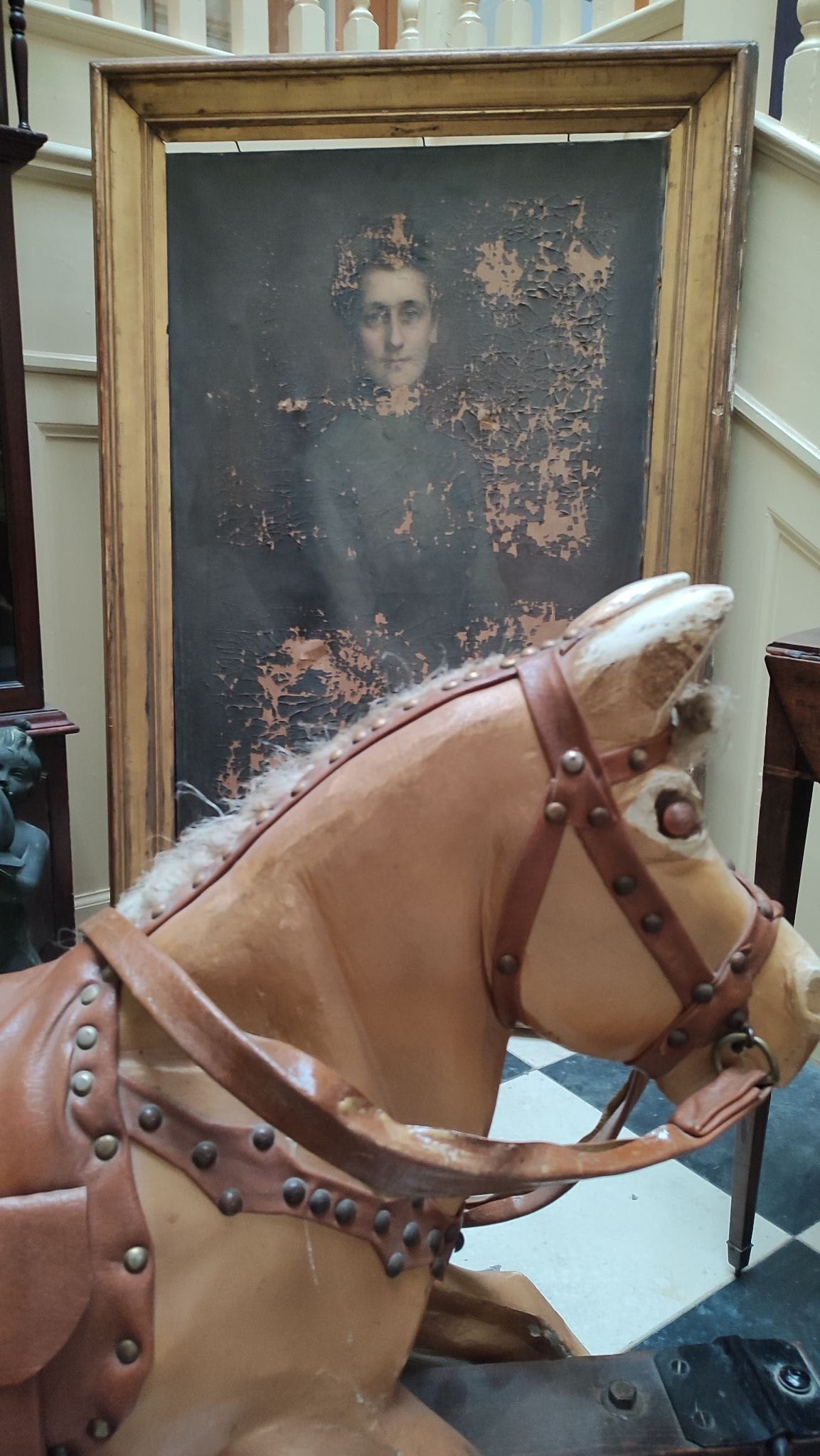
Lord and Lady Moon – wedding photo, and a later portrait returned from a local pub.
Each group of people who pass through Braziers left puzzling echoes of themselves. Why was an orchard planted in a frost pocket? The grand hedges framing the house simply do not match. There are traces of inexplicable flower beds, and old paths to nowhere. It feels like the site of repeatedly amateur, dissolute, entitled, and ultimately infertile privilege. People making things up as they went – before simply moving on.
With the intentional community era, beginning in 1950, the pattern continues. Residents and volunteers pass through Braziers Park leaving odd traces behind. It is strange to look through old folders, correspondence, and photo albums. The building and interactions are recognisably the same, yet the faces change.
“My impression of Braziers was that of two elements which co-existed. There was on the one hand, the functioning house and community with its ideas and aspirations. On the other, that of a disintegrating past with elements of what had once been a grand lifestyle, steeped in a history of decadence [...] The remnants of a former habitation meets the place where life exists.”
– Lorraine King, Braziers International Arts Workshop 1996
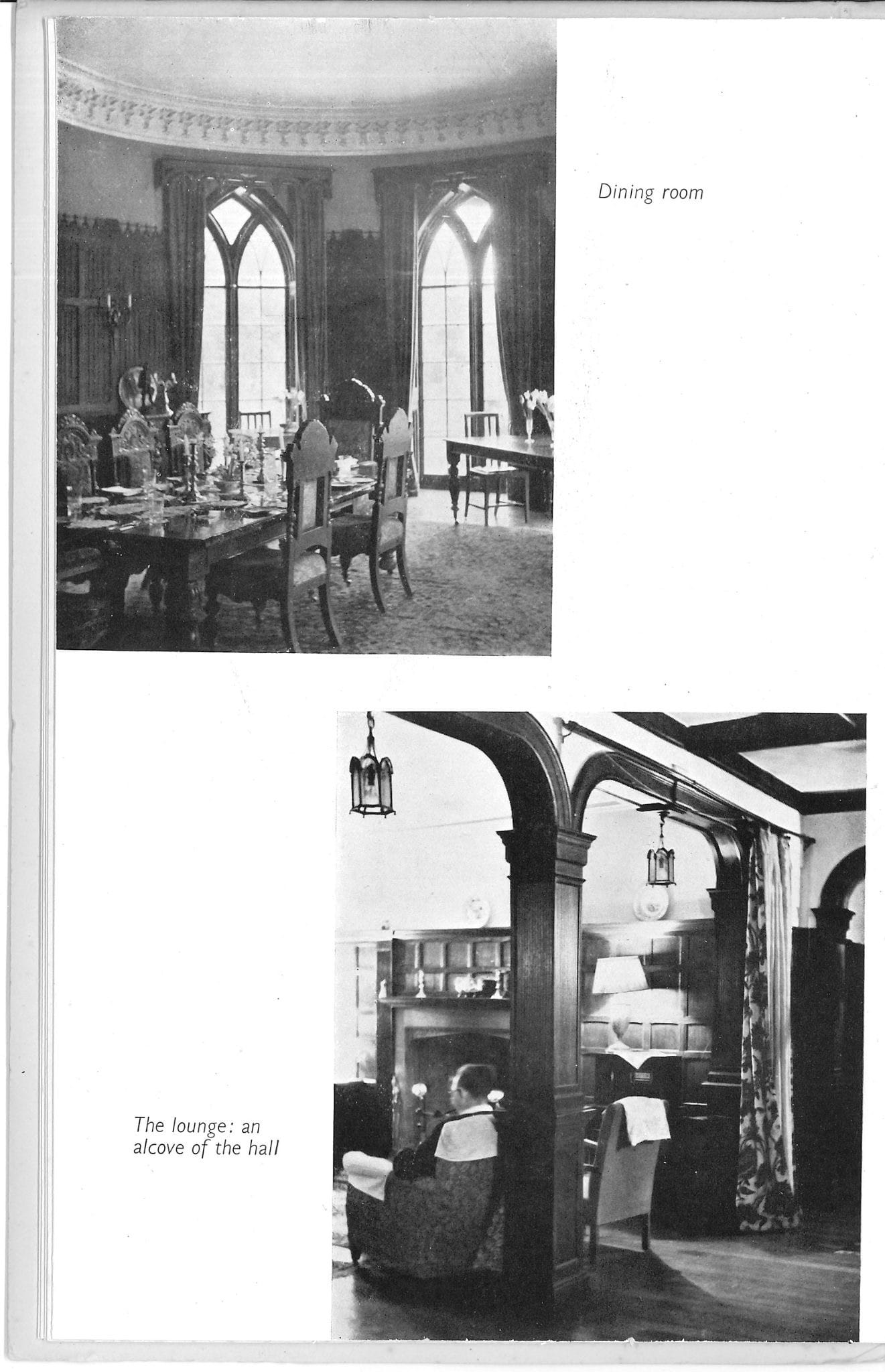
An early booklet about the school has images which feel startlingly familiar.
An outward-facing intentional community?
The house is a major feature, but also a financial ball-and-chain. What is the point of Braziers Park, beyond just conserving heritage, a building, and a legacy?
I attended the recent UK Communities Conference (hosted here in July) to find out. A lot of communities were founded about 50 years ago, and some are now struggling with renewal. However, there is renewed interest in forming and joining communities. They vary in their shared goals, commitments and locations, from urban co-housing to rural projects reconnecting people with land and food. Some seem like a reaction against the modern world, but they also embody a positive desire to live more intensely and more consciously. They are often attempts to reverse contemporary alienations from land, food, work, and one another.
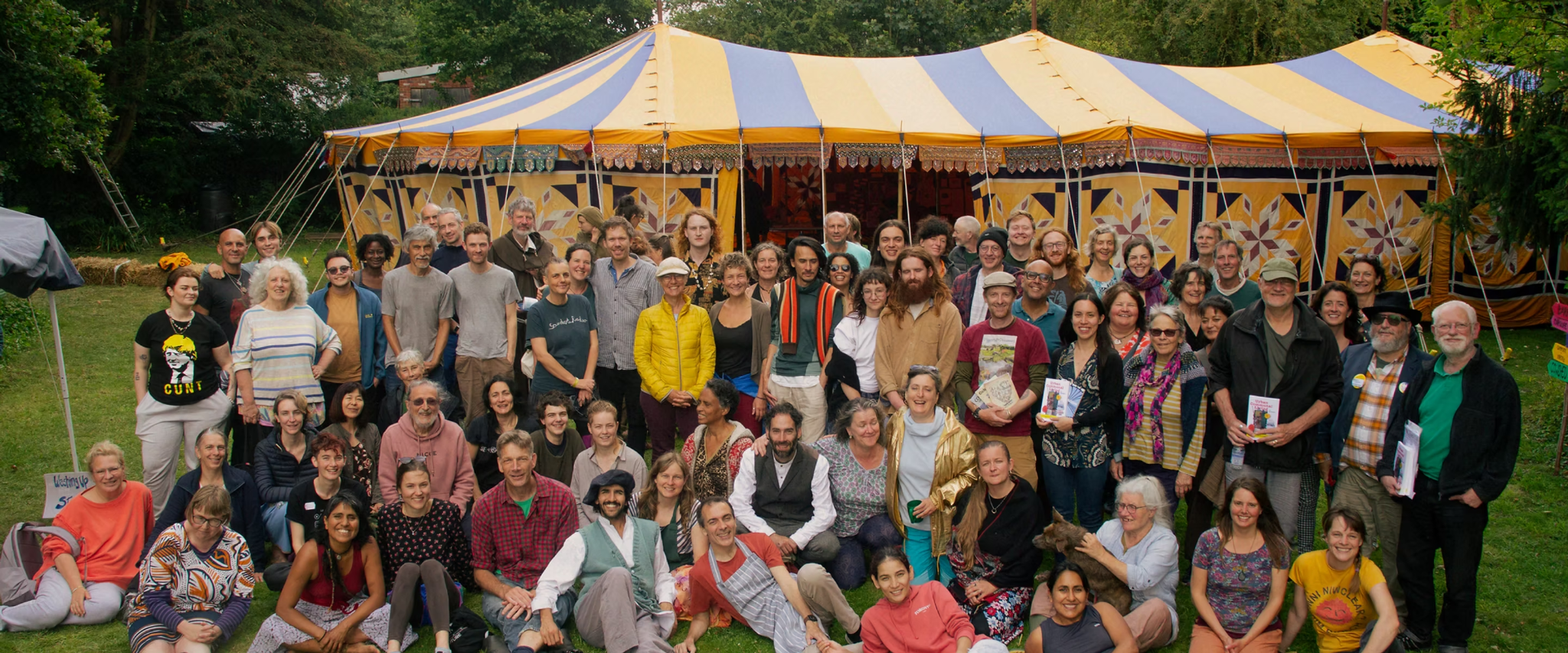
Braziers Park is a bit unusual. It’s a little older, and it’s also an intentional community which faces outwards. We host a bewildering array of events over each year, and also going back into the past. Braziers has been something between a soil bed, petri dish and social incubator for a long-running artists workshop, an international film festival, a vibrant cultural festival, and so much more…
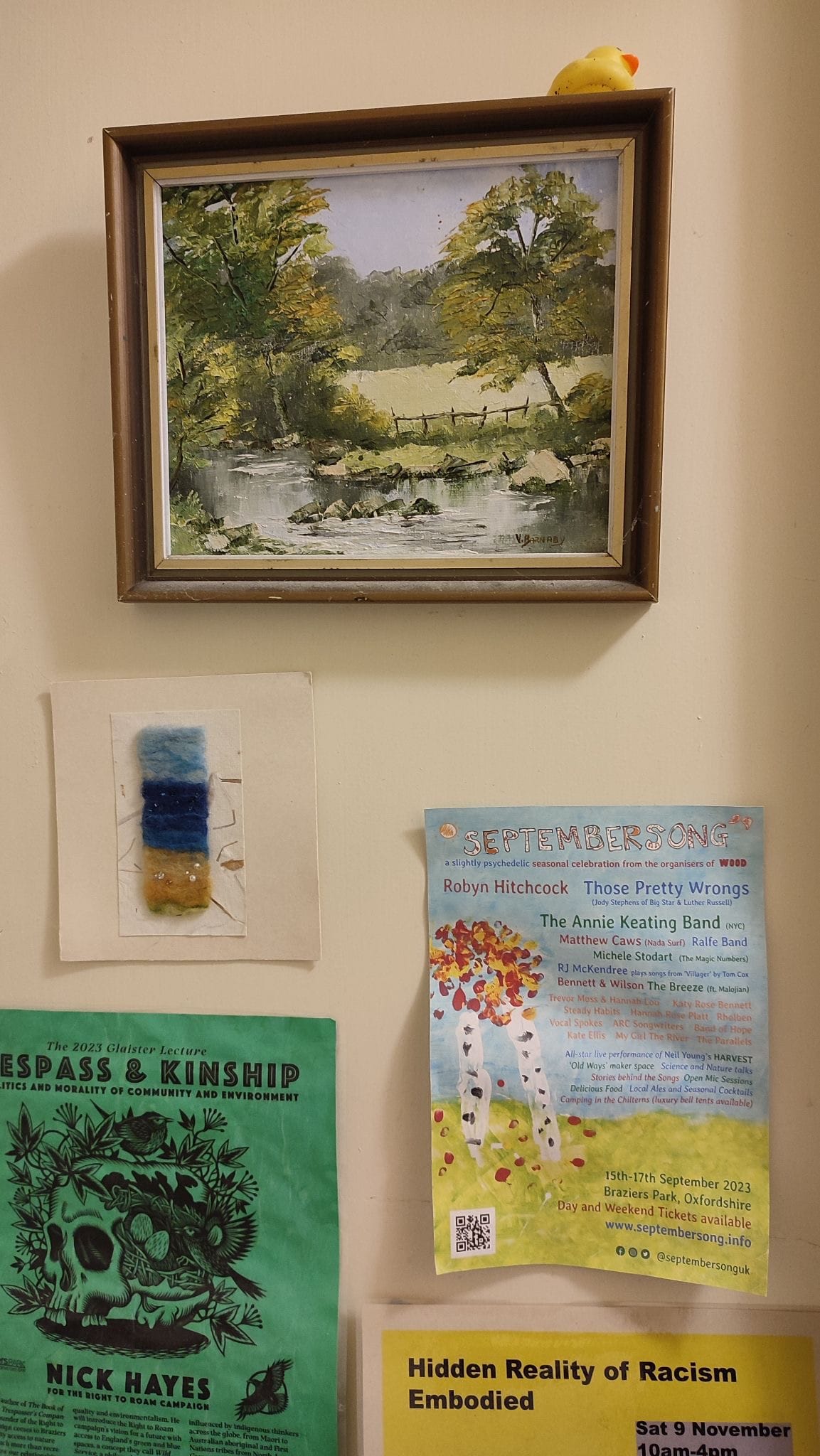
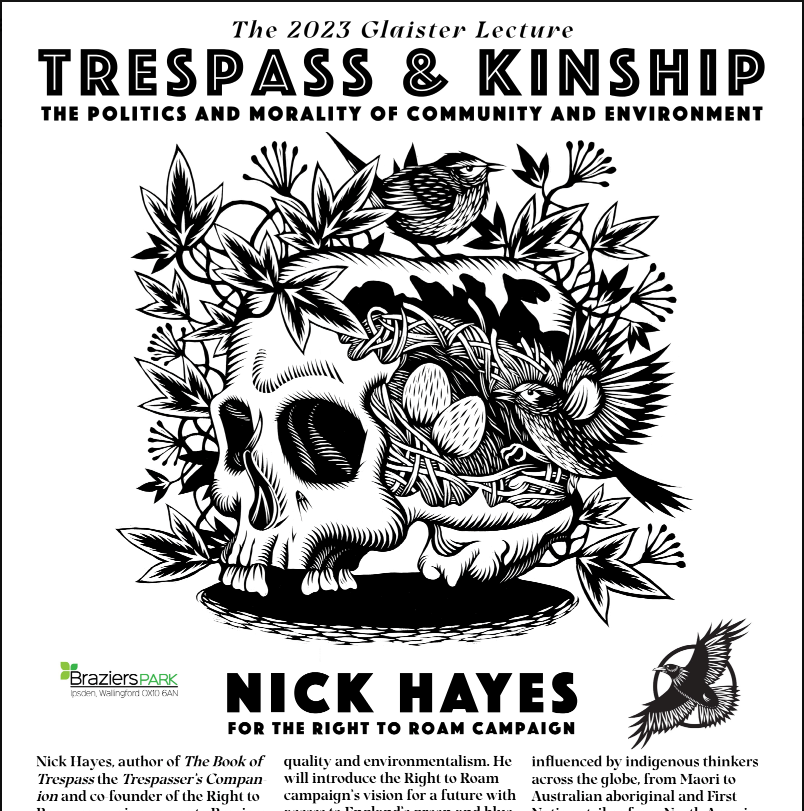
Nick Hayes is a powerful voice in the recent film Our Land about land ownership and access; we’re hoping to screen it at Braziers Park in the near future. I accidentally found out Nick gave our main annual lecture in 2023, because I noticed a dishevelled poster in the corner of an obscure bathroom.
Sometimes the world arrives at Braziers in other ways as well. The community nearly collapsed during COVID, but seems now on a more positive trajectory. This year we watched the green grounds wither up with trepidation. Our rolling chalky hillsides mean we have no natural water stores on site – an ancient and forgotten well dried up long ago. The drought revealed puzzling lines in the lawns, tracing possibly lost outbuildings. It also exposed our vulnerability to climate change.
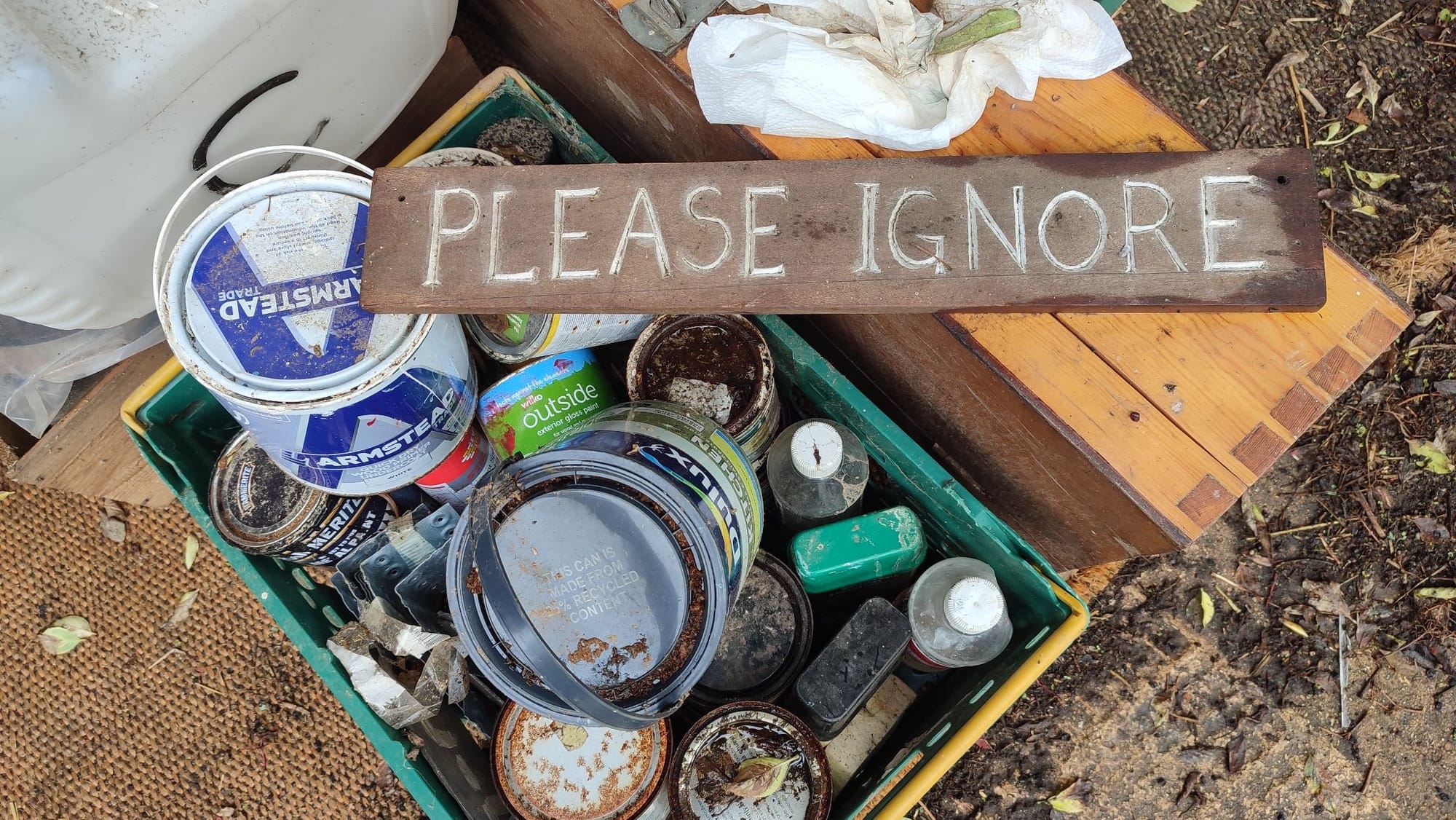
Braziers is now in a period of rethinking and renewal. Over the winter season, when we host fewer outside events, we will have a larger group of Academic & Creative Research (ACRE) residents staying with us than ever before. We are reviewing our next season of educational content, rooted in Satish Kumar’s ‘Soil Soul Society’ framework, and how we can integrate that into our connections with intentional communities. We aim to challenge deepening our internal engagement without becoming introverted. A retreat, but also an engagement, with the outside world and its growing challenges.
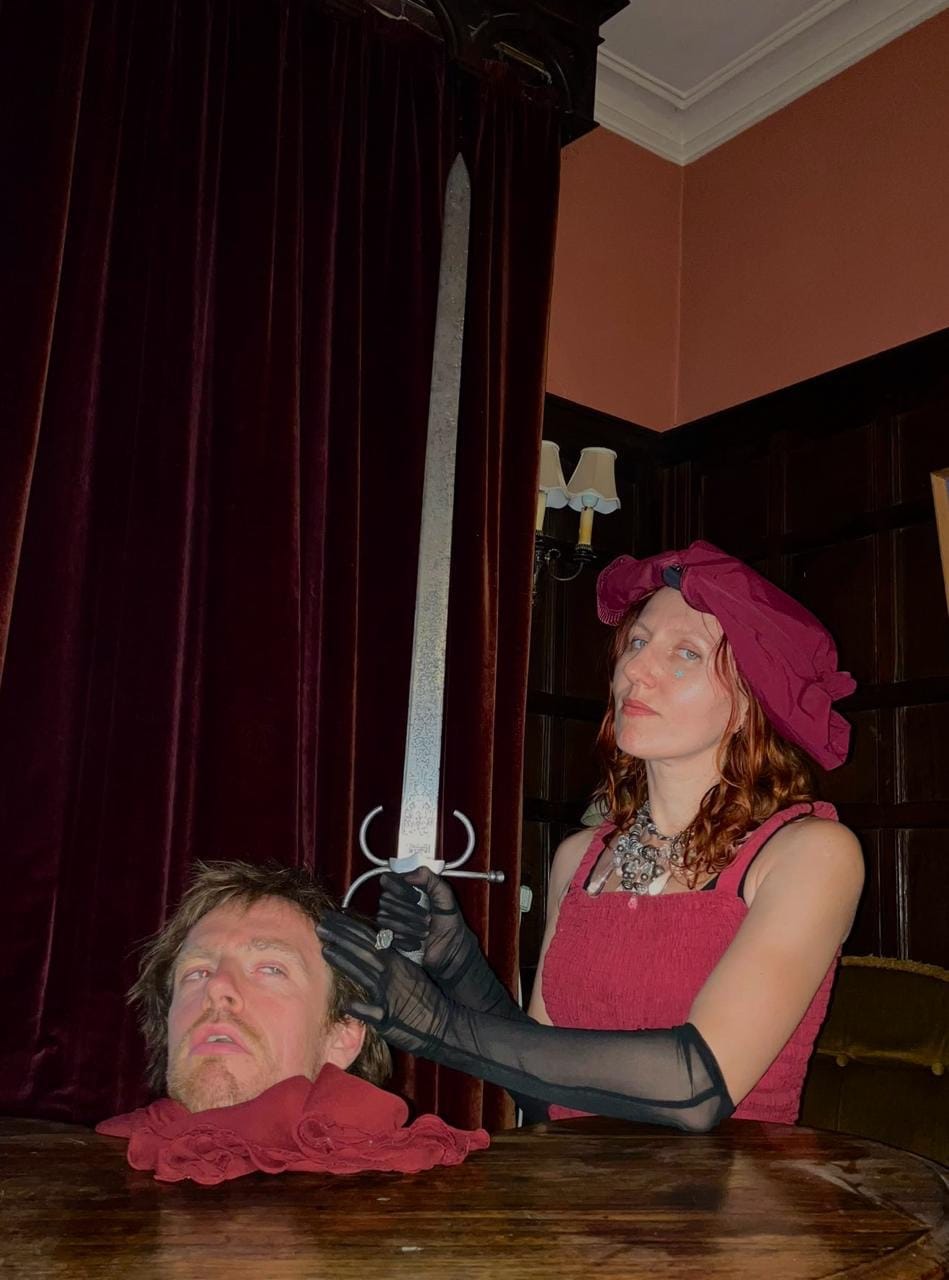
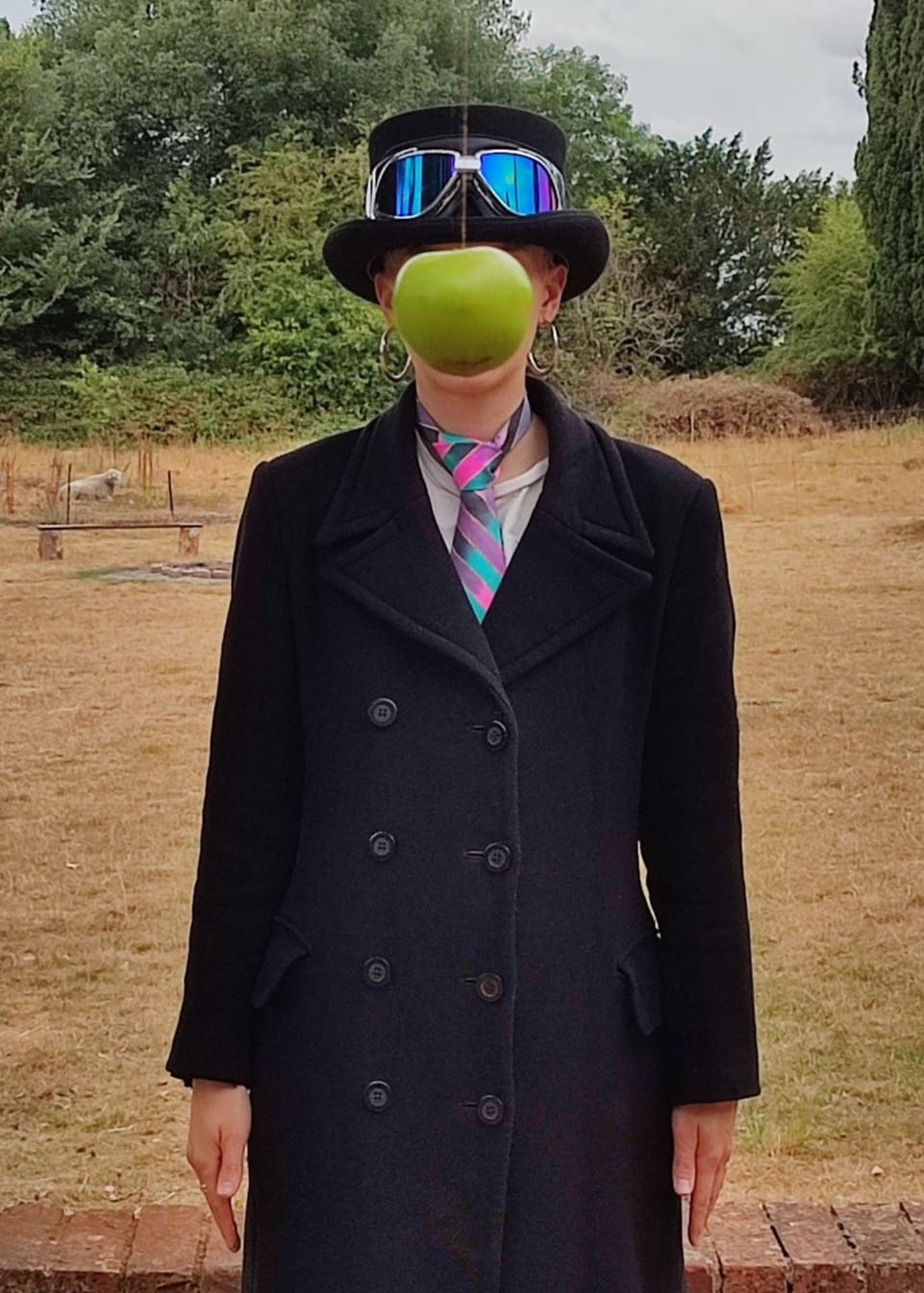
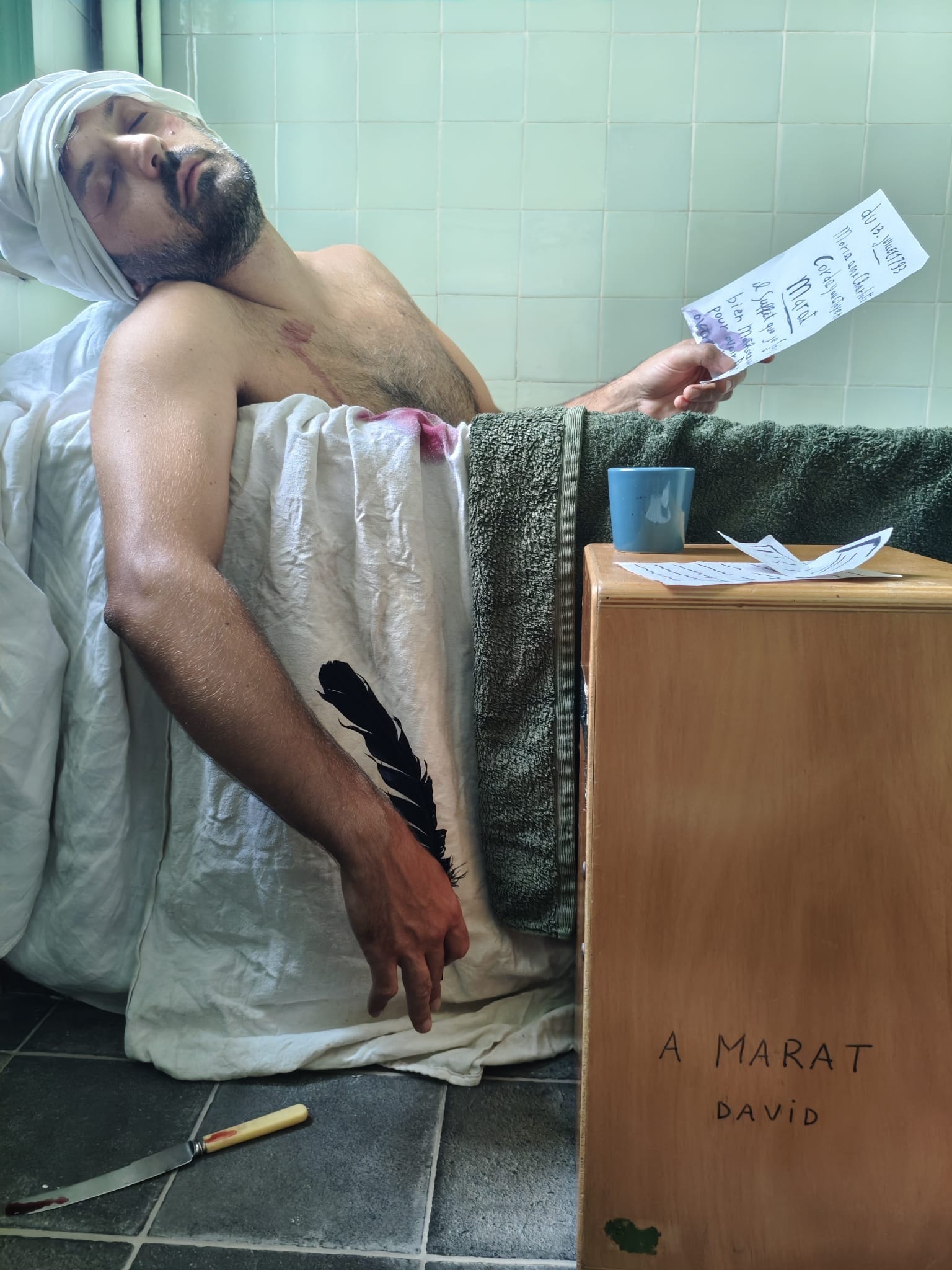
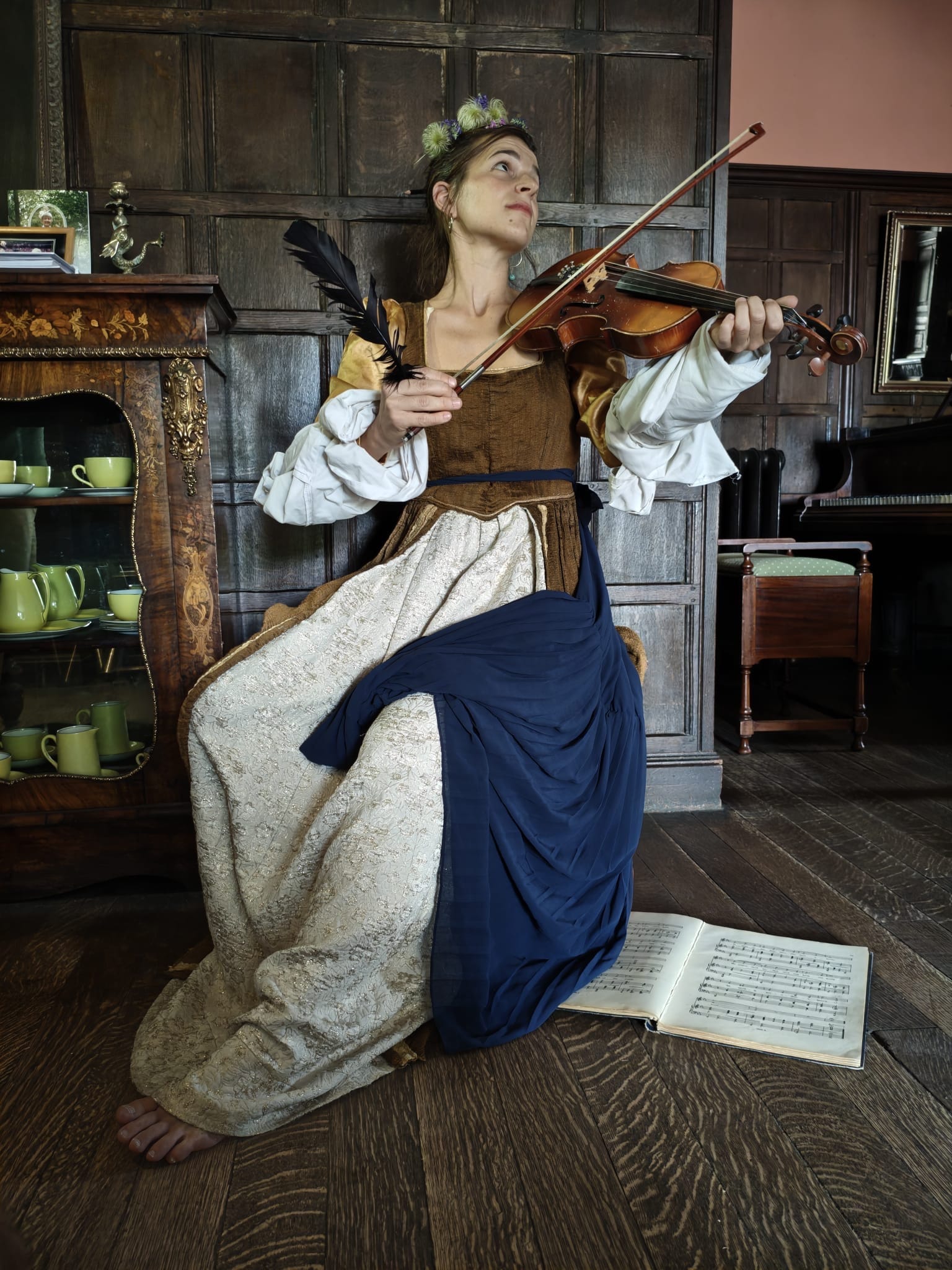
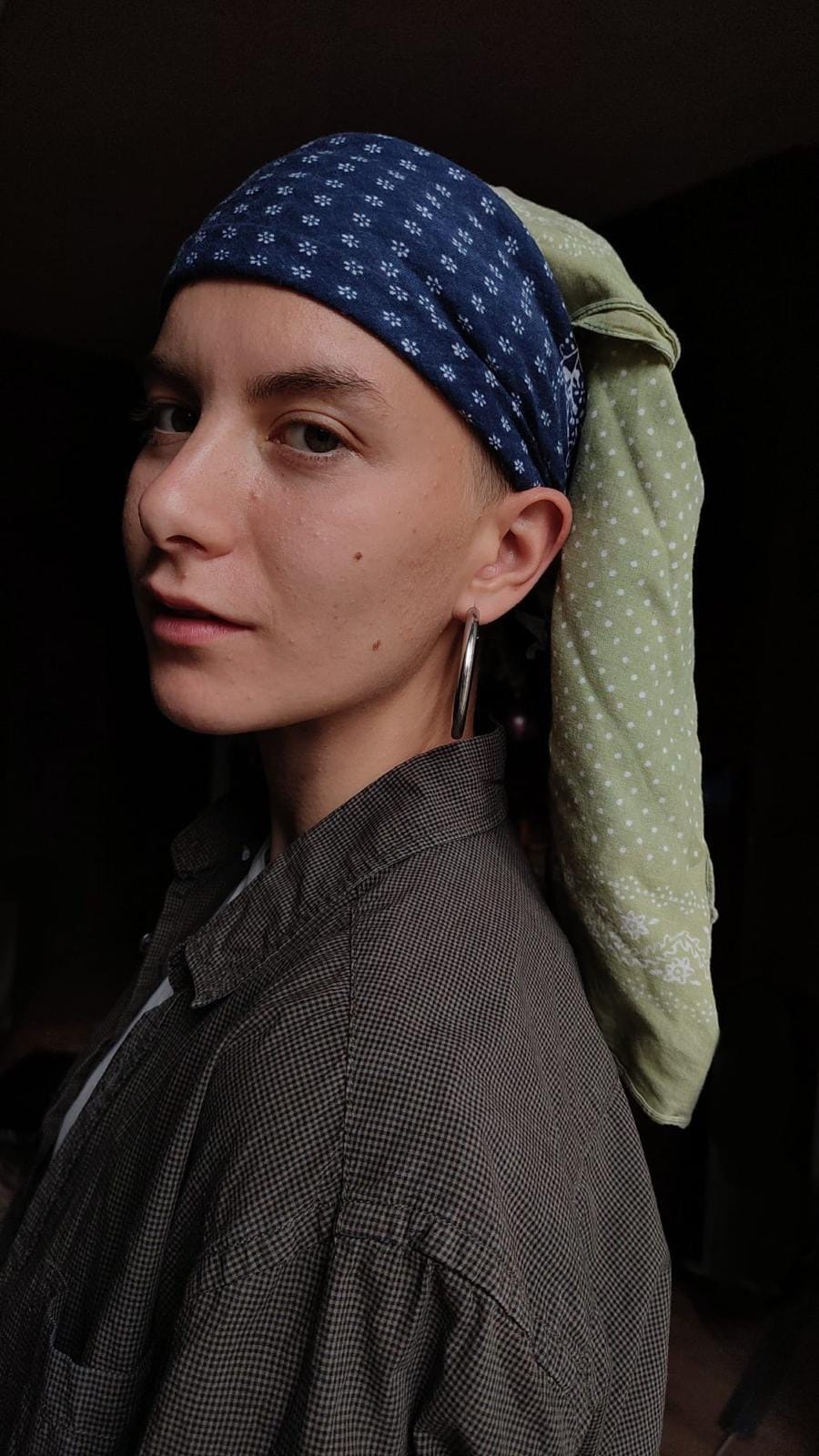
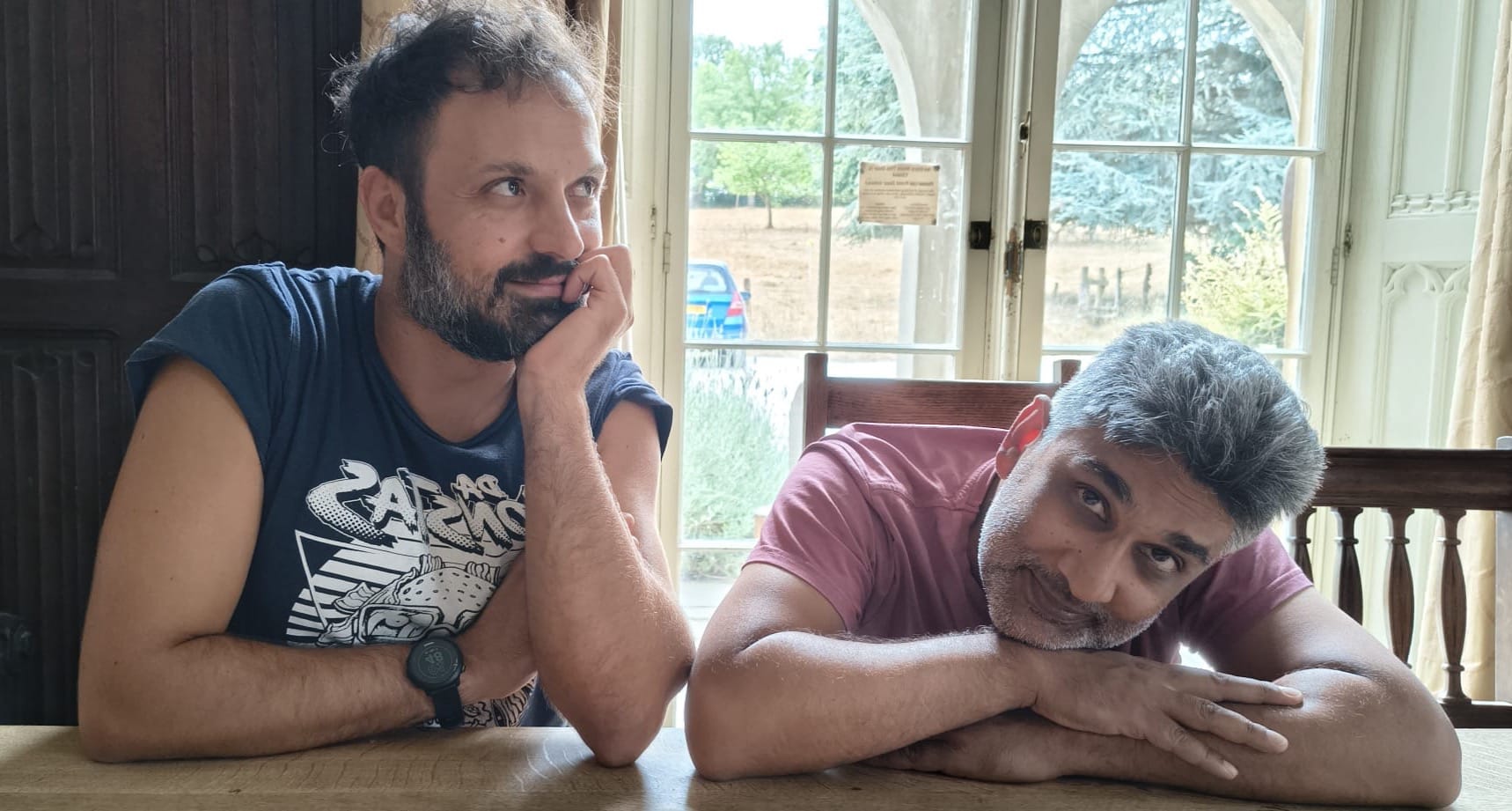
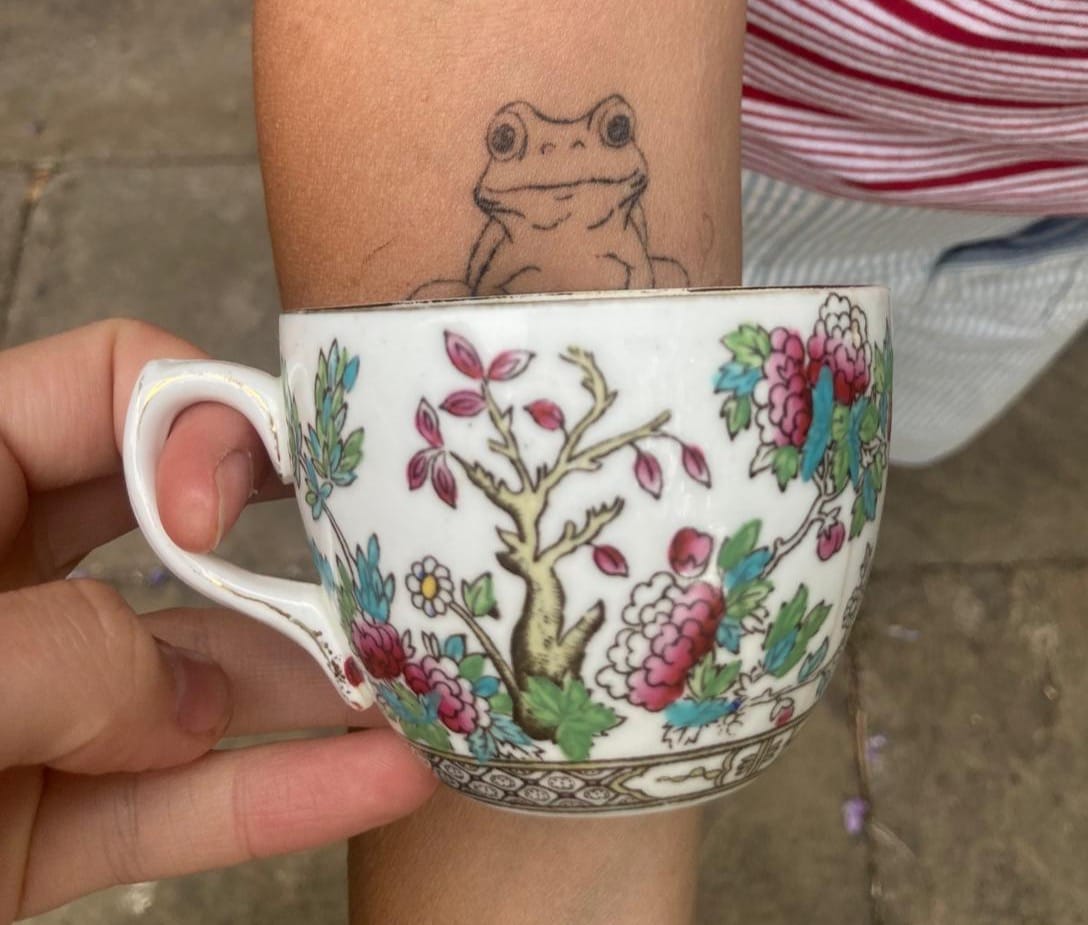
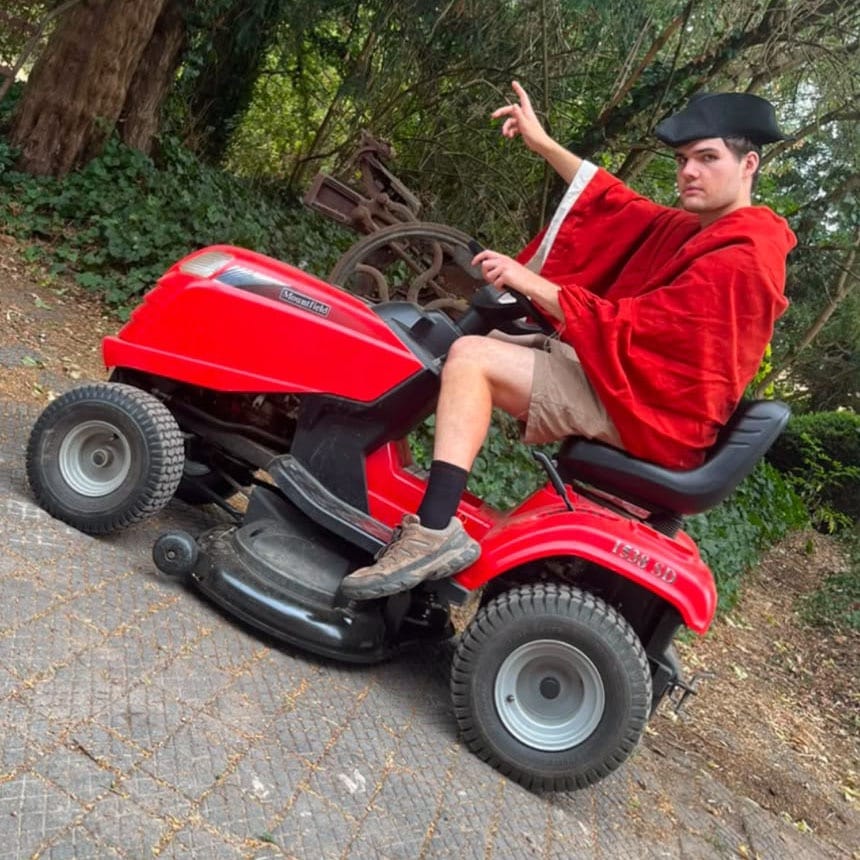
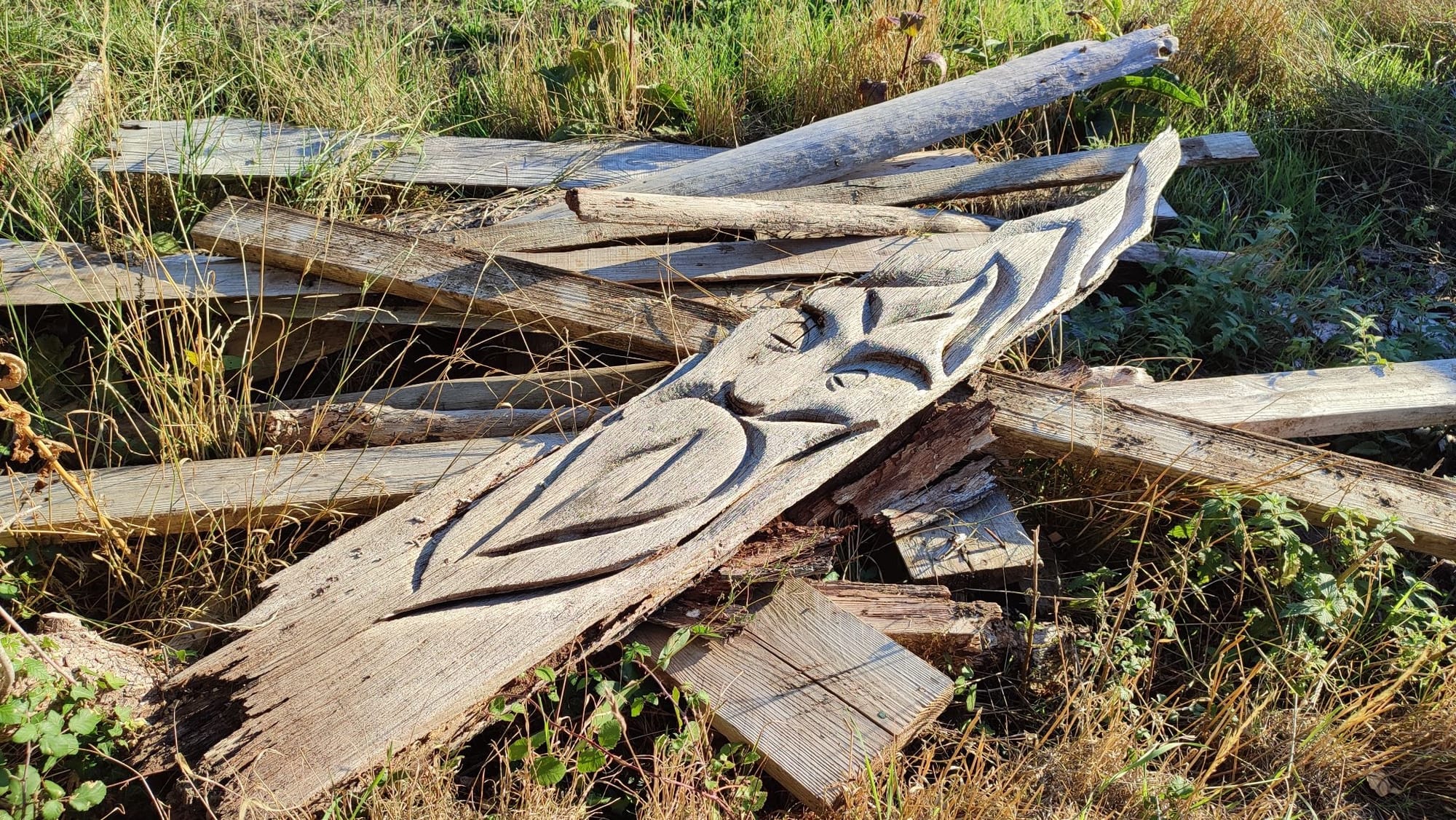
Is this art? (inspired by Jennie Walmsley’s recent ACRE research into fun)
One of our oldest community members, an uncle of Marianne Faithful, recently told me something Braziers-curious. There was an important card with a red heart pinned up, in a neglected corridor near our West Park entrance, where the weather often blows in. It was a tatty and forgotten thing I had not noticed before, carelessly pierced with many drawing pin holes. Apparently I needed to look after it. Apparently it was very important.
The envelope turned out to contain a handwritten letter from our only Russian volunteer, Polina. It is the most touching thing I have read so far about Braziers Park. In her own words:
“This place is alive, this house is alive.
This place is a hospital for lost souls and you know it.
It gives you what you need to have, what you want the most.
It treats everyone differently, and you know it.”
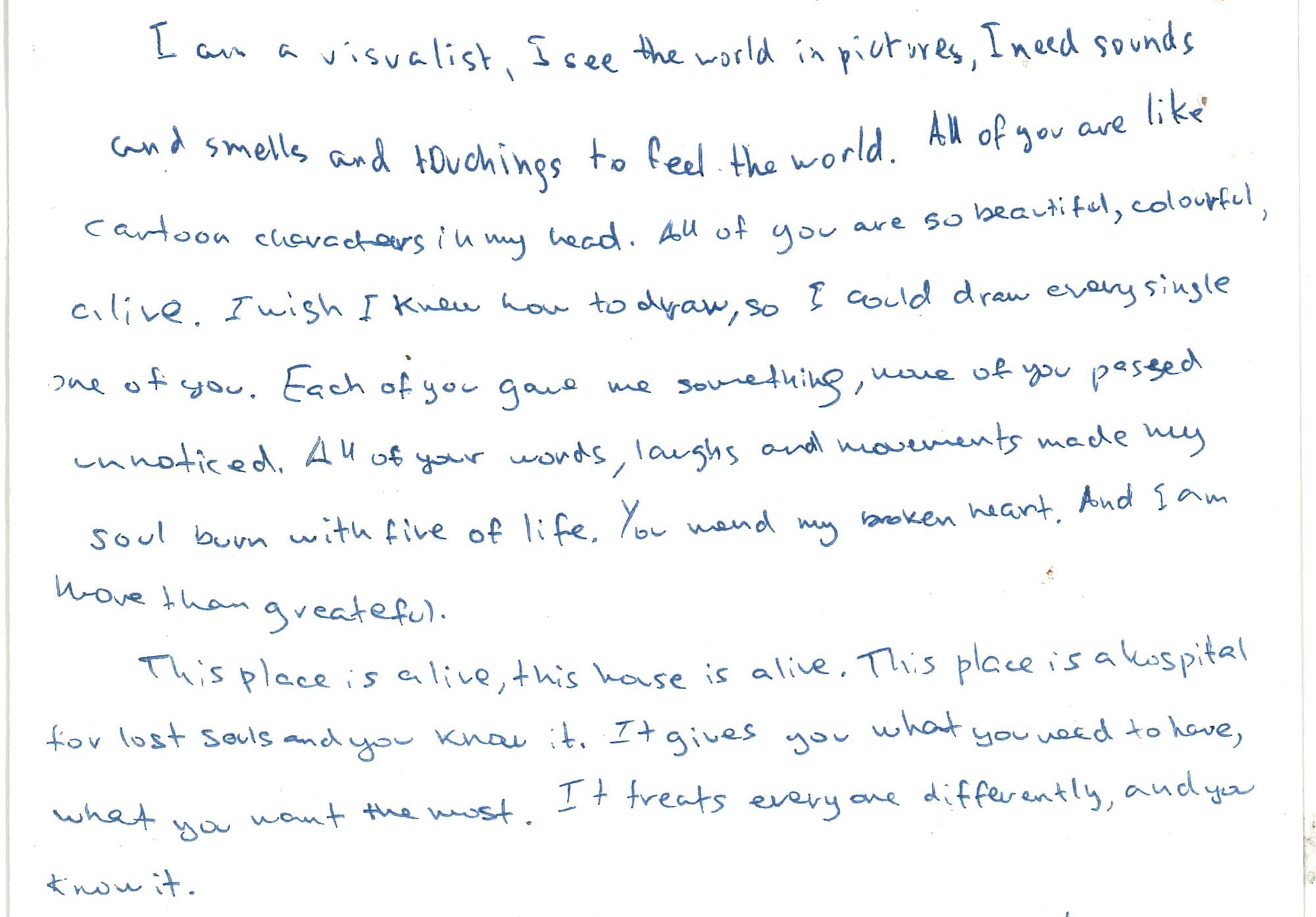
I have now taken down this letter to scan, before I put up a copy more prominently. I will then find a safe permanent home for the original in our archives.
Anand Madhvani is the Community Co-ordinator at Braziers Park. You can find out more about Braziers Park, including events, volunteering, research or work at braziers.org.uk.