
Exclusive: £10m of Government funding for Oxford was sent back
A £10m grant for infrastructure in north Oxford was returned to Government unspent – just as a safe cycleway on Woodstock Road, to be funded by a very similar Government grant, was cancelled due to a £10m shortfall.
The Government is funding road schemes across Oxfordshire including the A40 to Witney, the new Didcot relief road and Thames crossing, and local improvements in Banbury, Kidlington and elsewhere.
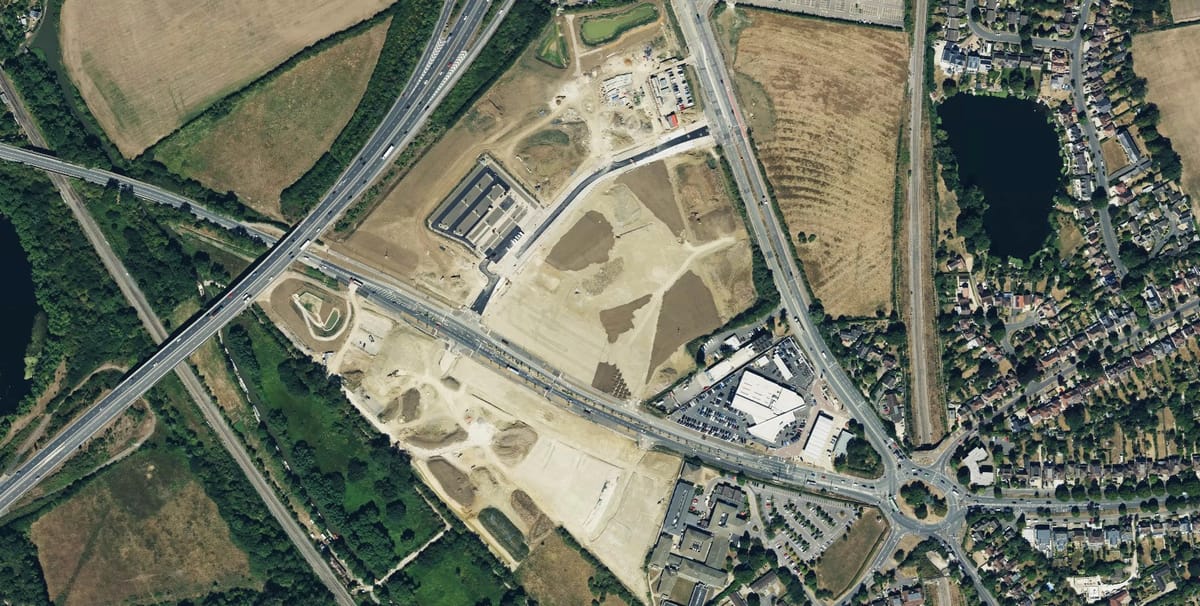
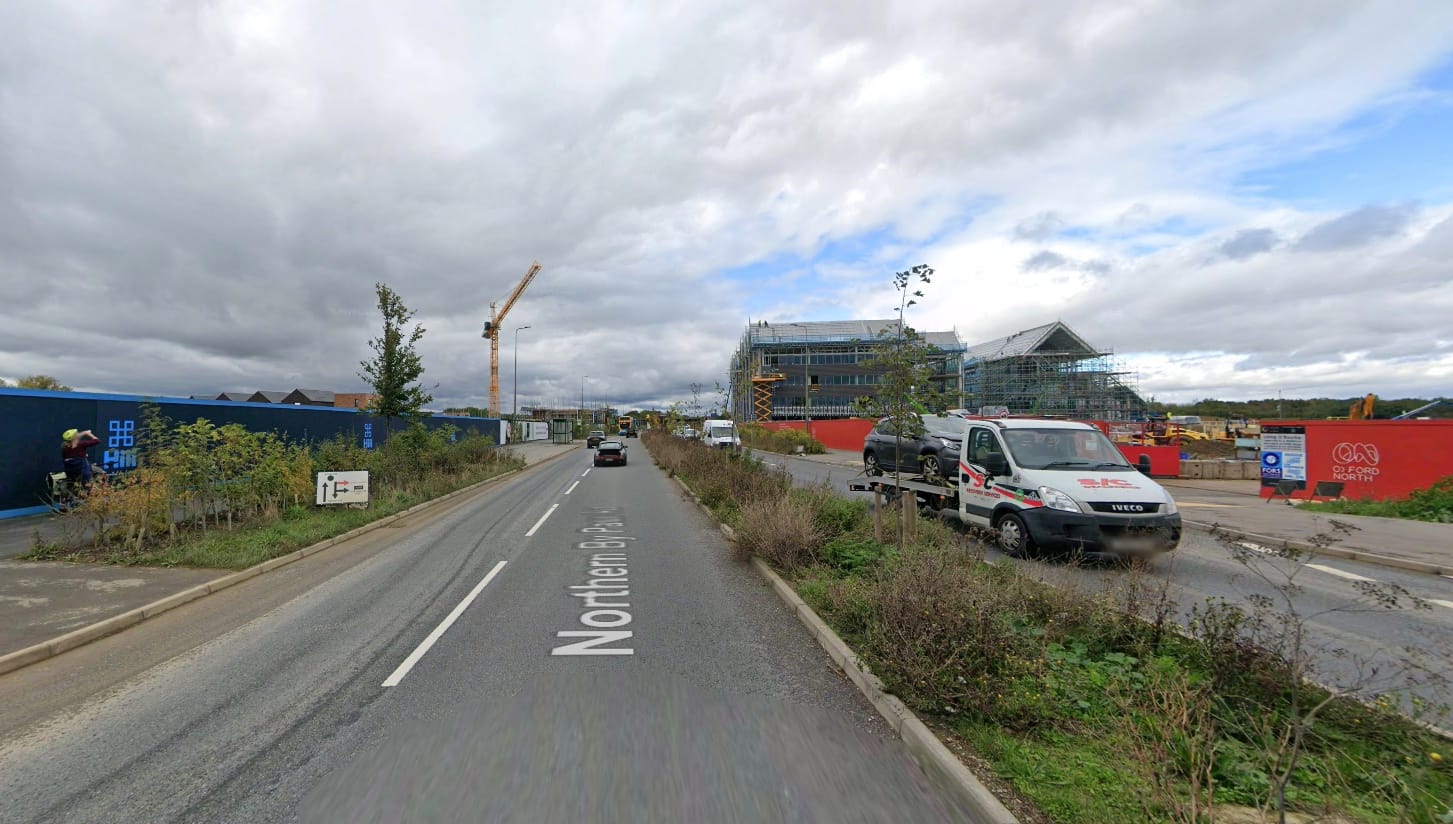
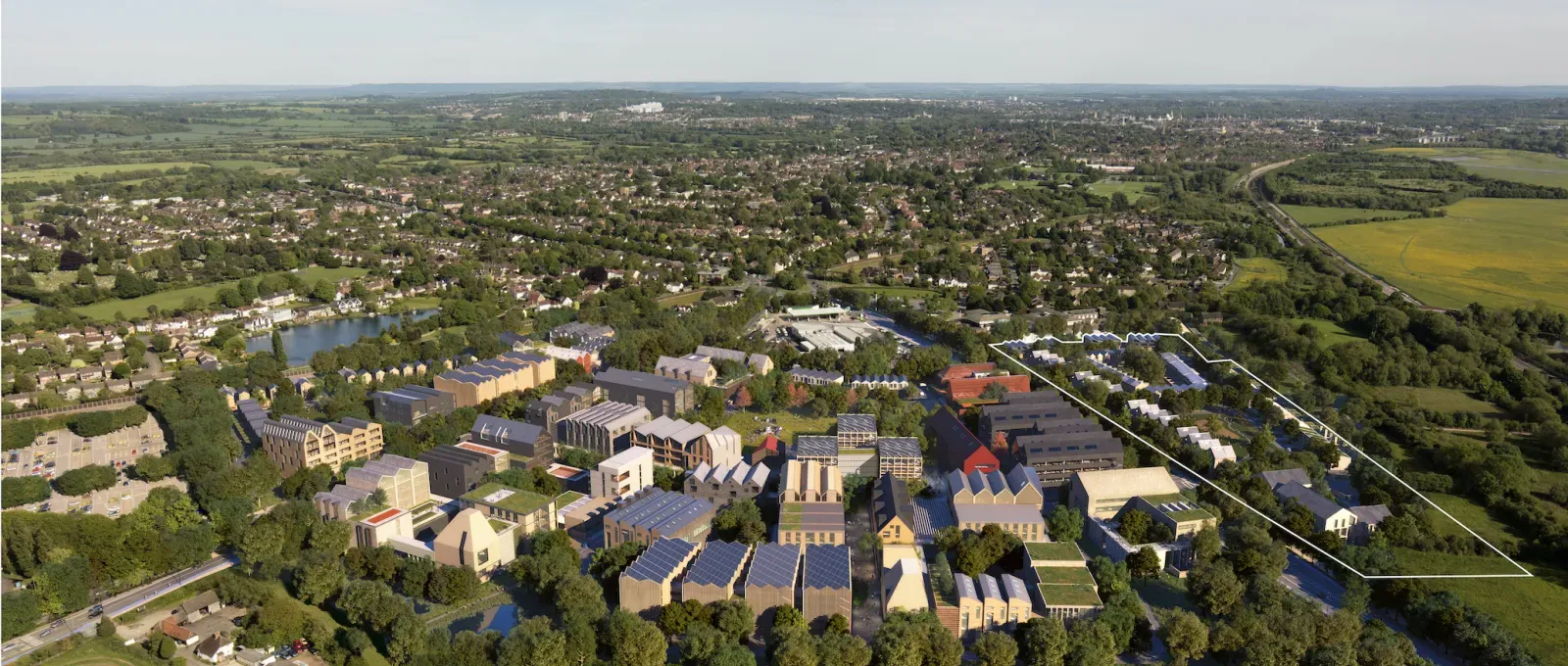
It had allocated £10m for roads, cycleways and other infrastructure at Oxford North, the new office and residential development on the approaches to Wolvercote Roundabout. But differences between the college-owned developer and Government agency Homes England led to the £10m being returned largely unspent after five years, with the developer funding the works itself.
At the same time, Oxfordshire County Council was forced to cancel a £12.5m plan for a Dutch-style protected cycleway along Woodstock Road – just 300m from Oxford North, and the key route between the development and the city centre. The funds were reallocated to other projects around the county that had gone over-budget.
Yet the Clarion has learned that information about the unspent Oxford North funding was deliberately withheld from Oxfordshire County Council – and there is no evidence of any attempt to reallocate the £10m from one Homes England-administered pot to another, so that it could be spent on Woodstock Road’s cycleway or any other projects.
A tangled web
The web of funding behind Oxfordshire's biggest developments is bewildering, and Oxford North is no exception.
Ultimately Oxford North is a commercial development. Its parent company is owned 50% by Thomas White Oxford (the development arm of St John's College), and 50% by two commercial financiers (a Canadian pension fund and developers Stanhope).
Any development of that scale comes with obligations. Some are policies imposed from above, principally the level of 'affordable' housing required. Others are to mitigate inevitable impacts on the surrounding area. Here, that means roads, the busy A40 and A44 that pass the site.
Often, the scale of these obligations goes beyond what the developers believe is economic. Several Oxfordshire councils have exempted the biggest housing schemes (“strategic sites”) from any community contributions at all, for this reason.
Oxford North was not so pressured. With a developer commited to “positive social impact”, community contributions were paid on time and in full. But Thomas White Oxford had concerns about funding both new infrastructure and affordable housing.
"It has always been TWO’s stated intention to provide a level of affordable housing of at least 25%. The limit to providing more is simply the substantial cost of investment into power, utilities, and public space, alongside the infrastructure improvements to the A40 and A44 that people who live and travel in the area know are vital, and for which public funding support is now available."
25% affordable housing is well below the 50% expected in Oxford. But, as the developers explained, “public funding support” could help them increase it.
“Following the viability appraisal process, we are able to provide both the infrastructure improvements and an affordable housing level of up to 30% […] The offer is subject to Oxford City Council’s £10m Homes England Housing Infrastructure (Marginal Viability) Funding (HIF) application.”
Enter central Government, which in 2018 put out a splashy press release about “unlocking” new homes. £10m was earmarked for Oxford North from a national pot called the Marginal Viability Fund, “a piece of infrastructure funding to get additional sites allocated or existing sites unblocked quickly”. It was administered by Homes England, the Government's housing quango. The £10m was conveniently the maximum available from the fund, but was roughly divided into “on-site roads £4.3m, utilities reinforcement £0.6m, utilities distribution £3.3m, surface water £1.8m”.
It wasn't the only Government sweetener directed at Oxford North. On 29 January 2015, Oxfordshire had been allocated £9.9m of Government funds, as part of the Oxfordshire Growth Deal. £5.9m of this was earmarked for “a package to improve transport in North Oxford and enable the Northern Gateway Development” (as Oxford North was then known).
In total, £15.9m of Government funds were allocated to help Oxford North on its way. As a result, the affordable housing was built at the higher level, totalling 35% of the 480 homes.
Return to sender
So why did the developers end up returning the £10m grant?
In March 2025, we spotted an obscure item on the Oxford City Council website. It set out the issue in sparse terms:
“Extensive negotiations ensued between the Council, the Oxford North Developer and Homes England, over the terms of the funding agreement. Ultimately the developer (Thomas White Oxford) were able to provide alternative funding for the infrastructure and therefore no longer require the HIF Funding. […] In the absence of an agreement with the developer to enable the spending to be transferred to them to deliver the infrastructure, it will now be returned to Homes England.”
Unable to find out any more through official channels, we lodged a Freedom of Information Act request with Homes England, asking for correspondence around this £10m. After delays caused by the “complexity” of our request, we received a 55-page compilation of emails.
We requested correspondence concerning “the lack of applicability, lack of use, potential reallocation, and termination of HIF Marginal Viability Funding for Oxford Northern Gateway”. The released correspondence began in July 2022 and continued until 2025. Many of the emails were heavily redacted for commercial reasons, but we have identified the key points.

In September 2022, more than four years after the £10m was first awarded, a representative of developers Thomas White Oxford wrote:
“We have been working with OCC and (redacted) from your office at Homes England on the HIF grant for the 500 homes but after more than 24 months of work on the Agreement there are a couple of significant issues outstanding. We have proposed a solution to the wording of these sections that seeks to protect our shareholder St Johns College , however we have not been able to make any progress over the last few months.”
[HIF is Housing Infrastructure Fund, the overarching scheme that includes Minimum Viability Funding.]
Fast forward to June 2023 as construction gets underway. An internal Homes England memo showed that contractual arguments were continuing:
“Claims are held up by the need to conclude the Deed of Variation, which has been significantly delayed due to the Council and site owner (TWO) raising new contractual issues relating to the interpretation of the original HIF GDA [Grant Determination Agreement] and its alignment with the signed S106 Agreement. Senior level meetings between Homes England, Oxford City Council and TWO are ongoing - progress is being made with TWO currently tasked with providing relevant evidence to demonstrate no ‘double counting’ of funding for the HIF infra works – however ongoing issues also relate to COT and land.”
These proved to be irreconcilable differences. Soon after this, Thomas White Oxford concluded they could not accept the funding. A Homes England email on 1 November 2023 briefed their Chief Executive, Peter Denton, on an upcoming visit to Oxford:
“Homes England, the City Council and TWO have been in discussions for many months following Homes England’s queries around the structure and funding arrangements between TWO and its JV, leading Homes England to conclude full repayment of the grant would be required.
“TWO took the matter to its Board recently and concluded it did not make commercial sense for them to utilise the HIF grant. The City Council has therefore verbally indicated that it will seek to withdraw the scheme from the HIF programme. The scheme is currently on-site and will continue to proceed in full without the HIF grant.”
Passing up £10m of funding seems remarkably generous, but Oxford North is a £700m project. In that context, the lost money is merely a 1.5% increase in project costs.
Meanwhile, on Woodstock Road…
Woodstock Road is the main artery connecting Oxford North to the city centre. With Oxford North envisaged as a science campus, drawing on Oxford University’s pre-eminence in research and technology, reliable, safe, non-congested connections to the city are essential.
The cycle path along Woodstock Road is shared with pedestrians, narrow, inconsistent, bumpy, and frequently interrupted by side accesses. With Oxford North very much aforethought, Oxfordshire County Council drew up plans for safe, protected, Dutch-style cycle tracks – better than anything yet installed in Oxford. As they stated in their justification for the proposed cycleway:
“An increase in users travelling along the corridor as a result of wider planned growth across north Oxford is anticipated in future years. The current arrangement of the Woodstock Road means that currently many people have a poor journey experience when using the corridor… There are a number of connected highway projects including […] independent developer schemes including Oxford North.”
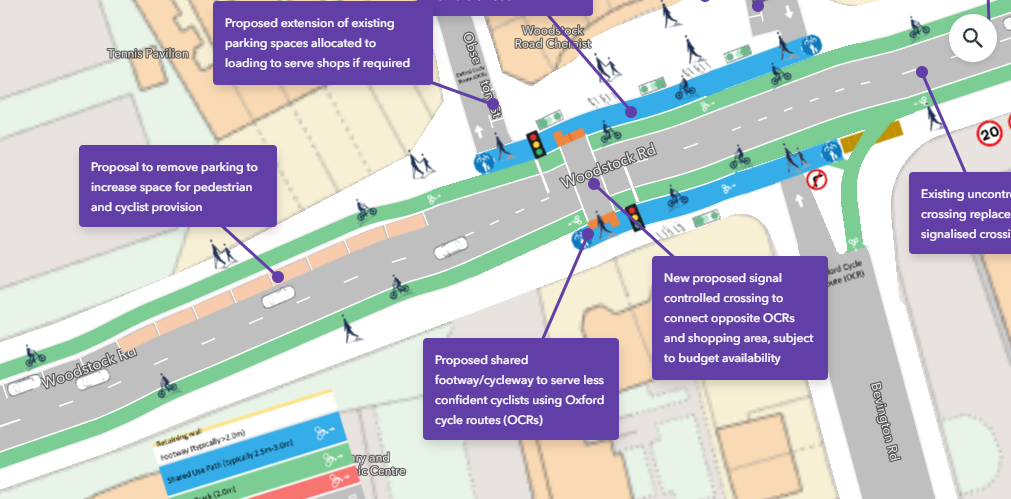
The £12.5m cost was to be covered by another tranche of Government funding, the Housing & Growth Deal, signed in November 2017. The package included several highway schemes across Oxfordshire, including a new bus lane on the A44 south of Yarnton, junction improvements on the A40 at Witney, and the Benson Relief Road. Homes England proudly boasted of their role in this deal.
But as construction inflation began to bite, the menu was trimmed. As we reported in a long read in 2024, the Woodstock Road cycleway was initially dropped entirely with funding reallocated to five other schemes around Oxfordshire, all primarily car or bus infrastructure.
After an outcry, a Woodstock Road scheme reappeared, but as a severely reduced £3.2m programme. Most of this was spent on “side-road entry treatments”, which benefit pedestrians but do not improve cycling. Good for local residents, but not for Oxford North, which is three miles from Carfax; few people would walk this every day. Even council officers conceded “the proposal falls short of long-term aspirations”.

Could the money have been reallocated?
The original planning application for Oxford North expressly set out what would happen in case there was surplus funding – and improvements to Woodstock Road were high on the list.
A 120-page planning document for Oxford North was drawn up by City Council planners, at a time when the £10m Marginal Viability Funding had already been lined up. It expressly stated (emphasis ours):
“Through pre-application discussions, officers at the City and County Councils have sought to identify the infrastructure needed to support the development into that which must be guaranteed and that which, subject to review, should be provided. […] These items of unfunded infrastructure are recorded below so that, should additional funding become available from this development, from other developments within the AAP boundary, surplus CIL monies, or the recirculation of grant, these items can be considered for funding:
“[…] contributions to off-site footpath and cycle links including cycle routes on Woodstock Road, canal towpath improvements, enhancement of Joe White’s Lane, cycle route improvements to Oxford Parkway via Five Mile Drive and Banbury Road”
Could the £10m have been allocated elsewhere? Homes England says this would be “unusual” but not impossible. Reporting discussions with Oxford City CouncIl, they wrote:
“The Council has indicated that it will seek to retain grant received to date (but not yet passed through to its development partner Thomas White Oxford who are delivering the scheme) for further housing delivery by the Council. Approval of such would be unusual, but no commitment or discussion on this point has been had to date.”
The Woodstock Road improvements were directly intended to improve cycling between Oxford North and the city centre. If it was possible – though “unusual” – to reallocate the grant to further housing schemes in Oxford, it must be possible to reallocate it to a nearby, connected scheme in a project substantially administered by Homes England. After all, Woodstock Road lost its funding precisely because it was reallocated to other schemes around Oxfordshire.
Indeed, just this week, the City Council’s Liberal Democrat opposition is proposing that Government should intervene to reallocate another part of the grants awarded to Oxford. They say that the £5.4m cost of the Oxpens Bridge over the Thames could pay for other projects, including “resurrecting the substantive scheme for Woodstock Road improvements to mitigate the effect of housing development to the north” – that is, Oxford North.
Oxpens Bridge funding is no less complex, but a significant part of the project comes from the very same Marginal Viability Fund as the Oxford North £10m. The proposers of the motion, councillors Theo Jupp and Katherine Miles, also believe that such funding could be reallocated:
“Government has the option to repurpose the money for use in other active travel schemes and entrust the County Council to manage this. Government can and does vary the rules of the Deal from time to time. Thus far, Government has rightly prioritised the spirit and objectives of the Deal above the letter of the agreement.”
So why was this not considered for the Woodstock Road cycleway? One possible explanation is that Oxfordshire County Council, the body behind the Woodstock Road project, was deliberately kept in the dark by Homes England. Three separate items of correspondence show that information about the £10m was repeatedly withheld from the County Council:
“CONFIDENTIAL: Withdrawal of Oxford North MVF scheme from HIF programme (only discuss if Oxford City raise, as Oxfordshire County may not be aware).”
“Confidential Update (not to be discussed with Oxfordshire County Council as this is from Oxford City Council) – the Local Authority have verbally told HE this week that the scheme may withdraw from HIF programme as they don’t necessarily need the HIF grant.”
“Confidential note (not to be shared with Oxfordshire County Council) – Oxford City Council have informed HE that they may not need the HIF grant as they have received additional money for the scheme.”
Homes England were fully aware that the Woodstock Road scheme was being dropped. An Oxfordshire County Council document from June 2022, proposing “the removal of further funding from… Woodstock Road Corridor”, says “Officers are in regular discussion with Homes England and [Government department] DLUHC and will continue to work with them to agree the final programme.”
At the same time, Homes England should have known there was a possibility the £10m might not be spent on Oxford North. Discussions, after all, had been ongoing since 2020. By the time the County Council cabinet agreed to drop the Woodstock Road cycleway because “the funding to implement that comprehensive scheme is no longer available” (June 2023), the £10m funding was teetering on the brink: Homes England’s May 2023 email spoke of “significant delays”, “ongoing issues”, and “new contractual issues”.
But if Oxfordshire County Council was deliberately excluded from discussions about the £10m, reallocating it to Woodstock Road was unlikely to come up.
A right to reply
The Oxford Clarion asked Oxford City Council for comment. Unusually, we had not received one at the time of going to press, but our Freedom of Information request to Homes England actually included the reply that the council was intending to send us:
“In 2018 work on the viability of Oxford North was indicating that it would need financial support to enable the development to be delivered and meet requirements to provide affordable housing. Marginal Viability Housing Infrastructure Funding (HIF) was secured to provide key infrastructure to help unlock the development of the site and deliver homes and employment premises.
“Since the HIF funding was secured, the Developers Thomas White Oxford, have identified alternative funding to deliver the key infrastructure, whilst maintaining the same level of affordable housing. The HIF funding was therefore no longer required and as such the terms of the funding agreement were not met.”
We also contacted Homes England for comment but have not received a reply at the time of going to press. Thomas White Oxford indicated that they would prefer not to comment.
Lessons learned?
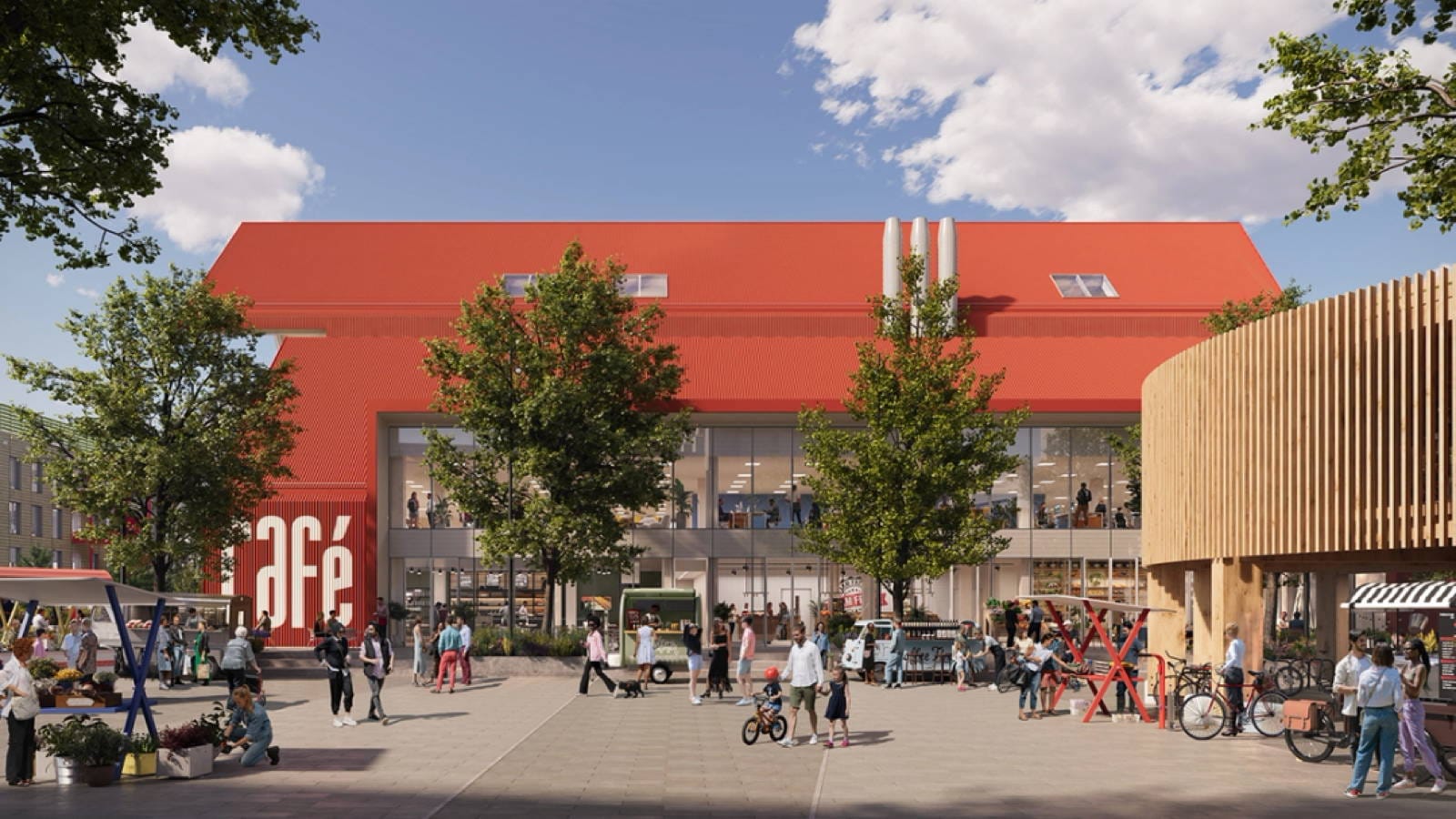
Oxford North is up and running, despite sending back the grant. 35% of homes were built as affordable, well above the 25% originally proposed. New tenants are moving in, and the Red Hall is a characterful, striking addition to Oxford’s skyline.
The £10m is lost to Oxford. Could this have been avoided? Two lessons stand out.
Government funding for infrastructure is a mess. Growth Deals, top-up Growth Deals, Housing Deals, Marginal Viability Funding. Demarcation between the Ministry for Housing, Communities & Local Government and Homes England is not clear. There could be no better illustration of the confusion than this remarkable email from January 2025, in which two civil servants try to find out what the Housing & Growth Deal was actually paying for:
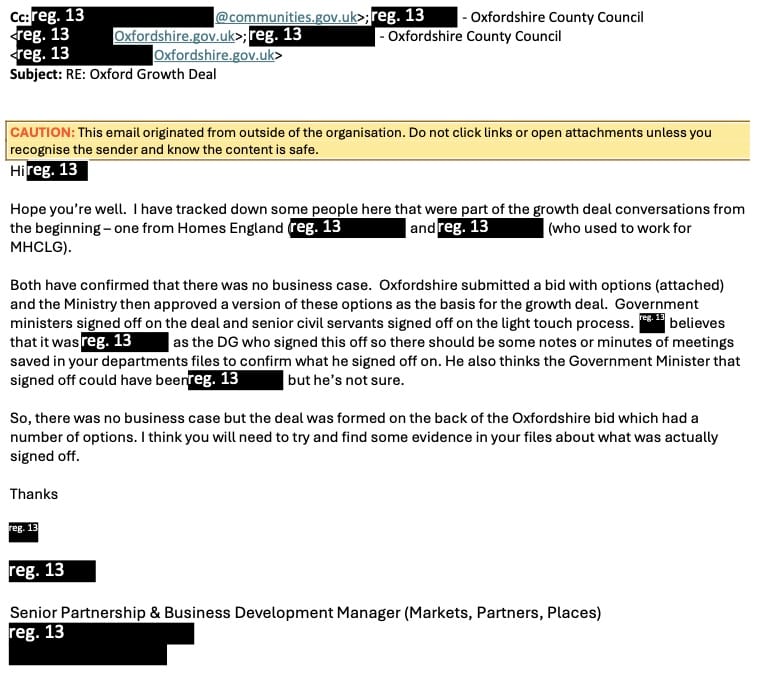
We have not seen many things more absurd than the Government department that gave £150m saying it is "not sure" who agreed that money, or for what.
Oxfordshire has too many cooks. Responsibility for these schemes lies with the City Council, or the County Council, or the Oxfordshire Growth Board (renamed twice, first as the Future Oxfordshire Partnership, now the Oxfordshire Leaders Joint Committee). The Oxfordshire Local Enterprise Partnership (which is now Enterprise Oxfordshire) is another player.
A proposed unitary council, merging City and County, should eliminate some of this confusion. But even then, we have our doubts. Along with unitary councils will come a new higher level body, a mayoralty covering the whole Thames Valley, responsible for transport and housing planning. Joined-up thinking will remain a pipedream if some decisions are being taken in Oxford, others in Reading, and Oxfordshire schemes are still subject to the whims of a remote funding body.
Among the roles of the press is to be provocatively naïve. The old hands will say, condescendingly, “you can't simply move money from one pot to another” – to which the journalist replies “why not?”. We exist to question these assumptions.
Because as the Clarion's investigations have found, reallocating funds was expressly anticipated in Oxford North’s planning documents. In a different context, it is still being spoken of today. There is, prima facie, no reason why the £10m sent back from Oxford North could not have funded the Woodstock Road cycleway. But this would have required not just political will, but also open communication – and as we have discovered, communications were deliberately kept closed.
There are no pantomime villains in this story. Thomas White Oxford, Oxford City Council, and Oxfordshire County Council have all done what was expected of them. TWO, indeed, have gone above and beyond by funding all the planned work without the £10m funding. Homes England perhaps come out less well, but are ultimately the instruments of a confused Government policy that prizes top-down intervention above joined-up local decisions.
Oxford now has a Growth Commission. Its chair, Neale Coleman, has authored a thoughtful interim report that lays bare the stresses of a fast-growing county, calling for close co-operation on infrastructure between the city and county councils. He told a December meeting that he had secured agreement for Homes England to engage more closely in Oxfordshire:
“Off the back of the interim report and conversations with the department and Homes England, I think I now have final agreement to get a significantly bigger Homes England team to come and work in Oxfordshire. We’ve had half a person – a very good person – but we’re now building that up to four or five people to really try to fill in some of the gaps there are in capacity.”
Top of their list will be Begbroke’s new Innovation District – a University-led development for 1,800 homes and an expanded science park, just 25 minutes’ cycle ride from Carfax. The route from the colleges to this Innovation District will be along Woodstock Road. It is not too late.