
Five challenges with Oxford gardens… and how to turn them into opportunities
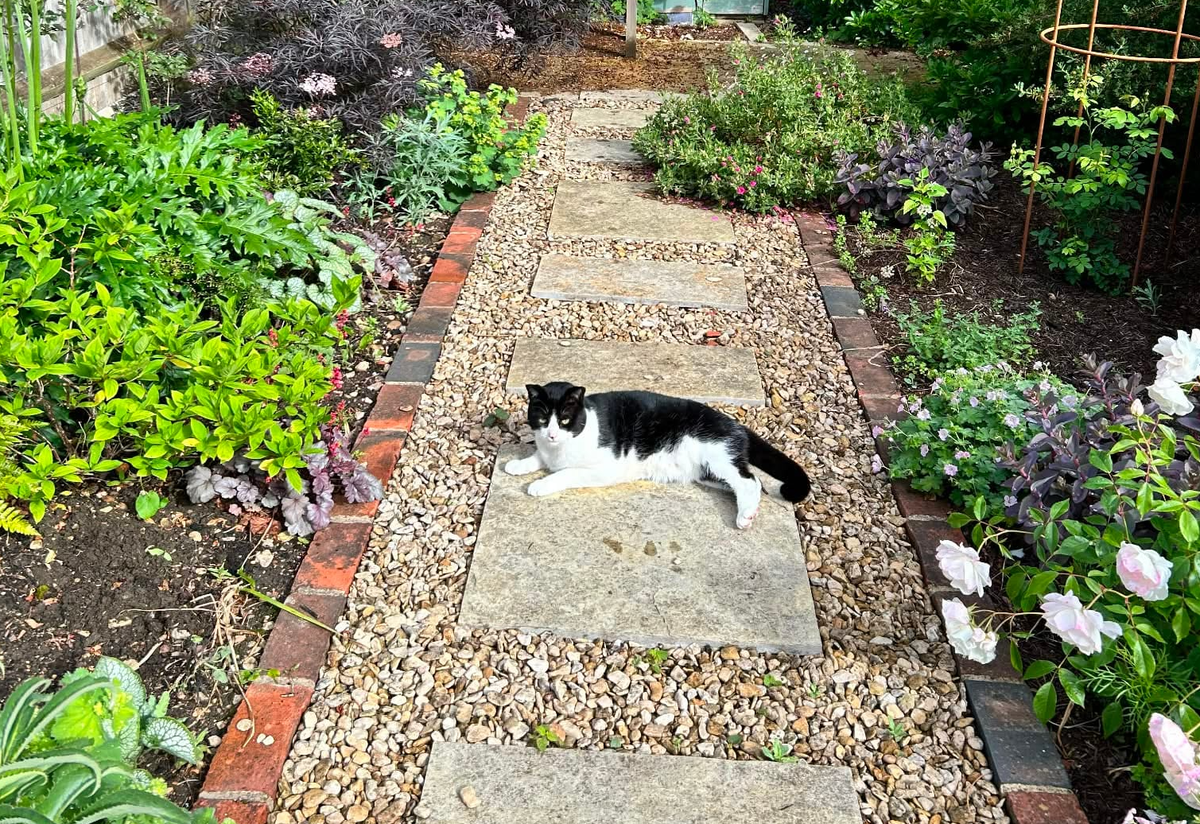
With the summer over, and the merciful reappearance of rain, our thoughts turn to gardens – as we move to a more outside-in lifestyle to accommodate the changing climate. We asked our resident horticulturist Amandine Lepers-Thornton for her thoughts.
I’ve lived in Oxford for over a decade but I really got to know Oxford gardens through my work as a garden coach. If you’ve read my previous articles for the Clarion, you’ll know how passionate I am about promoting the potential that green spaces have to make an impact in cities.
In garden consultations, I regularly come across specific challenges Oxford residents have with their garden. As a professional horticulturist, my mission is to help people make their garden work hard for them so that they get more enjoyment out of it. Part of that work involves overcoming common problems, which I want to share with you to help you make the most of your garden as an extension of your home.
Limited space
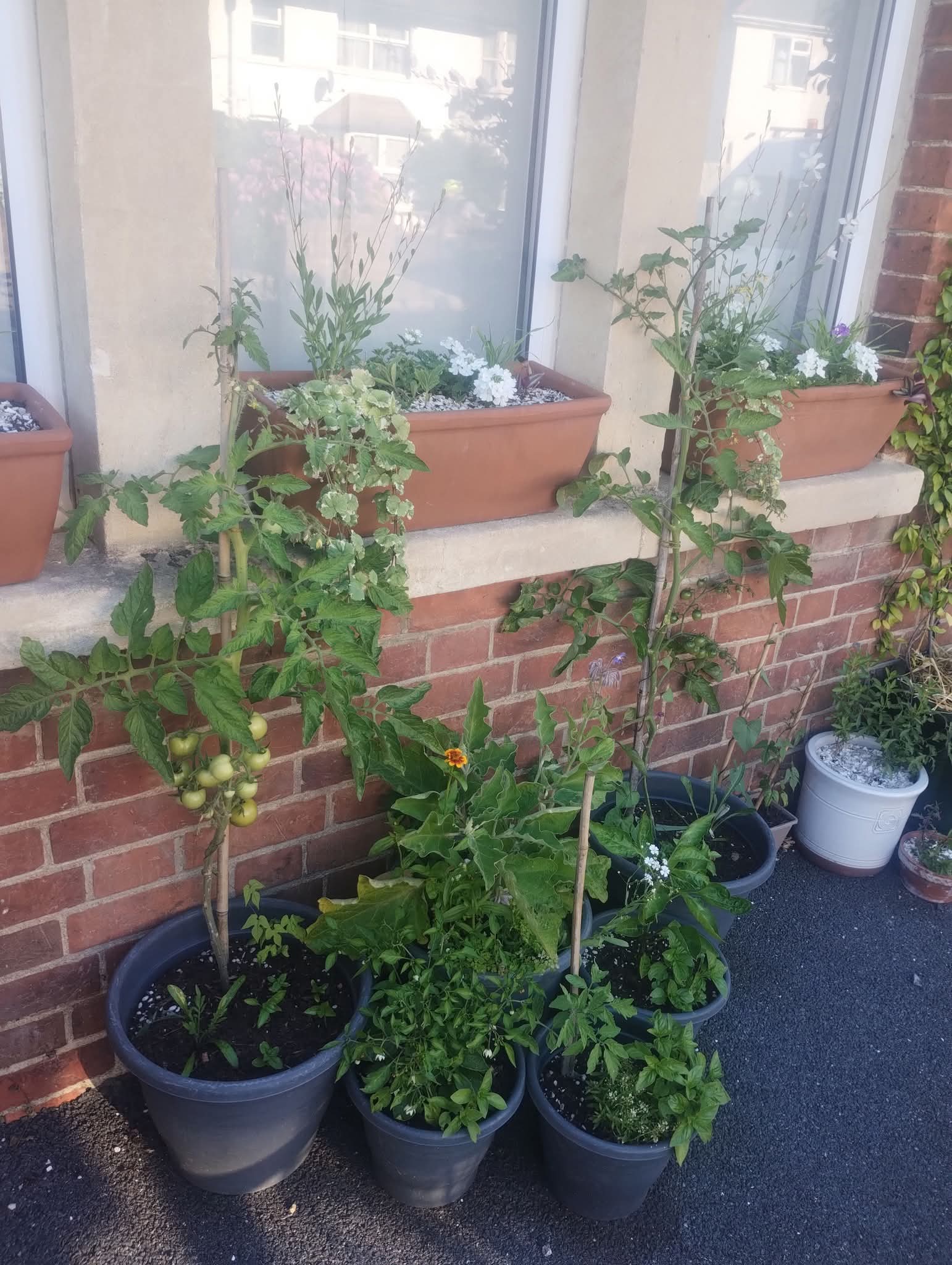
Unsurprisingly, the main challenge with Oxford gardens has to be space (or lack thereof). Small urban gardens need to work on so many levels and it’s critical to make them as multifunctional as possible. Seating area, shed for storage, flowers, a few planters or raised beds for growing food, space for kids to play, and of course our beloved pets – an urban garden needs to tick a lot of boxes… not to mention the garden room or office when you run out of space in the house.
People often bring me in because they’re finding it all a bit of a headache and they want to optimise the green space they have, but don’t have the garden design knowledge to make their garden work for them. I personally believe small spaces offer big opportunities in a ‘less is more’ kind of way, but they can become cluttered or unloved quickly if not carefully thought out.
You need to start by understanding how you use your outdoor space, and whether that changes with the seasons, so it is best to focus on impactful wildlife-friendly, drought-resilient planting. Also important in this context is to not neglect the view of your garden in the winter months, as it can be such a boost to have winter blooms or a patio area filled with flowering bulbs when it’s still too cold and wet to sit outside.
Naturalistic ‘low maintenance’ designs are a worthy aim, but as I often say to people, ‘no maintenance’ gardens don’t exist. Even the dreaded fake lawns require quite some maintenance, including dusting and weeding.

Environmental stress
Air pollution, urban heat island effect, water scarcity in summer (or floods in winter), habitat fragmentation, artificial light at night – gardens in cities like Oxford face a number of environmental challenges.
Stressors for humans are also stressors for plants, but plants have the wonderful ability to solve human-made problems. Some plants like Elaeagnus pungens or Stachys byzantina will absorb pollution by trapping harmful pollutants in their leaves; bushy trees and shrubs will provide shade while ground cover plants will stop the soil from drying out quickly. Plant roots soak up excess water when it rains solidly for months and there’s an array of plants that will create invaluable habitats for urban wildlife.
In fact, the senior wildlife expert for the RHS has confirmed that “hedgehog numbers in urban areas are starting to stabilise, showing that people are making efforts around allowing freedom of movement, putting out food, and providing natural sources through the way they manage their gardens“. If you fancy hedgehogs in your garden, check out this guide to hedgehog-friendly gardening.
The best solution for managing environmental stress is to increase the amount and variety of plants in urban gardens. It doesn’t have to all happen in one go. Planting an urban-friendly tree like an acer, and adding a few bulbs in the autumn, selecting long-flowering plants like Salvia and Verbena, planning for winter interest – all these actions go a long way towards improving green spaces in cities like Oxford.
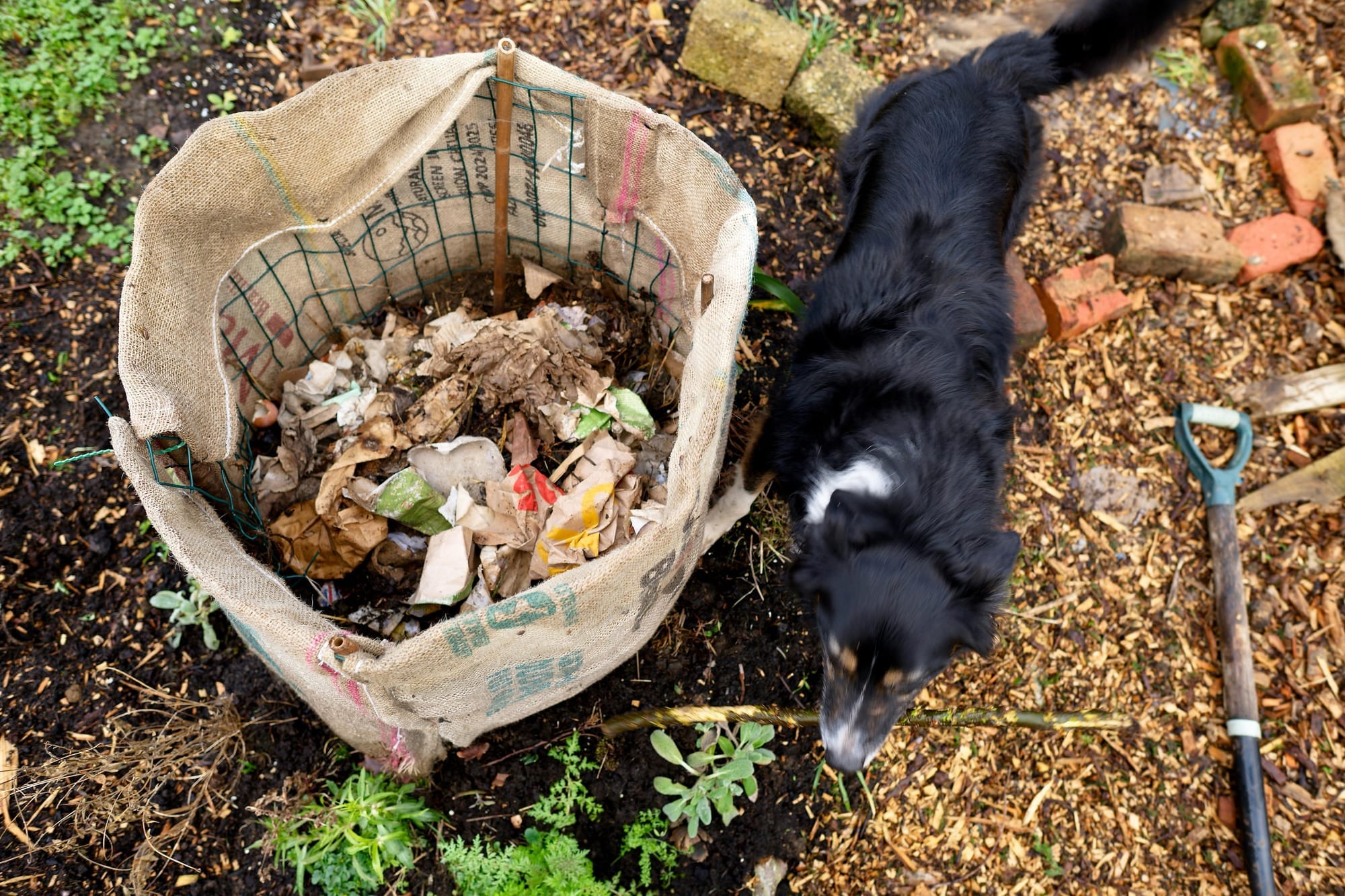
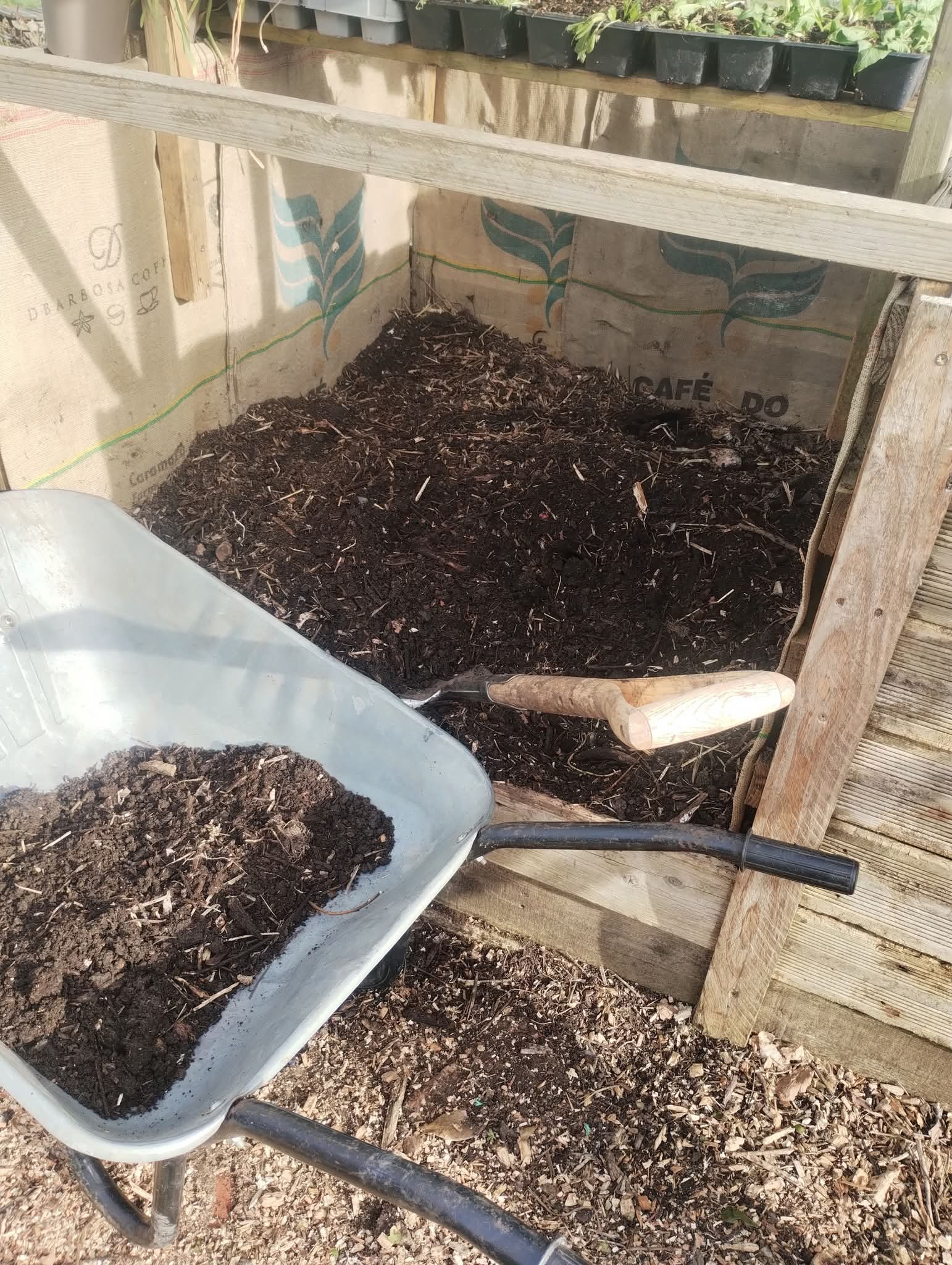
Composting is a sure way to improve soil quality and texture, particularly in Oxford's heavy clay. Dog optional. (Photos by Roger Close.)
Soil quality
Garden consultations are my first chance to see people’s gardens. When clients are willing to do the work themselves, it is sometimes a one-off session in which we go over a list of problems and I offer solutions or help people draw up an action plan. But you can also work through the list in this article as a start point to guide your thoughts.
Soil quality comes up in consultations every single time. In Oxford, we have heavy clay which isn’t necessarily the worst soil to work with, as it retains moisture and nutrients. But it does have a tendency to turn boggy in autumn/winter and then to bake in spring/summer. There’s a simple solution for heavy clay: basically, you cannot mulch it enough.
Another common issue is when people have had an extension built (or live in a new-build home), and the builders have used the garden as a tip, then laid turf over it. This always results in poor, rocky soil. Unless you’re willing to do without a lawn altogether or have the knowledge to design a gravel garden, that’s going to mean difficult soil for plants to establish. Again, it is worth looking at ways to improve the soil first. Don't try to do your entire garden at once, perhaps take a section at a time.
And weeds – who doesn’t hate them? (Actually I enjoy weeding but I know how weird this sounds to most.)
Here’s the thing: weeds tend to grow in poor soil. They’re a good indication of what is problematic with your soil. Horsetail will grow in wet often shady soil and bindweed will colonise dry soil. It is possible to improve soil quality in urban gardens and with good soil good plants follow, so it’s worth investing a bit of time and effort in this area. Add compost, woodchips, leafmould, straw, or any organic matter you can. All of this will rot down in time and add nutrients to your soil. A home compost bin will turn your kitchen scraps into gorgeous rich compost in about a year, while a hot composter is spendy, but speedier.
Sunlight
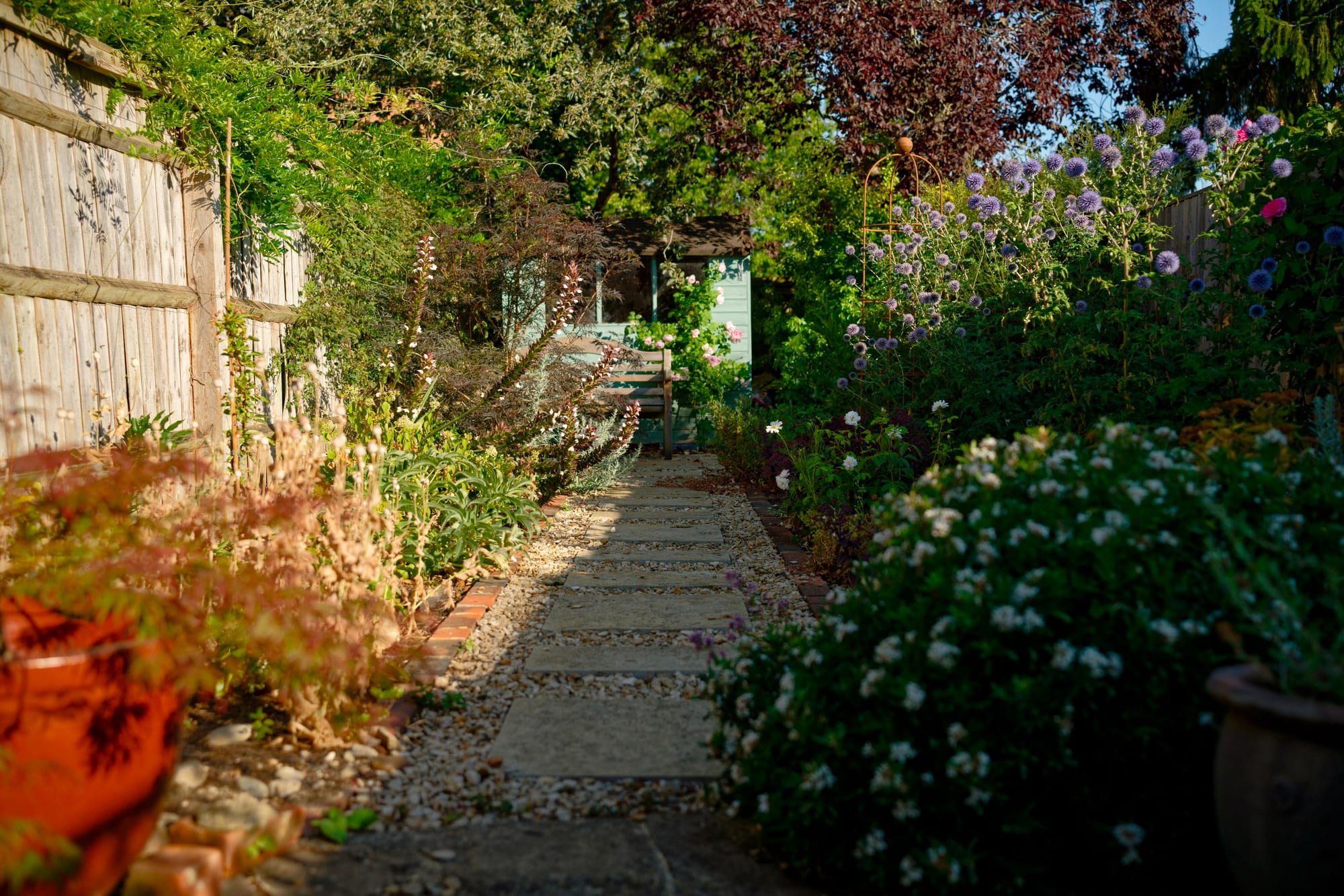
The urban heat island effect means urban gardens are significantly warmer than rural ones. Contrary to many people’s belief, shady gardens are preferable to sunny gardens in cities – as we all discovered this summer. That’s because plants in south-facing locations will need an awful lot of watering to keep them alive in the summer through long periods of drought and increasingly bad heatwaves (not to mention hosepipe bans).
Having said that, deep dry shade or gardens that are entirely north-facing (or shaded by buildings) can be challenging. Again, the motto ‘right plant, right place’ is helpful. You need to work out how much light hits different parts of your garden at different times of year.
Maybe you have a shady spot where a Clematis can be planted and climb to reach the light. Or you could make the most of a south or east-facing fence for training an espalier apple/pear tree or, as I’ve done recently, a fan-trained apricot tree. And yes, it’s possible to grow apricots in a sheltered spot in Oxford!
Drought-resilient planting is the only way to go for hot dry parts of your garden. Maybe consider ground-cover plants – like creeping chamomile, Alyssum if your garden is sunny, or clover and geranium if your garden is shady – to stop the soil drying out quickly. In most urban gardens, light challenges mean we have to think creatively about what we plant where to have an interesting and lush-looking green space most of the year.
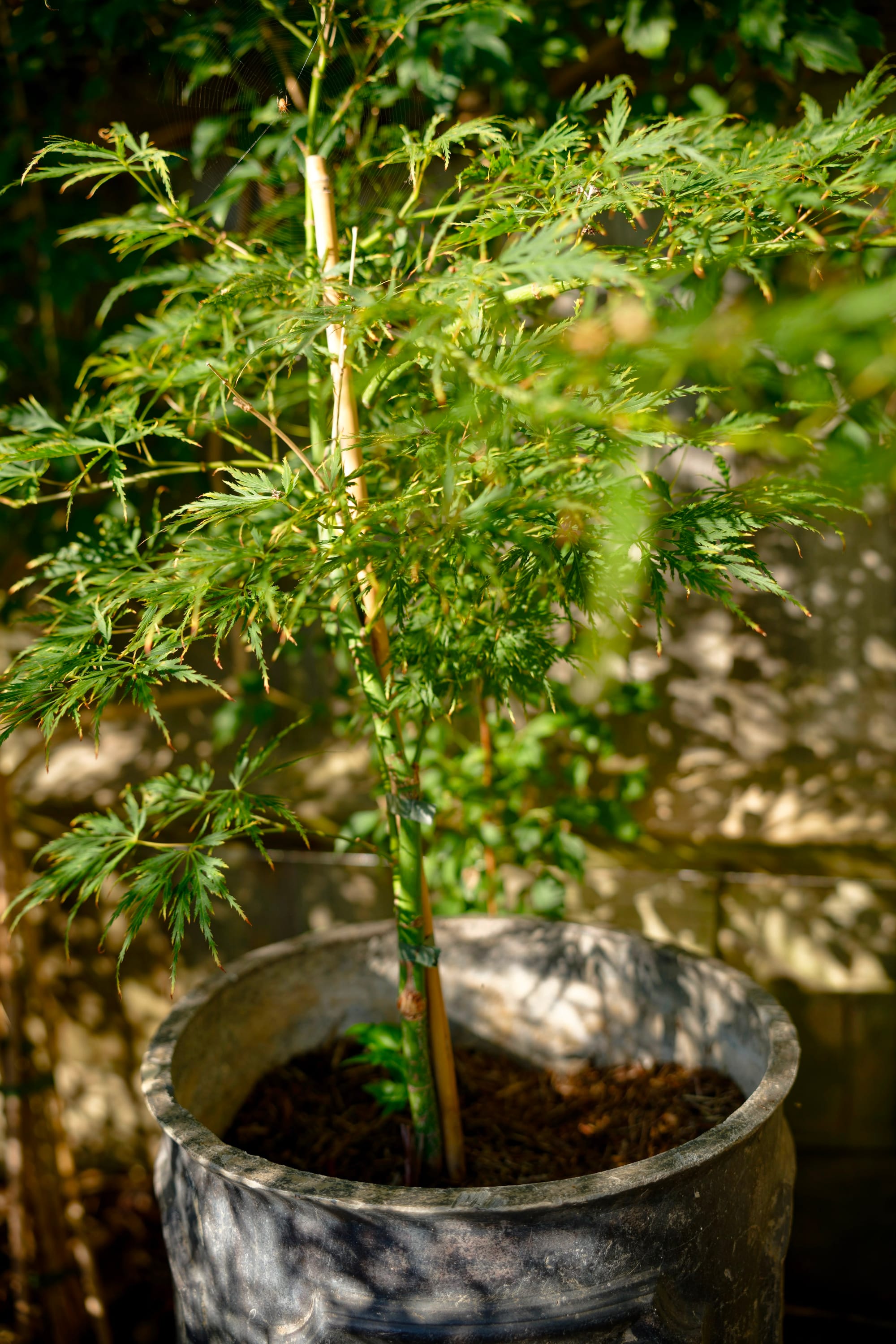
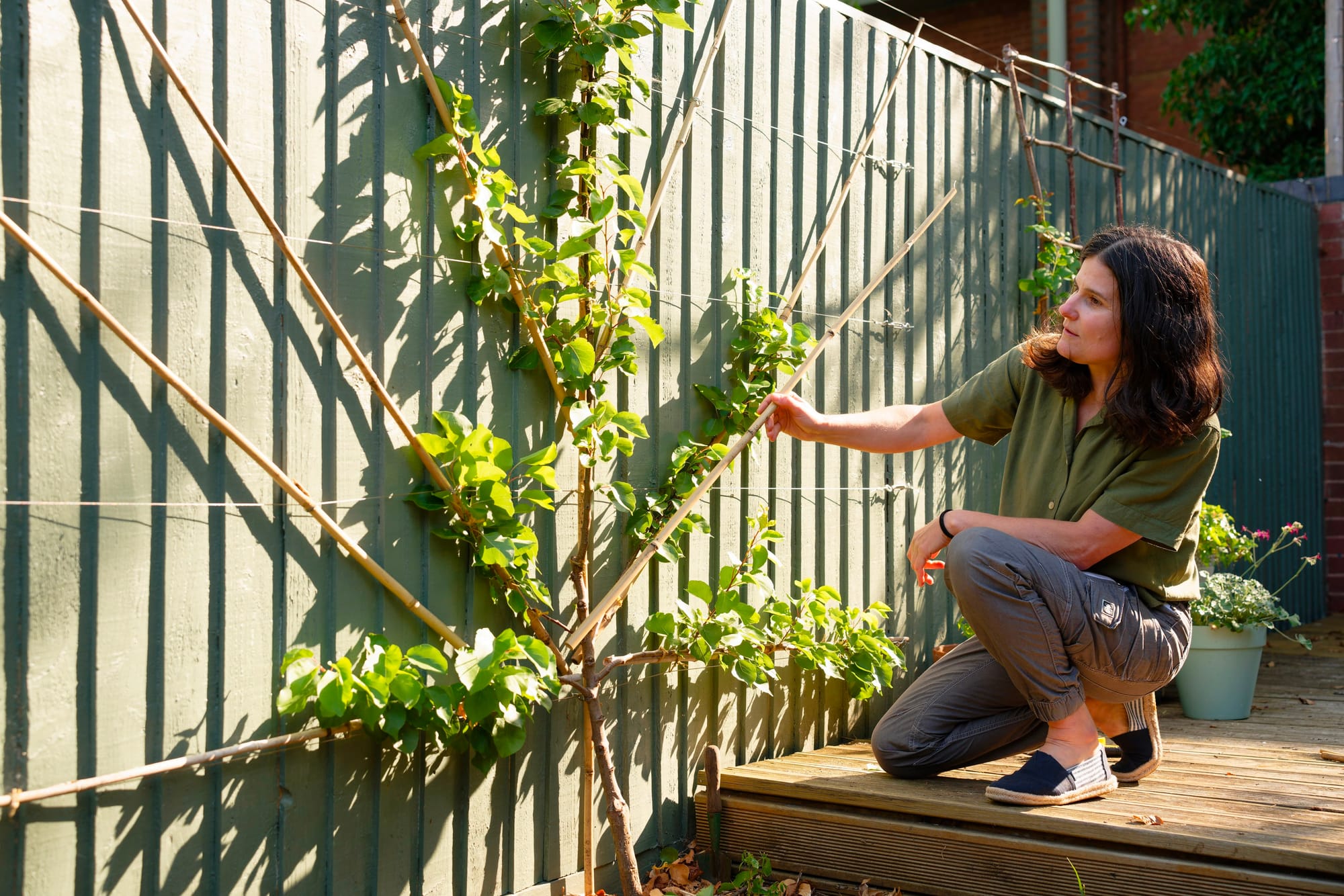
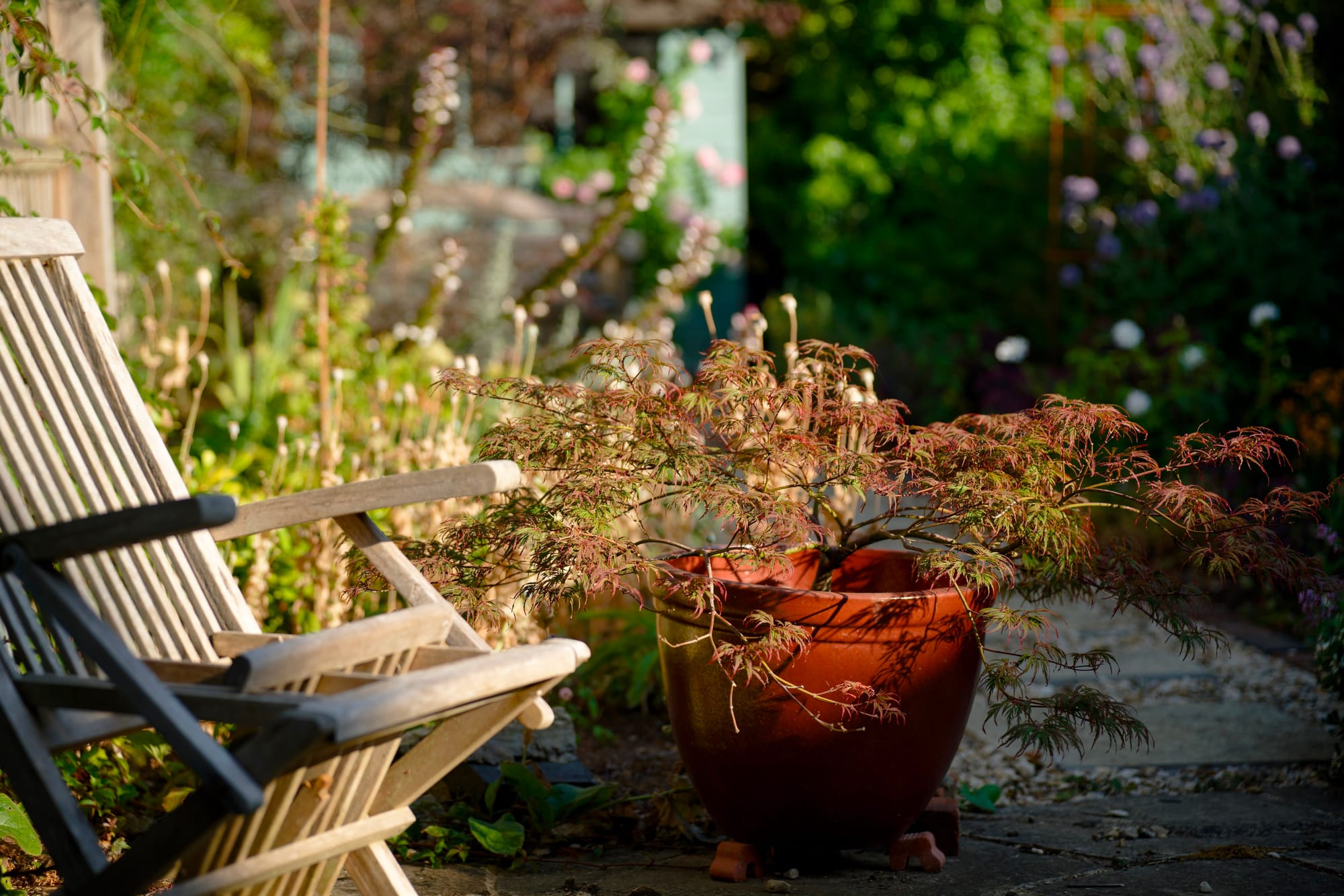
Containerised acers and fan-trained fruit trees are great choices for small urban gardens (Photos by Roger Close.)
Trees
People often inherit a weird and wonderful selection of trees. In Oxford, where the average sized garden goes from small to tiny, trees that get very big are never something you want to have to deal with. While we have excellent tree surgeons in Oxford, the cost of pollarding a large tree can run in to the thousands.
With new-builds, I often see gardens where the wrong type of trees and shrubs have been planted. This is generally because property developers have selected plants with a vigorous growing habit in order to fill the space quickly – but when the trees and shrubs aren’t pruned annually (sometimes twice a year), things get out of control scarily quickly.
As well as helping people identify the trees they have growing in their gardens, I cover pruning regimes and techniques with them and we get the ball rolling again. If you're doing it on your own, start here for apple and pear trees that have been left alone for a while, and here for stone fruit trees like plums and cherries. Remember: apples and pears want a winter prune (as well as a summer prune for trained apple and pear trees), and stone fruits need a summer prune.
With new gardens or when gaps need filled, I help clients choose the ‘right plant for the right place’. Again, this really can’t be said enough. In extreme cases, the best thing that can be done is to dig up existing trees. Since that can mean a big tree surgeon bill, pruning regularly is advised. If you do engage a tree surgeon, keep the woodchips as mulch!
That said, I wouldn’t want this to put people off planting trees – in fact, trees are helpful in urban settings where they offer valuable shade during hot weather as well as shelter for wildlife. Trees are nothing short of amazing. They soak up extra water in times of rain to reduce flooding, and are home to a veritable ecosystem of birds, insects and other plants like mosses and lichens.
Just make sure you check the ultimate height and spread of any plant you intend to put in your garden and you’ll be able to enjoy trees suitable for your space. You can do this by checking the label in the garden centre, or the listing if you're buying online. If it's already in your garden and you want to know how it will end up, the Royal Horticultural Society's plant checker is your place to go. My personal favourite small trees for urban gardens are Magnolia stellata for early spring interest, Acer for autumn foliage, Viburnum for wildlife and dwarf Amelanchier for year-round interest.
When is the right time to make a change?
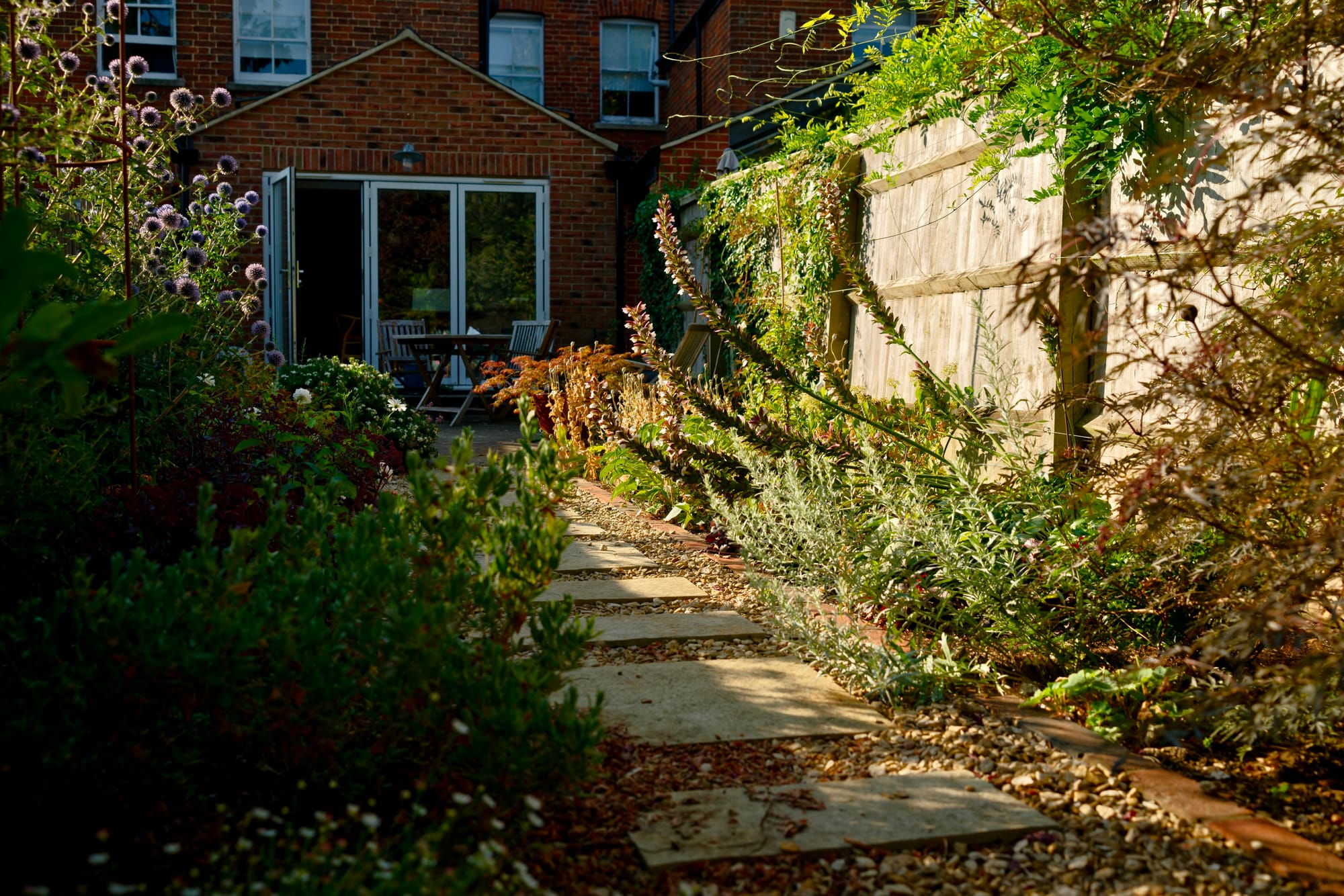
As we write, it’s September. The best time to make a change is now – but autumn is a particularly good time to check in with your garden, and see what problems you want to fix for next spring. The weather isn't too hot, the soil is still warm, and moisture has returned, yet most of the plants have finished growing.
This means that working on the layout can be easier, and trees, if you plant them, have some time to establish before winter hits. Winter is your only chance to see the structure of your green space, and you have the cold frost to ruminate on your designs before acting in the spring. And next summer, you can sit in your beautiful garden and enjoy the fruits of your labour.
Amandine is an RHS-qualified horticulturist based in Florence Park – her services include garden coaching, gardening classes/workshops and plant sales. She also runs Oxford Garden Club, a group for Oxford gardeners that meets once a month at Flo’s. She posts plant recommendations and gardening tips on her Facebook page (Amandine – Oxford Garden Coach) and can be contacted on amandine.oxfordgardencoach@gmail.com.