
Floreat Oriel
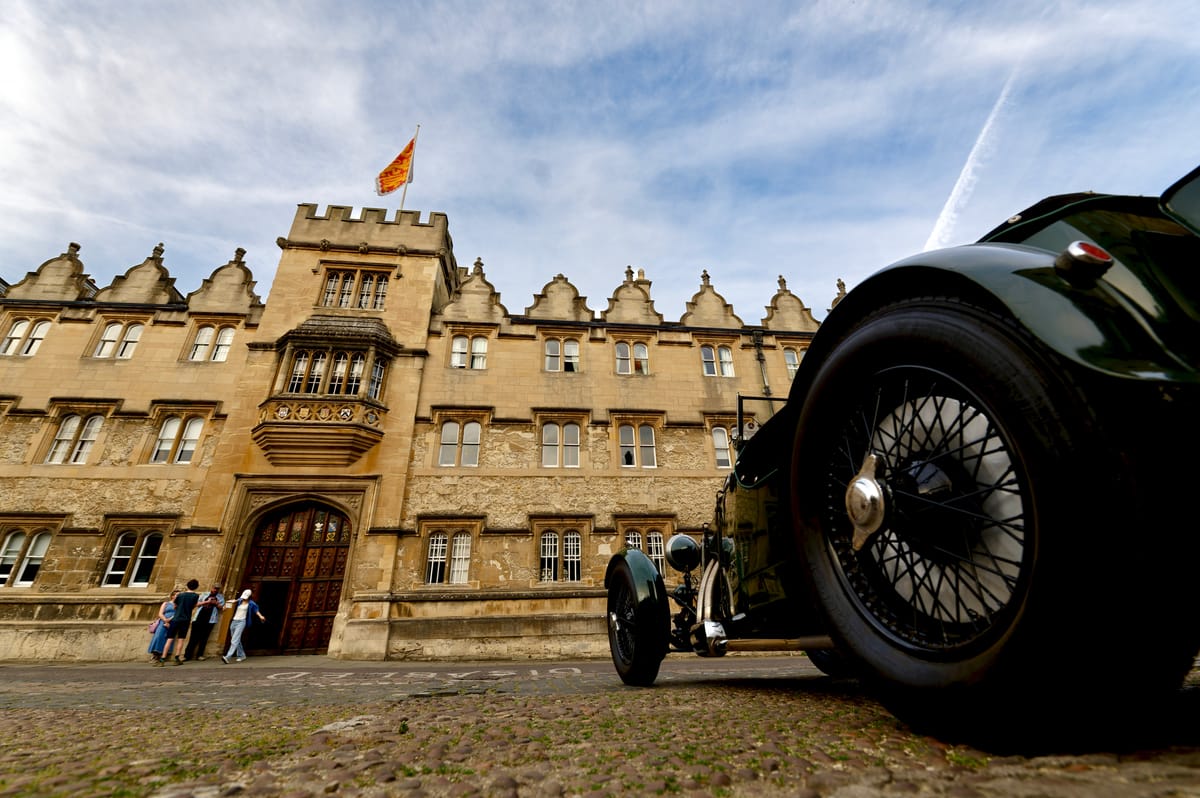
The city we live in, shop in, walk through, work in, is full of history, much of it hidden to many residents who glide through its beautiful streets. The Clarion is on a mission to uncover the ‘gown’ for the ever-changing residents of the ‘town’ – starting with a college which celebrates its anniversary in 2026.
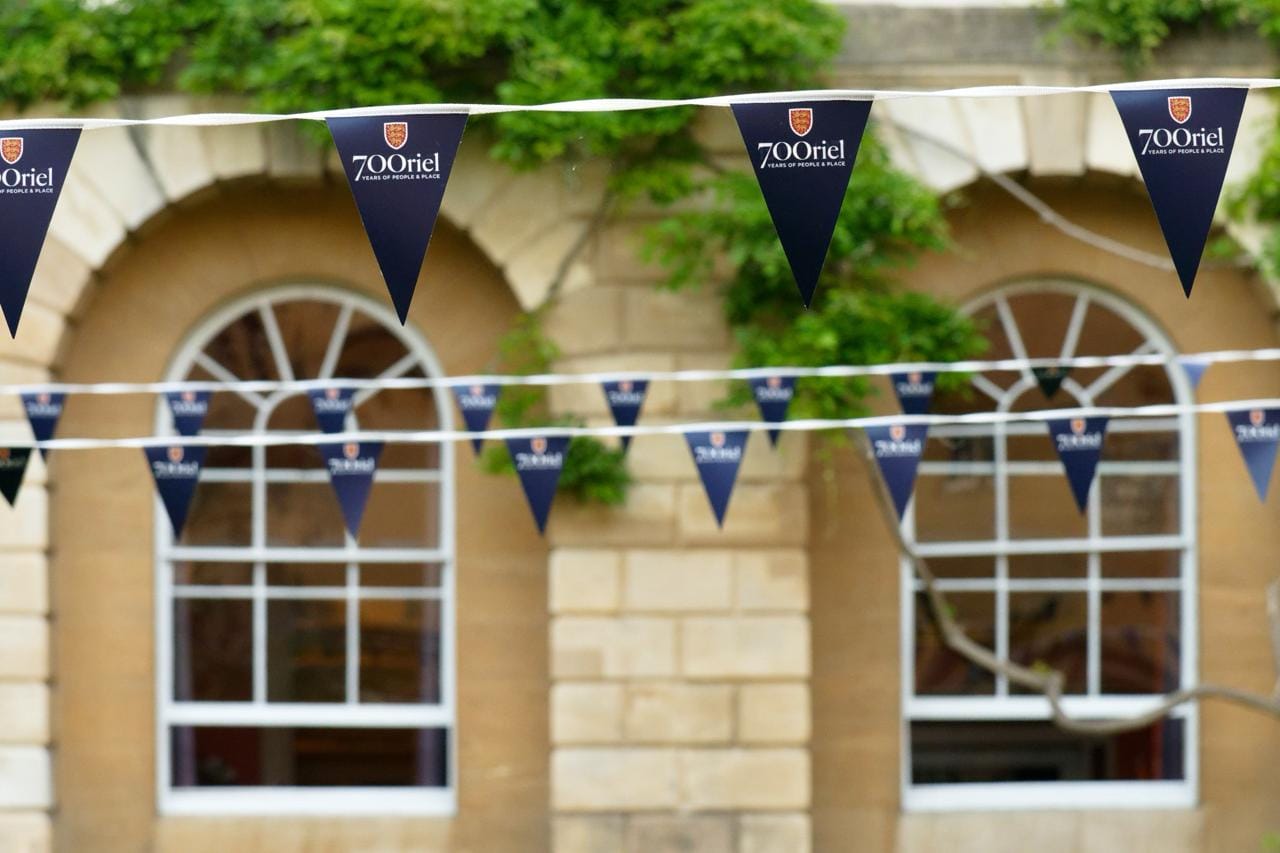
Oriel College is 700 years old this year. To say the college is rich in history is an understatement. The very architect of the phrase 'dreaming spires' was a Fellow here. Sir Walter Raleigh, Sir Thomas More, John Henry Newman, theologians, Nobel scientists, and now – cutting edge climate policy, and cultural diplomacy. It is the only college which still uses the very earliest building in which it was founded, 700 years ago.
Listed buildings expert and Oriel alumna Madeline Odent, together with our photographer Roger Close, open the gate and take a look at a place that has shaped not just Oxford but the world around us today. Who would have thought, when Oriel was the Royalist HQ in the English Civil War, that 400 years later, 'Orielenses' pioneering the science of longevity would put human tissue up in to space?
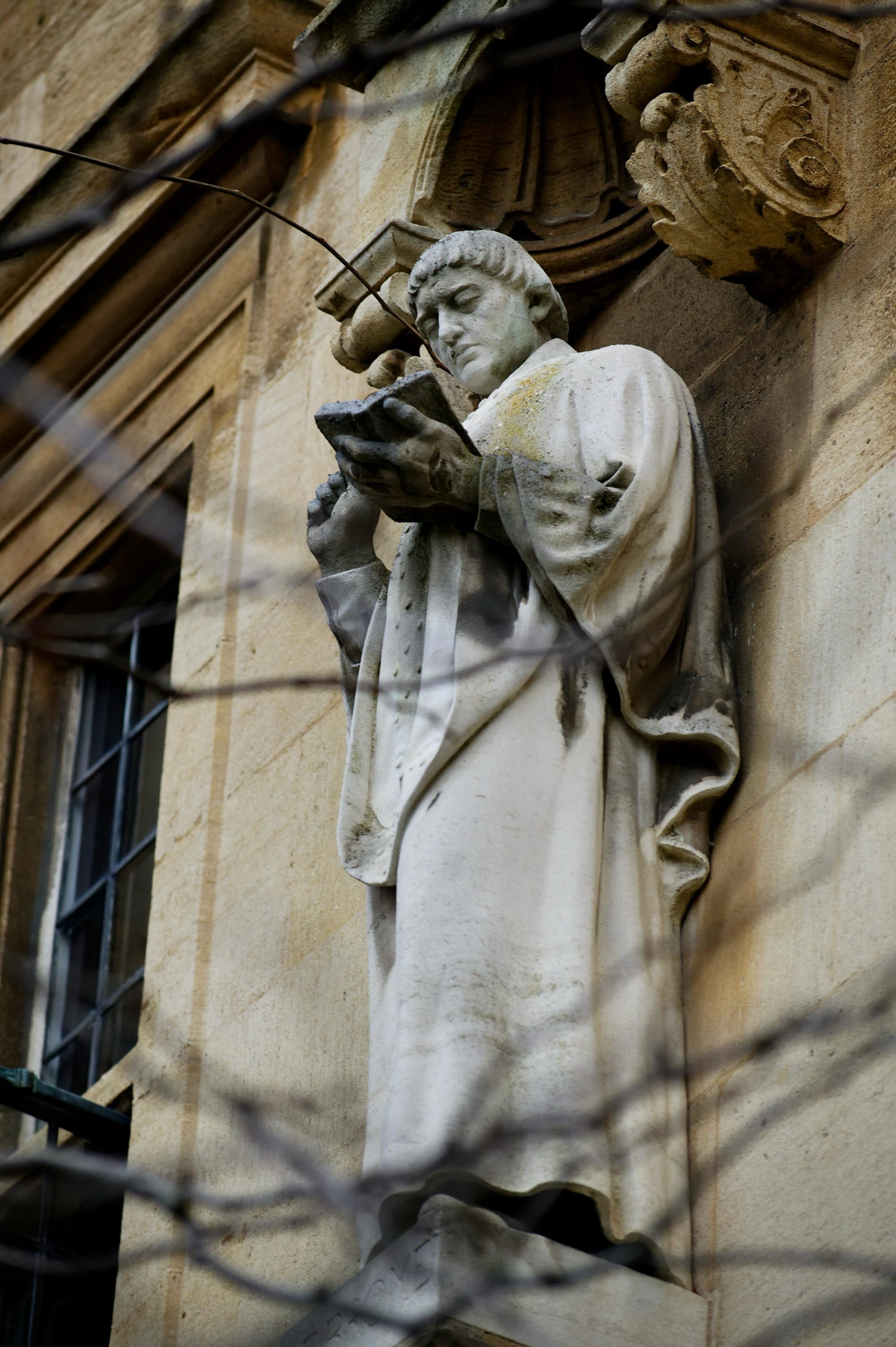
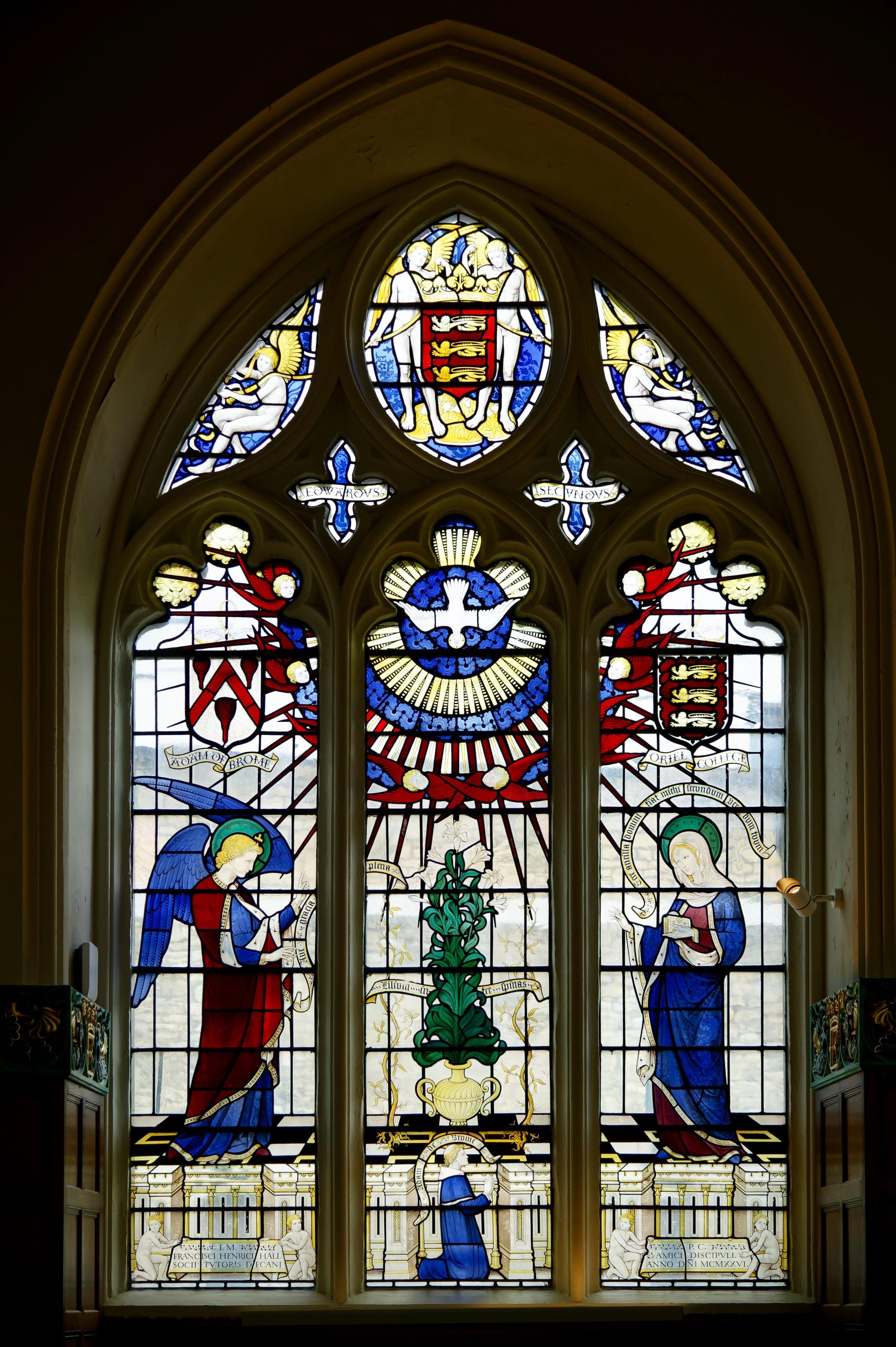
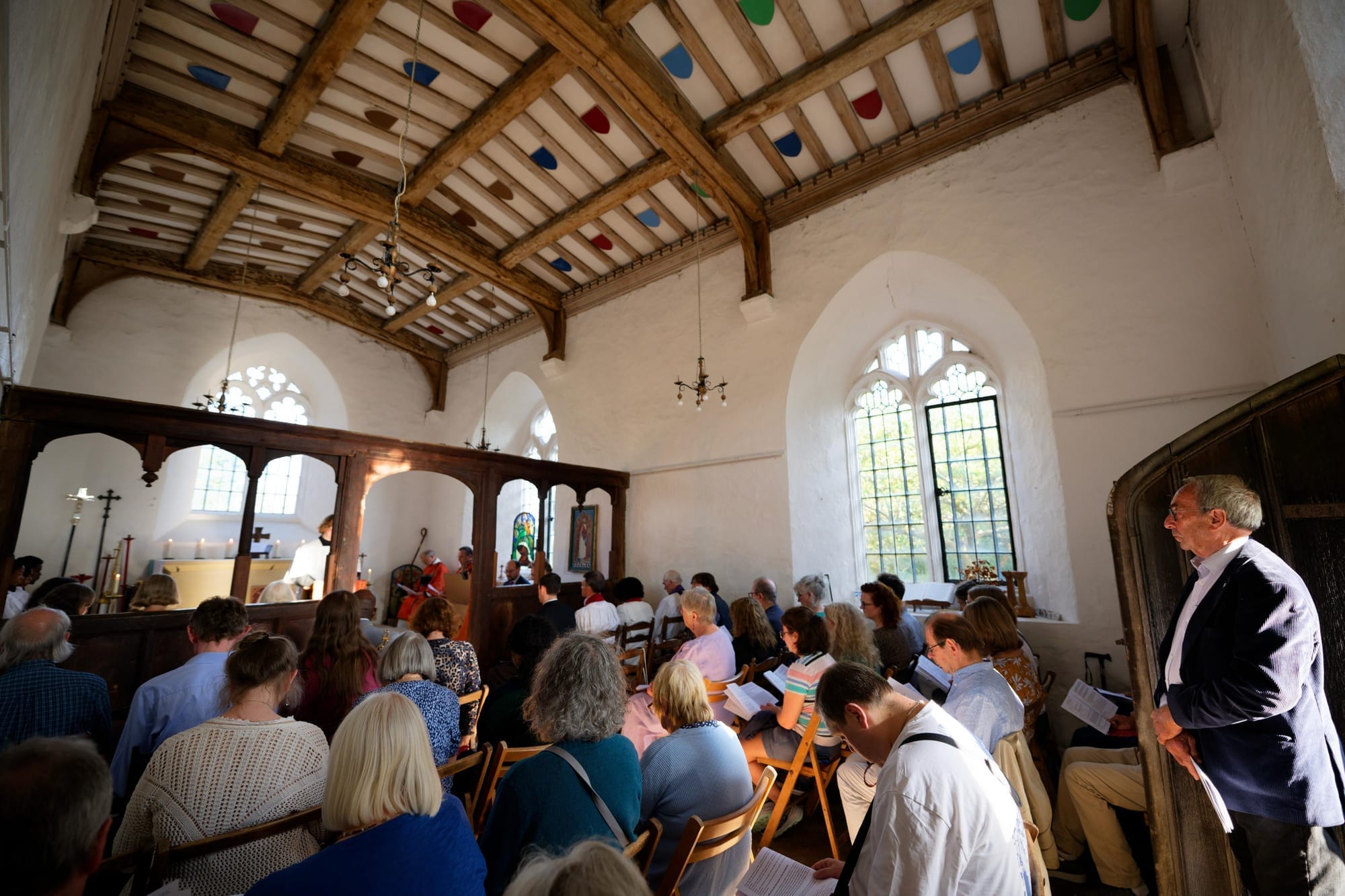
Adam de Brome's statue, and his stained glass depiction, next to the Virgin Mary, representing Oriel College in Bartlemas' leper chapel which still stands today.
From St Mary's to Oriel
Oriel College was founded in 1326 by a senior clerk in the King's Exchequer, Adam de Brome, under the patronage of King Edward II, making it the fifth oldest college at Oxford University. It has always been formally named 'The House of the Blessed Virgin at Oxford', but at this stage, it was known as the King's College, or King's Hall, as it was established as a royal foundation, and the monarch had rights as a 'Visitor'.
Originally established for a Provost and 10 Fellows to study theology and law, it was intended as the supplier of intellectuals for an administrative 'governing cadre' for King Edward. De Brome was rector of St Mary the Virgin (now the University Church) in Oxford from 1316 to 1326, the rectory for which became the base of his new college. He was also rector of St Bartholomew's Leper Hospital, whose chapel still stands. De Brome purchased two properties in Oxford, Tackley's Inn and Perilous Hall, to found a college of scholars in diverse sciences, rhetoric and logic.
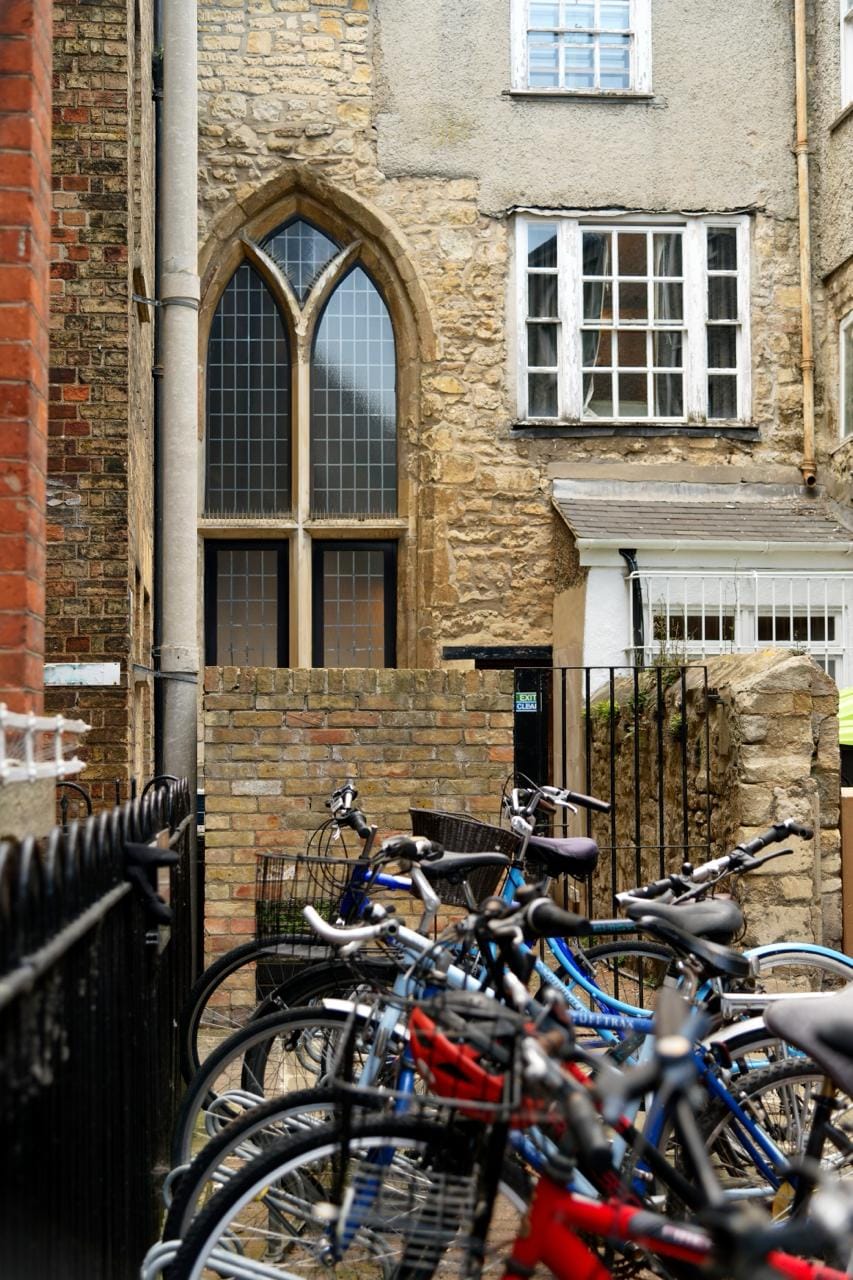
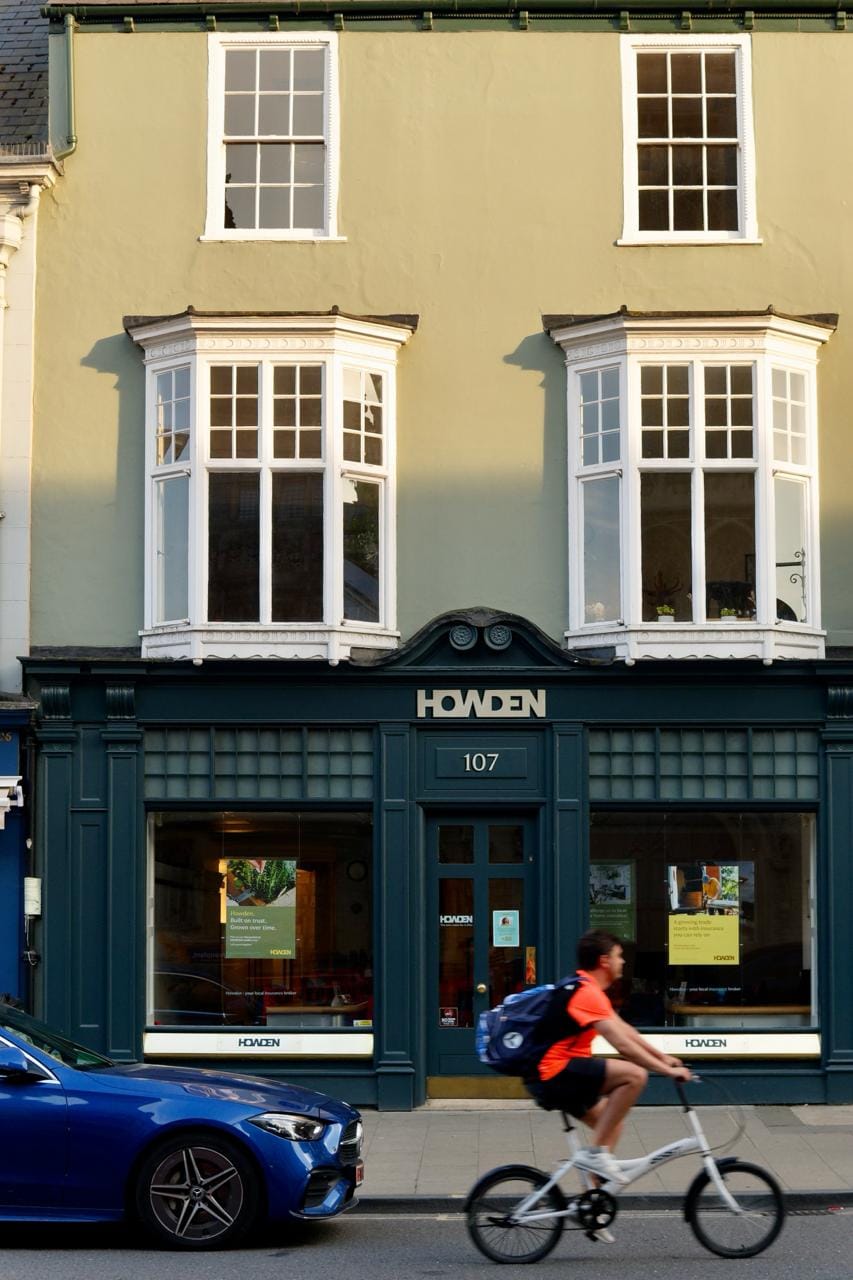
Front and rear of Tackley's Inn.
Perilous Hall no longer stands, but Tackley's Inn, a scholars' residence with rent-producing shops in front of it, is now Howden's Insurance on the High Street. It still belongs to Oriel, with student accommodation above. This makes it the oldest collegiate building continually used for its original purpose – it was built as accommodation and is still accommodation for students.
The link to the University Church stands too. While St Mary's has served as the University Church since the 11th century, Oriel is officially the 'rector' of the church, and legally owns the chancel. The vicar of the church is a member of the college and for many centuries was appointed by the college, and the college also has some responsibility towards the upkeep of the chancel, although in practice the church is quite independent. Perilous Hall was on the site of 54 Broad Street, and was sold to Trinity in 1615, pulled down and rebuilt as Kettell Hall: it still stands today. (The name Perilous Hall was a corruption of the original name of the building after the family, Perle's, who originally built it.)
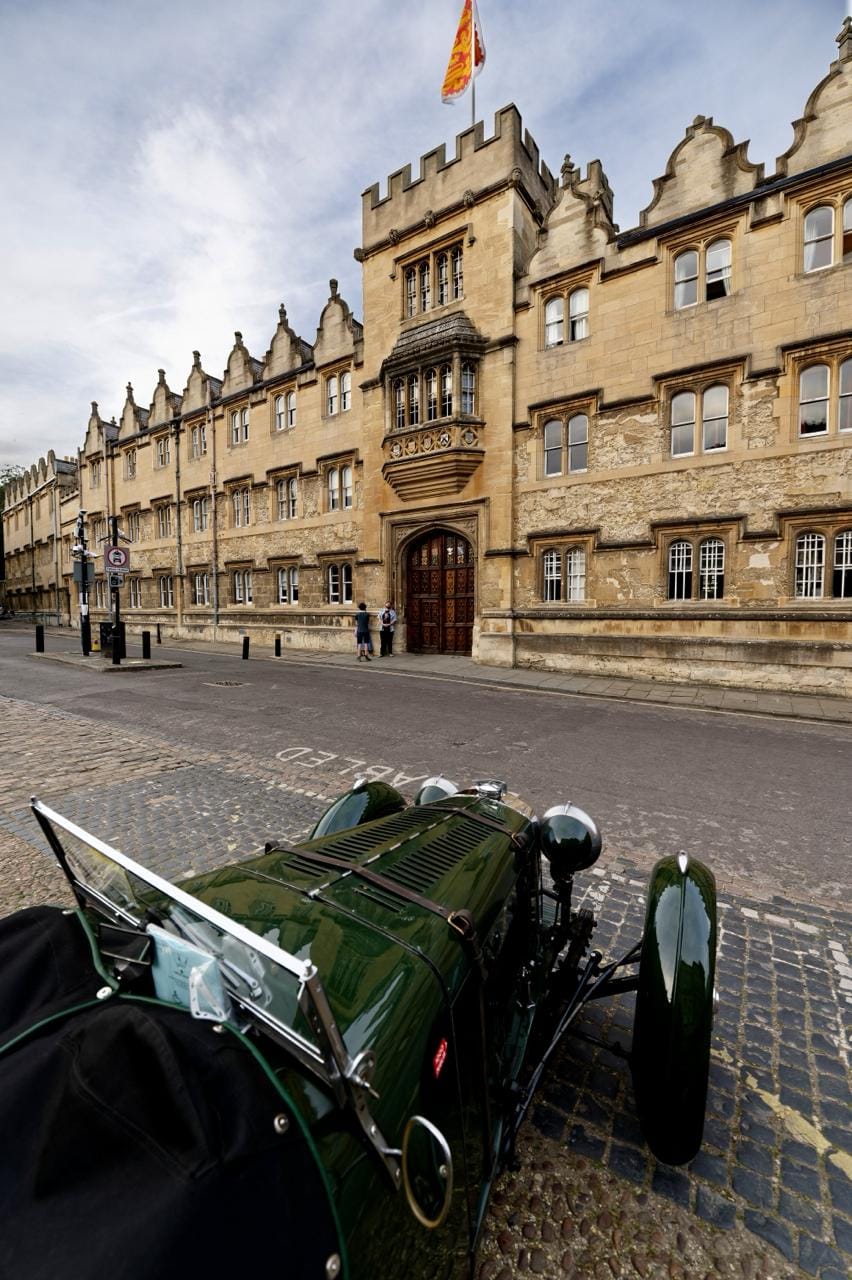
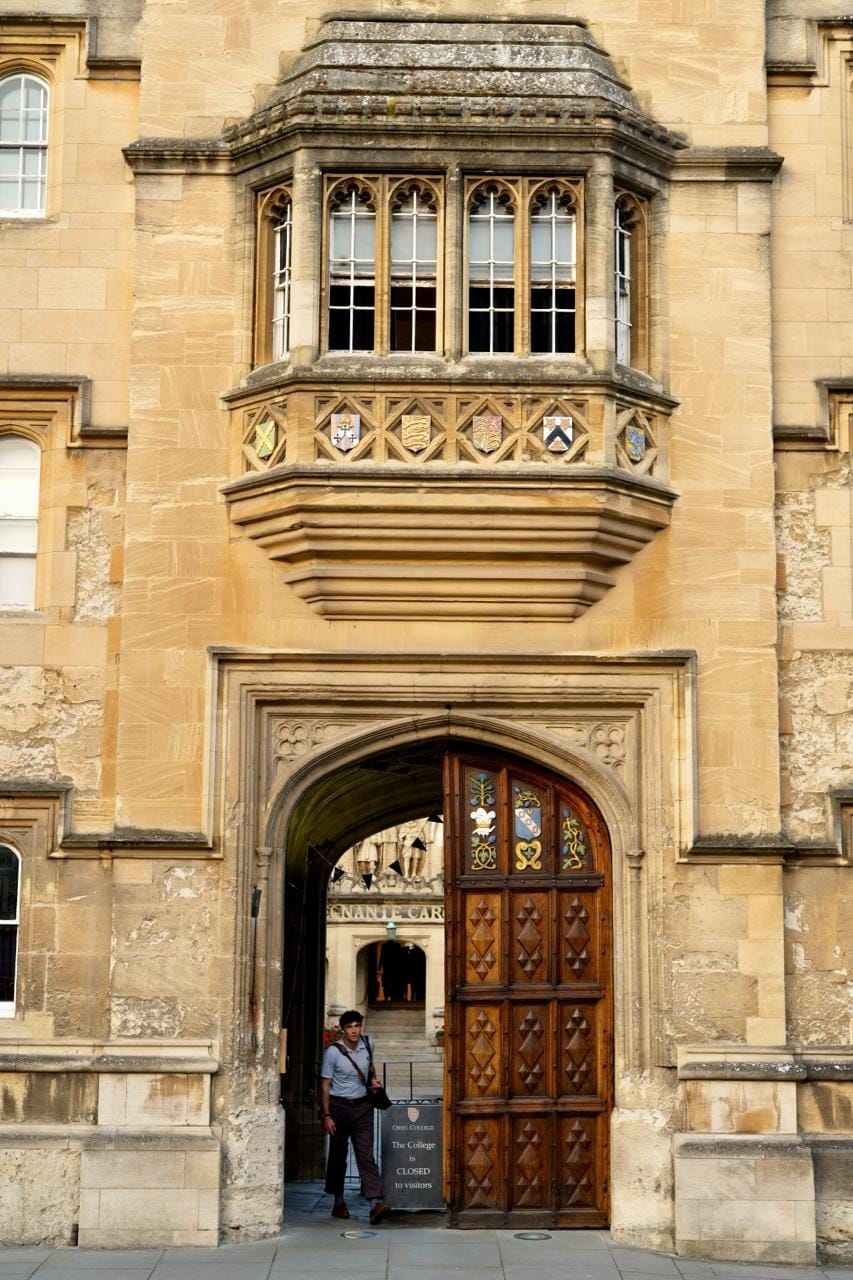
Oriel College and its oriel window.
De Brome attracted other benefactors, notably his colleague, James of Spain, the son of Alfonso X of Castile, nephew of Eleanor of Castile, Edward I's first queen. James presented the college with his own house, La Oriole, which had a prominent 'oriel' window, or projecting bay. It was the largest house in Oxford (after Oxford Castle) and the Provost and Fellows moved in to it in 1329. It occupied the site of the present First Quad and eventually gave rise to the nickname (Oriel) by which the college is generally known.
Under de Brome's stewardship, the college, unlike others, was free to elect Fellows from any part of the realm. This enhanced the college's reputation in later centuries, as it could choose the best new Fellows regardless of their background.
The Middle Ages
The second generation of Oriel was overseen by the new Provost, William de Leverton, a doctor of medicine who had been a Fellow of Balliol before transferring to Oriel. He attracted other fellows, notably Richard Kilvington whose patron was Richard de Bury, the most influential of Edward III's ministers.
Kilvington left his books to the college, the beginning of a College library of manuscripts. The earliest listing of the library dates from 1349, and contains 99 works in Grammar, Logic, Astronomy and Law. The buildings between St Mary Hall, the current junior library, and La Oriole were acquired. The first college chapel was erected in 1360.
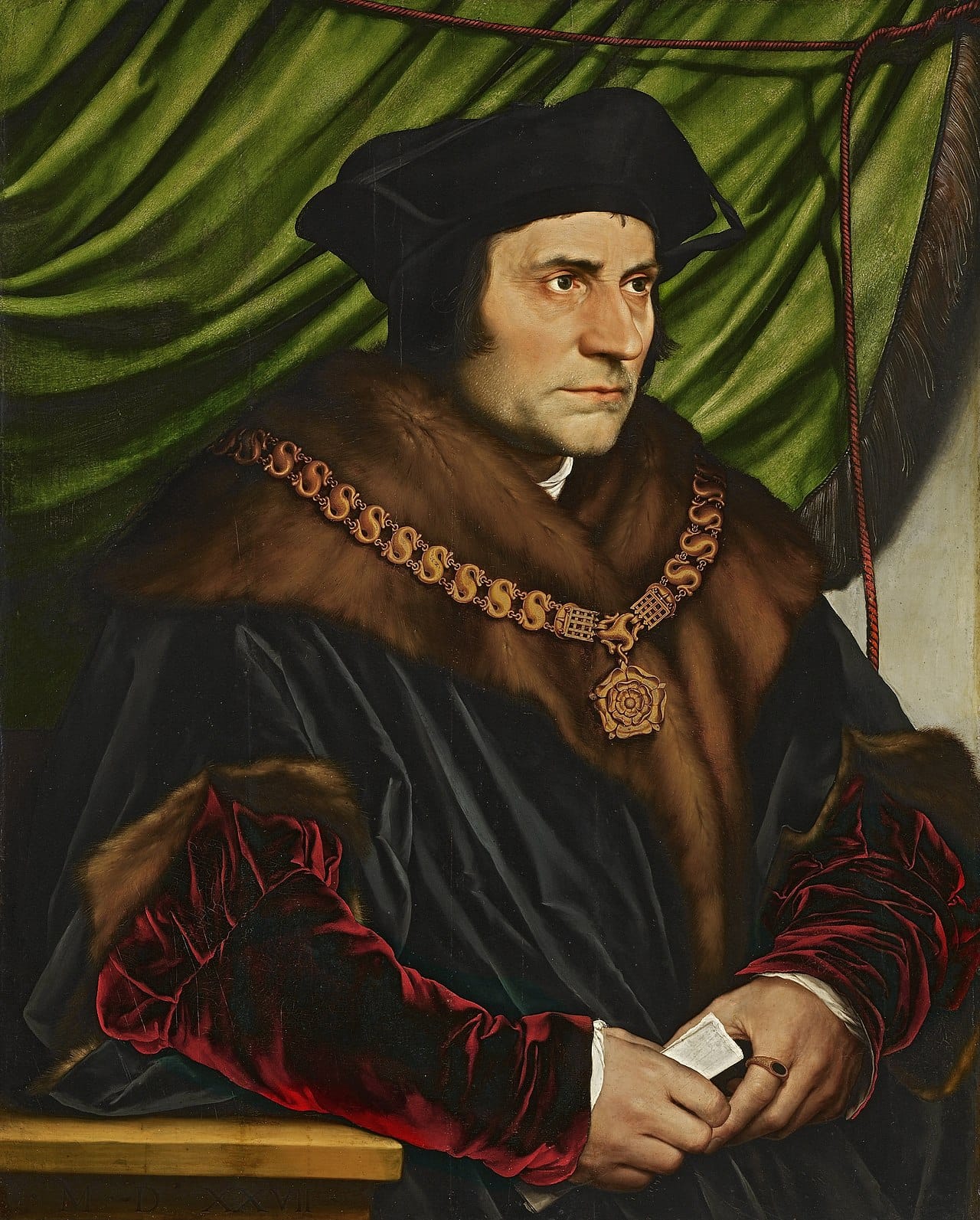
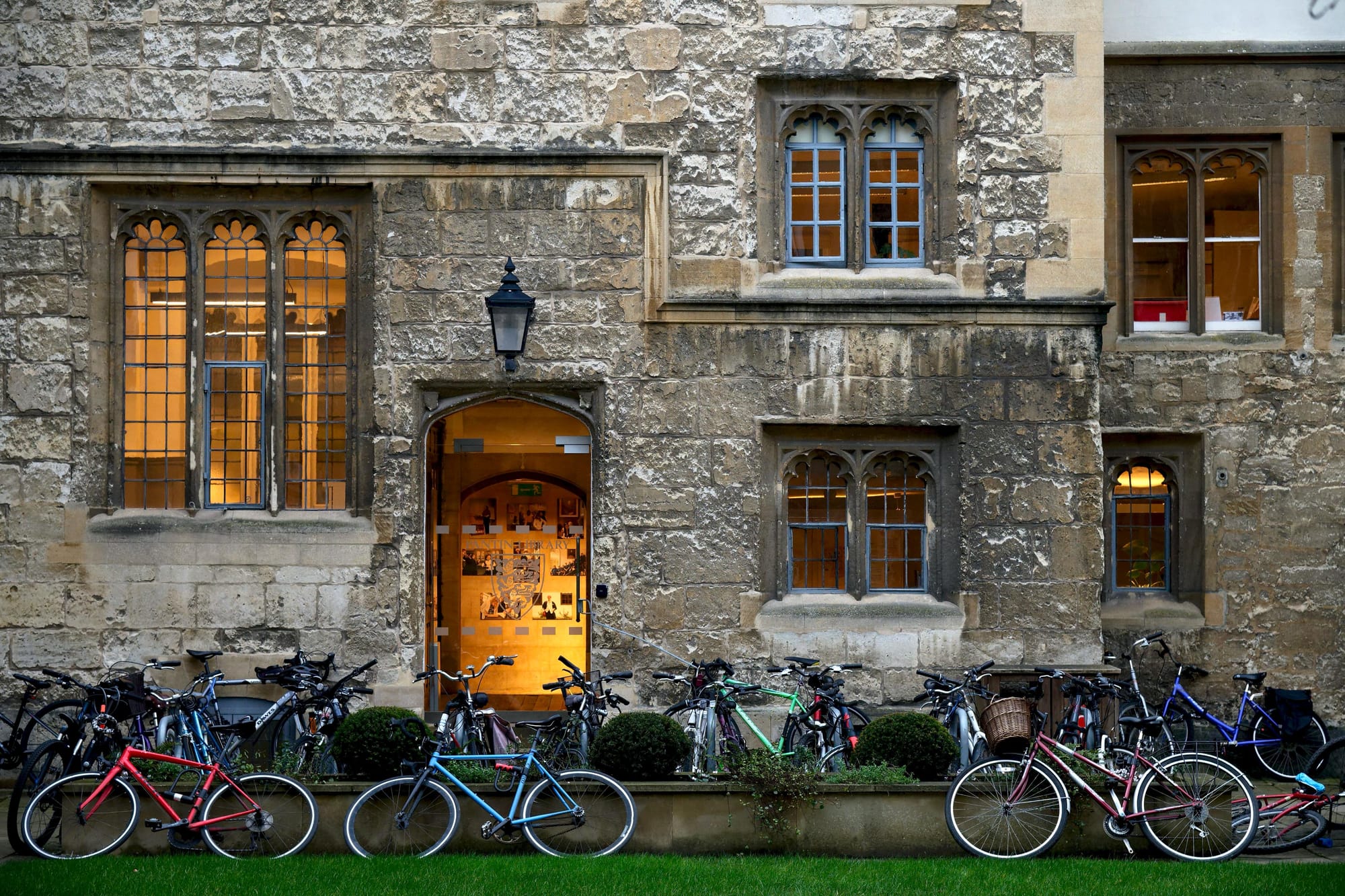
Sir Thomas More (Hans Holbein, public domain) and the former St Mary Hall, now the junior library. (Roger Close)
Renaissance and the Reformation
In the later 14th century, Oriel began to admit young noblemen in to the college as 'sojourners' to study, as wards of the Crown. The sojourners foreshadowed the later practice of fee paying 'gentlemen commoners' at Oxford colleges.
One of the early noble sojourners was Thomas Fitzalan, later key in helping remove King Richard II from power. In 1492 Thomas More, at the time a page in the household of Cardinal John Morton, studied at St Mary Hall, as an undergraduate. Oriel's association with Thomas More marked the emergence of Oriel as an important component of the English Renaissance. In the 16th century the college began to focus on educating undergraduates rather than its initial incarnation as a seminary for clerics.
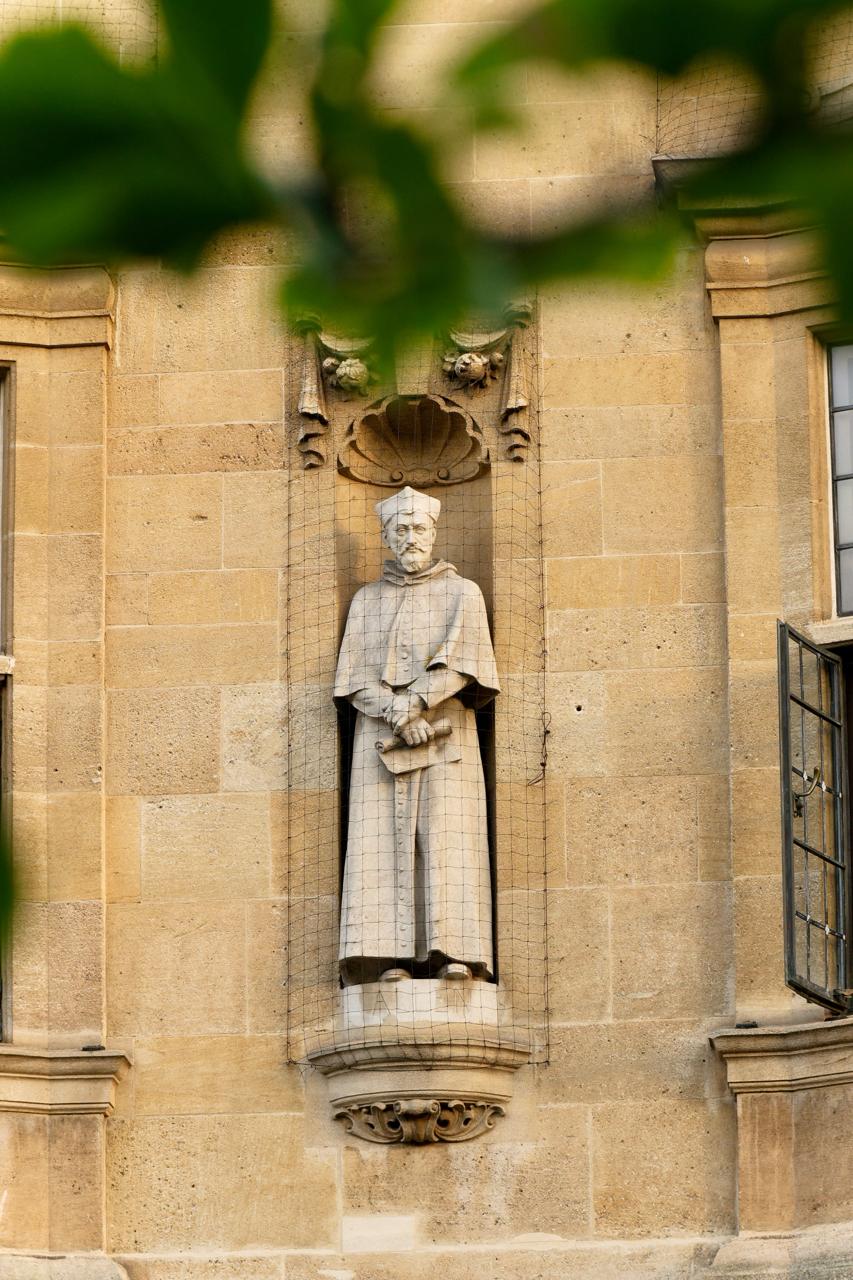
There has been a continuing theme of loyalty to the Crown throughout Oriel's history. When Henry VIII dissolved monasteries and other religious institutions, in 1534 the Provost and Fellows took an oath recognising the king as Supreme Head of the Church of England, and thus escaped the immediate controversy surrounding the break from Rome. Nonetheless Catholic activist William Allen, who had worked on the English-language Douai Bible, was elected Fellow of Oriel in 1550 (in 1587 he was made a Roman Catholic Cardinal). A sculpture of him looks down on the Third Quad.
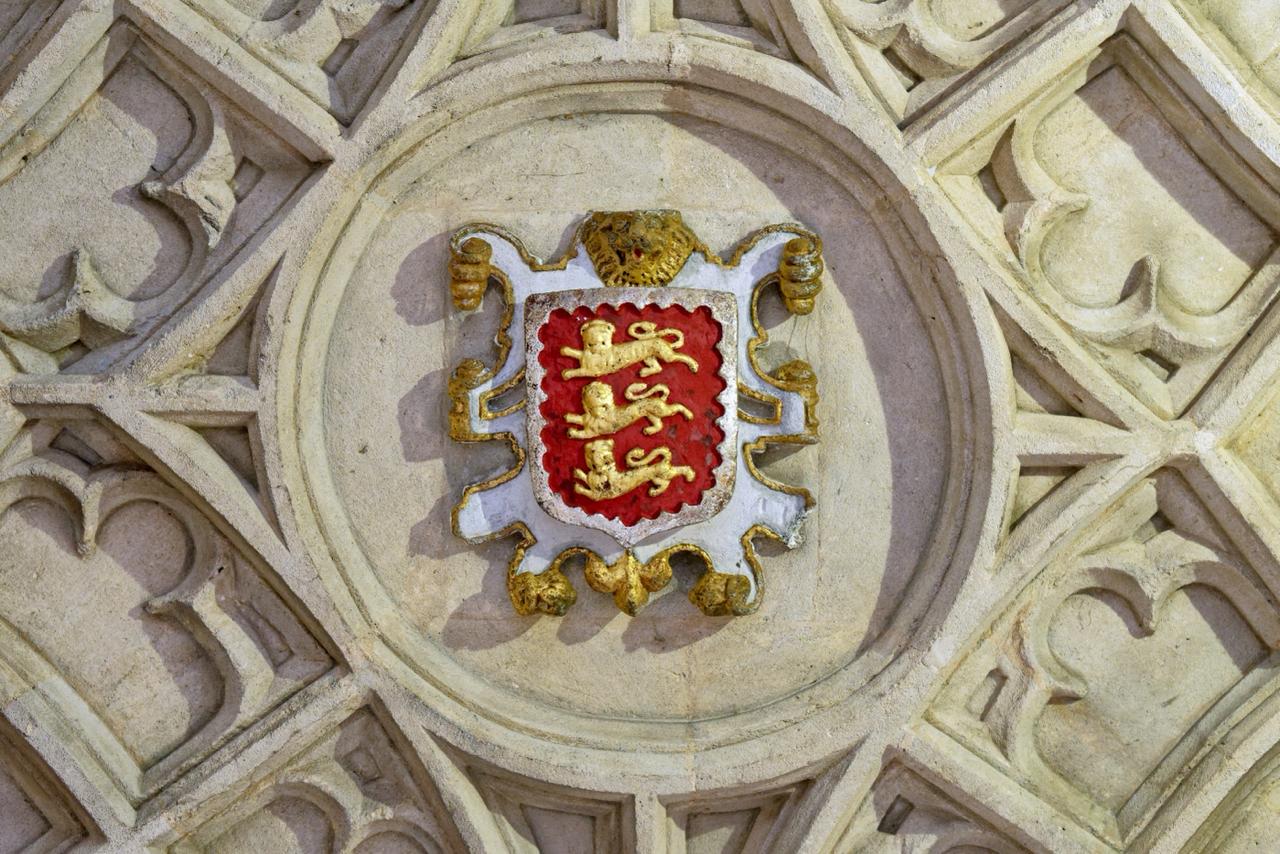
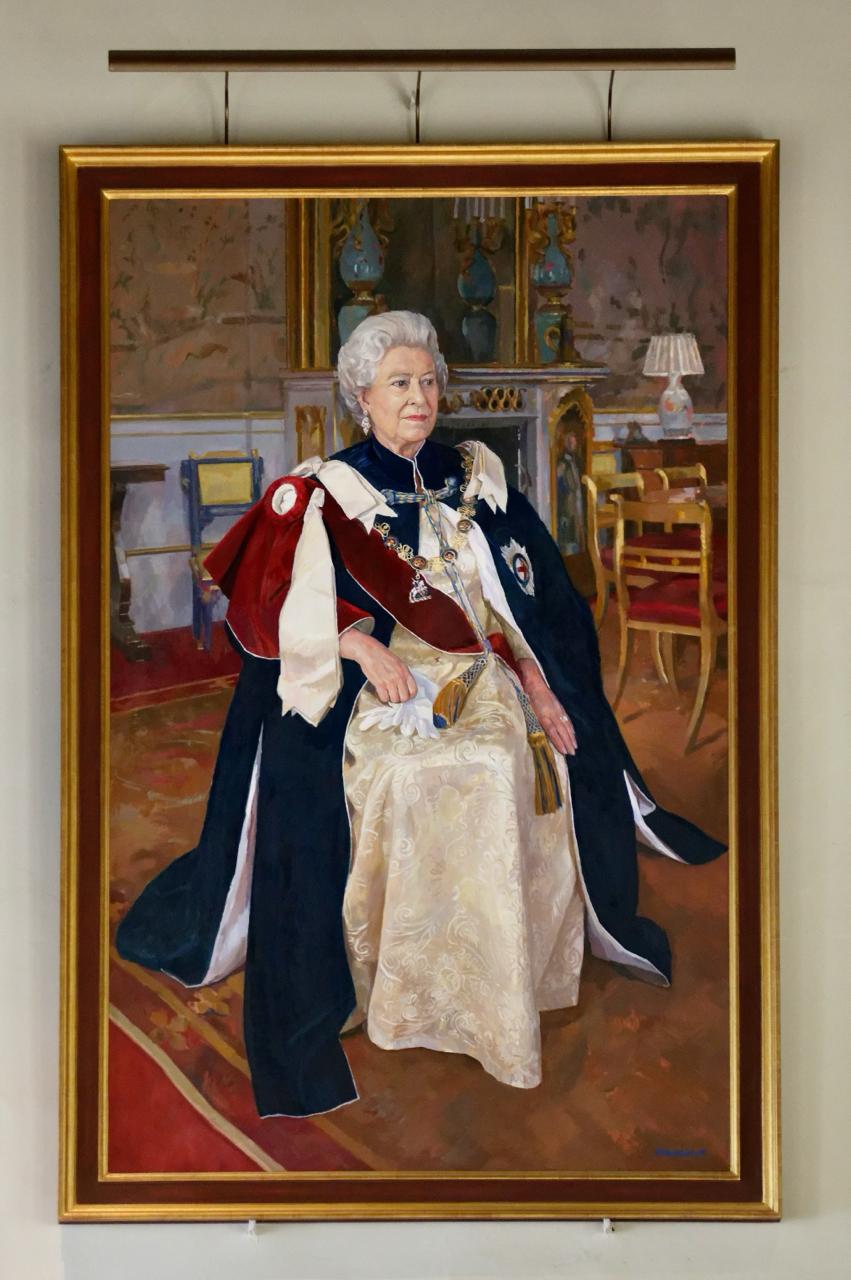
In 1566 Elizabeth I became the first sovereign to visit Oriel in person, cementing the ongoing link with the monarchy. The link is so strong that the College's coat of arms is based on the royal arms of England, featuring three lions passant guardant, reflecting its foundation by Edward II. Today the monarch is the 'Visitor' or technical overseer of the College, as they have been since 1326.
Completion of the front quad and the dawn of the Civil War
The increasing intake of undergraduates in the later 16th century brought some interesting junior members, including Thomas Harriot, astronomer, inventor of binary notation, reputed to have introduced the potato to England, and Sir Walter Raleigh, later a sea captain, who introduced tobacco to England. (We wonder what he would think of Oxford's current incarnation as a 'Smoke free city'.)
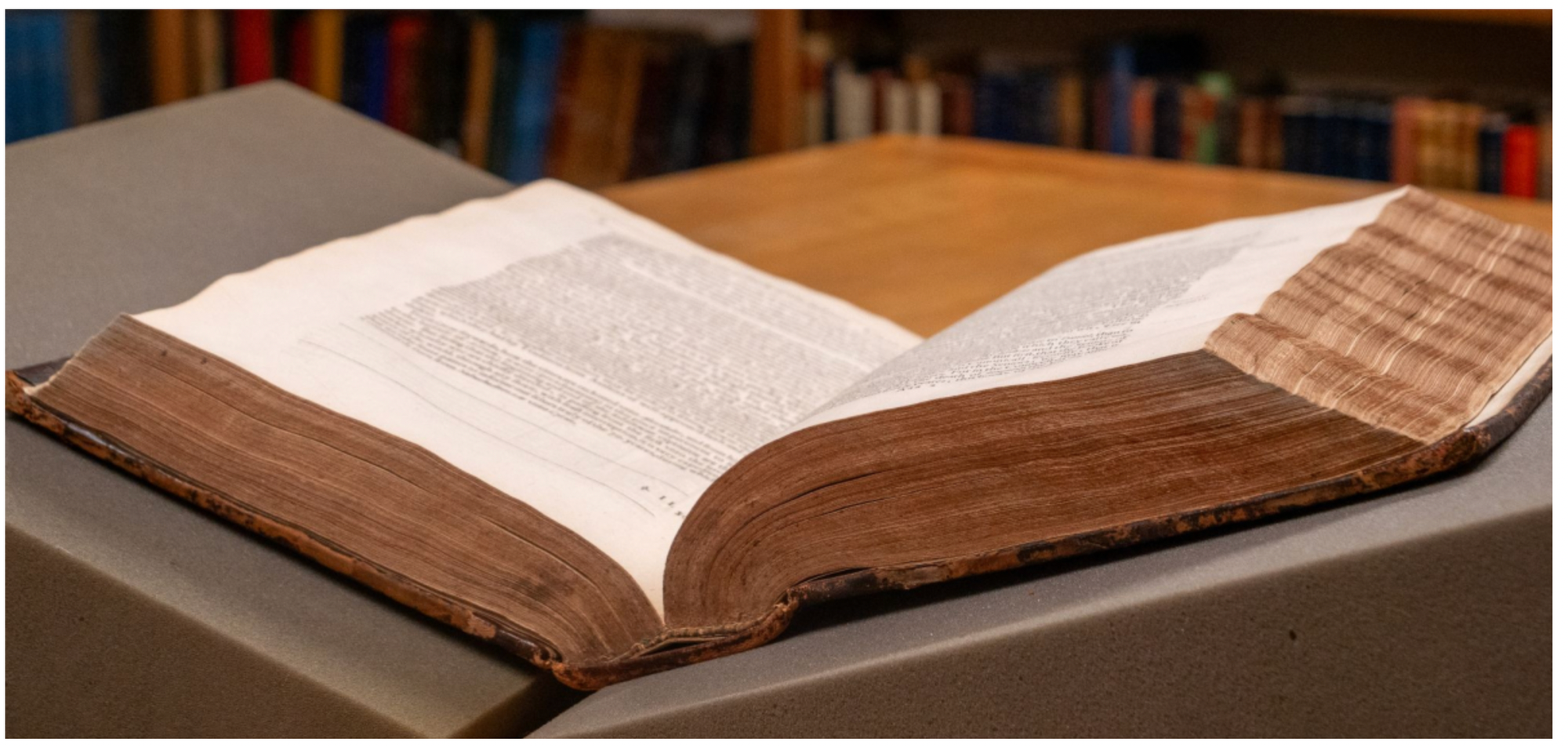
Though Raleigh was a favourite courtier of Elizabeth I, he fell out of favour under James I for factionalism. While he was imprisoned in the Tower of London following his conviction for treason under James I, he wrote his History of the World. A 1614 first edition of this work was donated to the college in February 2026.
In the 1590's the college started to admit 'gentlemen-commoners'. These paid higher fees in return for special privileges, including gold-tufted gowns and dining with the Fellows. The majority of these so-called 'commoners', though, came from landed gentry and growing ranks of merchants and lawyers – plus clever boys through scholarships, or who worked to earn their keep.
To accommodate this growth, the college did two things. Firstly it became an incorporated body in 1603, formally adopting the name of Oriel College, which gave it legal security and the ability to pursue debts. Secondly, in 1608 it began rebuilding the front quad range – the principal part of the College on the site of the medieval La Oriole. This quad still stands today. Gothic architecture was now out of style, and many colleges had begun rebuilding in more classical traditions. Oriel's decision to build a Jacobean Gothic revival quadrangle was an intentional and conscious homage to its medieval origins and royal associations.
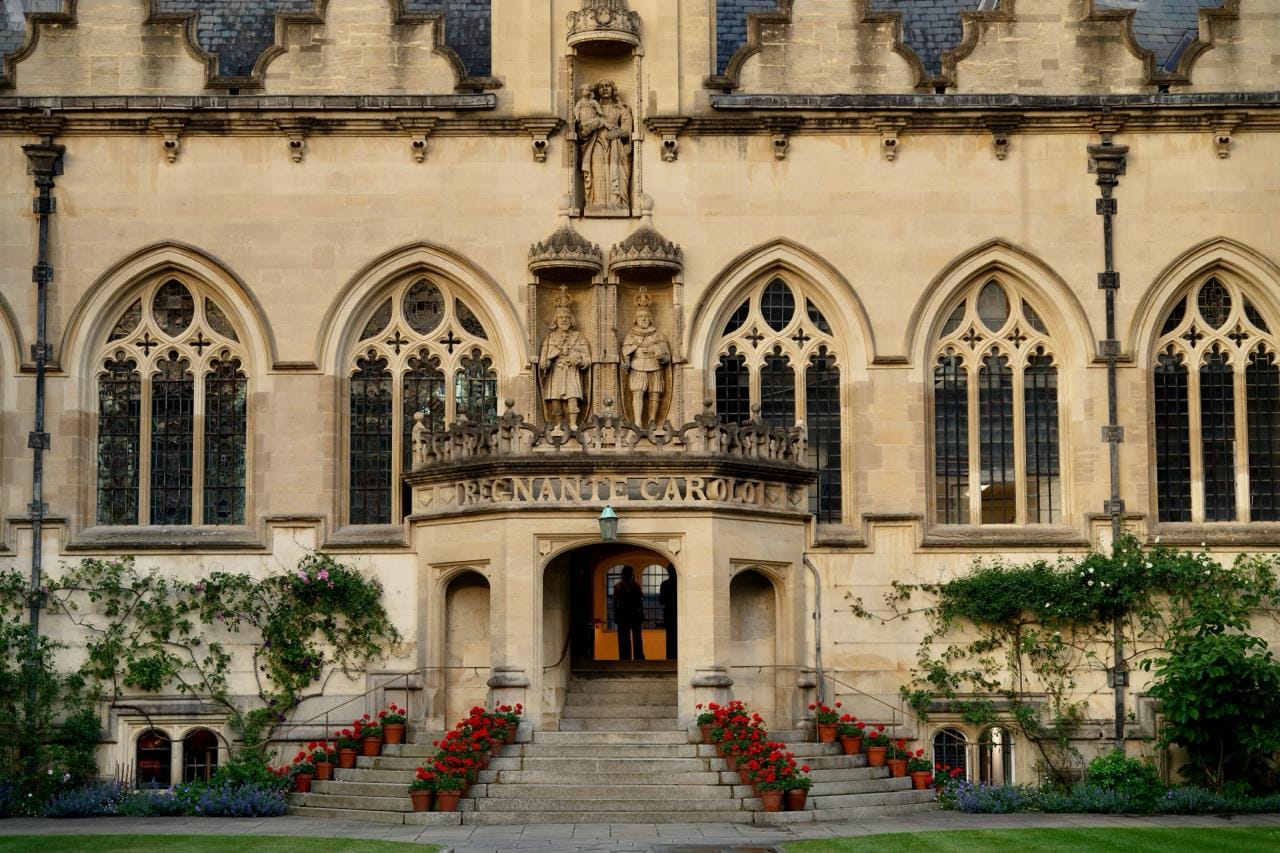
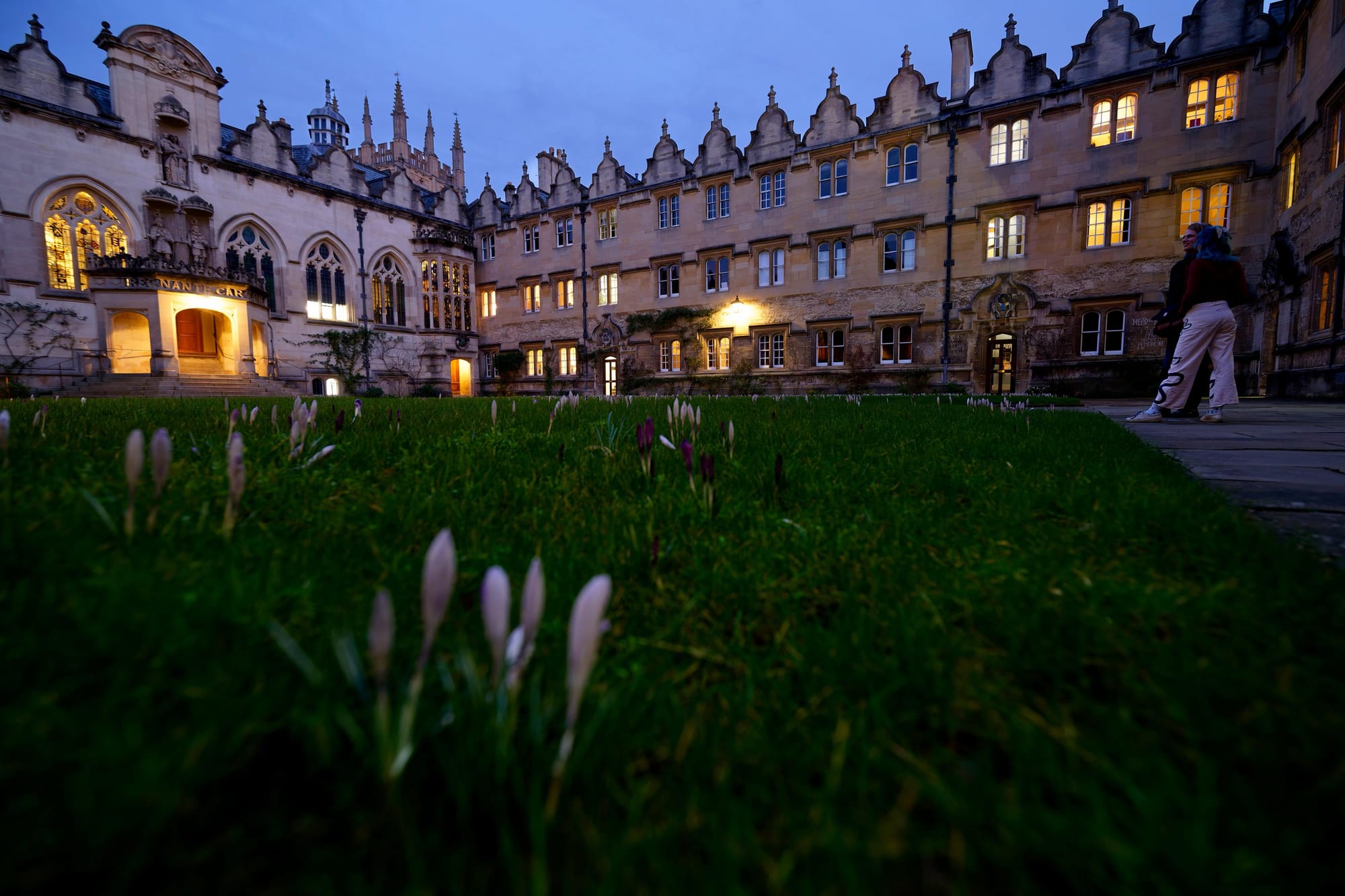
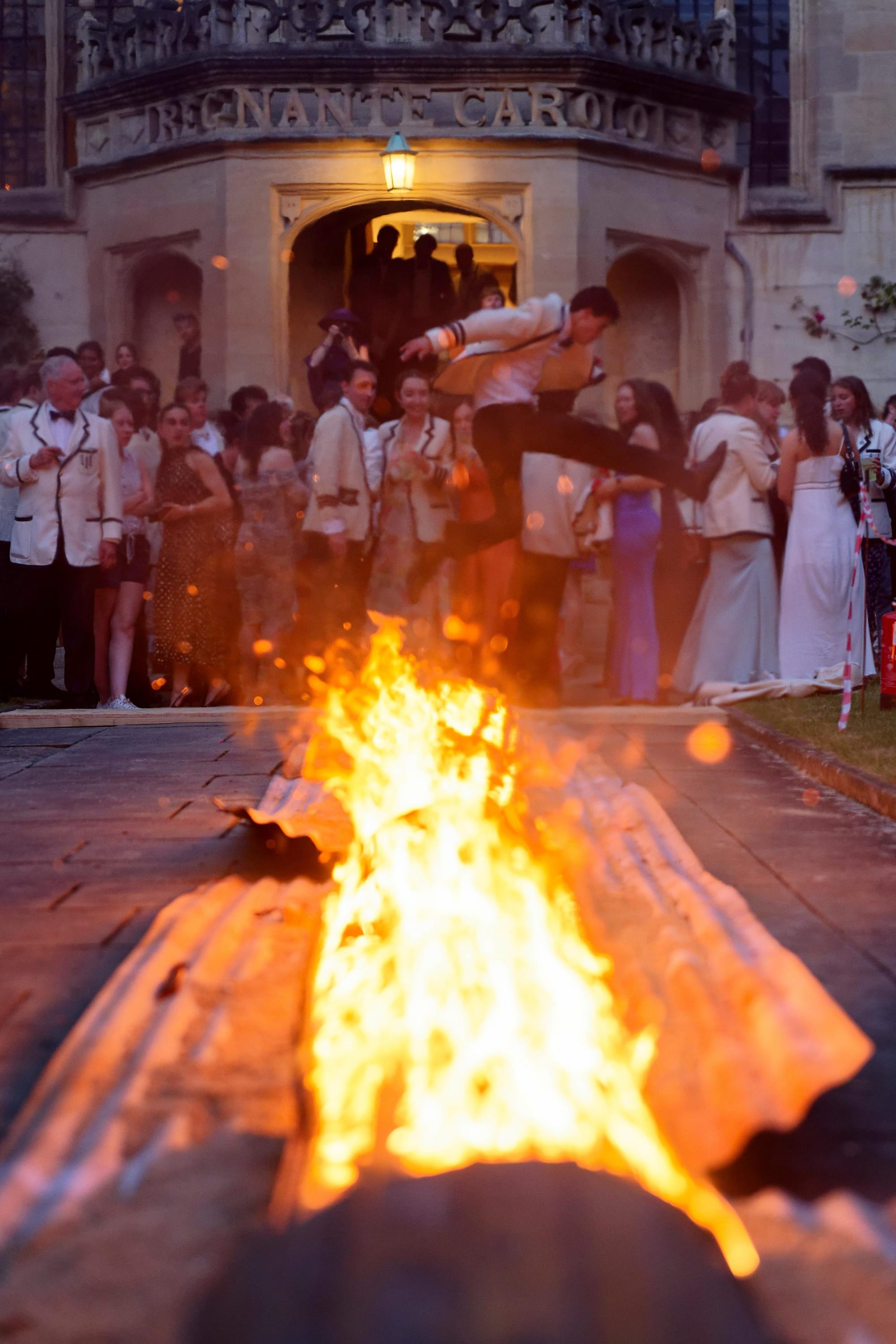
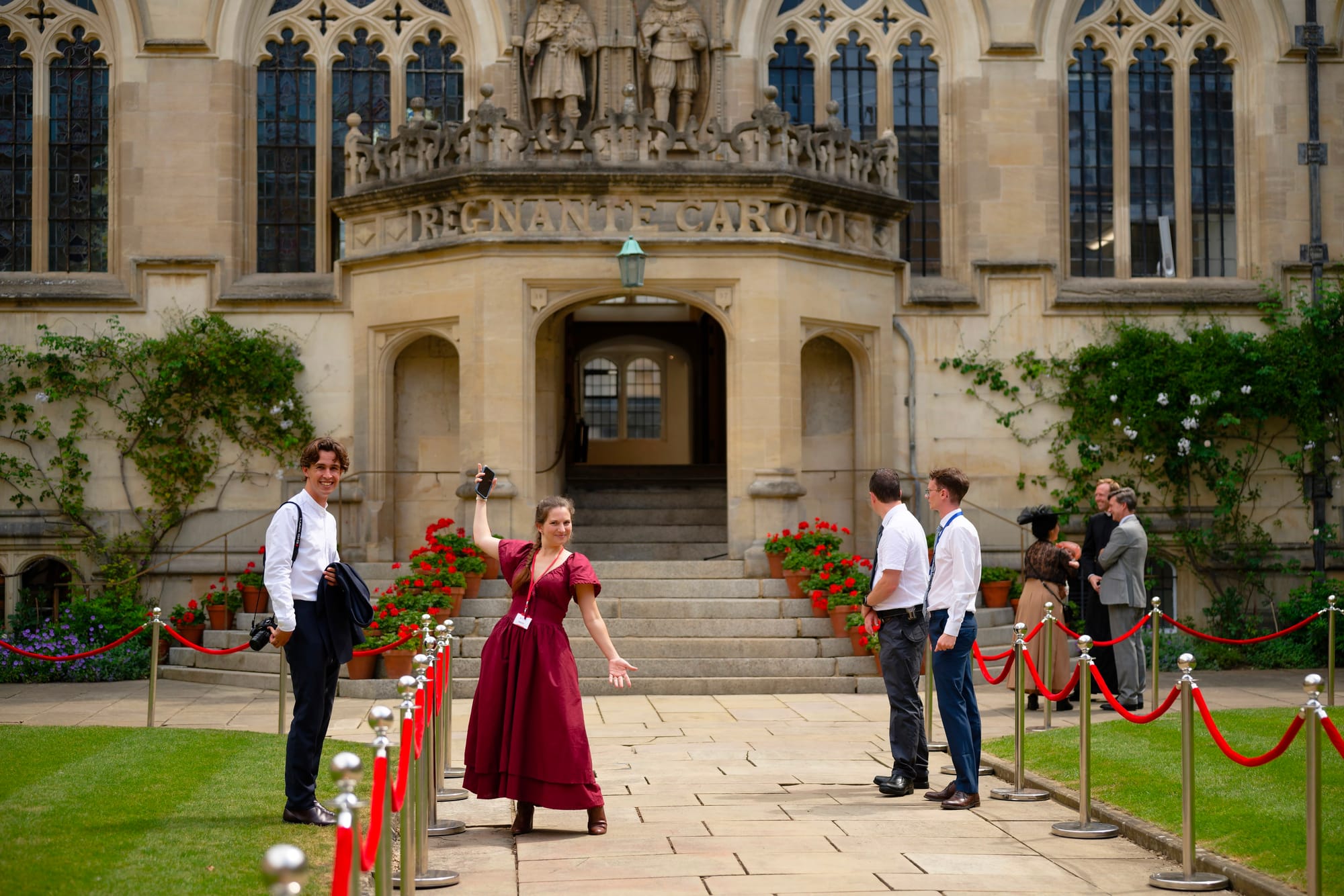
The front quad, by day and by night, with its royal statues and 'Regnante Carolo' inscription.
A new Provost's lodging was built first; then the south and west ranges with their gatehouse; and finally the north and east ranges, with the hall and chapel finished in 1642.
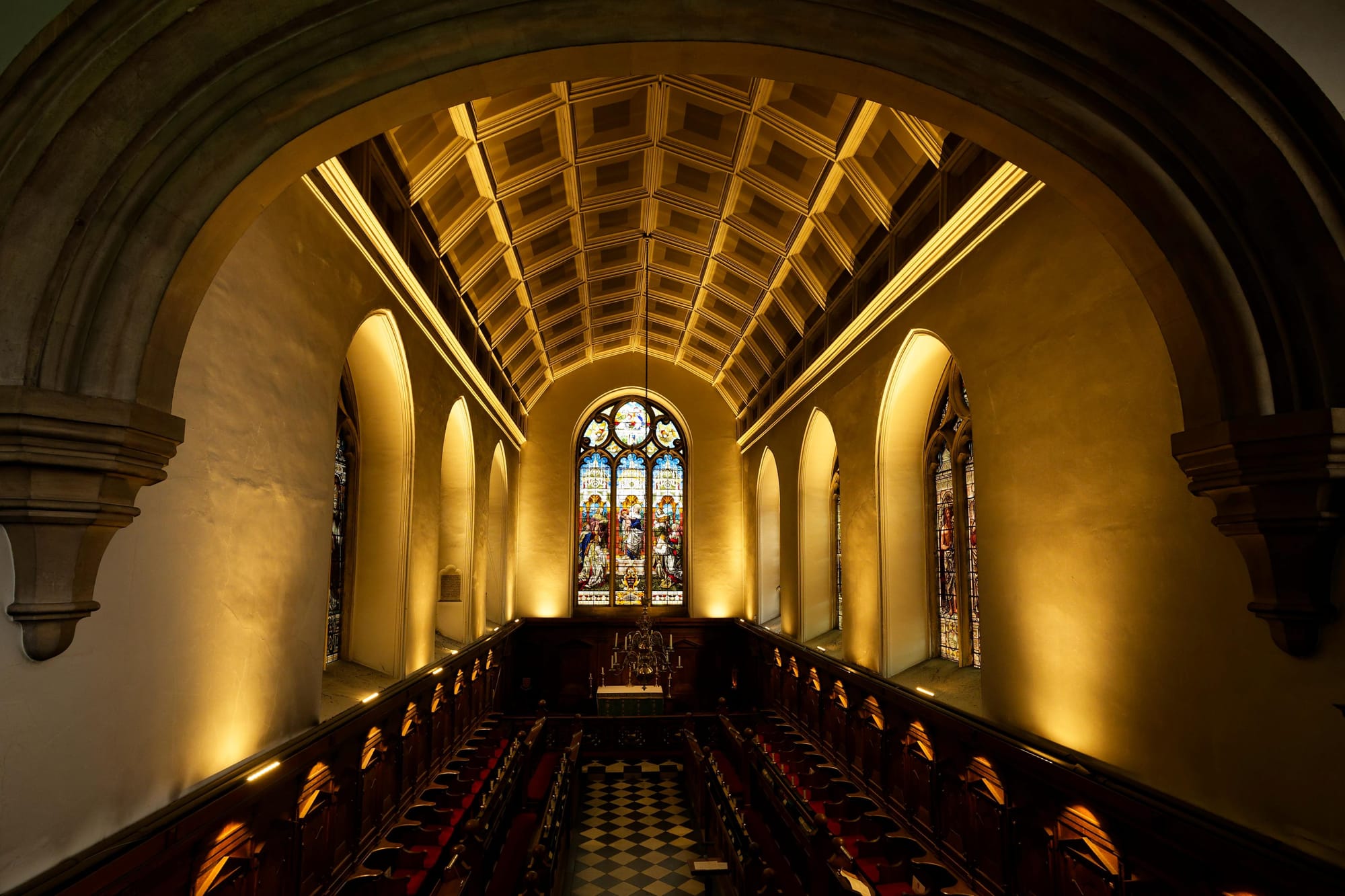
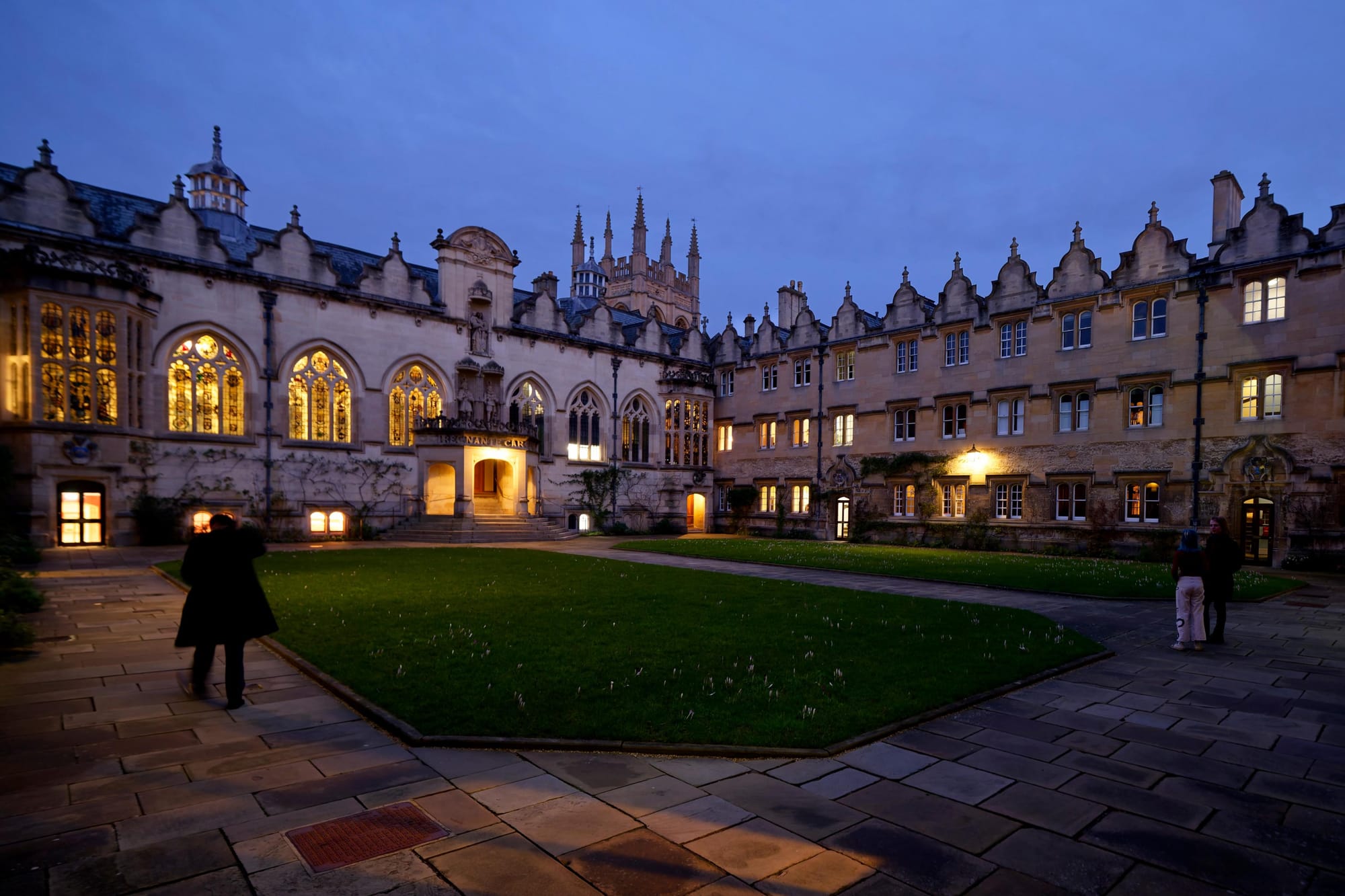
Oriel's chapel, and its front quad at night.
The magnificent quad contains statues to two Kings: Edward II, Oriel's founder, and Charles I, the monarch at the time.
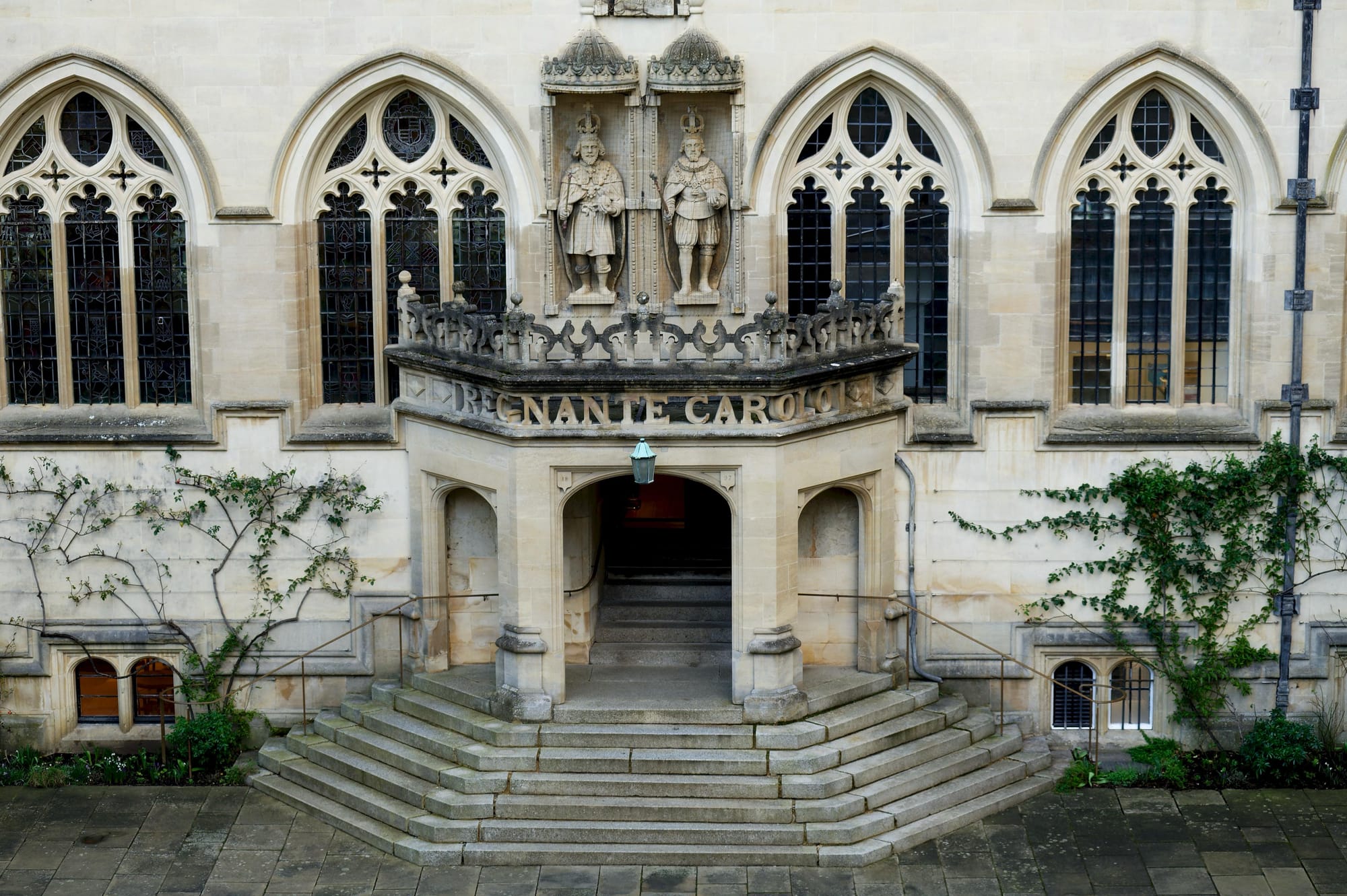
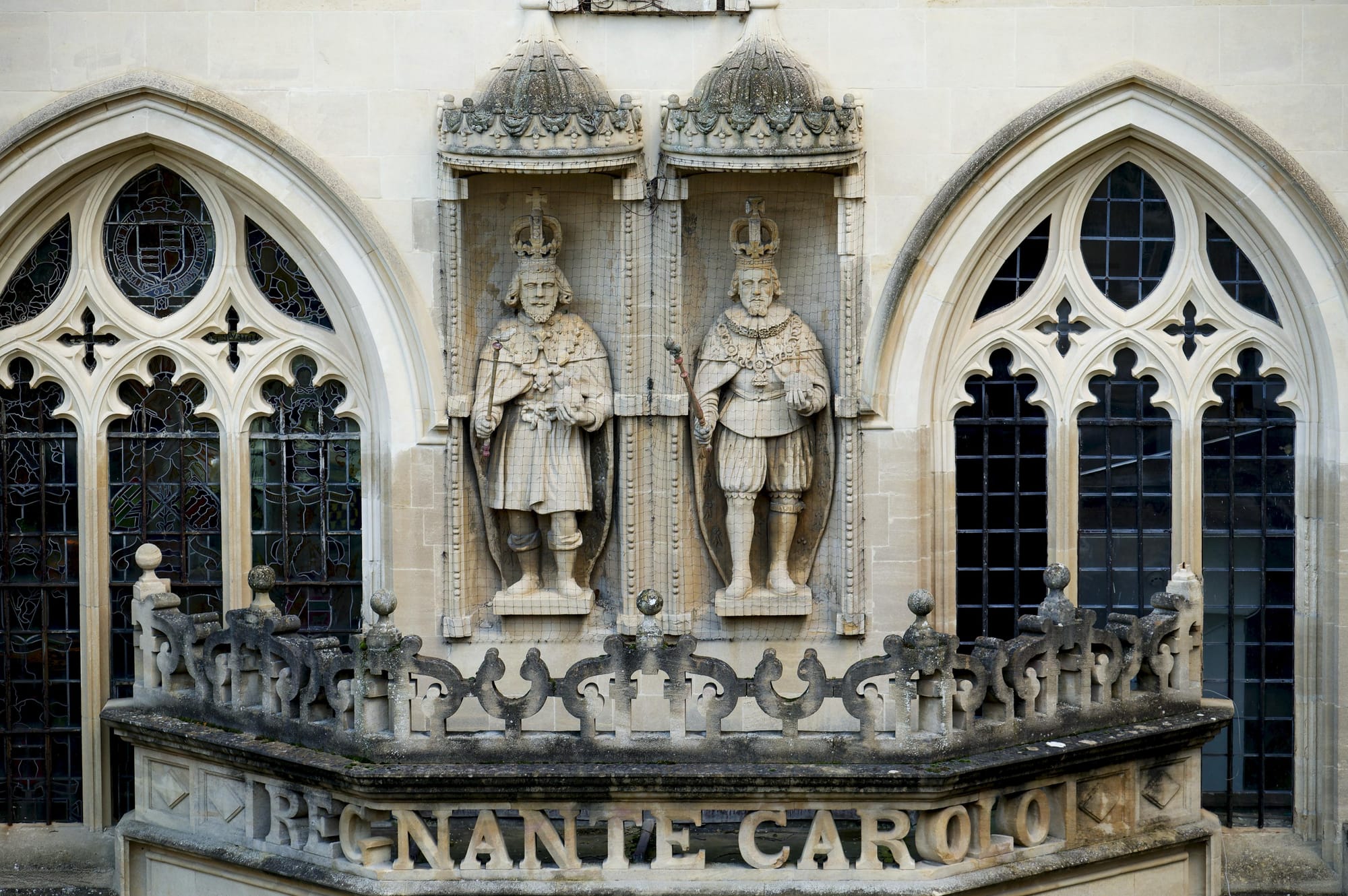
Statues in the front quad - Edward II and Charles I. The stone inscription reads 'Regnante Carolo'.
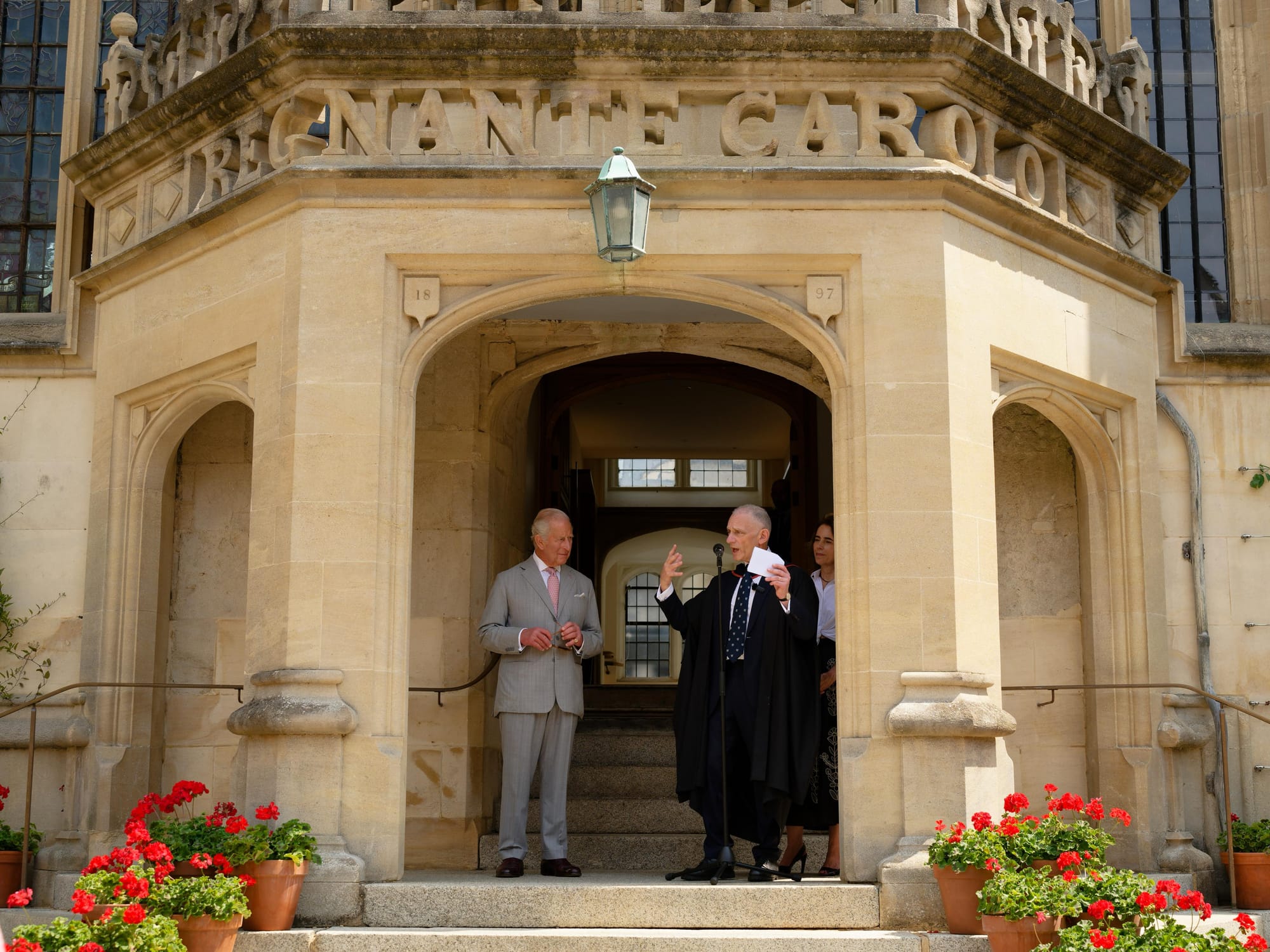
Oriel in the English Civil War
No sooner had the chapel been consecrated, the country descended into civil war, with Oxford at its heart. The city became Charles' de facto capital, following the stalemate battle of Edgehill in October 1642.
Undergraduates fled home or joined the struggle, but the King held court at Christ Church, where royalist Lords and MPs formed an Oxford parliament. Conveniently next to Christ Church, Oriel became the office of the executive committee of the Privy Council, and housed royalists including Charles I's treasurer Francis Cottingham. The college also lost most of its silver to fund the war, in the form of levies to the crown. At the same time, Cromwell's New Model Army set itself up in Marston.
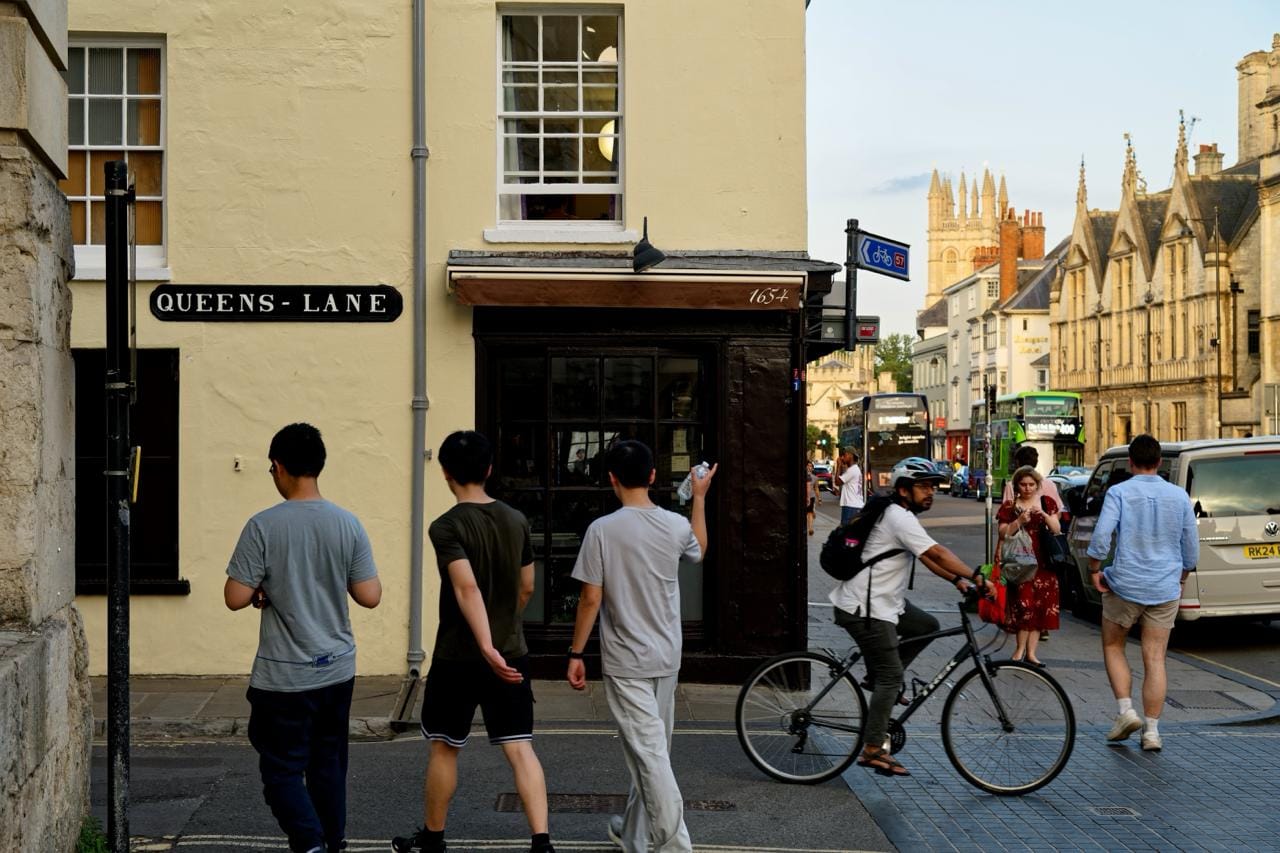
Oriel was responsible for educating the royalists' most successful propagandist – Sir John Birkenhead, who edited the newspaper Mercurius Aulicus where he presented weekly accounts of events in a witty and often sarcastic way. (We feel a certain kinship.) It was printed either in Oriel or Queen's Lane by the university printer. It ceased publication after the King lost the Civil War, but Birkenhead returned from exile to Fellowship at Oriel after the Restoration of the monarchy.
By the end of the Civil War the college had lost most of its undergraduates, its silver, its funds, and many of its Fellows, due to support for the Royalist cause. It only started to recover after the restoration of the monarchy, albeit slowly.
Oriel in the Age of Reform
The late Georgian/Regency period, and transitioning in to very early Victorian period was a time of great influence for Oriel within the University. Three successive Provosts (John Eveleigh, Edward Copleston and Edward Hawkins), drove Oriel to be seen as the intellectual powerhouse of the University, with a band of brilliant thinkers, teachers and writers.
Radical theological debates provided some of the impetus behind the social policies of the Whig reforms of the 1830s, especially the creation of the Victorian Poor Law System. Oriel also nurtured two dramatically different schools of thought within the Church of England: the Noetics, and the Tractarians or Oxford Movement.
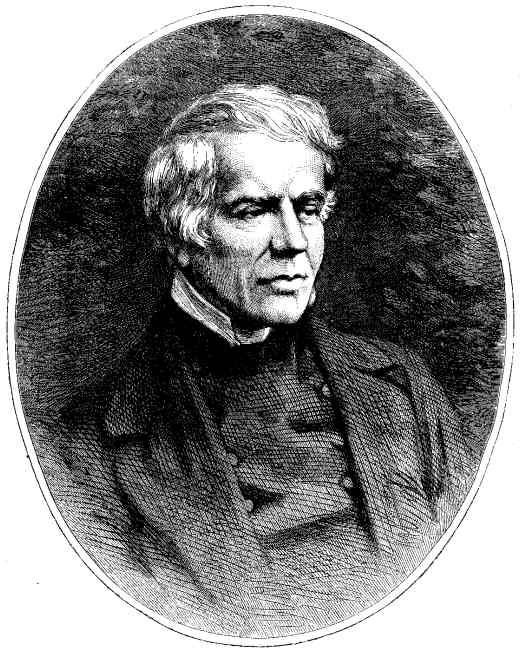

John Keble, Public domain image; 24th World Scout Jamboree (Flickr, World Scouting CC BY-NC-ND 2.0)

This period also saw the construction of the Senior Library, to house a collection of rare books. It also saw the college focusing on awarding places by merit: Eveleigh wished to fortify English society by creating a new university-educated intellectual elite. Consequently, John Keble, the founder of the Oxford Movement was elected from Corpus; Thomas Arnold, the educational reformer followed, as did Richard Hurrell Froude, the catalyst in the Oxford Movement. The theologian and mathematician Baden Powell was also an Orielensis – his son was later to found the Boy Scout movement.
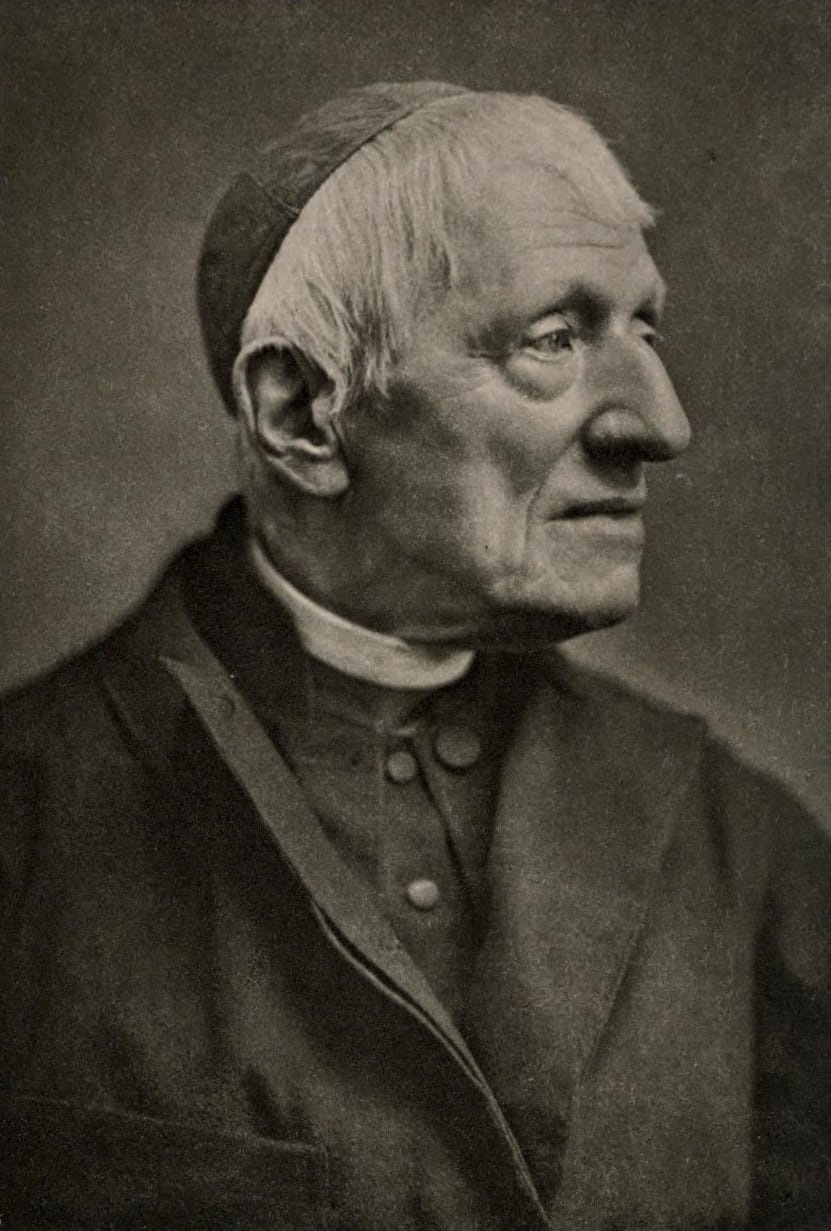
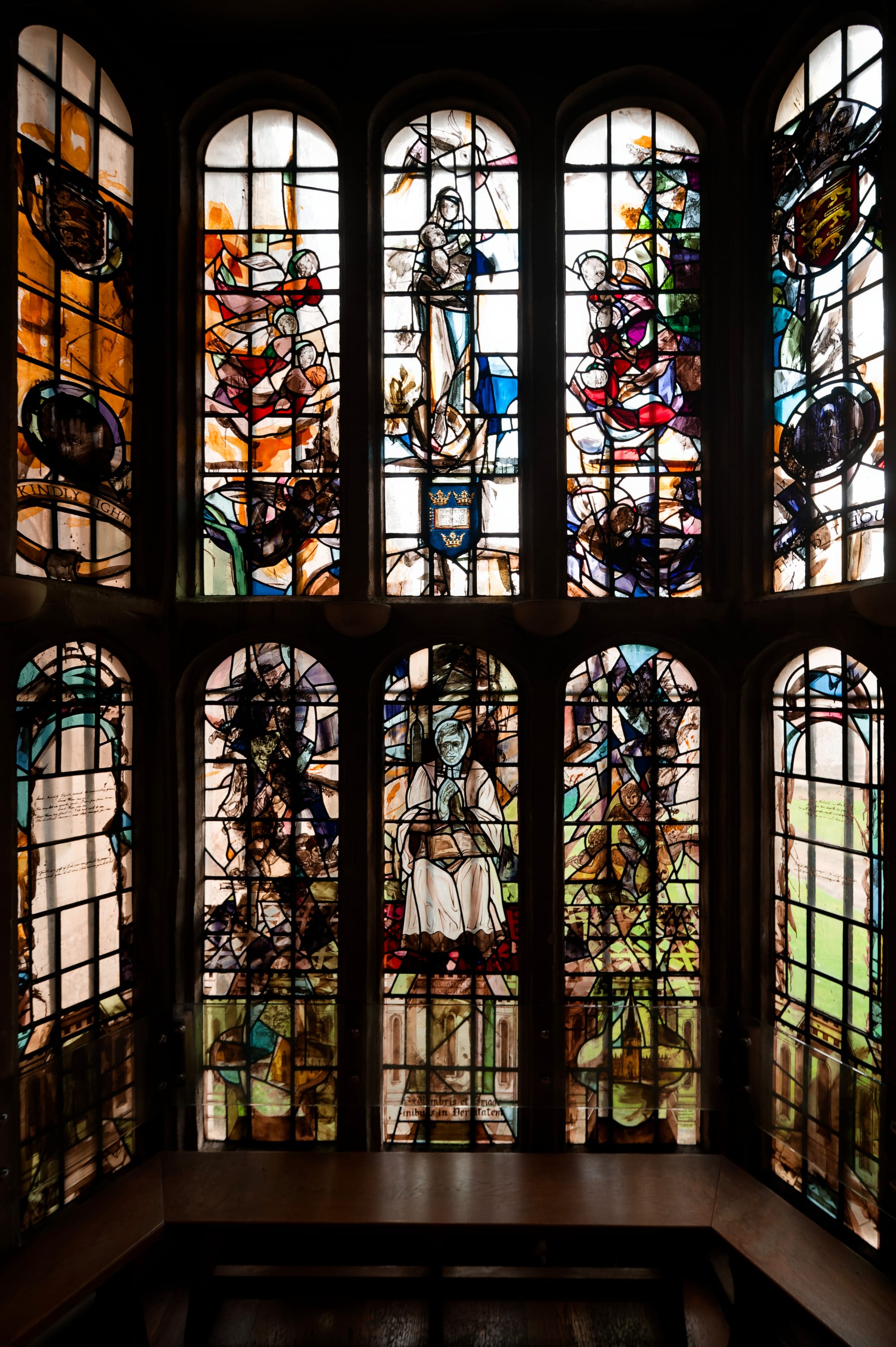
John Henry Newman (public domain image), Newman Window.

The Oxford Movement
In the chapel at Oriel, you will find a window commissioned to celebrate John Henry Newman (1801-90) on the bicentenary of his birth. Newman, Keble and Froude were the architects of the 'Oxford Movement' which sought to transform the Church of England.
The Oxford Movement emphasises the continuity between modern Anglicanism and the medieval (Catholic) church, and the drive to revive a more sacramental, 'high church' form of Protestantism. This is characterized by holding High Mass, special honour given to the Virgin Mary, genuflecting, making the sign of cross throughout the service and the swinging of incense. In the 19th century such practices were considered Romish, and highly controversial.
The Movement's sermons, preached from the pulpit of St Mary's Church, were published as tracts, hence the nickname 'Tractarians'. You might not be familiar with the Oxford Movement, but Newman left his legacy on Oxford – a school in Littlemore is named after him. (He preached his last Anglican sermon in Littlemore in 1843.) And you may be familiar with his hymn 'Lead Kindly Light', which featured in the BBC Songs of Praise top 100 hymns.
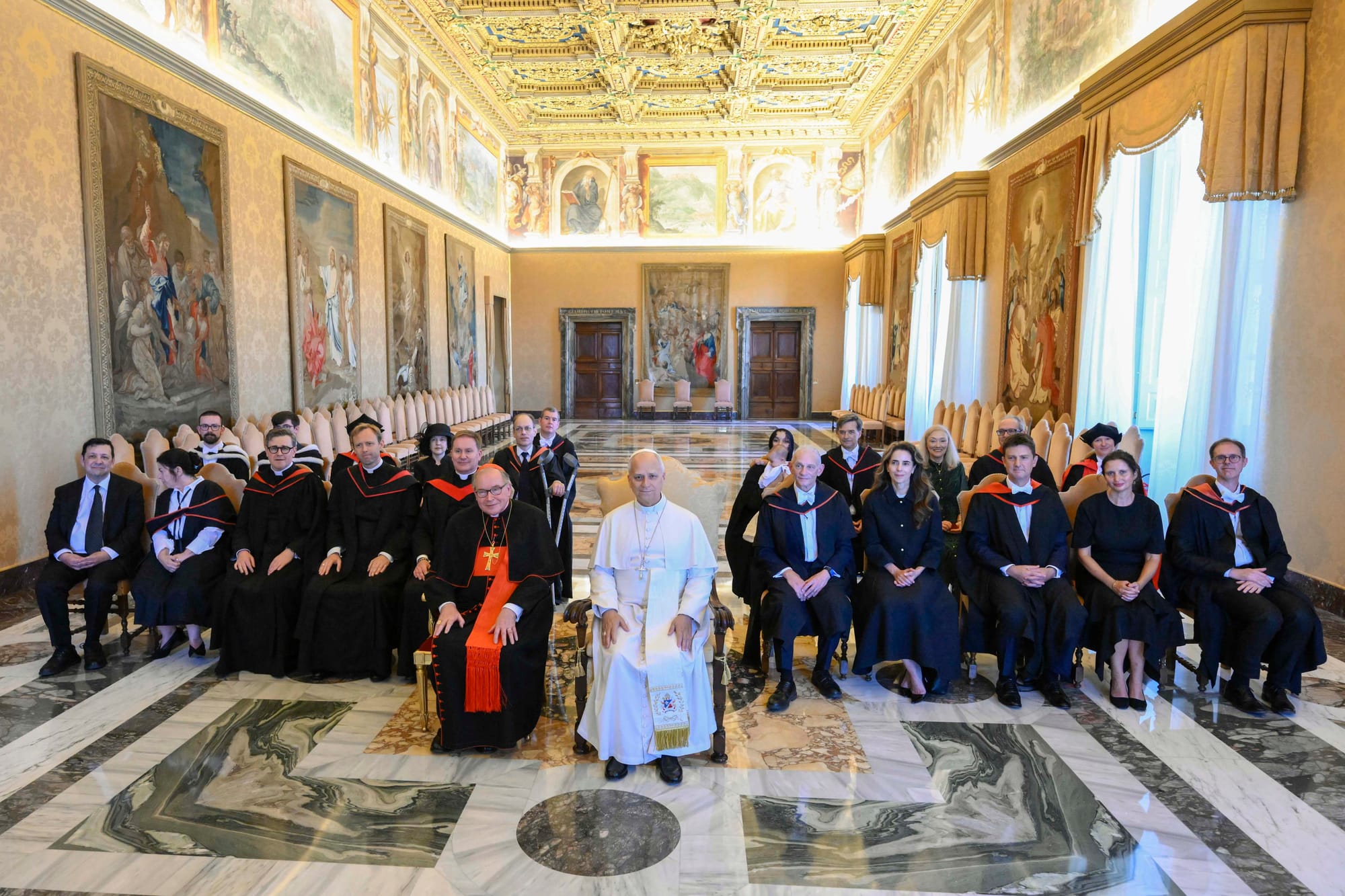
In 2025, the Pope recognised John Henry Newman as a Doctor of the Church and co-patron of education. In 2026, Provost Lord Neil Mendoza led the first ever delegation from an Oxford college to the Vatican, following the Church's recognition of Newman.
Dreaming spires
And it was at Oriel that poet and cultural critic Matthew Arnold, Professor of Poetry at Oxford in 1857, coined the phrase 'Dreaming Spires' in his poem 'Thyrsis'. Botley’s Matthew Arnold School is named after him, as the first such professor to deliver his lectures in English rather than Latin.
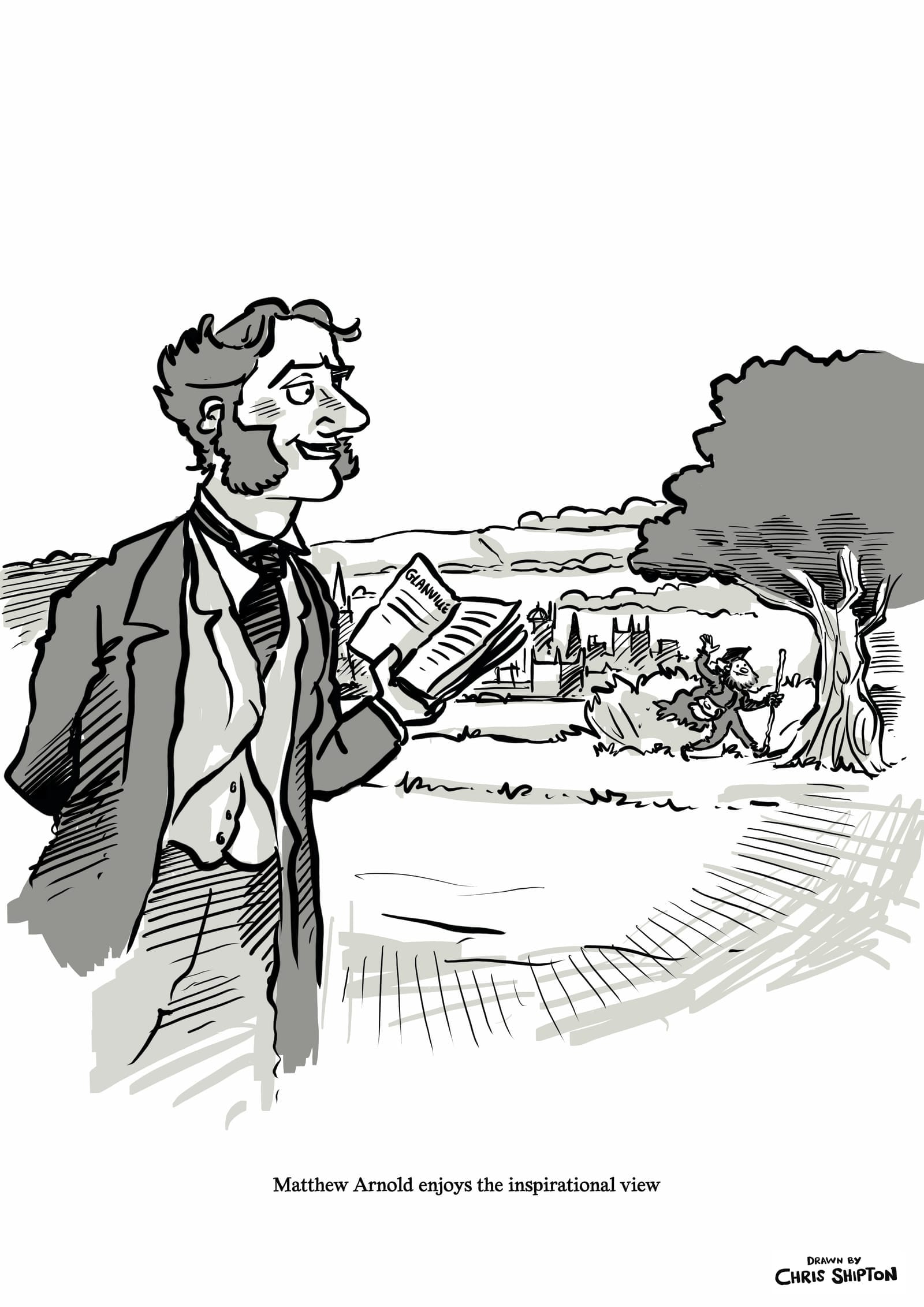
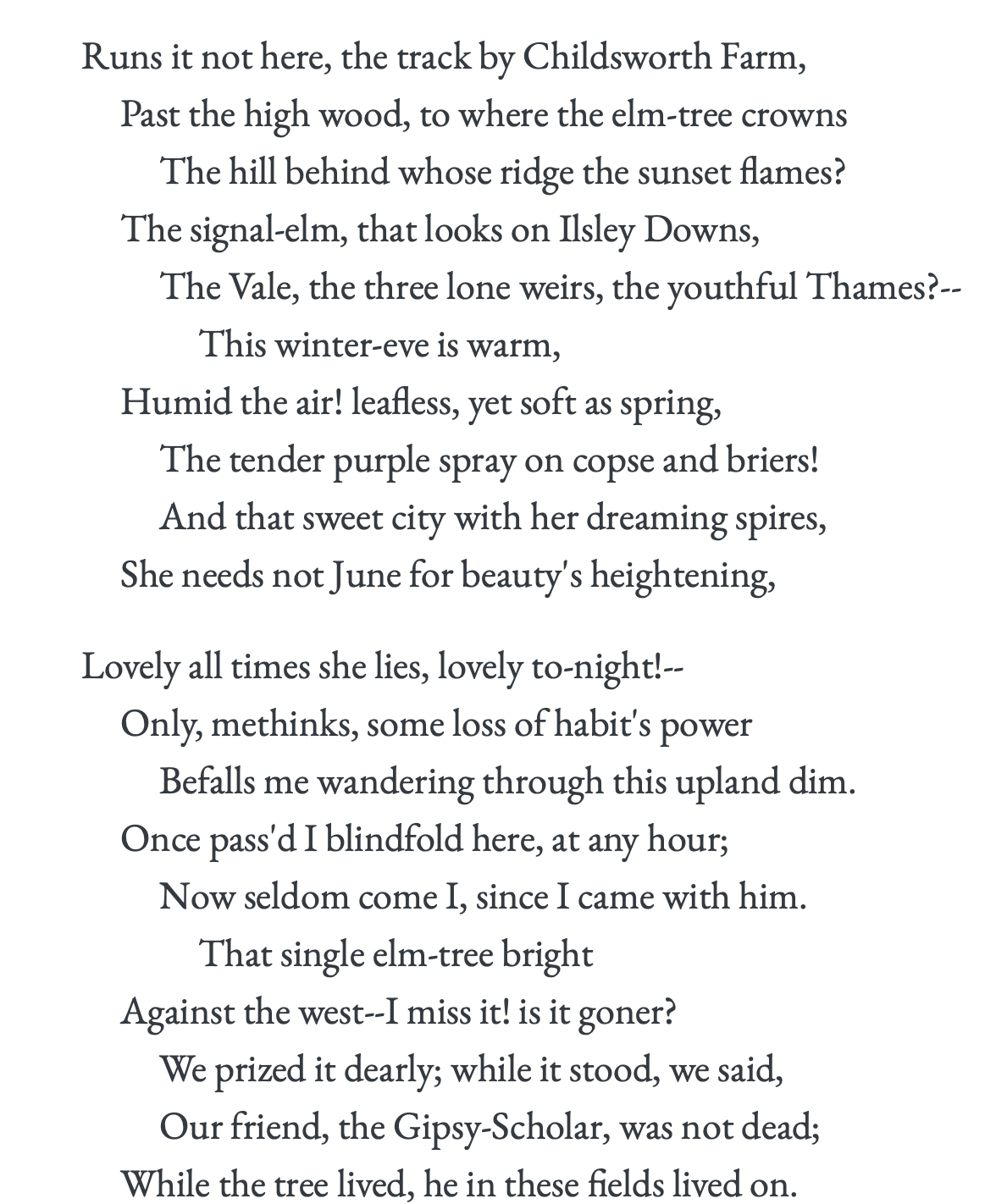
Matthew Arnold, as drawn by artist Chris Shipton for Network Rail. Extract from Thyrsis.
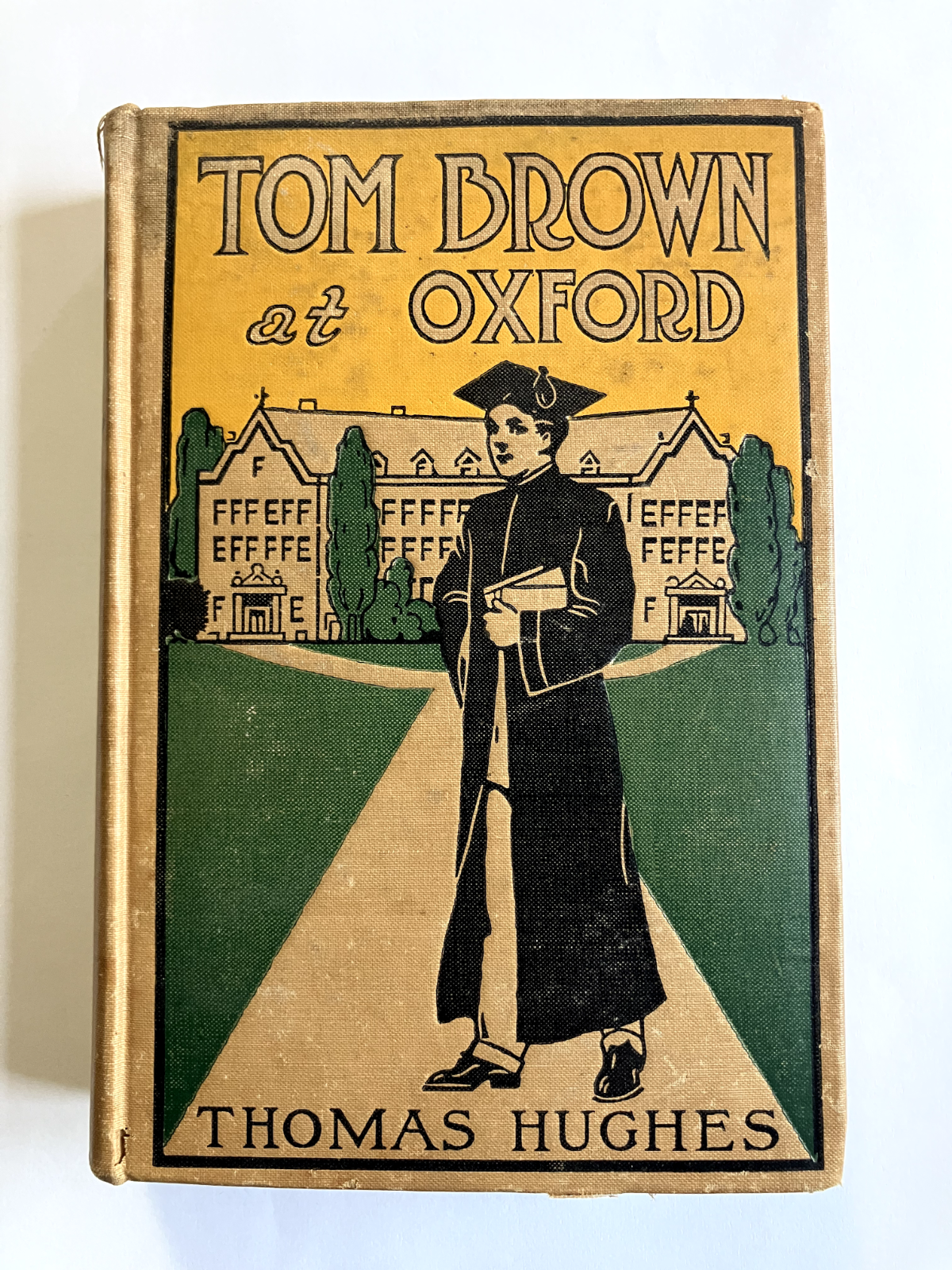
Tom Brown at Oxford
It is widely acknowledged that St Ambrose's, as it appears in Tom Brown at Oxford is a depiction of Oriel. The extravagance and immorality of the 'fast set' are set against the serious intellectual life and healthy activities of the eponymous hero and his companions, particularly rowing. The author, Thomas Hughes, attended Oriel from 1842, and rowed for the college. Hughes' novel featured Oriel winning the 'Head of the River' in the 'bumps' races.
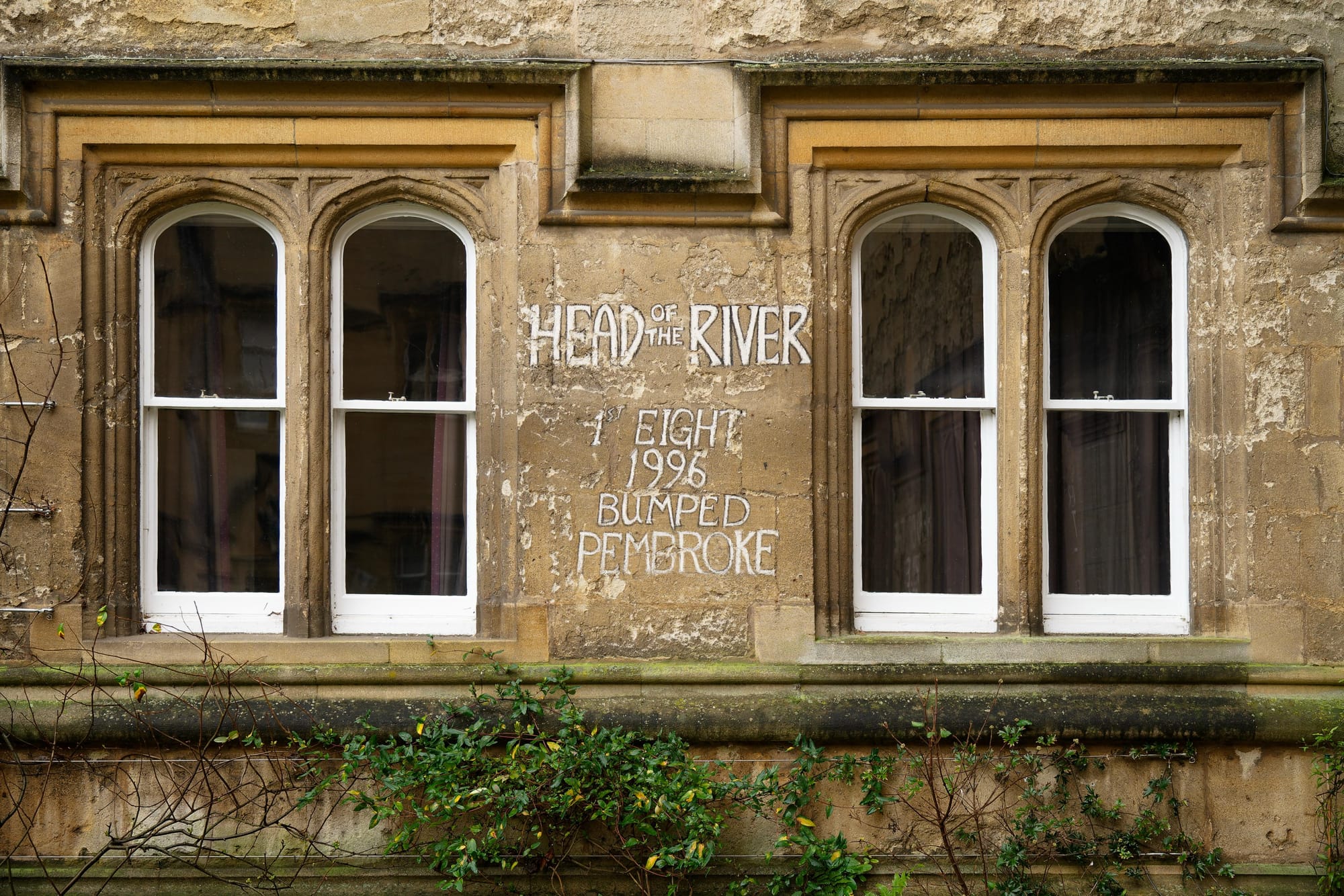

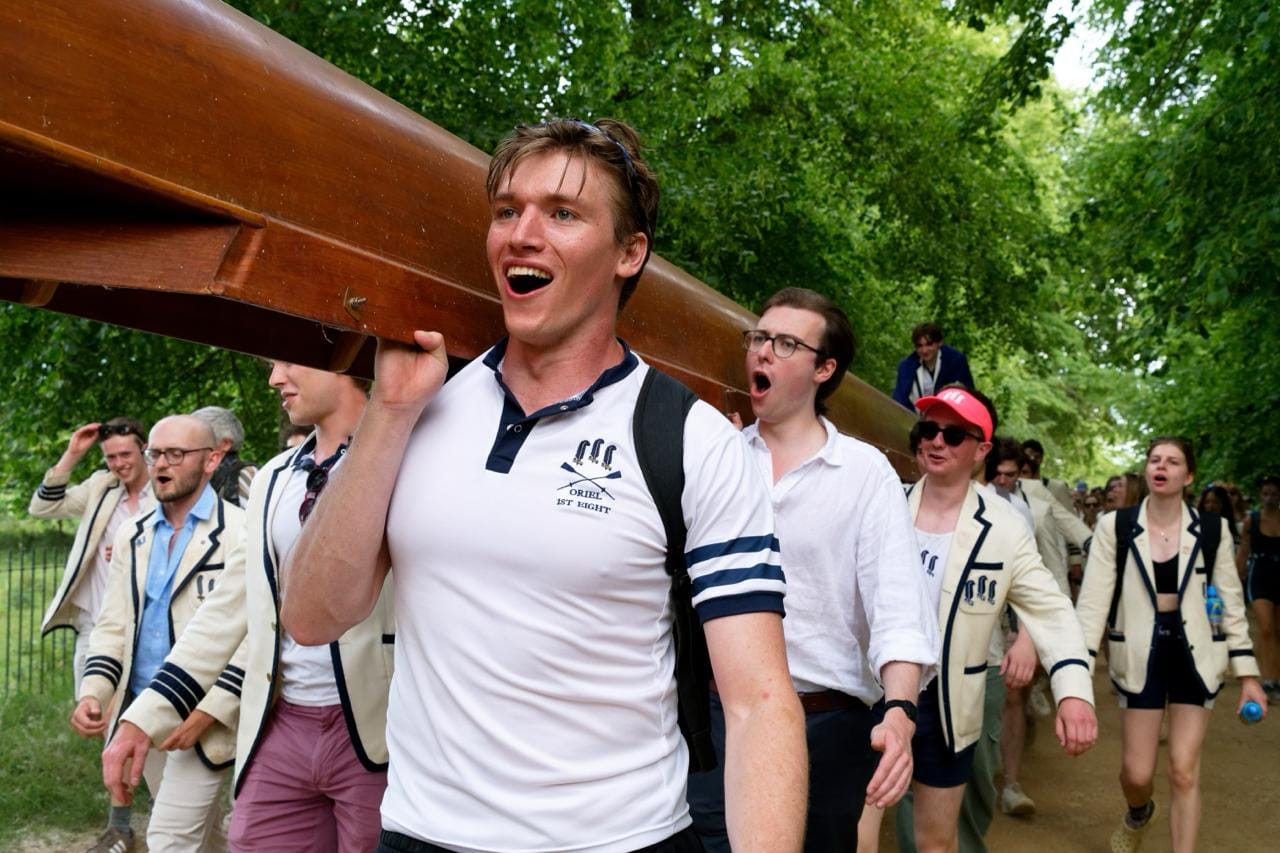
Inscriptions in the college's stone celebrate victories. The winning Oriel team at Summer Eights 2026.
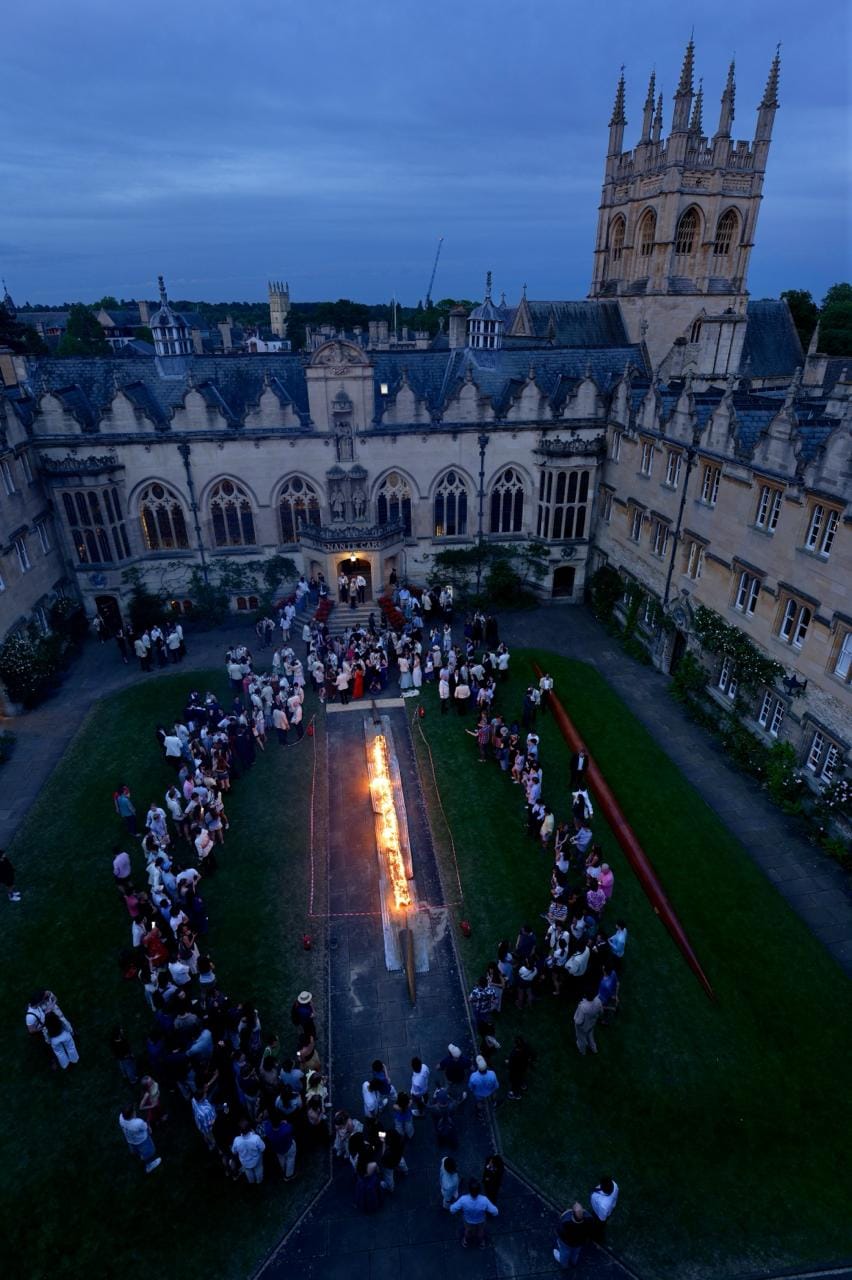
(A brief sporting note: Head of the River wins are recorded by teams on the wall of the first quad in Oriel, and they have won this title more than any other college. In 2025 half the crew of the Oxford-Cambridge Boat Race were from Oriel. In 2026, there were two in the boat. Cambridge won in both years, though the college jokes that if the rest have been Orielenses, perhaps that would not have been the case. Oriel rowers also won two gold medals at the Paris 2024 Olympics. Then, in 2026, Oriel men's boat reclaimed their 2024 position at Head of the River; as is traditional, the cox was carried aloft, on the boat through the streets of Oxford to the college, where it (or rather a replica) was burned in celebration. Oriel students are currently captains of men's rowing, hockey, and rugby at Oxford.)
In the era of Tom Brown, while still heavily influenced by religious and educational thinkers such as Thomas Arnold (the reforming headmaster of Rugby School), the college began to share teaching with other colleges. It broadened its appeal from graduates who took holy orders or became lawyers, to those who went into the Indian Civil Service and the Colonial Services. Despite all this, college income was shrinking due to falling estate rental in the late Victorian agricultural depression.
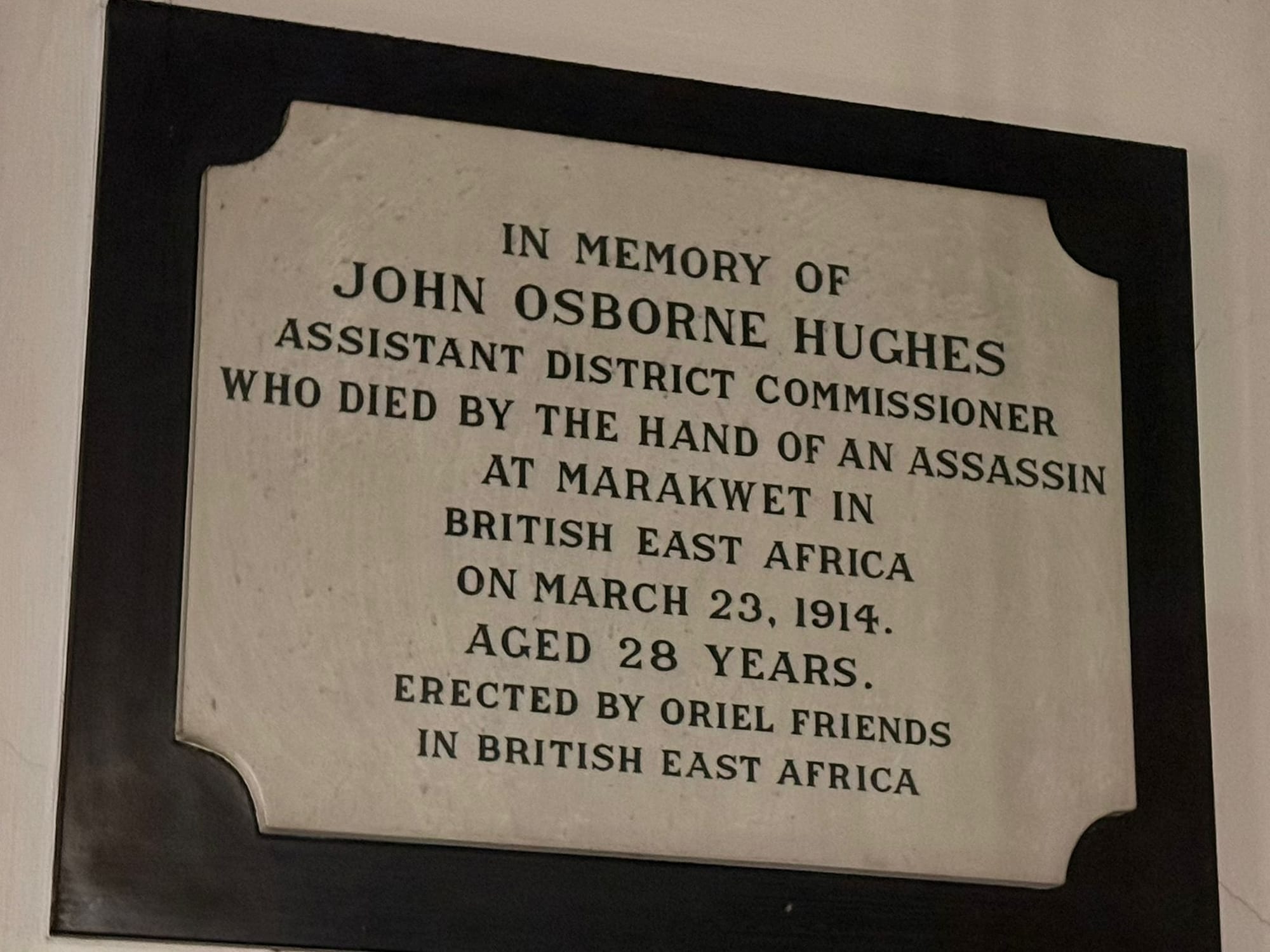
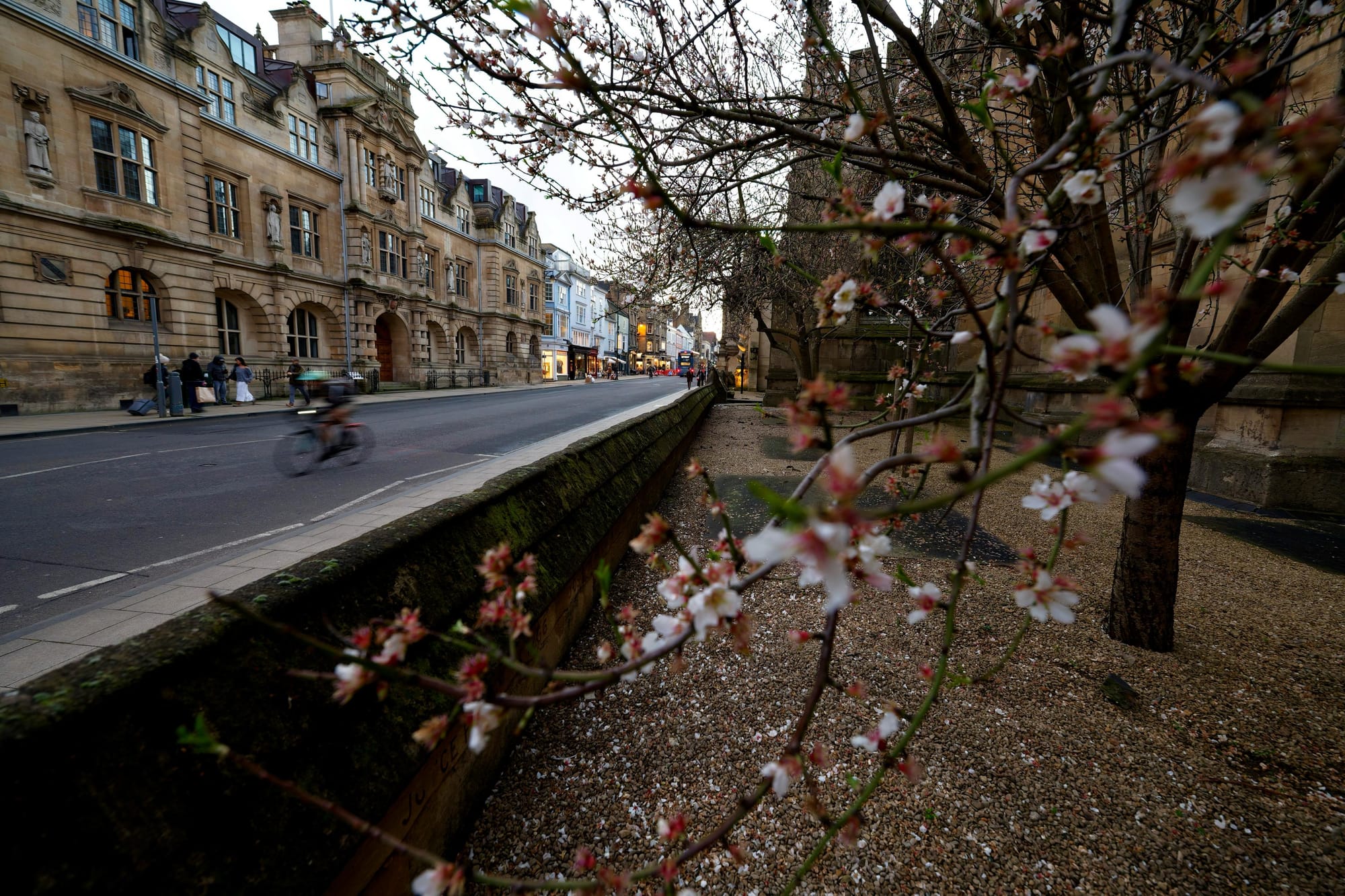
The college increasingly educated those who went into the colonial service. A plaque in the chapel commemorates John Osborne Hughes. A statue of Rhodes can be seen on the outside of the building.
Oriel and Rhodes
In this context of straitened financial times once more, enter Cecil Rhodes, a British mining magnate and politician in Southern Africa who served as Prime Minister of the Cape Colony from 1890 to 1896. To call his legacy problematic would be understating it. His business relied heavily on the land, minerals and people of Southern Africa. As Oriel College puts it, “Some of his actions, particularly during the conquest of Zimbabwe, led to considerable suffering and loss of life.”
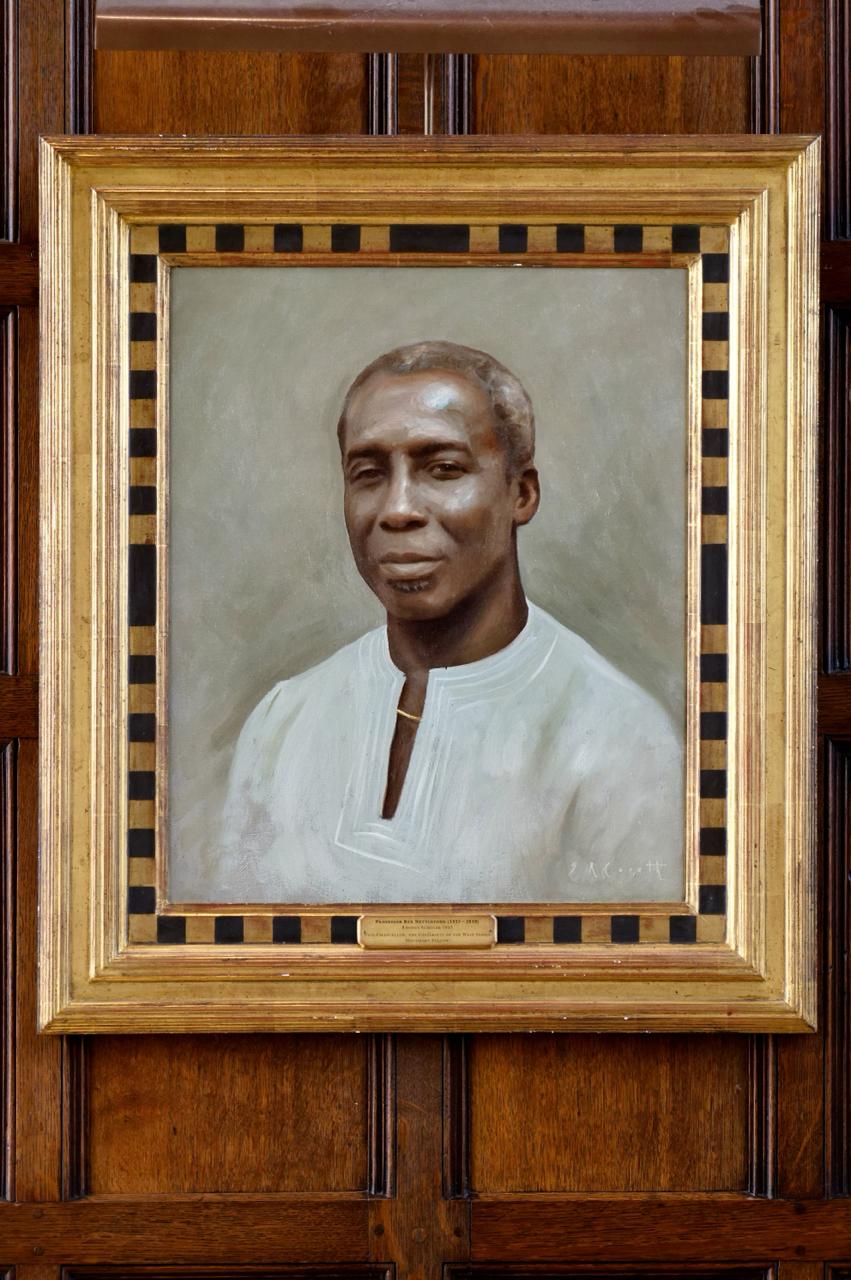
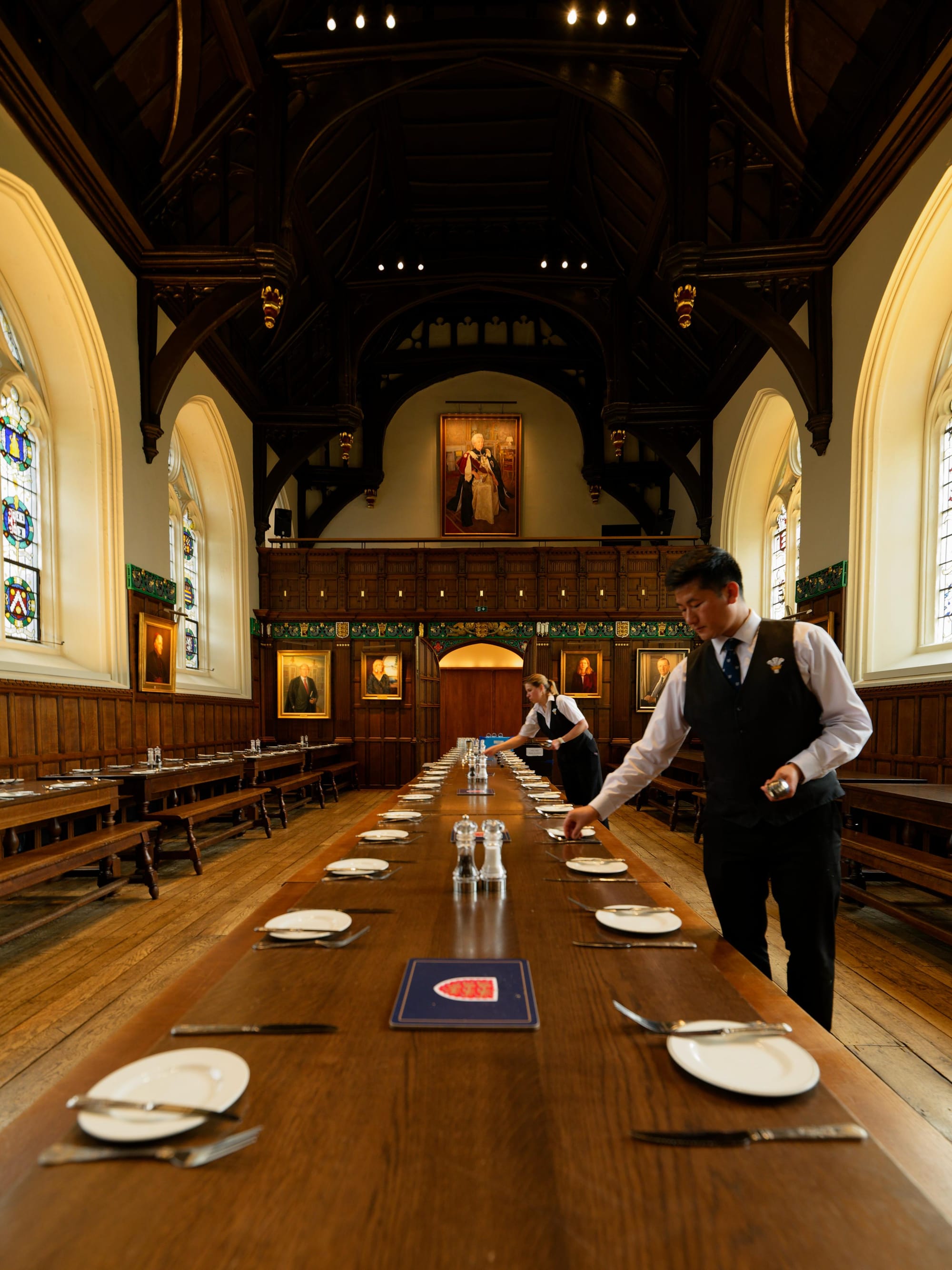
When he died aged 49 in 1902, he left £3m to establish a trust offering students from the British Empire, Germany and the United States scholarships to study at Oxford University. One of those scholars, Rex Nettleford, was to study at Oriel in the 1950s; he later became Vice Chancellor of the University of the West Indies. His portrait hangs in Oriel's dining hall and his name lives on in an annual essay competition for Year 12 students on the impact of colonialism.
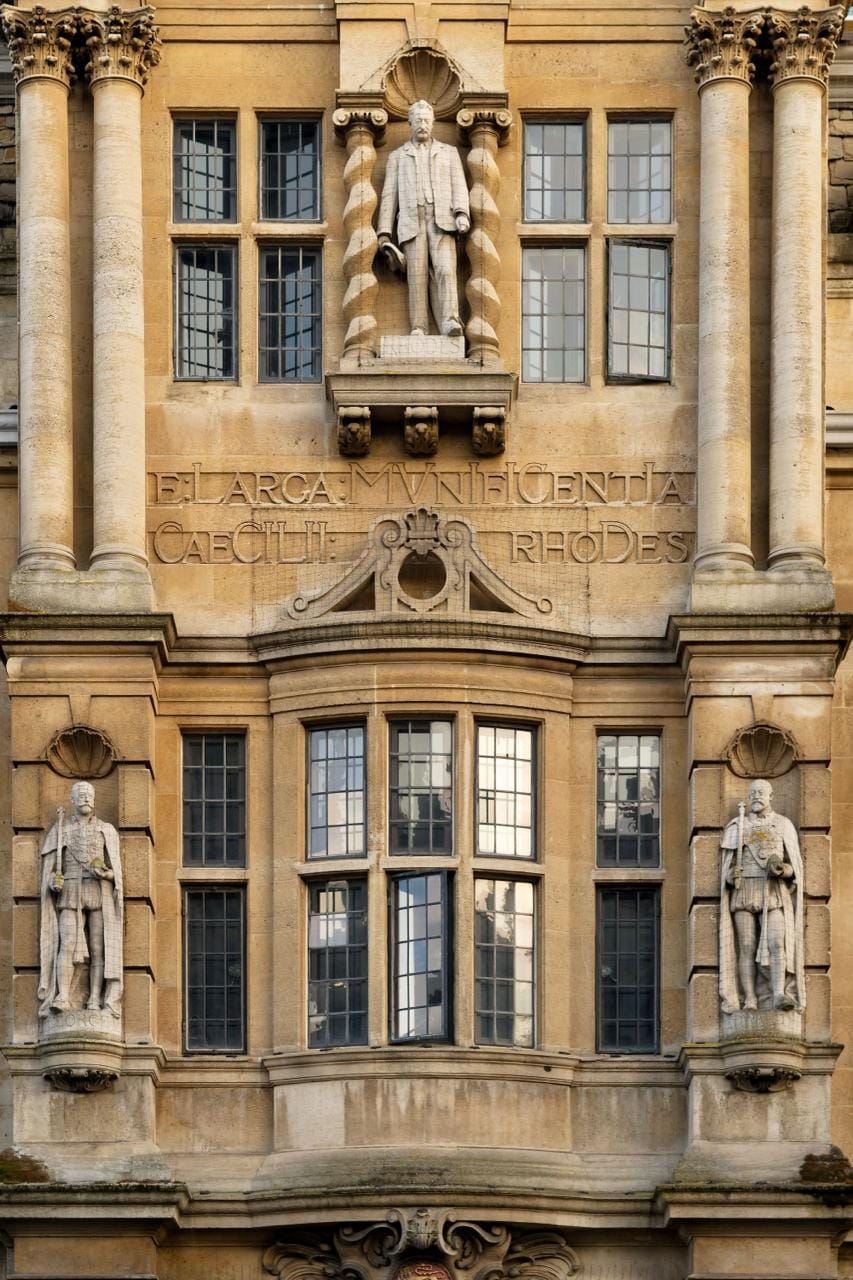
Rhodes also left £100,000 to Oriel College in his will, largely for the construction of a new building on the High, which stands to this day and has a statue of him on the front. The inscription under the statue – E:LARGA:MVNIFICENTIA / CAECILII:RHODES – is notable for its odd letter-sizing. The large letters, rearranged, spell out MDCCCLLVIIIIII, or an ostentatious 1911.
The building was designed by Basil Champneys in a Jacobean revival style, aping the style of the first Quad. The new structure was roundly panned by critics at the time, having required the demolition of several medieval houses: but the 'origami' roof conversion in 2015, to add another floor, is considered a fine addition.
But recent headlines have been less about architecture, more about accountability, in the form of the Rhodes Must Fall movement. It began in South Africa, and manifested itself in Oxford in 2016 and 2020 as students called for the statue to be removed. An independent commission looked at the issue, its planning constraints and heritage considerations. For now, Oriel has installed a plaque underneath the statue, contextualising Rhodes. It cannot erase the past, but it can re-evaluate it.
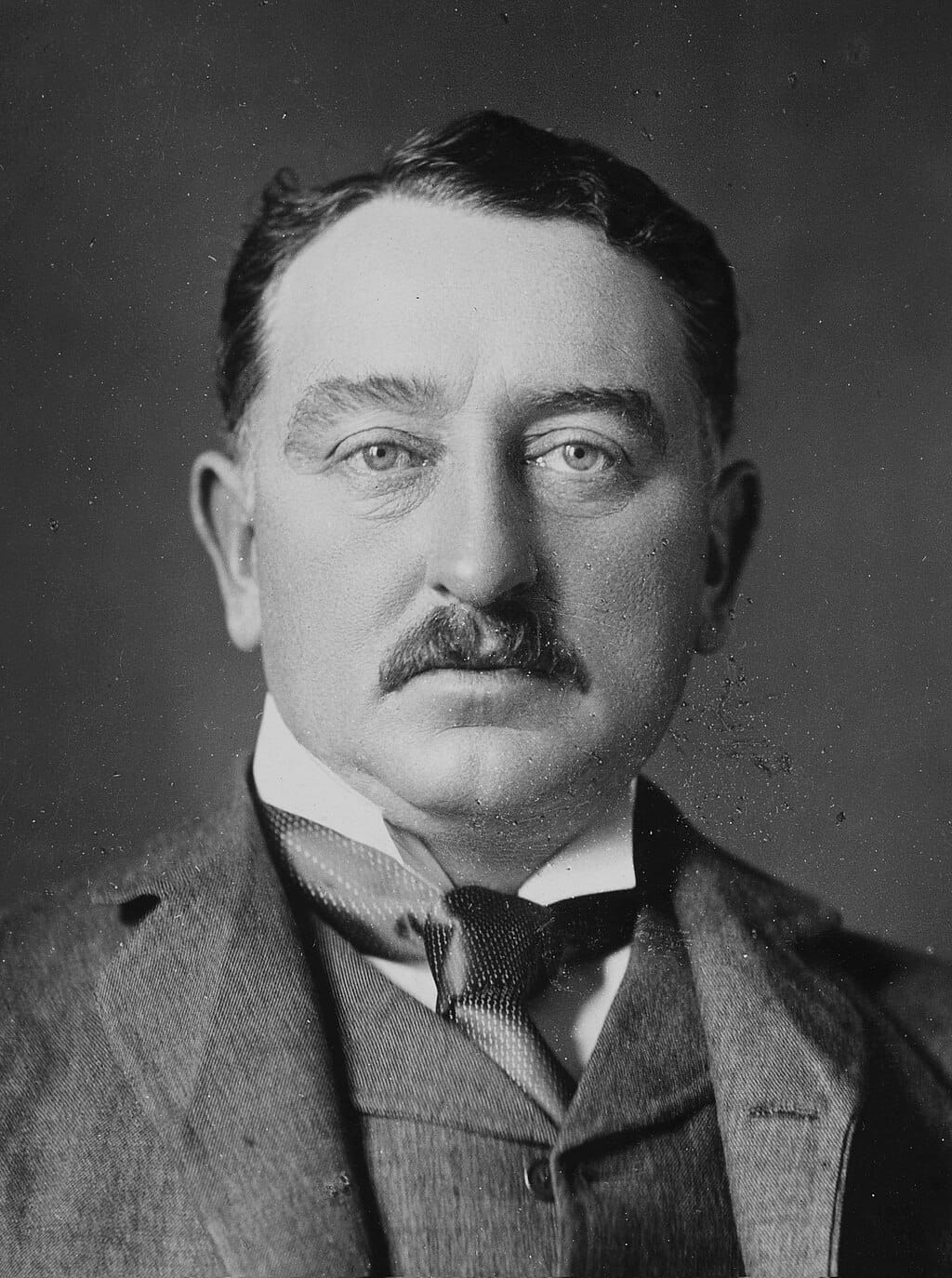

Cecil Rhodes (public domain); sculptor Wallace Mkankha (photo by Nehemia Nyakudanga of Rare Photography, via Oriel).
.jpg)
The college recently hosted an exhibition on Cecil Rhodes featuring four artworks by Zimbabwean sculptors. The exhibition discusses the colonial campaign led by Rhodes in Zimbabwe; charts the history of the Rhodes Must Fall campaign in Oxford; and shines a light on the tradition of Zimbabwean stone sculpture. It has resonated well in Zimbabwe. These are live issues, with present-day echoes elsewhere in the university in the donations from the (opioid-touting) Sacklers, and more recently, private equity tycoon Stephen Schwarzman.
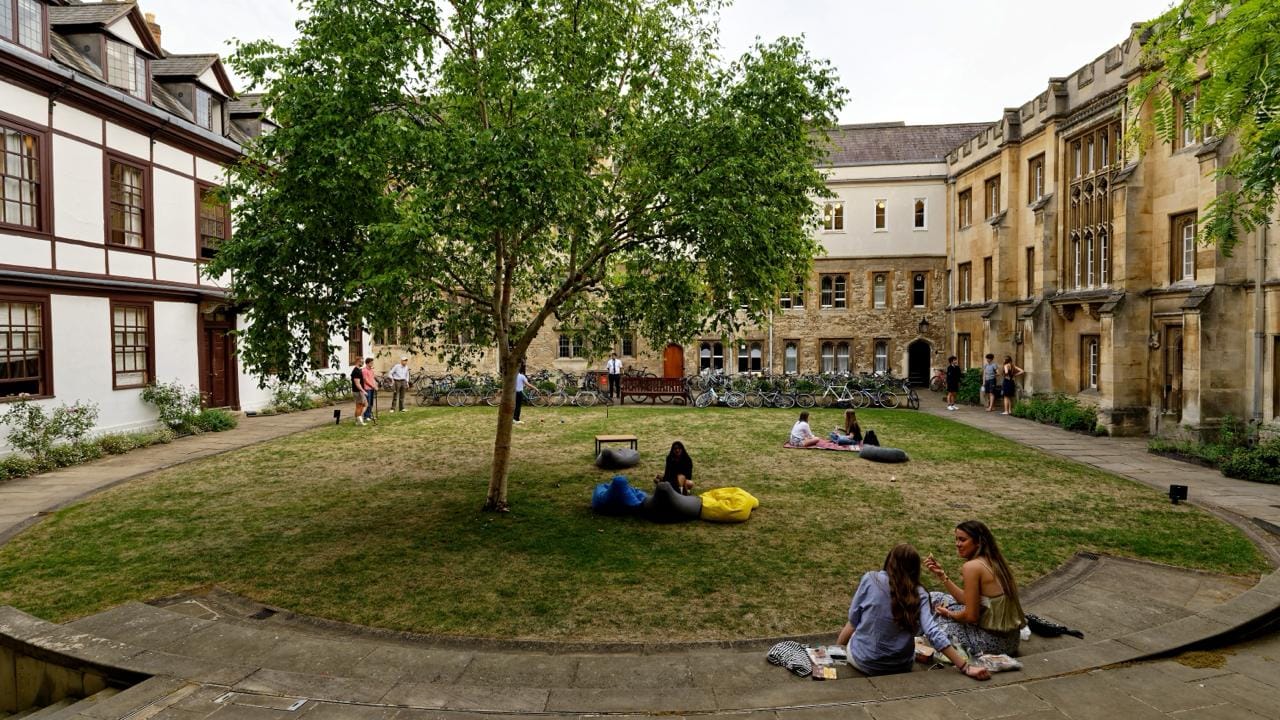
The Third Quad
The Rhodes Building (now known as the High Street Building) finished the Third Quad, which is an extraordinary mix of architectural styles including the Doll's House, which houses the Junior Common Room or JCR. This very unofficial video by a student shows a clash in architectural styles, cheek by jowl.
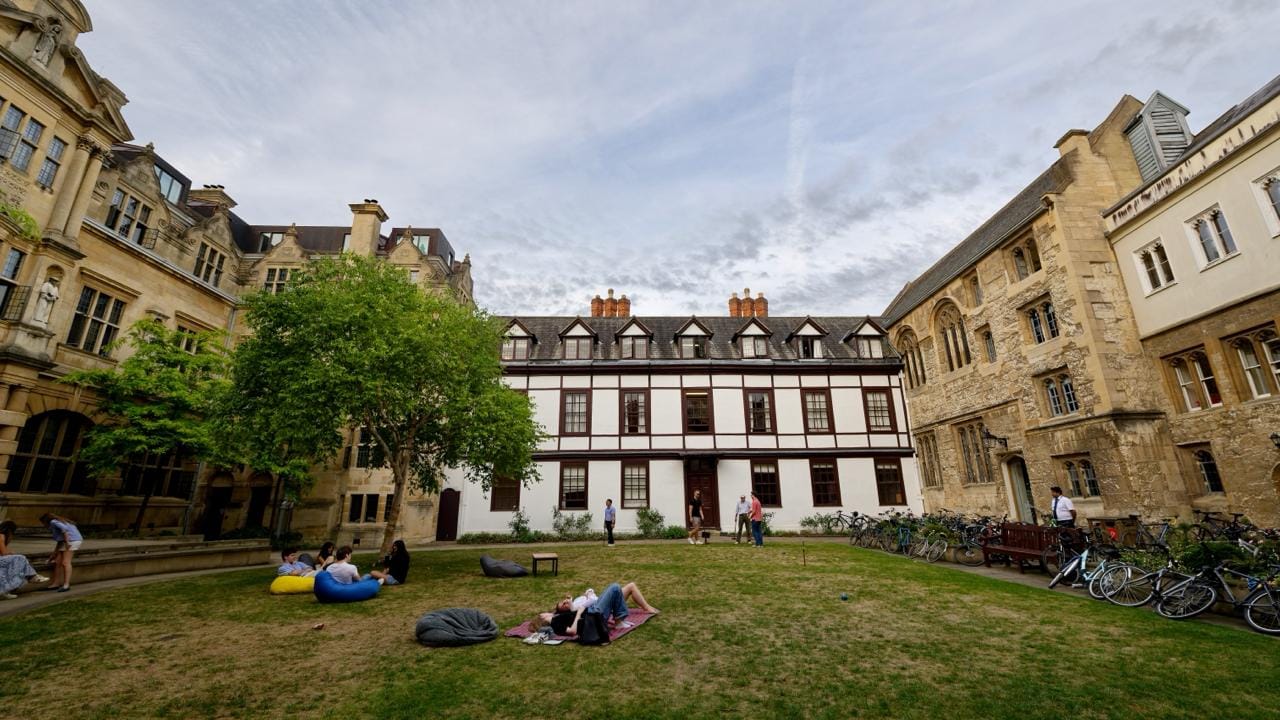
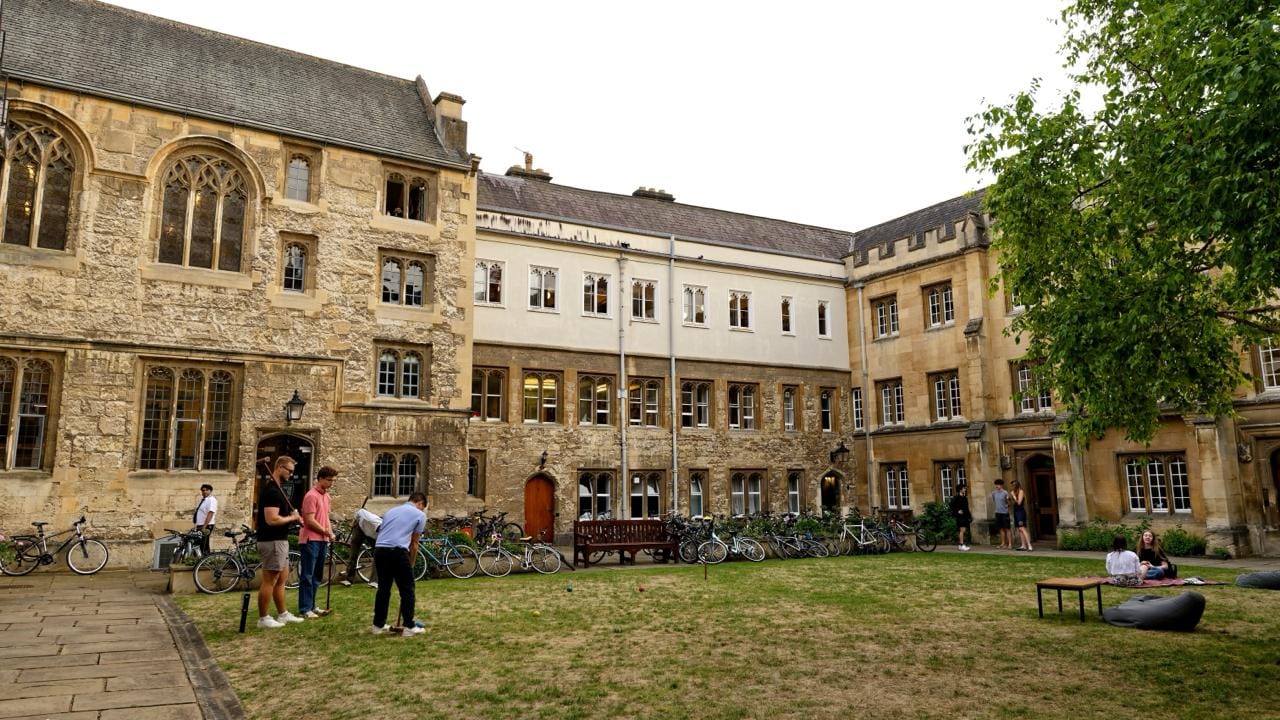
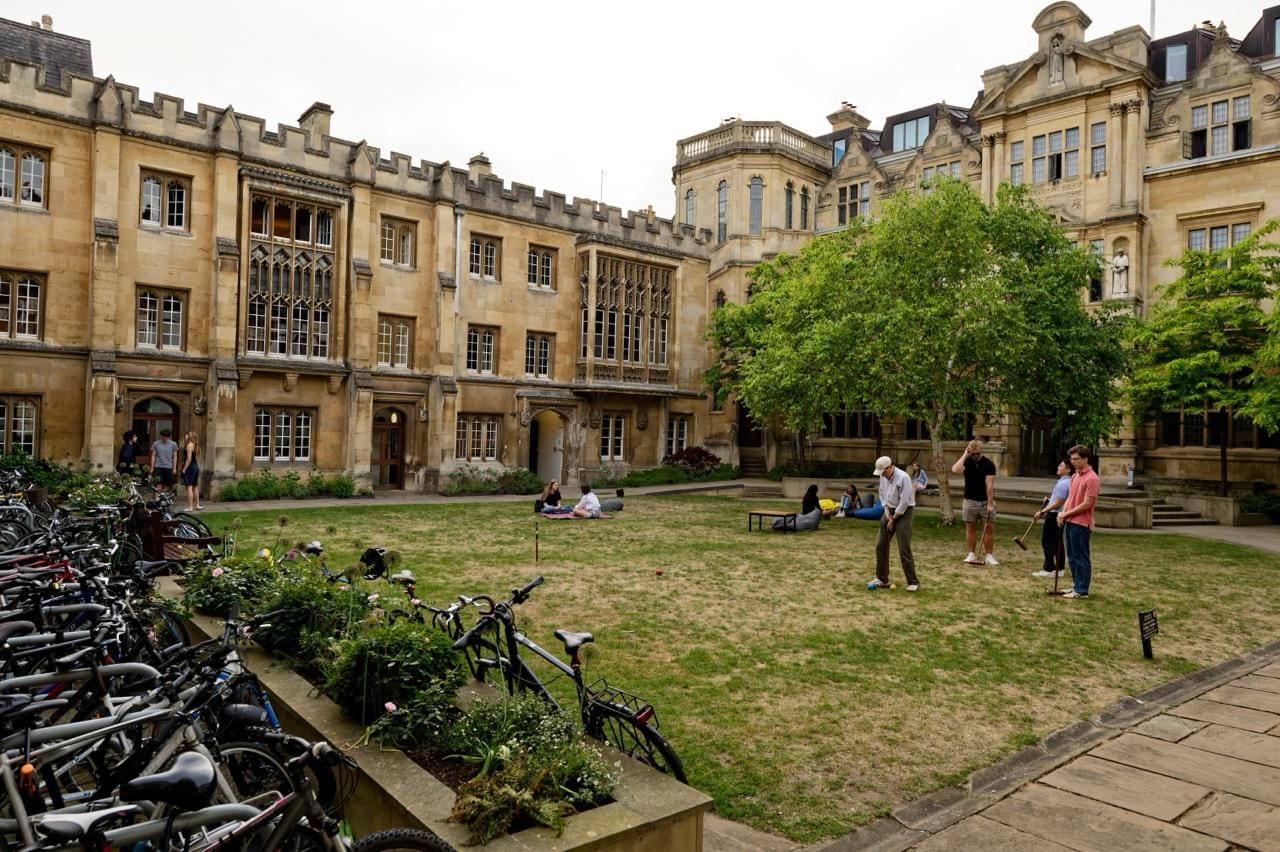
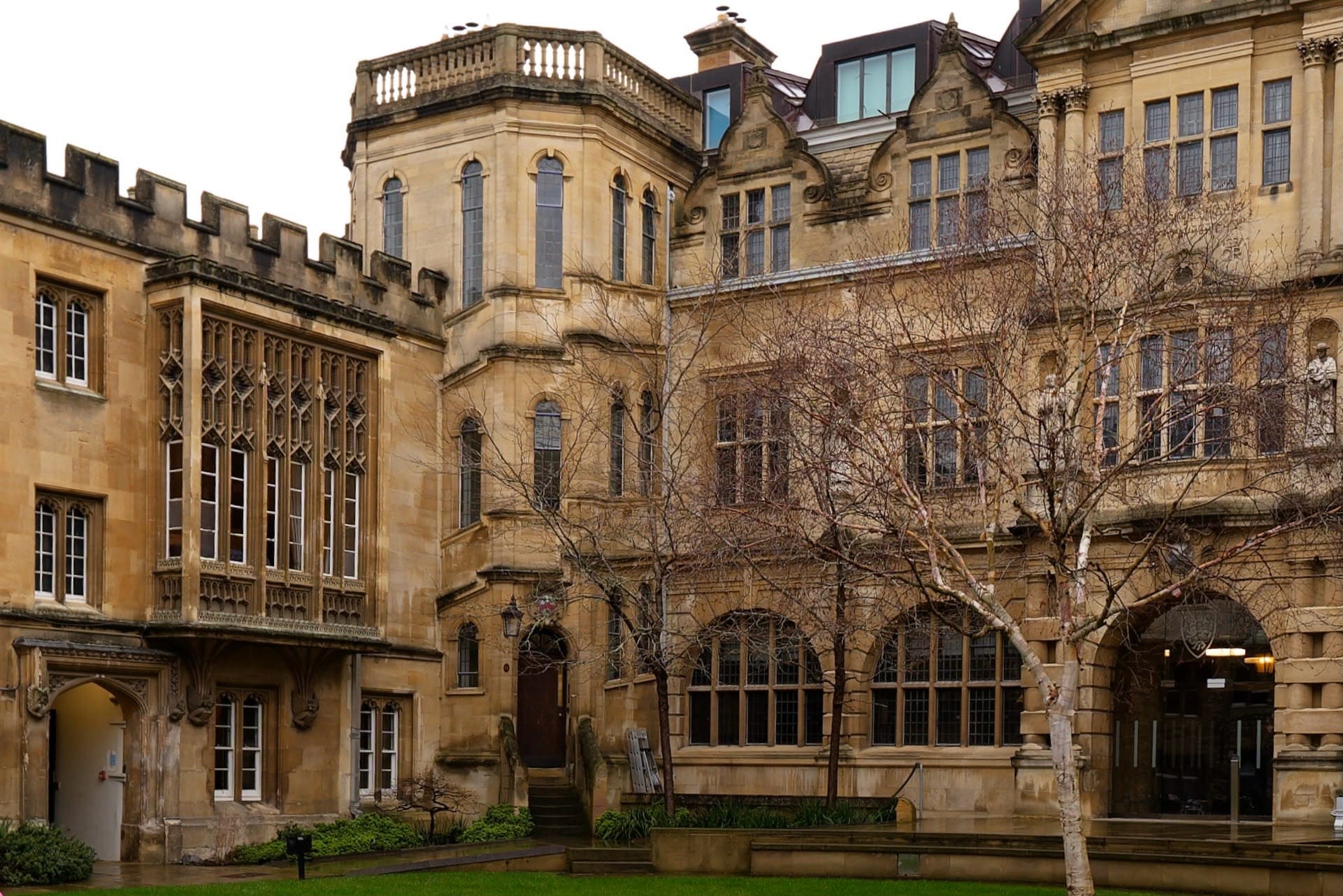
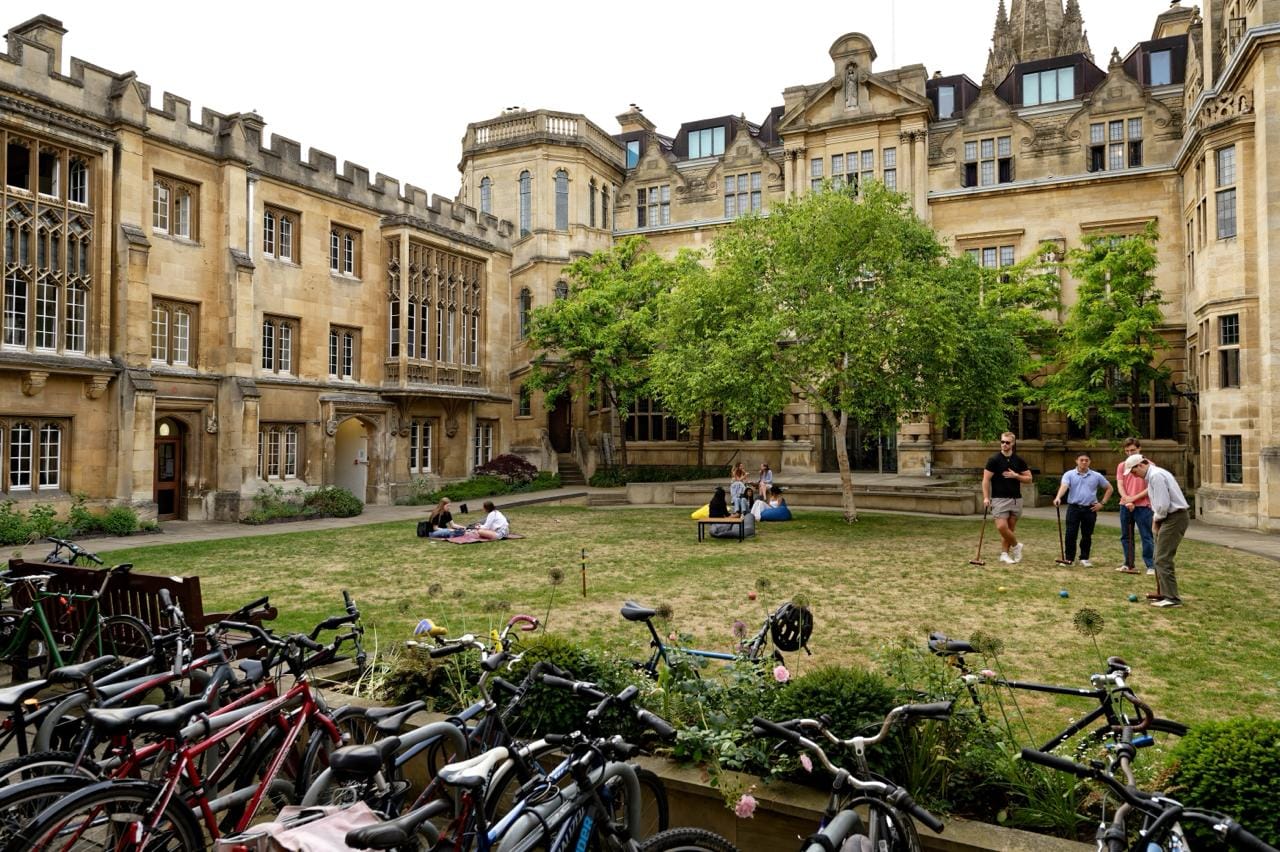
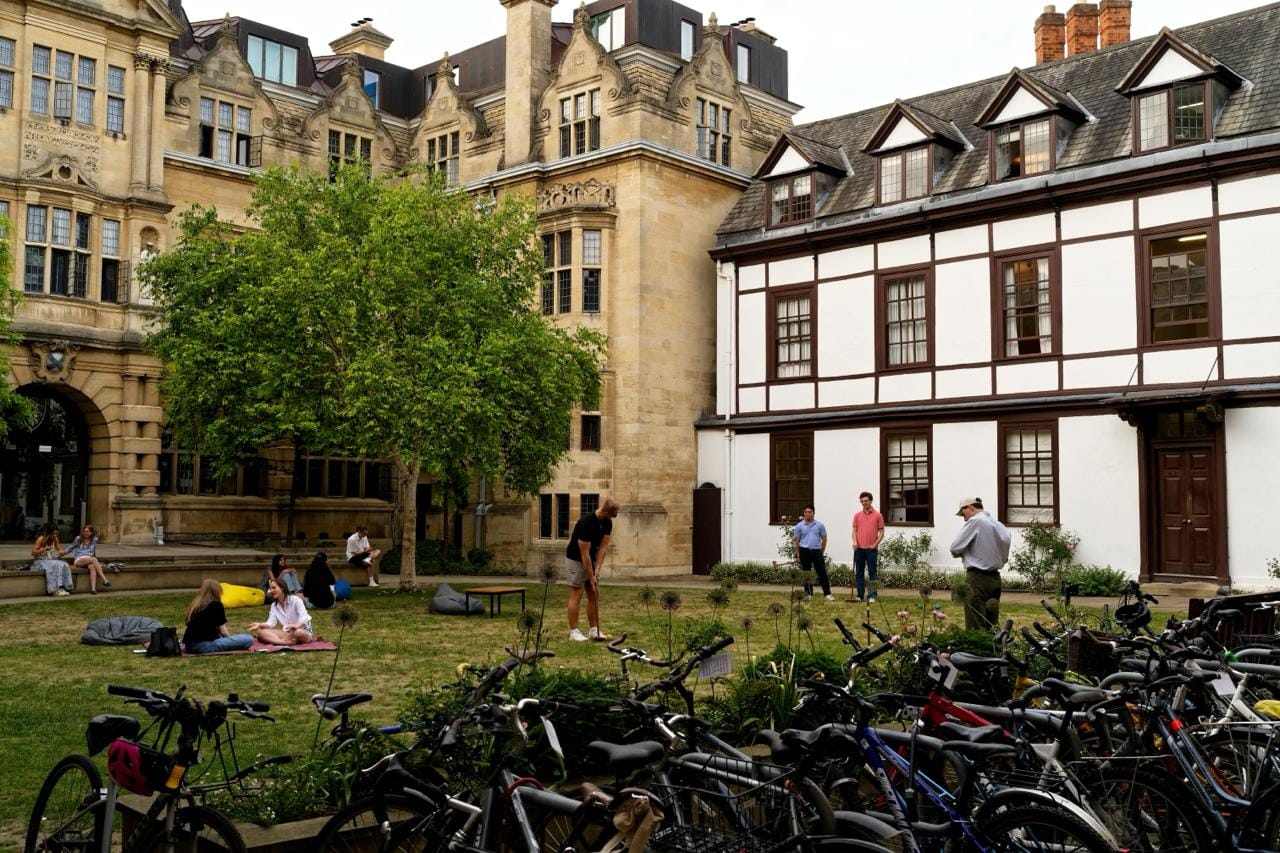
The Third Quad's extraordinary combination of architectural styles.
Of course, the Third Quad began as another college entirely. St Mary Hall, built as the rectory for the University Church, was annexed by Adam de Brome as a 'feeder' school for his new college. The Hall in turn annexed two other nascent, adjoining colleges: Bedel Hall and St Martin's. The 1450s Bedel Hall survives to this day as the range from the internal library stair to the rooms of staircase 10.
Finally, in 1545, St Mary Hall became independent of Oriel, ceremonially walling off the passage between the two. The new college built a dining hall with a chapel above – an unusual layout – and had some success, at times outflanking Oriel for funds and intake. In 1743, St Mary Hall built a timber framed mock Tudor building (now known as the aforementioned Doll's House) on the east flank, and in the early 19th century, rebuilt the west range in a distinctive Gothic Revival style to serve as the Principal's Lodgings.
However, the final Principal of St Mary Hall, Drummond Chase, under pressure from the University Commissioners, signed a deal with the proverbial devil on his shoulders, and upon his death, in 1902, St Mary Hall reverted to Oriel College. The passage was reopened, the Hall and Chapel repurposed as a junior library, the Doll's House as the Junior Common Room, and of course, the fine medieval rectory buildings torn down for the new High Street Building.
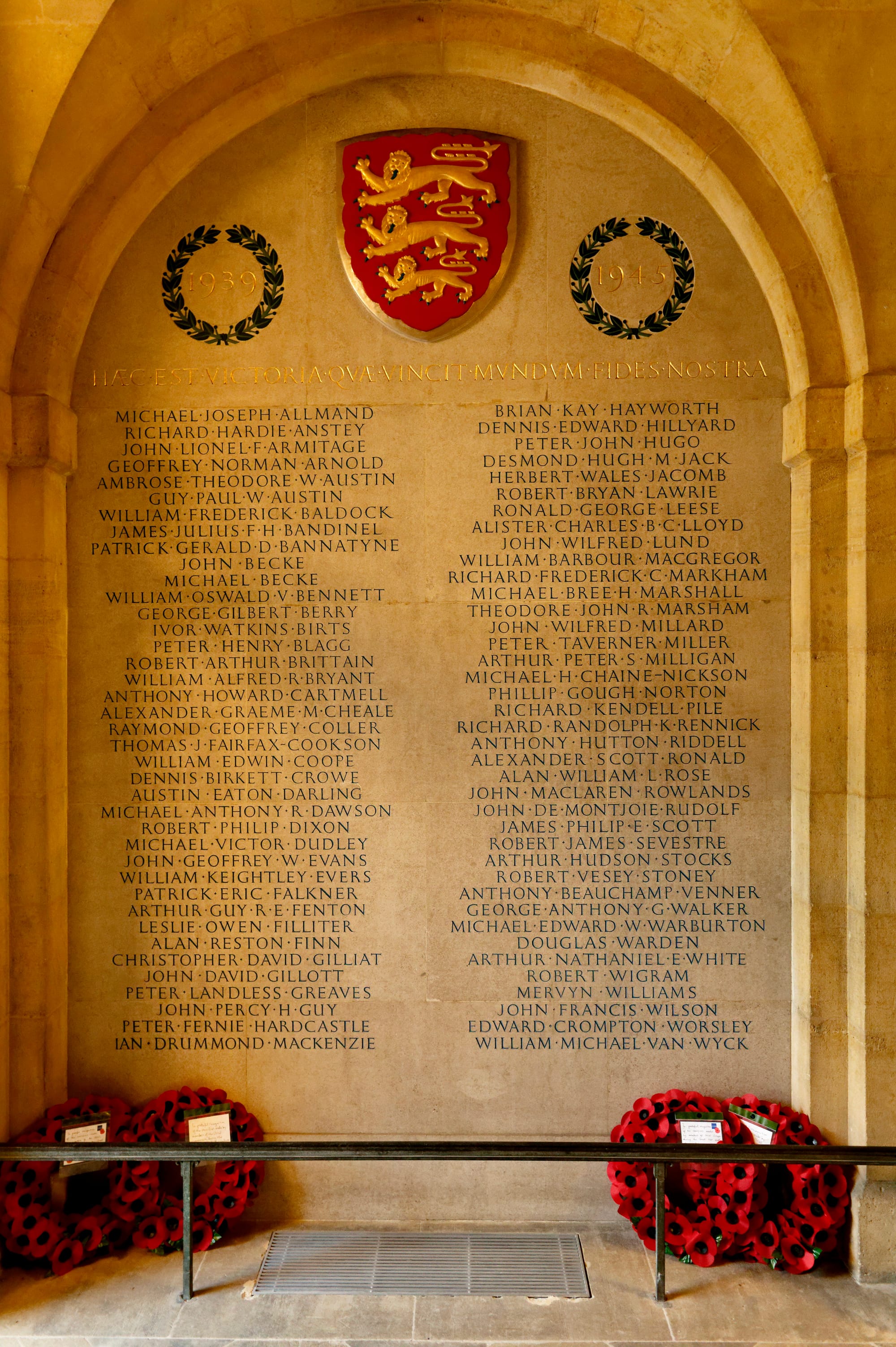
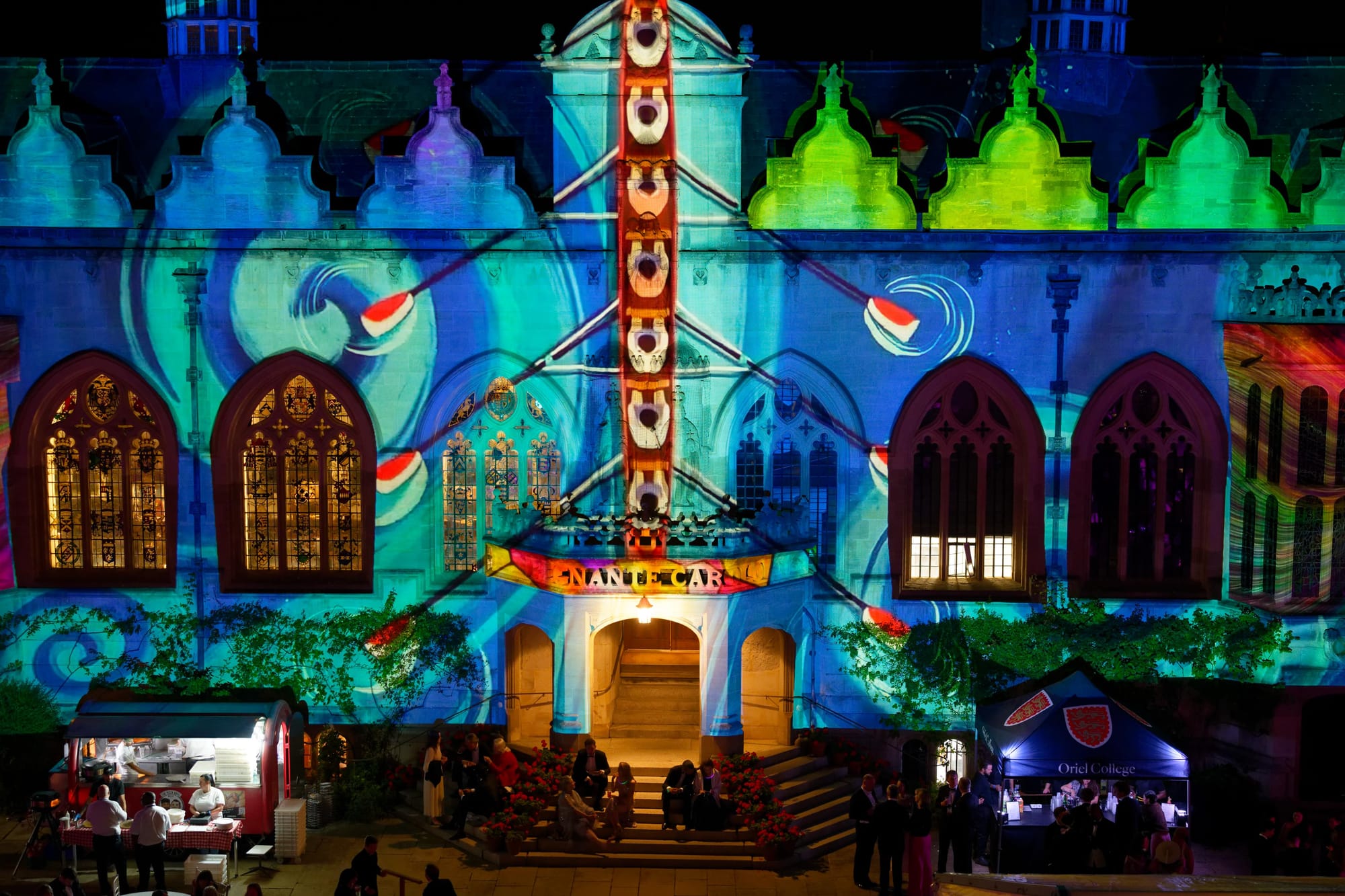
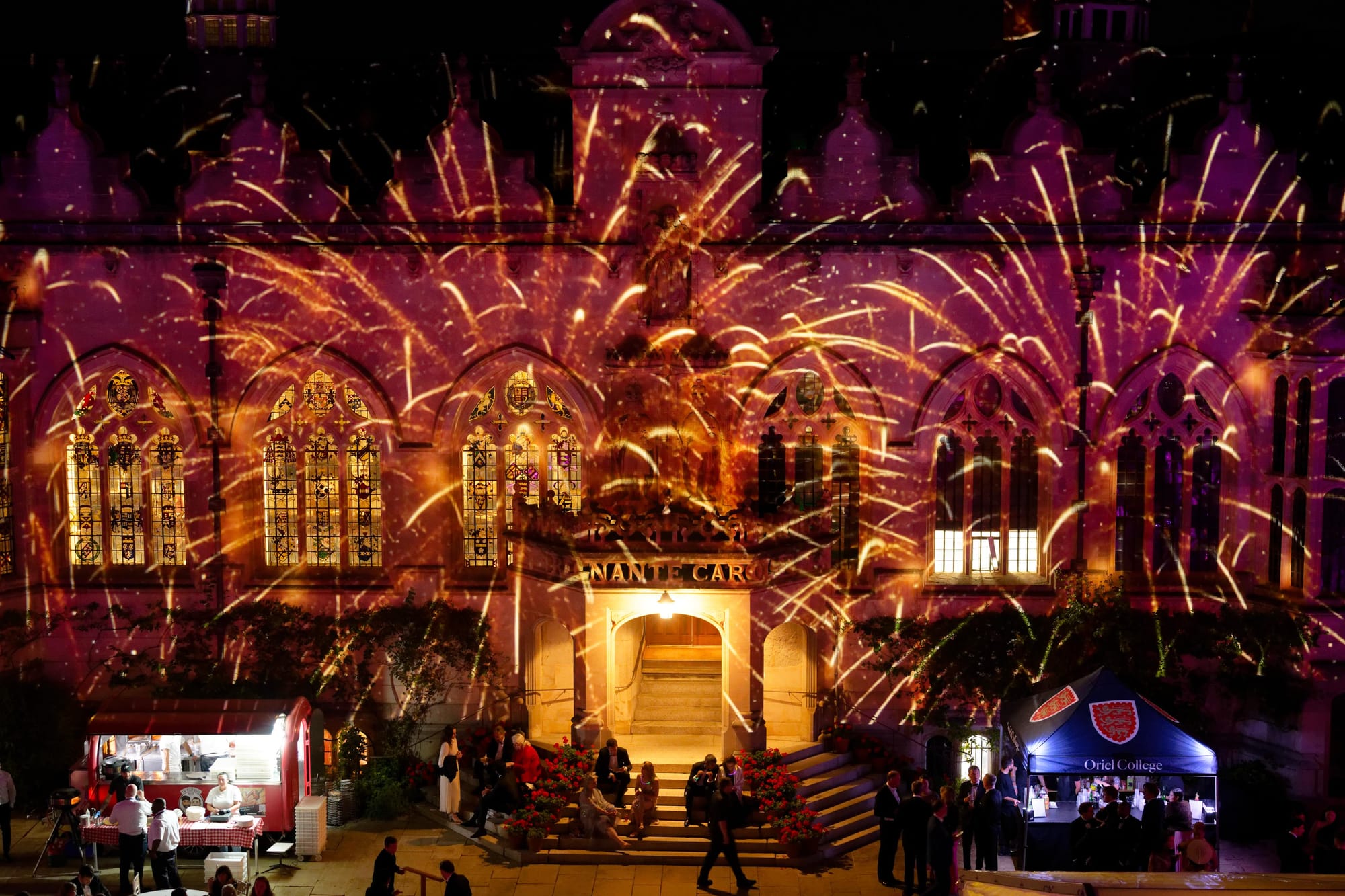
Oriel's war memorial, and its 700th anniversary alumni ball in September 2026.
The Great War
By the eve of the Great War, the first women's colleges had been founded in Oxford, and some lectures were mixed. College balls were a feature of Oxford's summer ‘season’ alongside Eights and Encaenia.
In 1914 the majority of those receiving honorary doctorates at Encaenia were German, including the composer Richard Strauss, and the German ambassador. But the Great War, and the Second World War after it was to empty the university of students to a degree not seen since the civil war.
The college claims that by the end of 1914 Oriel had the highest percentage of its members in the armed forces of all Oxford Colleges. It leased the Third Quad to Somerville College as their temporary home while their own premises were requisitioned for medical use due to their proximity to the Radcliffe Infirmary. The passage between the second and third quad – which had only been reopened 12 years prior – was once again walled off, as women first came to the college.
The former St Mary Hall functioned as a self contained unit (barring one night in 1919 when Oriel undergraduates took a pickaxe to the dividing wall), and residents included Vera Brittain, who went on to write Testament of Youth. One in five members of the college involved in the Great War died, plus a tragic 'ghost' cohort of young men who had been admitted to college but killed before they could matriculate. Among them was Victoria Cross Holder Thomas Riversdale Colyer-Fergusson, killed in Bellwaarde, Belgium, while seizing two machine gun nests before being killed by a sniper.
The end of the Great War also saw a decision to sell off the college's landed estates, one of the most significant moments in its financial history. This included land in Littleworth, Shenington, and Dean (which later saw fame for being the residence of UK Prime Minister David Cameron). Agricultural prices were high during the war due to protective tariffs, but it was widely expected that land values would fall across the UK. The trend to sell land became so widespread it was the largest redistribution of land since the Norman Conquest.
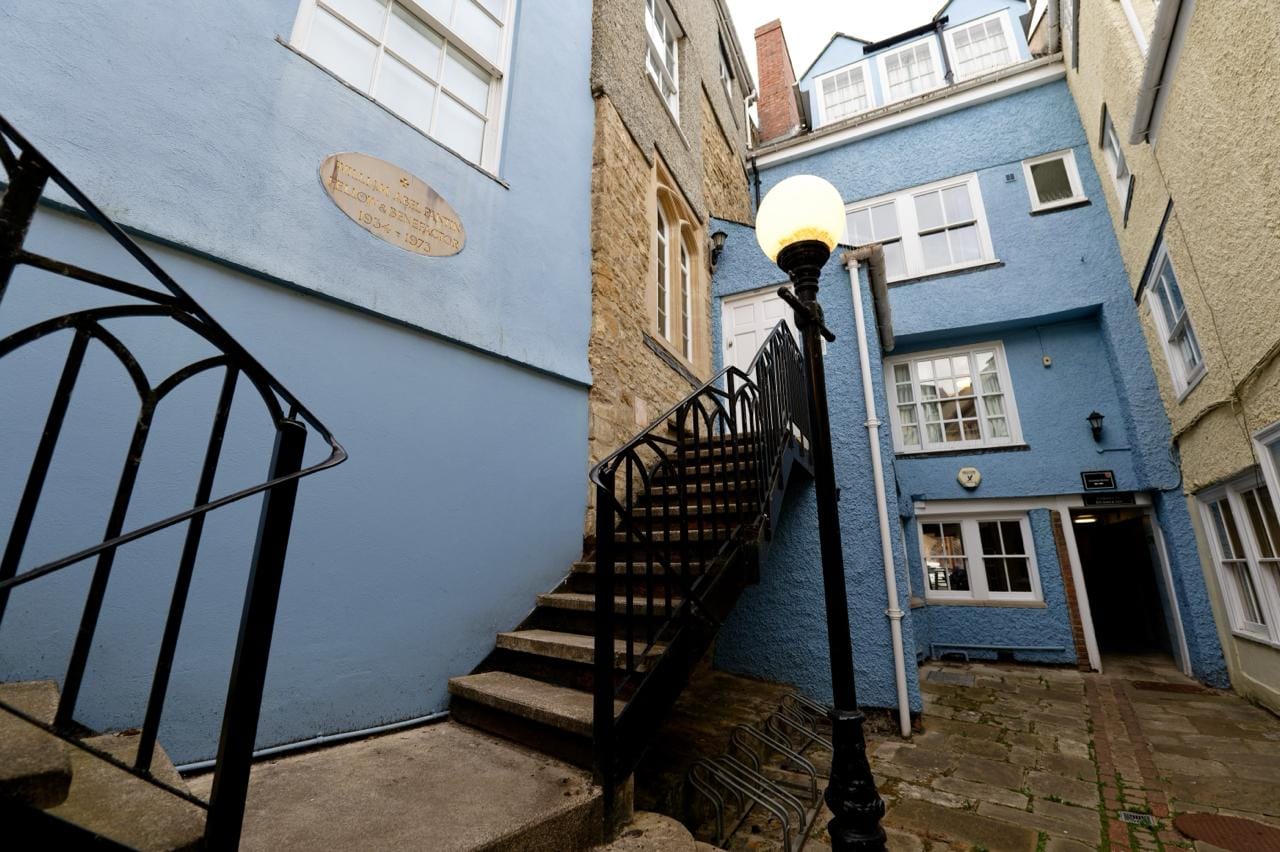
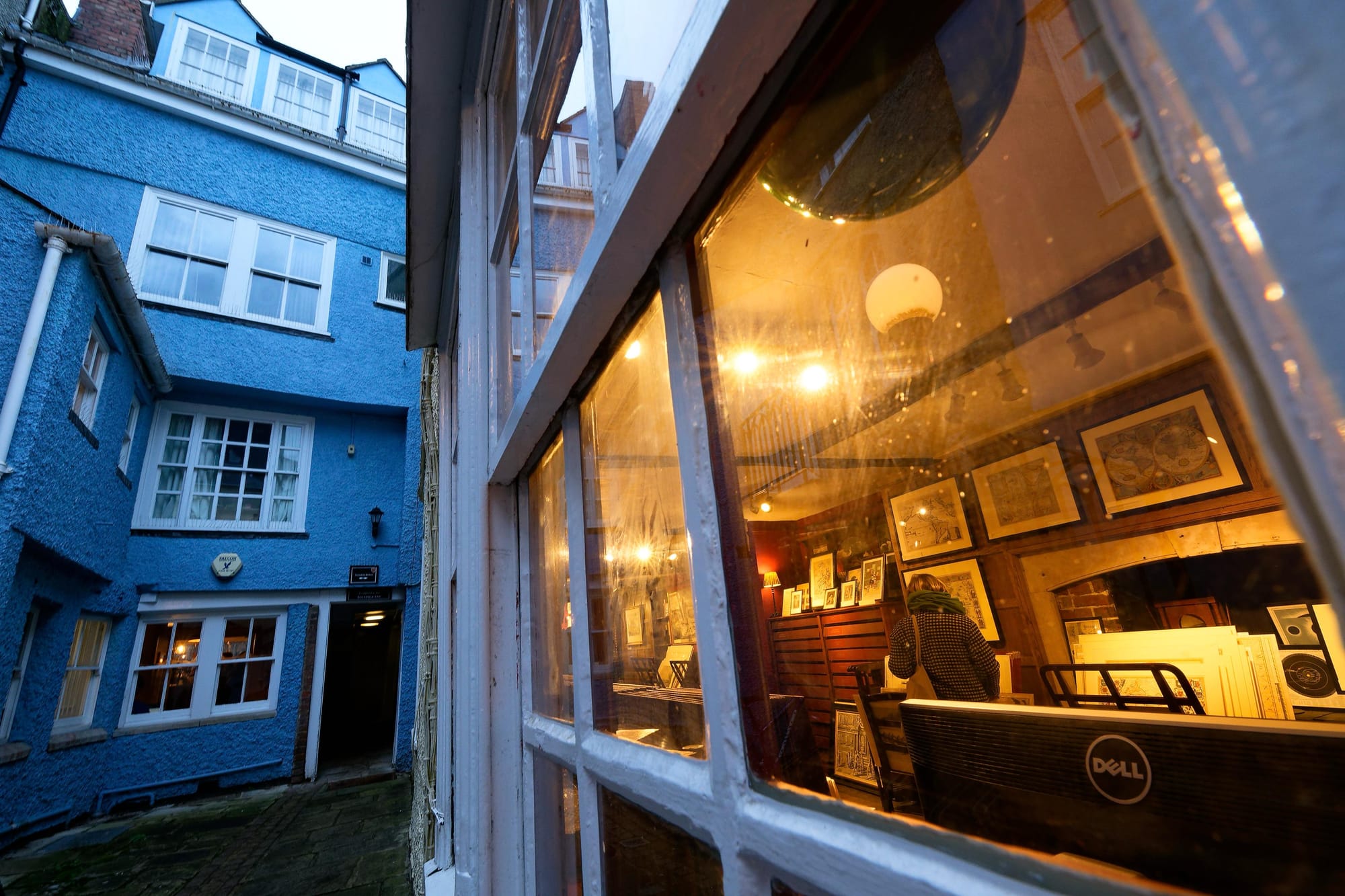
Narnia, which you can peek into from Jericho Coffee Traders or Sanders.
Narnia
Meanwhile, a hidden access courtyard behind Jericho Coffee Traders on 105 High Street has been called Narnia by generations of Orielenses. Nobody is sure from where the name originates.
In 1917, CS Lewis, author of the Chronicles of Narnia, matriculated at Oxford, studying at University College. He was subsequently elected Fellow and Tutor in English Literature at Magdalen College, where he served for 29 years until 1954. CS Lewis lived on St Mary's Passage, in a building adorned with satyrs and a lion, over the street from Oriel. Popular tradition has it that Lewis took the name Narnia from Oriel's site, since you pass through something of a cupboard and an alley to get there.
Between the wars
Notable during the quiet period between the two World Wars is the 1923 conversion of the Real Tennis Court where Charles I once played. Real Tennis is an ancient precursor of modern day tennis, played indoors on a court resembling a medieval street, complete with sloping roofs, openings (like windows) in the walls and the two sides of the court are not the same shape. The court was converted to what is now the Harris Lecture Theatre. (Oxford still retains a Real Tennis court on Merton Street.)
And Oriel's first Nobel prize winner, Alexander Todd, later Baron Todd of Trumpington, earned his DPhil at Oriel in 1933. (Oxford doctorates are DPhils, rather than PhDs, the anglicisation of the latin philosophiae doctor.) It was his work on DNA structure that won his Nobel Prize for chemistry in 1957.
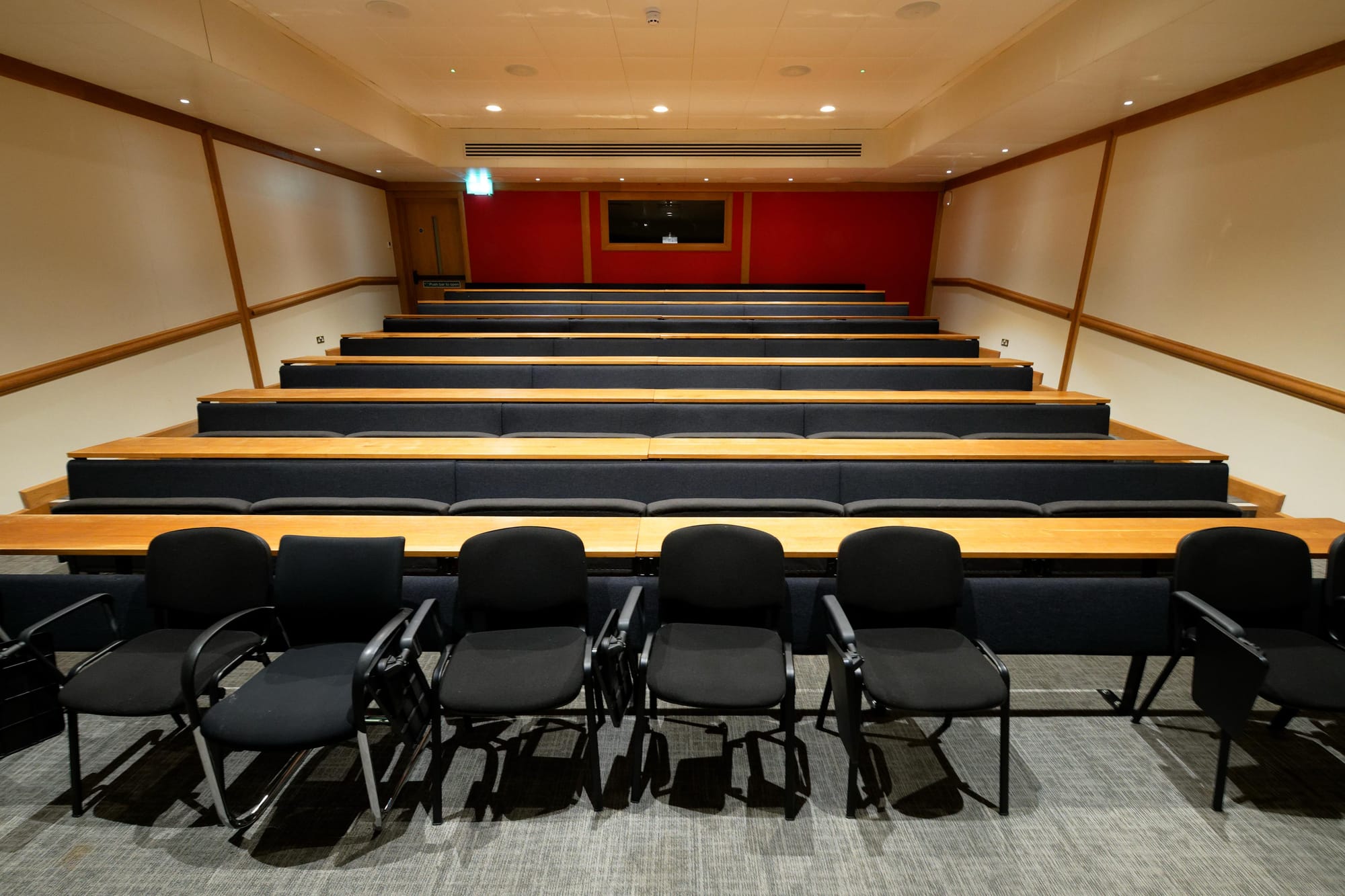
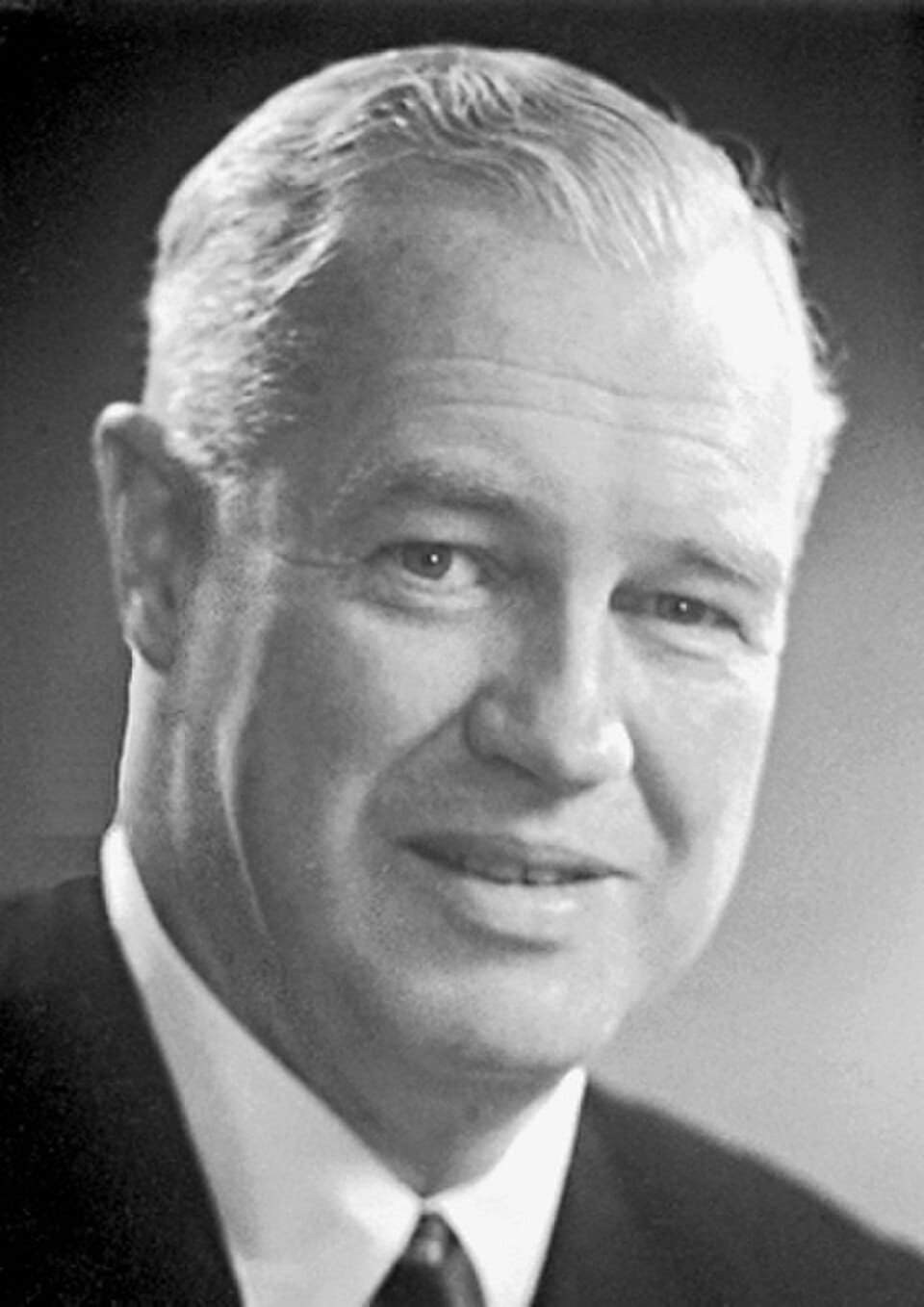
Harris Lecture Theatre, once a tennis court. Alexander Todd (Public domain image)

World War Two
The Second World War saw another wave of undergraduates enlisting for military service, and the lawns in the quads dug up to grow vegetables. Continuity was provided by dons who had been in residence since the 1930s. They included medieval historian W.A. Pantin, whose fire-watching duties saved the College from a serious fire in the library caused by a blocked flue. Another fire, caused by an electrical fault in 1949, badly damaged the Senior Library, losing over 300 books. The Junior Library is named after Pantin.
Oriel graduate, historian and 'TV Don' A.J.P. Taylor became famous for his revisionist interpretation of the causes of the Second World War, posing Hitler as an opportunist warmonger rather than a planned world war. In this clip you can see him debating the origins of the Second World War with Oriel's Regius Chair in History, Hugh Trevor-Roper, most famous for his book The Last Days of Hitler.
By 1960 one quarter of the College's undergraduates were reading science, and one quarter of the student body were postgraduates – bringing welcome extra fees to the College, but also demand on the premises. The Middle Common Room on Oriel Street, and a graduate table in Hall, were established to accommodate them.
Women at Oriel
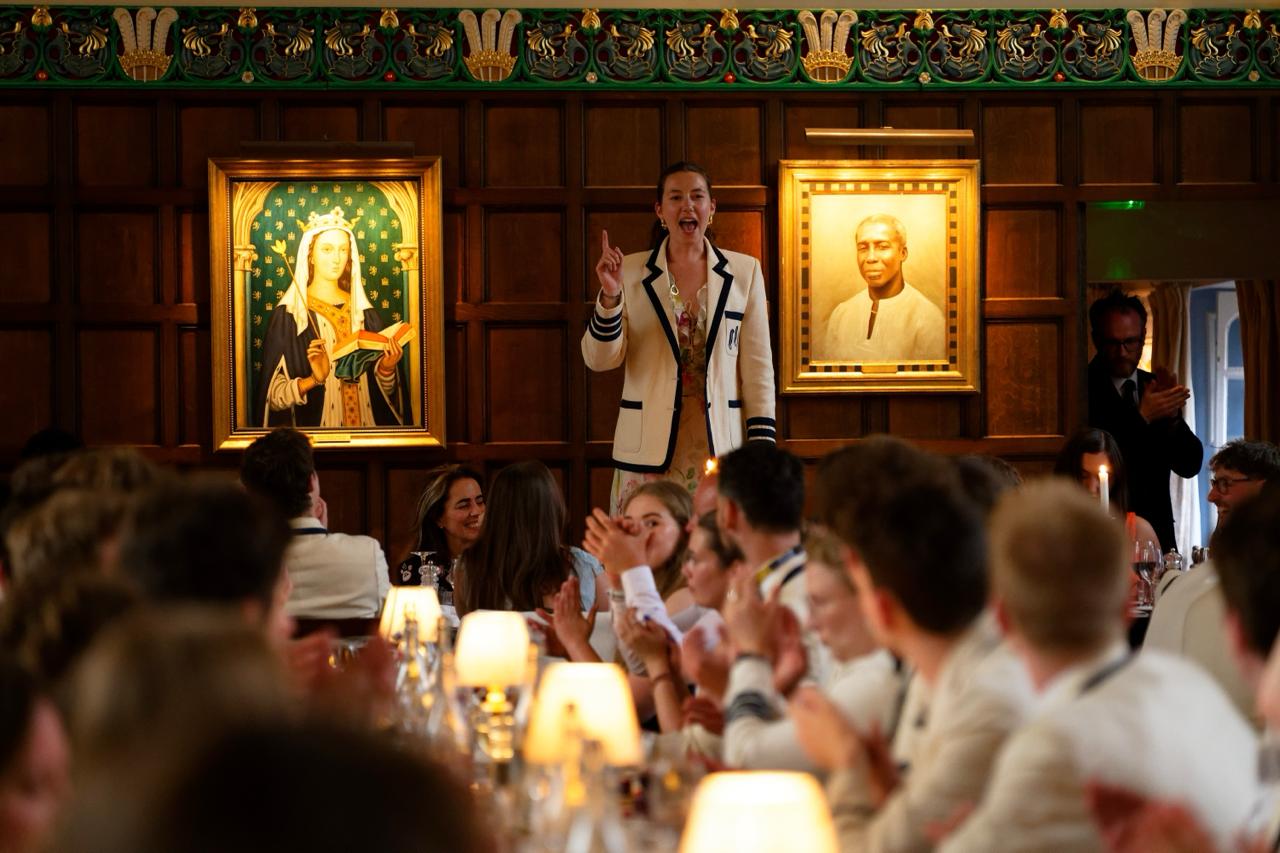
On 24 November 1971, before any formerly male Oxbridge college had admitted women members, a vote to alter the College statutes to admit women fell by two votes – thus failing to be the first college in Oxford to do so. Instead, Oriel became the last chartered Oxford college to admit women, in 1985. Close to being cutting-edge… but not quite. That said, Oriel is the alma mater of the Right Revd Joanne Grenfell, former Bishop of Stepney, and now Bishop of St Edmundsbury and Ipswich, and safeguarding lead for the Church of England; Bishop Joanne read English at Oriel and follows a long line of bishops and cardinals educated here.
In the 1970s, Oriel did introduce research fellowships in Environmental Science and related areas, producing the impetus for the college to become carbon neutral albeit utilising carbon offset payments in Brazil.
The Island Site
In the 1970s the college found itself once again in financial trouble, something of a continuing theme throughout its history. Thanks to a rapidly growing alumni outreach programme, the college funds grew enough in the 1980's to see the redevelopment of the Island Site, encompassed by Oriel Square, King Edward Street, the High Street and Oriel Street. It was officially opened by John Major, the then Prime Minister, in 1993. It also built James Mellon Hall, off the Cowley Road, which was opened in 2000. Both these developments meant that Oriel could house all its undergraduates for their entire time at the college.
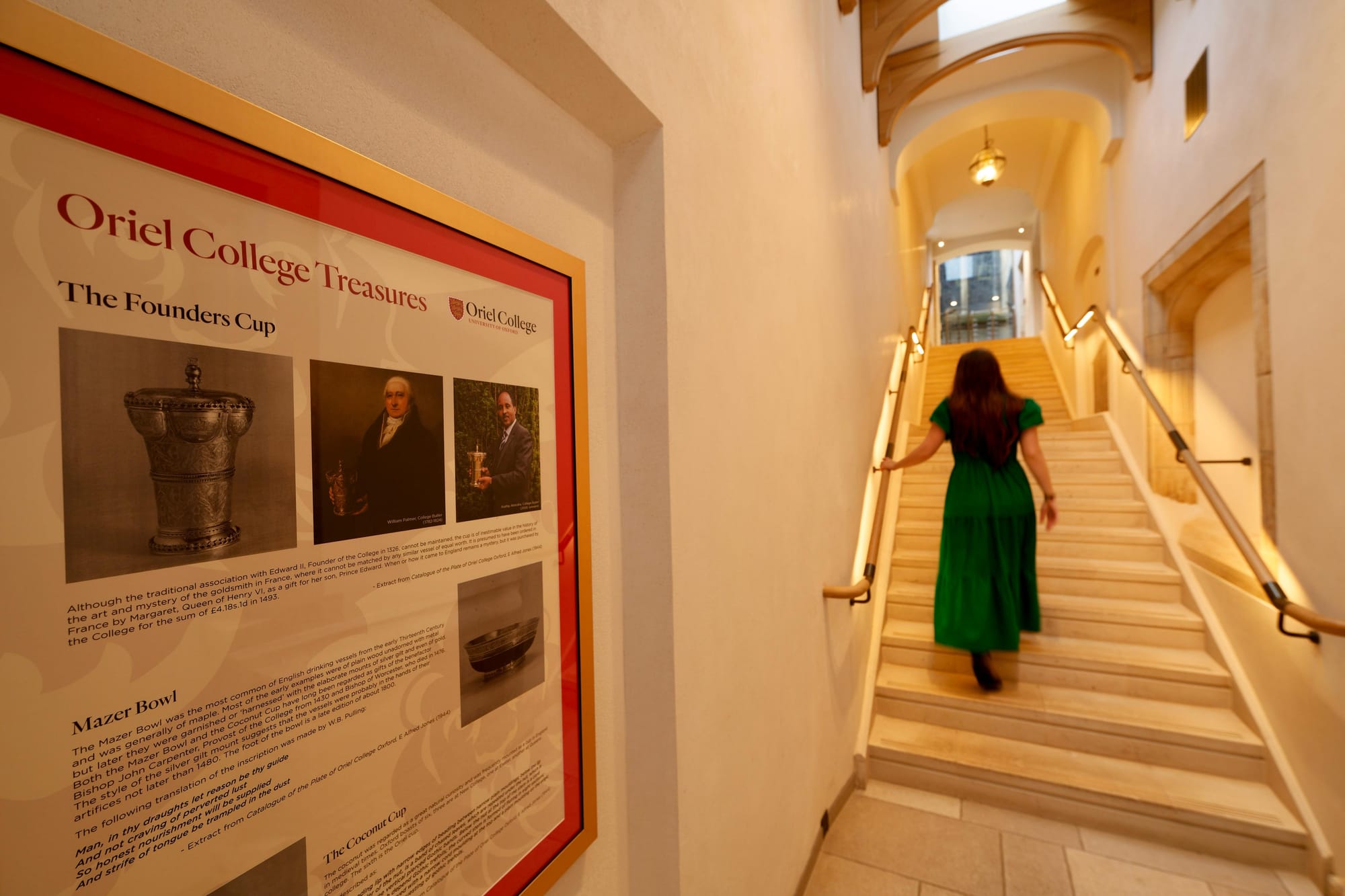
In 2003, an effort to fund various redevelopments and refurbishments of several of its listed buildings in time for the 700th anniversary was launched, and was so successful that in 2014 the College decided it could turn down an offer of $20m for its copy of the Magna Carta. These projects have focused on accessibility and climate sustainability.
The High Street Building, dilapidated by 2003, was fitted out with another floor, but more importantly, lifts, accessible student accommodation, and accessible seminar rooms. The most recent project – a refit of the kitchen complex and renovation of the Hall in Oriel's East Range – combined both accessibility improvements and climate sustainable features. Perhaps it is no surprise that the college has taken this focus: its current Provost, Neil Mendoza, also serves as the Chair of Historic England, who encourage the caretakers of historic buildings to consider accessible and sustainable improvements.
What is today's Oriel?
The college adapts and grows. Not the biggest, nor the richest, but a history of evolution and influence that continues to this day. The current college comprises 330 undergrads, 230 postgrads and 47 fellows, exactly where it's always been, just off the High. The sheer amount of students mean the college must adapt its space to accommodate them all, across both its High Street and Rectory Road sites.
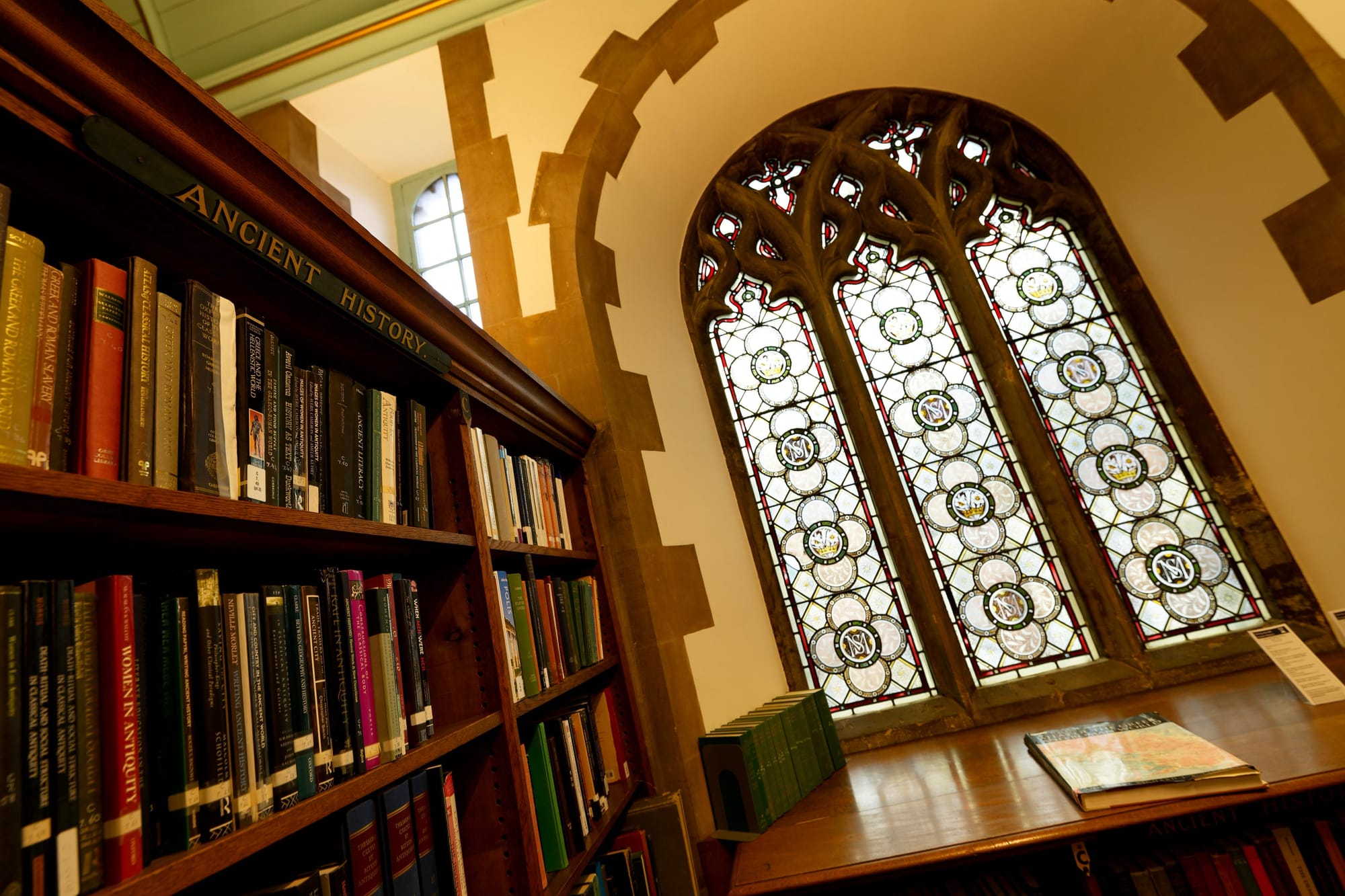
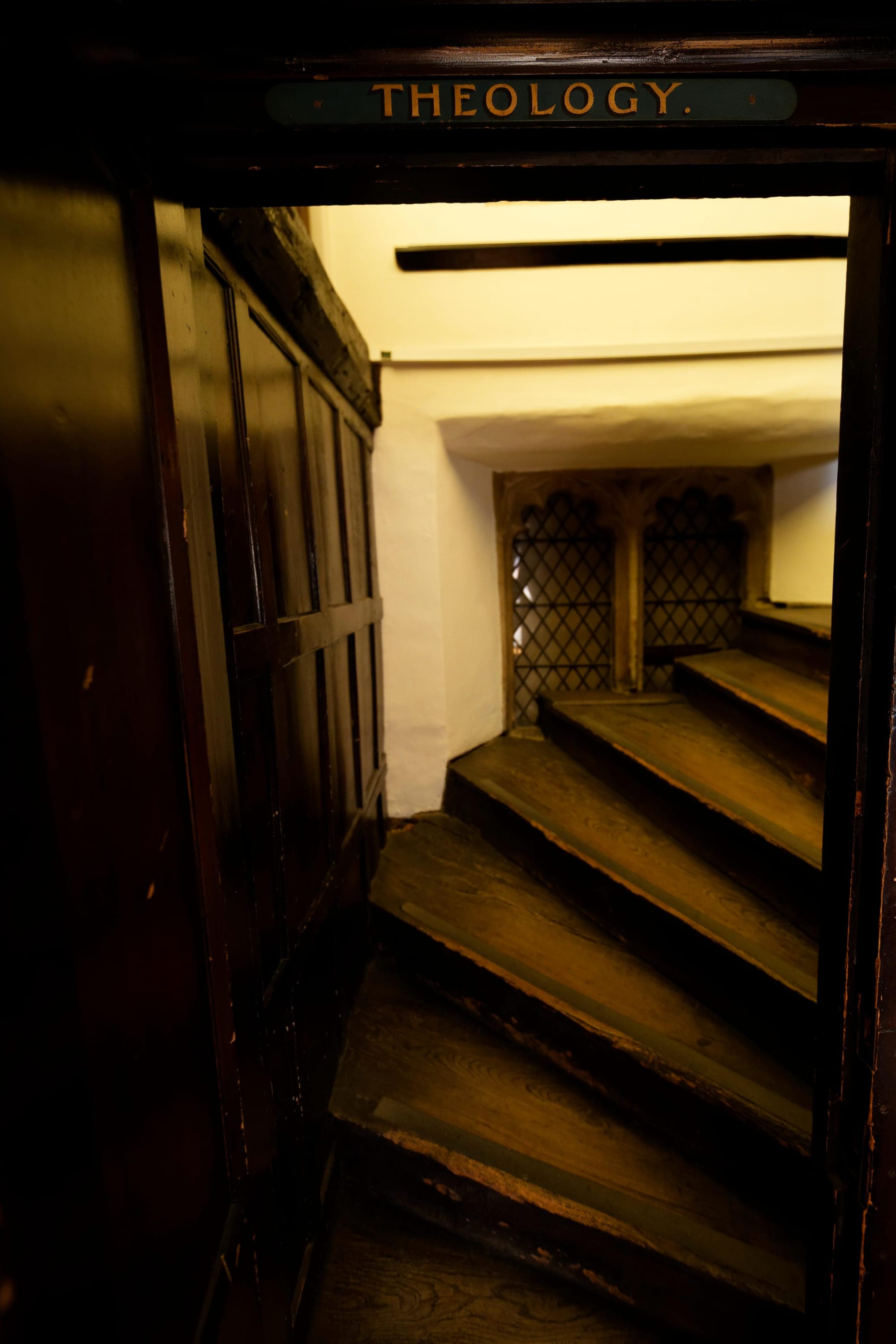
The junior library in the former hall and chapel of St Mary Hall.
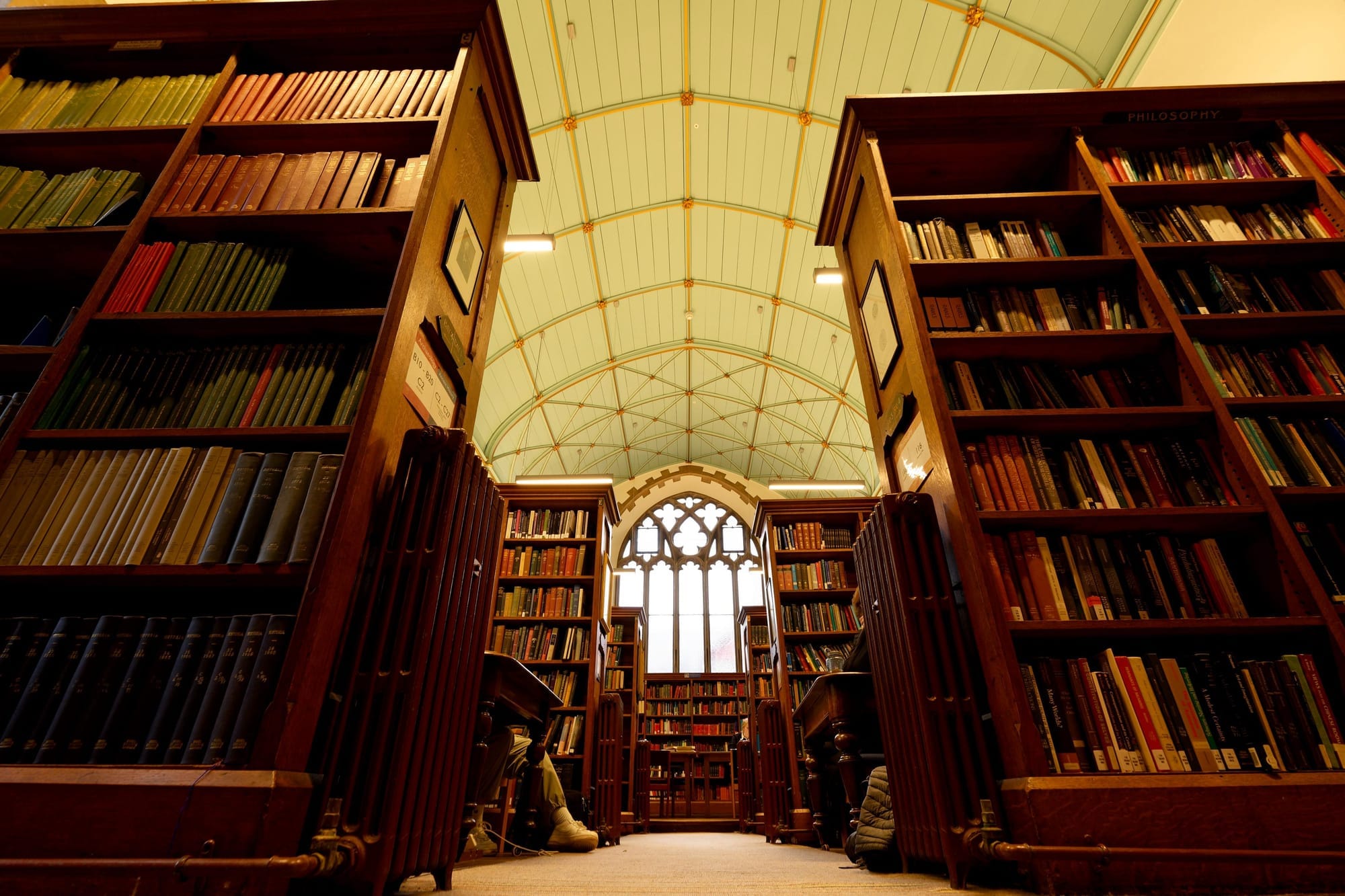
The junior library, the Pantin Library, provides a higgledy-piggledy contemplative space to study – with theology, appropriately, up the stairs in the gods. A senior library, housing collections of rare books, has served as an exhibition and event space during Oriel's 700th year and renovations are due to start in 2027.
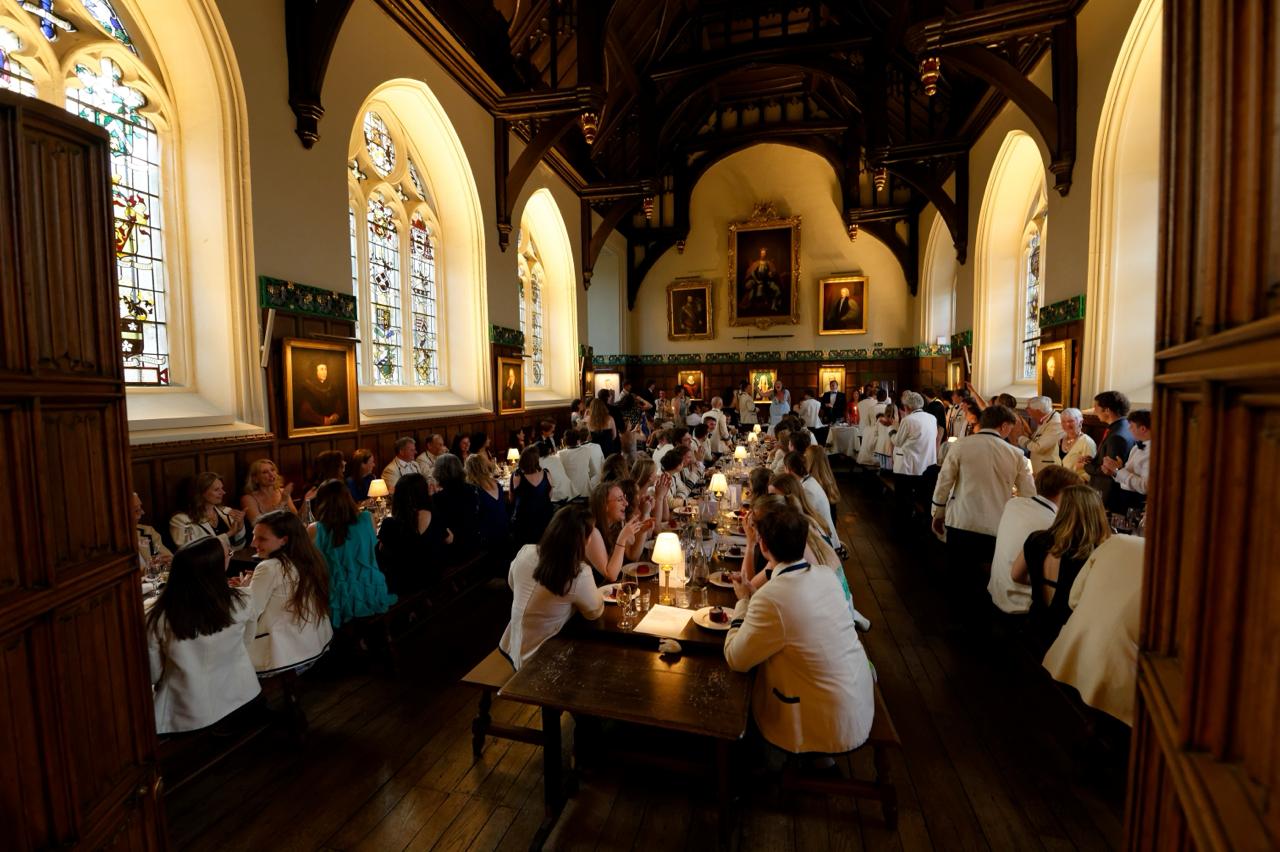
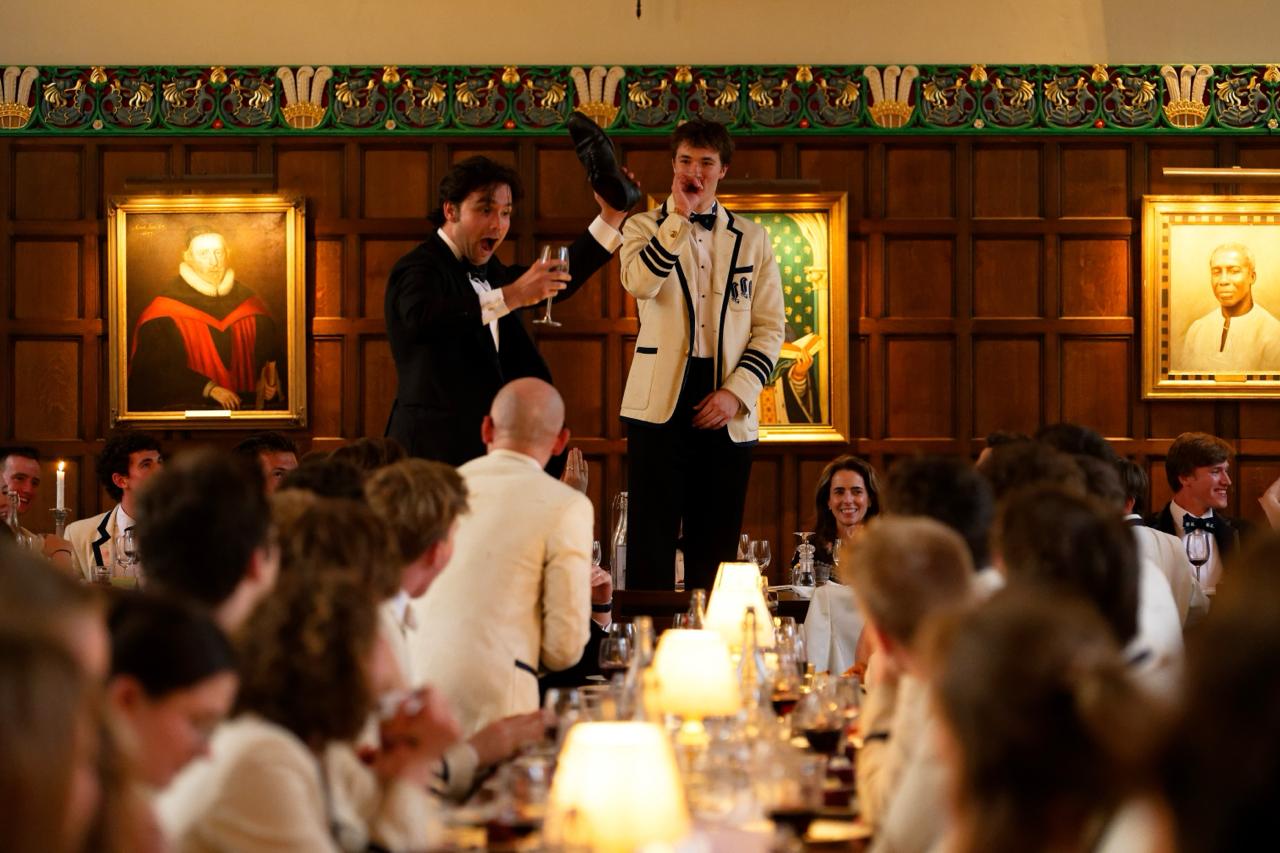
The dining hall holds two sittings six nights a week to accommodate the students: an informal hall canteen, plus formal hall afterwards. Portraits of alumni, notable fellows, and former provosts adorn the walls.
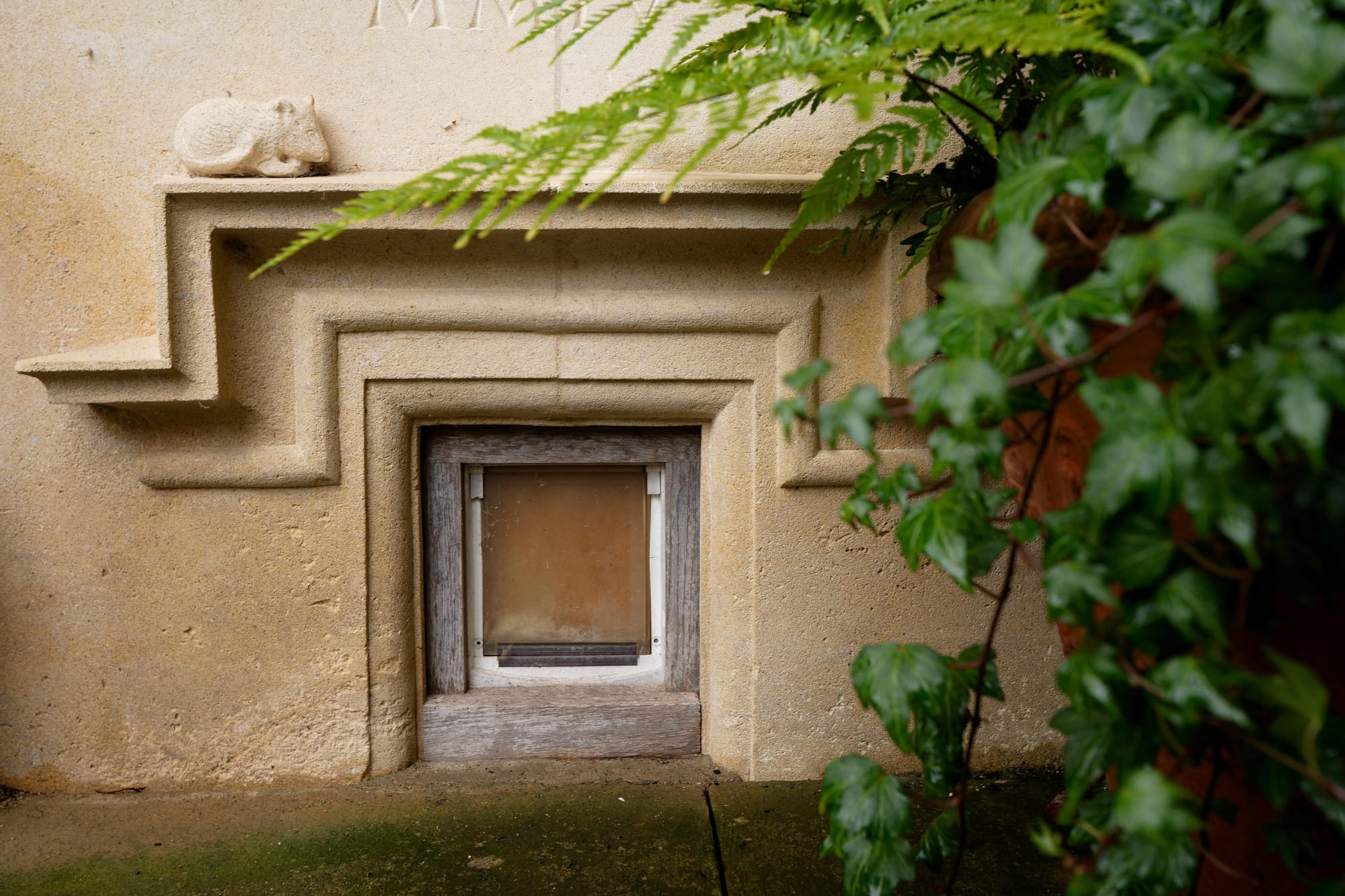
And an oddity that visitors to the second quad can spot, if they look hard enough, is the University's only listed cat flap. The Grade I listed flap was installed in 2004 for the Provost's cat, who sadly only lived a few months after the completion of the flap. The current Provost has no cat, so it sits dormant, perhaps one day to be used again by a future college cat.
Cutting edge
While Oriel may have provided bishops and writers, and likely still will, today it finds itself at the cutting edge of science.

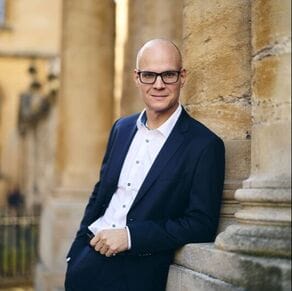
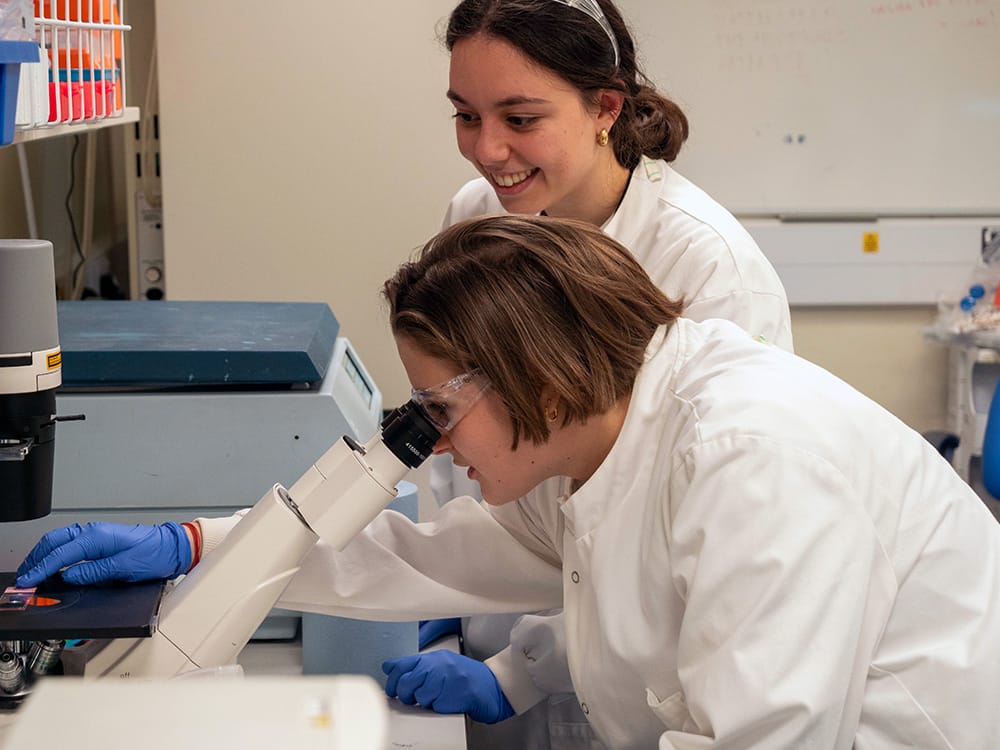
Phil Burrows (via Oxford University) Jan Rosenow (via Jan Rosenow); Oriel researchers study human tissue (Oriel).
Jan Rosenow is a current Fellow of Oriel and Senior Jackson Research Fellow in Energy. He also leads the Energy programme at the Environmental Change Institute, with his research focusing on energy demand, energy efficiency, electrification, renewable energy, and broader energy and climate policy, with a strong emphasis on the practical implementation of decarbonisation strategies. (His regular commentary on transition to renewable energy, now with the context of disruption to global oil supply, continues on his Bluesky profile.)
In 2019, NASA found that, for the year that astronaut Scott Kelly was aboard the ISS, he displayed signs of ageing faster than his identical twin brother Mark had done on Earth. For longevity researchers at Oriel, this promised an exciting line of research. Oriel members of a research group recently sent samples of human tissue to space as part of a pioneering experiment that could help extend health into later life, investigating a process known as cell senescence.
There is more. Former Oriel student Professor Phil Burrows was appointed Chair of the CERN Scientific Policy Committee in January. (He's now a fellow of Jesus College Oxford.) Oriel spinout Semantic Technologies, delivering logical reasoning within AI was acquired by Korean tech giant Samsung in 2023,
But Oriel isn't just about science. Oriel's Regius Chair of Modern History was first established by royal appointment in 1724. Emeritus Regius Professor in History, Lyndal Roper, won the prestigious Holberg Prize in 2026 and the Cundill History Prize for her latest book, Summer of Fire and Blood.
The role of the Provost
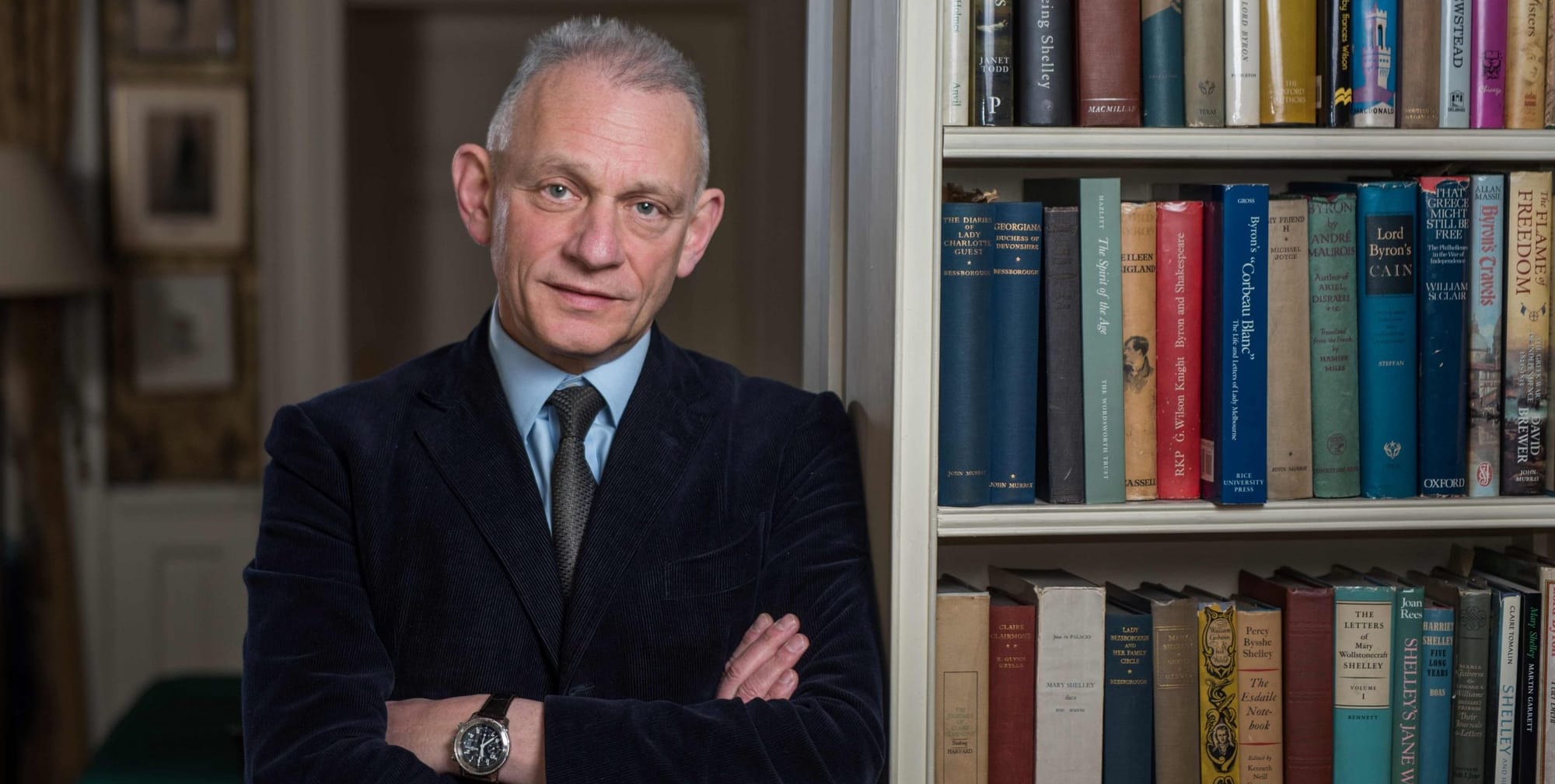
The Provost is the guardian of the college, a financial and spiritual steward who in many cases has wielded influence far beyond the walls of the college. The current Provost, Lord Mendoza, follows this tradition. In another role, he is Chair of Historic England, a position that seems apt for the custodian of this series of ancient buildings.
His work on the UK Government's Soft Power Council aims to support the government in navigating a world where influence is changing rapidly. For Oxford residents, perhaps the most obvious example of ‘soft power’ might be tourism. But there are worries that the UK is falling behind countries like South Korea, whose focus on the creative industries has resulted in the global proliferation of K-Pop, K-Film and K-Beauty. Given this global context, Mendoza says that Britain cannot afford to be casual about soft power any more. “There is this idea that we should value our soft power assets and understand what they are so we don’t let them decline, that the world is different and multipolar… so therefore we can’t be complacent.” His term expires at the end of the 2026/2027 academic year, and the search is on for his replacement.
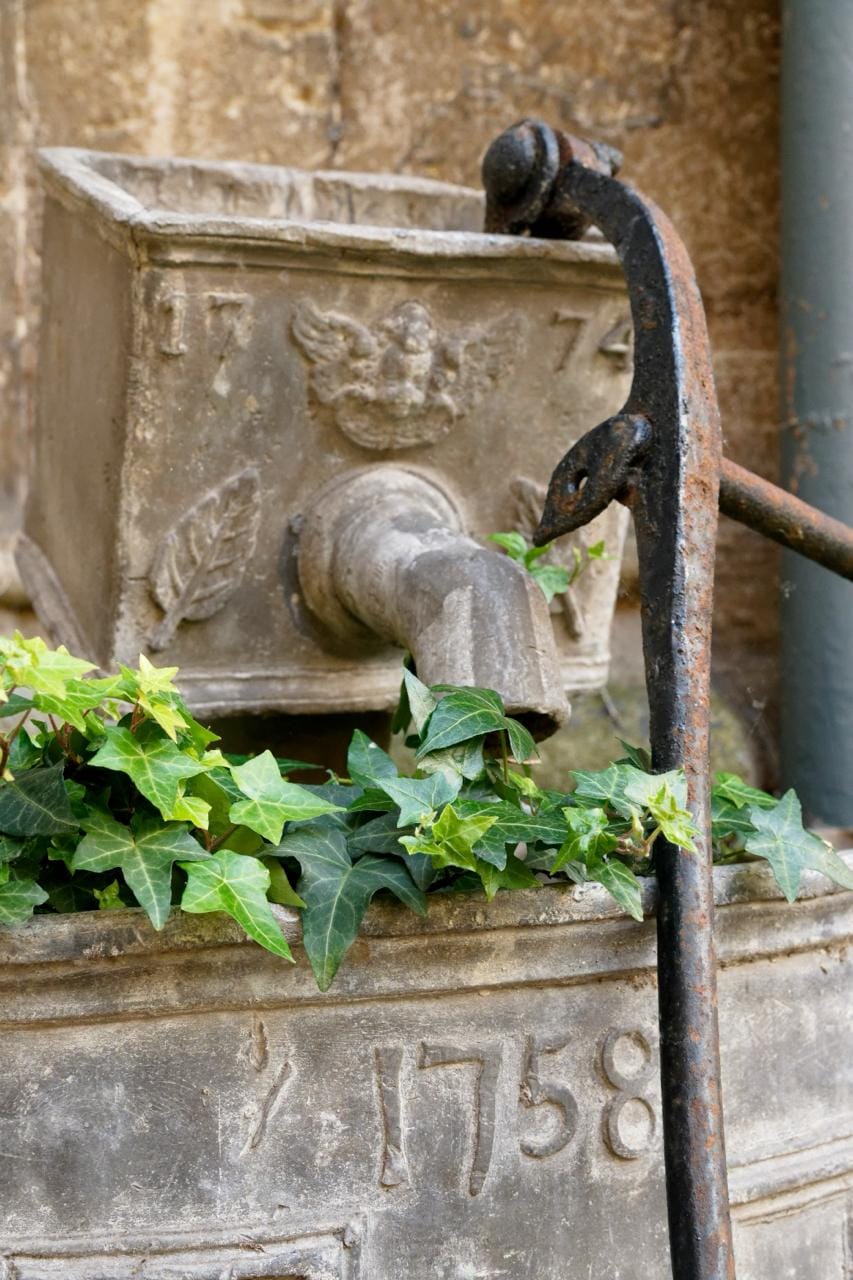
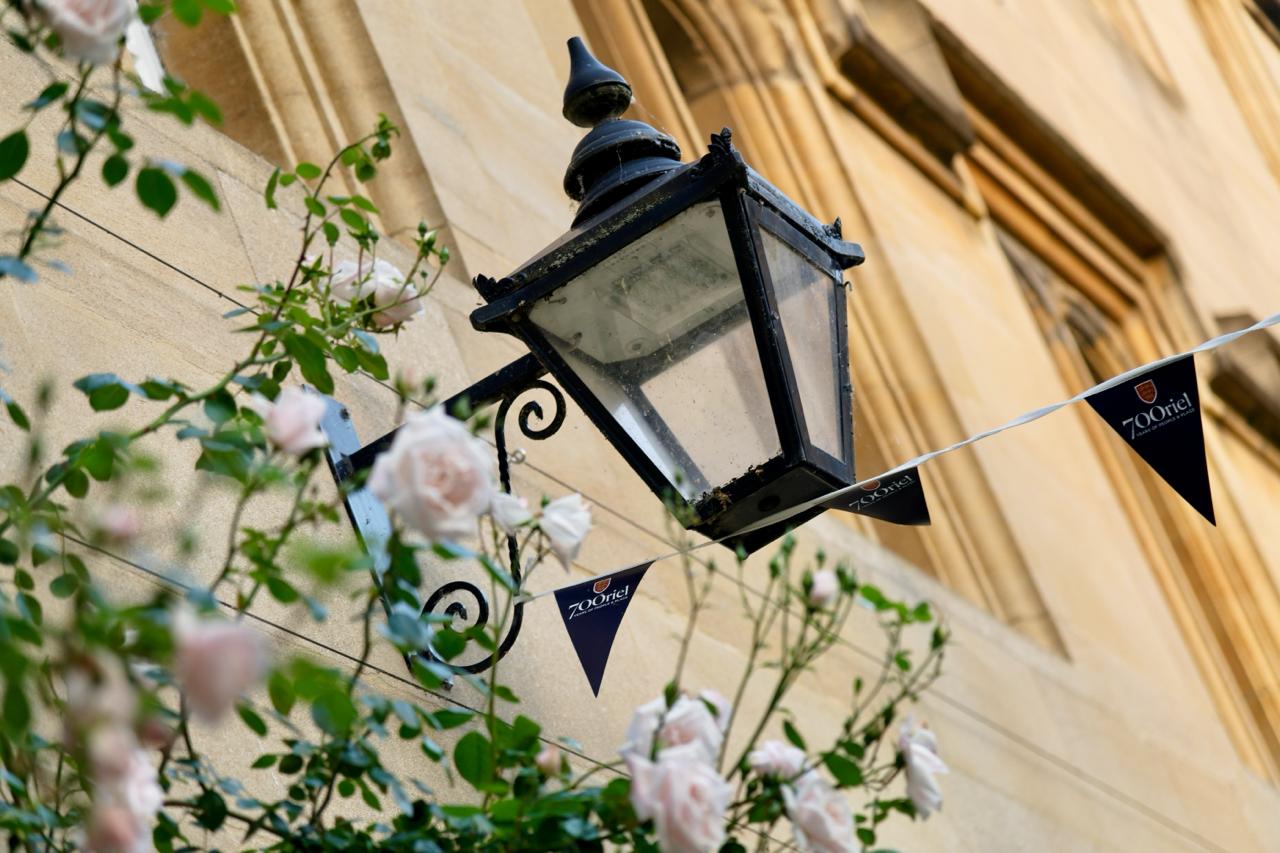
It seems very apt that in a college whose unofficial motto is Floreat Oriel, students are newly surrounded by flowers. The Provost's wife Lady Amelia Mendoza, as part of the College's welfare team, has been softening the monocultured lawns and borders of the quads with planting, working in conjunction with award-winning garden designer Laura Heybrook to encourage biodiversity.
Happy 700th birthday
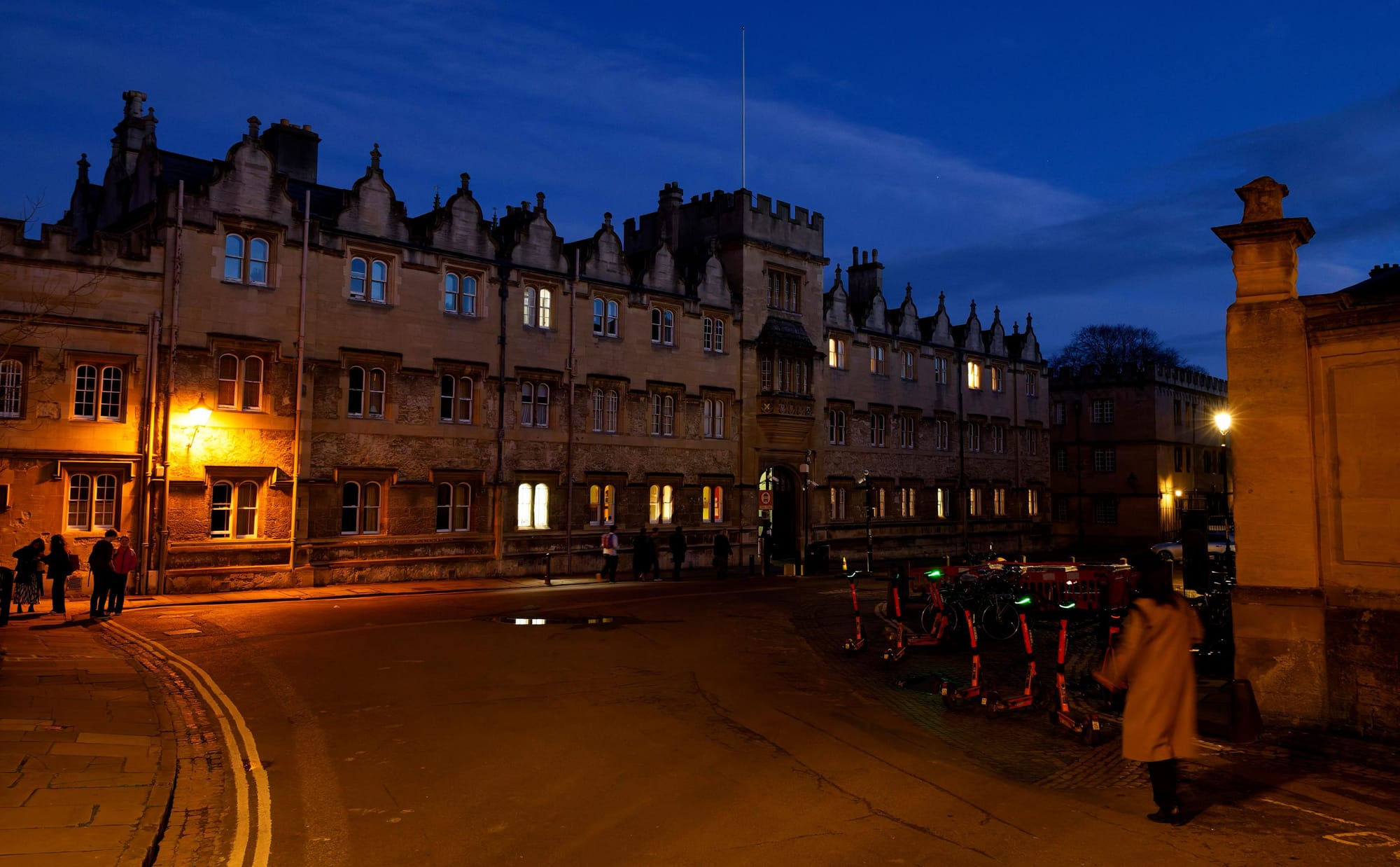
We started this article at the gate, 700 years ago. It is only fitting we should finish it here, before we walk away through Oriel Square, with its cobbles and its scooter parking. When you walk in through the lodge, you are struck by a sense of peace, of contemplation, and of buildings that convey the weight of history, the passage of time.
Those that run this college are the current custodians of an ancient institution that shaped the very fabric of this country's civic and religious life – and has come perilously close to financial collapse multiple times over the long arc of its history, which may give context to recent headlines over the UPP on Cowley Road. But the students bring life and energy to the walls that have seen so much. We hope we have shared a glimpse of the life behind the porter's lodge and the oriel window.
Madeline Odent is an architectural historian with a specific interest in listed buildings and built heritage conservation management. She matriculated at Magdalen in 2012 and switched to Oriel in 2014.
Roger Close is the Clarion's photographer. See his work on Summer Eights, Mayor Making, the Town and Gown and every newsletter we put out.
We thank Oriel College for their support with this article.
Further reading
A sneak peek in to the Senior Library