
How to see the eclipse in Oxford

The last total solar eclipse visible from Oxford was in 1715… and it was cloudy.
That makes the solar eclipse on Wednesday 12 August a big deal. While we aren't in for a full solar eclipse, it’s close at ~92%, and the weather is predicted to be sunny. The Clarion caught up with Chris Lintott, Professor of Physics at the University of Oxford, co-presenter of BBC 4's The Sky at Night, and a co-founder of the citizen science Zooniverse and Galaxy Zoo platforms – all in all, the perfect person to guide you though how, why and where to watch the solar eclipse tomorrow.

What?
First off, what even is an eclipse, and why should you care? Chris explains:
“An eclipse is a chance to see the clockwork of the Solar System in action – and to pay attention to something we normally ignore. A partial – even a large partial, like Oxford gets on Wednesday – isn't a spectacular event, but it is a chance to get outside, look up (or down if you're projecting an image) and share the experience of watching the Moon slide by.”
An eclipse of the Sun happens when the Moon comes between the Sun and the Earth, blocking light from the Sun and casting its shadow onto our planet’s surface. Depending where you are as the Moon moves in its orbit around Earth, this can be a partial eclipse where some of the Sun's light is blocked (like this week's), or a total eclipse where the Moon completely blocks the light from the Sun.
“You really should get to a total eclipse someday - they are awe-inspiring, eerie, unforgettable experiences,” says Chris. (For tomorrow’s eclipse, you'd have to be in Greenland to see the totality – though you can register to view the RRS Sir David Attenborough, which will be positioned near Greenland to catch the total eclipse.)
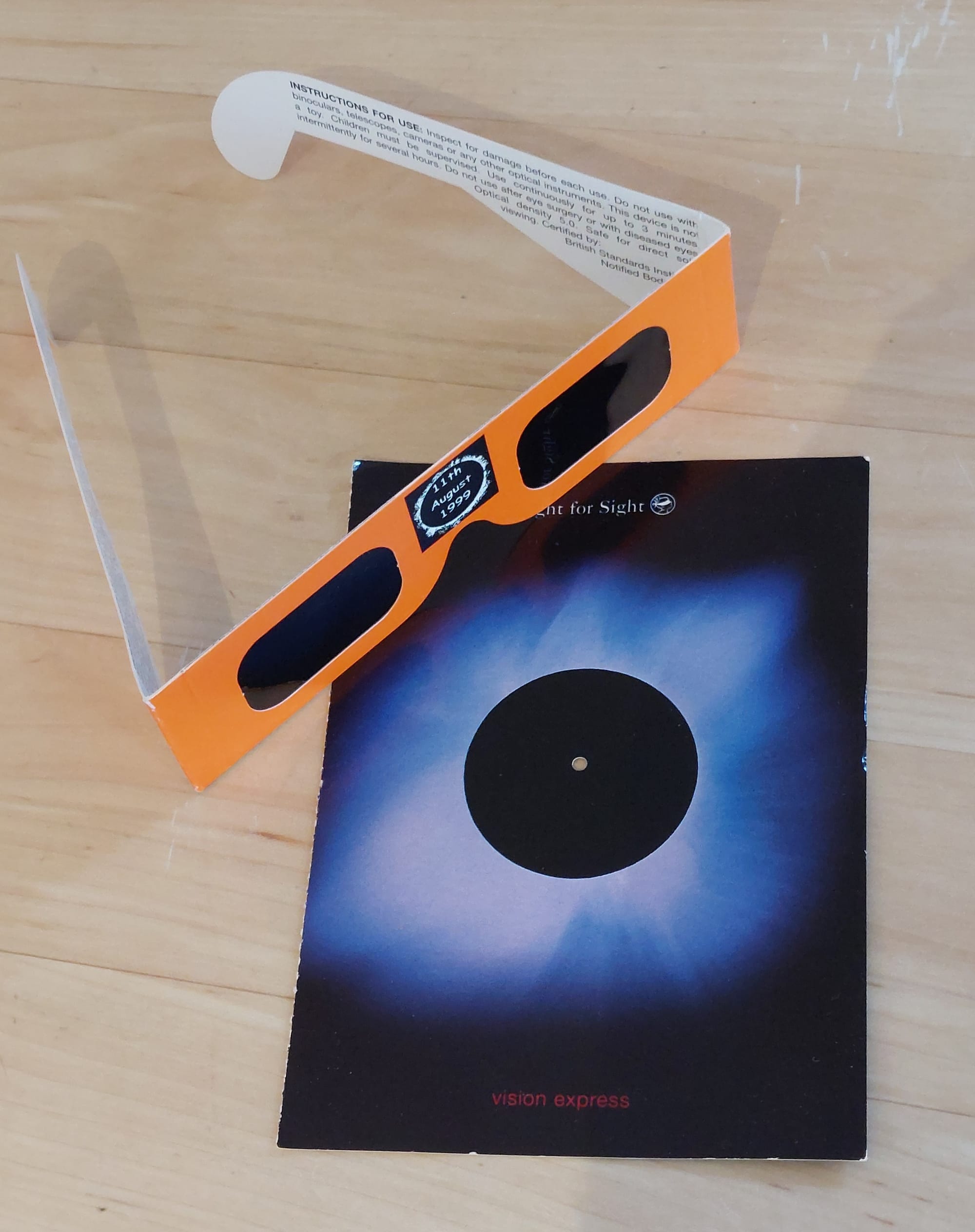
The Clarion’s space correspondent was lucky enough to be in France in 1999 at a time of total solar eclipse, which only touched the tip of Cornwall in the UK. He recounts: “It was an amazing experience: when the Moon went in front of the Sun, it went dark. The birds stopped singing and the insects stopped flying, thinking it was night. You could see the bright halo around the Moon - the Sun's corona.”
Total solar eclipses themselves rely on the coincidence that the width of the Moon, as seen from Earth, is the same as the perceived width of the Sun. If they didn't match up exactly, the Moon's shadow wouldn't block out the Sun as neatly as it does during a total solar eclipse.
Solar eclipses have a less showy cousin. During a lunar eclipse, the Earth is directly between the Sun and the Moon, and the Earth's shadow falls on the Moon. The Moon goes dark and red due to light passing through the Earth's atmosphere. If the Sun is between the Earth and the Moon – well, that really, really shouldn't happen.
When
Chris explains that we’ll be treated to a two-hour show.
“This is a total eclipse for those in Greenland, a small sliver of Iceland and a wide track across Spain. Here in Oxford, we'll see most of the Sun's surface hidden by the Moon. The eclipse starts just after 6.15pm, with maximum eclipse an hour later and the end of the show just after 8pm.
“Weirdly, even though most of the Sun will be hidden, you won't notice any difference in light levels – your eyes will adjust to the changing brightness. You might notice a drop in temperature as less of the Sun's rays reach us.”
How?
Rule one of eclipse club: do not look directly at the Sun. Chris says:
“It's dangerous, even during an eclipse, to stare at the Sun directly. You certainly shouldn't use any binoculars or a telescope unless you have filters and know what you're doing. If you have some eclipse glasses check them against your household lights to make sure there aren't any holes in them.
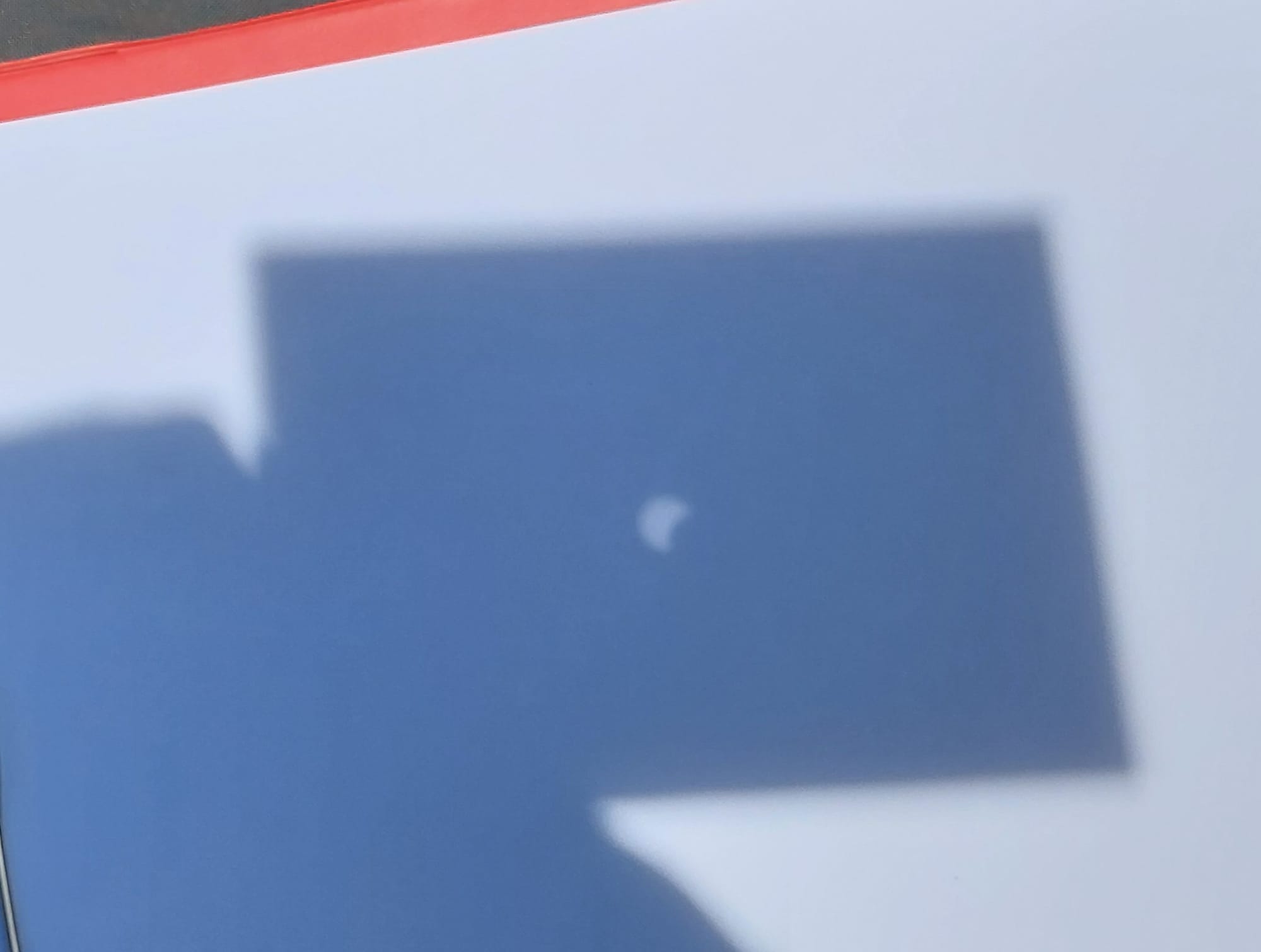
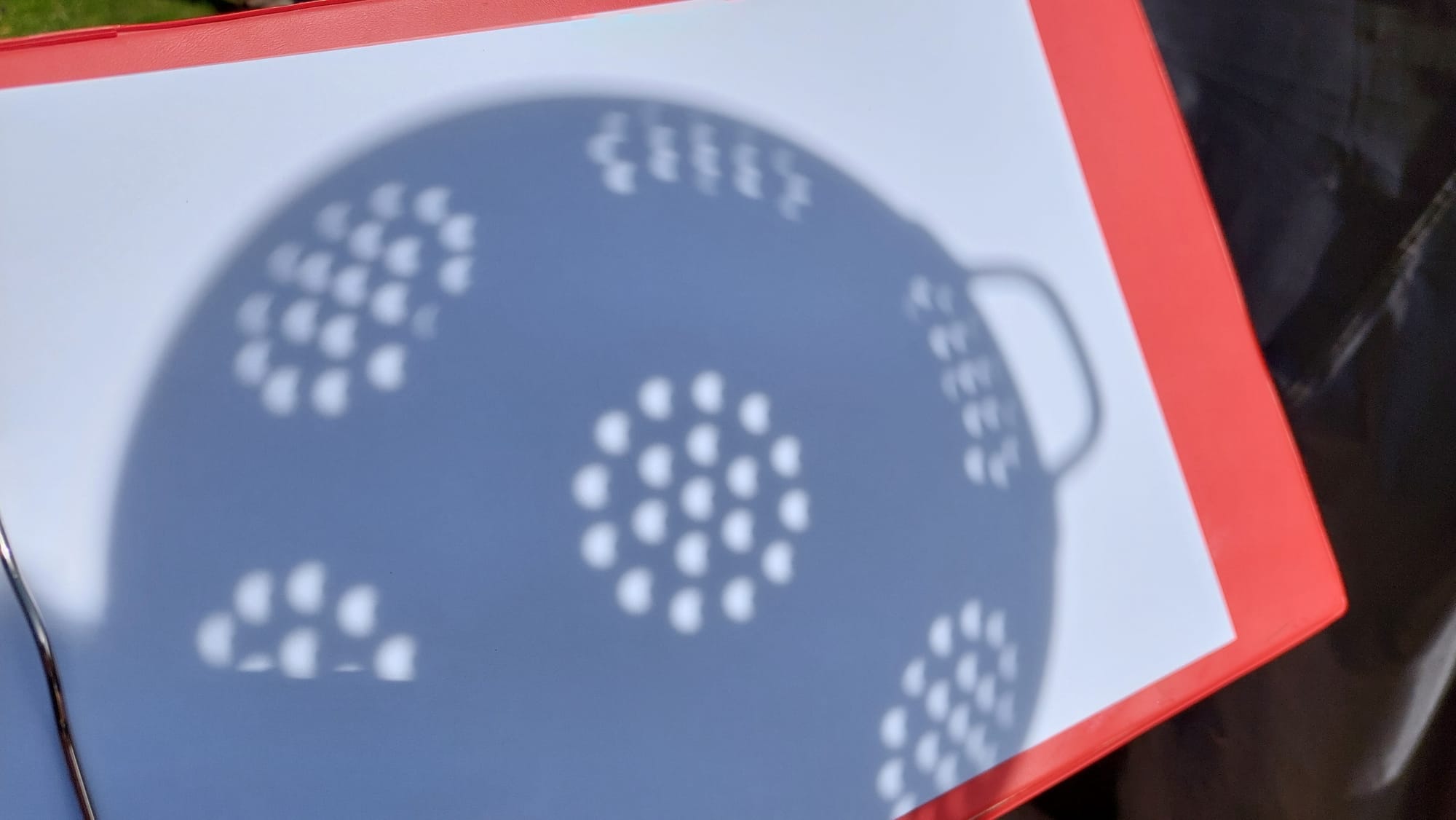
“Otherwise, projecting an image of the Sun is fun, safe and easy - a pinprick in a piece of cardboard or a cereal packet, or a colander or tea strainer will produce projected images of the Sun. Check for images produced by the crescent Sun shining through the leaves of trees too."
Here's a guide on how to photograph the eclipse if you wish a more shareable memory. These are our own results from card and colander from the 2025 eclipse, which was only 40% in Oxford:
Where?
We’re pretty sure people will be scrambling up Castle Mound and staking out their place on the Westgate’s roof terrace, but the most important thing is to look west. Chris explains:
“The difficult bit about observing this particular eclipse in Oxford is that the Sun is pretty low in the sky, setting just after the event ends. So you need a clear western horizon to catch the show. At the start of the eclipse, the Sun will be 20° above the horizon – that's about the distance between thumb and little finger if you hold your hand at arm's length.
“Plenty of people will head to Port Meadow, but any hill (or tall building) will do. I reckon the choice spot in Oxford is the top of South Park, where the Oxford University Space & Astronomy Society in association with Reuben College will have specially equipped telescopes and eclipse glasses to share.”
The South Park Solar Eclipse Watch Party starts at 6.15pm. Science Oxford are also holding an event at Margaret Road Recreation Ground in Headington from 5.30pm: it’s officially sold out but a waitlist is in operation. We’ll be somewhere with a clear view to the west, with a colander and a piece of card…
Further reading
- Chris Lintott in the London Review of Books on the 2024 total eclipse
- Projecting an image of the eclipse
- Safely viewing the eclipse
- When and where will the next eclipses take place?
- Bang! The Complete History of the Universe, by Chris Lintott, Brian May, Patrick Moore & Hannah Wakeford.
- Our Accidental Universe: Stories of Discovery from Asteroids to Aliens by Chris Lintott.