
Wolsey, Maxwell, and Morris: the curious philanthropists who made Oxford

Rich donors are nothing new to this venerable city. Oxford's reputation makes for an attractive place for philanthropists from across the globe to leave a legacy. Barely a week goes by without another announcement of a new foundation.
A rash of shiny new buildings (Blavatnik, Schwarzman, Ellison, Tata) made us look at donors past and present, and ask who funds the growth of this city and its university. In the late 19th century, Cecil Rhodes was lauded, cutting edge even. Today, he’s best described as problematic. But is there another Rhodes, hiding in our future?


Cardinal Wolsey by Jacobus Houbraken, CC0 1.0; Henry VIII by Hans Holbein (CC BY 2.0, photo by Richard Mortel).


The original
Perhaps Oxford’s first donor on a grand scale was Cardinal Wolsey. In 1524 he suppressed St. Frideswide's Priory and founded Cardinal College on its lands, using funds from the dissolution of monasteries including one in Wallingford. Wolsey, one of the richest men in the country, was an Oxford alumnus; he took his degree at the university at the age of 15. He fell out of favour with the King, but history looked more kindly on him in the round.
The college was not completed, but was refounded in 1532 as King Henry VIII's College by (surprise!) Henry VIII. In 1546 the King, who had broken from the Church of Rome and acquired great wealth through the dissolution of more monasteries in England, refounded the college as Christ Church as part of the reorganisation of the Church of England. The partially demolished priory church became the cathedral of the recently created Diocese of Oxford.
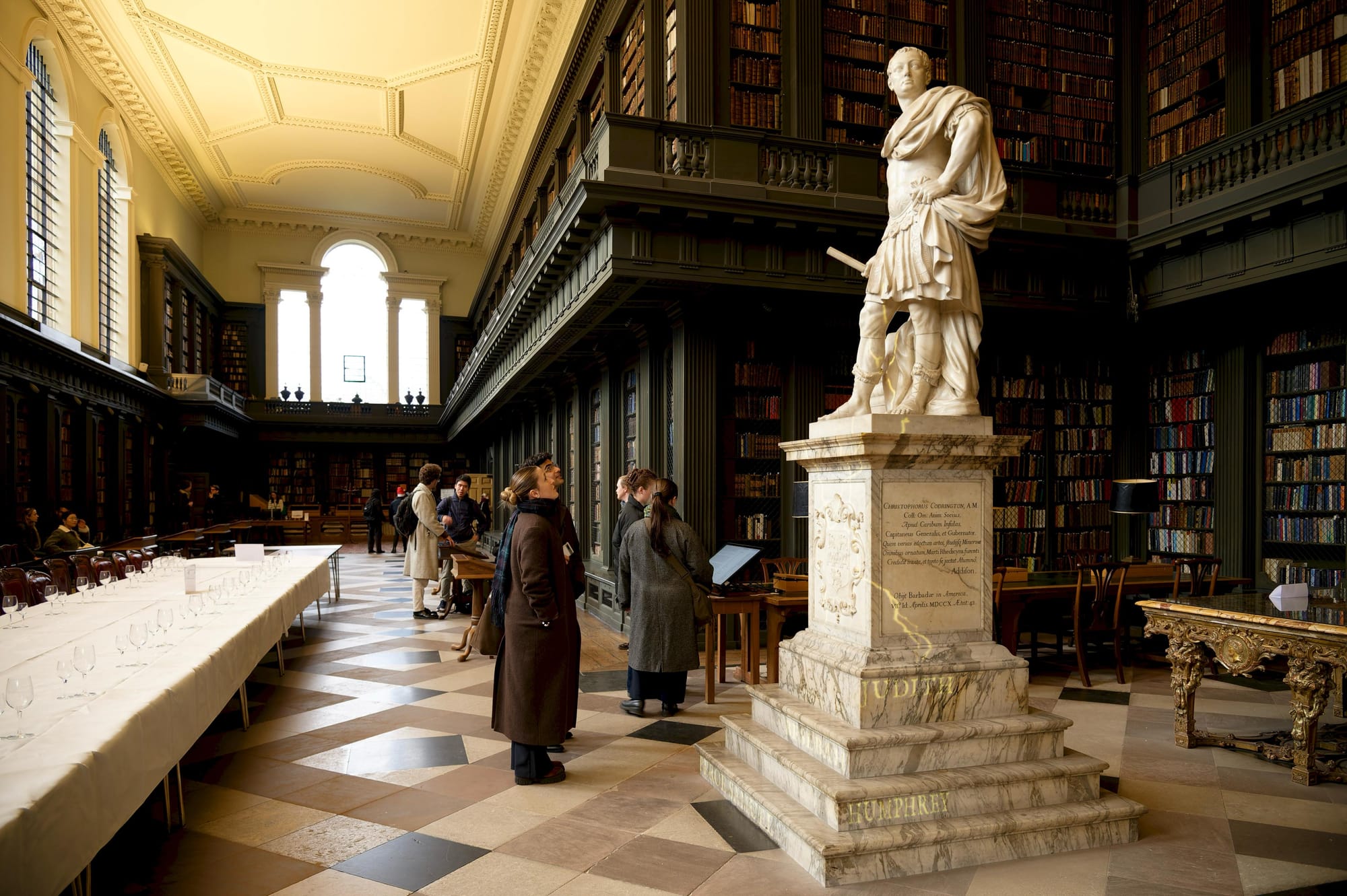
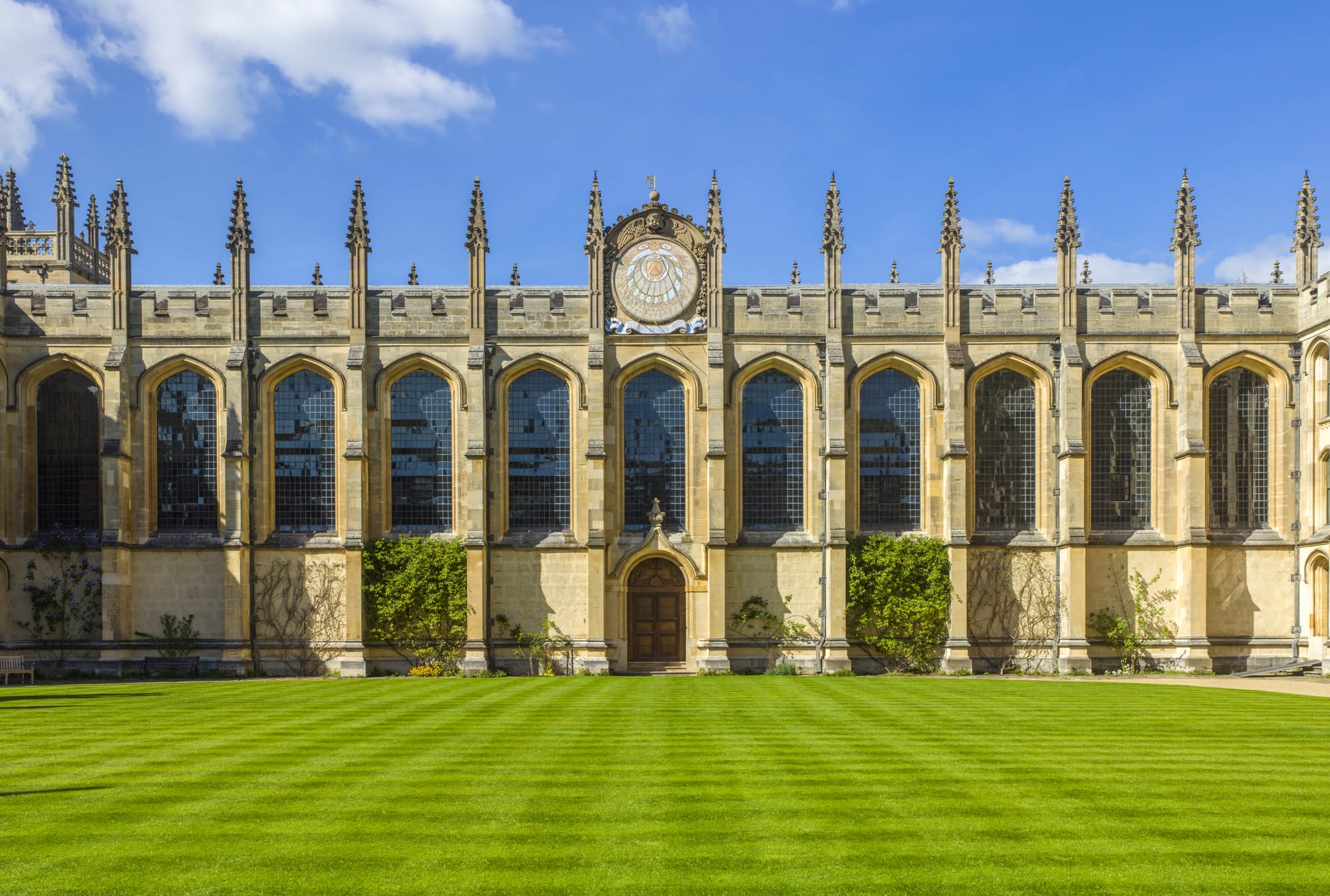
Codrington statue (Roger Close). Inside All Souls College Library, formerly the Codrington Library (Andrew Shiva / Wikipedia, CC BY-SA 4.0)
Christopher Codrington
Fast forward two hundred years, and switch colleges to All Souls, where we find Christopher Codrington leaving a bequest of £10,000 in 1710 to the college for the building of a new library. His wealth derived largely from his family’s activities in the West Indies, where they owned plantations worked by enslaved people of African descent.
The college says it has taken several steps to address the problematic nature of the Codrington legacy, including erecting a plaque at the entrance to the library “In memory of those who worked in slavery on the Codrington plantations in the West Indies”, and funding scholarships for Caribbean nationals who identify as black or mixed black ethnicity.

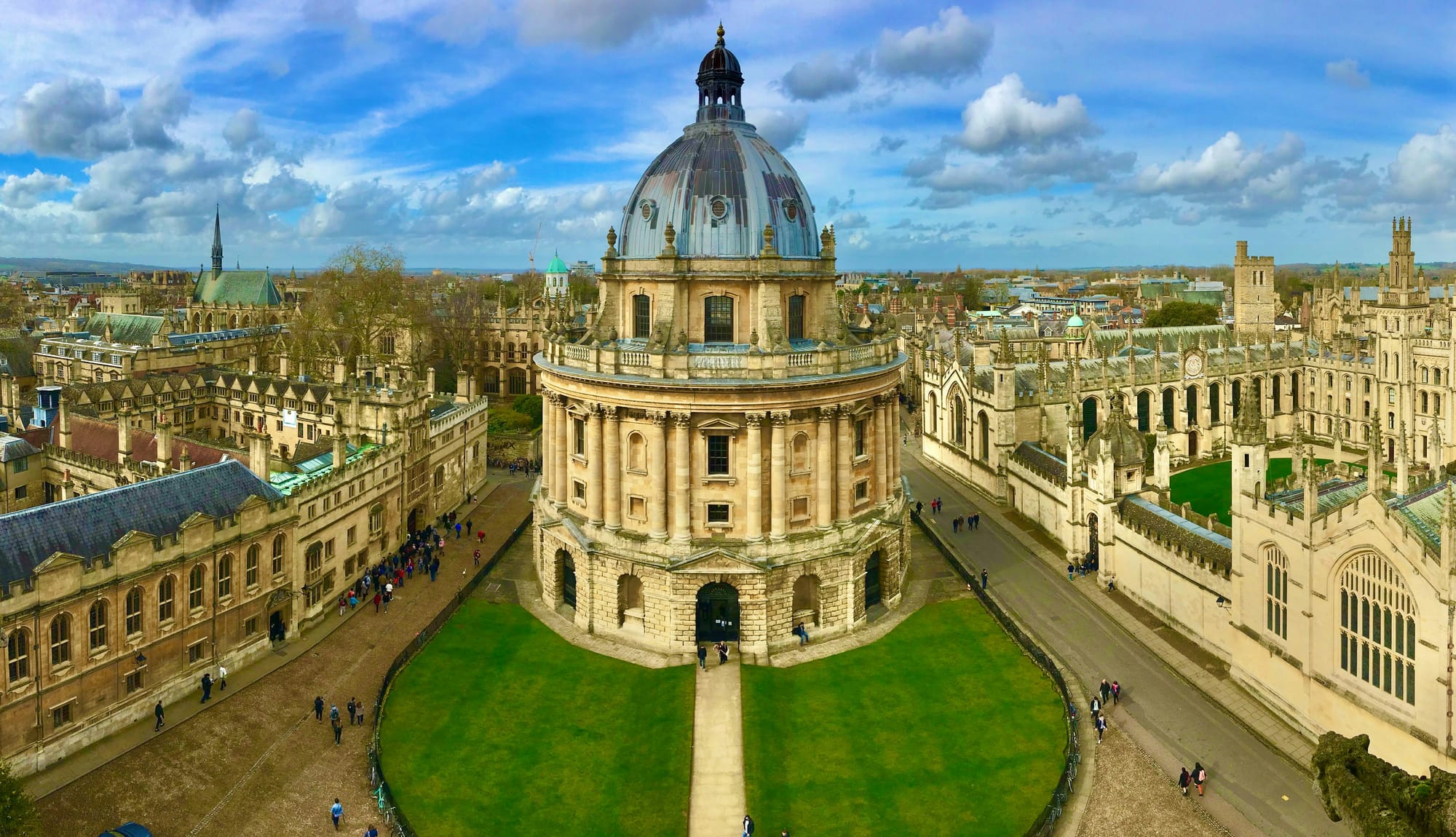
John Radcliffe, and the Radcliffe Library he founded (Unsplash, Ben Seymour).
John Radcliffe
Dr John Radcliffe was physician to King William III until 1699, MP for Bramber in Sussex and subsequently for Buckingham. He died in 1714, and his property was bequeathed to various charitable causes, including St Bartholomew's Hospital, London and University College, Oxford, where funds were used to found the Radcliffe Library.
As a physician he was proud of having read little, remarking of some vials of herbs and a skeleton in his study: “This is Radcliffe’s library.” A contemporary, Samuel Garth, quipped that Radcliffe founding a library was “about as logical as if a eunuch should found a seraglio”.
A number of landmark buildings in Oxford are named after him: the Radcliffe Camera (in Radcliffe Square), the Radcliffe Infirmary, the Radcliffe Science Library, Radcliffe Primary Care, the Radcliffe Observatory, the Radcliffe Observatory Quarter and the John Radcliffe Hospital. The former Radcliffe Lunatic Asylum is now the Warneford Hospital. He is buried in St Mary the Virgin Church, Oxford.
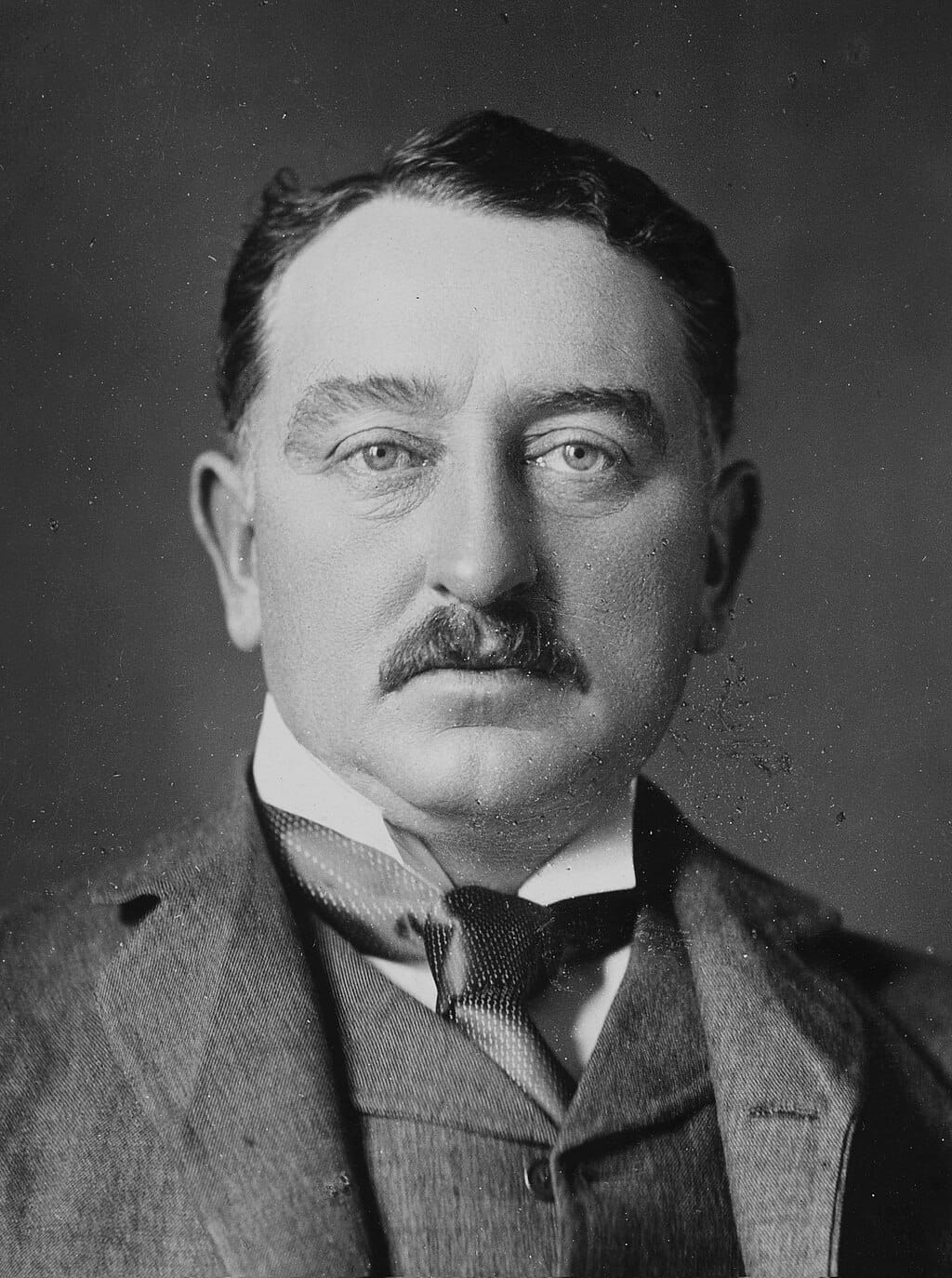

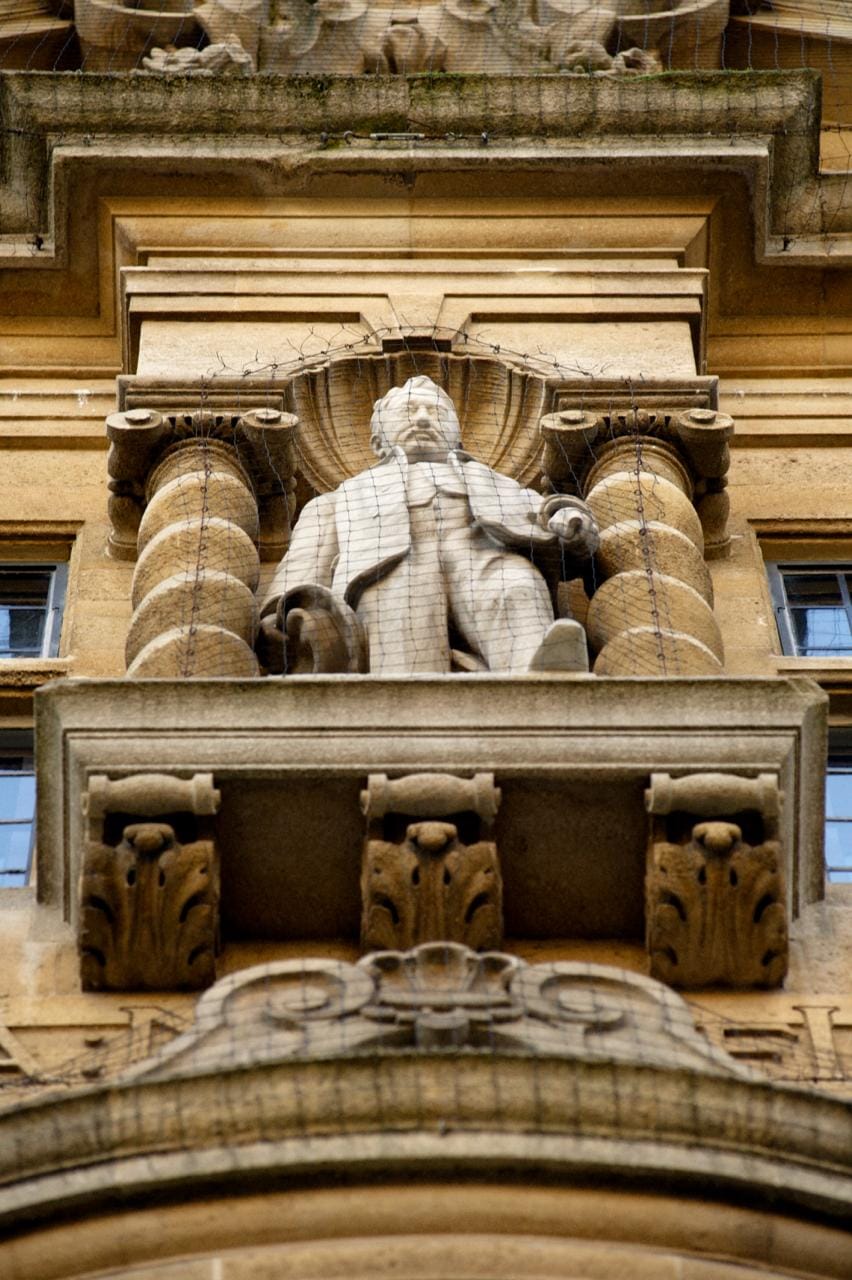
Cecil Rhodes (public domain); sculptor Wallace Mkankha (photo by Nehemia Nyakudanga of Rare Photography, via Oriel); Rhodes statue (Roger Close).
.jpg)
Cecil Rhodes
Fast forward another 150 years and we find Cecil Rhodes, a British mining magnate and politician in southern Africa who served as Prime Minister of the Cape Colony from 1890 to 1896. To call his legacy problematic would be understating it. His business relied heavily on the land, minerals and people of southern Africa. As Oriel College puts it, “Some of his actions, particularly during the conquest of Zimbabwe, led to considerable suffering and loss of life.”
When he died aged 49 in 1902, he left £3m to establish a trust offering students from the British Empire, Germany and the United States scholarships to study at Oxford University. The Rhodes Trust continues to offer scholarships to international students today. Rhodes also left £100,000 to Oriel College in his will, largely for the construction of a new building on the High, which stands to this day and has a statue of him on the front.
Unless you have been living under a rock in Oxford, you will surely have heard of the Rhodes Must Fall movement. This began in South Africa and manifested itself in Oxford in 2016, where students called for the statue to be removed in two large protests in June 2020. Planning constraints made removing the statue challenging, but, like All Souls with Codrington, Oriel has installed a plaque underneath the statue, contextualising Rhodes. It cannot erase the past, but it can re-evaluate it.
The college recently hosted an exhibition on Cecil Rhodes featuring four artworks by Zimbabwean sculptors. The exhibition discusses the colonial campaign led by Rhodes in Zimbabwe; charts the history of the Rhodes Must Fall campaign in Oxford; and shines a light on the tradition of Zimbabwean stone sculpture. It has resonated well in Zimbabwe. Perhaps this may yet be a template for how to deal with a forthcoming problematic legacy?
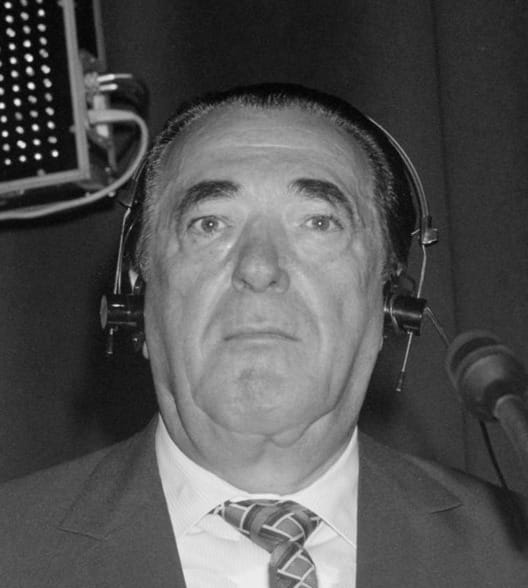
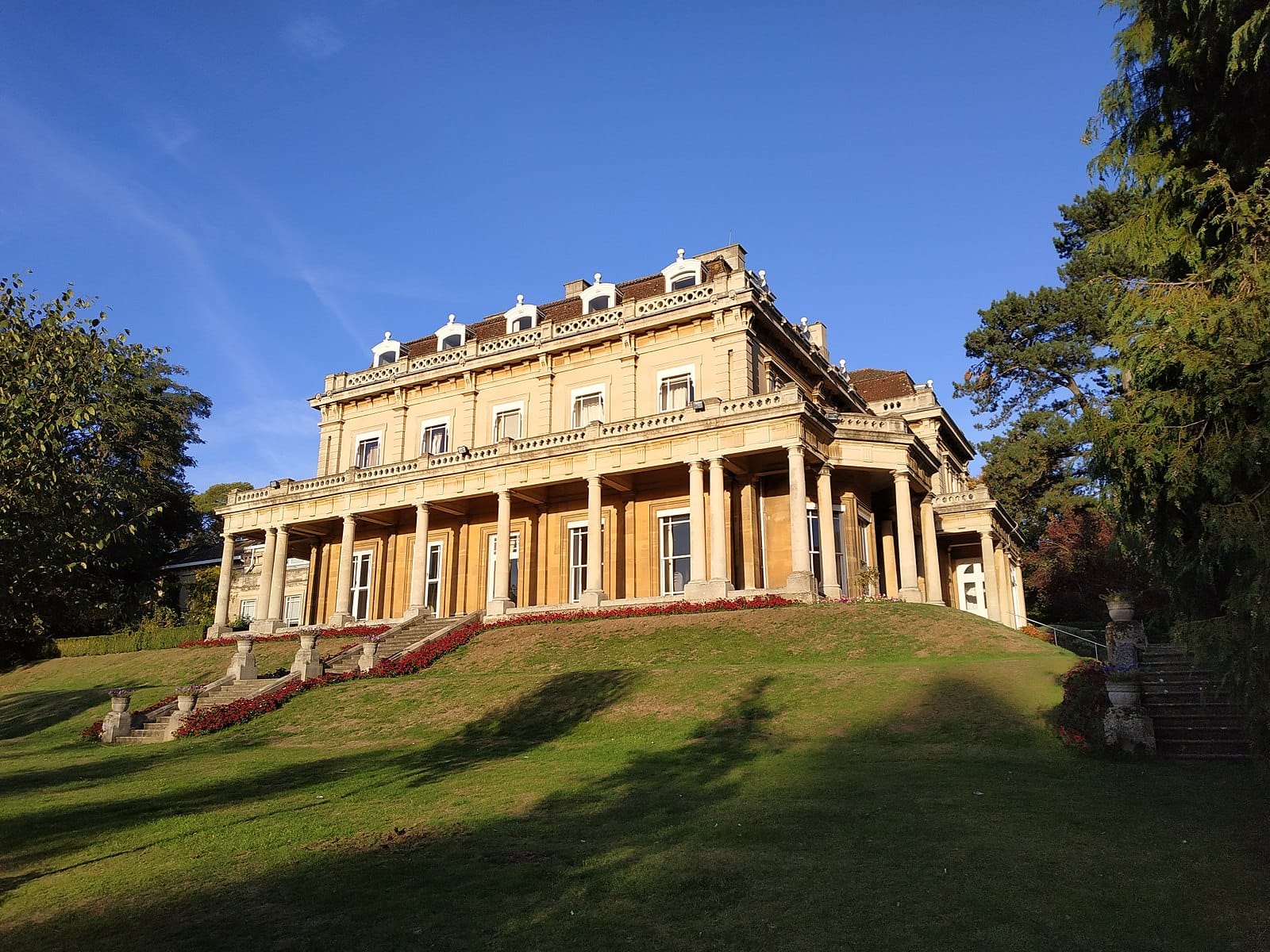
Robert Maxwell via Wikimedia Commons / Dutch national archive (CC0 1.0); Headington Hill Hall (EugeneStarostin, CC BY-SA 4.0).


Robert Maxwell
Born to a Czech family in 1923, most of whom perished in the Holocaust, Robert Maxwell lived in Headington before his untimely death in 1991 from falling off his yacht, the Lady Ghislaine. (Named after his daughter, Ghislaine Maxwell – yes, that Ghislaine. The yacht was originally commissioned by Saudi businessman Emad Kashoggi but both of those are rabbit holes that do not concern us at this time.)
Maxwell lived in Headington Hill Hall, now Oxford Brookes' law school, which he leased from Oxford City Council, calling it “the best council house in the country”. He founded academic publishers Pergamon Press (now owned by Elsevier) before becoming Labour MP for Buckingham (previously John Radcliffe's constituency!) for six years. Subsequently he threw his energy into publishing, most notably Mirror Group newspapers and Macmillan.
Maxwell was also the chairman of Oxford United, saving them from bankruptcy and attempting to merge them with Reading in 1983 to form a club he wished to call "Thames Valley Royals". He took Oxford into the top flight of English football in 1985, and the team won the League Cup a year later.
When Oxford Polytechnic announced plans to become a university, Maxwell offered to donate £1m to it if they would name it Oxford Maxwell University. They refused, and in the event in 1992 it became Oxford Brookes University, named after John Henry Brookes. Following his death, it was revealed that Maxwell had stolen hundreds of millions from the Mirror Group pension fund.
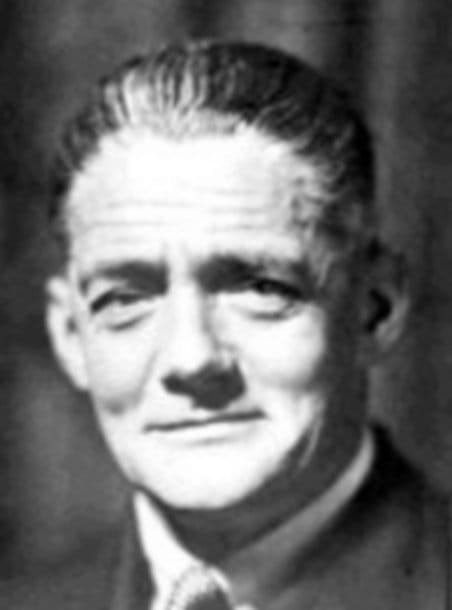


Lord Nuffield, his blue plaque, and the Morris Oxford that made his fortune (Charles01, CC BY-SA 4.0)

Lord Nuffield
Lord Nuffield, William Morris, the first Viscount Sheffield, founded Morris Motors, Nuffield College and Nuffield Hospital. He is not William Morris the wallpaper socialist and Clarion fellow-traveller, though that Morris did attend Oxford University and make his home in Oxfordshire.
A blue plaque marks the house in James Street where William Morris built and repaired bicycles in a shed in the garden. By 1902 he had progressed to motorcycles, and from there on to car sales and repair in the brick red garage that still stands on Longwall Street. Manufacturing followed, and in 1913 he acquired a disused military training college building in Temple Cowley (now Bennett Crescent flats). He was the first British manufacturer to develop mass production of cheap but reliable cars designed for urban living (the Morris Oxford) and after ten years had an annual turnover of £6m.
Philanthropy started early, with improving transport in the city. He introduced the first motorised buses to Oxford as a private operator, creating a reliable mass transit for his workforce. The workers in his factories contributed to ushering a wave of left-wing political activism via strikes and unionisation in the 1930s, which still echoes in the city's politics today.
His legacy in what is now (roughly) Mini Plant Oxford would be enough, yet he didn't stop there. He founded Nuffield College in 1937, a graduate college dedicated to advanced study and research in the social sciences, in order to address social, economic and political problems. Headington's Nuffield Orthopaedic Hospital is named after him as his 1930s donation, which pre-dated the foundation of the NHS, enabled its rebuilding. Outside of Oxford, he also founded the Nuffield Trust, an independent health thinktank, and research funder the Nuffield Foundation. He is memorialised in multiple place names in the city, particularly in Cowley.
At last, a saintly donor? Alas not. He provided funding for Oswald Mosley to launch ‘The New Party’ with a plan to rebuild Britain’s prosperity after the Wall Street Crash. The New Party morphed into the British Union of Fascists. Depending on which sources you believe, either Morris ceased giving any public support to British fascists after 1932 or did in fact continue, but became more subtle about it, as Cherwell outlines in this no-holds-barred article. The article contains multiple accusations of impropriety, including a link to a Daily Mail article where one Anne Vaughn accused Nuffield of abuse from the age of 12, although the article acknowledges that almost all evidence has been lost over the passage of time. It seems he continues in a long tradition of benefactors of this city who have a questionable past; what is not in question is his transformative impact on the city we live in today.
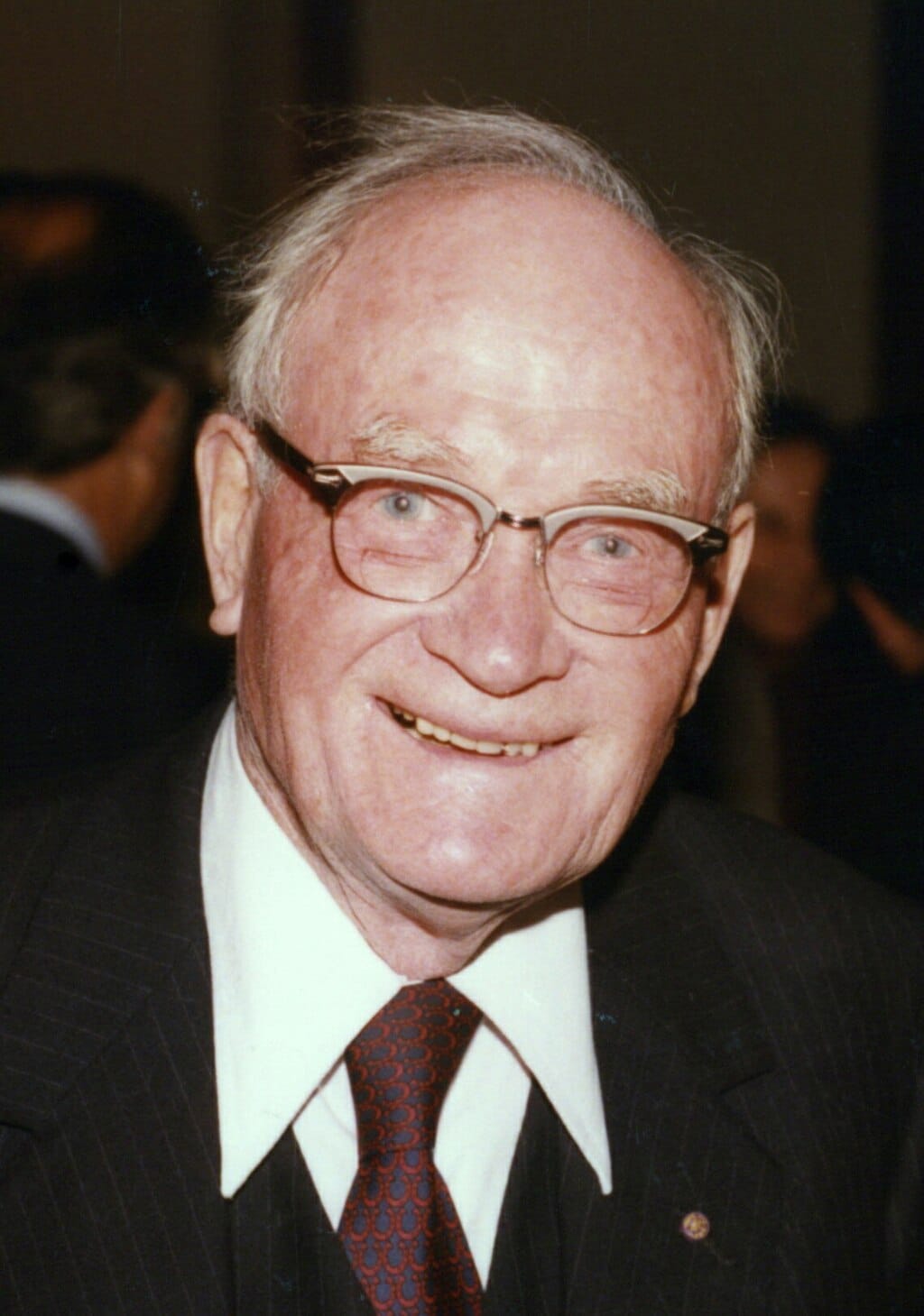

Cecil Green (A.T. Service, CC BY-SA 3.0). Lankester Quad, Green Templeton College (Cwawebber, CC BY 3.0),

Cecil Green
As we approach the present day, Oxford’s donors take on a transatlantic hue – an influence that shows no sign of fading.
Green College was founded in 1979 thanks to a donation from Dr Cecil Green, who founded American semiconductor behemoth Texas Instruments. A philanthropy giant, he died at the age of 102, having started programmes in education, science, medicine, social services and the arts across America, Canada, England and Chile.
Born in Manchester in 1900, Green moved to Canada as an infant and on to San Francisco in 1905 (the year before the famous earthquake), where his father was a cable car operator. Cecil Green worked on the steam turbine generator at General Electric, and in production engineering at the Federal Telegraph Company. He joined the oil exploration company Geophysical Service Inc. (GSI) in Dallas, Texas, and he and his wife Ida spent the next 15 years in hard fieldwork, exploring sub-surface structures in and around Texas for those that might contain oil and gas, work known as "doodlebugging." This vintage YouTube video is an interview with him telling the story of how he became a geophysicist. With three partners, they purchased GSI in 1941; it eventually became Texas Instruments, a world leader in microelectronics, including the first commercial silicon transistor and the first integrated circuit.
John Templeton
John Marks Templeton was born in Tennessee, and attended Yale University and then Balliol College, Oxford, as a Rhodes Scholar. Templeton became a billionaire by pioneering the use of globally diversified mutual funds. Money Magazine called him "arguably the greatest global stock picker of the century" in 1999.
Uninterested in consumerism, Templeton lived relatively frugally and never flew first-class. A friend jokingly described Templeton as Calvinist in his approach to wealth: “He believes it's okay to make money so long as you don't enjoy it.” Templeton was one of the most generous philanthropists in history, giving away over $1bn. In 1983 he endowed the Oxford Centre for Management Studies, which was turned into a full college (Templeton College, of course) by royal charter in 1995. In 2008, Green and Templeton colleges merged.
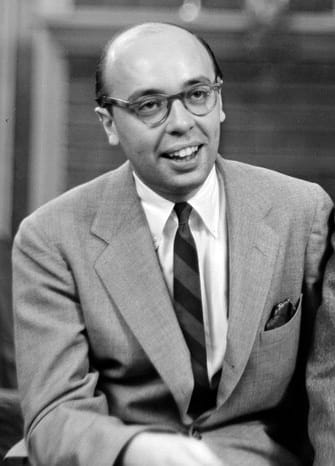
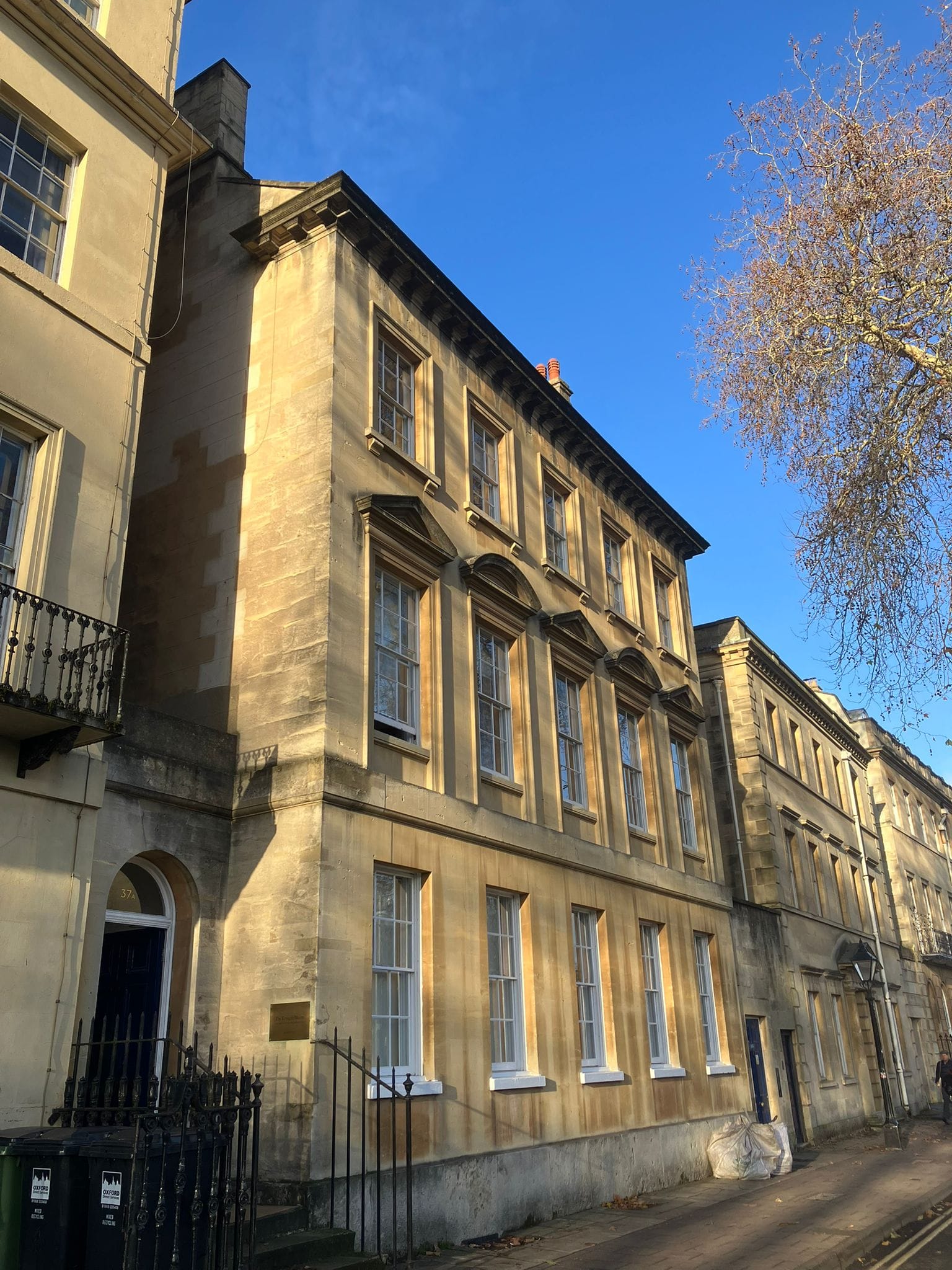
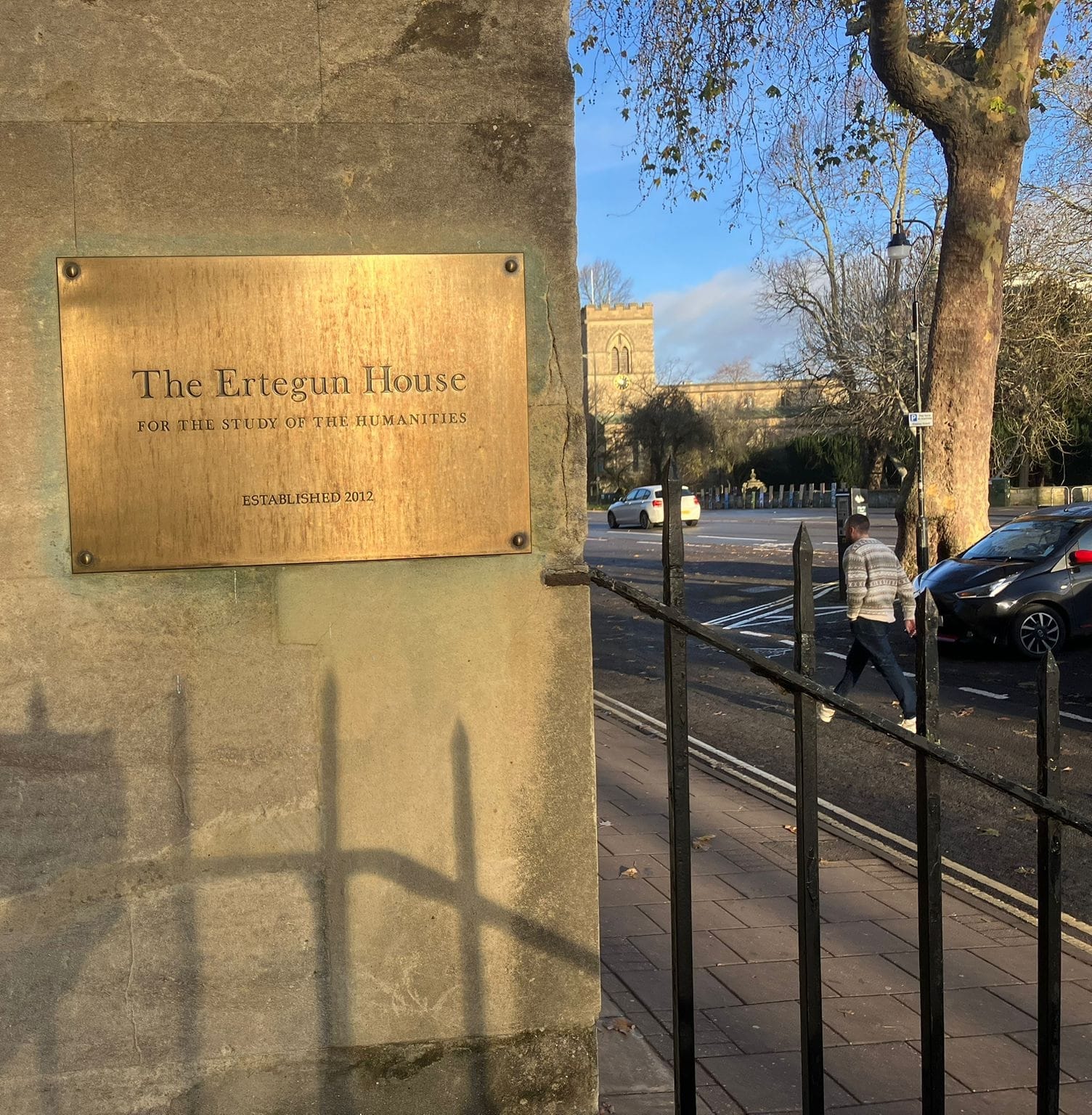
Ahmet Ertegün (Wikipedia, public domain). Ertegun House on St Giles.
.jpg)
Mica and Ahmet Ertegun
Mica Ertegun established the Mica and Ahmet Ertegun Graduate Scholarship Programme in the Humanities in 2012. At the time, the Ertegun gift was Oxford's most generous humanities scholarship ever. It endowed in perpetuity a programme for some of the world’s most gifted humanities students, providing support for up to 20 scholars each year and included establishing Ertegun House, on St Giles', as a home for the Ertegun Scholars.
In recognition of Mrs Ertegun’s philanthropy, in 2017 she was awarded an honorary CBE. Mica was the widow of Turkish-American Ahmet Ertegün, co-founder and president of Atlantic Records. He discovered and championed many leading rhythm & blues and rock musicians including The Drifters and Ray Charles.
In part two next week, we look at Schwarzman, Blavatnik and Saïd – names that adorn the university’s newest buildings – and Sackler, which does not.
Further reading
- Robert Maxwell: via headington.org.uk, which is a treasure trove of wider local history and information.
- William Morris: via Oxon Blue Plaques and via Uncomfortable Oxford.
- John Radcliffe: via Oxford History
- Morris Motors: ‘How Oxford became a motor city’, Oxford Centre for Global History