
Oxfordshire's maternity care: the findings

Oxford University Hospitals’ maternity departments are institutionally arrogant; the buildings are dirty and barely fit for purpose; and while frontline staff care desperately about their patients, the staffing is unsustainable.
The wider NHS maternity system in the UK is crumbling, insensitive, institutionally racist, discriminatory, has questionable oversight, is operationally and definitely digitally fragmented and needs radical reform, yet has been incapable of implementing previous recommended reforms.
These are the stark conclusions of the long awaited report into Maternity Care from Baroness Amos, published this week. As well as looking into NHS maternity nationally, it includes a dedicated report on OUH’s provision, together with the other trusts that Amos inspected.
We'll start with a content warning right upfront: childbirth, stillbirth, neonatal intensive care, maternal health, racism, discrimination, bodily fluids. We recognise this is a difficult subject for many readers.
Why Oxfordshire?
In March, we took a close look at maternity care in Oxfordshire. By then, the Amos investigation was well underway. At first sight it seemed surprising that Oxford University Hospitals had ended up on the list of 12 trusts under investigation, given that some of its data put it mid-table rather than requiring “urgent measures” – but active grassroots campaigns by Families Failed by OUH and Keep the Horton General, and lobbying by local MPs, had raised the alarm that there might be more to it than the data suggested.
 Oxford Clarion
The final report confirms that the approach was not purely data-driven. It says that a representative sample of trusts was selected – from large tertiary teaching trusts to small rural district general hospitals – but that family feedback was also taken into consideration when selecting trusts to investigate. In other words, the campaigners successfully managed to shine a spotlight on the John Radcliffe and Horton.
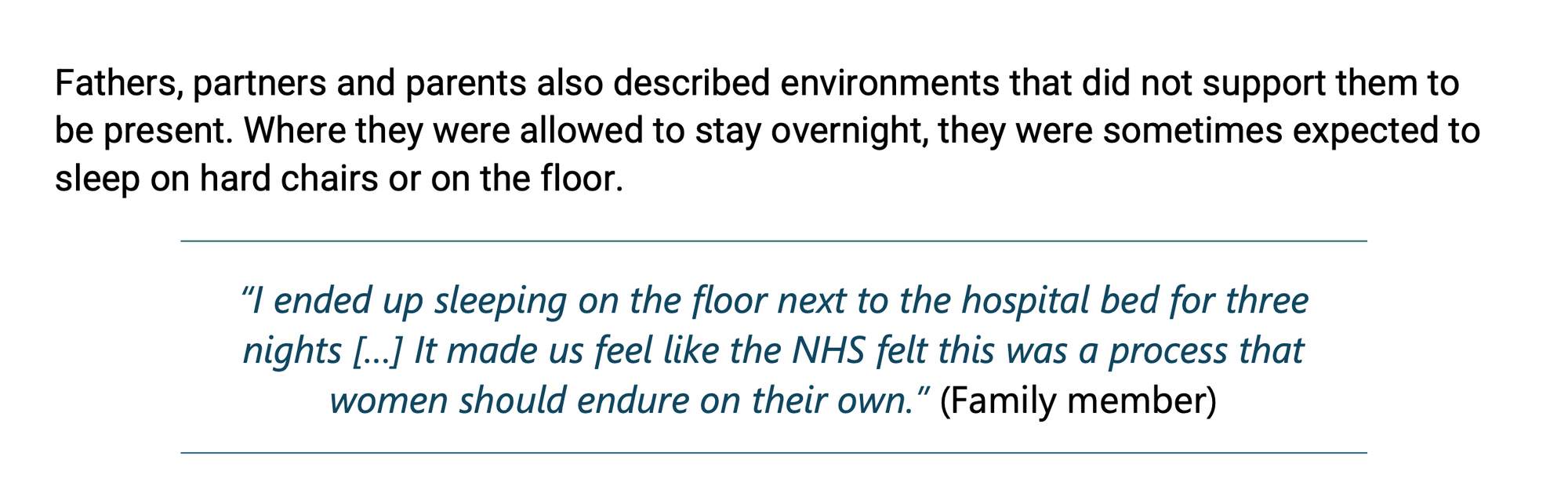
Once under the spotlight, the report is damning. After three days at OUH talking to staff and patient groups, the investigation team found that families didn't feel listened to, and felt that the hospital prioritised doing things the ‘Oxford Way’ over their care preferences. They were told that the prevailing culture at Oxford is difficult to challenge; that if someone speaks up, they are subject to micro-level criticisms; and that medical staff had left the Trust because of this treatment. They also heard that this culture had shown recent signs of improvement.
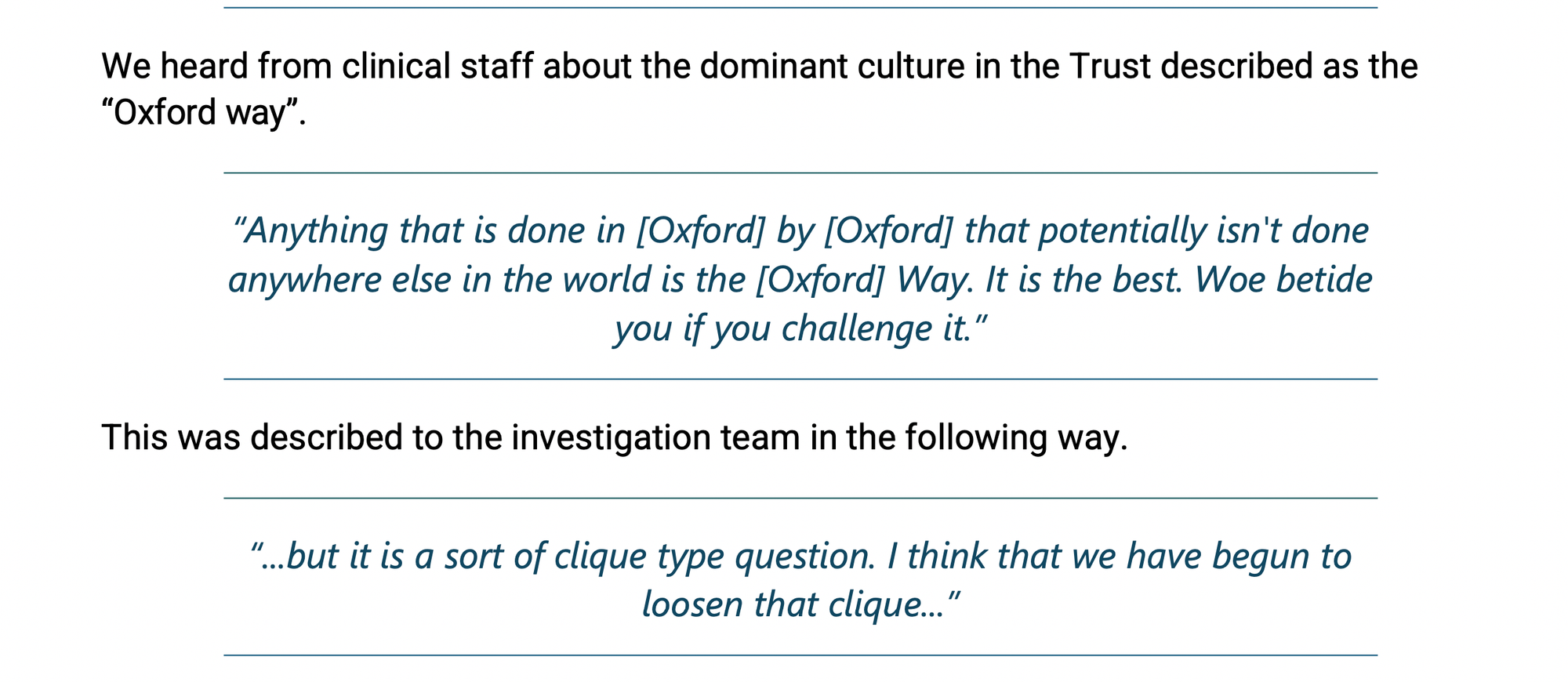
One way that the ‘Oxford Way’ manifests itself is to depart from NICE clinical guidelines. These would normally require a dating scan between 11-14 weeks to determine gestational age, detect multiple pregnancies, and estimate the date delivery is due. It would be followed by an anomaly scan between 18-20 weeks to screen for specific conditions and structural anomalies in the baby. The Oxford Way offers an additional scan at 36 weeks. Though at first glance this sounds like welcome additional care, a New Statesman/Channel 4 investigation last year raised concerns that came at the cost of more urgent care elsewhere – a finding echoed by the Amos report.
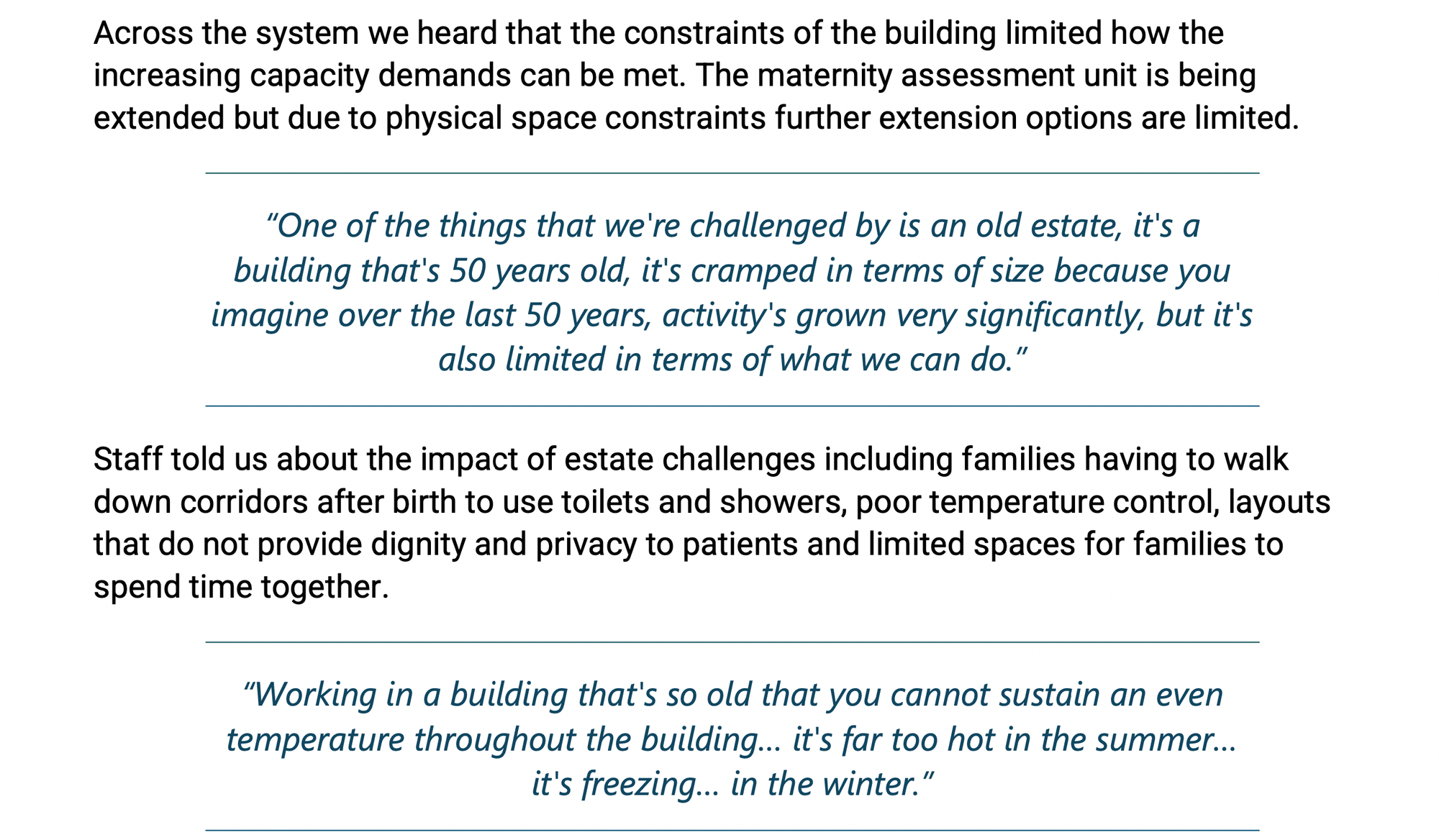
But 'excessive care' is the least of the concerns laid out by the report. It described a crumbling estate unequipped to deal with the demands placed on it:
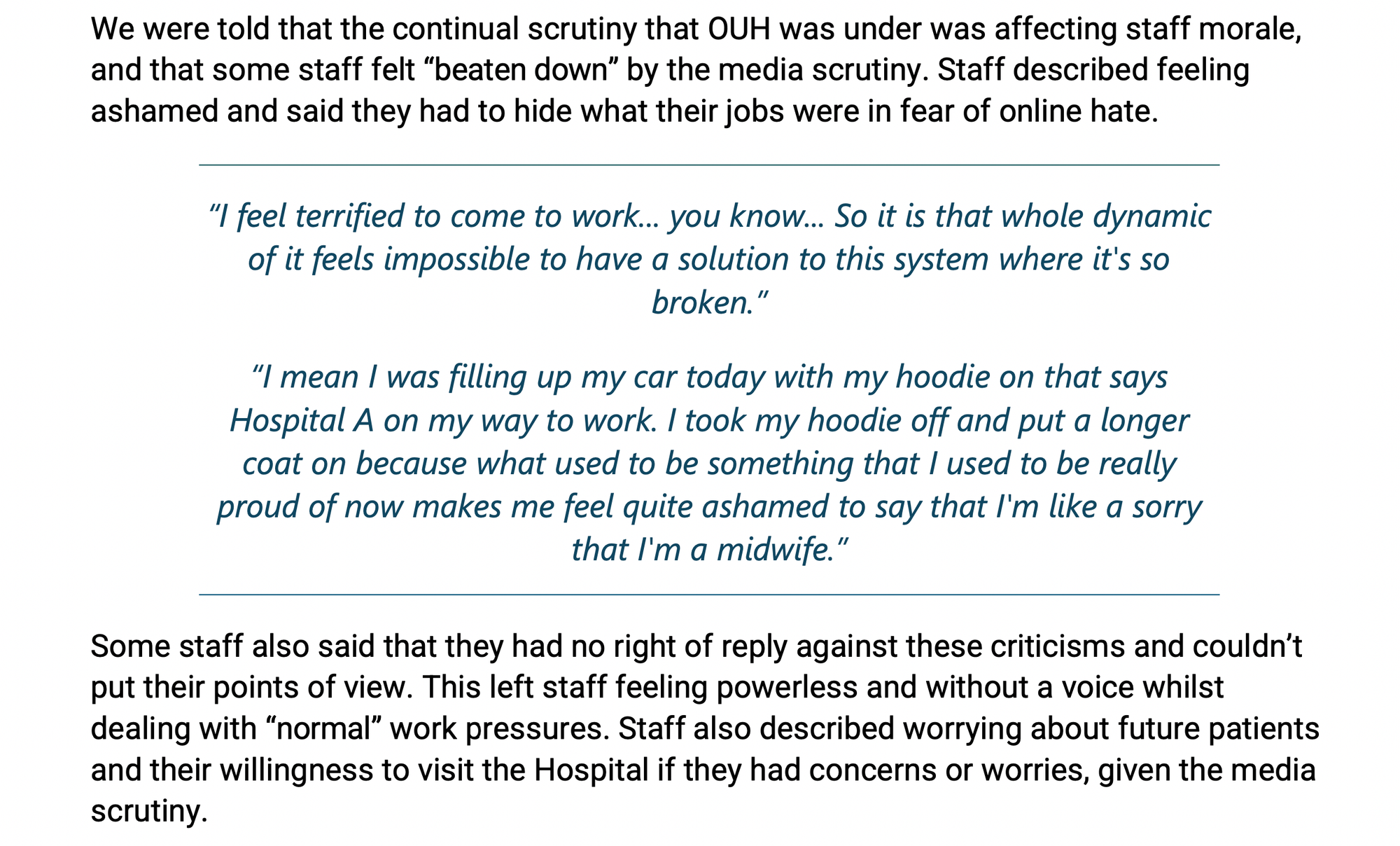
The Trust constantly being in the headlines hasn't helped staff morale – already stretched to breaking point by understaffing, while trying to manage the high levels of reporting requirements, audits and complex IT systems mandated by the NHS or local governance.
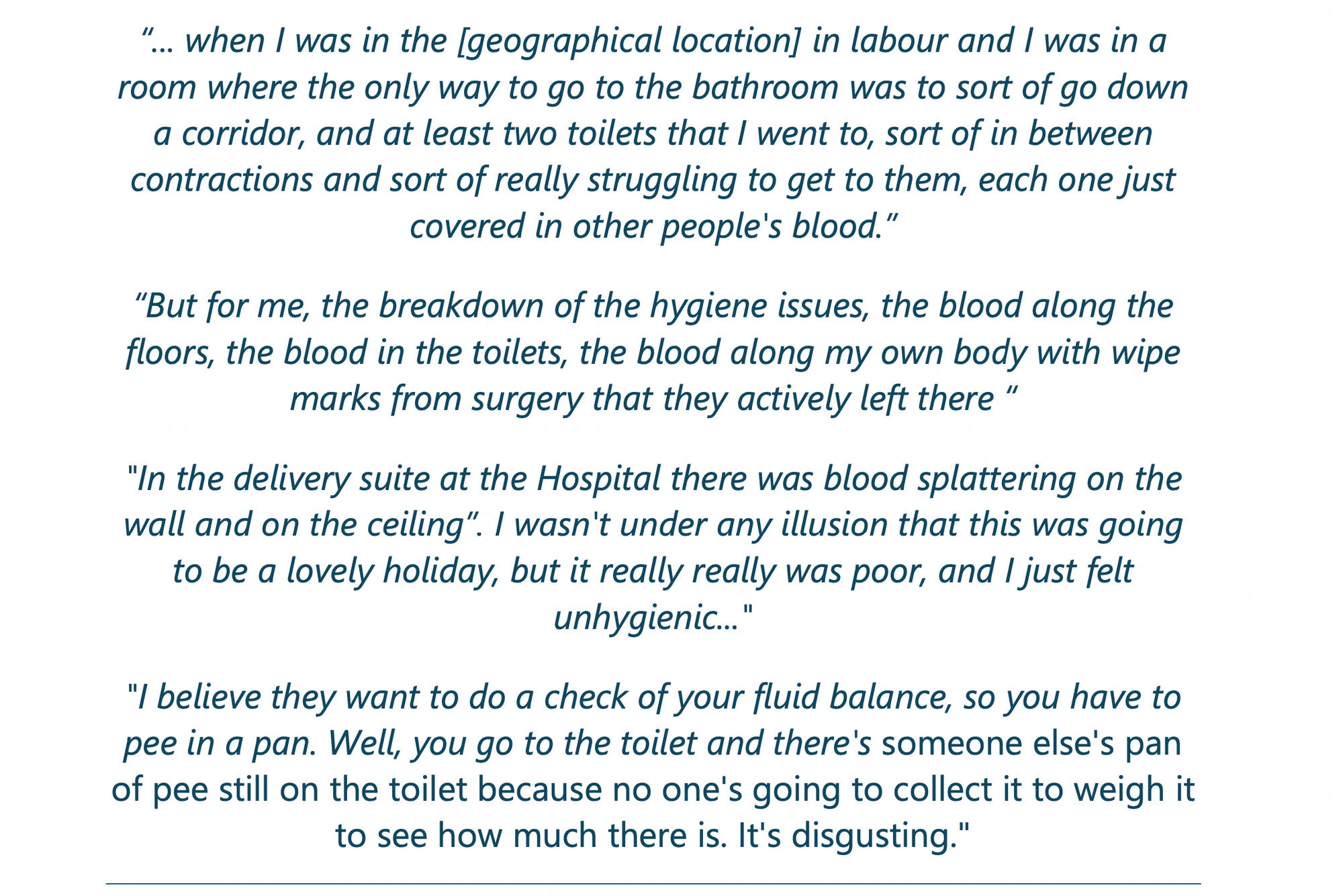
The Trust was also criticised for cleanliness in multiple evidence sessions, and even during the investigation itself:
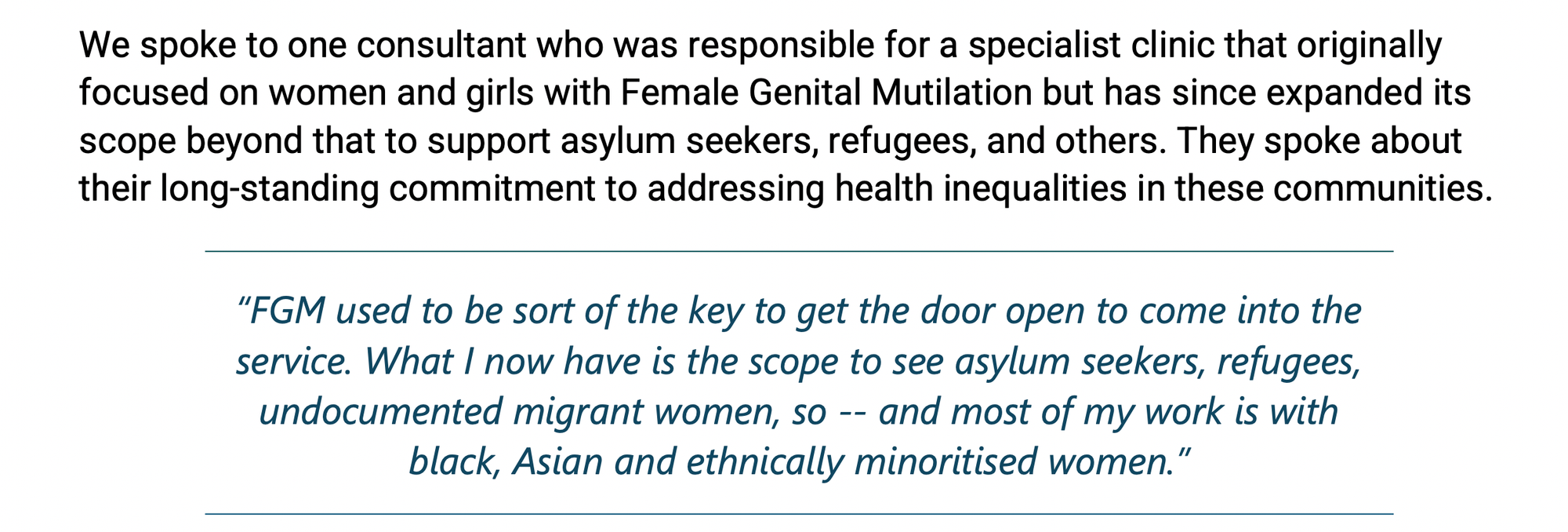
The report does also highlight the voices of women who had positive experiences. Many spoke highly of individual midwives, and services such as the midwife-led unit, ‘The Spires’. The report also contrasts the team culture at Banbury’s Horton General Hospital to the John Radcliffe, saying that the Horton staff generally spoke positively about the hospital and the leaders that oversaw the midwife-led unit there – both for a supportive team culture and for outreach to more marginalised groups locally.

The national picture
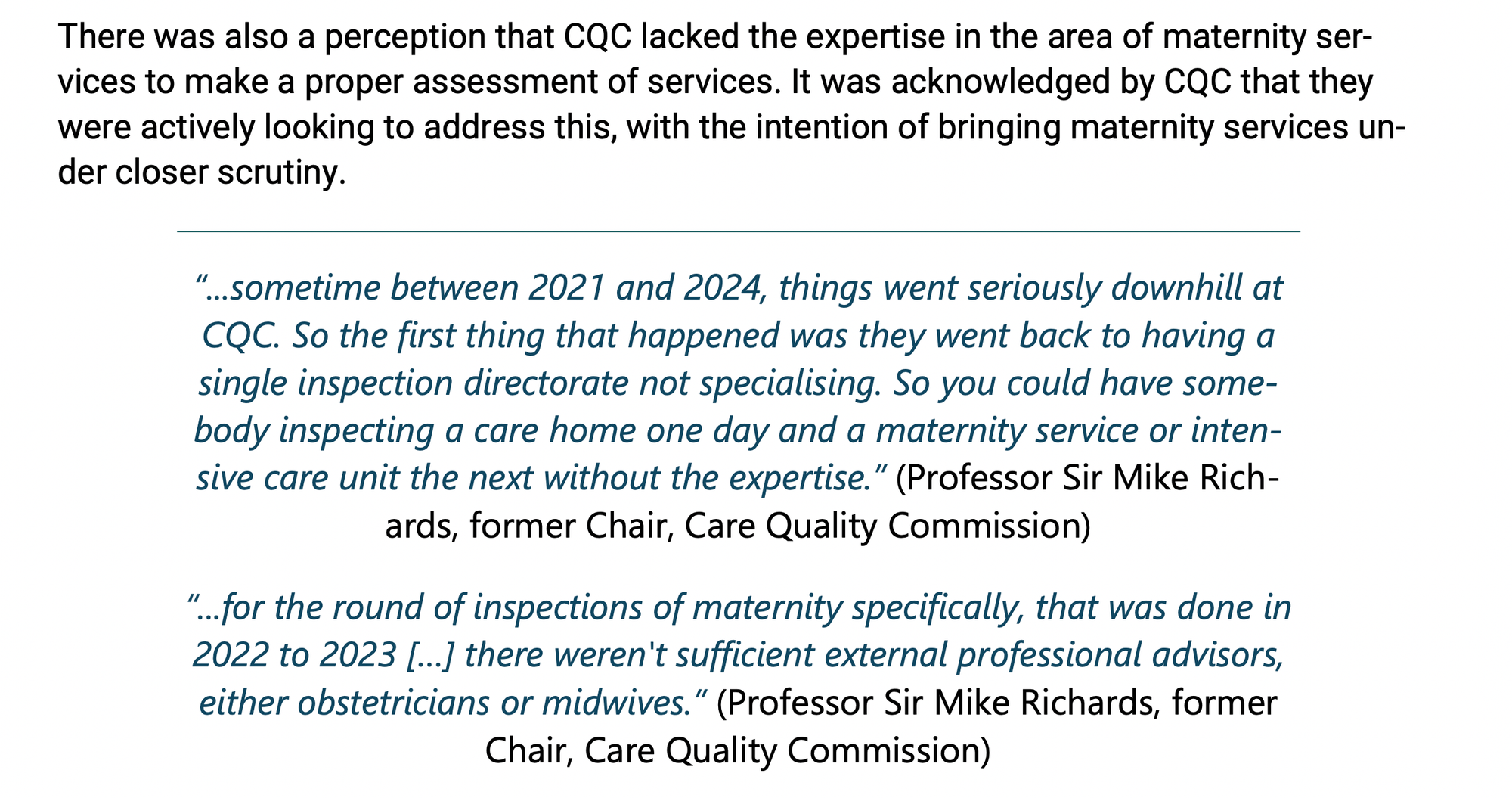
Yet there is a significant disconnect between the Amos report and the Care Quality Commission’s recent 'Good' Rating for OUH Maternity Services. This could be a result of recent efforts by OUH to improve. But the report casts doubt on the very ability of the Care Quality Commission to make an effective judgement on the maternity units they were tasked to judge.
In short, though Oxford University Hospitals has its own particular challenges, maternity failings are a national issue. Across the NHS, the report notes too little capital funding for estates and IT, with outdated buildings, obsolete digital infrastructure, and constrained capital spending directly undermining productivity, safety and care quality. Add to that the fact that maternity care is becoming more complex to provide – there's a declining birth rate but an increase in caesarean births – and it is clear that NHS maternity staff are faced with a near impossible job.
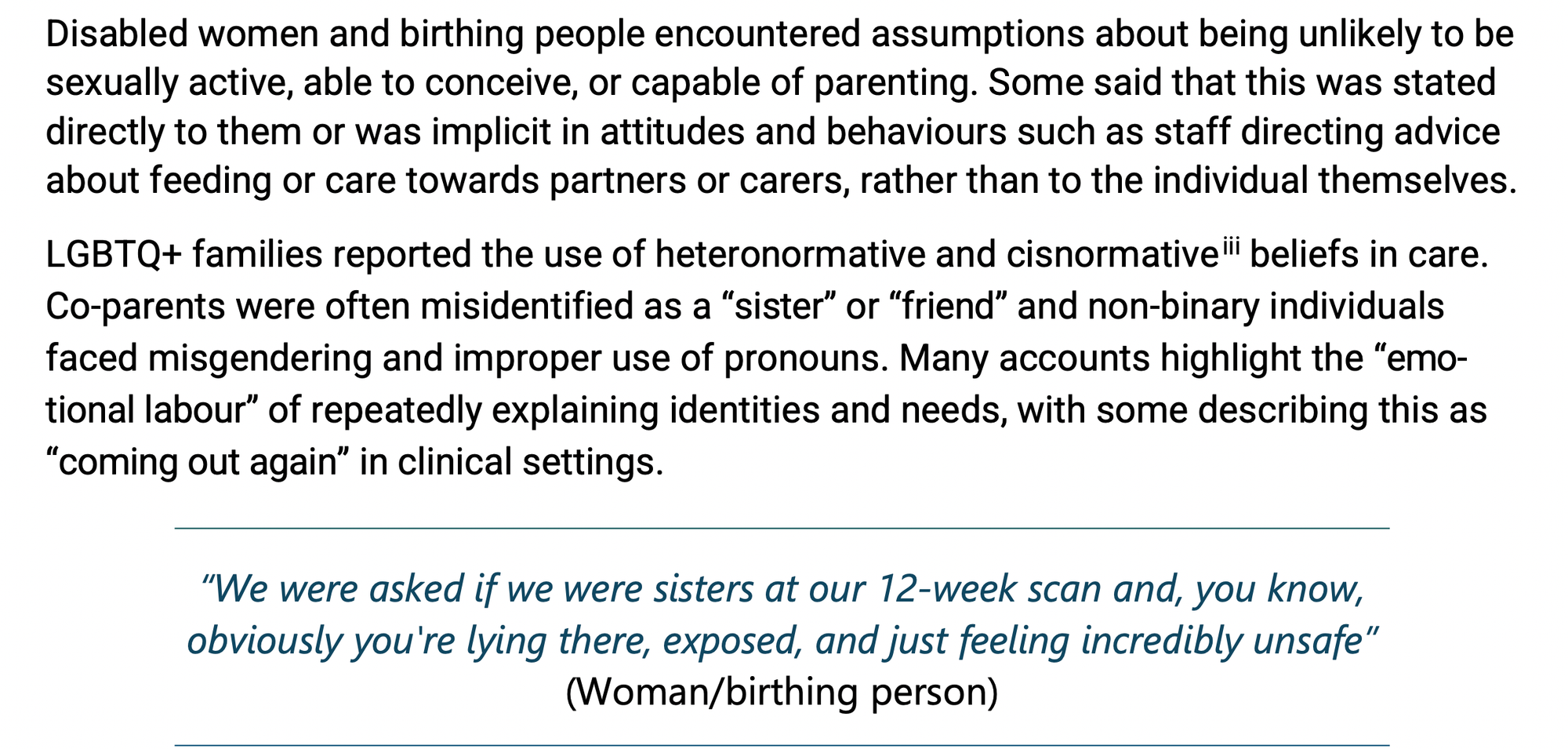
The report also detailed institutional racism where bias is embedded in clinical tools. For example, standard assessments of newborn jaundice may be less suitable for babies with darker skin tones because they do not account for differences in skin pigmentation. Families described encounters where staff appeared to apply fixed expectations about what a ‘typical’ patient or family looks like and expects, rather than adapting to the person in front of them. When people did not fit these expectations, because of disability, family structure, gender identity or other factors, they were more likely to experience care which felt inappropriate or exclusionary.
We can only scratch the surface of the 174-page report. It also pulled out insufficient resourcing in maternity triage as being the root of many challenges; digital systems that don't talk to each other, leading to duplication and resource challenges; tribalism between obstetricians and midwives; and a national culture of cover-ups and blame, rather than learning and seeking to provide comfort to bereaved families.

What now?
The report concludes that we must create a modern maternity and neonatal service with a new statutory role of Maternity and Neonatal Commissioner, accountable to Parliament. Among the recommendations are:
- Nationally agreed service standards: covering women, birthing people and family involvement, digital systems, buildings and estates, and more.
- Clear accountability: setting out who is responsible for delivering standards at trust and national level.
- Defined workforce requirements: including safe staffing levels, skill mix, training expectations, and role standards for advanced-practice midwives and specialist obstetricians.
- Mandatory standards for triage and Maternity Day Assessment Units: including staffing, seniority of cover, physical environment, and response times.
- National oversight of outcomes and inequalities: with specific accountability for the persistent gaps affecting Black and Asian women, birthing people and those living in the most deprived areas.
- A unified approach to learning: ensuring that when things go wrong, lessons are shared and acted on nationally.
- Better coordination between services: joining up maternity, neonatal, mental health, GP and community care in a way that does not currently happen consistently.
Will it happen?
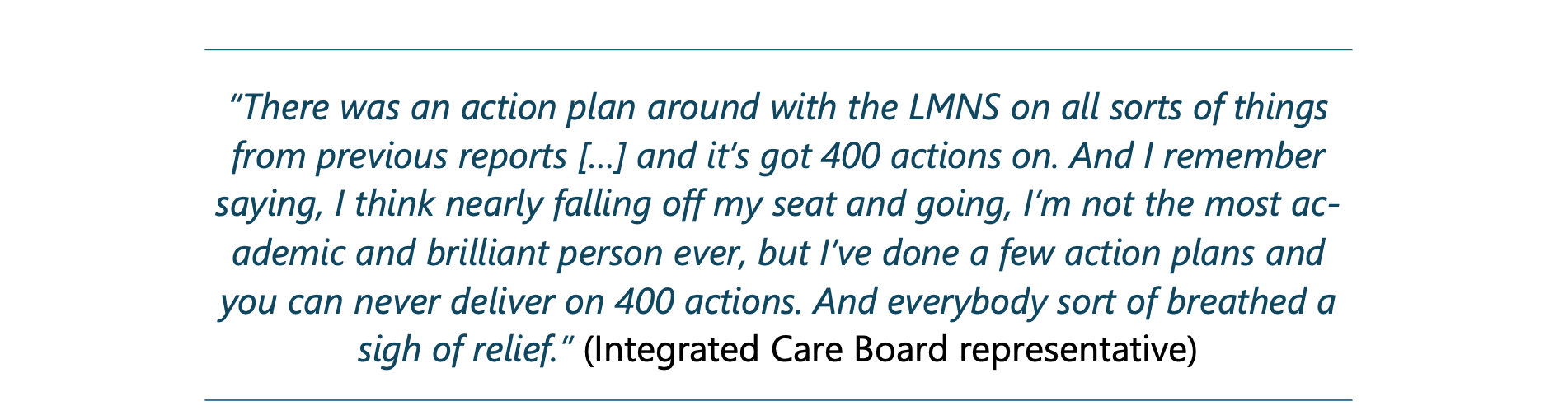
Depressingly, the report also looked at previous reports and 895 previous recommendations, spanning the period 2014 to 2025. It concluded that previous recommendations were too general, not joined up, and unachievable.
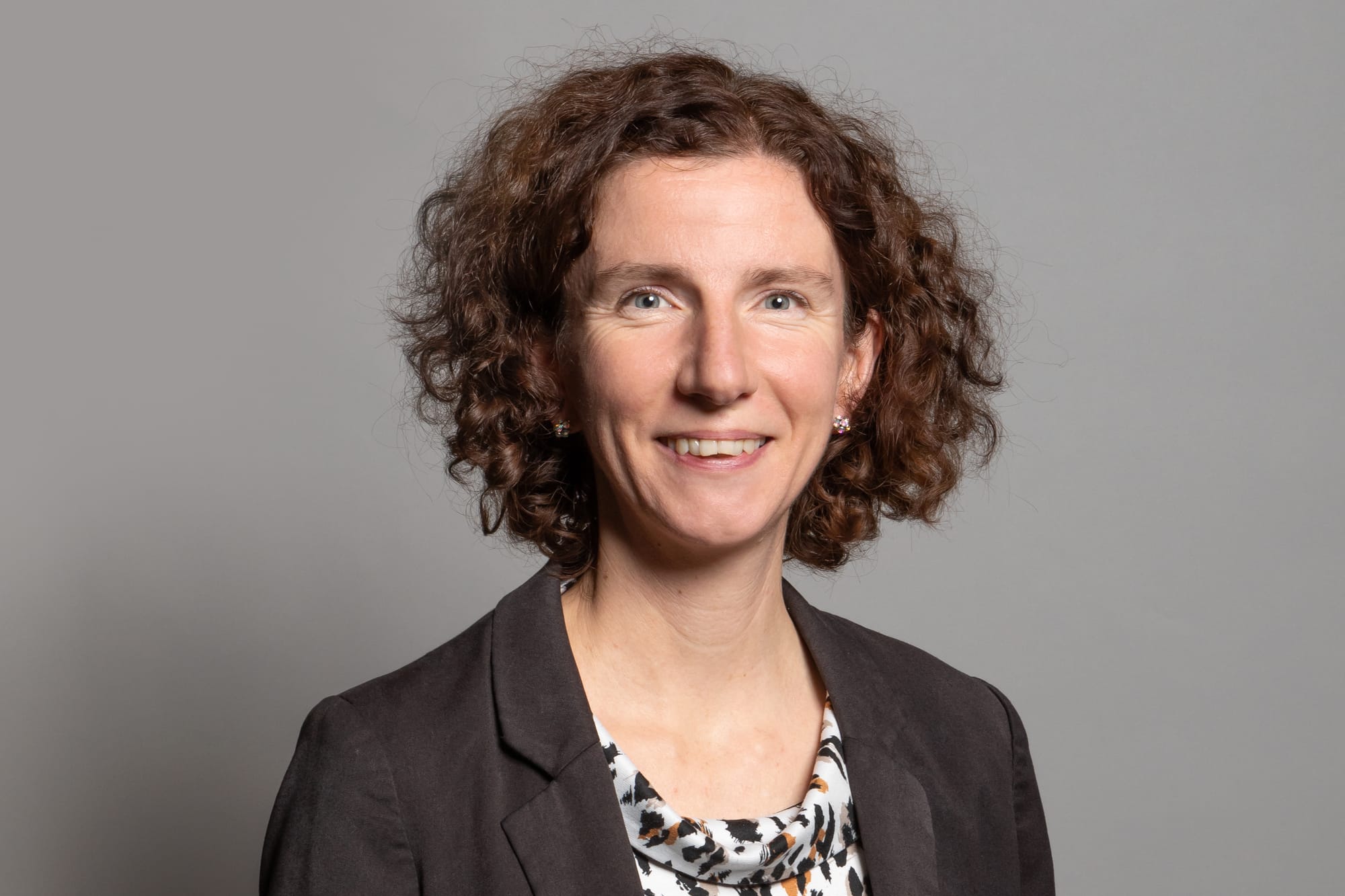
Our elected representatives have been united in their dismay at the report. As Labour MP for Oxford East, Anneliese Dodds is the MP for the John Radcliffe. She said: “I’m so grateful to the Oxford families who spoke with Baroness Amos and her team. Their testimony must lead to change – including the national standards they’ve called for, and that Amos has recommended.” Asking a question in Parliament this week, she called for the maternity triage standards to be implemented as a first step.
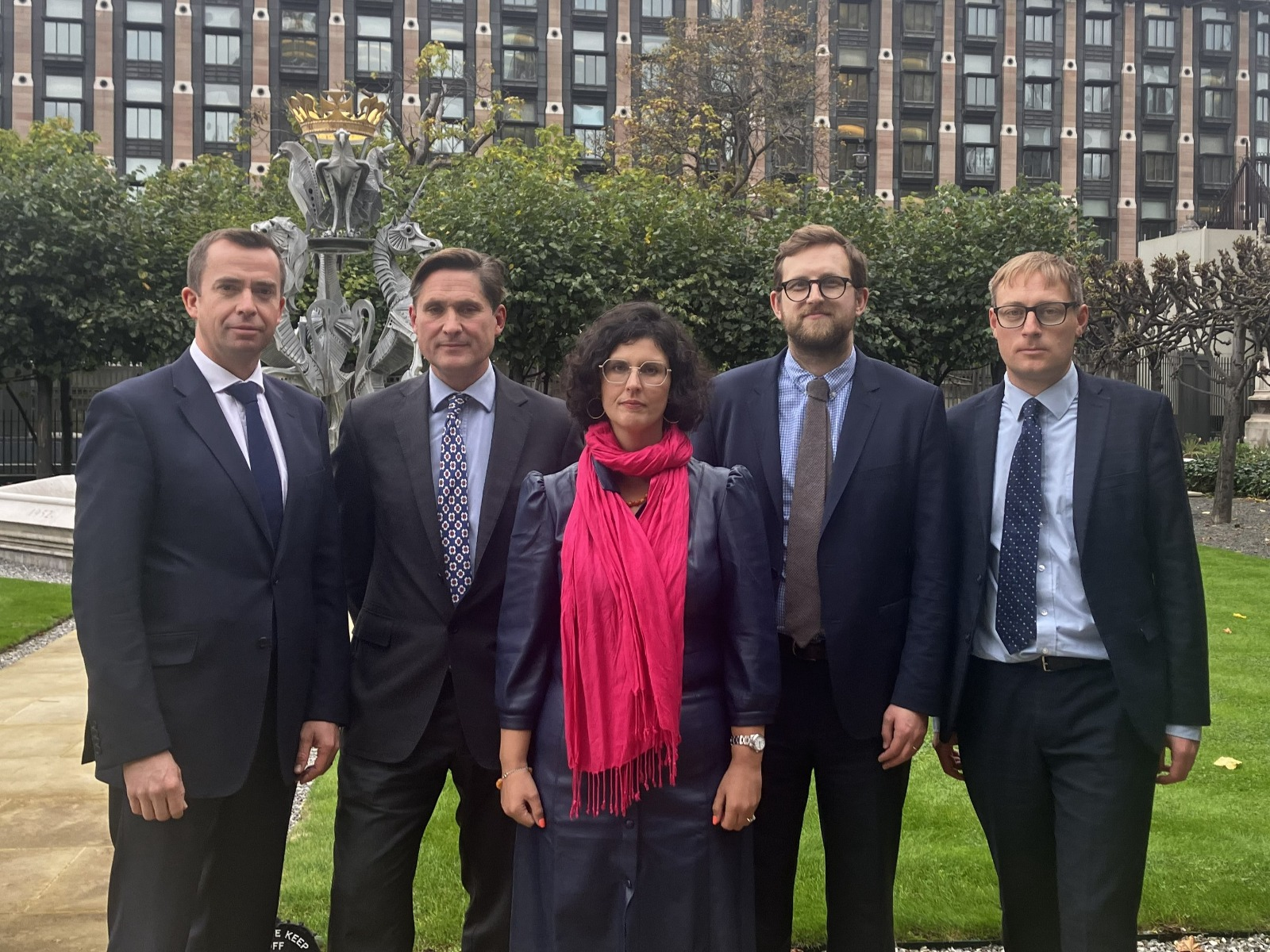
Oxfordshire’s Liberal Democrat MPs, Calum Miller, Layla Moran, Freddie van Mierlo, Olly Glover and Charlie Maynard, issued a joint statement.
“Today’s findings are devastating. Across the country, women and families have been failed by maternity services that too often did not listen, did not learn and did not act when serious concerns were raised.
“The section on Oxford University Hospitals is worrying. The report is clear that many frontline staff were committed to doing the very best for women and babies, often in incredibly difficult circumstances. But they should never have been let down by senior leadership putting them in a position where unsafe staffing, poor estates and weak governance left them getting through shifts ‘by the skin of their teeth’.
“We called for OUH to be included in the review so that the women at the heart of these issues could be heard. We are deeply disappointed that two and half years into the parliamentary term, the pace of change is not good enough. Families do not need more reassurance that lessons will be learned by December – they need to see changes happening now on the wards, and in the way they are treated when they raise concerns.”
For their part, Oxford University Hospitals published a full statement yesterday.
“We apologise unreservedly to the women, babies and families who suffered in our care, or whose experience caused them grief or distress. We failed them at some of the most important and vulnerable moments of their lives.
“We accept what families have told the investigation, the failings in care they describe in the report, and our responsibility to act. The report also reflects what many of our staff told the investigation. They described people who are committed to doing their best for women, babies and families, often in difficult and demanding circumstances. We are sorry for the toll this has taken on them, and we thank them for their dedication to the families in their care.
“We know that families’ trust and confidence in our maternity services have been badly damaged. We also know they will not be rebuilt by words alone, and that what matters now is what we do next.”
We give the final word to Families Failed by OUH, a campaign group of 800 families, formed in June 2024, whose actions appear to have propelled OUH to the top of the lists of trusts for investigation. Their full statement is here. While they were glad to see the CQC rating of the John Radcliffe called in to question, they feel that the report does not go far enough, describing themselves as 'betrayed'.
“Despite the report’s central theme that women are not listened to, Amos has left us questioning whether she truly listened to us.
“Harmed Oxfordshire families have waited years for an investigation like this. We held out so much hope and we deserved a report that reflected what we shared and the retraumatisation we experienced in sharing it. Instead, the most painful and most common harms reported by families in our group have been erased.
“Shockingly, the reports place a heavy emphasis on ‘estates’, which is mentioned 134 times across both publications. Yet any mention of brain injuries, bladder care and incontinence, forceps births and perineal tears is completely absent. The report fails to cover psychological harm in depth, like postnatal depression, birth trauma and suicide. A report meant to explain why mothers and babies are still being harmed devotes more attention to the condition of hospital buildings than to the bodily injuries and emotional trauma women continue to live with every day.”
Estates are easy to fix, if expensive. Changing culture is harder. Amos herself quoted the aphorism “culture eats strategy for breakfast”, explaining: “No matter how insightful or detailed an improvement strategy is, its success depends on the people executing it, and the environment they are operating in.”
For Oxford University Hospitals, as for the NHS nationally, the Amos report raises uncomfortable questions. The challenge now is to ensure that its findings do not join the 895 forgotten recommendations of the past 12 years.
Sources and further reading
- Baroness Amos' full report
- OUH Trust report
- Baroness Amos' 'Reflections and Initial Impressions' on her investigation into Maternity and Neonatal Services in England
- Baroness Amos' Interim Report published 26 February 2026
- Original Channel 4 and New Statesman coverage (£)
- Further New Statesman coverage in the aftermath of the original accusations (£)
- Care Quality Commission's 2025 Maternity Survey (national)
- OUH response to Care Quality Commission 2025 Survey Results
- Health Secretary Wes Streeting's statement to the Commons sharing a progress update on the Amos report
- Royal College of Midwives response to Baroness Amos' interim report
- Families Failed by OUH Maternity Services
Support
We recognise that this article may have been as hard to read as it was to write. Here are some sources of support, should you need them.