
Regnante Carolo
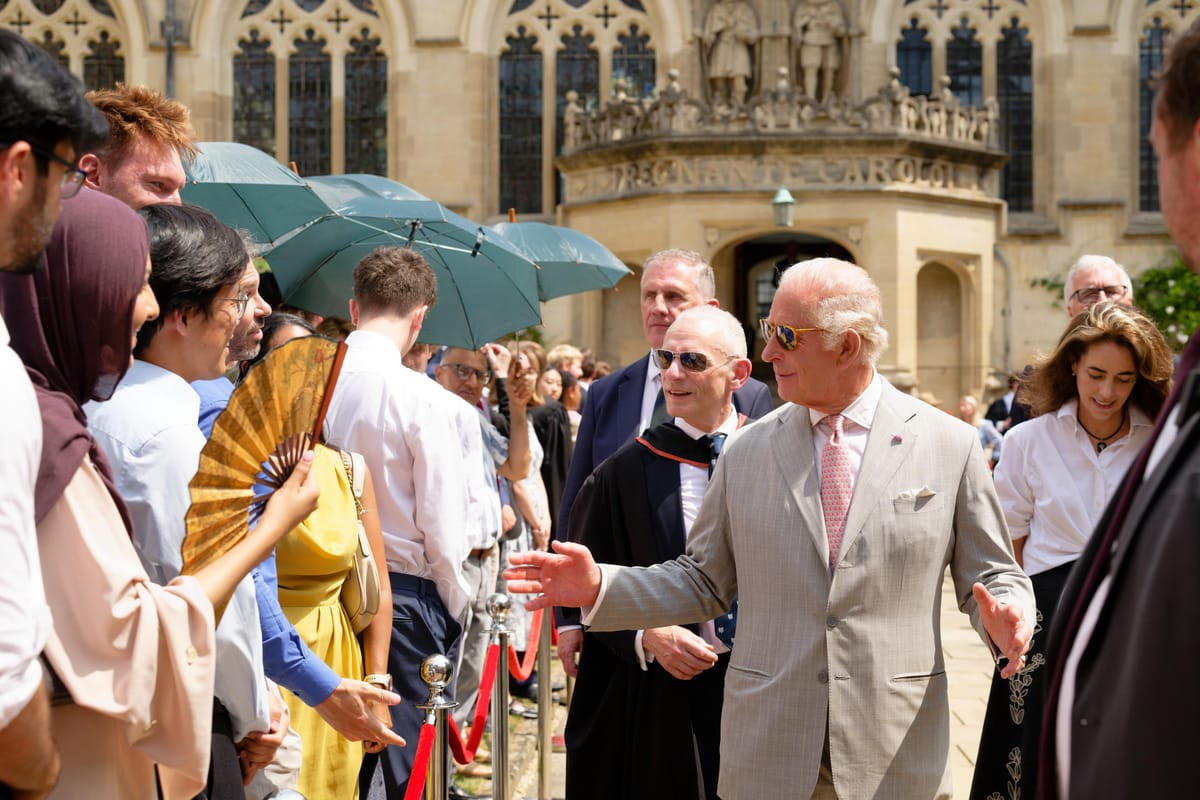
King Charles III visited Oxford today, officially opening the Schwarzman Centre for the Humanities, and paying visits to Oriel College and University College.
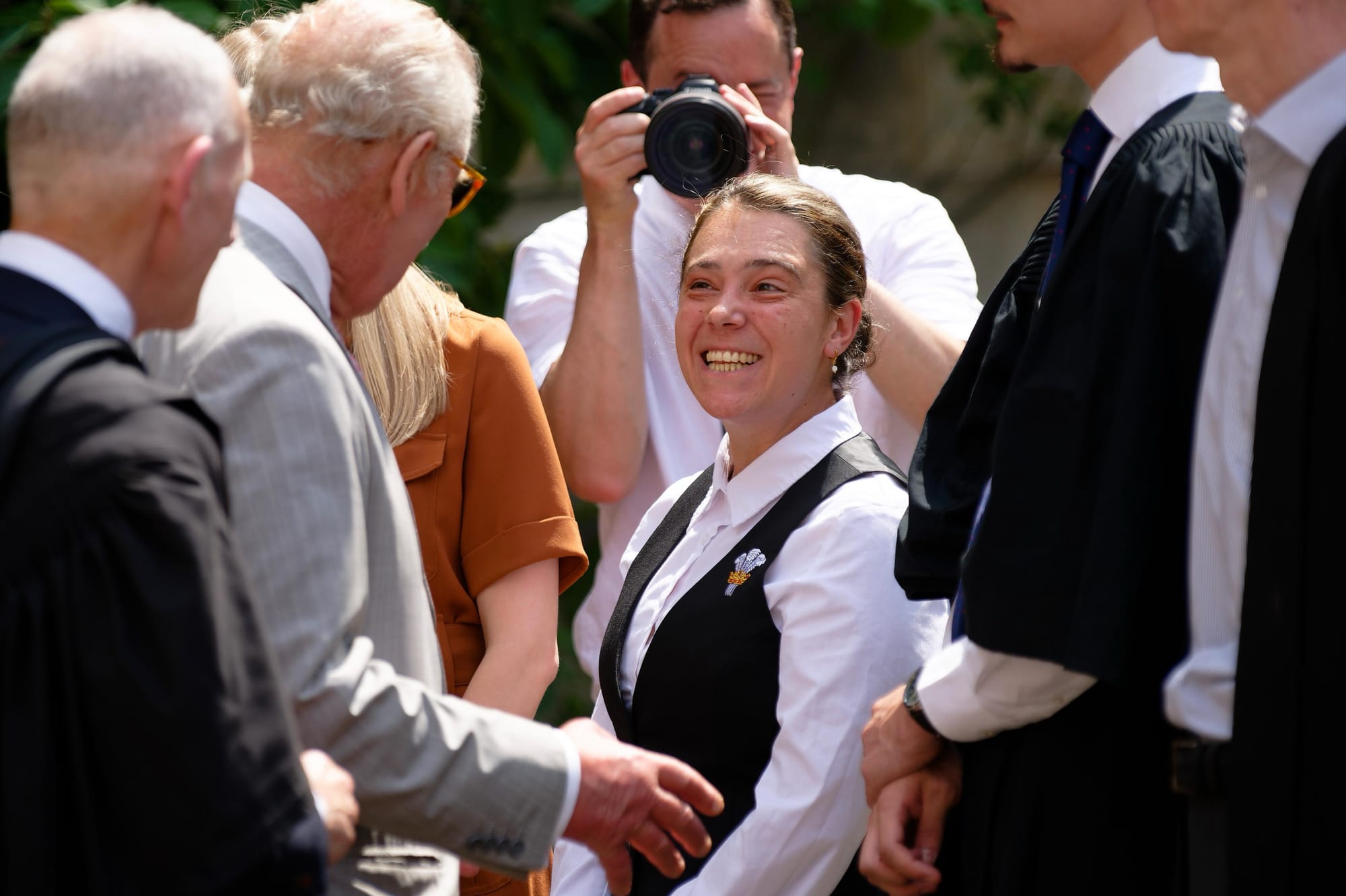
The Clarion was invited to photograph His Majesty's first official visit to Oriel, and as an Oriel alumna and sometime Clarion guest contributor, I was delighted to be the correspondent on the spot.
Photos by Roger Close
Oriel, as the oldest Oxford college of royal foundation, has a long history of aristocratic visits. The reigning monarch serves as the college’s official Visitor: historically, the overseer of an institution, with the right to settle internal affairs.
All but three of the colleges have Visitors. The Crown (currently represented by King Charles III) is the Visitor for Christ Church, St Antony’s, University College, and Oriel. The role today is largely ceremonial – I doubt the King has strong opinions in selecting the next Provost after Lord Mendoza completes his term next year – but comes with a traditional toast at each college supper.
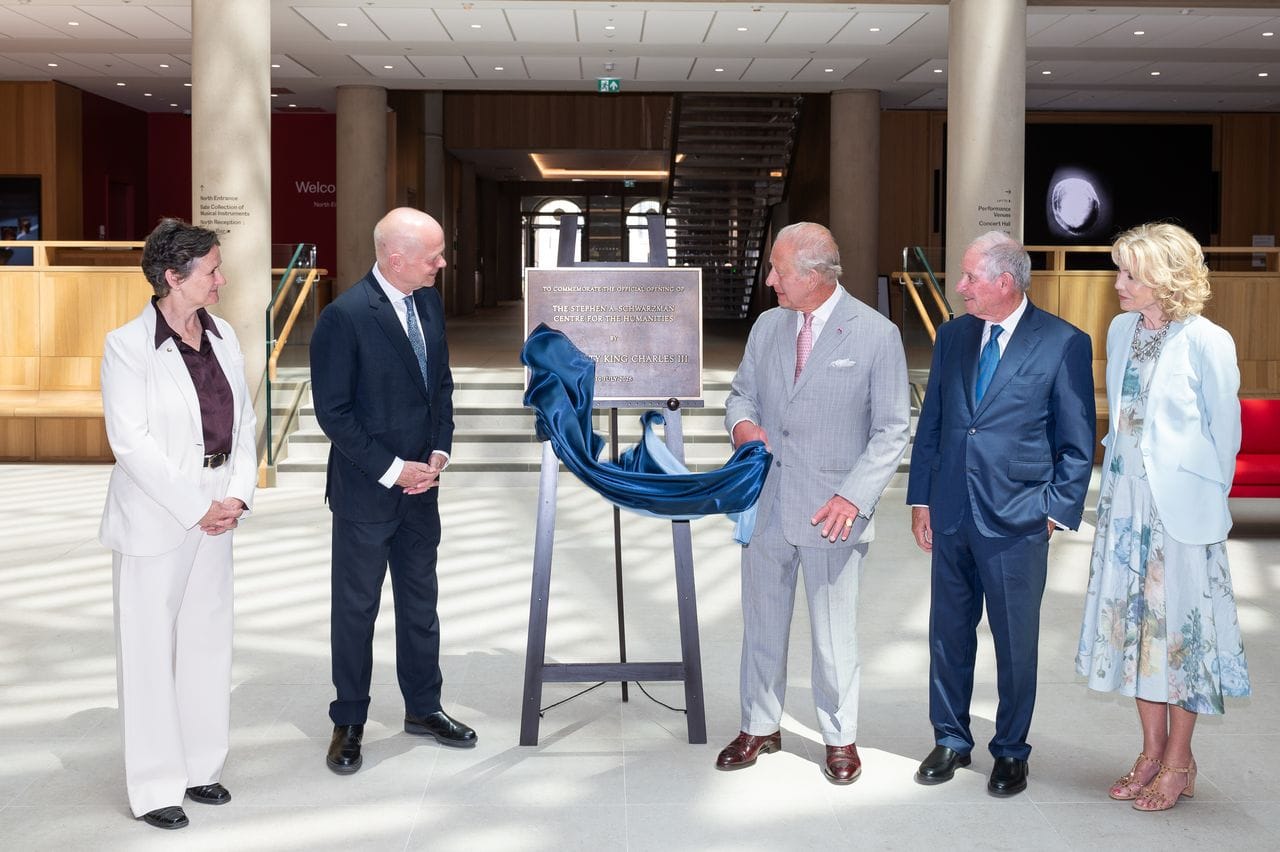
The King had a busy day. His majesty officially opened the Schwarzman Centre, toured the 500-seat Sohmen Concert Hall – the only Passivhaus concert hall in the world – and was shown a selection of historic musical instruments from the University’s renowned Bate Collection by representatives from the Faculty of Music and a rare Bach manuscript from the Bodleian Library. The Centre includes seven libraries, a 250-seat theatre, a black box immersive performance space, dance studio, cinema, and exhibition space.
During his visit, the King spoke with those involved in the construction of the building, as well as members of the University and representatives from the Centre’s Cultural Programme and the Leys Festival. The annual event celebrates the creativity and energy of the Blackbird Leys and Greater Leys communities. A choir of local children from across schools in Oxfordshire performed during the visit.
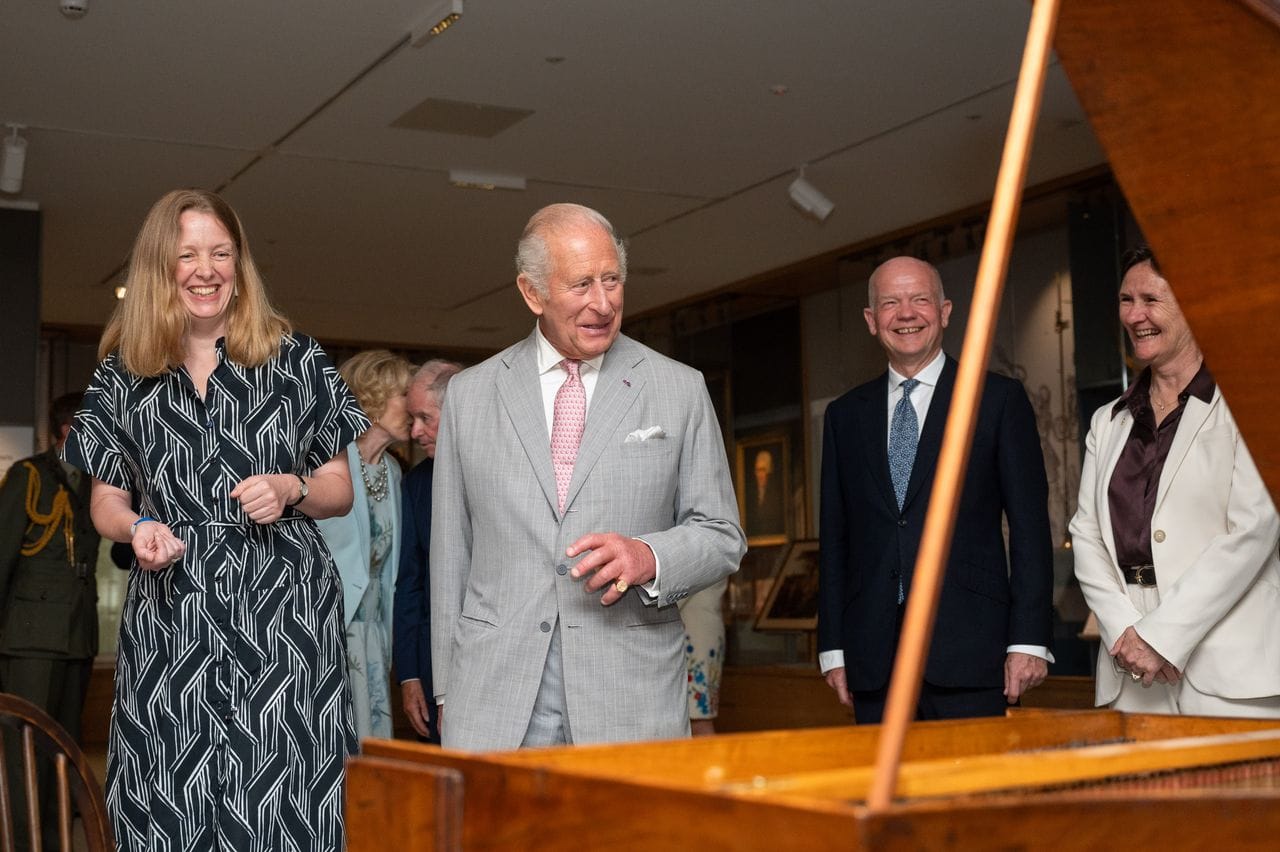

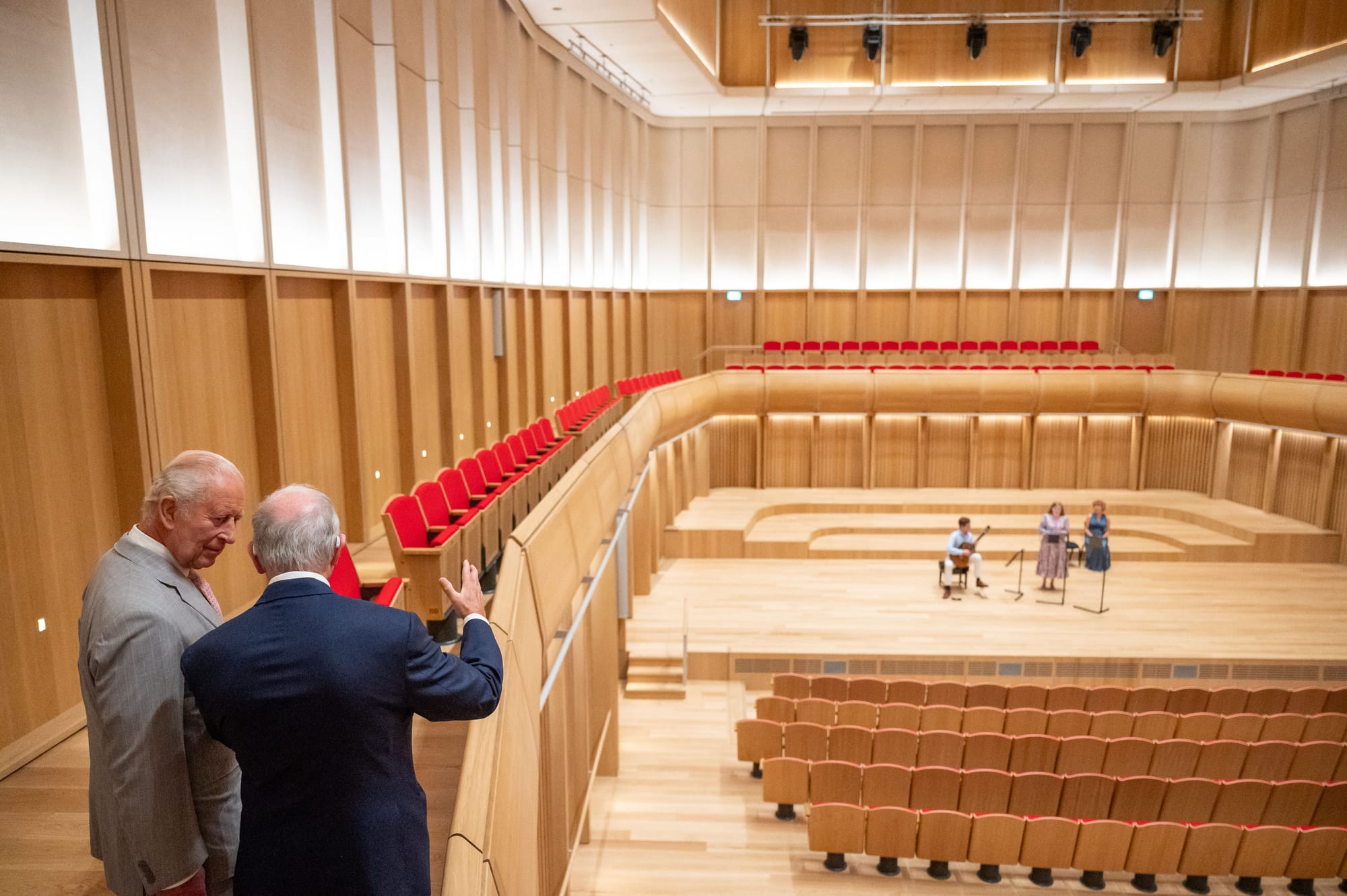
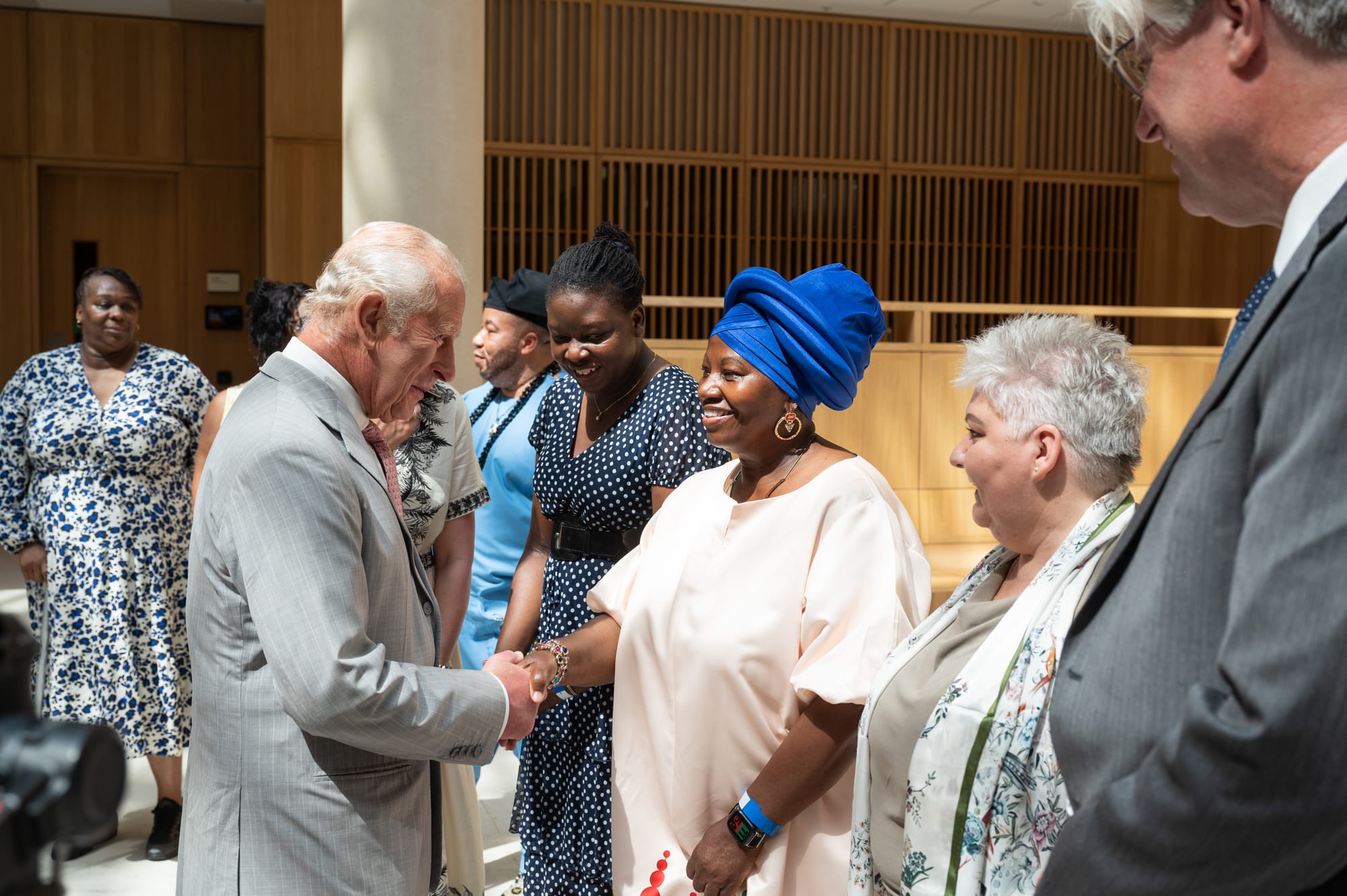
Photo credit University of Oxford
Commenting on the visit, the Rt Hon The Lord Hague of Richmond, Chancellor of the University of Oxford, said:
“It was a privilege to welcome His Majesty The King to mark the opening of the Stephen A. Schwarzman Centre for the Humanities, a moment that celebrates both an extraordinary new addition to Oxford and the enduring importance of the humanities. At a time when the world is changing with extraordinary speed, the study of history, languages, philosophy, literature, music and the arts helps us understand who we are, how we have arrived here, and how we might shape the future. This remarkable centre is a powerful statement of confidence in the ability of the humanities to illuminate public life, enrich our culture and equip future generations with the judgement and imagination every society needs.'
Photos by Roger Close
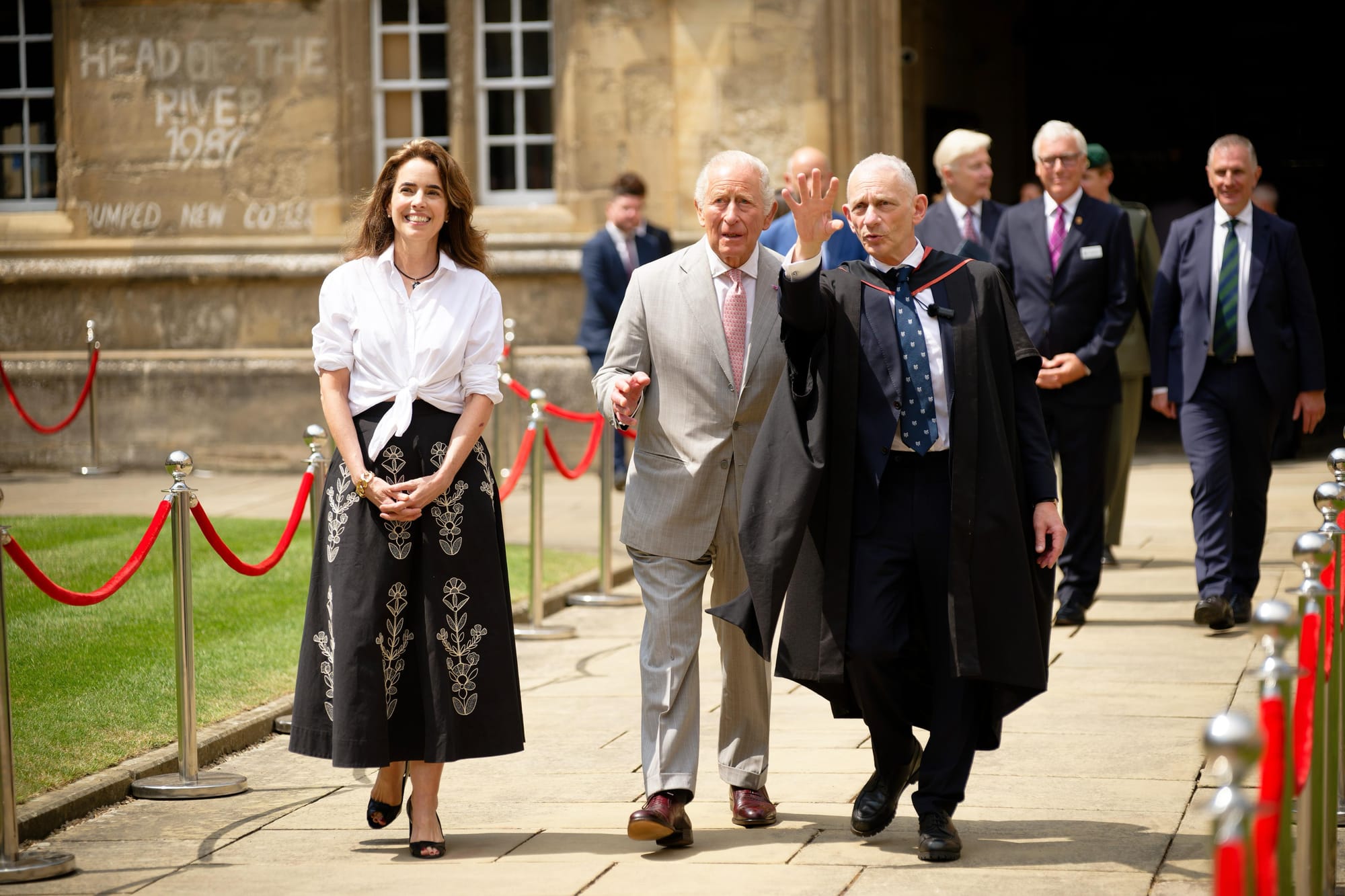
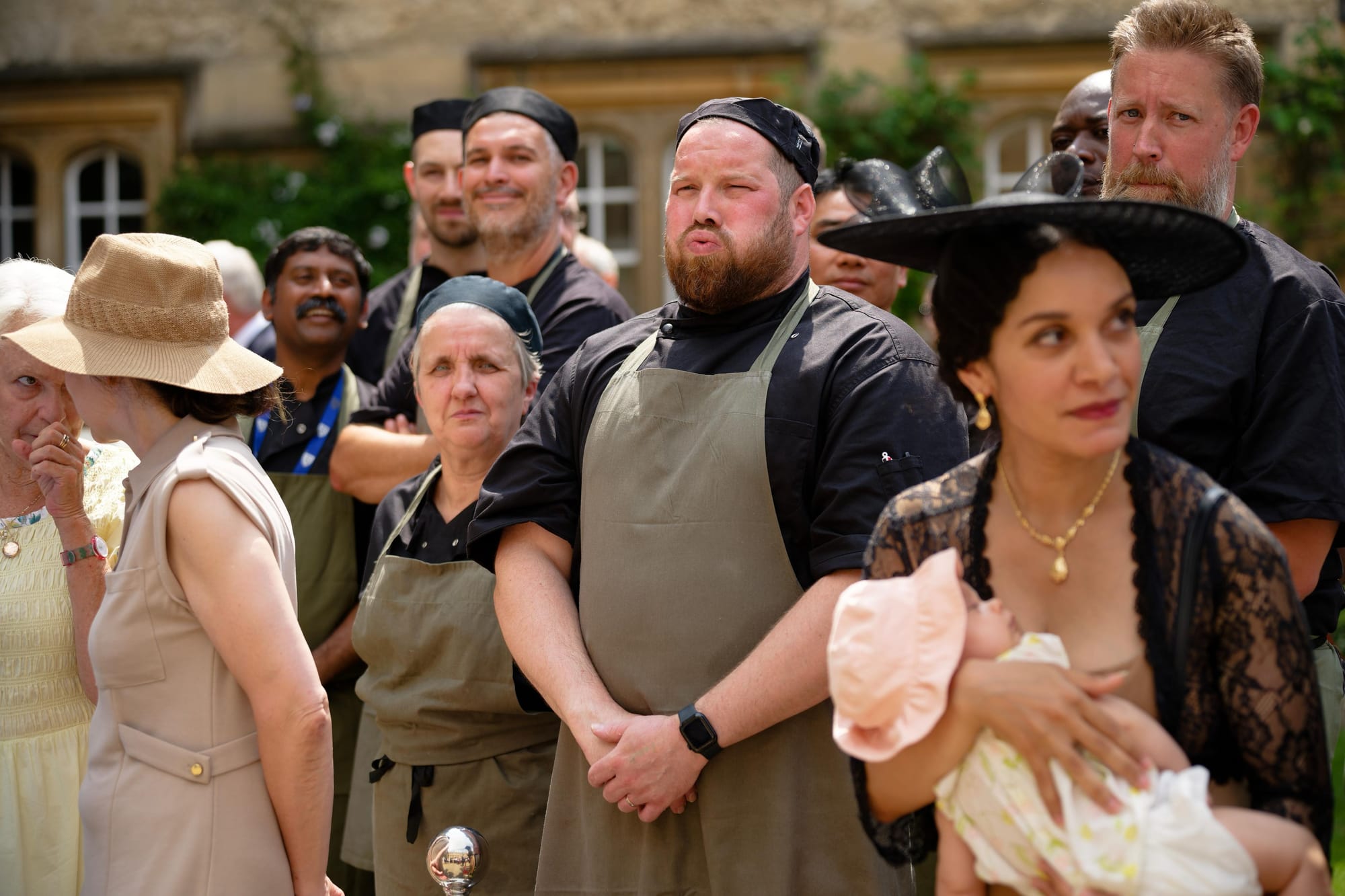
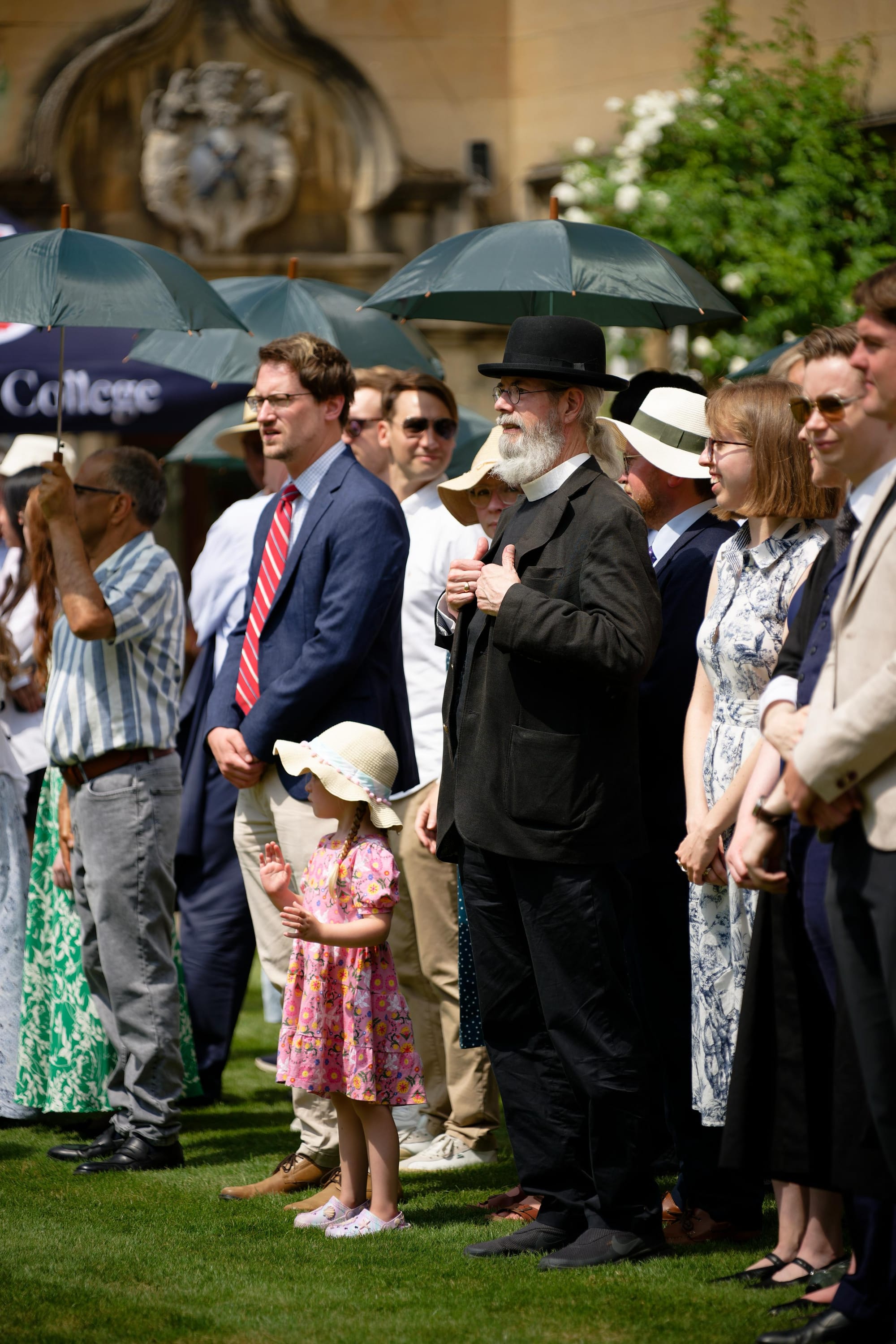
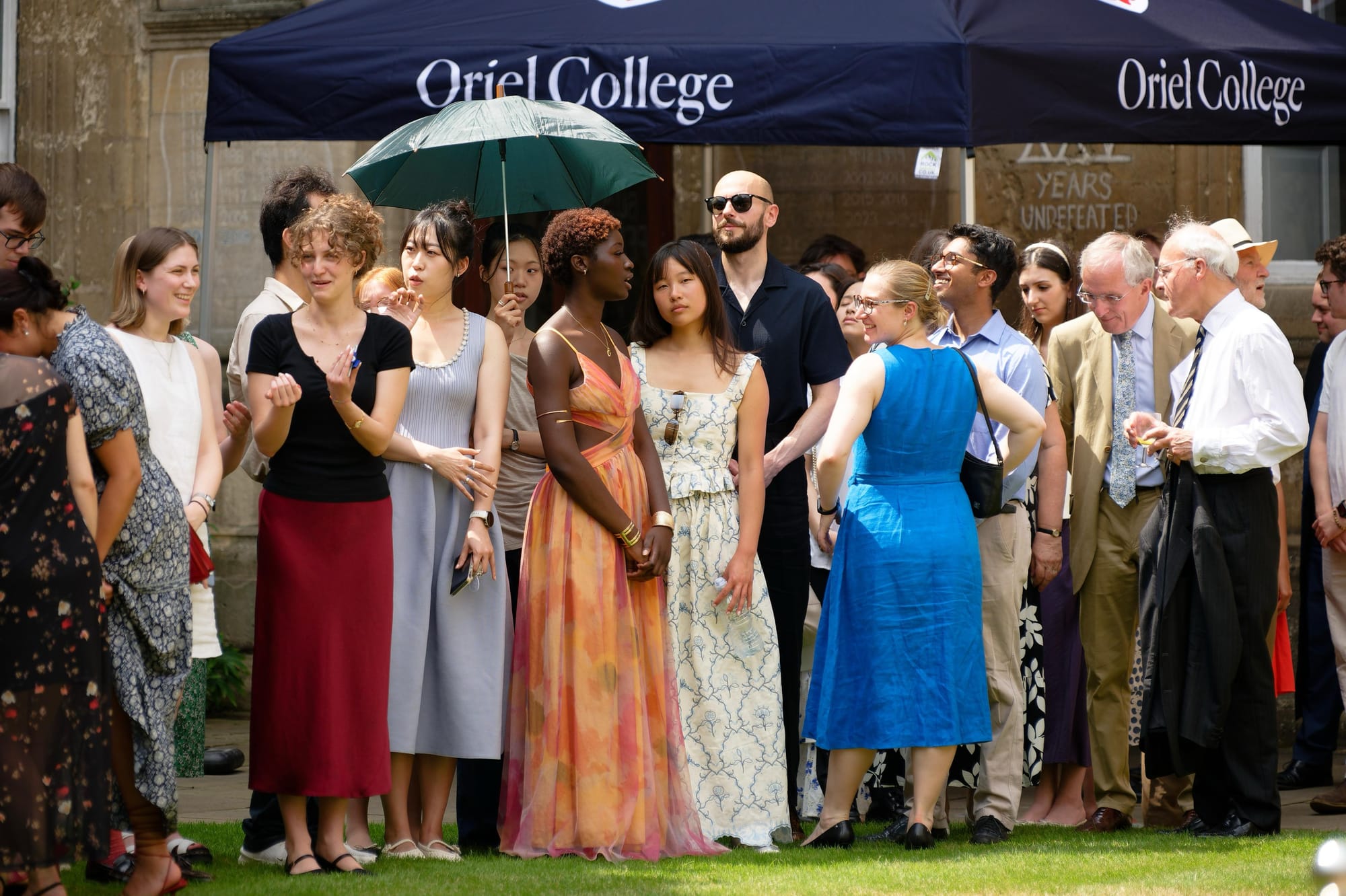
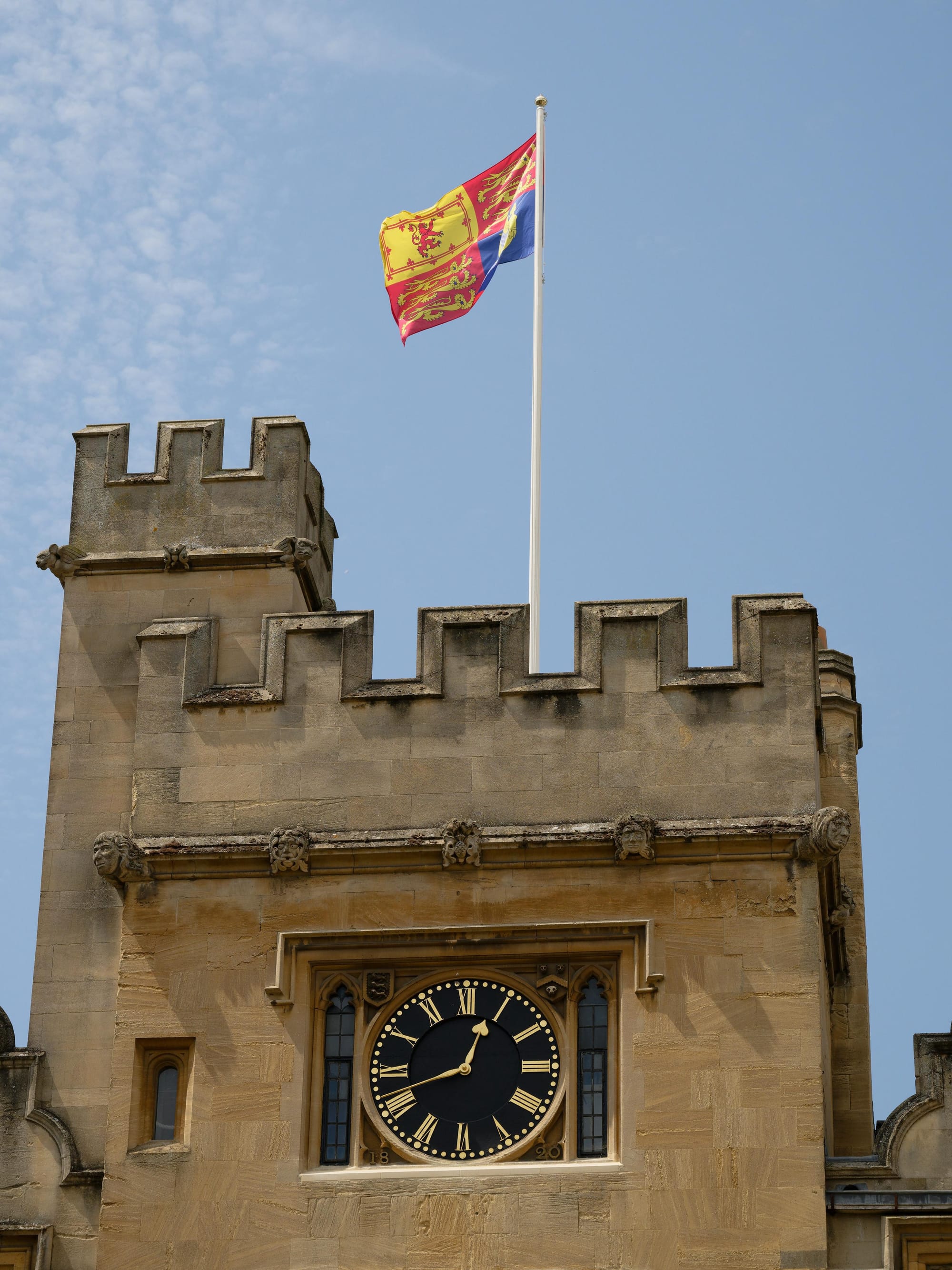
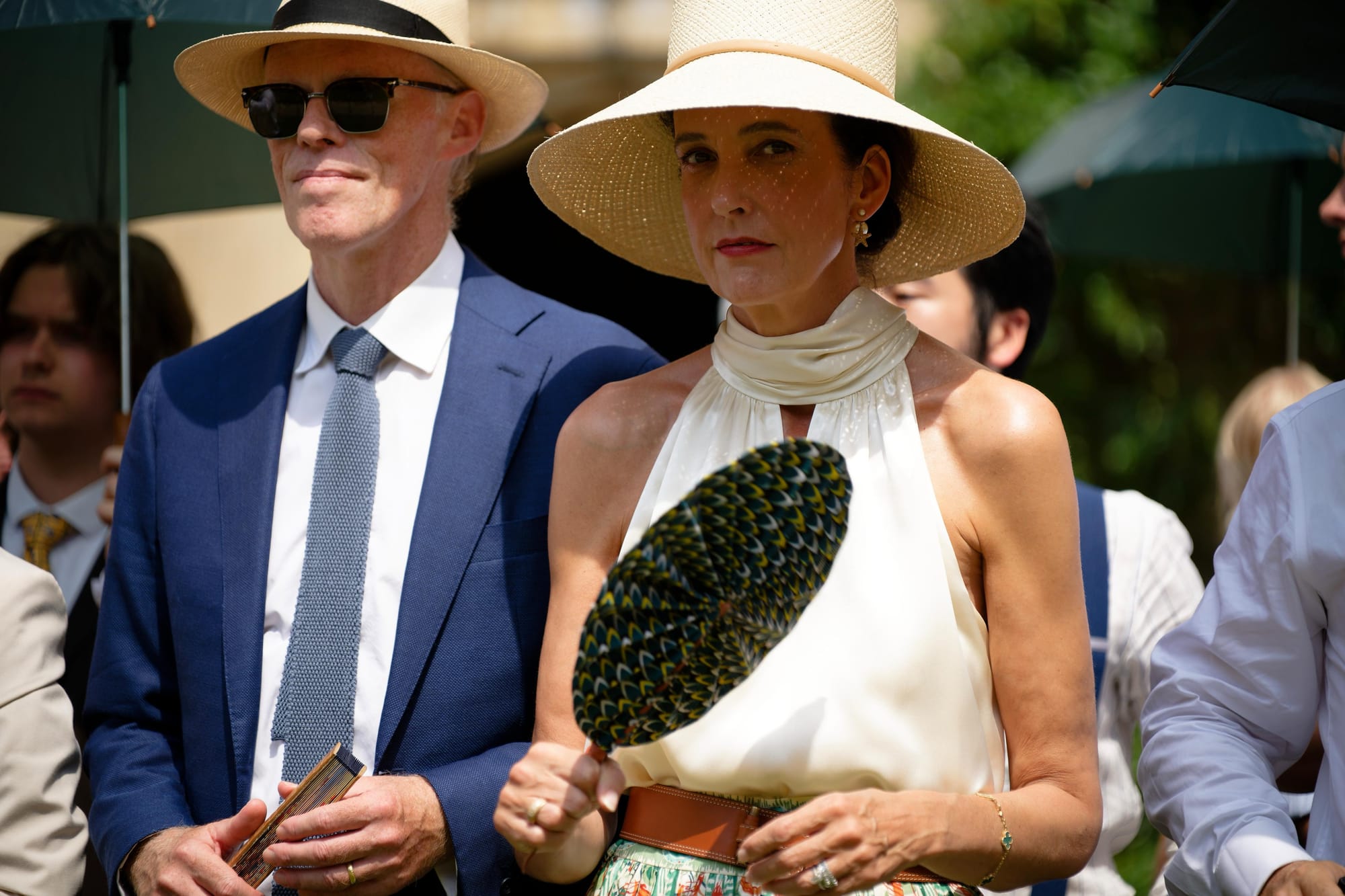
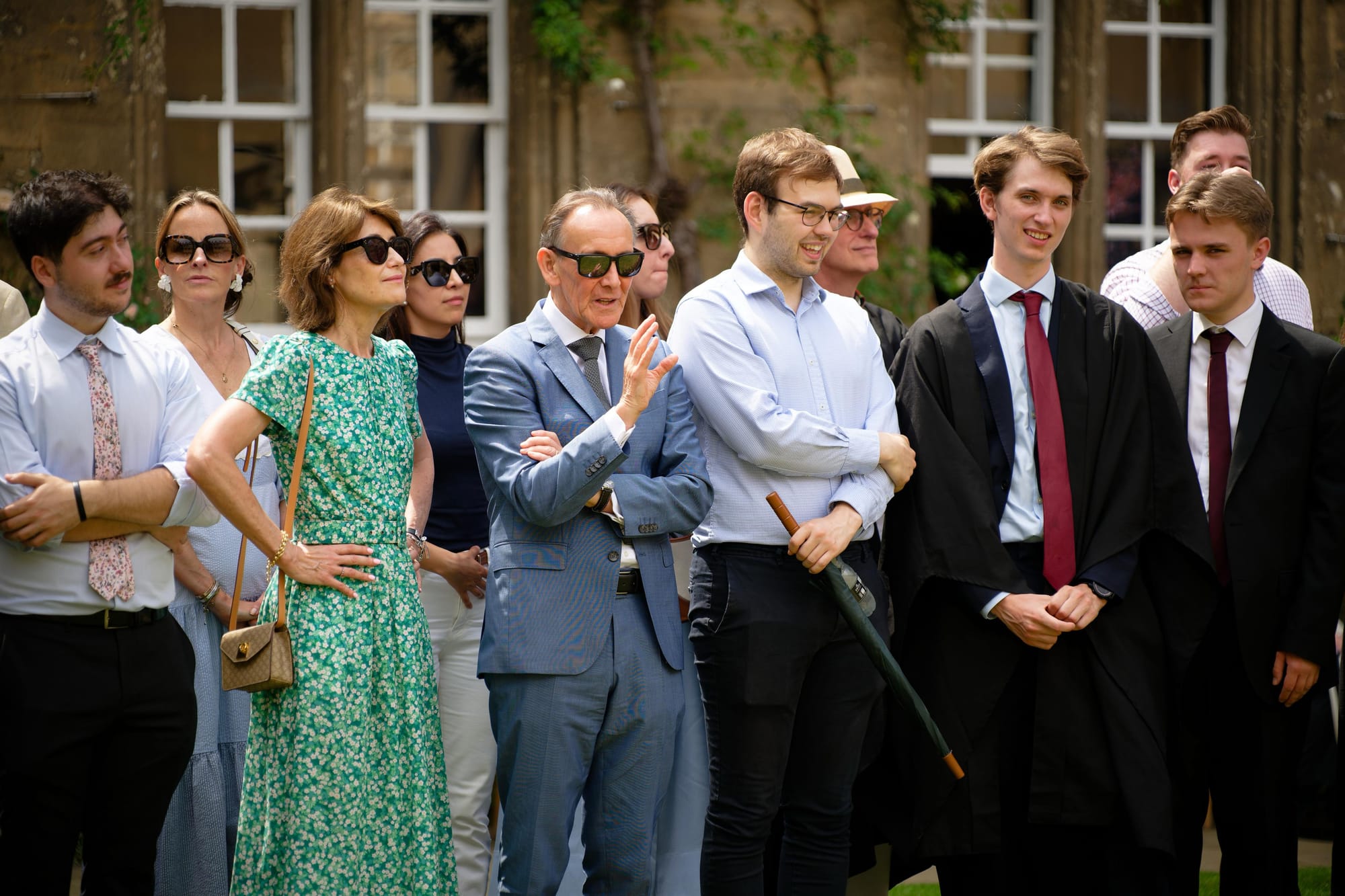
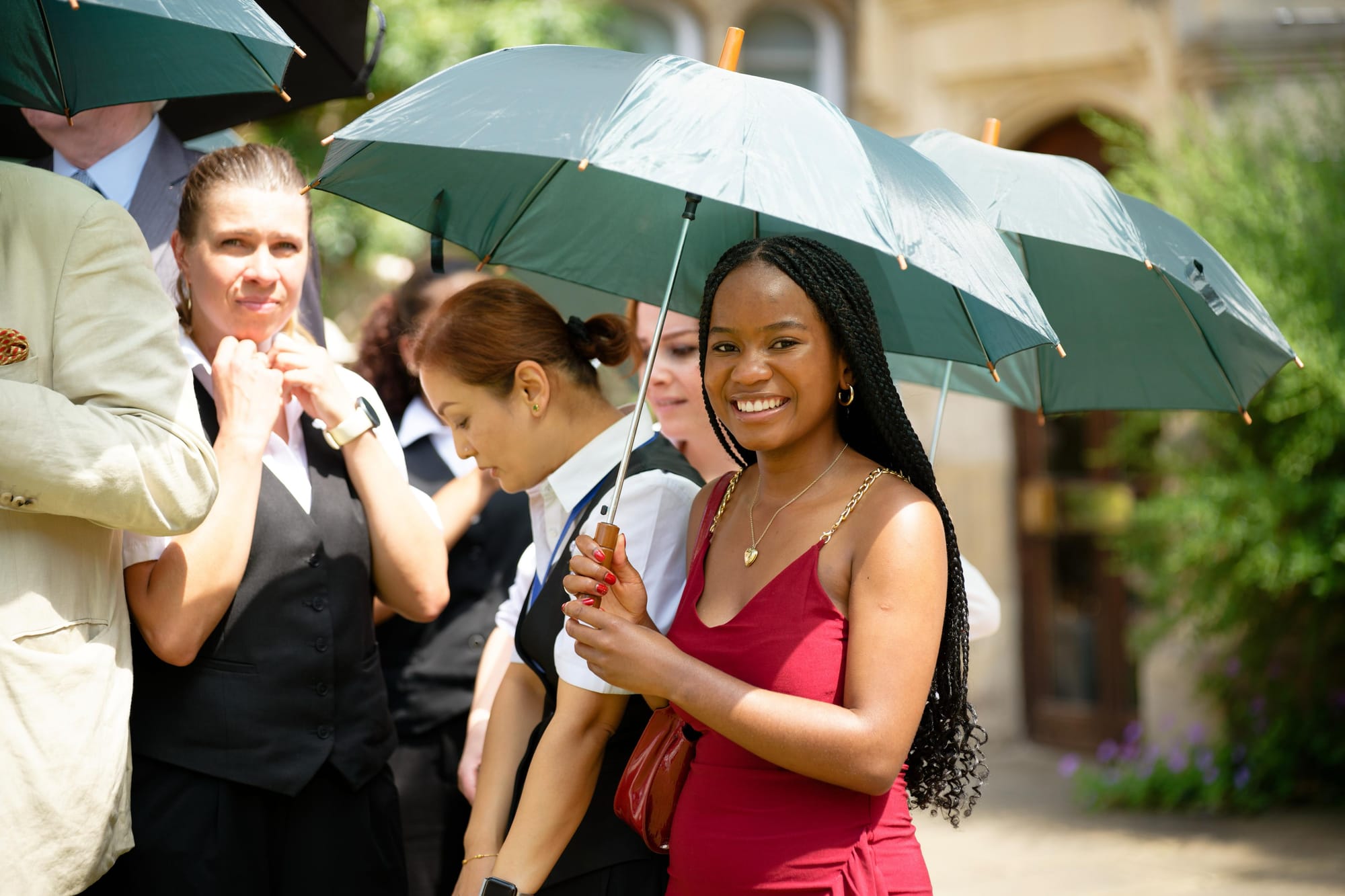
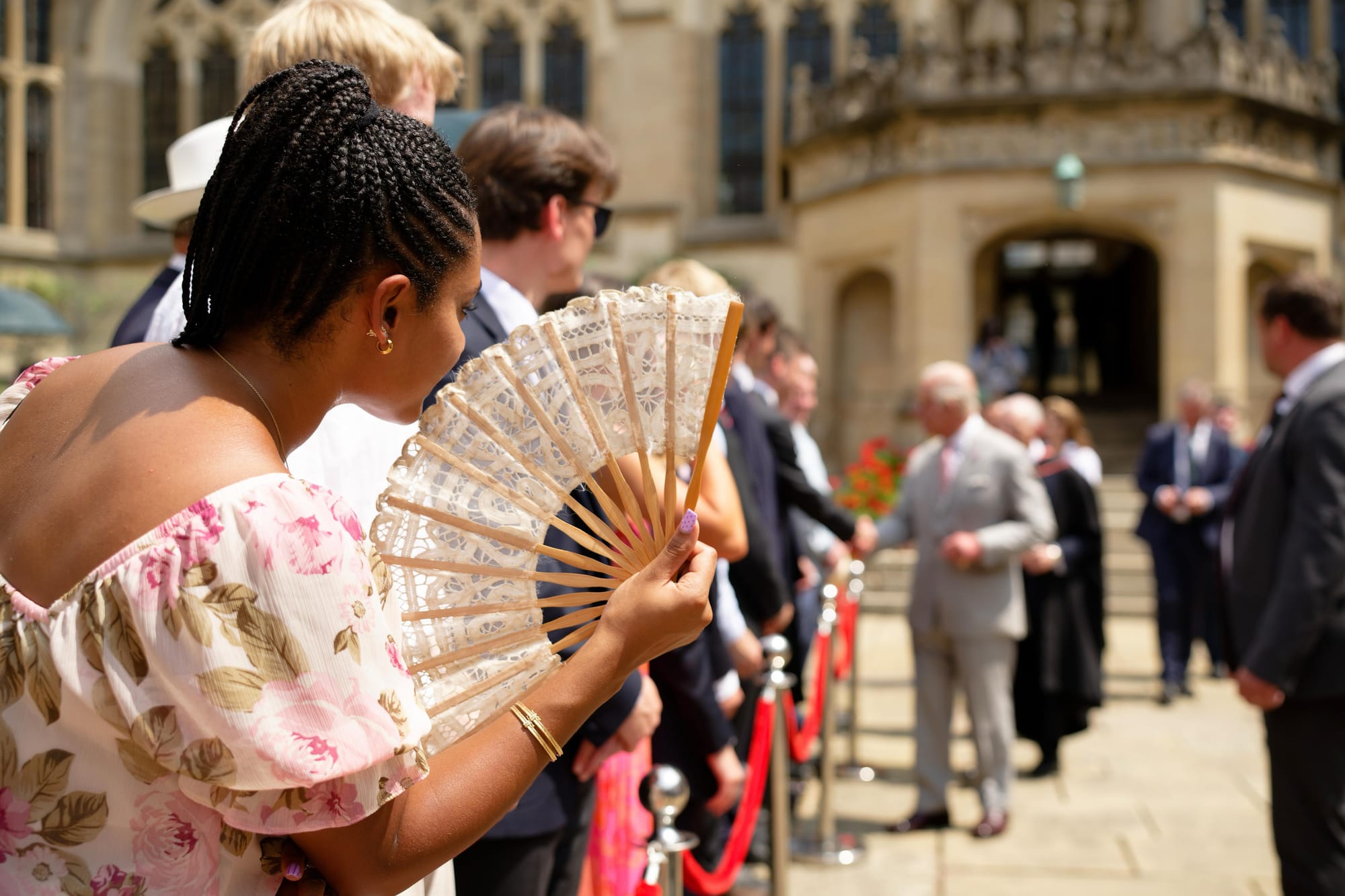
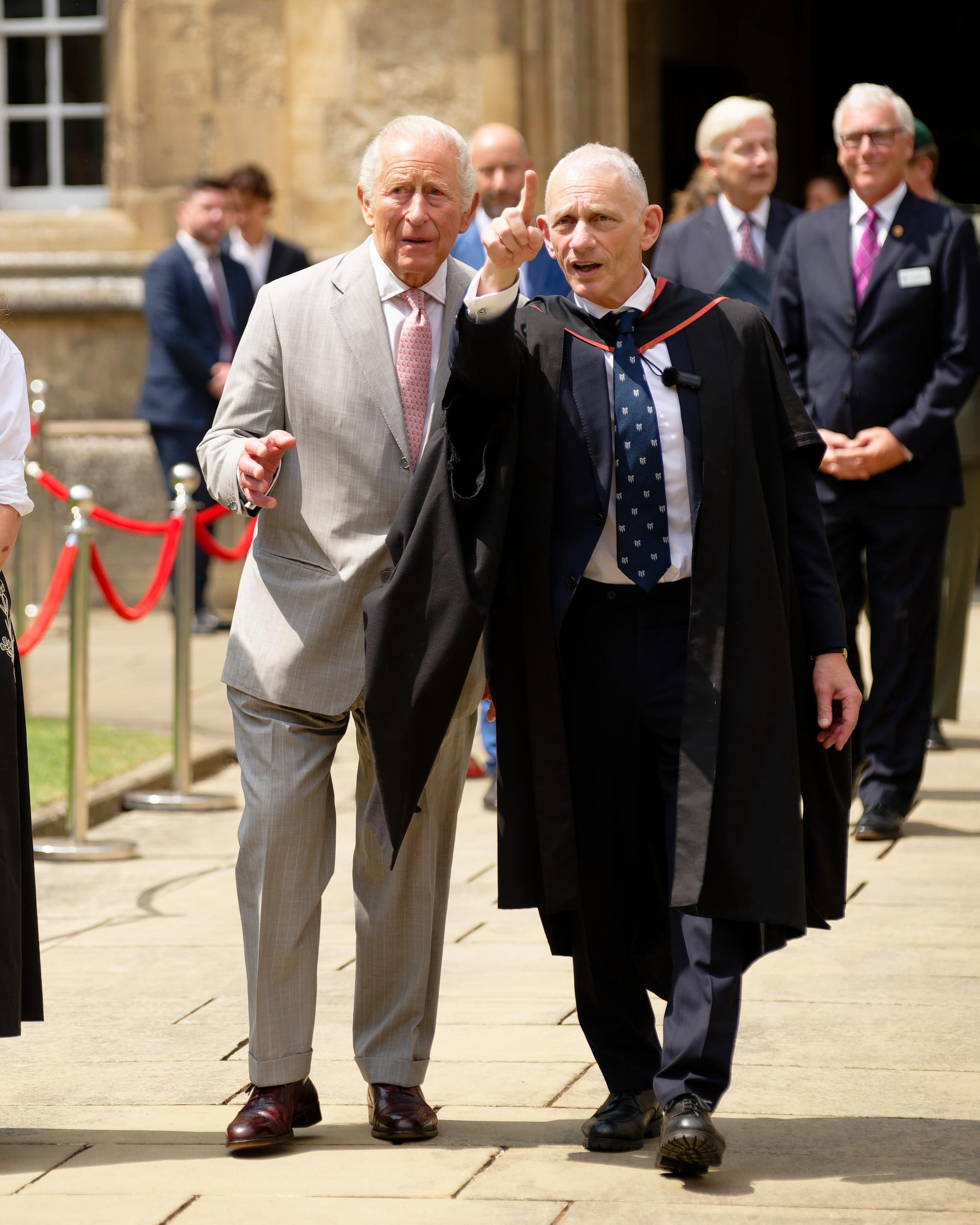
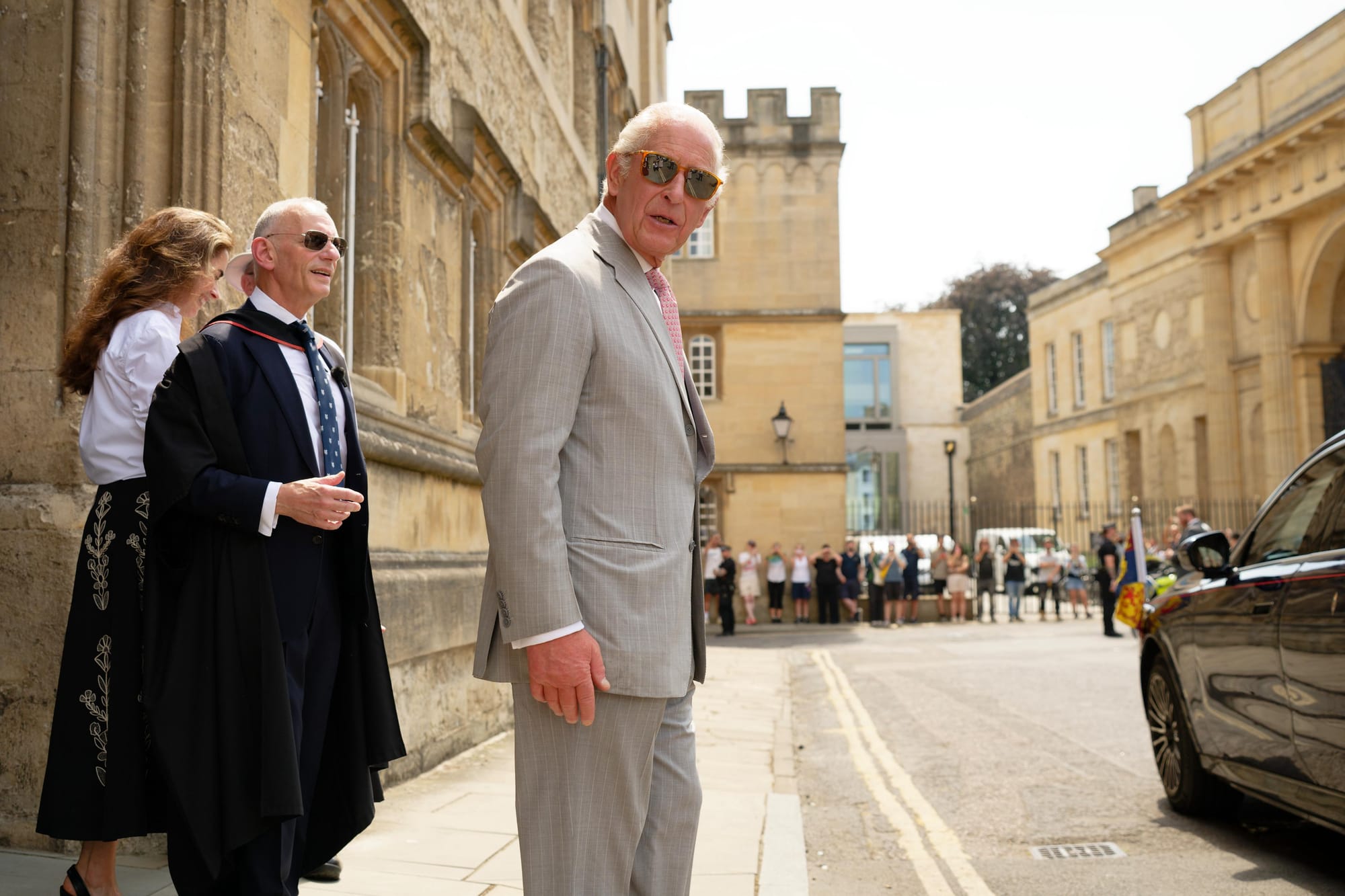
The King's visit to Oxford had not been publicised, but members of the college, including staff, students, fellows, and family, were invited to gather for a garden party. A string quartet played softly, while water bottles and umbrellas were handed out in an attempt to keep everyone cool. As the car arrived (an electric BMW), the royal standard was raised over the college, indicating that the monarch was in residence. Attendees lined both sides of First Quad as the King, along with Lord and Lady Mendoza, walked through to the chapel. They visited the Newman Oratory, marking Saint John Henry Newman, and then moved through to the newly renovated Hall.
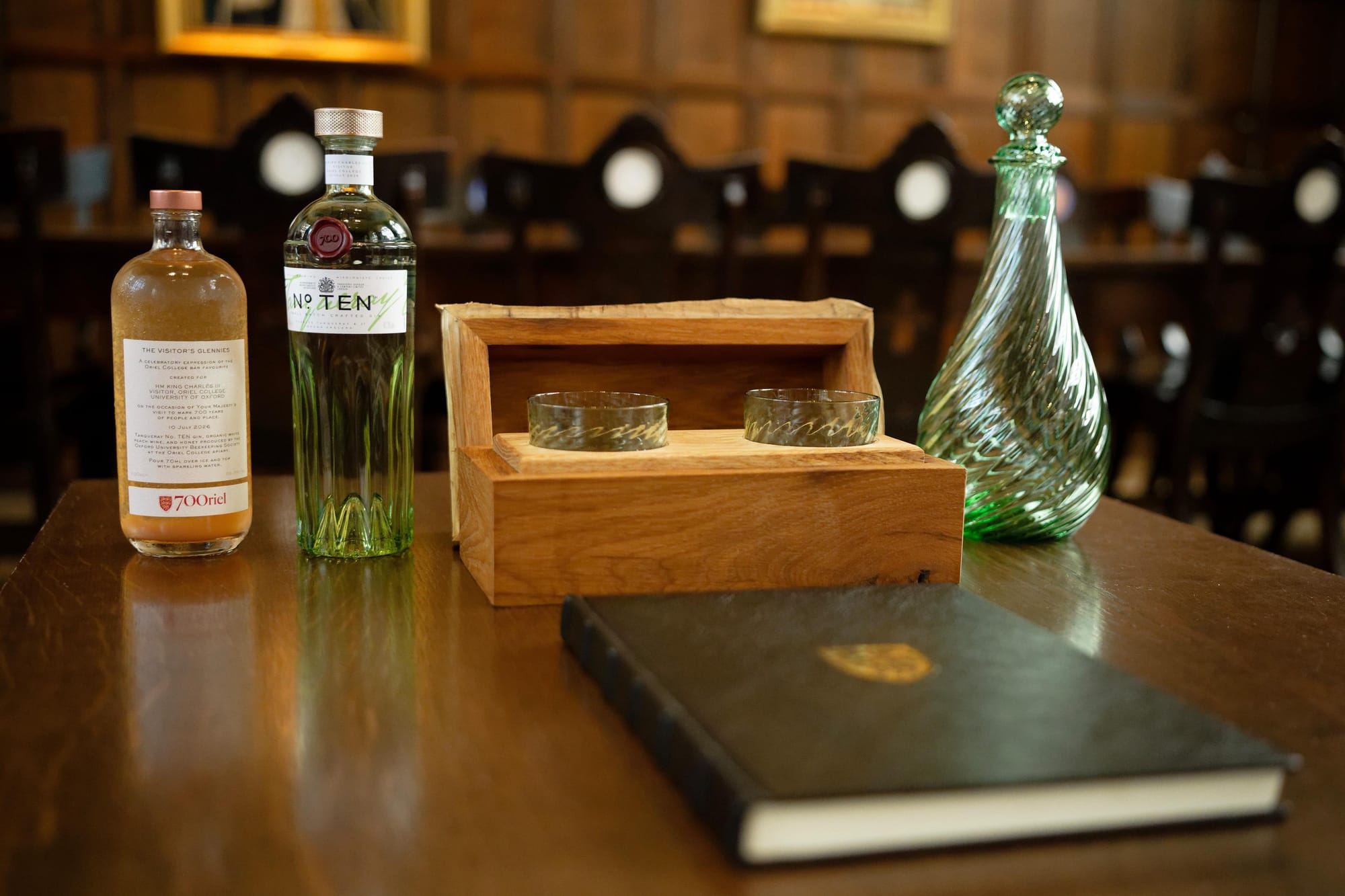
The King was presented with gifts, including a specially distilled bottle of Tanqueray gin and a specially mixed bottle of Glennies (the traditional cocktail of choice for Orielenses), made with the first honey from the Bartlemas beehives.
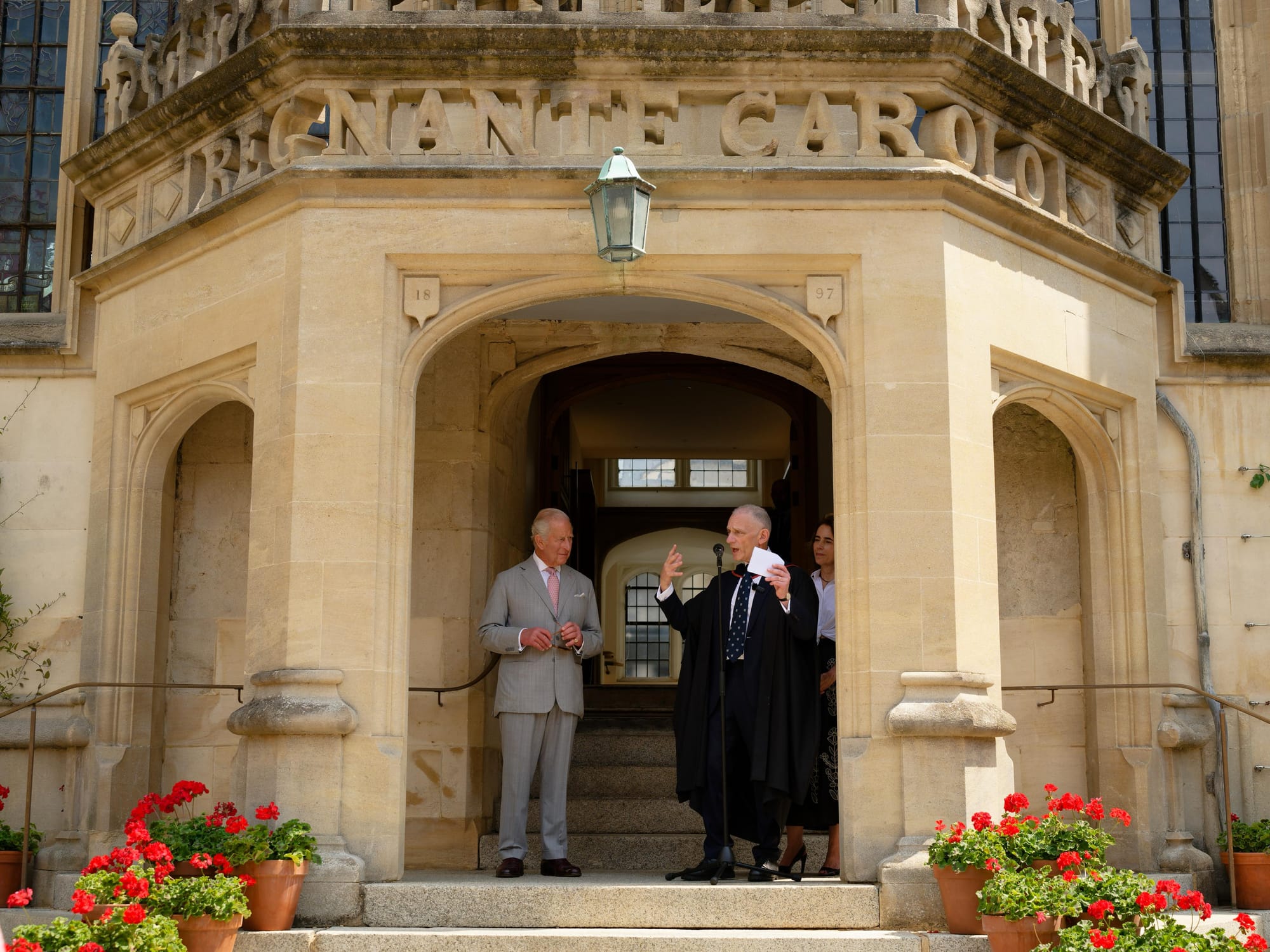
The King and Provost moved to the grand portico, which was built during the reign of Charles I. The college notably supported the Crown during the Civil War, and King Charles II returned that support after the Restoration. As Lord Mendoza noted in his brief speech, this is the first time since 1685 that the carved motto, Regnante Carolo (“Charles, being King”), has been accurate.
Photos by Roger Close
Lord Mendoza, Provost of Oriel College, said:
“The King’s visit to Oriel is a deeply meaningful occasion for our close-knit college community, as we celebrate the rare distinction of being dedicated to academic endeavour for 700 years. Much like His Majesty, we care about creating opportunity for young people, protecting the natural environment and conserving our built heritage. This care is reflected in the teaching and research undertaken by our academic colleagues. We are grateful to His Majesty for serving as our Visitor and continuing the relationship with Oriel that was deepened by Queen Elizabeth II. Her late Majesty visited Oriel on six occasions, and her visits are remembered with special fondness by our college today.”
Photos by Roger Close
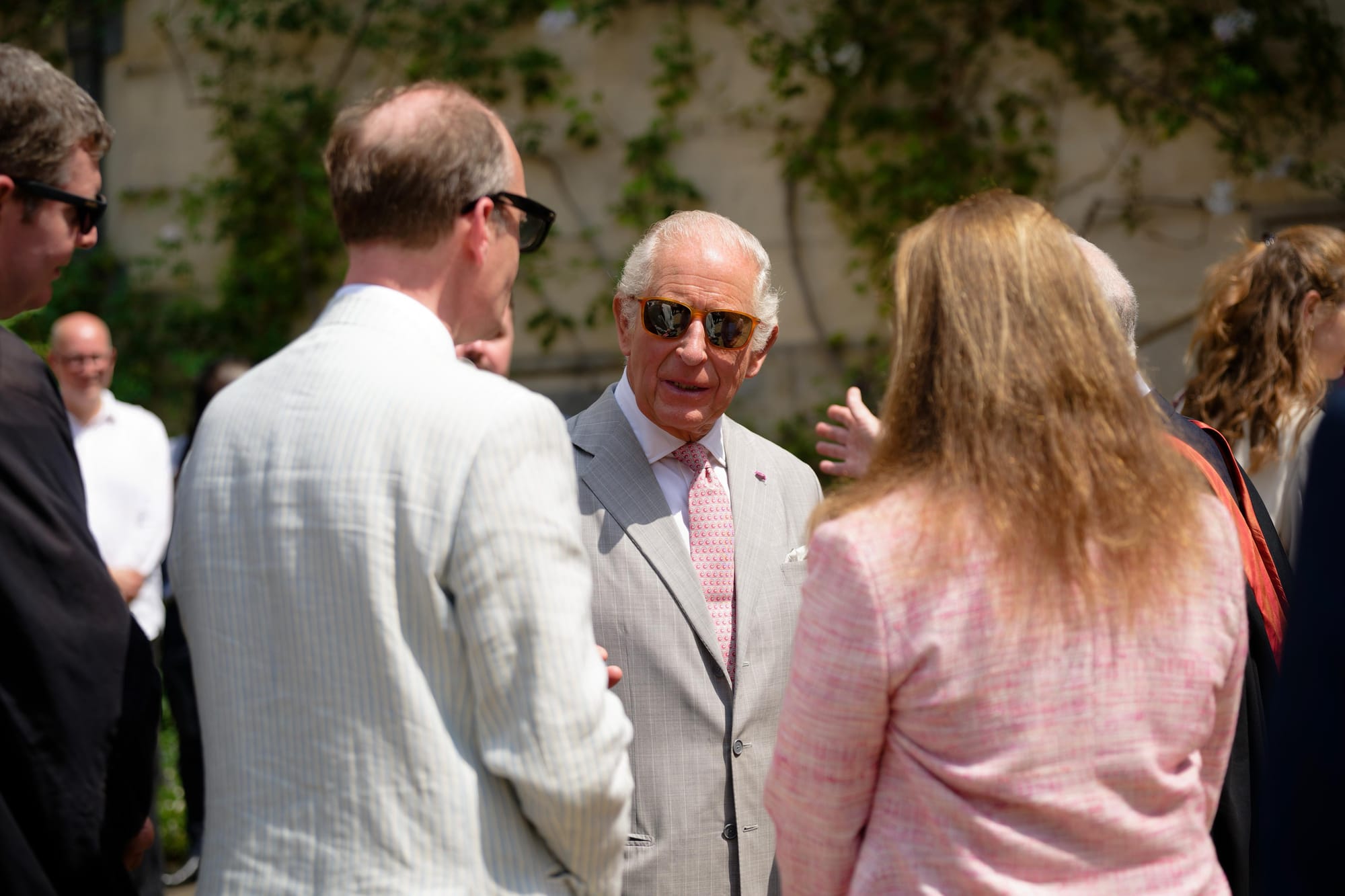
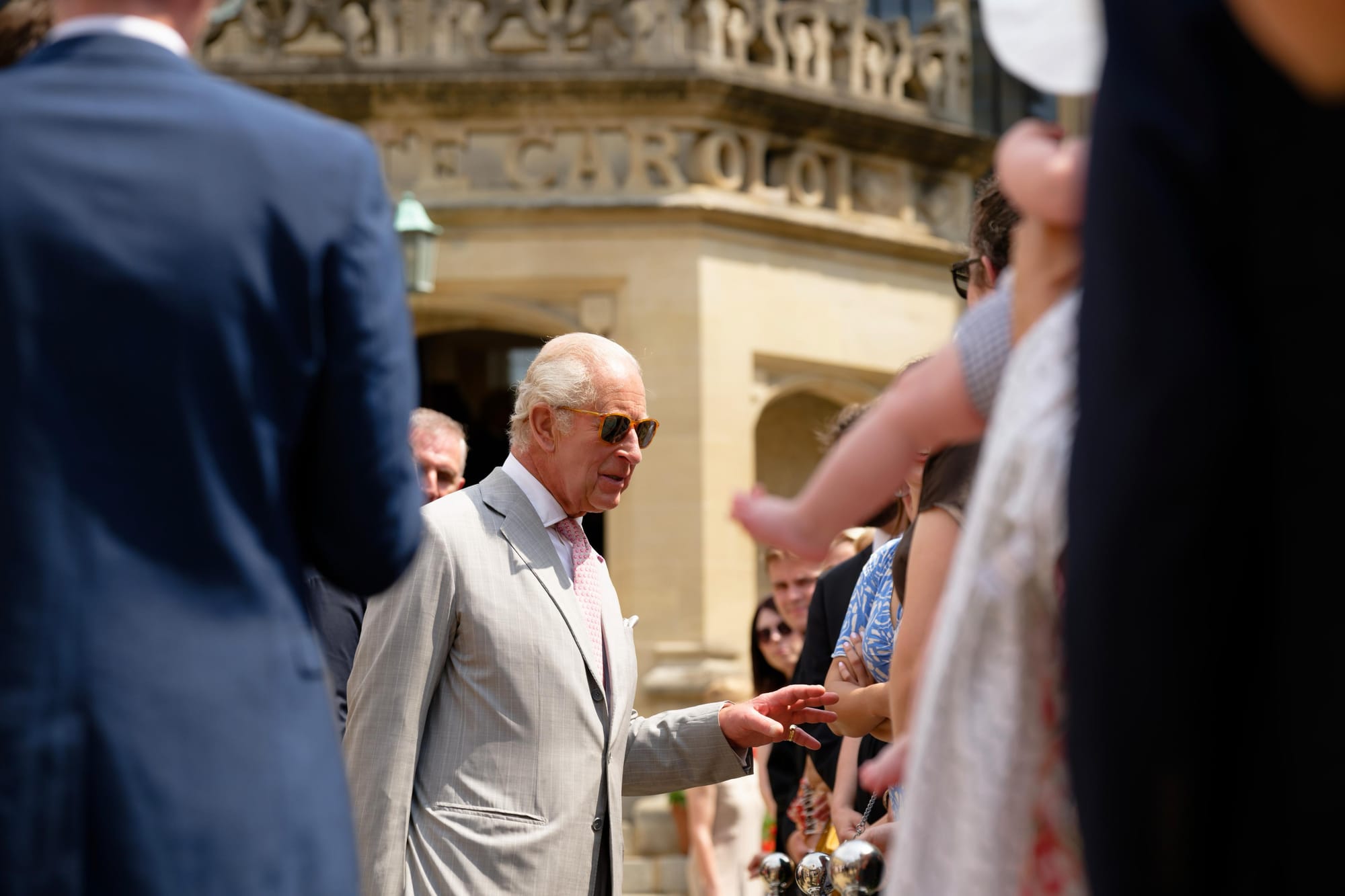
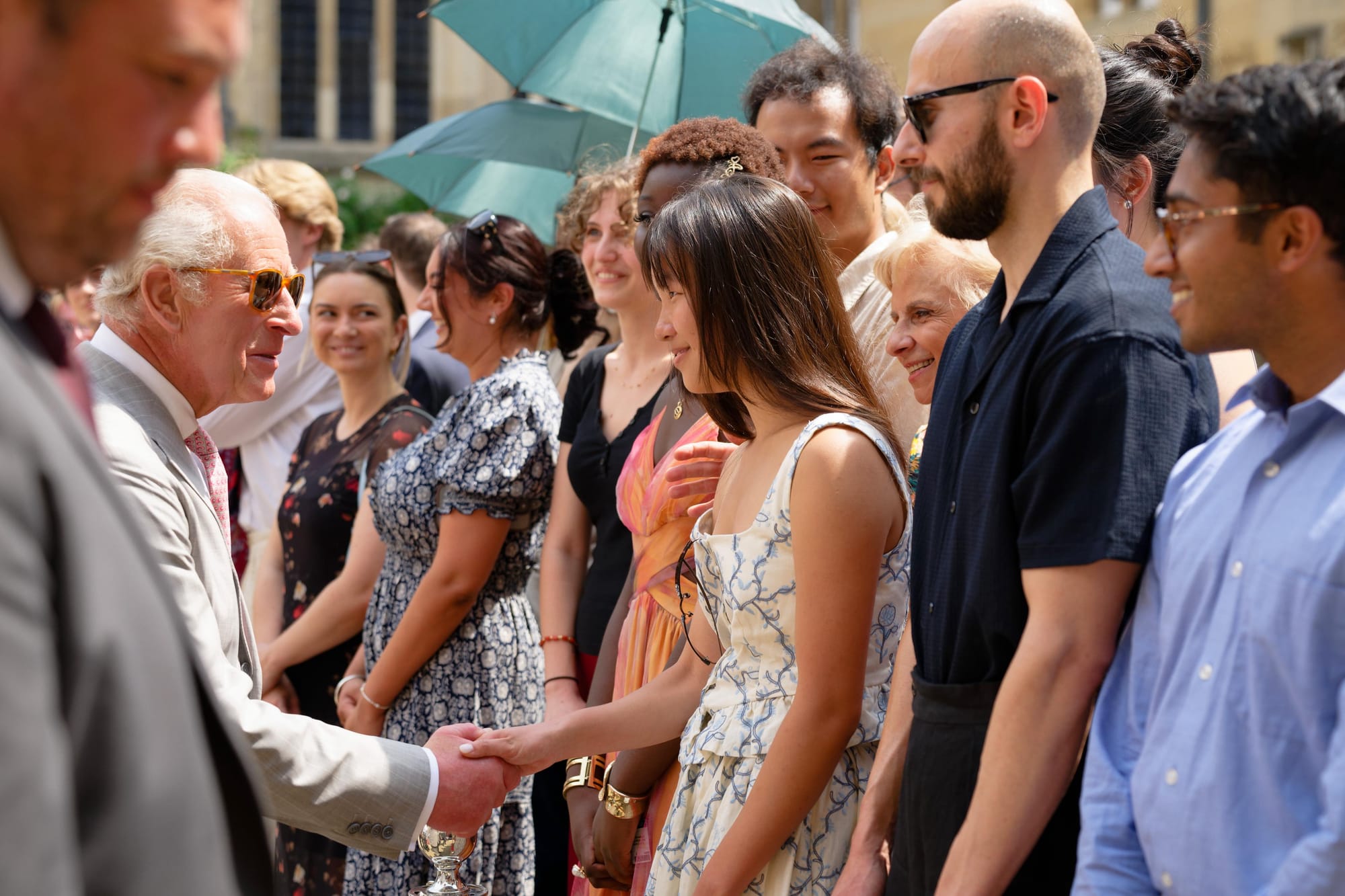
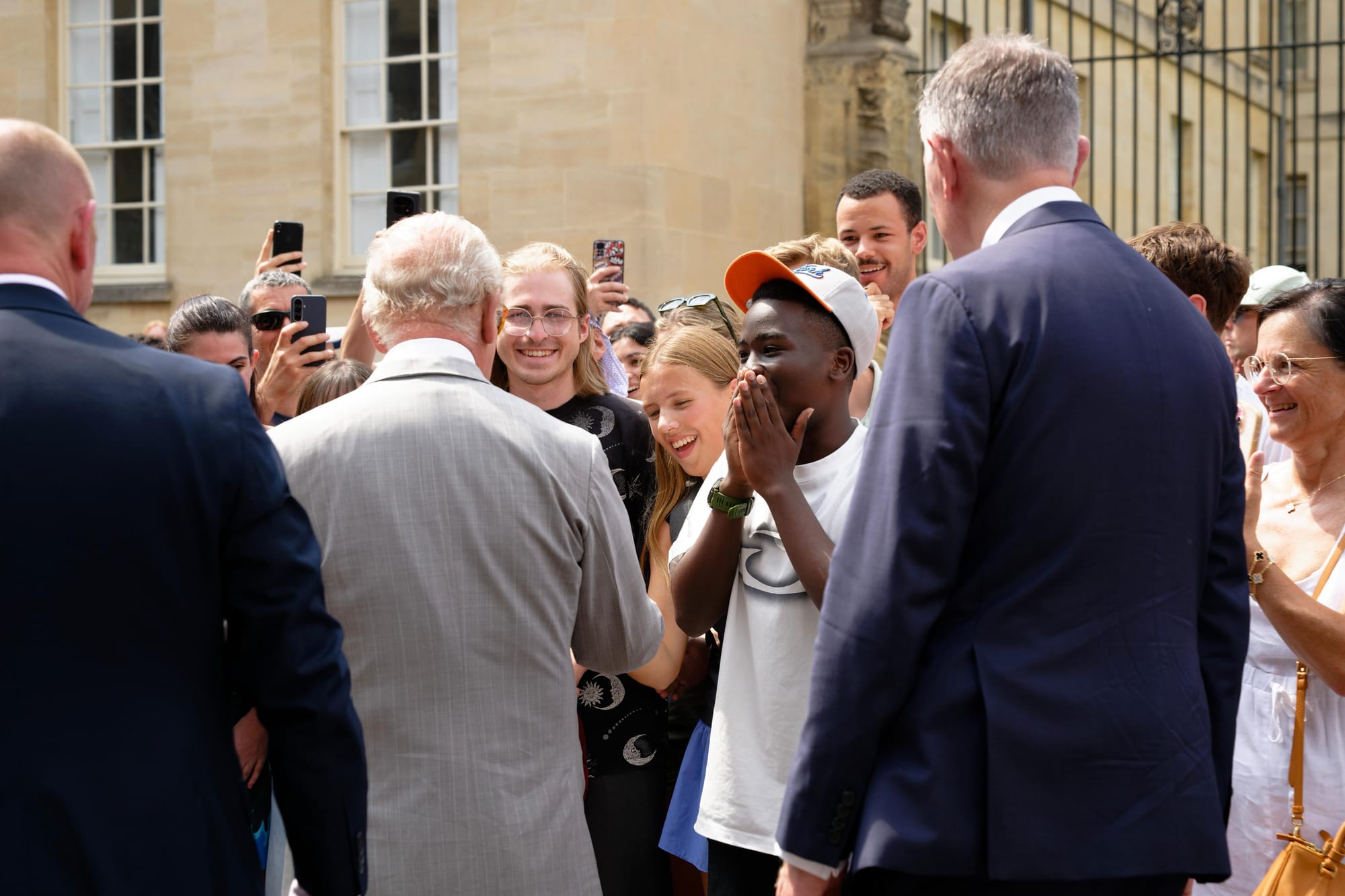
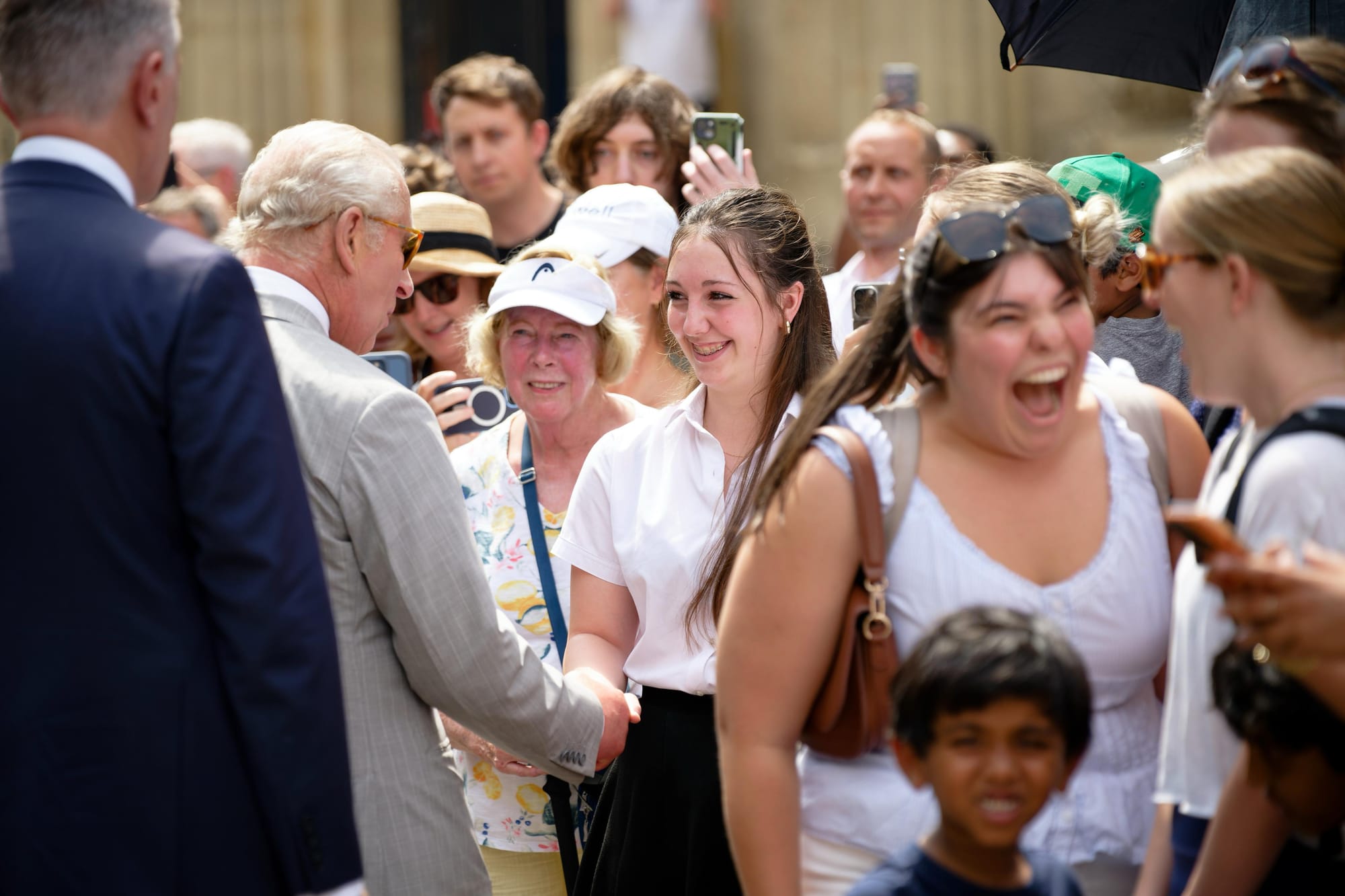
The King thanked the Provost for his warm welcome, and then met with several small groups. As he left, he stopped to shake hands with attendees and make silly faces at babies, (almost) all of whom greatly appreciated his efforts.
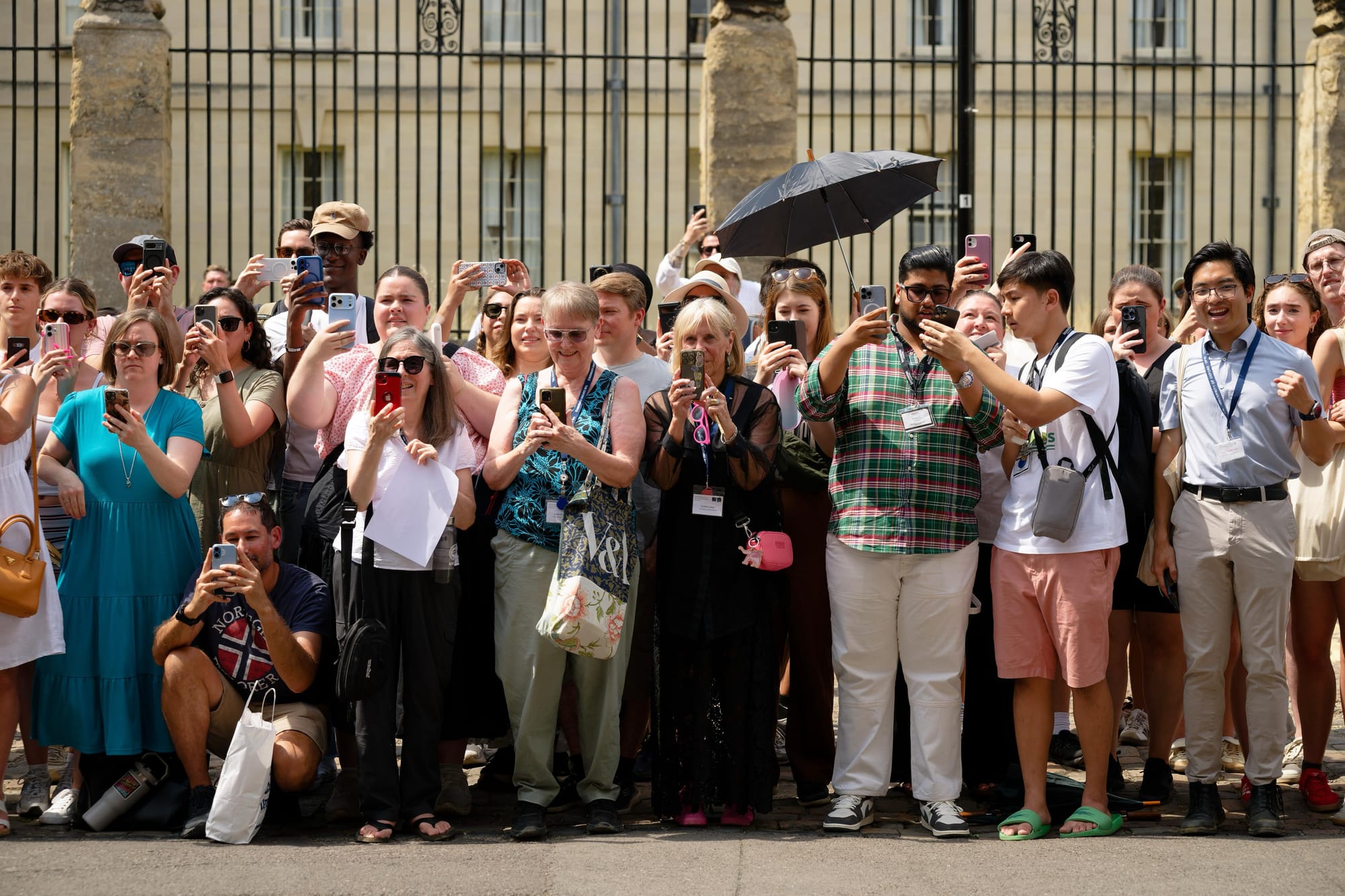
By this point, the news of the royal visit had leaked, and a crowd of a few hundred had gathered in Oriel Square. The King, to the gentle despair of those tasked with keeping him to schedule, stopped to greet the crowd. After several minutes, his team finally managed to encourage him into the car for the three minute drive to University College for his final stop of the day.
The King's visit marks an interesting point in Oxford’s history. Royal visits, openings, and engagements have occurred for centuries, and likely will continue for many more. The Crown no longer exerts direct control over the direction, goals, and mission of the University: nonetheless, the King still wields influence and soft power.
With his personal interests in responding to and reversing climate change, it raises questions around how institutions behave throughout his reign. The Schwarzman Centre achieved Passivhaus Certification in January, becoming Europe's largest university building to meet the very low energy standard. Oriel is pursuing a carbon zero plan, and its Fellows are leading research in energy policy and the environment (and, of course, the College is championing local biodiversity on its agricultural land through supporting pollinators). A new Visitor, ceremonial or not, is a chance to re-examine priorities and missions: we look forward to seeing what sustainable directions the Crown Colleges might take.
Madeline Odent is an occasional contributor to the Clarion. She is an architectural historian with a specific interest in listed buildings and built heritage conservation management. She matriculated at Magdalen in 2012 and switched to Oriel in 2014. We thank her, and Oriel College, for working with us on this article.