
The Clarion, 17 February 2026

It is (in no particular order) Shrove Tuesday, Chinese New Year, and starting tonight, Ramadan. Which is a pretty wonderful representation of our gloriously diverse city. We hope you enjoy whatever you're celebrating. Crispy (vegan?) duck pancakes after dark? See you at the (newly reopened) Red Star.

This week’s top stories
Figures just released show that Oxford University Hospitals has whittled down its waiting list. At the end of 2025, OUH – the local NHS foundation trust – counted 83,723 referrals on its waiting list, about 3% down from July 2024. The fall is in line with the national trend.
Analysis of the raw data by the Clarion shows particular progress by the OUH's cardiothoracic surgery service, slashing the waiting list from 99 to 5, putting it in the top 1% of large-hospital peers. Other successes were notched up by rheumatology (whose waiting list was down by 48%), plastic surgery (down 34%), general internal medicine (down 29%) and the paediatric service (down 29%).
At the other end of the spectrum was the OUH's gastroenterology service, which counted 4136 referrals on its waiting list in December 2025, up 91% from July 2024. The gynaecology service saw a 35% rise. Both of these were in the worst 5% of the OUH's peer group nationally.
“There is an awfully long way to go but Labour is getting our NHS back on its feet,” said Banbury’s Labour MP Sean Woodcock.
(For the data nerds: we defined the OUH peer group as the providers that were in the top 25% of overall waiting lists in July 2024, meaning anyone with more than 24,387 referrals on the overall waiting list. We limited the individual specialties’ statistics to those that had at least 50 people on the waiting list either in July 2024 or December 2025. Underlying data is available here.)
Superbugs with antibiotic resistance – described as “materials from the sharpest edges of biomedical research” – have been found in Oxford’s rivers. Campaigners say research labs, pharmaceutical companies, and university departments’ discharges are combining into a cocktail of antimicrobial, hormonal and pharmaceutical residues making its way into the River Thames.
A study of four sites across the city investigated the presence of Extended Spectrum β-lactamase (ESBL)-producing bacteria in river water, a type of bacteria resistant to many common antibiotics. 97% of all samples tested positive for ESBLs. During a discharge event at the Littlemore sewage treatment works, ESBL levels were approximately 17 times higher than average. Even at normal times, the ESBL concentration near the sewage outfall was significantly higher than levels observed upstream.
The analysis identified numerous research labs, pharmaceutical companies, and university departments holding licences from Thames Water to discharge into the sewer network. These include:
- Oxford Biomedica, which produces viral vectors for gene therapy
- The university Department of Chemistry with high-volume chemical discharges
- Enara Bio, Oxford Genetics, and T-Cypher Bio, all working with human cell lines or genetically modified bacteria
- Several others whose activities span fluorination chemistry, immunotherapy, and synthetic biology
“We don’t know precisely what’s making its way from bench to brook, but we know enough now to be seriously concerned,” said David Wallace, a citizen scientist for HoT Water. “These aren’t just household or industrial pollutants; we’re talking about materials from the sharpest edges of biomedical research potentially ending up in environments never designed to cope with them.”
Rob Morley, who led the microbiological analysis at Index Microbiology, said: “This pilot study highlights the global issue of antibiotic resistance at a local level. More surveillance of this clinically important group of bacteria is needed to further understand the environment as a potential reservoir for antimicrobial resistance, and see what can be done by water companies and regulators to reduce it.”
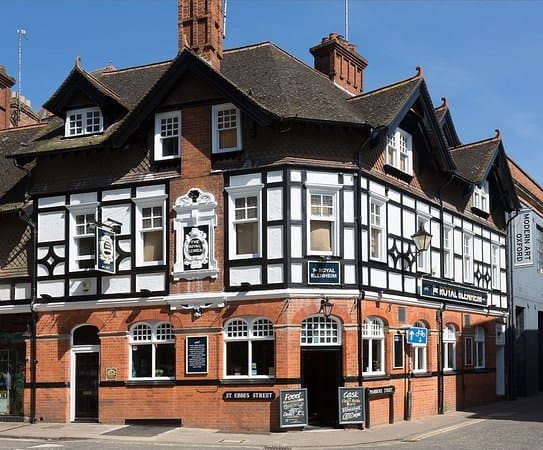
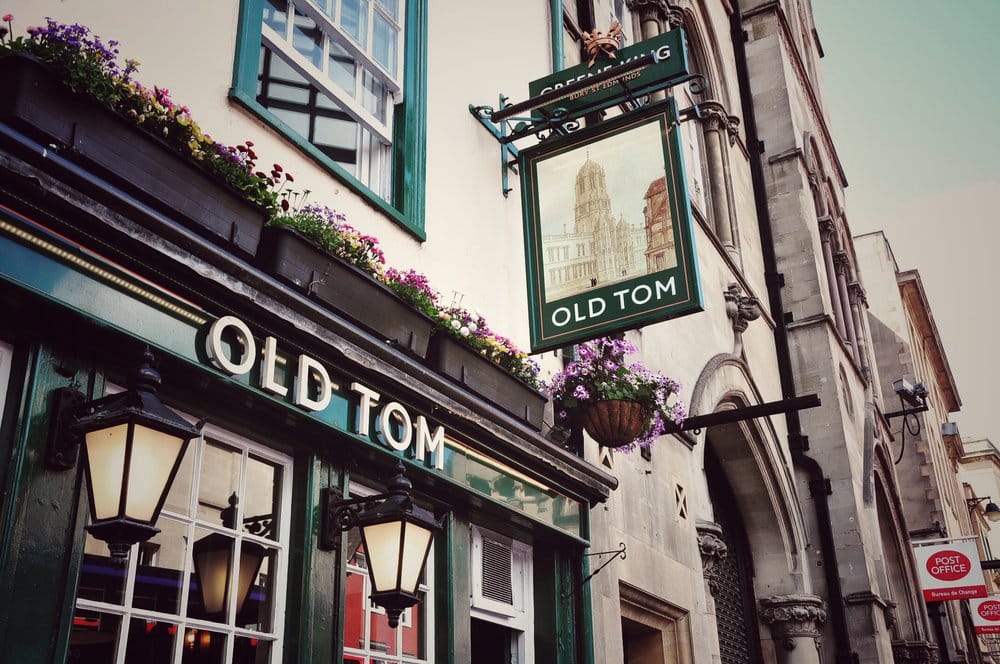

Favourite haunts of Labour, the Greens, and the LibDems (the latter represented by the pub dog)
In this season when councillors are closeted in rooms for long hours arguing over budgets, the Clarion asks the most essential question of all – which Oxford pub do they repair to after the meeting is over? Our research suggests:
- Labour: The Royal Blenheim
- Liberal Democrats: The Jolly Farmers
- Green Party: The Old Tom (winter), the Bear (summer)
- Conservatives: Our source says “the Conservatives don’t really go to the pub”, but when they do, it’s either Wetherspoons or the Cow & Creek.
Around the city
- The scaffolding is finally coming off Oxford Town Hall. Since last year, the St Aldate’s frontage has been hidden behind scaffolding as specialist restorers have been cleaning the stonework and repairing detailing. The City Council says that it views the repairs as a “sound investment” which will help to safeguard income from weddings and other events hosted there.
- Planning has kicked off for the £20m Government grant to Greater Leys, as part of the Pride in Place programme. The spending will be managed by a Neighbourhood Board made up of local residents, businesses, community organisations and faith groups. The Neighbourhood Board is set to be appointed this summer, and will then work to draw up a plan ready for the funding to start in spring 2027. Oxford City Council will administer the funds, which are intended for “the improvements that matter most to local people”. An information session will be held at the Barn on Nightingale Avenue on 28 Feb. Cllr Linda Smith, for the City Council, said: “Anyone with ideas about how to make the area a better place to live through improvements to our green spaces, the built environment and public services should come along.”
- Community landlords Makespace Oxfordshire are opening a new floor of offices and studio spaces at their 9 Park End Street hub. Space is open for makers, artists, and organisations for social, cultural or environmental good. Open house events will take place in early March.
- Meanwhile, over on Instagram, fabled tapas restaurant Arbequina have posted images of the zinc bar and handmade Moroccan tiles being installed at their new branch in the Covered Market. (Yes, we are excited.)
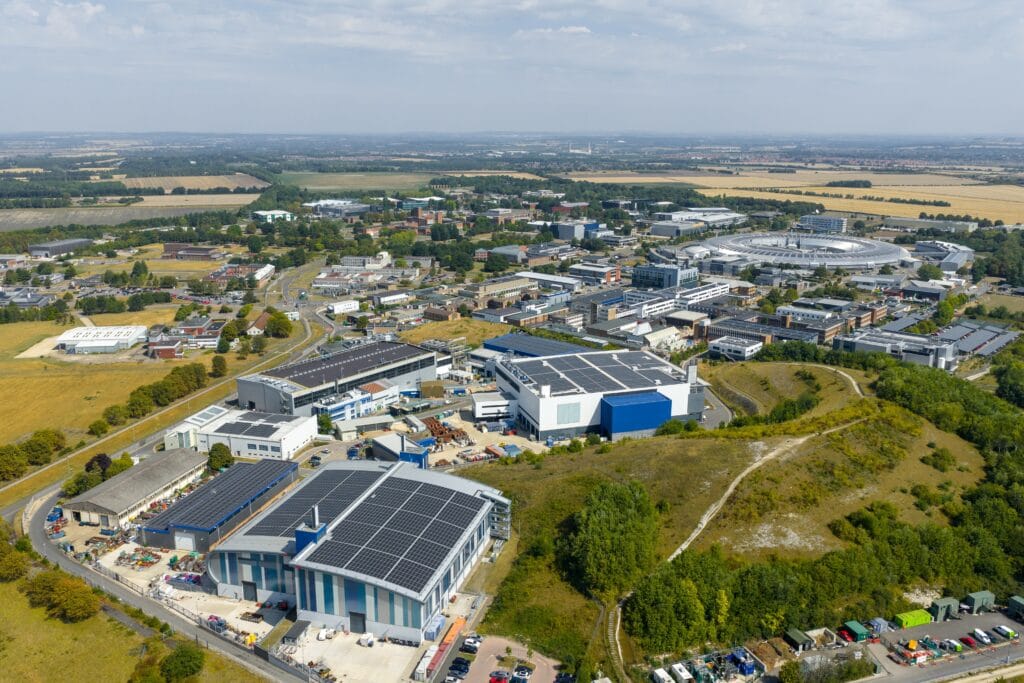

Harwell Campus from above; FunParx, coming to Banbury.
Around the county
- The Harwell Campus has announced a 25-year expansion plan, with better connections to Didcot and Wantage, a “walking first” campus, greater public accessibility, and new research buildings – including a brand new postgraduate Harwell Institute of Technology.
The first phase would see a new “accelerator quarter for start-ups and scale-ups”, plus upgraded National Facilities for cutting-edge research, such as the Diamond II upgrade and the Extreme Photonics Application Centre. A new hotel, community hub, and science adventure playground are planned. In Phase 2 (years 6-12), the campus would expand to the north and south. The north would focus on commercial innovation, while the south would group national research capabilities, including the Harwell Institute of Technology and a new science visitor centre for schools and families. Phase 3 would take the project into the 2040s, with next-generation research buildings, enhanced visitor facilities, and more hotel and hospitality developments. An online consultation is now open on the ‘Vision 2050’ project, with public sessions planned for the spring. - The site of Debenhams in Banbury’s Castle Quay is to be transformed into a 50,000 square foot multi zone indoor playground for all ages including a ninja style assault course, slide city and a soft play for children. It is set to open in Summer 2026. (Oxford City Council unanimously passed a motion supporting a city centre playground in November 2024.)
- Earth Trust has won £500,000 of developer funding for its Gateway to Nature project, to help fund a new access road and car park to avoid constraints on the current ‘single lane with passing places’ road past Wittenham Clumps. The funding was approved by South Oxon District Council last week. Earth Trust’s CEO Ian Barrett described the funding as “timely”; construction is planned to start in March and a new adventure playscape will open in 2027. An active travel route, the Ladygrove Greenway, is partly constructed and forms part of a circular walk taking in Earth Trust’s arboretum. (We wrote about the Earth Trust and its wonderful founders last year, and in 2024 about how Community Infrastructure Levy can fund infrastructure to benefit the community. We love it when a plan comes together.)
- As the Clarion grows, we now find ourselves on the radar of marketeers across the nation who send us their (frequently quite tenuous) press releases with a local connection shoehorned in somehow. So: MoneySuperMarket is warning of the dangers of drivers splashing pedestrians for TikTok content, after a 100% increase in Google searches for ‘splashing pedestrians’ in the past three months. They kept it local by astutely observing it was raining in Oxford. Drivers can receive a Fixed Penalty Notice of £100 and three points on their licence, or up to a £5,000 fine under the Road Traffic Act 1988. Alicia Hempsted at MoneySuperMarket said: “The Act is designed to protect not only drivers but also pedestrians. Drivers who splash pedestrians could face serious consequences, including penalty points, fines and court action.” What we really want to know is whether installing rubber ducks in the never-draining puddle on our walk to work would count as obstructing the highway. (Do follow us on Bluesky, where we post more of this nonsense.)
Oxfordshire politics
Tenuous Valentine's Day links! Botley West fence sitting! Greenland! Beavers! We've got it all this week...
Before we start, the race in the Gorton & Denton by election is hotting up. (Manchester, for those not terminally online.) Depending on who you ask, it's either a Reform/Green scrap, or a plucky fight for Labour to retain the seat after their MP Andrew Gwynne resigned on “ill health grounds” (aka being dismissed and having his Labour membership suspended because of offensive WhatsApp messages). Oxfordshire politicos have been on the overcrowded trains up to Manchester to lend their door-knocking skills. The BBC has it as “too close to call”.

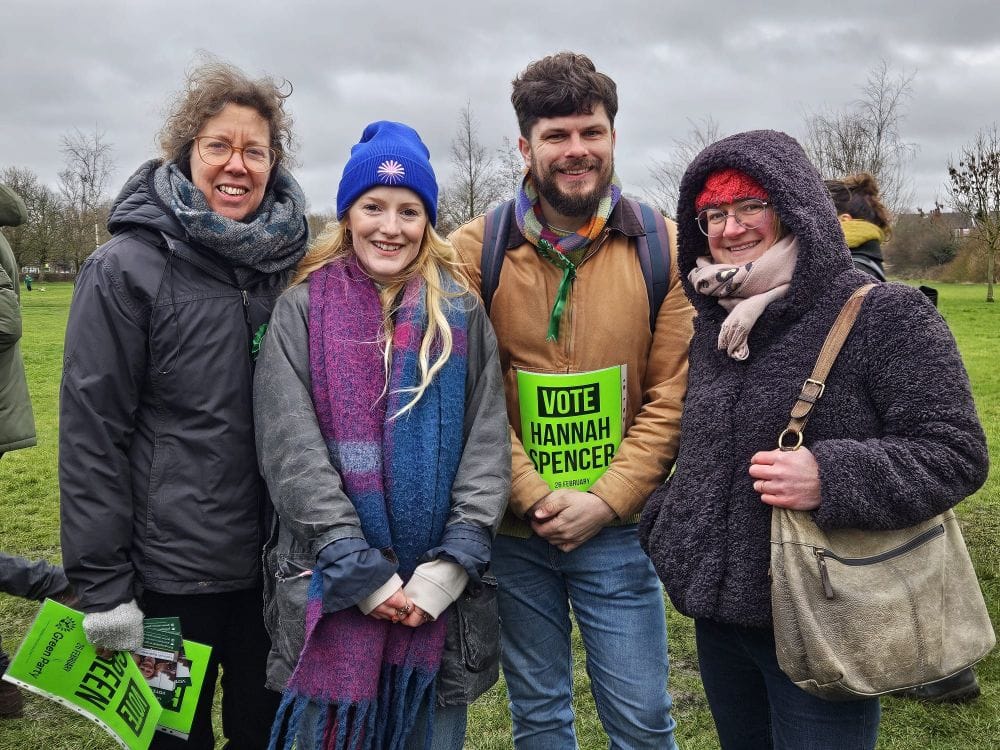
Labour: Dame Anneliese Dodds MP campaigning for local councillor Angeliki Stogia. Greens: Oxford(shire) councillors Lois Muddiman, Alex Powell, and Kat Foxhall campaigning for 'plumber and local councillor' Hannah Spencer.
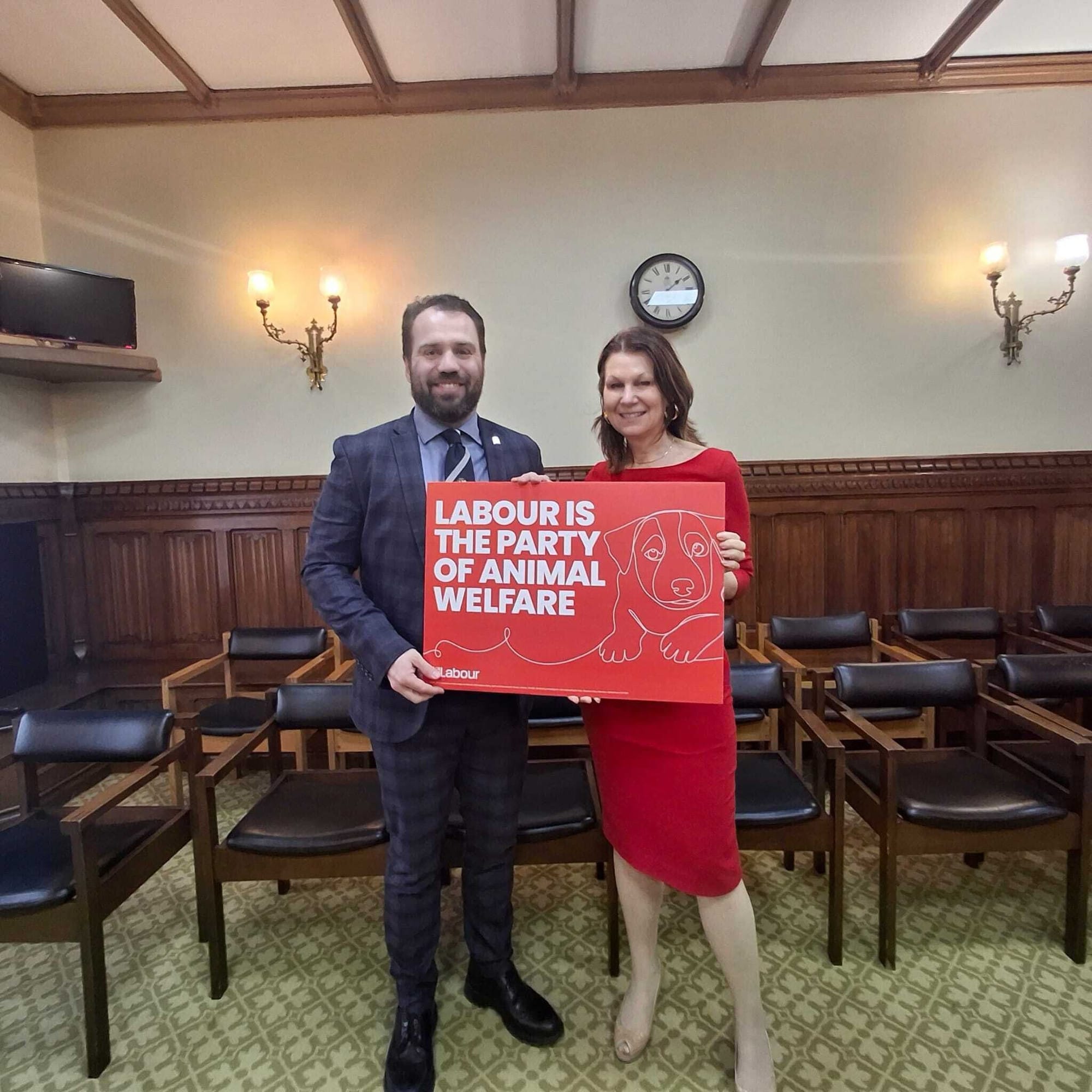
- Banbury MP Sean Woodcock was on the BBC's hotseat: you can listen here from 3 hours in, talking about Epstein, the Horton, and inevitably, potholes. He attended a DEFRA backbench meeting on animal welfare. In the constituency he met with local employer Barry Callebaut (that's the delicious chocolate smell you catch when driving through or past Banbury) on changes to shift pay. As a frequent campaigner on the topic, he's happy that the government is paying off councils' SEND debt. And finally… he is delighted that beavers have been released in the UK to help rivers and wetlands. Are we perhaps soon to see beavers in Banbury's wetlands? (The editor has banned me from making any beaver jokes. So I won't. 🦫)

- Bicester & Woodstock MP Calum Miller: After our somewhat flippant suggestion last week that Bicester's internet might be broken, we had a very good natured email from his people pointing out that his radio silence was due to him being in Nuuk, Greenland in his capacity as LibDem foreign affairs spokesperson. Here is a very interesting (and short) video from him explaining a little more about the issues faced by Greenlanders, which are rather more complex than some media reports might imply. Worth a watch. Closer to home, he visited Precision Life, a Long Hanborough company specialising in developing AI models alongside medical data to predict and prevent chronic disease (more good AI like this, please). Following the news that the decision on Botley West has reached the desk of the Energy Secretary, he wrote to him (alongside Layla Moran) to raise questions on behalf of his constituents that remain unanswered by the planning process, whilst holding up Southill Solar Farm in Charlbury (a much smaller installation) as a local success. He also spoke out against violence against Jewish communities.
- Witney MP Charlie Maynard got a Valentine's card from Make Votes Matter. Apparently 'Witney loves Democracy'. For a tenuous link between Valentine's Day and proportional representation, see this video (are we doing clickbait right?). He celebrated the passing of the County Council budget, agains the background of what Oxfordshire LibDem MPs claim is a £24.1m funding cut for the council from central government funds. Clarion readers will be familiar with “Maynard stands in the rain next to flooded bits of his constituency” videos – in this one, a classic of the genre, he warns of a flood on the B4449. We hope it's cleared by the time you read this, else he might need a boat to do some of his constituency work.
- Oxford East MP Anneliese Dodds has post news! The minister for postal services apparently hauled in Royal Mail management to take them to task over post delays in Oxford East, particularly NHS appointment letters. (Several Clarion writers wait with bated breath and empty letterboxes.) With City Council elections on the horizon, she was out campaigning in Osney & St Thomas with City and County councillor Susanna Pressel.
- Oxford West & Abingdon MP Layla Moran, as chair of the Commons Health & Social Care Select Committee, announced an inquiry into children and young people's mental health (fittingly, in Children's Mental Health Week). She celebrated the work of local charity the Abingdon Bridge in this area. She visited the Botley Road bridge works, reporting cautious optimism over progress.

- Didcot & Wantage MP Olly Glover challenged the Prime Minister over funding for pothole repairs, saying the Government was cutting Oxfordshire's funding by £24m over three years. The PM said more money was being made available centrally. After the exchange, Glover expressed his frustration saying the PM had “completely missed the point… councils do get some funds for road maintenance from central government, but this has been falling year on year, and councils are having to use general funds to try and fill the gap”. Locally, he met representatives of the Fire Brigades Union in Didcot Fire Station to better understand issues around the ongoing consultation. Here's his roundup.
- Henley & Thame MP Freddie van Mierlo, in another tenuous Valentine's Day link, said he was backing the Dad Shift campaign for increased paternity leave. He celebrated having responded to 1,834 constituent enquiries in January alone. (Top queries were around a social media ban for under 16s and potholes. Sigh. We're really going to have to write something on potholes aren't we?) In Parliament, he questioned the Minister about the suitability of the Pharmacy First scheme (which encourages residents to visit a pharmacy rather than their GP for specific issues) for rural areas, citing challenges meeting the thresholds to trigger payment.

- Thames Valley Police & Crime Commissioner Matthew Barber explains the shortfalls in the policing budget in this video using glasses and jugs of water – worth a watch for making a complex situation simple. He was on BBC News talking about the strain on Thames Valley Police funds caused by state events taking place in Windsor while Buckingham Palace is refurbished; in Parliament talking about illegal businesses operating on the High Street; and delivering leaflets in Harwell. And here is a week in his life as a PCC.
Our friends in the west
The Government has dropped a heavy hint that it wants to include Swindon in the region of the new Thames Valley mayor. A new consultation on spatial development strategies (SDS) includes Oxfordshire, Berkshire, Swindon, and potentially Buckinghamshire in a single area. In a paper released last week, the Government says it “recognises the value in aligning strategic planning with devolution geographies” suggesting it expects the mayoralty to follow the SDS in including Swindon. (Buckinghamshire already has devolution status so might not join a mayoralty.)
Council leaders reacted differently. Susan Brown, leader of Oxford City Council, said: “We're pleased to see Government's recognition that Swindon should be included as part of the Thames Valley strategic economic area.”
But Maggie Filipova-Rivers at South Oxfordshire said “We do not agree that Swindon is a good fit for our area – it has completely different economic and demographic challenges and needs.” Her comments were echoed by Bethia Thomas at Vale of White Horse. (Adding Swindon, traditionally a Conservative/Labour marginal, could swing the result of any Thames Valley mayoral election. So don’t be too surprised to see Labour councils campaigning for it, and LibDem councils campaigning against…)

Meanwhile, Oxfordshire’s rural districts have put forward their case for including West Berkshire in a new council with Vale of White Horse and South Oxfordshire. Bethia Thomas says:
“Oxfordshire is much too big to be a unitary council on its own, but too small to divide into two – you’d be left with two unitary councils that are too small to be financially resilient. Partnering with our friends in West Berkshire solves that problem – it means you can create two councils that are exactly the right size.”
Unlike any of the Oxfordshire councils, West Berkshire’s financial woes mean it is currently in receipt of Exceptional Financial Support from Government. But one striking claim in the release is that West Berkshire’s “Adult Social Care and Children’s Services are delivered far more efficiently than in Oxfordshire where per person costs are 20–30% above the national average”.
We looked into the figures and we don’t think it’s that simple. Gross current expenditure on adult social care is £59,641 per 100,000 residents in Oxfordshire, £68,798 in West Berkshire (table 16, column K). Unit costs for external long-term support are £1,230 in Oxfordshire, £1,474 in West Berkshire (table 55, column K). With 25 data tables we’re sure a canny statistician could make any case they chose, but treat this as a reminder that canny statisticians are hard at work here!
University and research
- The Charity Commission is considering whether to investigate New College in relation to sexual harassment by academic staff, according to Bloomberg. The news agency reports that the Commission can require the college's Fellows to answer its questions. Oxford colleges are self-governing charities whose academic staff also act as the trustees; in 2024, the Charity Commission was reported to have ordered colleges to modernise their governance, after a long-running dispute involving Christ Church’s former Dean. Three senior academics at Oxford have been named in recent months in sexual harassment accusations. The local branch of the UCU trade union has issued an emergency briefing on sexual misconduct at Oxford University calling for a review of emeritus status.
- Oxford has the fourth largest concentration of “star scientists” outside the USA and China, according to a new analysis. London, Toronto and Paris were higher. When the USA and China are included, Oxford is 17th in the rankings, ahead of Cambridge in 21st place. The research, published by the Royal Geographical Society, is based on a “Knowledge Generation Index that combines researcher quantity with research impact”. It says New York, Boston, London and the Bay Area host 12% of the world’s top scientists.
- A new portrait of Nobel Peace Prize winner Malala Yousafzai has been unveiled in her Oxford college, Lady Margaret Hall. Yousafzai studied philosophy, politics, and economics at LMH from 2017 to 2020. She came to the UK after campaigning against religious misogyny and for girls' education in Afghanistan.
- A new exhibition at the JR, ‘Embers of Care’, celebrates the stories of internationally educated NHS staff at Oxford University Hospitals. The portraits were created by John Yayen, an artist and registered nurse originally from the Philippines. Ruth Charity, Arts Lead at Oxford Hospitals Charity, said: “The faces pique the interest of visitors and staff, drawing them in to look more closely and read their stories. These are fascinating stories that offer a glimpse into the challenges, sacrifices wins and joys made by our migrant staff.”
- With Ramadan starting tonight, Louise Taylor, Professor of Education at Oxford Brookes University, has published a guide on how schools and universities can take a more inclusive approach to education during Ramadan. She was motivated to write the guide after being struck by how little institutional guidance or awareness there was around Ramadan, despite its significance for many students, when a student admitted struggling to concentrate during an afternoon session while fasting.
Trains and buses
- Chiltern Railways have sent back a train that was to be used for Oxford–Milton Keynes services. With East West Rail services still not underway, one re-liveried train has been returned to the West Midlands with its new Chiltern Railways branding covered up. The Class 196 trains are subleased from West Midlands Railway; one has been returned for test runs on the Camp Hill Line, where three new stations are being built. As we reported in September, services to Milton Keynes are delayed due to a union dispute over guards. (The rumour mill is in overdrive on this one – we’ll bring you more when it firms up.)
- Timetables for the new Pulhams X52 bus from Oxford to Cheltenham show that the current timetable is maintained through the day but with one fewer in the early morning and late evening. The X52 will take over from the current Stagecoach S2 next month. Travelling west, the first arrival in Cheltenham will be 0837, and the last 1937. Travelling east, the first departure from Cheltenham is 0627, and the last 1707. Some Cheltenham–Oxford journeys at the start and end of the day may require changing in Witney.
- Train company CrossCountry is bidding to take on six unused Voyager trains to ease overcrowding on lines including Oxford to Banbury. Although the operator is the only one to use the fleet, six five-coach trains are currently sitting idle after being replaced by newer trains on the West Coast. Two further trains are currently on short-term hire to north-eastern line Grand Central, and CrossCountry has staked a claim for these too. Industry magazine Modern Railways reported that CrossCountry has presented a business case to the Government. The company has also begun a refurbishment of its existing Voyager fleet, including power sockets and automatic passenger counters.
- A decision is pending on weekday Oxford to Bristol trains. Great Western Railway has submitted its application to the Office of Rail & Road; track operator Network Rail has agreed but wants a financial contribution to manage increased risk at level crossings. Oxfordshire, Oxford and Swindon council leaders issued a message of support this week.
Notes from Clarion HQ
Thanks to our data scientist for spending his weekend mining vast swathes of Government data to look at waiting lists at OUH. While we were tipped off by an MP’s press release, this story is an illustration of our commitment to find the truth (in this instance, good news) behind the data, rather then regurgitate press releases, at least, when we can. Huge thanks to our ever growing team. You know who you are – we are all the Clarion.
And this week the little Oxford Clarion (est. 2022) overtook the Oxford Times (est. 1862). The latest circulation figures for Oxford’s weekly newspaper have come out at 3,023 copies, a good way below our newsletter readership. We’d be the first to say it’s comparing apples and oranges (a paid-for print paper vs a free email newsletter; the Times doesn’t have its own website), but it gave us a smile – and the trend is only going one way. See you on Friday.