
The Clarion, 17 March 2026

Library-worrying AI bots, church roofs, ultrasonic hedgehogs, school wars, outspoken MPs, dog breeders and golden train tickets. Plus your old favourites of Thames Water, East West Rail and Oxford buses. Welcome to Tuesday’s Oxford Clarion – Oxfordshire’s most varied news update!
This week’s long read
Oxfordshire’s councils are set to change – and the Government consultation closes in less than a fortnight. Oxfordshire County Council leader Liz Leffman writes for the Clarion on why she believes a single Oxfordshire council is simpler and more efficient.
 Clarion guest contributor
This week’s top stories
Rachel Reeves is expected to announce plans to turbocharge Oxford’s growth in a speech this afternoon. The Chancellor of the Exchequer is set to give the annual Mais Lecture in London. Policies trailed in advance include a new ‘development corporation’ to lead planning and infrastructure in and around Oxford, echoing a similar model in Cambridge, and compulsory purchase powers for new developments. The soundbite is a “Silicon Valley of Europe”. The speech comes after our newsletter deadline, but we’ll have more details later today.
The legal challenge to Oxford’s congestion charge from a small group of High Street businesses is holding back investment in transport, according to Oxford Bus Company boss Luke Marion – who says Oxfordshire County Council is anxious about spending all the proceeds from the charge. In an interview with RouteOne magazine, he says: “The county has been reluctant to reinvest all the money so far, as it still has one eye on the fact that the legal challenge is going ahead and in the worst-case scenario, the charge could be found to have been unlawful.”
He adds that only 50% of the income is currently being spent, and believes improved bus services to hospitals would cut congestion further. “We could be providing more carrots to encourage bus use. Some of the bigger under-represented groups could move the needle.”
Local residents have launched a petition asking for repairs to Donnington Bridge to be sped up, so that full-size buses can resume services. They also want the temporary replacement minibus service, which currently runs four services on weekday mornings, to be expanded.
The petition points out that, while residents around Donnington Bridge Road may have access to bus services on Iffley or Abingdon roads, the through route directly connects South Oxford with Florence Park and Cowley Centre, and Cowley with Hinksey Park and South Oxford. The weight limit has been in place since August 2024 and the minibuses have been running since December 2024.
Oxfordshire County Council says it has commissioned “complete site investigations” to find out whether strengthening or replacement is needed, and if so what the options and costs are. Findings are expected this year. In May 2025, Oxford cycling group Cyclox called for the cycle track on Donnington Bridge to be widened from its current 2 metres to the 3 metres required in national guidance.
Around the city
- East Oxford schools have warned pupils not to get involved in the “red vs blue” social media craze, an AI-fuelled attempt to encourage fights between schools. On Friday, Thames Valley Police patrols dissuaded children from gathering in parks. Rob Pavey, headteacher of Cheney School, said: “It seems to be AI generated, and I am not aware of any real fights actually happening. Very few of our students are foolish enough to go along with this nonsense, but peer pressure can do strange things, and what starts as an online fake could become real.” London’s premier local news site, London Centric, recently wrote that there have been “no reported incidents” in the capital despite a social media panic.
- Oxford ranks fourth in the UK for women working in STEM, according to a new CoworkingCafe study analysing career prospects across 95 of the country’s largest cities and towns. Oxford has the highest women’s share of STEM jobs in the UK at 35.5%.
- Collab alert: Oxford United have unveiled a limited-edition replica shirt, created with the Ashmolean Museum to mark the opening of the museum’s major new exhibition, ‘In Bloom: How Plants Changed Our World'.
- The latest data on perinatal mortality in UK hospitals has been issued, with Oxford University Hospitals coming in line with, or better than the average for comparable hospitals across the UK. OUH highlight a reduction in all perinatal mortality rates over the past decade. Yvonne Christley, Chief Nursing Officer at OUH, said: “It is important to remember that behind every statistic is a bereaved family. We remain very mindful of the profound impact that the loss of a baby has on parents and loved ones. Our teams continue to focus on careful case review, learning and ongoing service improvement.” We took a deep dive into the data and the noise around OUH maternity care in a long read earlier this month.
- Important journalist research: Oxford is one of the UK's top gentrification hotspots, according to a press release we received this week; house prices have increased faster than wages, and rents have increased by nearly 30% in 5 years. (Tell us something we don’t know.) It also has “122 craft breweries”… really? We’ve visited one or two but clearly we have some catching up to do.
Around the county
- West Oxfordshire tourist attraction Cotswold Woollen Weavers is closing after 44 years. The shop and museum in Filkins, near Burford, tells the story of the wool that made the Cotswolds prosperous, but also offers bike hire, stonemasonry and a coffee shop. A closing-down sale begins tomorrow.
- The former council offices at Bodicote House, Banbury, are to be redeveloped for housing by a company owned by Cherwell District Council. Graven Hill Village Development Company was set up to develop a former MOD site in Bicester and is now expanding to Banbury. Oxford firm Lucy Developments, which traces its heritage back to an ironmongery shop in 1812 and then a canalside ironworks, had previously been announced as the Bodicote developer but “revisited its options… following changes to the company’s commercial position last year”. Graven Hill’s Adrian Unitt promised “an innovative housing development that is sensitive to this characterful village”. A planning application will now be drawn up with the intention of starting construction in 2027.
- Another illegal dog breeder has been prosecuted thanks to Cherwell District Council's licensing team. Gemma Blackman from Banbury bred from animals with genetic ailments, earning around £12,000 in three years. She was banned from breeding dogs. Blackman first came to the attention of the council following a complaint from a resident who had purchased a puppy; officers then noted coverage in the Sun of her pet chihuahua, Olaf, which she claimed might have been the smallest dog in Britain. (Our local print newspaper, which outsourced its subbing in 2014, reported this under the headline ‘UK's smallest dog owner, 43, had illegal breeding operation’.)
- Vale & Downland Museum in Wantage has won the Small Business Britain Green Growth Award 2026. The museum has decarbonised over the last year, which also reduced their costs. The awards were presented by adventurer and TV presenter Ben Fogle and sponsored and hosted by BT. The Vale & Downland Museum is a community museum in Wantage, recounting the cultural heritage of the Vale of White Horse from Anglo-Saxon to more recent times. It has an excellent cafe, popular with cyclists (always a good sign).
Oxfordshire politics
Last week we reported that Gail's was set to open in Banbury, by definition making it a LibDem target. Now we find the LibDems in Banbury are revolting (stop that) as the proposed Gail's is apparently to be not in the centre of the market town, but in the Gateway Retail Park. (We should finish our half-written story on Banbury Gateway and the impact it's had on the town...)
The nationwide Green surge has seen much speculation as to whether Oxford East could be in the sights of the Polanski-led party. We wrote back in 2024 about the danger of seat-by-seat predictions, and that still holds true. One example: a forecast by UK Election Maps currently has Labour as strong favourites to keep the seat. It also shows the Scottish National Party surging to 0.56% in Oxford East, ahead of the Conservatives on 0.16%. Don’t believe everything you read on the internet.
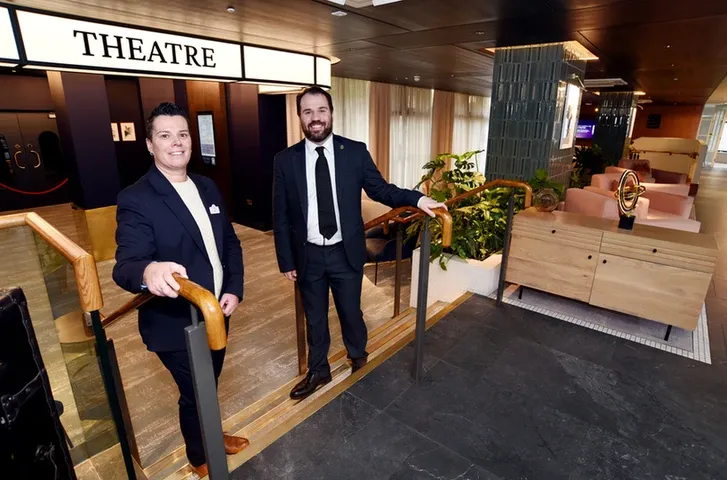
- Banbury MP Sean Woodcock supports proposals meaning fly tippers would get points on their driving licences; visited Heythrop Park to support English Tourism Week; congratulated Longford Park Primary School in Bodicote on their Ofsted report; and wants to build more nuclear power stations to ensure energy security. But his stand-out this week is a no holds barred Labour List opinion piece which uses Thames Water as a signifier of the Government’s current troubles: “Labour’s current troubles are because people don’t believe we have delivered change. And where they accept we have, they currently think it has been change for the worse. Nowhere is this clearer than on the issue of water. For all that Labour has passed legislation in this area, the reality is that the public do not believe it goes anywhere near far enough.”
- Bicester & Woodstock MP Calum Miller started the week by defending the Listed Places of Worship scheme. (Literally sticking up for the people who fix the church roof, which he said with an entirely straight face. As politics geeks we find this very funny.) The rest of his week, as Foreign Affairs Spokesperson, appears unsurprisingly to be issuing statements on the US, Iran and the Strait of Hormuz. Here's a short video explaining his views.
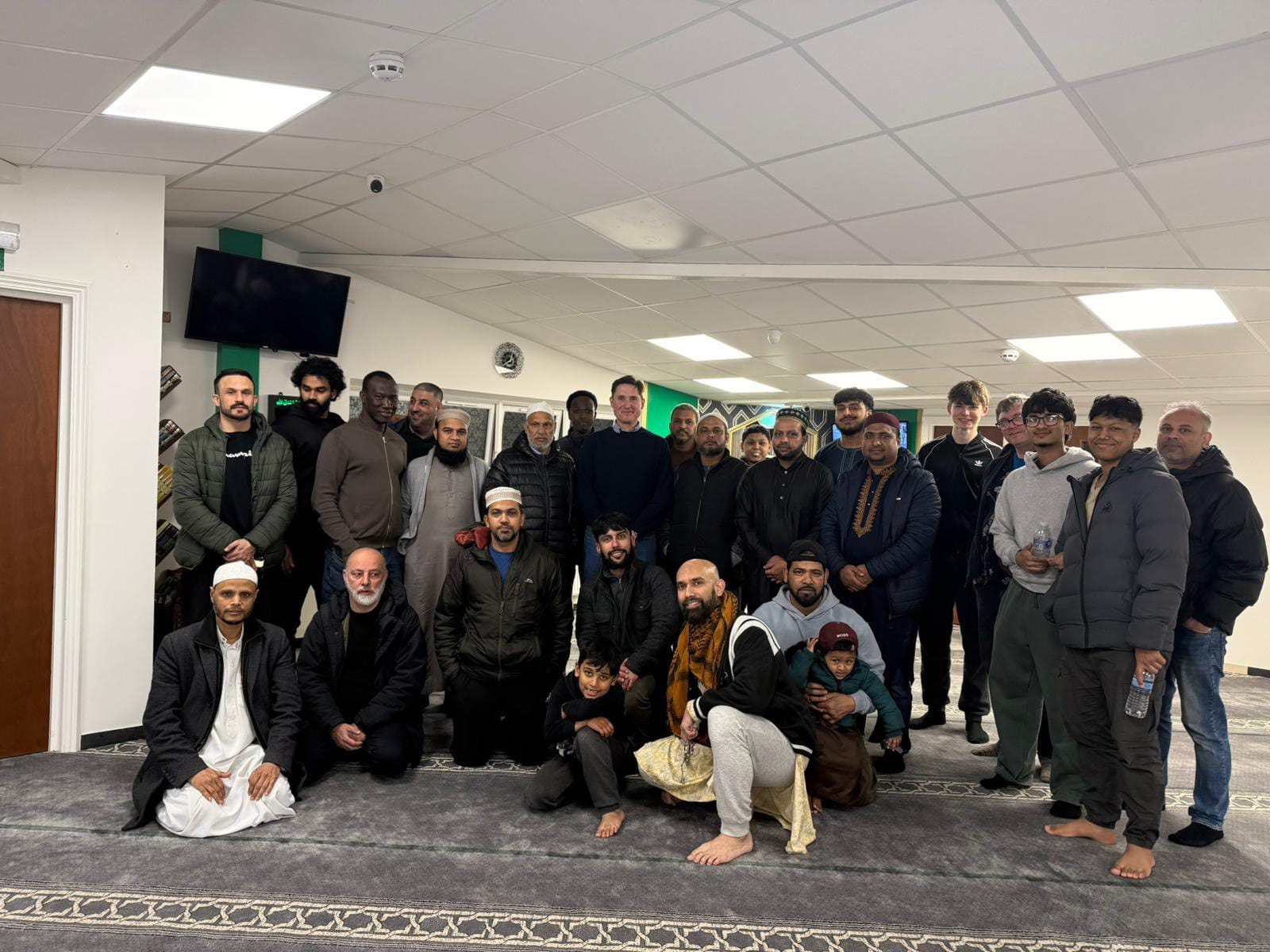
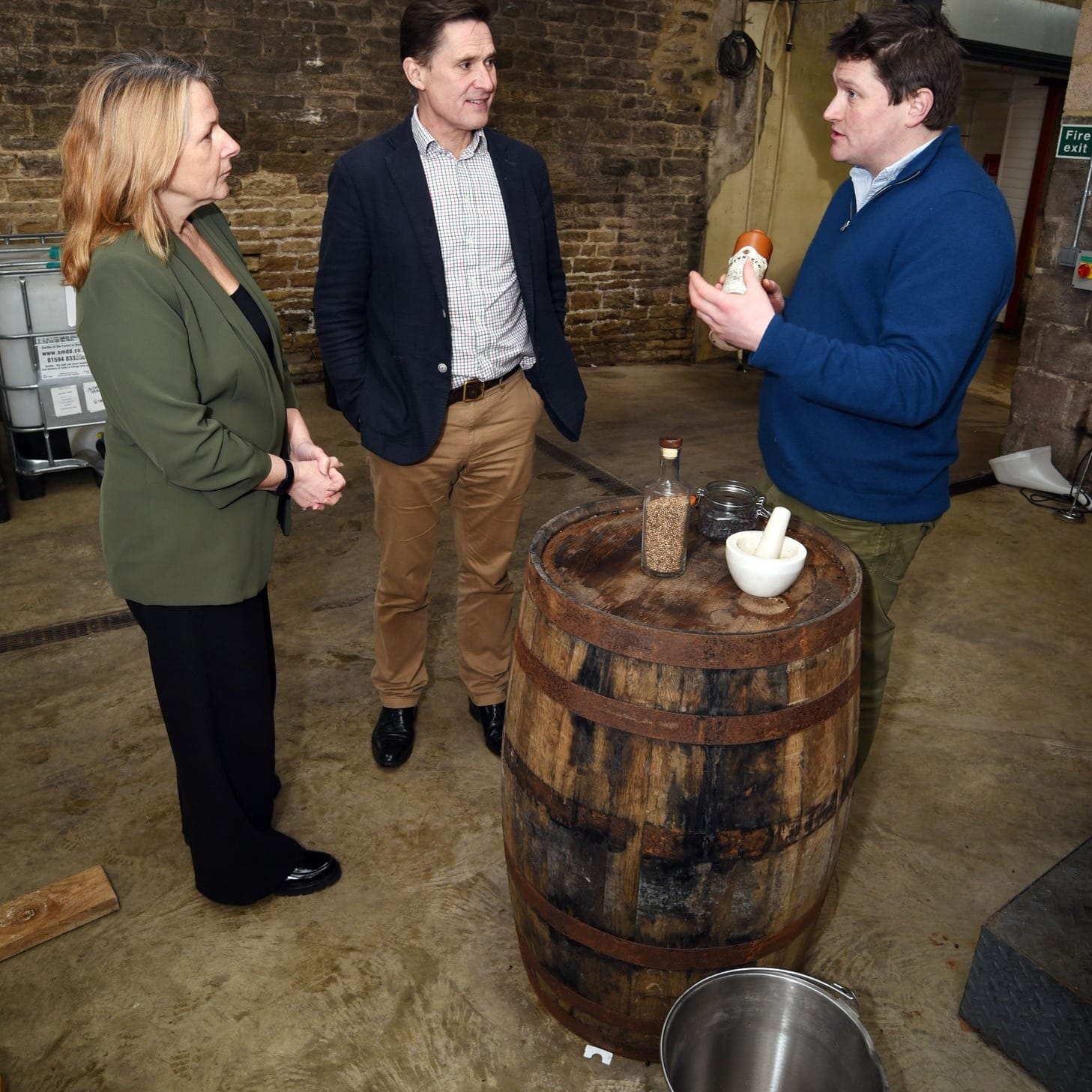
Charlie Maynard at a Witney iftar and a Black Bourton distillery.
- Witney MP Charlie Maynard spent much of the prior week reporting from burst water main sites and handing out bottled water. So you might hope for a quiet week from him. Not so. Here's a video of him demanding compensation for residents from Thames Water, and another demanding a plan from Thames Water when the same pipe burst again but was rapidly fixed. When not dealing with water, he announced a fixed pothole, demanded action on Royal Mail, visited two schools, and marked English Tourism Week by celebrating Wood Brothers Distilling Co in Black Bourton. And he went to an iftar in Witney.
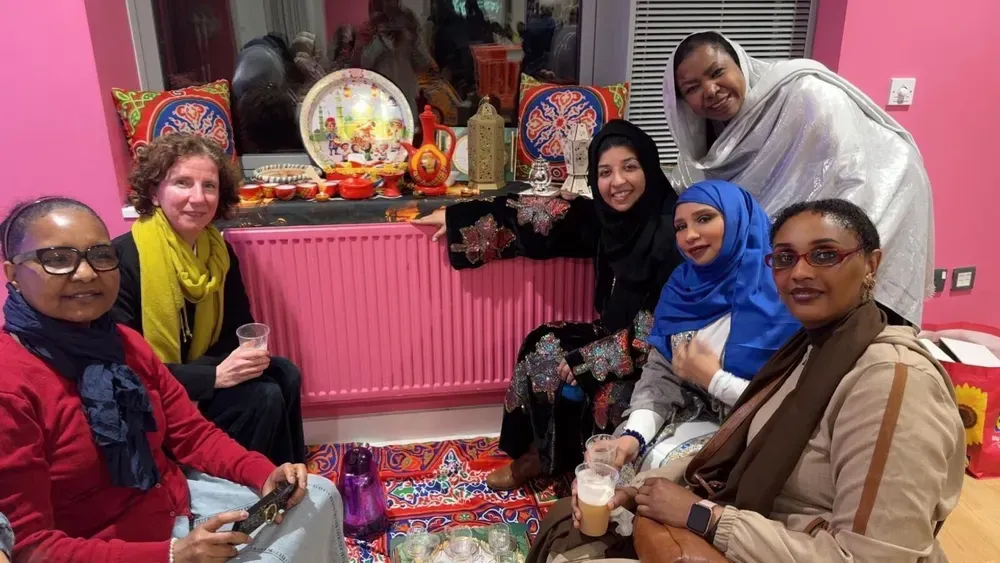
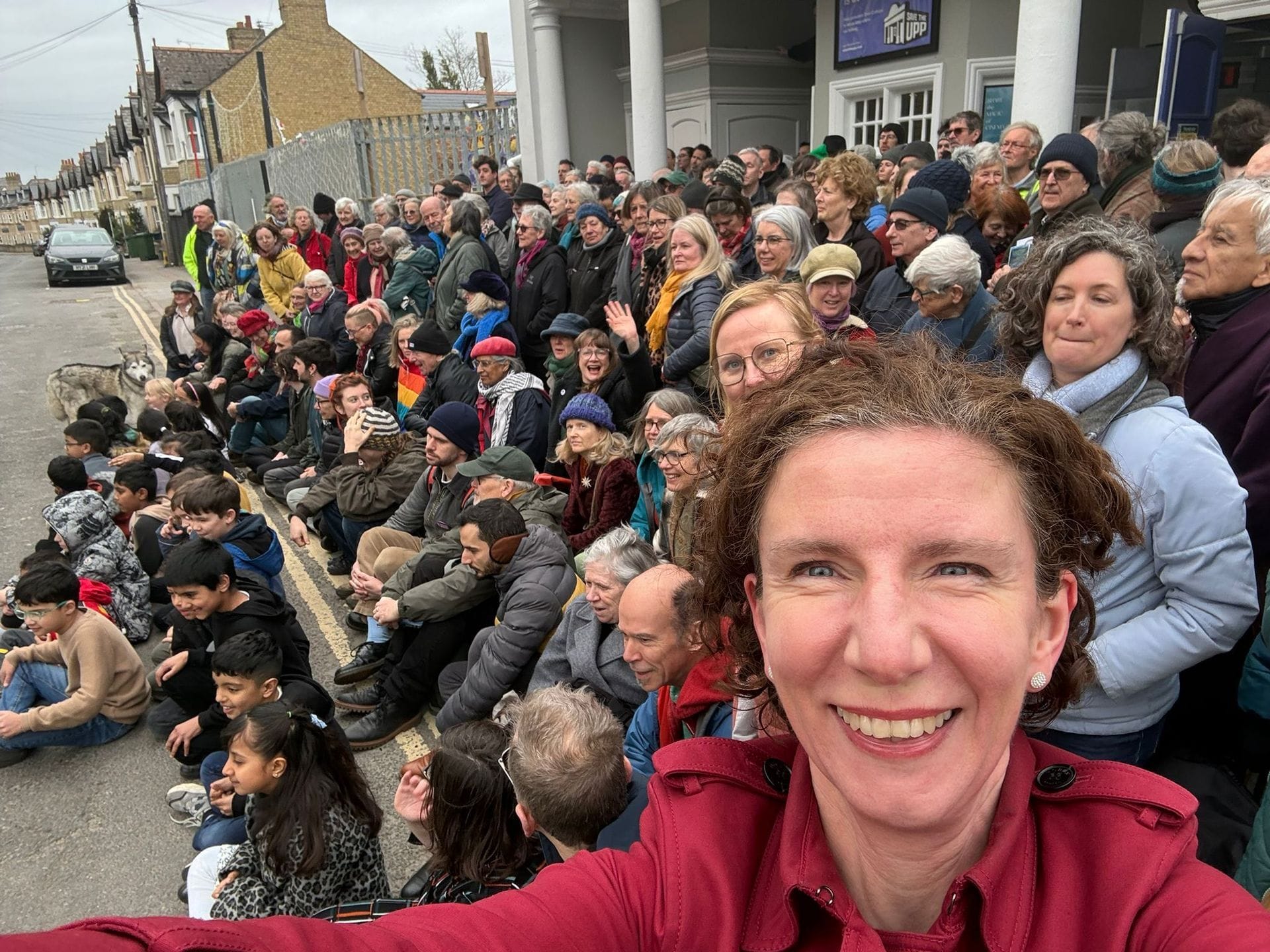
Anneliese Dodds at a community iftar, and with campaigners at the UPP.
- Oxford East MP Anneliese Dodds has had a week of local campaigning, starting with the effort to bring back buses over Donnington bridge (video). She thanked everyone who keeps the Ultimate Picture Palace going, urging people to sign the UPP's petition. And finally, she attended a community iftar with the Sudanese community in Rose Hill. (Can we just say we appreciate the Labour red trenchcoat she's wearing in a lot of the photos and videos this week? Perfect for spring campaigning and politically on point.)
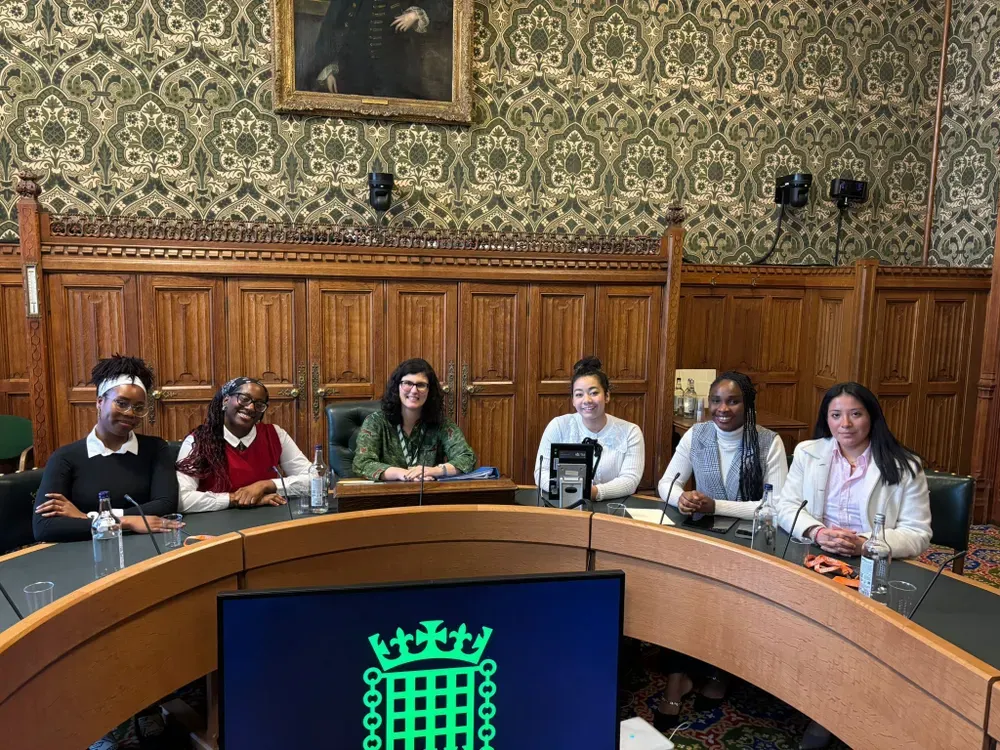
- Oxford West & Abingdon MP Layla Moran met students from the University of Oxford and Oxford Brookes as part of the NUS' national lobby day on student loans, saying that the Government should end the freeze on repayment thresholds and establish a fairer way forward. On the Epstein files, she suggested that Keir Starmer’s appointment of Peter Mandelson, knowing that he had continued a relationship with Jeffrey Epstein after his conviction in 2008, shows serious lack of judgement. In The Wire she writes raising questions on the US-UK Pharmaceutical bill currently in the Commons – an accessible primer on a complex and far-reaching challenge. (Extra points for including a Yes Minister video.)
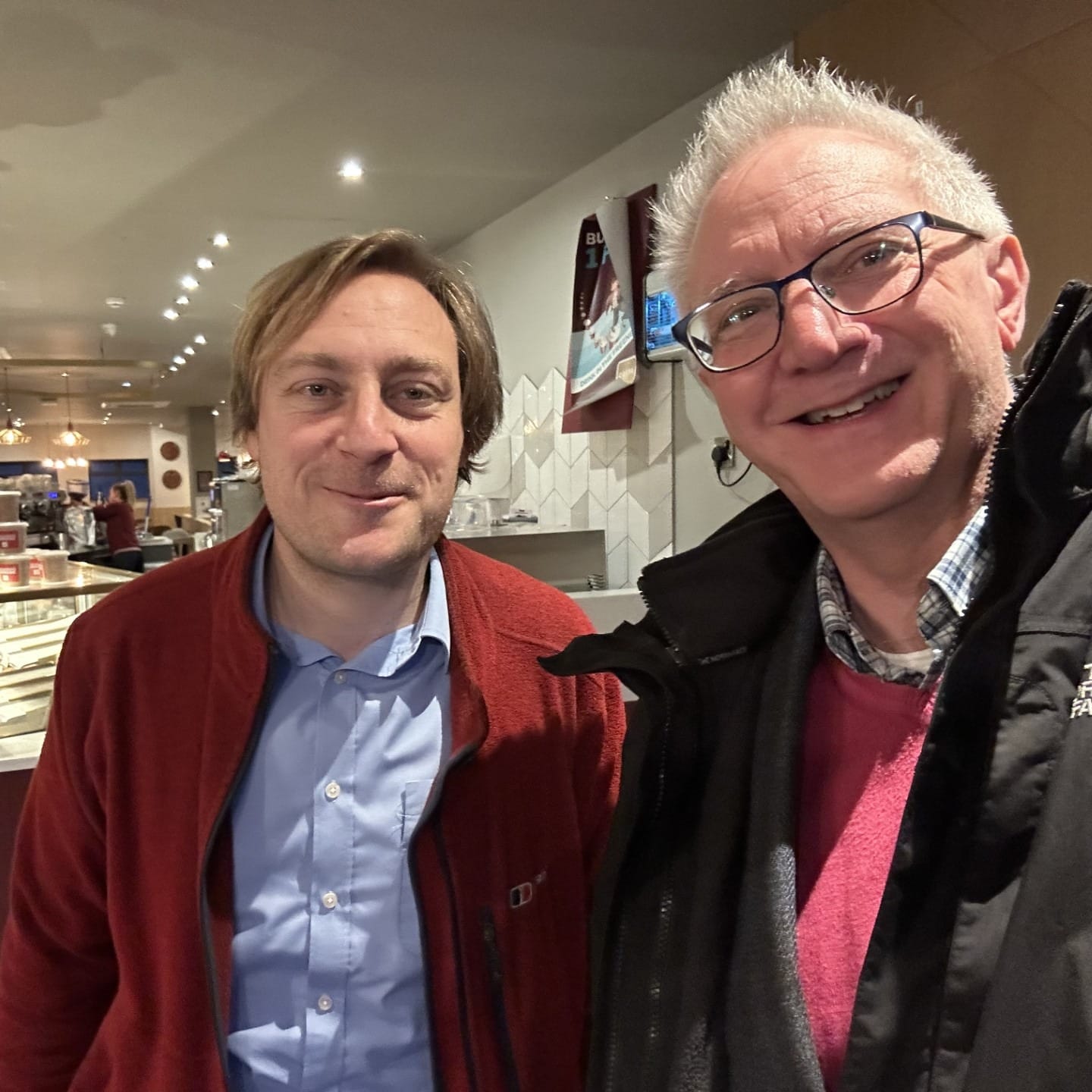
- Didcot & Wantage MP Olly Glover wants people to respond to the Government consultation on student loan repayment terms and graduate taxation. (Bold move for the LibDems wading into the student funding debate!) As his party's spokesperson on Transport, he wrote to the Rail Minister, outlining concerns about changes to rail ticket terms and conditions which ban refunds on walk-up tickets on the day of travel. On Young Carers Action day, he celebrated the work of Be Free Young Carers, who support young carers across Oxfordshire. Here is his weekly round-up.
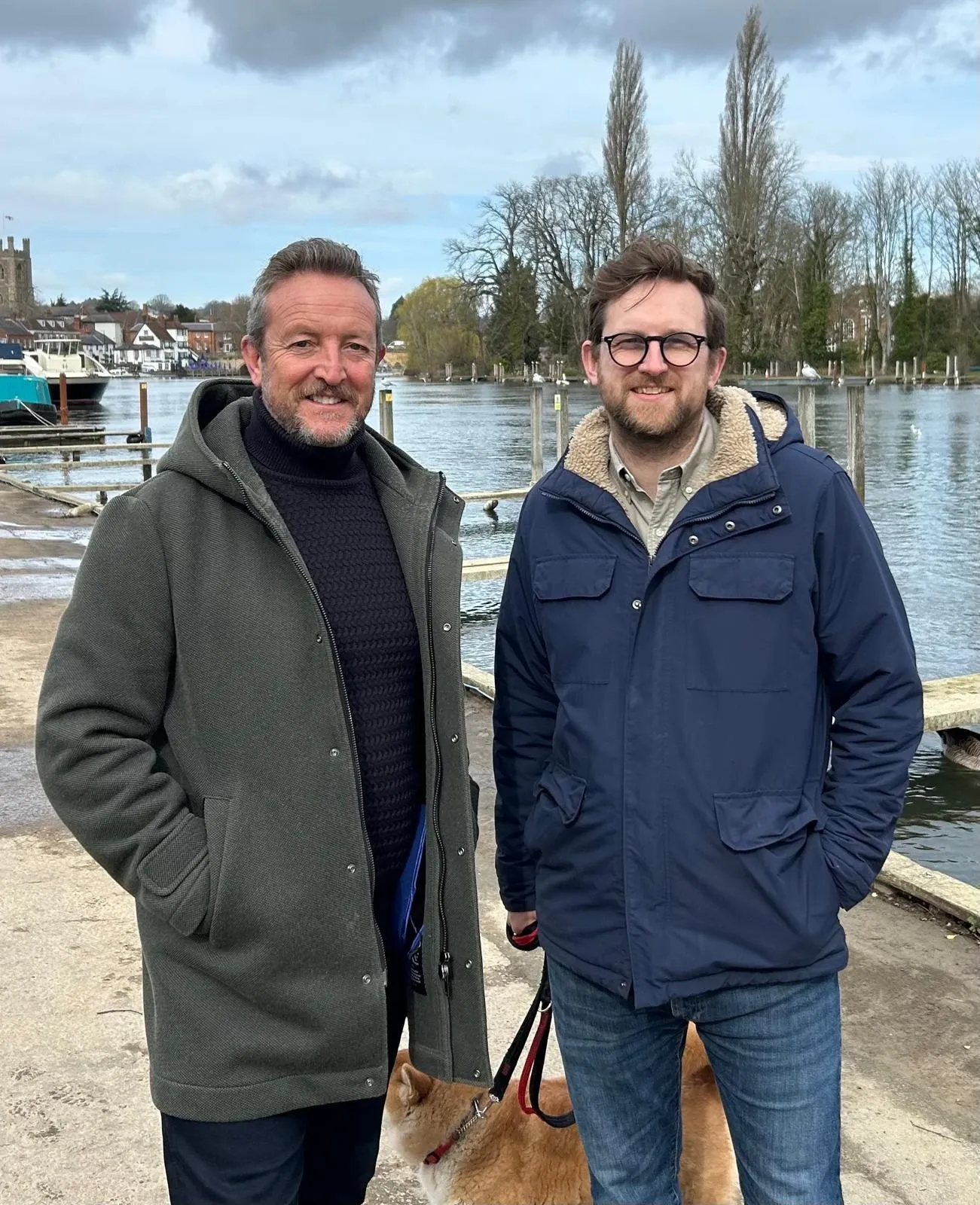
Freddie van Mierlo MP at Hobbs of Henley and, right, with Baroness Amos.
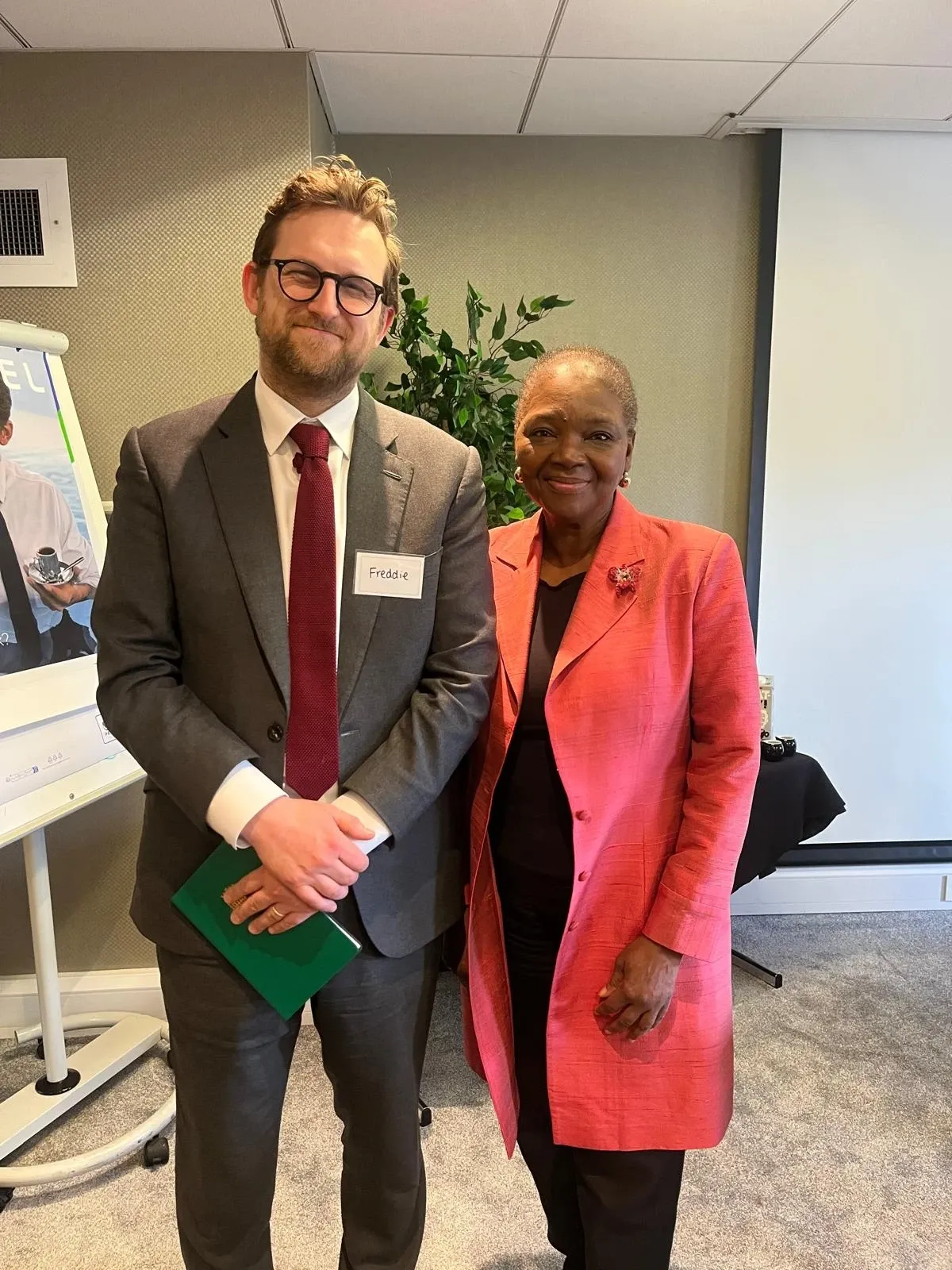
- Henley & Thame MP Freddie van Mierlo has been talking about rivers with Hobbs of Henley but hasn't worked out how to get his dog to face a camera. In Parliament he asked the Chancellor about higher rate taxation, the Parliamentary Secretary to the Treasury about youth unemployment, the Minister for Care about dementia diagnosis, and representatives from CERN about their work. He shared the news that the upper deck of the Haddenham & Thame railway station car park will be reopened by May 2027. He met Baroness Amos during her evidence session for the Maternity and Neonatal investigation (our long read). And finally he's pushing for access to ADHD medication.

- Thames Valley Police & Crime Commissioner Matthew Barber has been working with the Lords on an amendment to the Policing & Crime Bill, involving criminals operating as legitimate businesses on the High Street. He’s opposing the closure of East Hagbourne Post Office. He appeared on BBC Politics South talking about everything from NHS dentists to fuel duty increases (to be clear, no one is accusing NHS dentists of criminal activity). Hyperlocally he celebrated the U12 team at Grove Rugby Club. Here’s his week's recap. This picture is of him out delivering in Drayton: he’s looking for volunteers if that's your (delivery) bag.
University and research
- Researchers and students from Sudan will no longer be coming to Oxford University, following the Home Secretary's “emergency brake” on sponsored study visas from four countries. Professor Trish Greenhalgh called the ban “a sad day for the University of Oxford”.
- A new graduate scholarship at Exeter College will fully fund refugees or those with lived experience of displacement. The new Oxford-Exeter-Sandys scholarship will prioritise research at the university’s Refugee Studies Centre which would be of use to refugees and displaced persons. Centre director Tom Scott-Smith said: “It will enable outstanding doctoral researchers from a wide range of backgrounds to undertake research that deepens our understanding of refugee and migration issues.”
- Oxbridge rivalry is going online this week, with the two universities meeting on Twitch and in Jesus College for the esports Varsity match. This year's games include League of Legends, Overwatch 2 and Valorant. Esports is not yet eligible for a sporting 'Blue'.
- Two Oxford colleges have elected their first women Principals - coincidentally both diplomats. In August, Lindsay Skoll will become head of Jesus, and in October, Alyson King will start at Brasenose. Skoll is ambassador to Austria and King is ambassador to DR Congo.
- Researchers at the University of Oxford and the University of Copenhagen have suggested that ultrasound repellers could help reduce hedgehog deaths by cars. Road traffic accidents are thought to kill up to one in three hedgehogs in local populations. The team discovered hedgehogs could hear in ultrasound by testing the auditory brainstem response of 20 rehabilitated hedgehogs from Danish wildlife rescue centres. The next stage is to find collaborators within the car industry to fund and design sound repellents for cars, say the team.
- AI bots are taking Oxford University websites offline by attempting to scrape scholarly databases. Bodley's Librarian, Richard Ovenden, said: “It's the result of massive bot activity, downloading data at a scale which our infrastructure has found challenging.” The current problems follow the sudden suspension of several older Bodleian websites in November 2024 as a precautionary measure in the light of the cyberattack on the British Library the previous year. Both libraries are still recovering their infrastructure. Oxford University is one year into a five-year collaboration with OpenAI; it was announced this time last year that “the Future Bodleian initiative demonstrates how the Bodleian Library is using AI to imagine the library of the future”.
- Researchers from the University of Oxford, Imperial College London and pharma giant GSK are to form a research hub to create open-source computer models of organs to help accelerate the development of new medicines. The £11m centre will create computer models or ‘digital twins’ of organs and diseases to better understand how diseases of the lungs, liver and kidneys progress; to discover and develop drugs more quickly; and to target medicines more precisely.
- Oxford's business school has appointed its first Poet Laureate. Dr Athol Williams, published poet and senior fellow in strategy, says “We often talk about business, about the complexity of the world, ambiguity in the world. And we want our students to embrace that.” Professor Mette Morsing, Interim Dean of Saïd Business School, described poetry as an “under-appreciated, yet rich, vehicle to sharpen perception, strengthen critical thinking and deepen empathy”. Her predecessor resigned in September in a harassment scandal.
- Reading University, founded in 1892 as an extension of Oxford University, celebrates the centenary of its 1926 royal charter today. The Vice-Chancellor will cut the 100th birthday cake. Public celebrations in May will include a community festival and rag parade. Oxford's 19th-century 'extension' movement was an adult education initiative. Halford Mackinder, a geography don at Christ Church, became the first principal of Reading's extension college, which offered evening classes in academic and vocational subjects.
- 'Uncle', an Aboriginal Australian man whose body was taken to England in 1900, has been reburied near Sydney after being repatriated from Oxford's Pitt Rivers Museum. His remains were returned in October 2023 along with those of four other individuals from the museum. Last week, the Pitt Rivers Museum requested permission from Oxford University's executive governing body to repatriate Naga ancestral human remains. Comments are open until Thursday 26 March.
- Oxford’s crews for the Boat Race on 4 April have been announced. Oxford Women are led by Olympic bronze medallist Heidi Long, while the Men are led by cox Tobias Bernard and include four-time under-23 world champion and Los Angeles 2028 hopeful Harry Geffen.
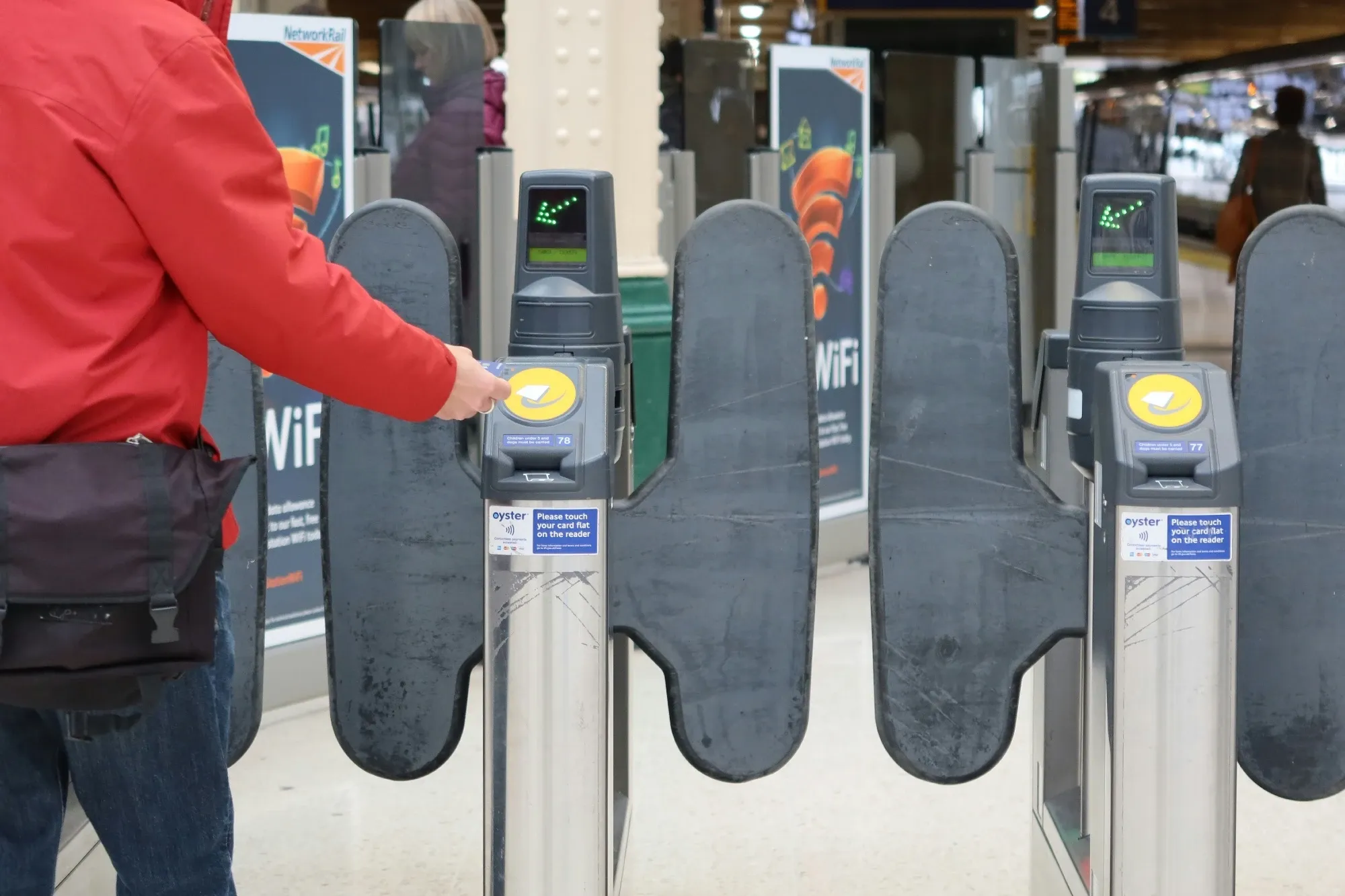
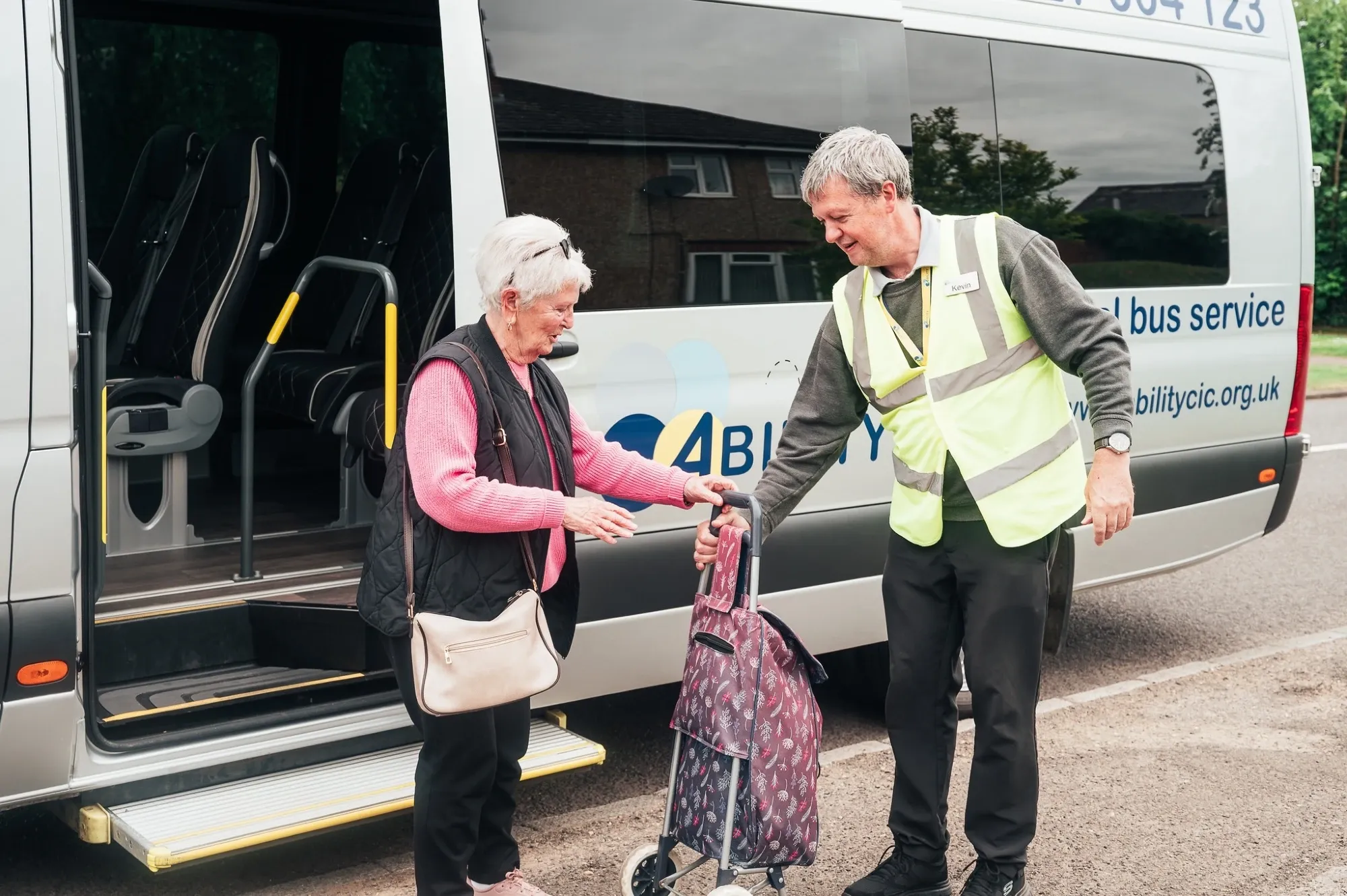
GWR’s “golden tickets” work barriers for free; bus operator Ability CIC is closing.
Trains and buses
- Chiltern Railways is to be renationalised in September. The Government has confirmed 20 September as the date for bringing services from London Marylebone to Oxford, Bicester and Banbury into public ownership. GWR is also expected to transfer this year, but no date has been set.
- Driver training is ramping up on East-West Rail – even though, one year on, there is still no agreement with unions over the presence of guards. Until recently, drivers recruited for the new Oxford–Milton Keynes line have been learning the route on Chiltern’s existing fleet of 1990s trains. The operator is now concentrating on ‘traction learning’, where the drivers are trained on the new Class 196 trains earmarked for the line. Services had once been expected to start in March 2025, but unions are opposed to the Government’s plan to run them without guards. Drivers’ union ASLEF has expressed particular concern over who dispatches the train at stations, checking that passengers are clear of doors; the new trains are fitted with body-side cameras for use by the driver, but ASLEF is unconvinced by their safety. We first reported East West Rail delays in September last year.
- Oxford’s electric buses have reduced city-wide NO2 concentrations by 10%, with up to 24% improvement on St Aldates and the High Street, new figures suggest. Research was carried out by a 3-university project, the Public Health Intervention Responsive Studies Team. As well as improving air quality, the electric buses lowered peak traffic noise by up to 5.1dB, which the researchers say is comparable to moving three times further away from a road. Bus drivers also said they experienced less fatigue driving an electric bus.
However, the electric buses alone did not make a significant difference in how people choose to travel. Instead, respondents told the researchers that they were swayed more by factors such as cost, reliability, and where the buses go. Dr Suzanne Bartington from the University of Birmingham said: “The transition to electric buses has had a measurable and meaningful impact on air and noise in Oxford. People noticed changes including less diesel fumes and fewer sleep disturbances, suggesting a real benefit for people’s lives.” - An interim director for the Cowley Branch Line has been announced. The project received in-principle approval from government last autumn. The next stage is for City and County Councils to work with Network Rail and the Department for Transport to finalise funding, design links with surrounding communities, improve connections with local bus services and active travel routes, and secure planning permission. Clive Tritton will oversee this next phase of work and provide continuity until a permanent appointment is made.
- A community bus service connecting villages around Bicester and Banbury is to close. Directors of Ability CIC have blamed “uncertainty around council grant funding” from Reform-controlled West Northamptonshire Council, where most of their services operate, as well as the loss of their office. Ability’s principal Oxfordshire route is the Bicester Bee network (services 81, 82 and 108), running to Bicester from villages in the Cherwell valley and nearby. They will continue to run this until 29 August, after which Oxfordshire County Council will seek a replacement operator.
- GWR have removed the ability to make seat and bike reservations from their website independently of buying a ticket, after it was discovered that the QR codes it generated could be used as free “golden tickets” – successfully passing through ticket barriers and on-train scanners. The glitch arose after GWR replaced their existing app and purchasing platform. The train company now asks passengers who already have tickets to call them on the phone, or visit a ticket office, if they want to make a seat or bike reservation. Reservations can still be made at the time of purchase.
Notes from Clarion HQ
Just as we finish today’s newsletter, the Government unveiled a Local Media Strategy. It claims “the future of news is local” – so far, so platitudinous – but backs that up with a £12m fund, and a review of the outdated ‘public notices’ system which entrenches legacy print titles. There’ll also be a pilot study in Bristol on helping public services communicate better with journalists. We’ll be taking a closer look in due course, but at first sight, it seems a promising recognition of a news landscape where the big three conglomerates (Newsquest, Reach, Iconic) are no longer the only game in town.
As always, you can support local independent media by telling your friends about the Clarion! See you on Friday.