
The Clarion, 28 July 2026

Car-free housing, hubs beyond measure, new restaurants, a whole bunch of AI, plus university, train and bus news. All in a weekend’s work for your Oxfordshire volunteer newshounds. Read on!
This week’s long read
An unprecedented cross-party coalition is developing in north-east Oxfordshire to oppose a military base being turned into asylum seekers’ accommodation. Principled opposition or dressed-up NIMBYism? We listen to the arguments.
 Oxford Clarion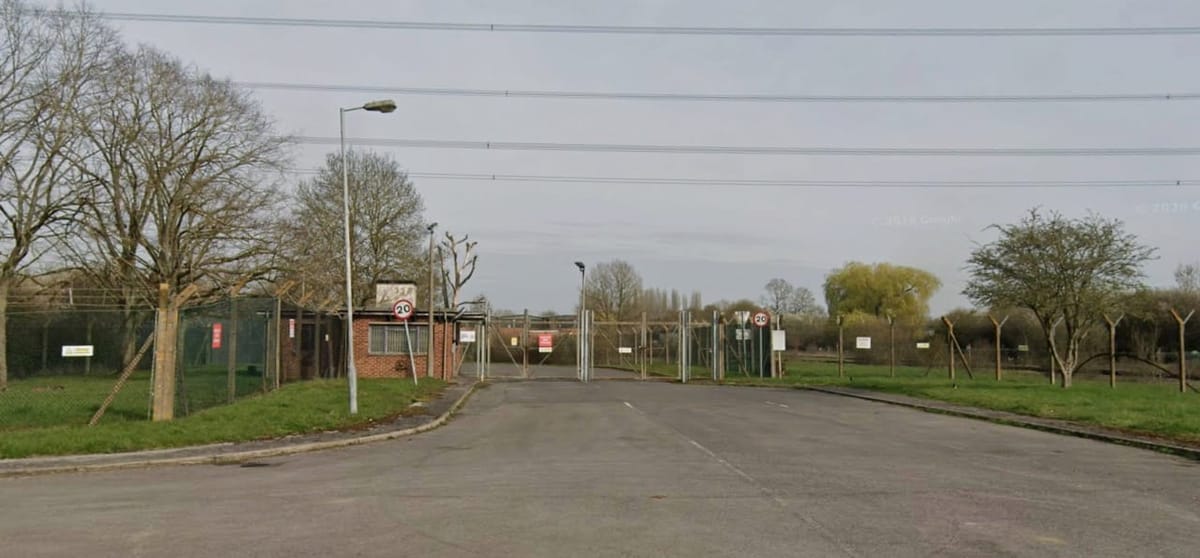
This week’s top stories
On-the-ground work has started on reopening the Cowley Branch Line to passenger trains. Preparatory work began on Monday and continues into mid-August, including site mobilisation, vegetation clearance, ground investigations and ecology surveys. Trains are expected to start running in 2029.
Network Rail says work will take place in phases over the coming months. The project will see two new stations built and the freight-only track brought up to passenger standards, plus capacity and junction improvements on the main line into Oxford station.
Oxfordshire County Council recently pledged a further £14.5m towards the reopening of the line, borrowed against business rates from the south of the county. The new Greater Oxford Council will be expected to repay this over the next 10 years using funds from developments close to the line.
Anti-congestion charge organisation, Open Roads For Oxford Limited, is winding itself up – but with outstanding legal costs of £14,000 still to cover.
Earlier this year, the company failed in its attempt to secure a judicial review into the charge. Despite the High Court dismissing the case, Oxfordshire County Council was forced to pay almost all of its own costs (as an Aarhus Convention case). ORFOL says it raised almost £85,000 through donations, but “the remaining costs now fall to the three of us personally”.
Its three directors are two High Street business owners, Emily Scaysbrook of Hoyle’s and Paul Major of Pens Plus, plus Anne Gwinnett, chair of the Independent Oxford Alliance party. In a (perhaps unwittingly) revealing write-up of ‘lessons learned’, ORFOL reflected:
“Support by way of signing petitions and responding to consultations is sadly not sufficiently reflective of the general public’s willingness to donate to a legal challenge.
“Legal action of this nature is expensive and difficult to sustain unless you have access to substantial financial resources or people willing to undertake significant work on a pro bono basis.
“The judicial review process […] is concerned exclusively with the legality of the decision-making process rather than whether the underlying policy is sensible, proportionate or beneficial.
“We were consistently disappointed by the standard of political debate surrounding the scheme. During the City Council election campaign, we believe many voters were presented with inaccurate or misleading information about key aspects of the proposals. We would welcome stronger, enforceable standards for factual accuracy in local election campaigning.”
Back so soon? Having resigned from his Ministerial position as Champion of the Oxford–Cambridge Growth Corridor, Lord Patrick Vallance has been appointed as Chair of the Oxford–Cambridge Growth Corridor in the new Burnham Government. He will also chair a new AI Taskforce, making the centre of his Venn diagram the Culham AI growth zone – the UK's first such, and set to be in the new Greater Oxford as part of local government reorganisation.
In ‘the other side of AI’ news, the Bishop of Oxford, Steven Croft, used his final speech in the House of Lords to call for Government regulation of AI and warn of the risks posed by rapid technological change. Bishop Steven told the Lords: “The speed of change, and the significant power unleashed, make this revolution distinct from other technical developments in the past. There is a risk that the speed of change will itself undermine the very benefits that change brings.” Responding on behalf of the House of Lords, Lord Clement Jones paid tribute to Bishop Steven's record, describing him as an “influential and instrumental voice” on AI. “With his insights, collaboration, and dedication to ethical innovation and policy making, he will be greatly missed.”
Oxfordshire’s annual £302m social care bill was on the table at the County Council today, as a Cabinet meeting decided that the 35% Disability Related Expenditure allowance, used for calculating an individual’s contribution towards their care costs, should drop back to its pre-2022 level of 25%.
OCC says it already has a £5.4m funding gap, even before £27.2m of Government cuts kick in, and that social care costs are growing. Benchmarking its approach showed “the 35% allowance is much higher than the average disability expenditure and what is offered by other local authorities”.
A new £10 charge will be levied when people request transport help from OCC’s adult social care department (“only to be used in exceptional circumstances to meet unmet care and support needs”), and Telecare alarms are going up from £6 to £9.87 per week. In a six-week consultation, 52% replied that they expected the changes would have a negative impact.
Council leader Tim Bearder said: “It’s a horrible, horrible decision to make. We have to stretch the limited money we get from Government and make sure it protects the most vulnerable residents.” Bekah Fletcher, cabinet member for adult social care, added: “We are going to have ongoing monitoring and review to make sure if there are consequences, we pick them up as quickly as possible. Unfortunately, the pressure on the council’s budget caused by the £24m cut to our funding by the Government means that our generosity is no longer sustainable.”
Around the city
- An £11m project to improve Urgent and Emergency Care at the John Radcliffe has begun. The development will transform currently unused space on Level 1 of the JR to include an emergency assessment unit and an urgent treatment centre. Felicity Taylor-Drewe, Chief Operating Officer at OUH, said: “This project represents a significant investment in the future of urgent and emergency care at the John Radcliffe Hospital. The new facilities will help us reduce delays in care, and deliver high-quality care in the most appropriate setting.”
- Megan’s, the new Mediterranean restaurant/bar on George Street, has announced its opening day as 21 August but with a soft launch from 17 August. It promises “colourful Eastern Mediterranean-inspired mezze, Turkish-inspired brunches, and crispy hot honey halloumi”. The restaurant extends over two floors in the former Jamie’s Italian site. The chain has 21 other outlets, mostly around London (none of which excuses the use of the phrase “picky bits” in their mailout).
- An advertising screen to replace payphones in Summertown, described by BT as a ‘Street Hub’, has been refused by Oxford City Council planners. They described it as “a harmful and discordant feature that would be an unduly prominent and dominant structure and advert that would detract from the visual amenity of the area. The proposal would introduce a visually incongruous addition and an unacceptable amount of clutter to the street scene and public realm which would further be exacerbated when combined with other street furniture.” (We love it when planners say what they really think.)

- Oxford's Indian diaspora gathered last Thursday evening at the Radcliffe Camera to demonstrate their support for the educational reform youth movement that began after India’s Chief Justice called unemployed young people involved in journalism and activism “cockroaches” and “parasites”. Around 100 people waved placards and raised slogans in solidarity with students protesting across India.
The movement’s leader, Sonam Wangchuk, an engineer who inspired a hugely successful Bollywood film, has now ended his hunger strike after India’s Education Minister resigned. The Indian government has also promised not to take action against protesters, after its use of tear gas and batons at demonstrations was heavily criticised. (The Clarion team spotted an optimistic placard calling on the powers that be to “Beat the patriarchy, not students”.) Campaigners say they will continue to press the Indian government to overhaul the education system, including ending the major examination paper leaks that spurred the current protests. - Following the introduction of the congestion charge, Oxford has been ranked as the third best place to drive in the UK. The UK Driveability Report by MoneySuperMarket compiled data from FOI requests, desk research, insurance industry statistics and a fervent desire to get their brand in the papers. First place was taken by Bath, which has a Clean Air Zone, nine LTN projects, bus gates and camera enforcement. Croydon was at the bottom of the table. (You should see the Facebook comments on this one.)

Around the county
- 100 new homes are proposed for an ‘infill’ site in Shrivenham between the village and the A420, with 40% to be classed as affordable. Streets will be built to a shared-surface design and a village green will feature a play area. A planning application is with Vale of White Horse District Council.
- Green councillors in North Oxfordshire say their Oxford counterparts should be careful what they wish for. A strongly-worded statement by the Green group on Cherwell District Council castigates the decision to split Oxfordshire into three councils – even though the Oxford City Greens called it “a big improvement” and “the right call”. Cherwell Green leader Ian Middleton writes:
“The final outcome seems driven more by a desire to gerrymander the Oxfordshire political landscape than by what’s best for residents. Cherwell is to be unceremoniously carved up in an attempt to make the population statistics stack up. Towns like Kidlington and surrounding villages such as Yarnton, Begbroke and Gosford will wake up in April 2028 to find themselves living in a city suburb. Very few, if any, of those residents ever wanted that.
“Whilst I understand that many City councillors regard this result as favourable for their residents, they should remember that out of the 27 county divisions that make up the current area of Greater Oxford, 11 of them are outside the current city boundary. That makes for a huge shift in political and cultural dynamic. The current City Council leadership will need to learn that rural districts are not just potential building sites to serve their needs, but places with their own unique characters, communities, problems and opportunities.”
- Harwell’s Rutherford Appleton Laboratory (RAL) could be getting a new energy centre. The proposed 20m high building will use the excess waste heat energy from the data centre across the wider campus. RAL says this will support it in moving away from its current gas based heating systems. Currently nearly 50% of buildings on site rely on gas for heating and hot water. The energy centre, once complete, will save 1000 tonnes of CO2 annually. The application is under consultation with Vale of White Horse District Council.


Artists’ impressions of proposed new housing in Banbury.
- Plans for new car-free housing in Banbury could finally kick off long-awaited redevelopment of the ‘Canalside Quarter’, a 60-acre town centre site next to the railway station. A derelict depot building on a corner of the site would be replaced by 17 new apartments and ground-floor commercial units.
With the site being immediately next to the railway station (18 minutes from Oxford), the developers promise “a genuinely car-free scheme, designed for residents and occupiers who wish to prioritise sustainable modes of travel and reduce reliance on private car ownership”. The design is said to be “a contemporary interpretation of Banbury's Victorian railway and warehouse architecture, incorporating high-quality brickwork, expressed structural bays and robust detailing”.
The site looks onto the River Cherwell, rather than the Oxford Canal, with a public frontage area. The scheme includes a communal roof garden, as well as private terraces and balconies. An outline planning application (26/01745/OUT) has been submitted to Cherwell District Council, even though the council is in ‘special measures’ and developers can apply direct to the Government.
In a long read last September, we wrote that the Canalside area was one of the easiest wins for new housing in Oxfordshire. The area has long been identified as in need of regeneration. A Conservation Area Appraisal for Banbury’s canal states: “Instead of being lined by buildings of character which provide a window onto Banbury’s past, we are treated to waste land and a C20th shopping mall which turns its back on the canal. The canalside is in need of reinvention on a human scale.” - Covered Market favourites, the Oxford Cheese Company, have teased a new venture at Groves’ Yard, an artisan workshop and retail destination at Milton-under-Wychwood near Burford. They have promised to unveil “the concept and progress” soon. (The site is already home to one of the Clarion’s favourite cafes, Rise & Flour, which serves possibly the best sausage bap we have ever tried.)
- More details have been published of a proposed 400-home development on the edge of Chipping Norton which we first reported in May. The site by the A44, adjoining three other housing sites, could include a “sports hub”, a “community hub” and a ”mobility hub” (enough already), though initial proposals for an
education hubnew primary school have been dropped.
The site is 1.5mi from Chipping Norton town centre along a busy A road, and served by the existing S3 bus. Developers have suggested a shuttle bus to the ‘Cotswold Automotive Museum’ planned at nearby Enstone. Gallagher Developments is owned by billionaire Tony Gallagher, who lives in a seventeenth-century mansion in nearby Sarsden and has been linked with the Chipping Norton set. An informal consultation is live until 3 August, with a planning application later this year.
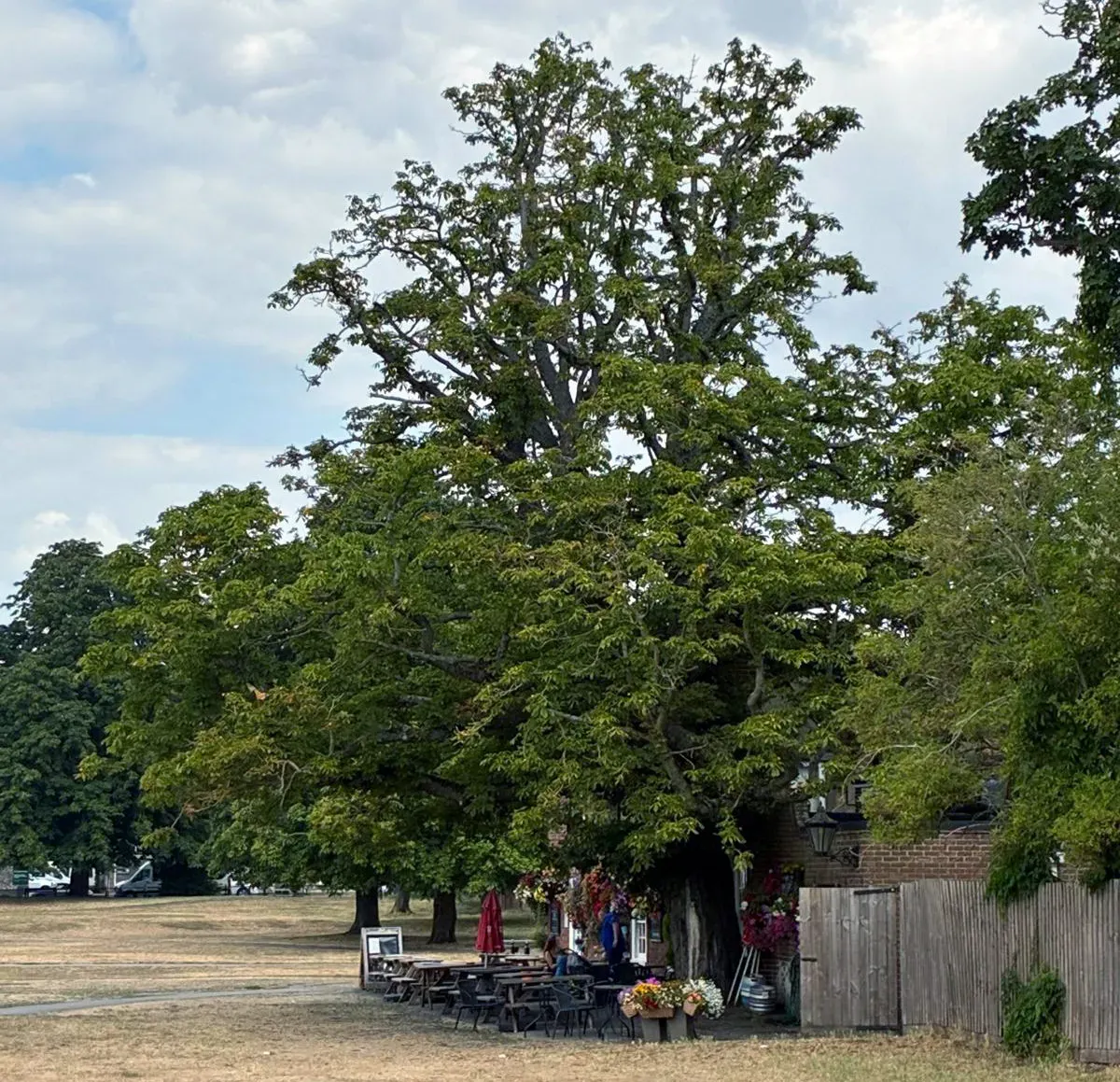
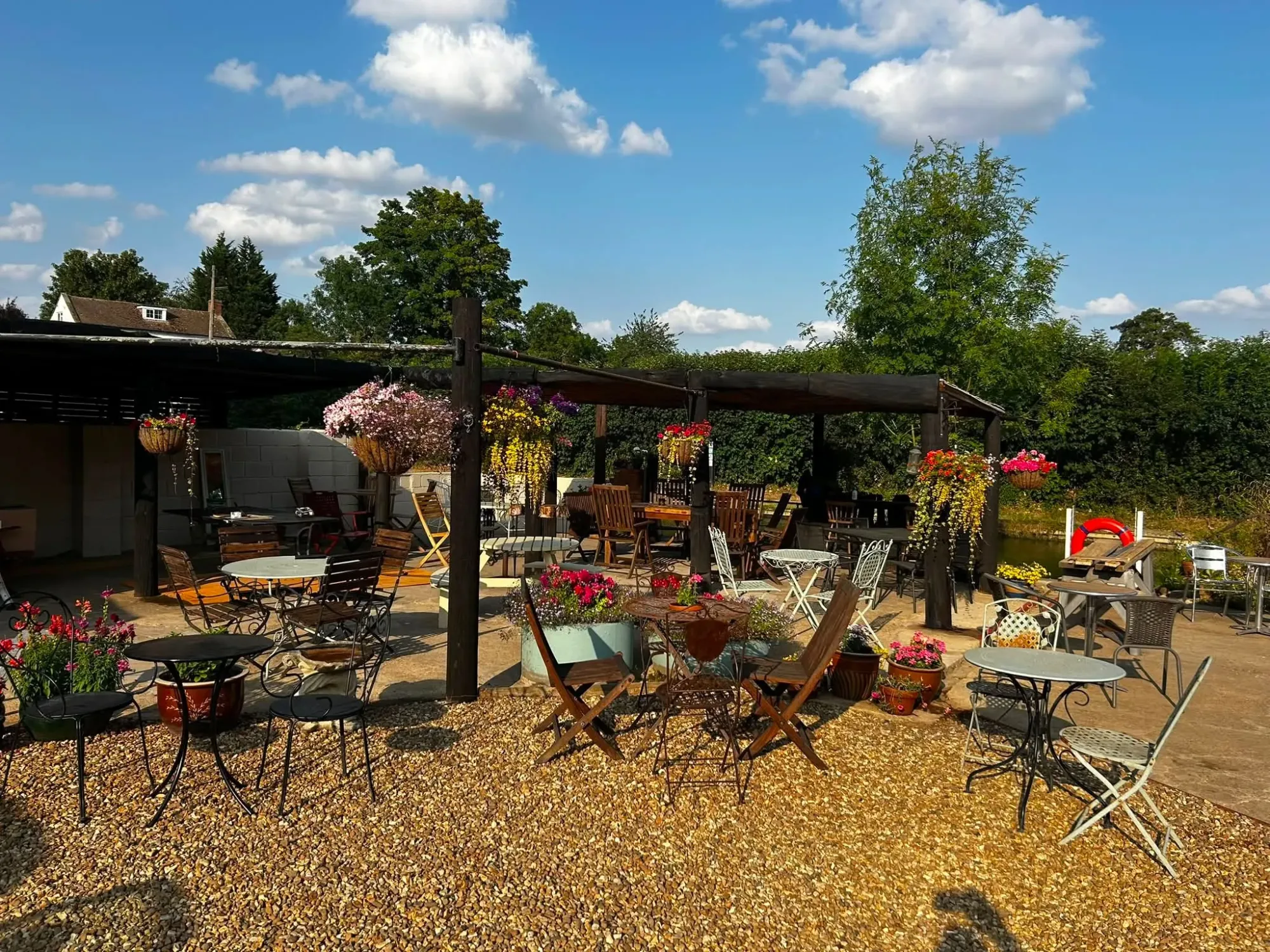
Wallingford’s horse chestnut and Cropredy’s canalside bar.
- A landmark horse chestnut tree in Wallingford town centre, next to the Coach & Horses pub, is set to be felled after a decision which the town’s council admits will cause “real sadness”. The Kine Croft tree is dying and has signs of a fungal disease. The council writes: “Given the tree’s condition and its location within a busy public open space, we have reluctantly reached the point where it can no longer be retained safely.” They say that fencing off the surrounding area would not be practical due to its proximity to nearby buildings. They have committed to planting a replacement tree on the site. An application for its felling has been submitted to South Oxfordshire District Council.
- A canalside wharf in Cropredy, north of Banbury, opens in early August as a bar, coffee shop and craft studio. The Old Coal Wharf will also be hosting live music during Fairport Convention’s Cropredy Festival weekend (13-16 August).
Oxfordshire politics
We are taking a recess in line with parliamentary recess, but here’s the reshuffle news…
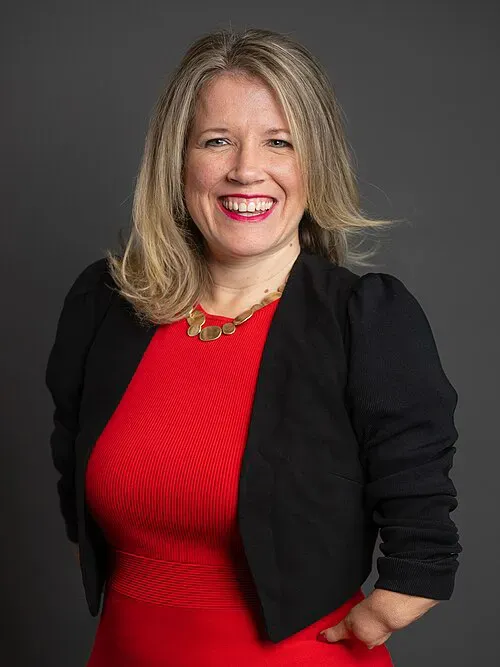
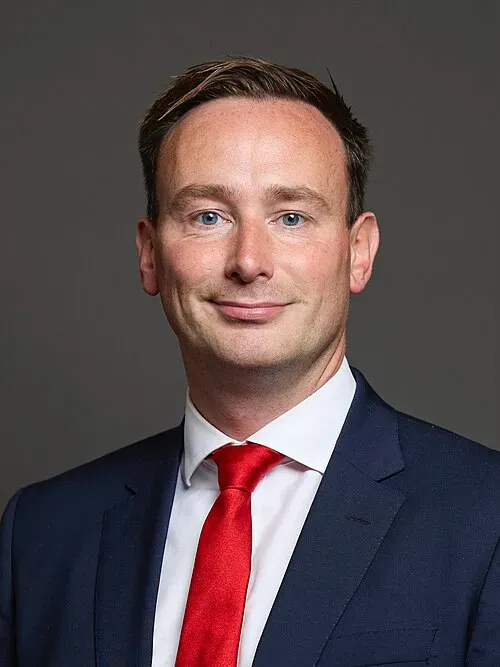
Dr Marie Tidball and Tom Hayes in regulation red (official parliamentary portraits).
Former Oxford City councillors Tom Hayes and Dr Marie Tidball have been announced as Parliamentary Private Secretaries as part of a “diverse and talented group” of MPs in a new format role. Sean Woodcock has not retained his role as PPS to the Cabinet Office.
Tom Hayes, MP for Bournemouth East since 2024, was councillor for St Clement's on Oxford City Council from 2014 to 2024, serving as deputy council leader and Zero Carbon cabinet member in charge of the zero emission zone. He becomes PPS for the Department of Energy Security and Net Zero.
Marie Tidball was elected MP for Penistone & Stocksbridge in 2024. She studied law at Wadham College, was city councillor for Hinksey Park until 2022 and is a national disability rights campaigner. She is appointed PPS for the Department of Business, Innovation, Science and Trade. We are likely to see more of both of them on our screens: in a shakeup to the role of PPS, Anneliese Midgley, the new Chief Whip, has announced a heightened focus on media and parliamentary activity for PPSs.
(And for those counting, we reckon that the final Cabinet Oxbridge tally is Oxford 10½, Cambridge 5, others 11½. The half-point is for Education Secretary Lucy Powell who started at Oxford but finished her degree elsewhere, occasioning some Fleet Street froth.)
University and research
- Oxford University has successfully vaccinated the first volunteer in the world’s first clinical trial of a vaccine designed to protect against Bundibugyo ebolavirus (BDBV). Teresa Lambe from the Oxford Vaccine Group said: “This latest step reflects the dedication of the general public in enabling a response in the face of a devastating outbreak. Their contribution is helping advance vaccine candidates into communities that need them most.” Volunteers are still being sought for the trials.
- Oxford University is rewriting its regulations to comply with Government stipulations on freedom of speech. 15 committees will get a new obligation to consider “whether any decisions [they] take could directly or indirectly (and positively or negatively) affect freedom of speech within the law”. The new obligations were introduced in June by the Starmer government after media reporting about “cancel culture”. The then Education Secretary, Bridget Phillipson, claimed “there are far too many cases where academics and speakers are being silenced”. Also in June, pressure group Alumni for Free Speech reported the university to the Office for Students on free speech grounds after a Keble law professor, Michael Foran, chose to cancel his planned talks on “gender critical and gender identity belief”.
- Oxford University's Mathematical, Physical & Life Sciences Division will no longer underwrite parental leave for all fixed-term researchers. This reverses its previous policy where all fixed-term researchers had their contracts extended to cover parental leave, regardless of funding. In a statement to the Clarion, an Oxford University spokesperson said that the decision followed “a review and consultation" of the policy. The spokesperson added that the division “remains committed to supporting researchers taking family leave and will continue to promote the University's family leave policies and wider support available to staff”.
- In a more positive reversal, careers support for research staff at Oxford University is set to continue after funding for the service was secured for another three years. The University had previously said that this provision would end in August 2026. The specialist service provides one-to-one careers guidance, workshops and events specifically for researchers, and a CareerConnect online account. It is now recruiting two new specialist careers advisers.
- An Oxford University-led pilot study is being expanded to screen every newborn baby in England for spinal muscular atrophy, a rare but treatable genetic condition that can result in severely limited movement. Testing involves a heel prick to collect a small blood sample from the baby. Campaigner Jesy Nelson said: “This is a victory for every family affected by SMA. Whilst it can’t change the future of our children, I know it marks the beginning of a brighter future for future SMA families.”
- The modern family (trigger warning: parenting): An associate professor in Public Policy at the Blavatnik School of Government points out that modern family life depends increasingly on two full-time incomes, but there's an underlying assumption that one parent is permanently available (this apparently needed an Oxford professor to point it out). Adam Webster points out the sharp rise in housing and childcare costs and argues that Andy Burnham’s government must rethink how Britain conceives work, care and family life if it is serious about setting families up for success. Dare to dream, Professor Webster...
Trains and buses
- The Airline coach service from Oxford to Heathrow and Gatwick is to be sped up, in a timetable rewrite which its operators attribute to the city’s congestion charge reducing traffic. 13 new coaches are entering service this year with laptop trays, USB charging points and aeroplane-like map displays. Oxford Bus Company managing director Luke Marion said: “The benefits of the congestion charge, including faster journeys and reduced traffic, have allowed us to introduce these changes. We’re also investing in improvements at our Gloucester Green travel shop and wider coach station.”
- City Sightseeing Oxford has partnered with six leading attractions for a summer Passport Trail. Small passengers on board its open-top buses can collect stamps from six locations across Oxford, take part in fun activities, and earn a certificate. Locations include Pitt Rivers and the Story Museum.
- GWR says that advance bookings for trains to Oxford have more than doubled year-on-year. Bookings in August and September are up by 131%, compared to a 72% rise for Bristol and 50% for Plymouth. The company has launched a ‘Family Day Out’ ticket for weekdays until 4 September, offering same-day return travel from Oxford to destinations including London, Bristol, and Worcester (£49), Cardiff and Exeter (£59) for up to two adults and four children.
- A new bus service has started linking nearby villages to Wantage. Community bus company First & Last Mile is running a Monday morning service from Ardington, East Lockinge and West Lockinge at shopper-friendly times, calling at the Market Place, Sainsbury’s and Wantage Health Centre.
- After writing to the government to request financial support on subsidising bus fares, Oxfordshire County Council is welcoming the government announcement of a return to a £2 single bus fare cap from 1 January. Cllr Gareth Epps, Cabinet Member for Transport, said: “Following my letter calling for the £2 bus fare cap to be reinstated, I am delighted that the government has listened and reversed the previous Prime Minister's decision. This will make bus travel more affordable for thousands of people. If we are serious about tackling climate change and reducing Oxfordshire's chronic congestion, buses must be an affordable, convenient and comfortable alternative to the car. Reinstating the £2 fare cap is a welcome step in the right direction, even if there is still more to do.”
Charity begins at home
- The Windrush Bike Project, Witney’s community bike charity, are taking over the running of CyclAbility in Oxford from October 2026. CyclAbility is an inclusive cycling project for adults (16+) operating out of Horspath athletics track. This builds on their Wheels for All programme in Witney. They're recruiting for two roles, an inclusive cycling programme co-ordinator, and a Witney-based part time administrator.
Notes from Clarion HQ
It’s robots all the way down! We were intrigued to spot a website called Open Council Network this week, which takes council meetings, papers and webcasts, and assiduously boils them down into an AI-generated weekly summary. As you might expect of AI, it regularly hallucinates: its summary of the Woodford Way car park debate at West Oxfordshire District Council the other week, for example, got the outcome entirely wrong and made up a vote tally. (Though we could believe that it, like us, saw the debate and thought “oh no, not again”.)
But we wonder where all this is going. The Government has published its analysis of consultation responses to Oxfordshire’s unitary council reorganisation. Buried in the text was this snippet:
“The Ministry used a tool named Consult AI to assist in the analysis of responses. The AI tool identified themes present in the responses, which MHCLG officials have checked for accuracy. The tool did not have access to any personal data. All responses from named consultees were read by Ministry staff.”
This is pretty unimpressive straight off. Unless you’re a ‘named consultee’ (a council or other Government body), then despite all the exhortations to have your say, no human ever read the response you sweated over: it was fed into an AI that “identified themes”. More than this, though, we face the situation where AI, like Open Council Network or the Oxford Mail’s AI-assisted reporters, is increasingly reporting on AI-generated output, like the consultation summary (and we’ve spotted ChatGPT-like phrasing sneaking into council papers now and then) – something referred to as an ‘AI doom loop’.
Still, we reckon we’re safe until AI starts inventing far-fetched metaphors about cheese. And maybe, just maybe, consulting an AI could have saved some people £85,000:
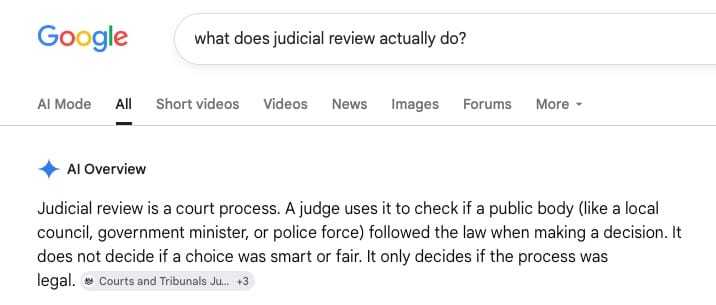
Other than that screenshot, no AI was involved in the production of this newsletter! Have a great week.