The Hell of the North (Oxfordshire)
Our county is to be split into three parts. But can little Northern Oxfordshire survive on its own, separated from Oxford’s innovation economy? LibDem Cllr Dan Levy, Oxfordshire’s cabinet member for finance since 2023, sounds the alarm.
The Government’s reasoning for the split into three unitary authorities, set out in a letter from the minister, Jim McMahon, skims over the financial implications of his decision. It does acknowledge that a single unitary authority would be financially better.
It says – and presents as a positive – that the biggish population of Ridgeway will bail West Berkshire out of its current financial hole. My reading of the numbers is that view is wrong, and the whole of Ridgeway will be challenged to be solvent. What the minister has said is that, in practice, council tax in Vale of White Horse and South Oxfordshire will have to go up to pay off West Berks’ debt. That wasn’t in the original specifications, or what the proponents of Ridgeway mentioned.
As someone representing Eynsham, which would be in Northern Oxfordshire, a key concern is around the finances and service delivery in the new northern unitary.
Northern Oxfordshire will be tiny – though still bigger than the new city. It comprises the current West Oxfordshire, plus the current Cherwell less 15 of its parishes. That includes Kidlington, which makes up a big chunk of Cherwell District.
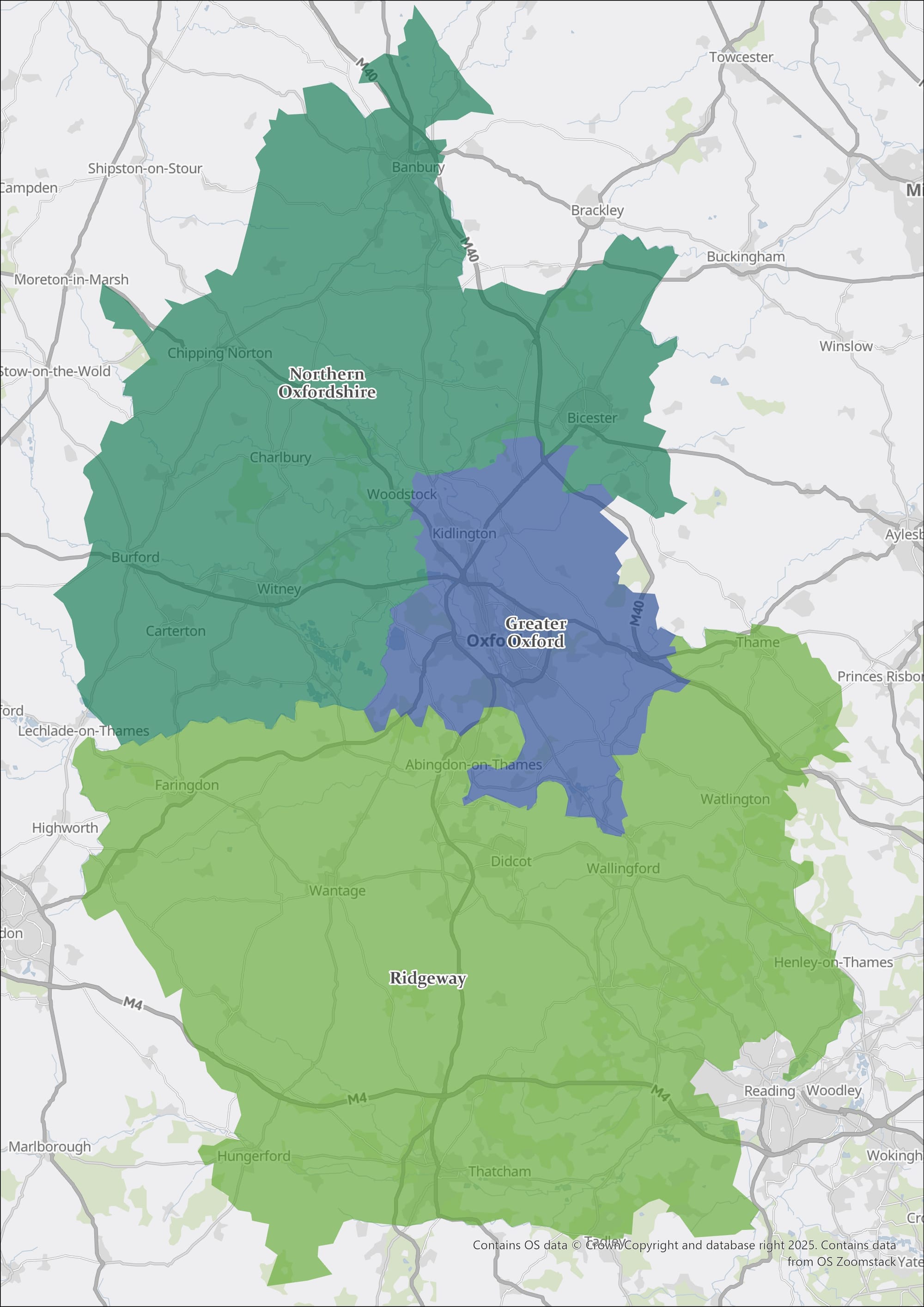
The new authority is bound to be based in Banbury. Which has great transport links from Oxford, and pretty bad ones from most of the rest of the area, including from places like Witney.
There will be 265,000 residents. Banbury has about 55,000 residents, so over 20% of the total. Banbury has a lot of strengths, including great logistics companies and motor racing tech firms, but it also has some of the most socially deprived areas in the country. It is inevitable that much of the cost of Adult Social Care and Children’s Services will be absorbed by Banbury’s needs – it already is for the county council. But those costs will be paid for by a much smaller number of council tax payers. That means huge pressure on the finances of the new council, and a squeeze on things like road repairs and on capital projects like the new libraries planned for Banbury and Woodstock.
At the moment the most expensive areas to support with services are shared among the whole million or so residents of Oxfordshire. Those are essentially the urban centres, and primarily the two big ones, in Oxford city and in Banbury. In the new regime, those costly areas will get supported by a much smaller population of Council Tax payers.
The new authority, if it goes ahead, is going to have real difficulties from day one in delivering the level of services that residents already get, and in keeping its head above water.
The Government has got its decision horribly wrong. It’s the residents of Oxfordshire that are going to pay for the mistake.