
The hole in my road is letting in water
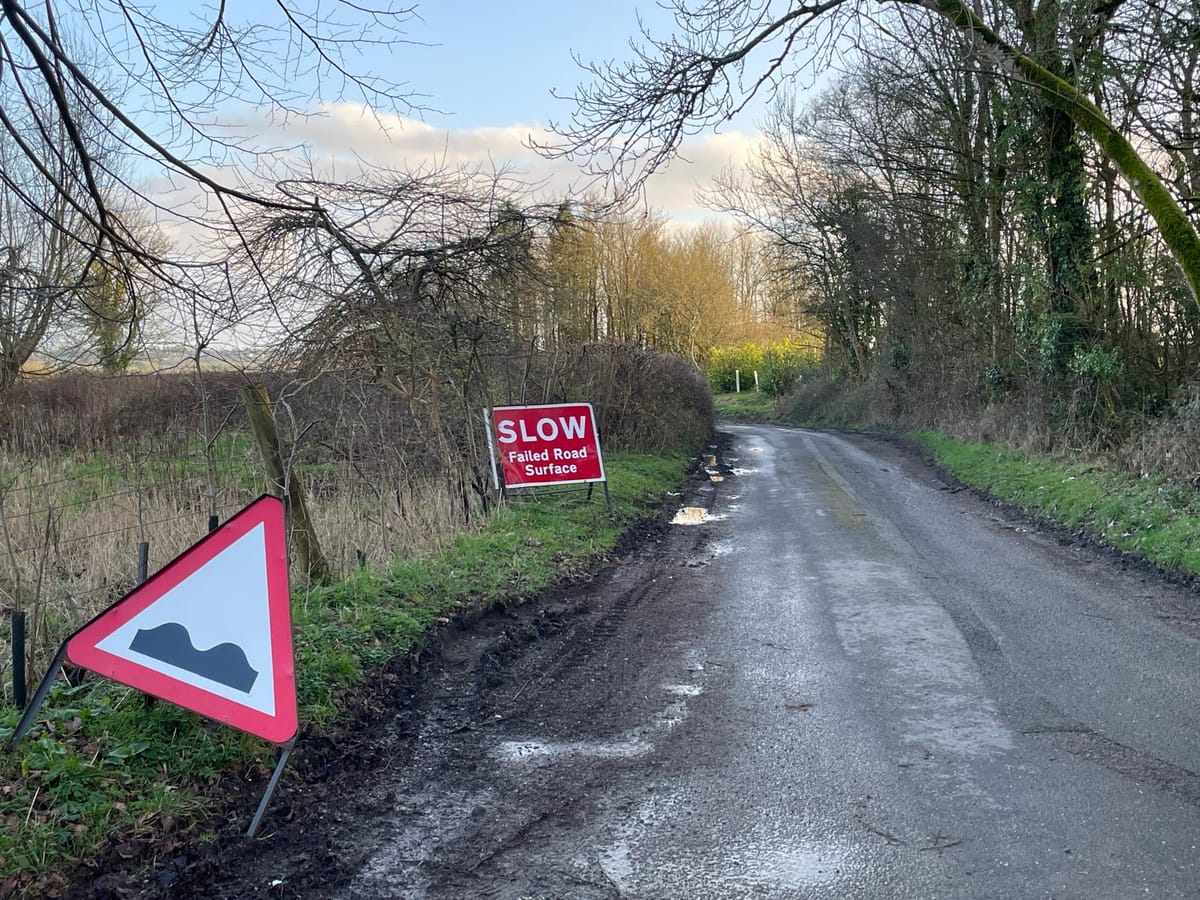
Britain is getting both hotter and wetter. Cars are getting heavier. And so roads are getting more potholed.
It’s that simple. But fixing them isn’t – especially when Government funding to Oxfordshire has dropped by 13% in ten years, yet social care and special educational needs are swallowing up more money than ever. Here is the ‘how and why’ of Oxfordshire’s pothole story, told with graphs.
A long and winding road
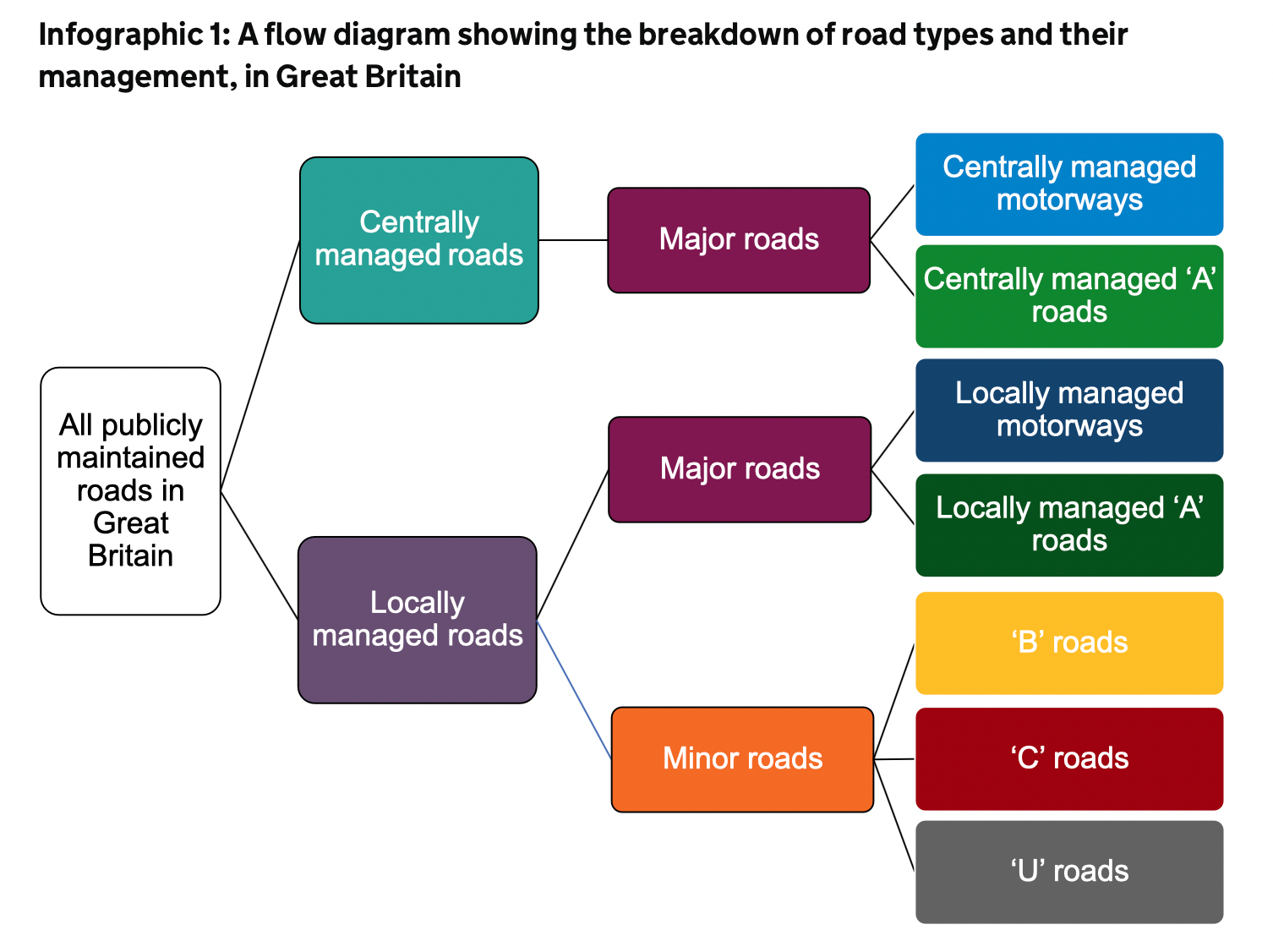
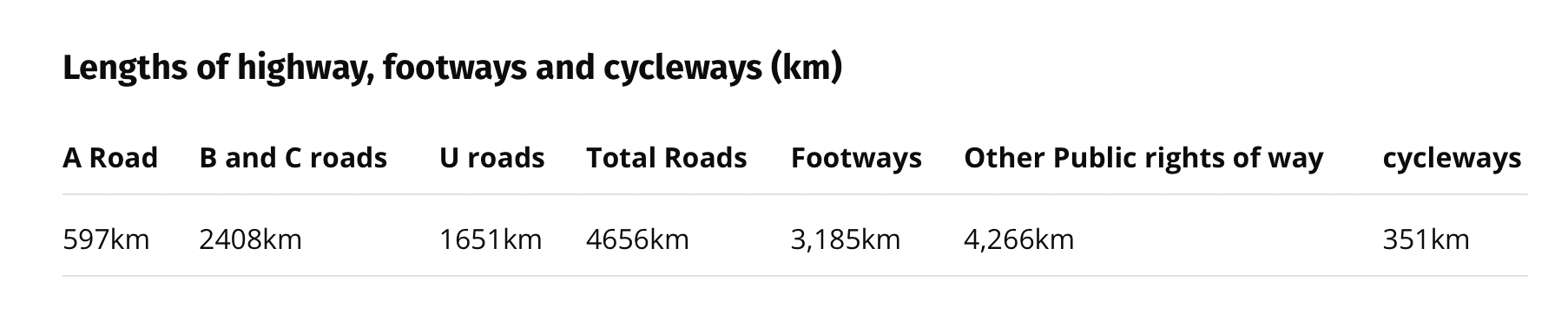
Oxfordshire County Council looks after some 4,500km of roads (2,800 miles) – a mix of A, B, C, and unclassified roads, around half of them being rural. Every road in Oxfordshire is OCC’s responsibility except about 80km (50 miles) of the M40, A34 and A43: those three are National Highways. The county also manages bridleways, byways, footways and cycleways, and potholes can form there too.
How do potholes form?
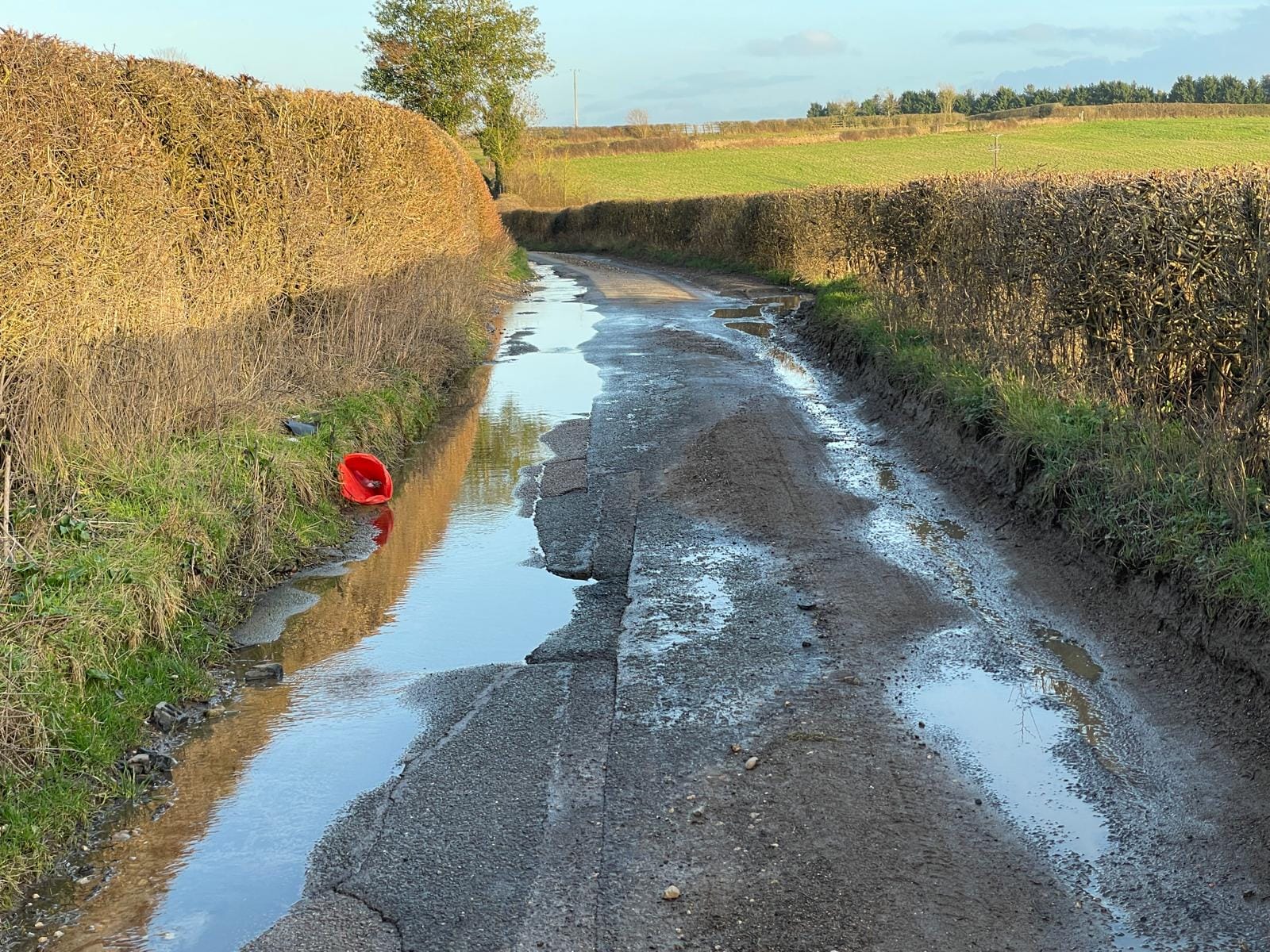
Most potholes start when the road is damaged either by heavy traffic or heat stress, leading to small cracks in the surface. Things really get going when water seeps into those cracks. Cold weather freezes the water, causing it to expand – so when it melts, it creates gaps which then get broken down by the motor traffic. This ‘freeze/thaw cycle’ is why you see more potholes when it's cold. This video explains in more depth.
It is the biggest vehicles that cause the damage, because they cause even well-laid roads to flex. A near-legendary report among highway engineers, 1962's AASHO Road Test, was based on running over a million axle loads over ten test lanes between 1958 and 1960. It found a fourth-power relationship between damage and axle-weight. So if you double the load, you multiply the damage by 2 × 2 × 2 × 2 = 16. If you spread that over more axles, you reduce the damage.
In practical terms, that means that historically, Heavy Goods Vehicles and buses have done most damage to our road surfaces. To put things in round numbers, cars do about 20 times as many miles as HGVs, but a 15-tonne two-axle HGV will do 10,000 times as much damage to the road as a 1.5-tonne car. That's not to say that cars are blameless. Some roads don't see any HGVs or buses, and they still get potholes; and once a hole is formed, any vehicle can make it bigger.
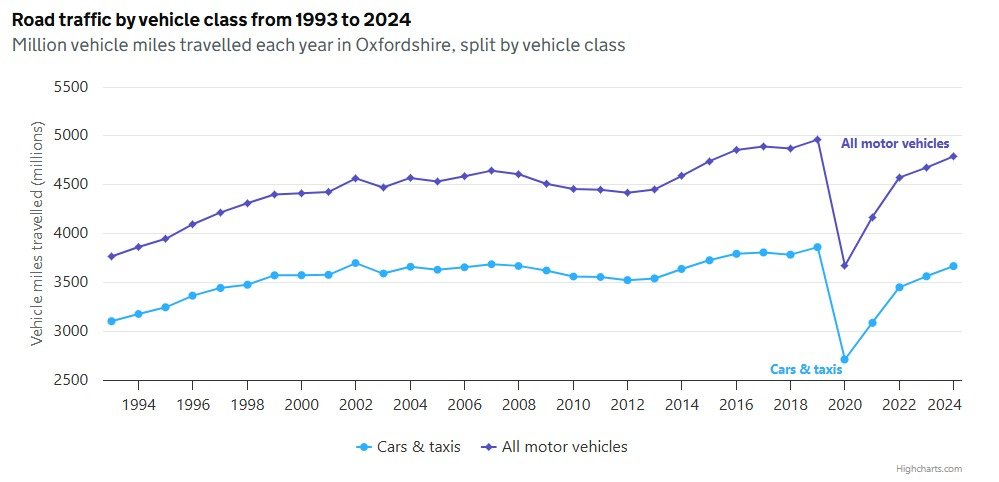
The balance between holes being made and fixing them is being put under stress. The post-Covid dip in traffic volume has nearly been cancelled out as traffic continues to rise, particularly in Oxfordshire with its rising population. Today’s cars are often heavier than light goods vehicles 20 years ago, thanks to the popularity of SUVs and electric cars. But the same is happening for goods vehicles, which get heavier as they too switch to batteries or hydrogen to reduce damaging emissions. Weight regulations were eased by up to 2 tonnes to compensate, but the roads didn’t magically get more resilient.
Meanwhile, our weather is breaking all records. We've learned how summer heat and winter rain create more potholes. The bad news is that climate change exacerbates these extremes, meaning more potholes on the way.
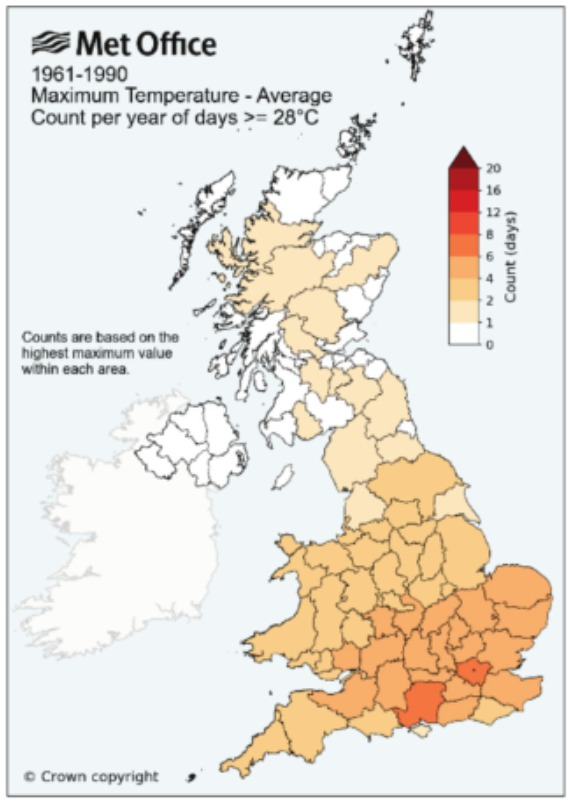
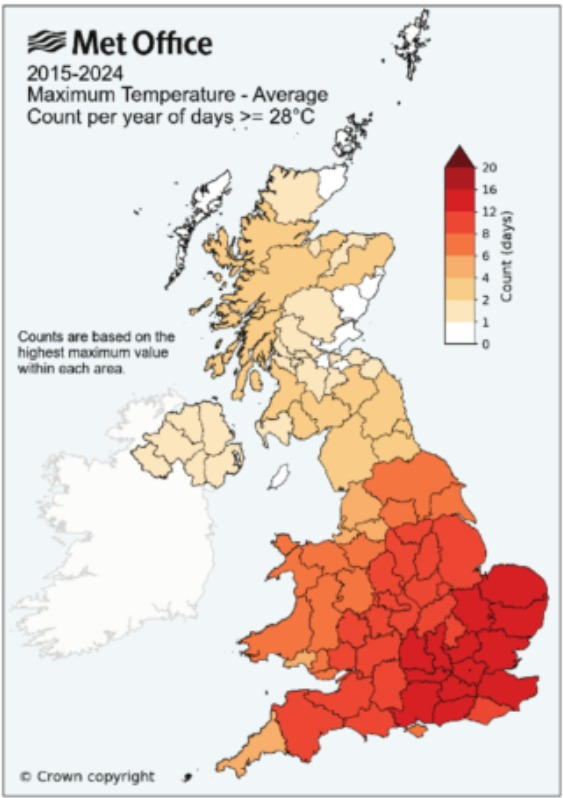
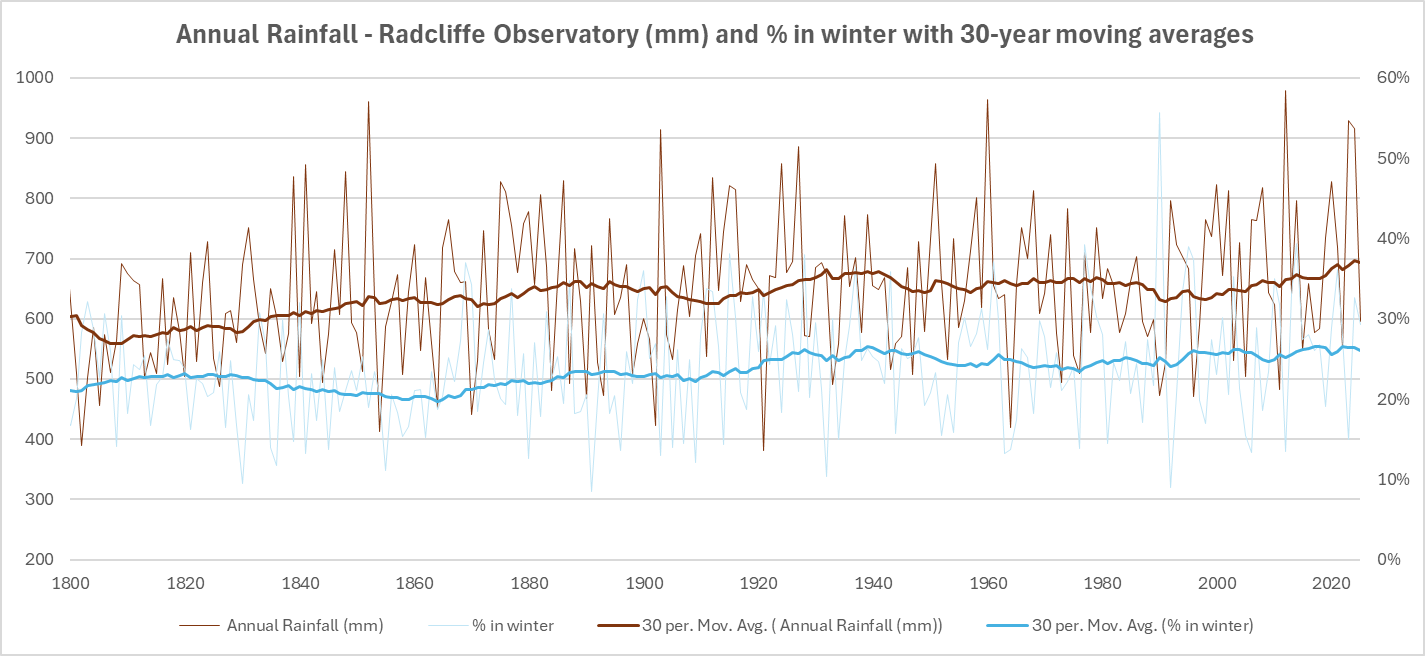
Despite our childhood memories of long, hot summers, in the ’60s, ’70s and ’80s, Britain only averaged five days a year above 28°C. Since 2015, it has been more than 12 days a year. Rainfall levels have been increasing too. Since the 1970s, annual rainfall at Oxford's own weather station has risen from 665mm to 700mm, and the fraction that falls in winter has been rising too.
A perfect storm
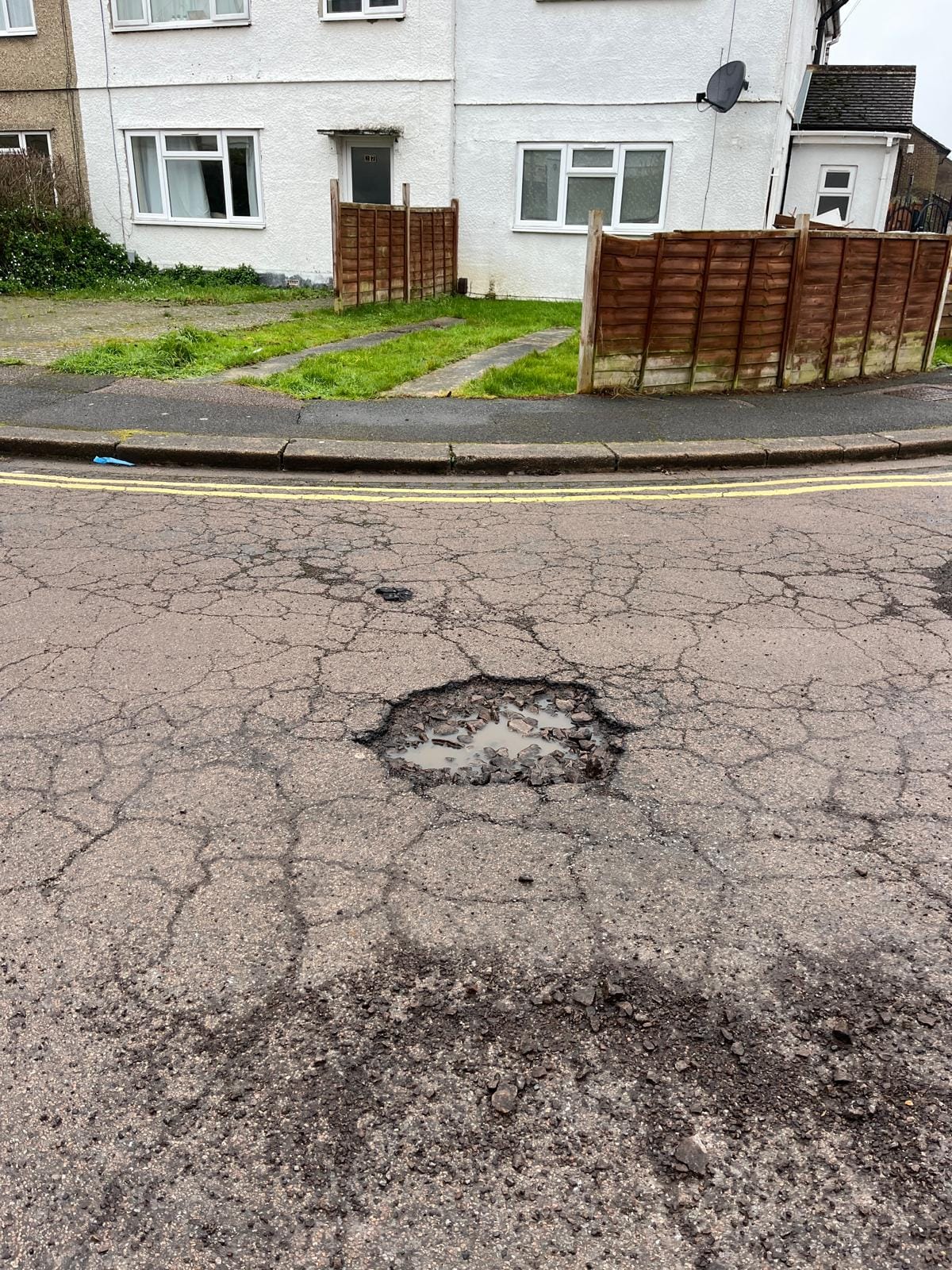
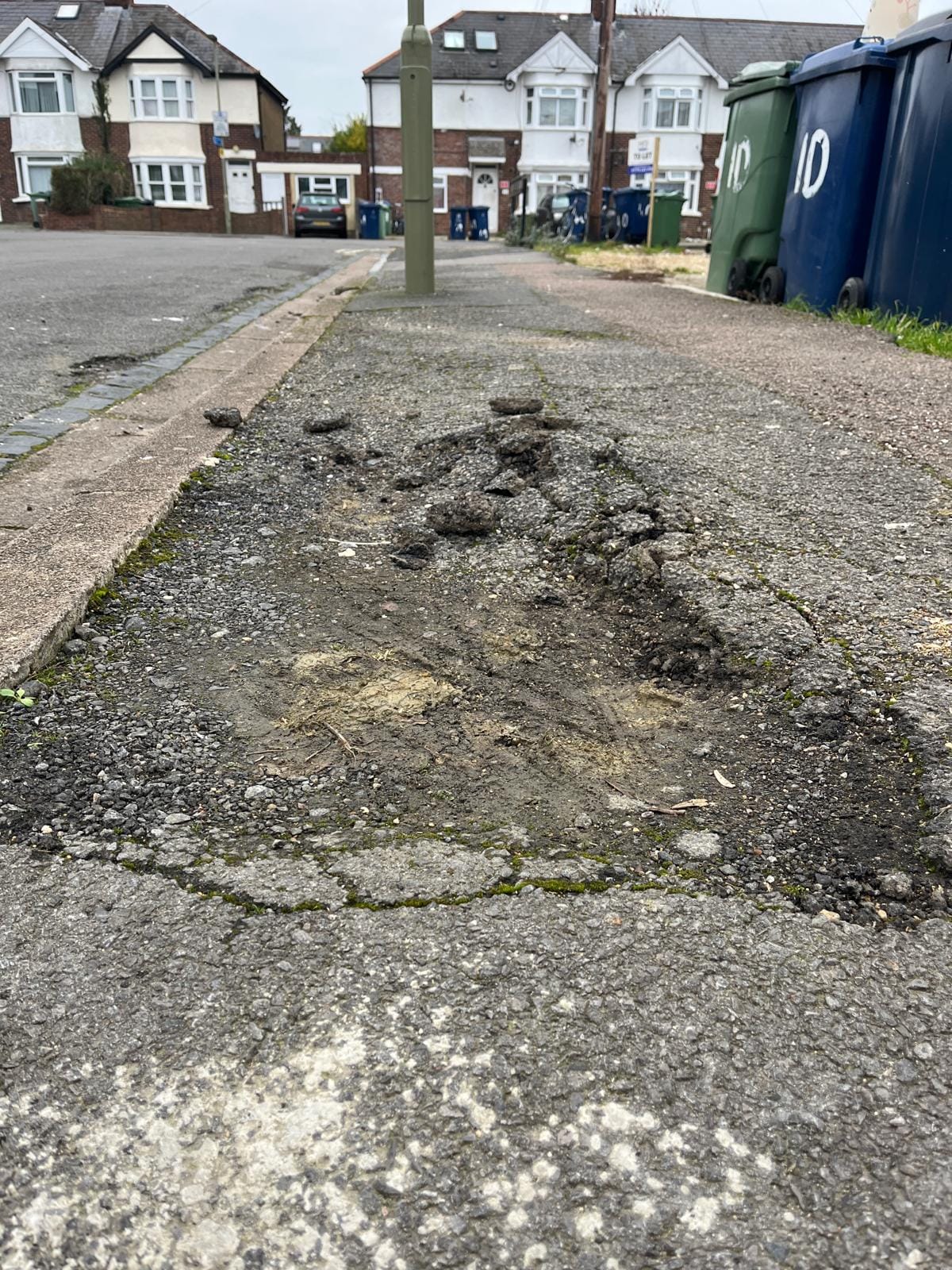
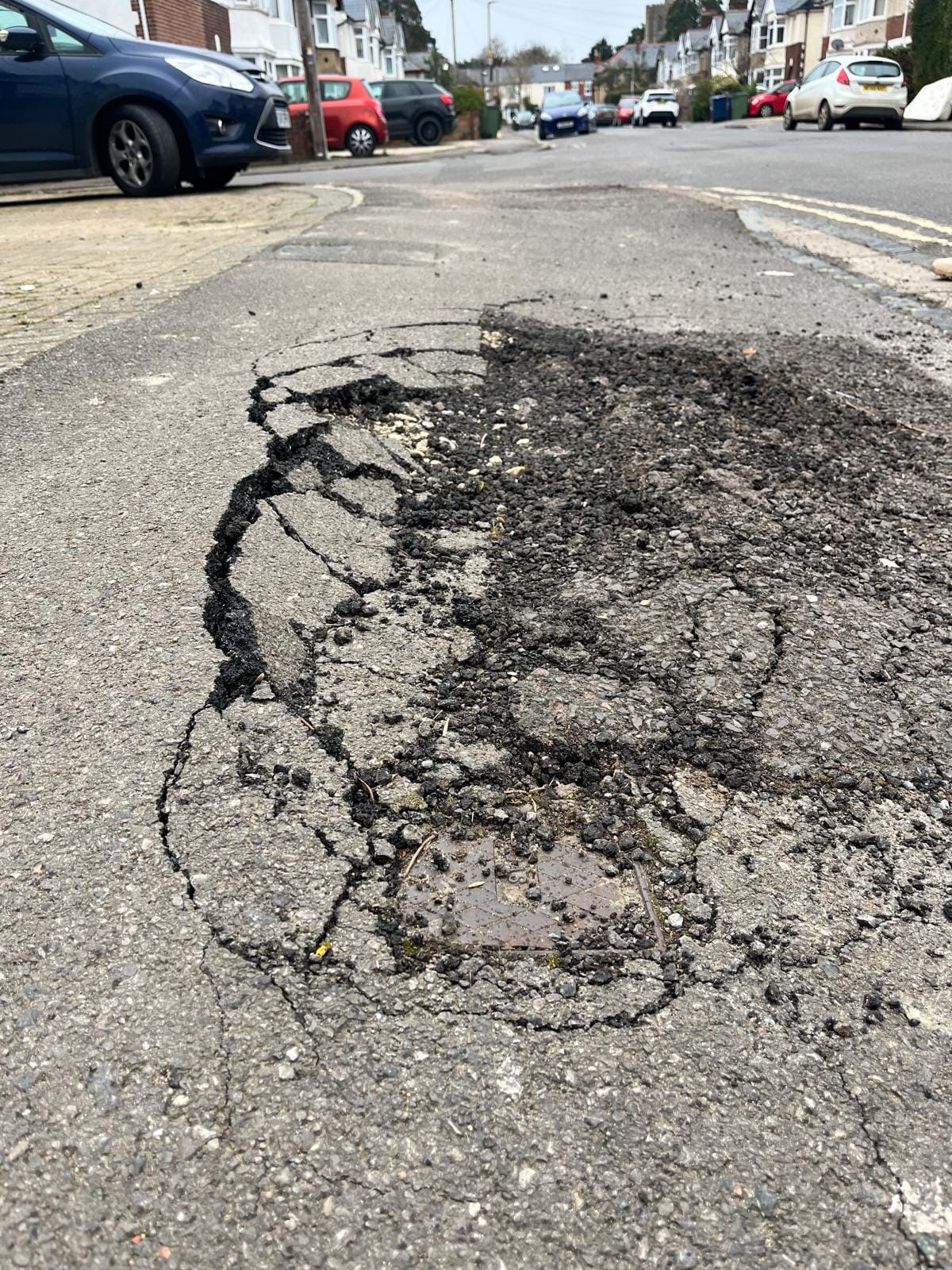
All of these conditions came together this winter, when January and February 2026 in Oxfordshire saw the longest period of continual wet weather in Oxfordshire since 2004 combined with 17 nights of freezing temperatures. Oxfordshire County Council described this as “perfect conditions for potholes”.
This gave rise to images on social media that we're more accustomed to receiving from the moon than a market town.
Filling the hole
What's the main source of funding for repairing our roads? The answer is, of course, council tax. (Zero points for 'Road Tax', which was abolished on 1 April 1937, becoming Vehicle Excise Duty and part of general taxation.)
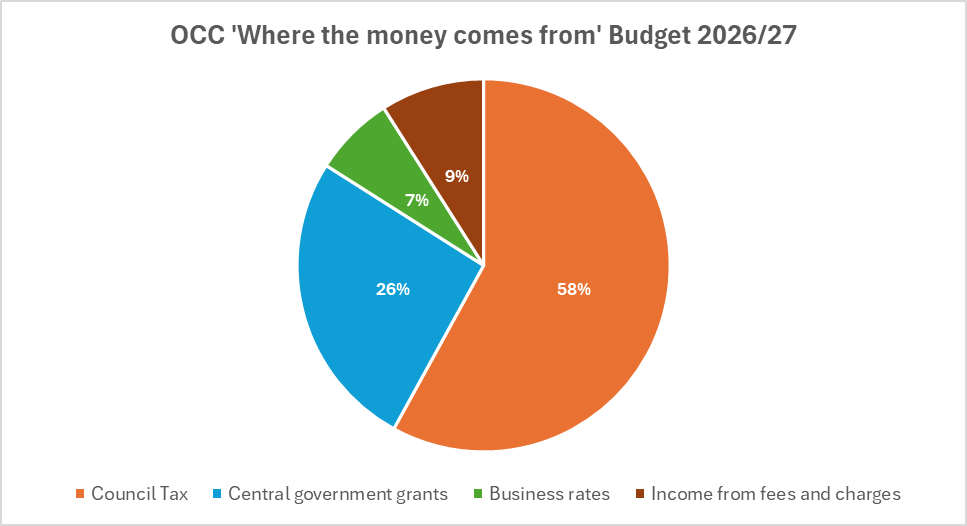
98% of Oxfordshire roads are the responsibility of Oxfordshire County Council, and road repairs are a ‘revenue’ spend. As the chart below shows, most of that money comes from council tax.
There is a ‘capital’ element as well – that is, OCC’s budget for improvements with a life of more than a year. That could include road surfaces, bridges and other structures.
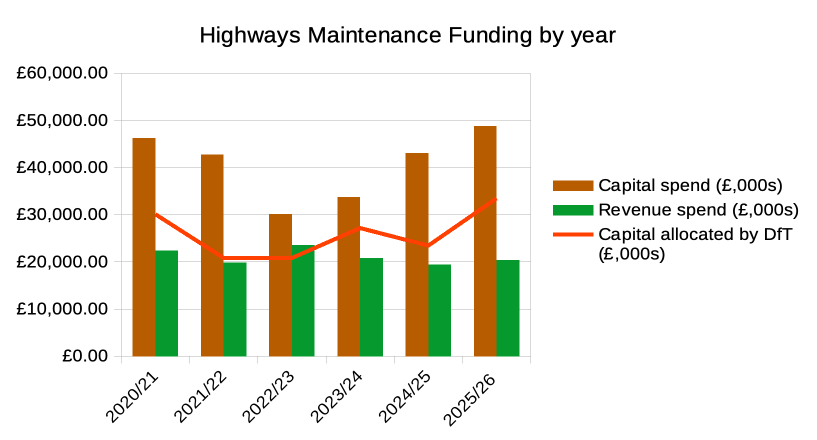
Oxfordshire consistently spends more than it is given by the Department of Transport on capital road maintenance (the brown bars vs the red line). Revenue spend has been about level. In the last two years, in particular, OCC has used this money to increase the number of potholes fixed.
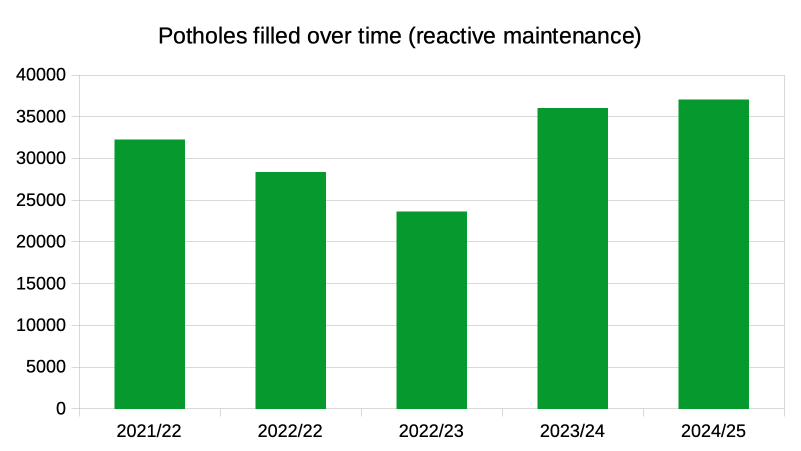
It has also allocated funds to preventative maintenance, which is more cost-effective than fixing holes. An £8m programme got underway this month.
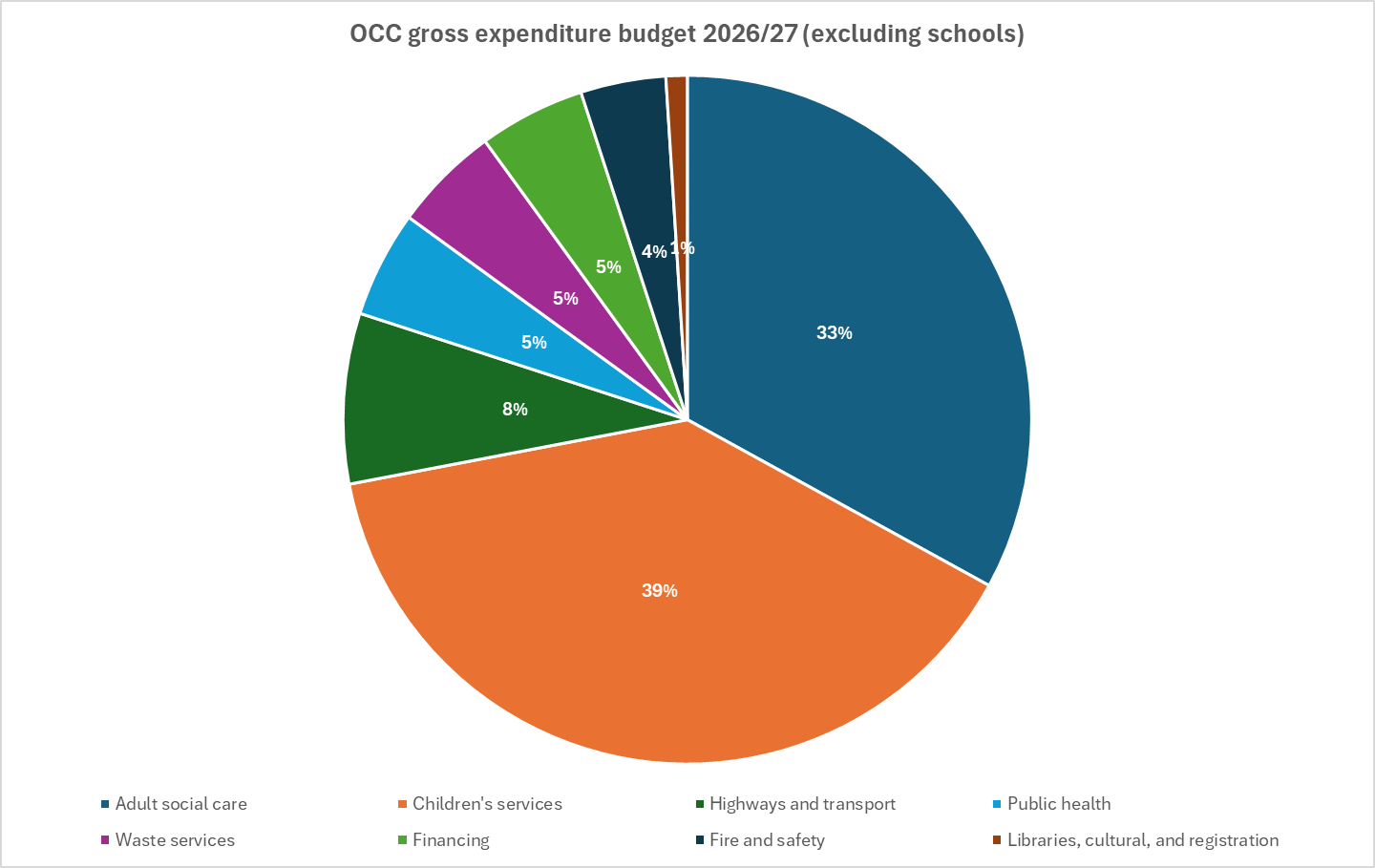
Every county council in Britain would no doubt like to spend more on fixing potholes. But every council is facing pressures from the rising costs of adult social care and children's services. These huge items now account for three-quarters of council spending, pushing everything else into a corner.
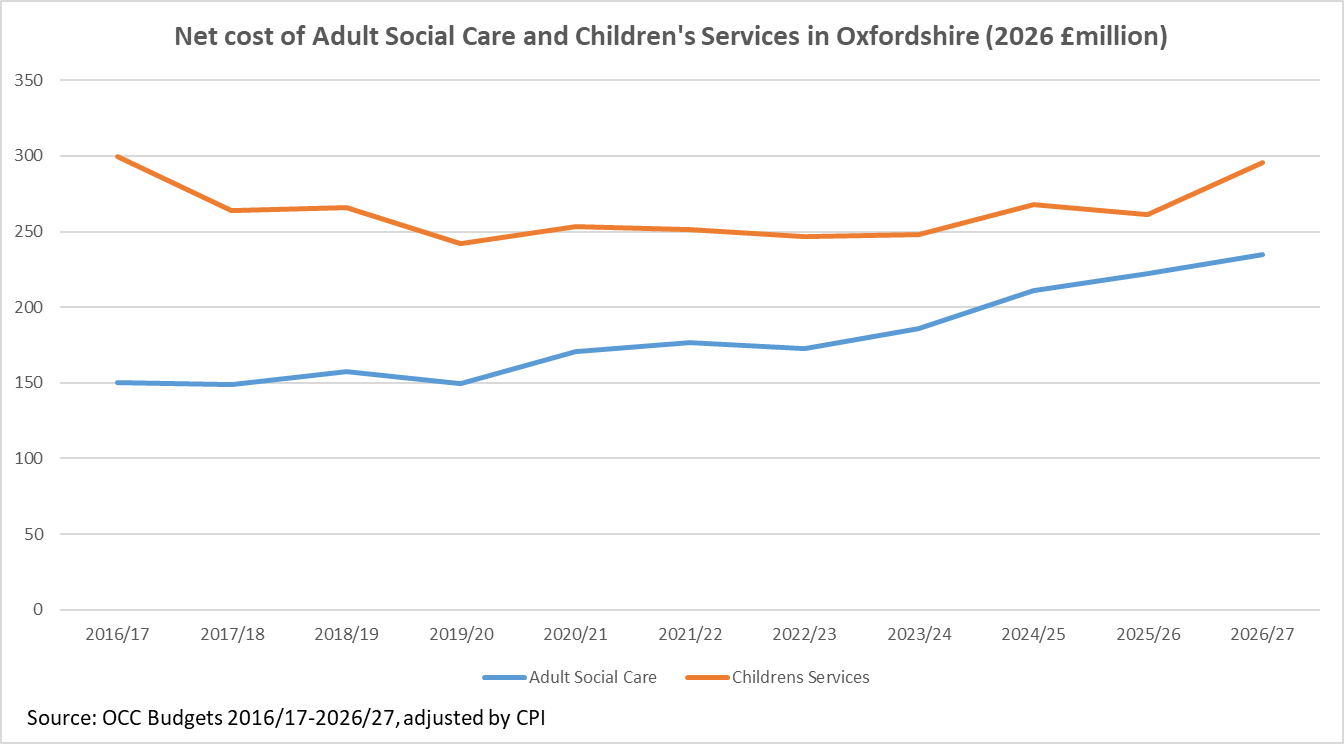
These costs have been increasing and they are statutory, not optional. Adult social care costs have risen by £85m in real terms over the 11 years that we reviewed the budget papers for. Children's services have ballooned by £54m since 2019/20 – not coincidentally, the year before the Covid-19 pandemic. (We adjusted these figures for inflation to ‘2026 pounds’.)
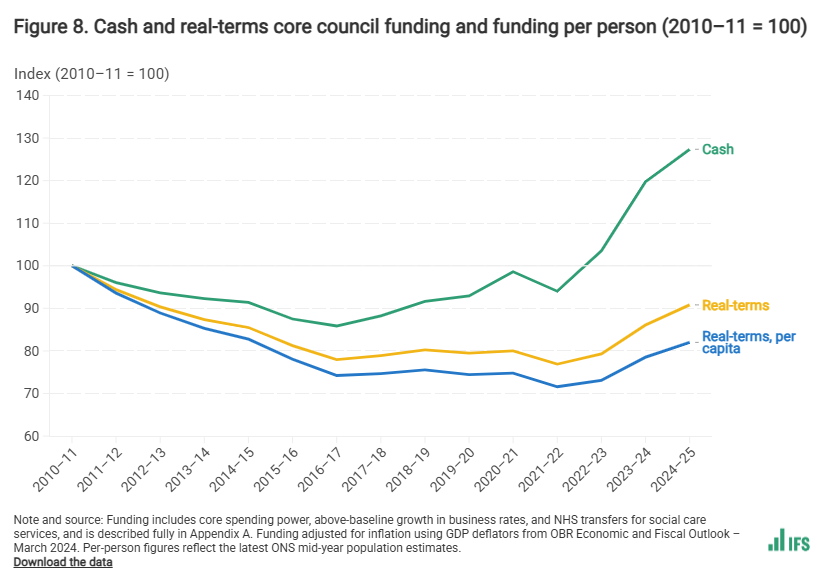
There has also been a funding squeeze on local councils. The chart below from Institute of Fiscal Studies analysis shows how real (inflation-adjusted) council funding was cut by the coalition government from 2010-17, then stabilised, and only started recovering from 2022 - still remaining 18% below 2010 levels. The cutbacks required in the intervening period, led to a strategy of 'managed decline' in Oxfordshire, a hole from which the council is still digging its way out.
All of this is cold comfort if your cycle, car or van wheel hits a pothole. But the equation is inescapable: more extreme weather, and more and heavier traffic, are creating more potholes at exactly the time that council budgets are under the greatest strain. It's no surprise that not every hole gets patched as quickly as we'd like.
Potholes and politicians
Wherever you find a pothole, it’s a safe assumption that a politician will be close by – especially in the run-up to May’s elections.
With a sticky issue like potholes, the politicians in power will be explaining the stickiness, while the opposition will be trying to make it stickier for them. Our quick scan found the (Conservative) leader of Hampshire Council saying in a few paragraphs what we've just spent 1,000 words explaining. Here is Kent County Council (now Reform, but at the time of this video, Conservative); here is Darlington Borough Council (Labour); and for a blast from the past, here’s Oxfordshire County Council being lambasted for “years of neglect” under its previous Conservative administration, back in 2013. Potholes are an issue wherever in the country you are, and whatever party you are.
They are political catnip. Whether you're a driver, a cyclist, a bus user or a wheelchair user, no one likes potholes. They're dangerous, ugly, and easy to complain about. They form the perfect pitch on which to play political battles – if a somewhat grey, gritty and bumpy pitch.
Our Oxfordshire politicians are, as you may have noticed, not shy on the issue. Oxfordshire County Council was run by a 'Fair Deal Alliance' coalition between the LibDems, Labour and the Greens from 2021 to 2023, after decades of a Conservative-run administration. 2023–2025 was a LibDem/Green coalition, and since May 2025, the LibDems have been running the council as a majority administration. So it is no surprise that the Conservative, Labour, and independent councillors are the ones in social media attack mode, even to the extent of using AI to pose as Gollum.
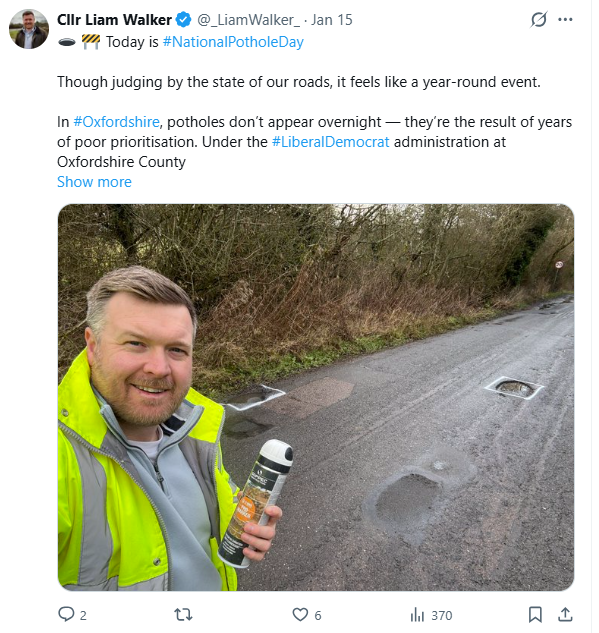
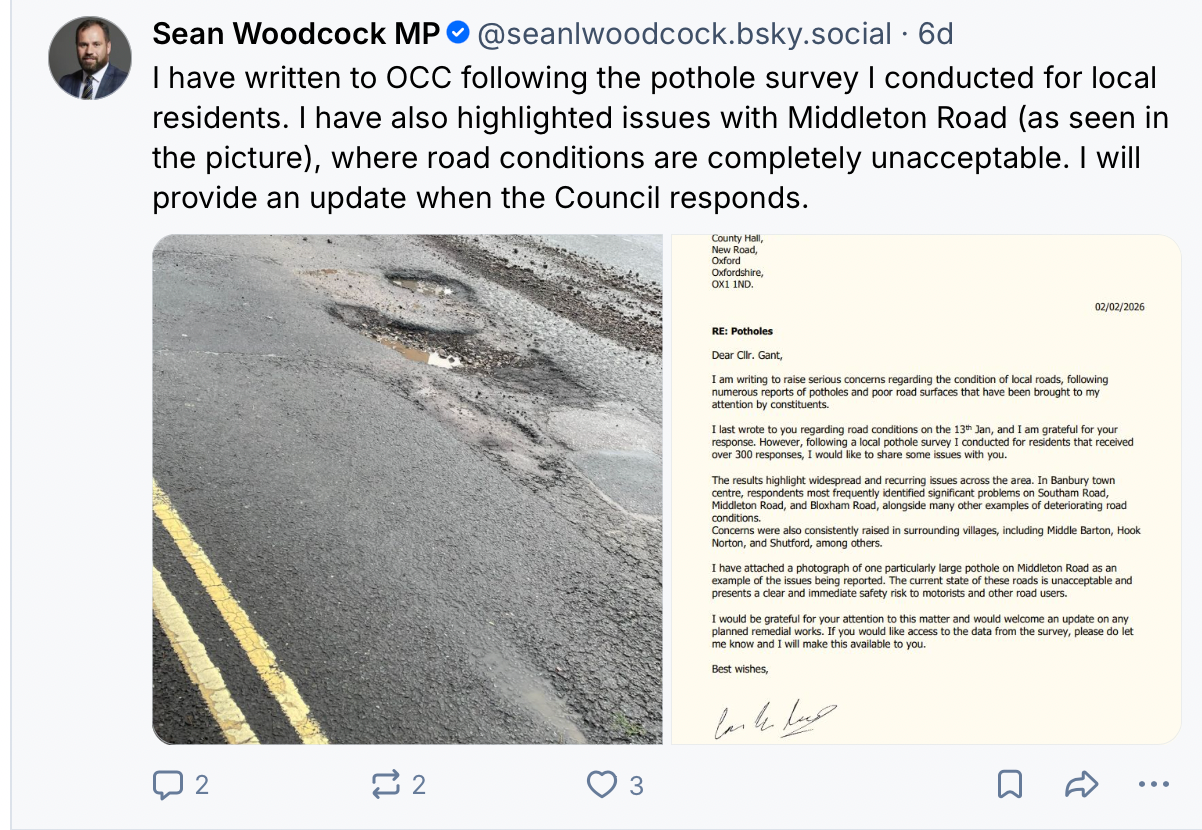

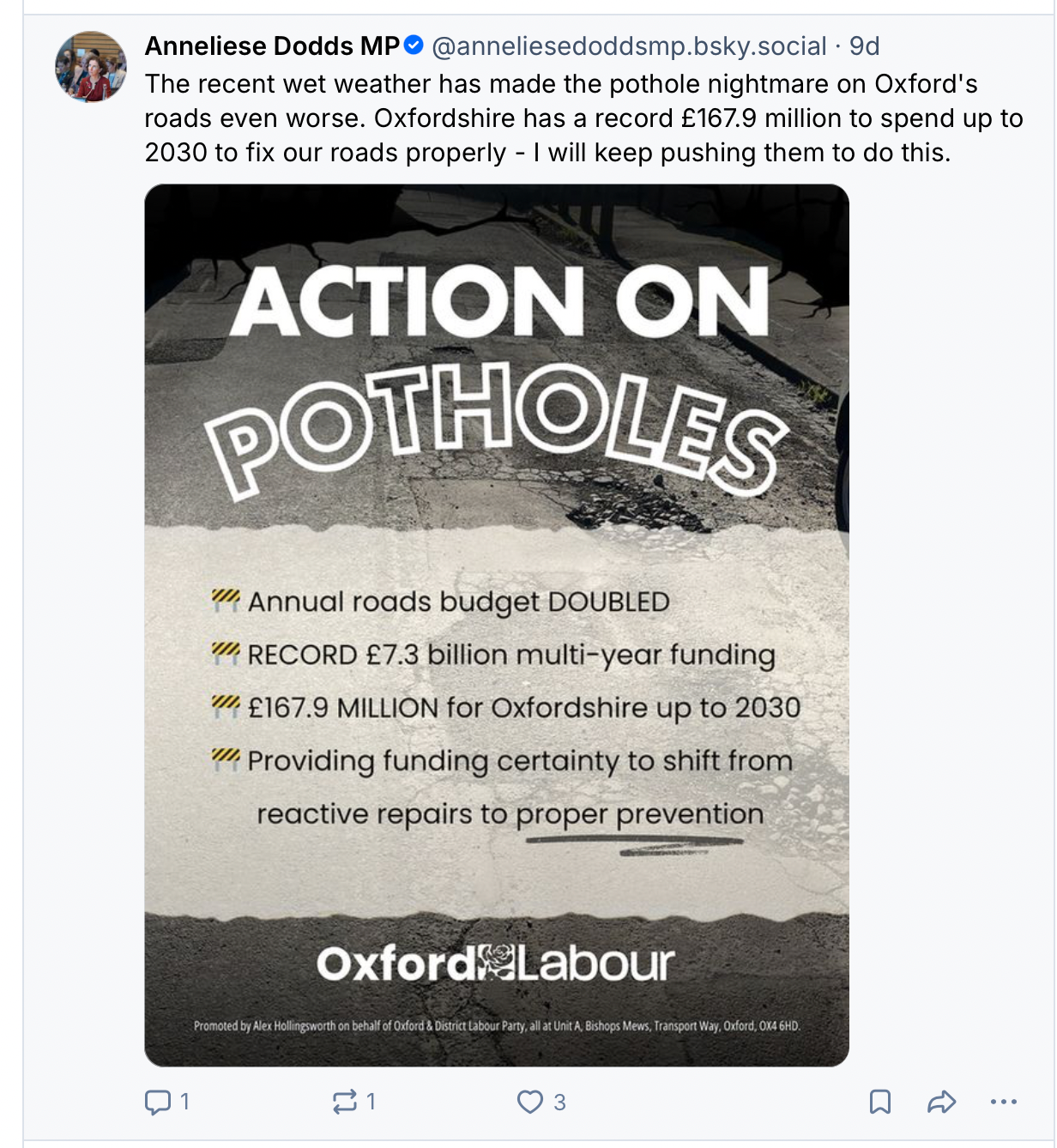
Liberal Democrat politicians, too, must tread a careful line. They know the voters hate the potholes, but their administration is in the firing line for fixing them.
The Government recently published its local road maintenance ratings 2025 to 2026. Oxfordshire wasn't rated badly, getting an overall amber rating, and green for ‘Spend’ (because it spends more than it gets). But this was enough to put a large political football into play.
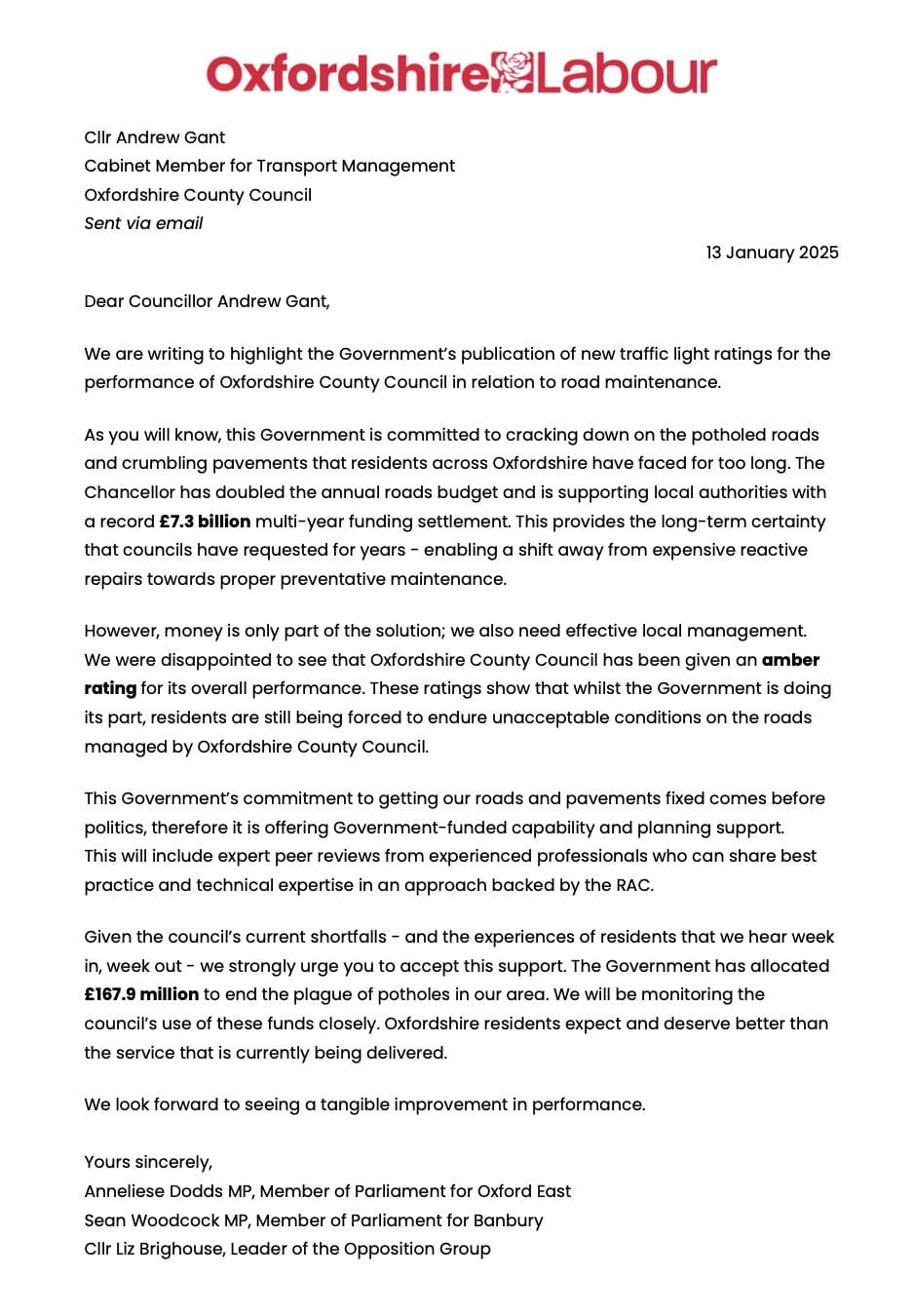
The two Labour MPs, Anneliese Dodds (Oxford East) and Sean Woodcock (Banbury), plus Cllr Liz Brighouse as the leader of the Labour group on the County Council, immediately wrote to OCC’s cabinet member for highways, Cllr Andrew Gant, to challenge the county council on its 'amber rating' and demand more action on potholes.
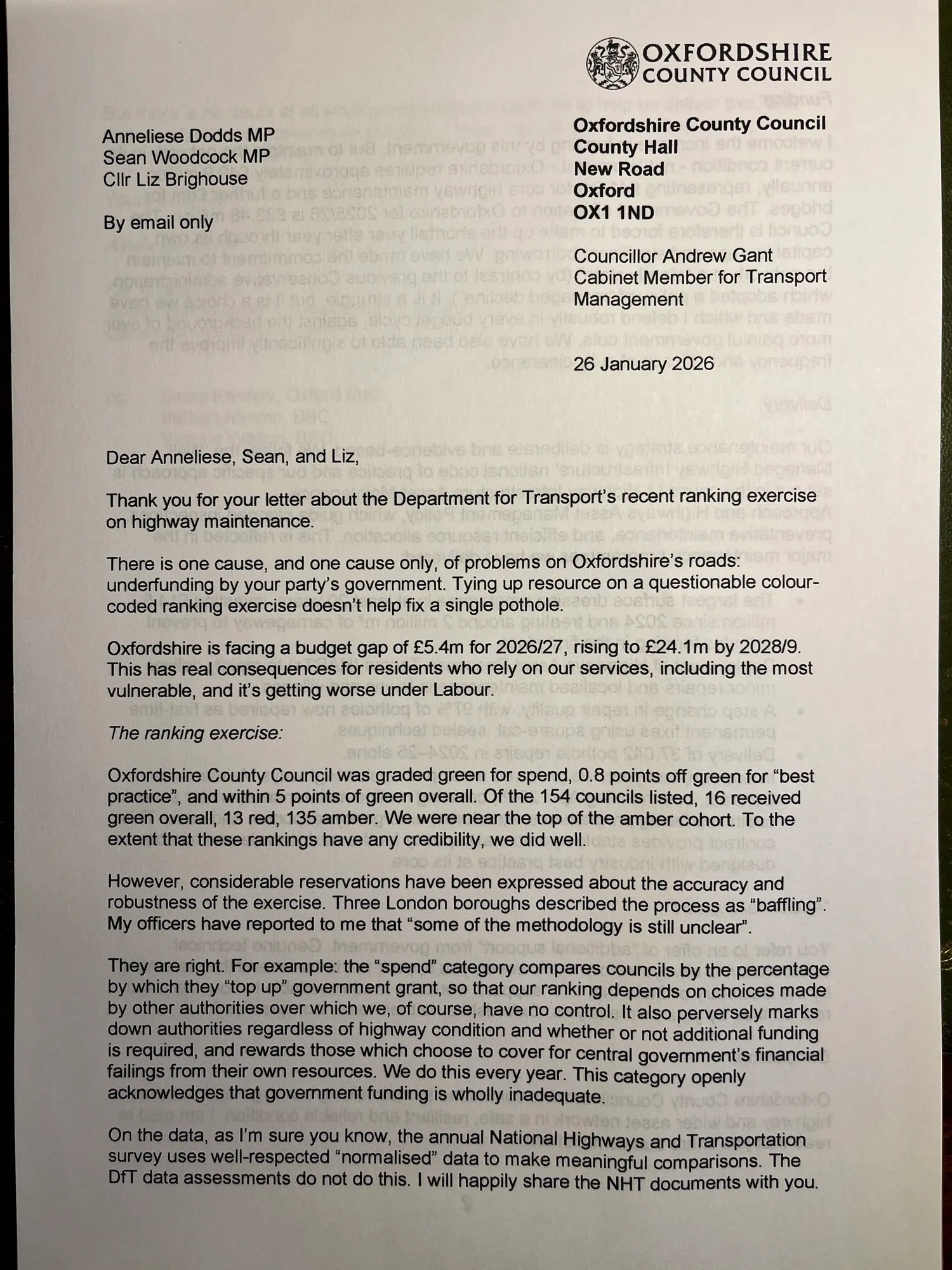
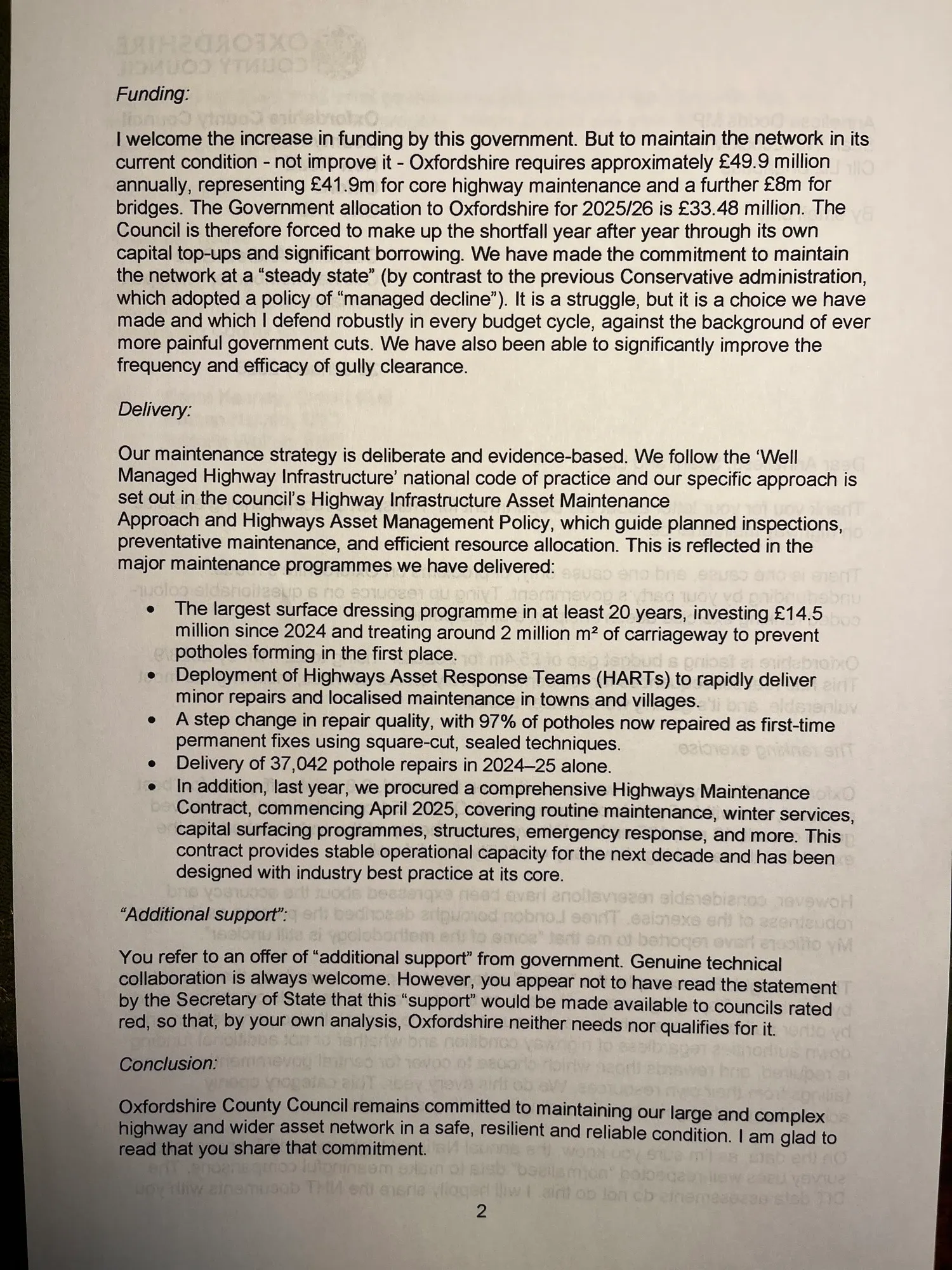
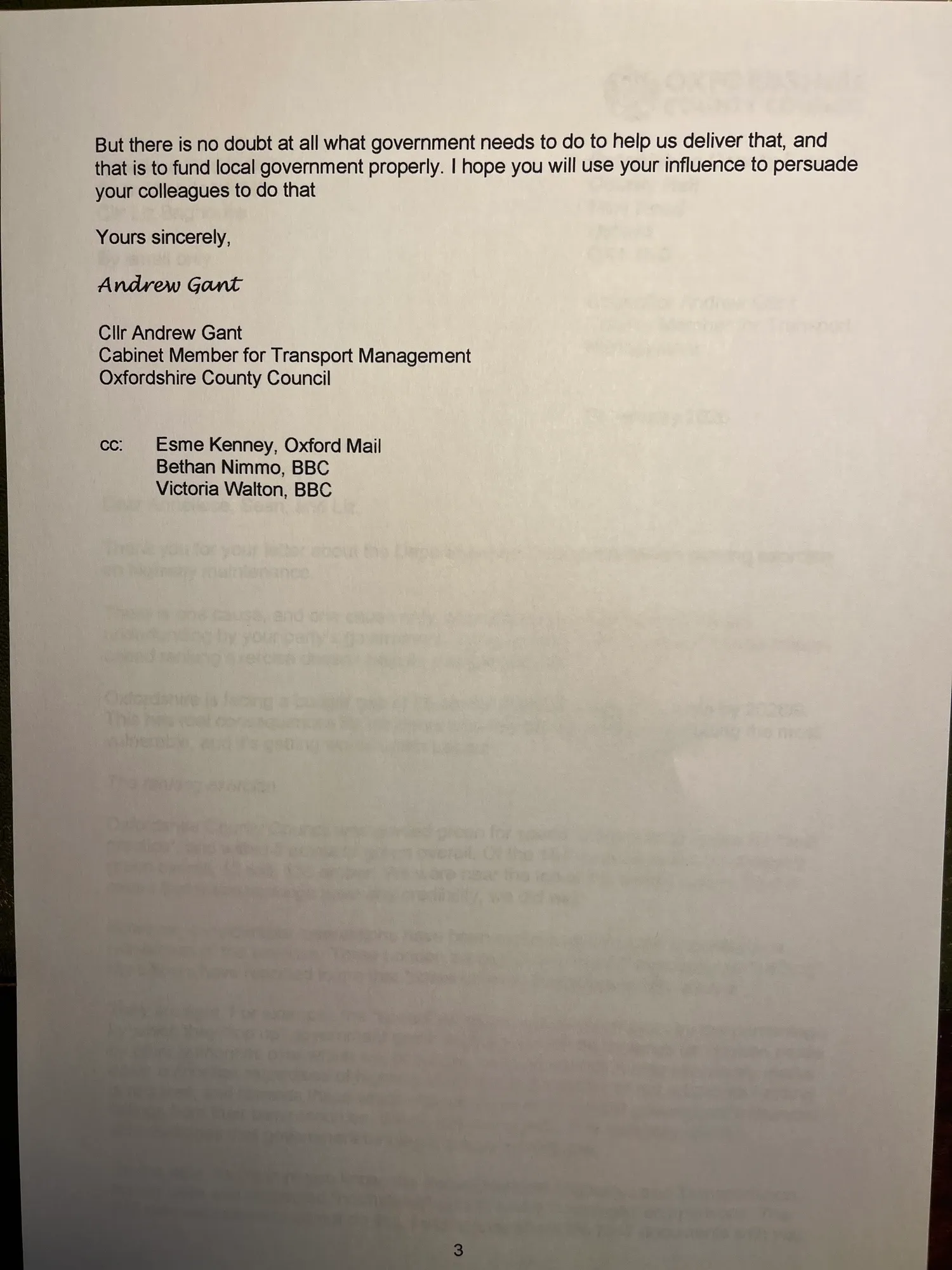
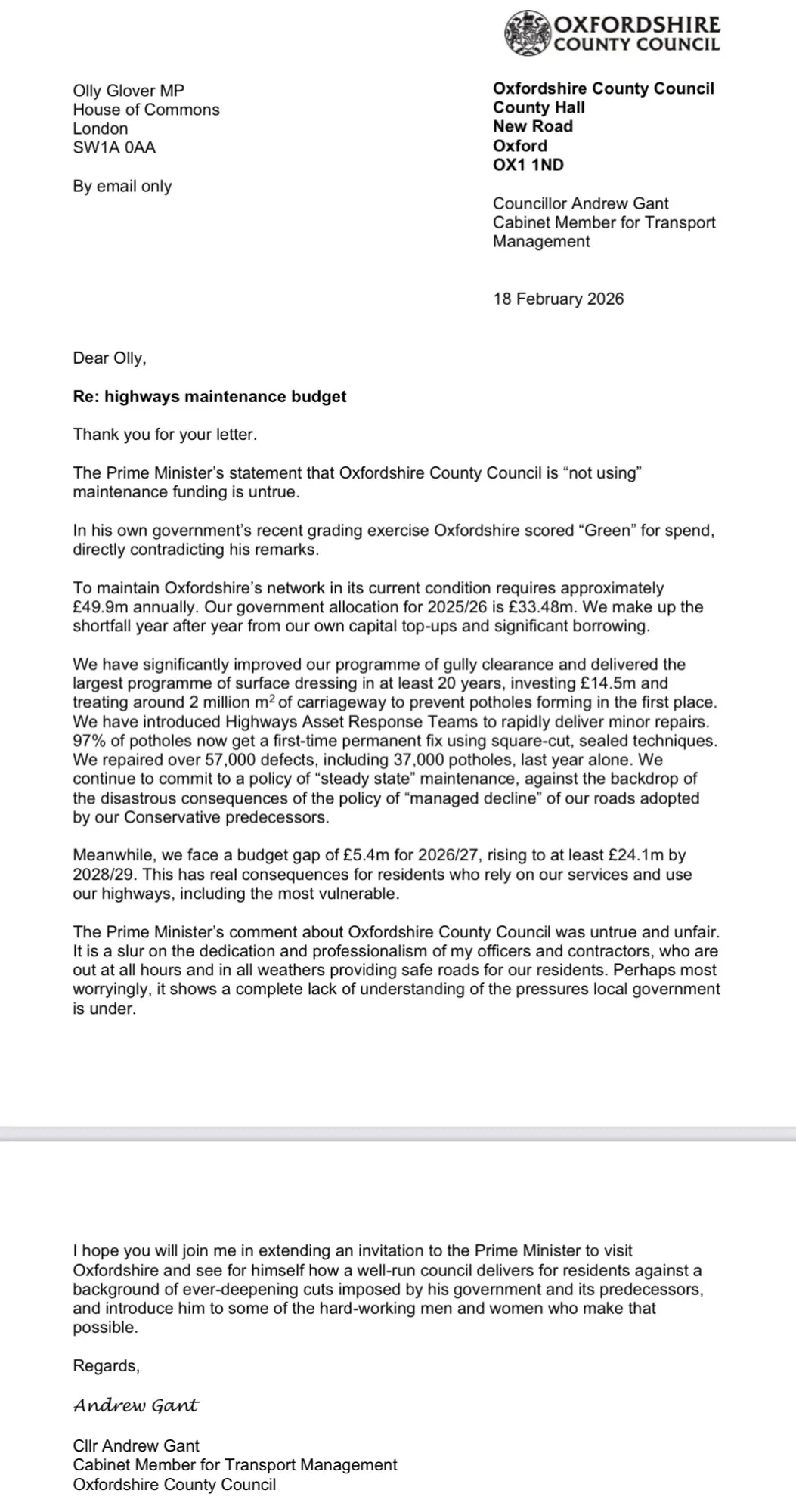
Councillor Gant's response was forthright. He placed the blame squarely on governmental underfunding, saying that despite the increase, it isn't enough to meet needs.
“Oxfordshire requires approximately £49.9m annually, representing £41.9m for core highway maintenance and a further £8m for bridges. The Government allocation to Oxfordshire for 2025/26 is £33.48 million. The Council is therefore forced to make up the shortfall year after year through its own capital top-ups and significant borrowing.”
He said Oxfordshire was following an evidence-based maintenance strategy with both a rapid response team for potholes and “the largest preventative surface dressing programme in at least 20 years”. He also took issue with the ratings themselves, saying that three London boroughs described the process as “baffling”. Of the 154 councils listed, 16 received green overall, 135 amber, 13 red; Oxfordshire was 5 points off green.
This political storm in a pothole was echoed around the country. We have found a similar approach recently being adopted by Labour MPs facing non-Labour councils in Nottinghamshire, Hertfordshire, Stockport, Northamptonshire, Bexley in south London, Warwickshire, Buckinghamshire, Derbyshire, and Northumberland.
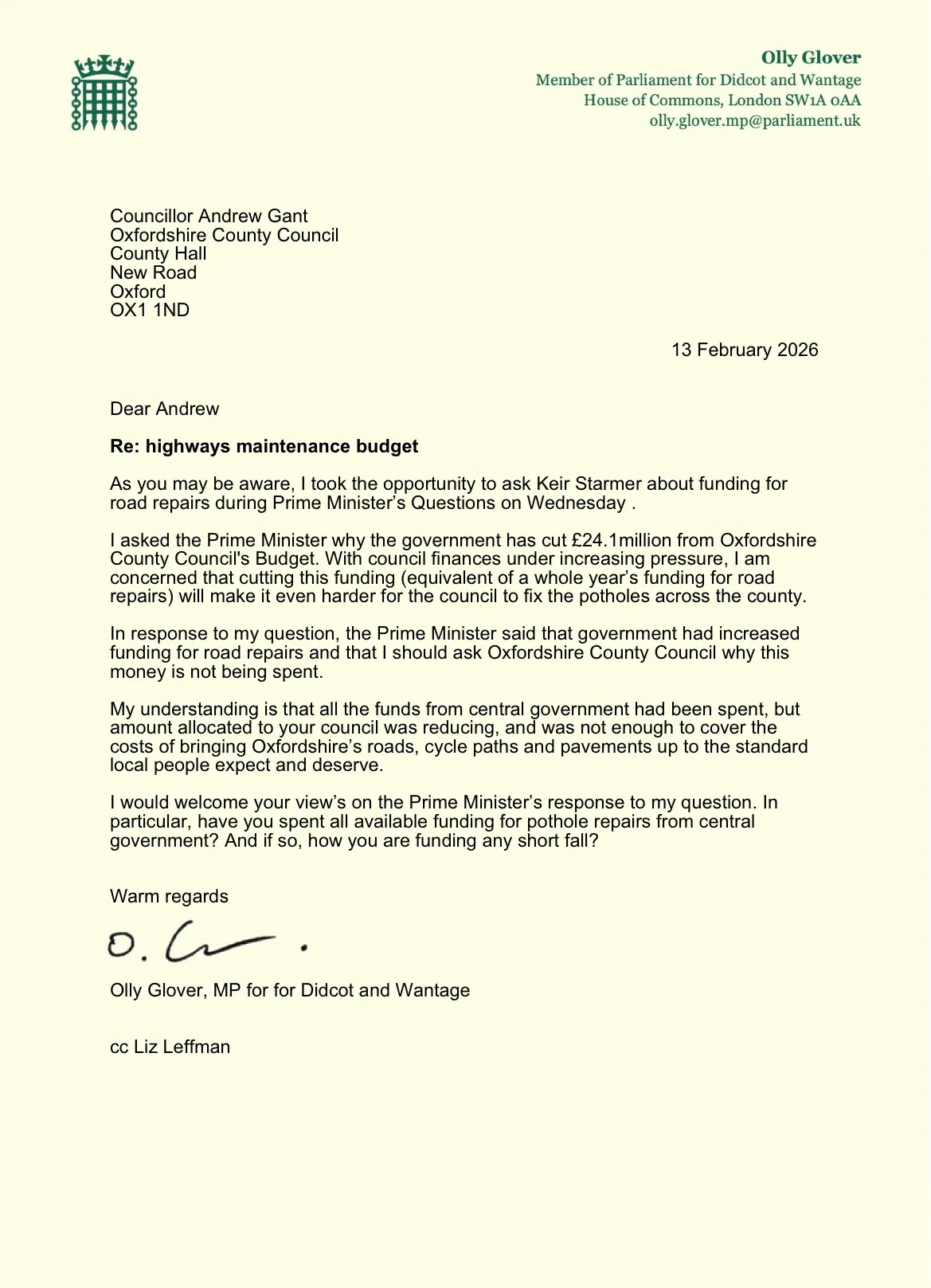
Whether or not this is a co-ordinated national strategy, it’s a fairly predictable part of the political cut-and-thrust in the run-up to elections. Indeed, the Oxfordshire pothole debate even made the national home of political cut-and-thrust, Prime Ministers’ Questions, courtesy of Olly Glover, LibDem MP for Didcot & Wantage. (We doubt the Prime Minister will take up Andrew Gant's invitation to “see how a well run council works”, but our photographer is on standby just in case…)
So what now?
The snakehead fritillaries of Oxfordshire are out, and this means spring is well on its way. The freeze/thaw cycle is over; time to catch up on repairs and, now that the rain has relented, start preventative work.
Every year sees engineering startups touting a new miracle fix for potholes, from the Dragon patchers already used in Oxfordshire to an autonomous, AI-powered robot. (Oxfordshire County Council investigated this and found the results to be disappointing: the trial has now been scaled back.)
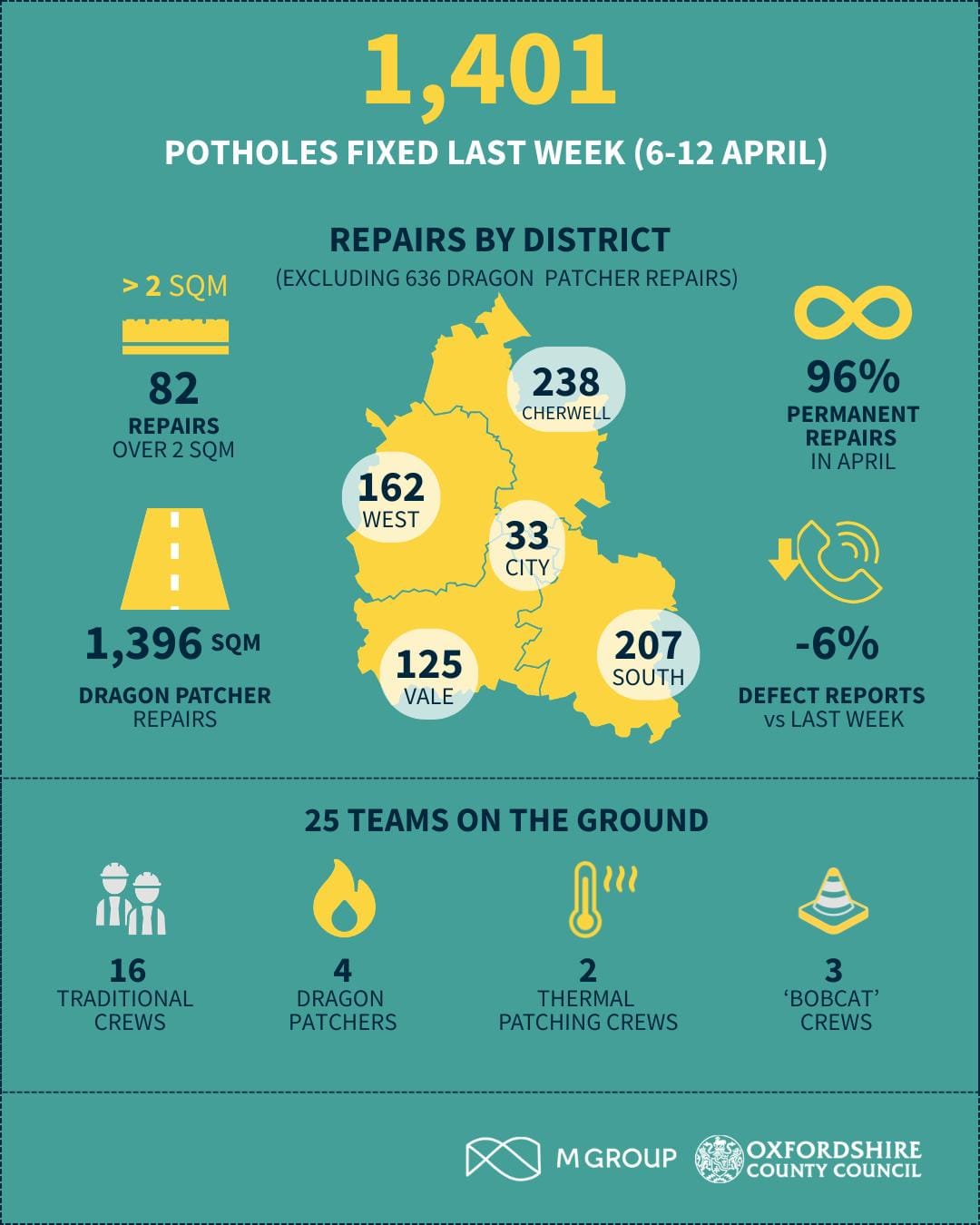
The core programme is simpler, a more ‘tried and tested’ approach. Surface dressing seals the road surface to keep out water, extending the service life of a road by an average 8 to 10 years. Oxfordshire’s 2026 surface dressing programme will see £8m spent on resurfacing a million square metres of carriageway on 87 roads, covering 62 towns and villages. This is over and above the rapid-response team who carry out fixes to individual potholes. (OCC report on these each week on their Facebook page complete with snazzy graphics, if you want to keep an eye on progress.)
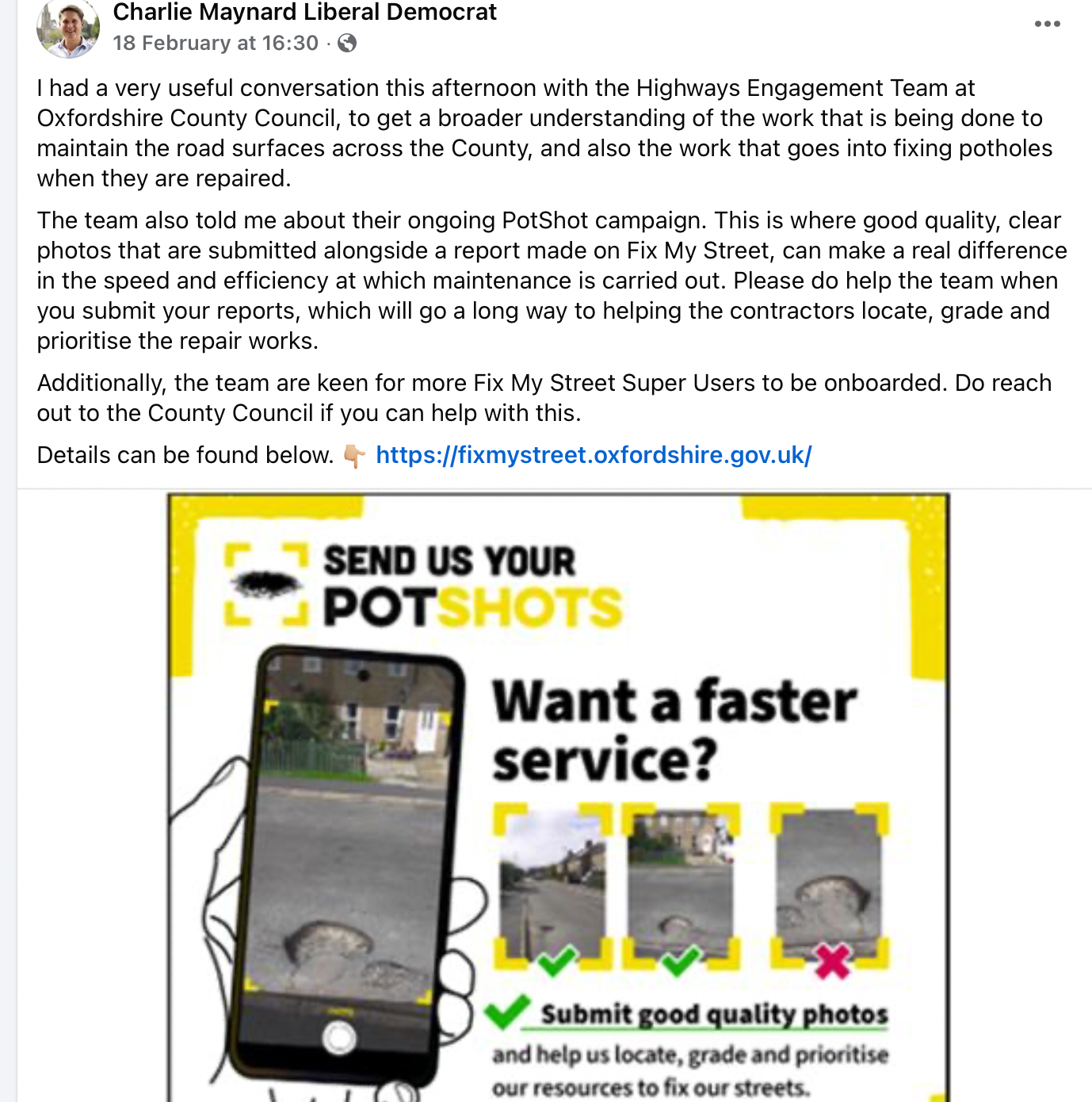
Unless you have your own Dragon patcher or some particularly sticky breakfast cereal, you probably can’t fix potholes yourself. You can, however, alert the council to potholes in your area by reporting them on FixMyStreet: clear photos help them both locate and prioritise the issues. You could even volunteer to be a FixMyStreet Super User, a scheme developed by Cllr Liam Walker in his brief stint as Cabinet Member for Highways. A Super User can take reports of basic problems, measure and mark them, and forward them to the council's contractor for repair – meaning that council staff can focus on more complex ones.
Or, of course, you could address the problem at source: replace your heavy SUV with a cargo bike, reducing road wear and helping to fight climate change. But best brush up on your puncture repair skills first.
Further reading
- Contributing factors to pothole formation (2023 research paper)
- Why are potholes such a problem this winter? (OCC blog)
- It’s quality not always quantity with pothole repairs (OCC blog)
- No two potholes are the same (OCC blog)
- Report potholes on FixMyStreet
- How we maintain our roads (OCC website)
- A National Pothole Crisis (opinion piece by Nathan Ley, LibDem county councillor for Abingdon North)