Trams not jams
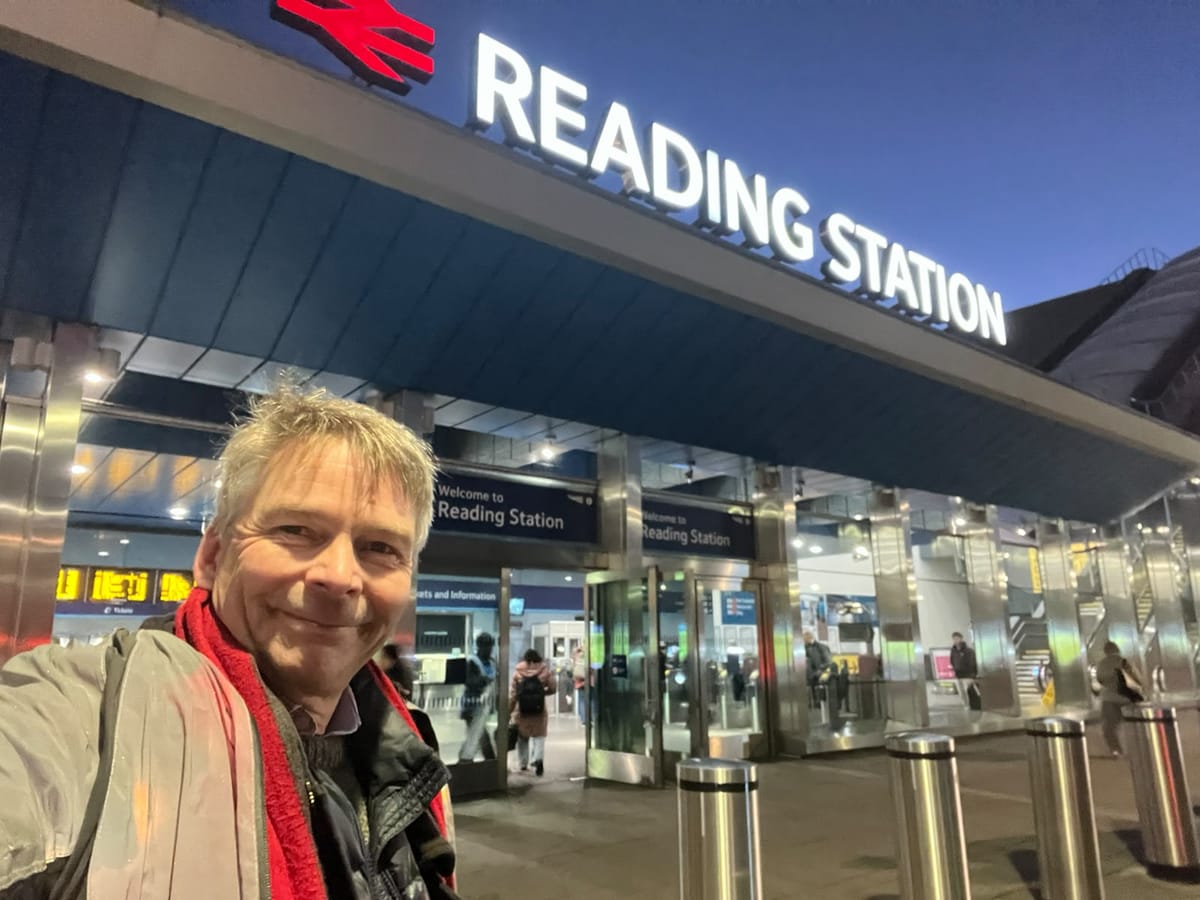
The Thames Valley is to have an elected mayor, with serious powers over housing and transport. Andrew Gant, county councillor for Wolvercote and former cabinet member for transport, says this is “the only game in town” – and Oxfordshire needs to seize the opportunity.
The Thames Valley deserves to know what it’s voting for. The new government, famously headed by the former Mayor of Greater Manchester, has staked your future on devolving real power to mayors and regional authorities (related to, but different from, the creation of new councils under Local Government Reorganisation). This presents real opportunities for you – for your transport choices, the air that you breathe, the climate, your job prospects and your cost of living. We need to make this work. Get it right and every resident in the Thames Valley will benefit. We’ve shown how it can be done.
Conservative Police & Crime Commissioner Matthew Barber wrote in the Clarion recently about plans for the Thames Valley Mayoral Combined Authority. He confirms that he and his party don’t know what it is, don’t like it, and don’t want to have anything to do with it.
He asks why my party, the Liberal Democrats, is engaging with the process. The answer is simple: Government has now told us (after quite a lot of grade-A faffing about) that it is going to happen. Whatever we thought of the process, this is now the only game in town. I and my party will engage fully with it to harness all the potential benefits for the residents of our region. Those benefits could be substantial if used responsibly and with a clear vision and objectives in mind.
What could a Mayor do?
Do buses connect well enough in Oxford city centre? Would you welcome a new Thames crossing in Oxford so that cyclists don’t have to do battle with the Plain roundabout, ever? (The Labour city council is spending £15m of your money building an entirely pointless footbridge literally right next to an existing one, instead of solving some of the many real infrastructure problems in our city.)
Why is the number 22 bus service in my home town of Reading under threat? Is it because traffic on St Peter’s Hill is as bad now as it was when I lived there in the 1970s? Who’s thinking about the underlying causes of congestion, danger and bad air? Why isn’t the footbridge across the main line through Wokingham step-free?Why do people who live within walking distance of Reading station drive to Twyford to catch the train, causing parking havoc in a small village? How do we continue to improve connectivity in rural south Oxfordshire, where my parents lived for forty years? What are your local equivalents of these questions?
The list goes on: why does Reading have a smart, new station and Oxford doesn’t? And why can you catch a train from Heathrow towards London but not west towards Slough, Reading, Banbury or Swindon?
These are some of the kinds of issues a visionary Thames Valley mayor must address by thinking regionally and using the powers set out in the government’s approach responsibly and creatively.
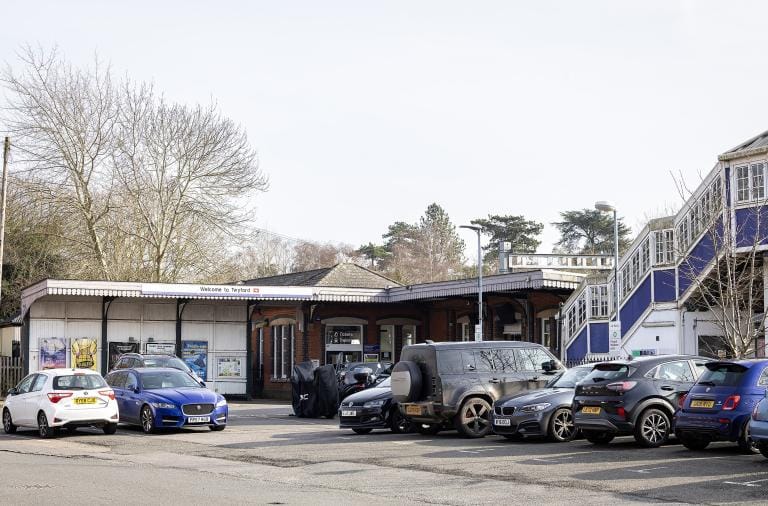
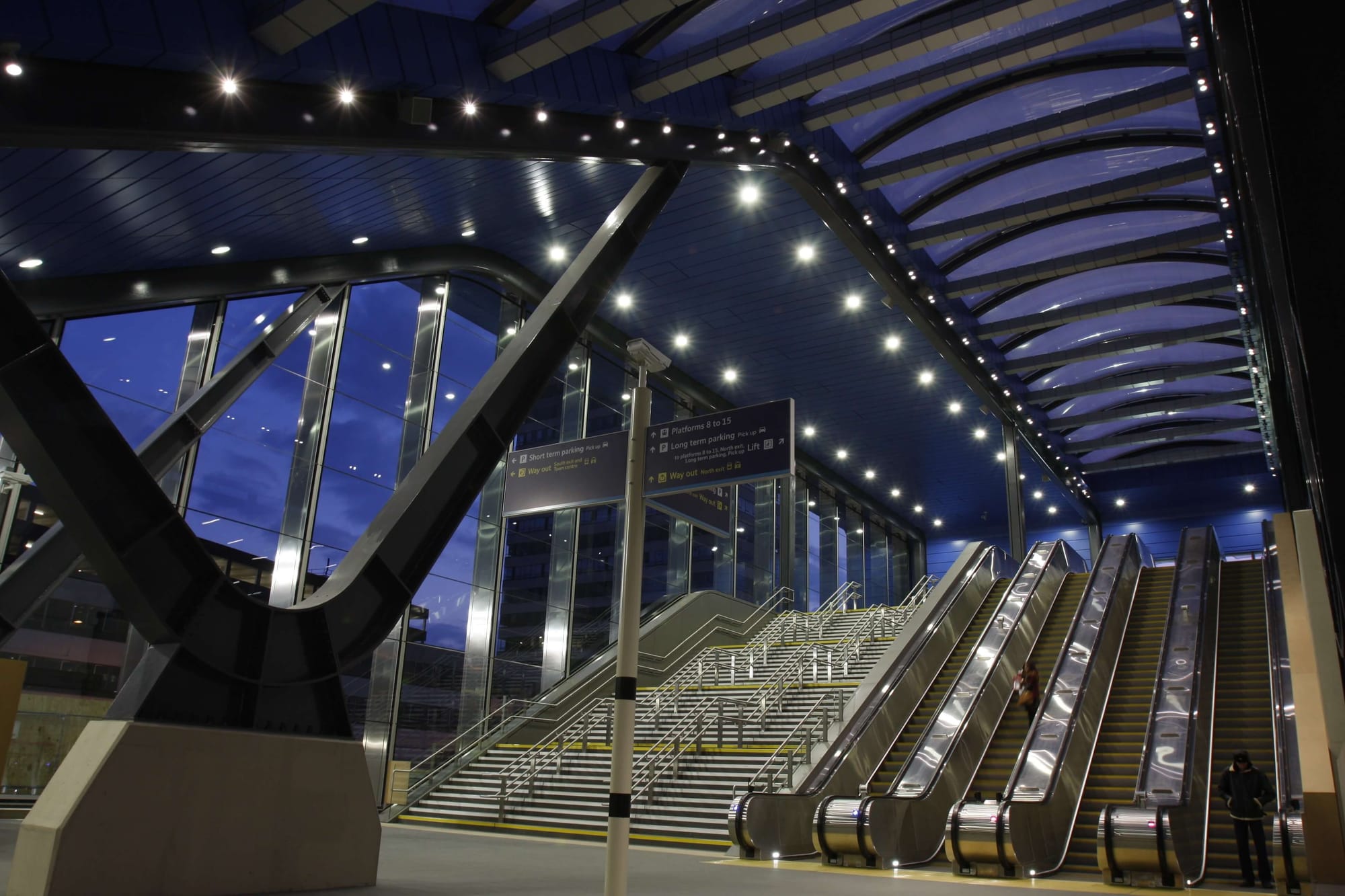
Twyford and Reading stations. (Photos: Wokingham Borough Council, Network Rail.)
A Thames Valley economy
And it’s not just about transport. Fiscal devolution can and must help you with the day-to-day cost of living, which has spiralled out of control under Conservative and Labour governments. Mayors can’t put your taxes up; but they can spend more of them on you and your priorities.
Lots of people visit our beautiful Thames Valley from abroad: is it right to think about asking them to pay a small amount extra to provide a dedicated income stream to improve our town centres and visitor offer? I look forward very much to sitting down with the hospitality sector across the whole region and saying: come on, friends, how do you want to allocate these nice new millions to encourage your customers to stay a bit longer and spend a bit more? It’s your choice – you know your business model. Let’s do it together. Every other European country does.
And the mayor will have to think hard from day one about climate change, nature recovery, access to green space and flooding. These issues are the textbook example of where plans can be made best at regional scale. Water moves. So do our iconic and at-risk species. Let’s work with landowners and others to make a plan. The science is out there. With political will and the right powers it will make your and your children’s lives better, healthier, and longer. What is politics for, anyway?
Underpinning all this is a little word which carries a lot of political baggage: growth. Successive governments have bet the farm on growing the economy rather than making hard choices themselves. Very unfortunately, the Burnham government seems to be parking the big decisions because of the kind of internal party wrangling which sank his predecessor. I genuinely hope I’m wrong about that: this Labour government has a generational opportunity to deliver radical change, and it has my full support and goodwill. But it’s got to know what it thinks.
Mayors have a key role in that, as Mr Burnham has repeatedly made clear: in working on apprenticeships, inward investment, transport and much else. And only my party has been unequivocally clear about the real yoke round the neck of the British economy: Brexit, sold on the basis of lies by the Tories and Reform (and connived at by Labour). I want our young people to move freely again, our universities to play a full part in the global research boom, and our companies and public services to hire and sell on the basis of their own needs, which they know best, not some isolationist political dogma. Those days are over.
Local councils know their communities best. We now know what’s coming with the new generation of unitary councils, after some pretty scandalous levels of incompetence from the government, causing real damage and anxiety to dedicated professionals delivering vital services (at least, we think we do, unless anyone has heard it’s going to change again this week…). A regional mayor can plan effectively at regional scale. But councils remain sovereign in the things they already do well. I speak to fellow councillors and other stakeholders across the region all the time. That dialogue will be a vital part of the new political order.
And we have form on the sorts of things a mayor can deliver. Oxfordshire has safer streets, cleaner air, lower casualty rates, better buses, lower speeds saving lives in 85% of our communities, safer and more sociable school gates, residential streets with up to 90% less through traffic, vastly increased Park & Ride usage, bespoke public transport for the health and education sectors, better conditions for traders, blue badge holders, unpaid carers, hospital patients, medical staff delivering care and many others, and the biggest per capita fleet of electric buses in the country, possibly in Europe (with only a small proportion of the cost falling on local taxpayers). All this at a time when many of these measures are going in the opposite direction in other places. I am proud to have been part of the team that delivered those outcomes for the residents of our great county. I took the blows. We can do more, together.
What do you want that “more” to be? Trams instead of jams? Other places have done it.
Getting it right
The Government’s underlying vision is right. They now need to stick to that vision and genuinely empower regional mayors, as they say they will. Their white paper, road map and other documents present a real opportunity for genuine regional government of the sort which works well in some of our European neighbours.
We are far too centralised in the UK. This has real consequences for local delivery: when did you last see a big infrastructure scheme appear on budget and in time? Mayors need powers, resources and capacity: or, as a group of visiting experts from India put it to me recently in a fascinating meeting, ‘Funds, Functions, Functionaries’. There are already examples of good regional authorities, and of ones which bicker and dither. There are good mayors, consensual and collegiate, and, well, others. I talk a lot to people who know both kinds from the inside.
The politics of unkindness has been decisively rejected in recent weeks. The political world has tilted on its axis. Here, the Alternative Voting system for the Mayor will allow an enlightened candidate to create a real, genuine coalition of the willing by reaching out to everyone who shares my vision of hope and a better future. It is there for the making.
We are at a critical moment in this process. We haven’t got here in a straight line, that’s for sure. But at least we know where we are.
Let’s not go backwards. Let’s build on our achievements here in Oxfordshire. Let’s make this work for the Thames Valley and everyone who lives and works here.
About the author
Cllr Andrew Gant is the Liberal Democrat county councillor for Wolvercote & Cutteslowe, and city councillor for Cutteslowe & Sunnymead. As the former county cabinet member for transport, his work included pedestrianising Broad Street, implementing Quickways, a Zero Emissions Zone, Low Traffic Neighbourhoods, and implementing Oxford's congestion charge. He wrote about why it is important to tackle congestion in an article for the Clarion in 2o24.
 Oxford Clarion