
What have we been missing? Oxford discovers Charlotte Sohy
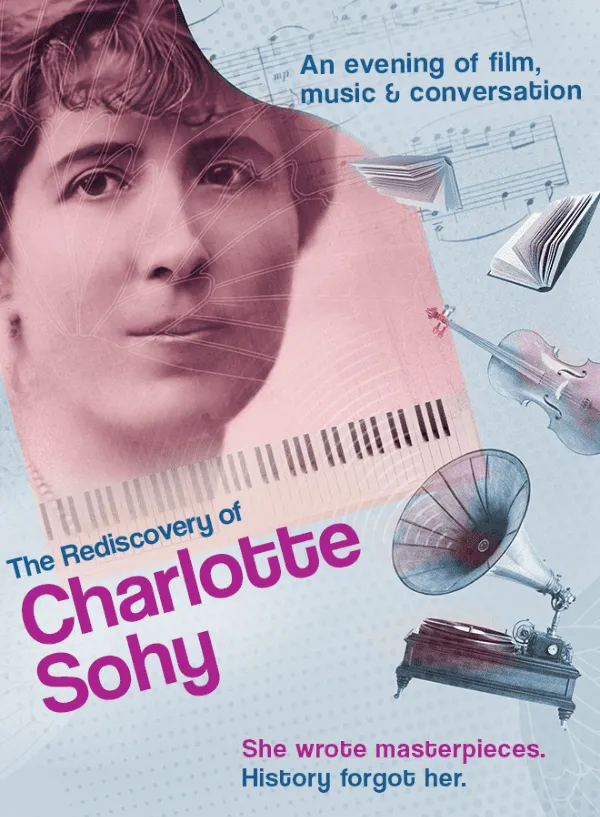
An evening of film and live music introduces a neglected French composer — and asks what we might gain by listening beyond the familiar names. Stacy Olive Jarvis previews an event on Friday...
You cannot fall in love with music you never get to hear.
On Friday 23 October, the Maison Française d’Oxford will give audiences a chance to encounter Charlotte Sohy, a French composer whose music is reaching new listeners decades after her death. An evening of film, conversation and live performance will explore how her work survived — and the effort required to bring it back into public hearing. The free Oxford event raises a question that reaches beyond one composer: how much of our musical taste depends on what we have been given the opportunity to hear?
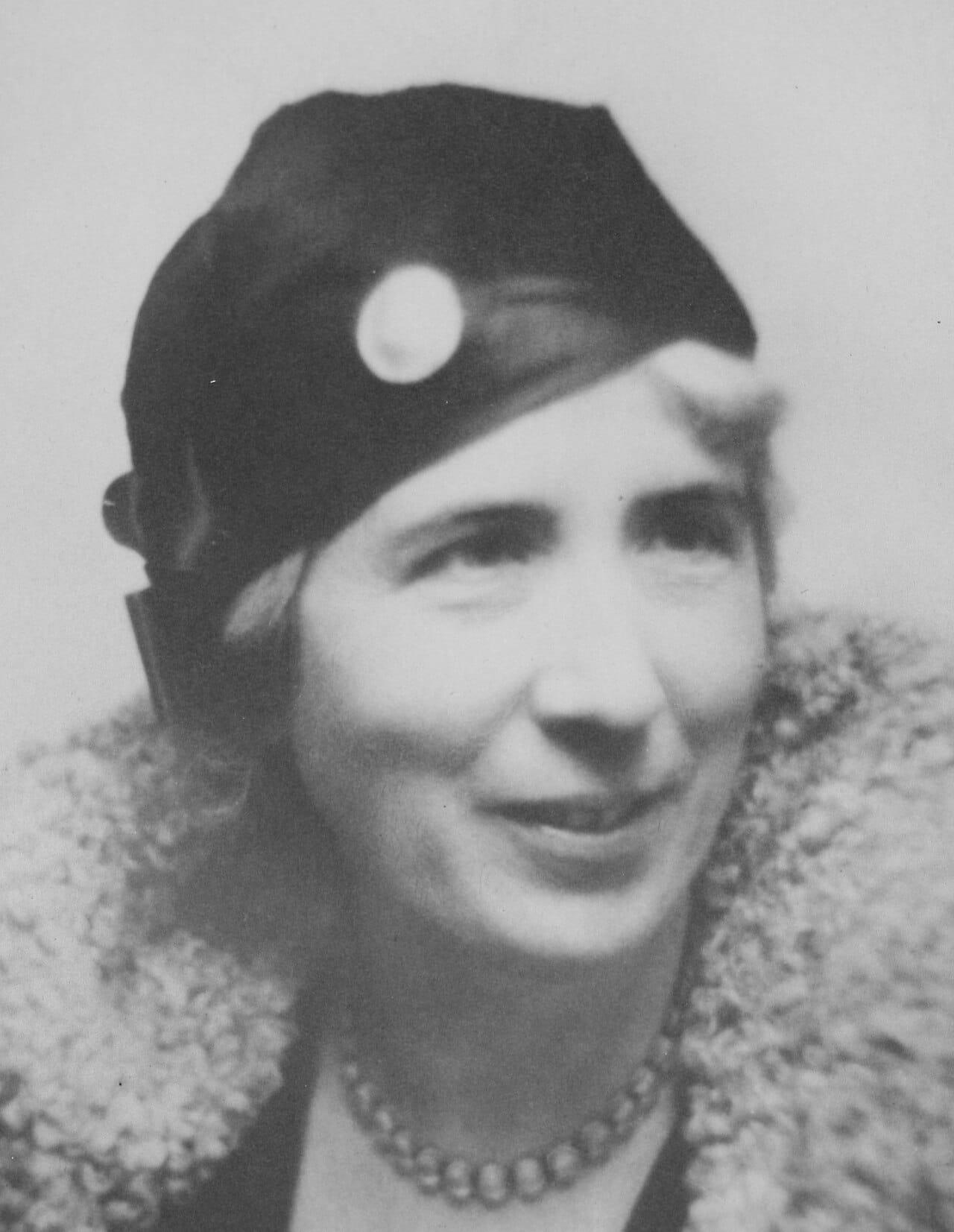
Born in 1887, Sohy lived until 1955. Her lifetime encompassed two world wars, the collapse of empires and the redrawing of Europe’s borders. Countries appeared, disappeared and changed their names. Alongside these upheavals, she continued to compose, producing music for the concert hall, the stage and smaller gatherings of performers. Her catalogue includes songs, piano pieces, chamber music, an opera and a symphony. France Télévisions’ account of her life places that creative persistence at the heart of her story.
History often reaches us through battles, treaties and political leaders. A composer’s work offers another perspective on the people who inhabited those years: their imagination, convictions and creative ambitions.
Sohy had substantial musical training. She studied with organist Louis Vierne and composer Vincent d’Indy, figures who connect her to the French musical world around the turn of the twentieth century. Her biographical website introduces a catalogue that is now being explored through performances, recordings and research. She was also a writer. In an interview with Présence Compositrices, her grandson François-Henri Labey described her literary interests, which included plays and a novel. For her opera, she adapted a story by Swedish author Selma Lagerlöf, writing the libretto herself.
Her biography complicates an easy tale of an artist working entirely without support. She benefited from family encouragement and financial security. Yet personal advantages could not guarantee lasting public recognition. Labey recalled that she concealed her gender behind the signature “Ch. Sohy”; other pseudonyms later made identifying her works more difficult.
He began sorting family manuscripts in 1974. Preparing her symphony for performance subsequently involved two years of revision with conductor Debora Waldman and violinist François-Marie Drieux. Its premiere finally took place in Besançon in 2019, under Waldman’s direction. As Labey’s account makes clear, preserving music and making it possible to perform are different tasks.
A manuscript cannot find an audience by itself. Someone must decipher it, prepare usable scores, persuade musicians to learn it and secure a place in a programme. What appears to listeners as a sudden rediscovery may rest on decades of patient work. But why should any of this matter to a parent juggling work and family life in Witney, a commuter heading home to Abingdon, or someone finishing a day at an Oxford office? Because those decisions about what gets performed help determine what is available for us to enjoy. When familiar names dominate our experience of classical music, we inherit a selection without necessarily recognising how much remains outside it.
The reward for exploring further could be quite ordinary: finding something absorbing to hear on the journey to work, discovering music to share with your children, or spending an evening listening to a composer you never knew existed. Nobody needs a music degree to have that experience. For someone whose musical education centred on a familiar succession of male composers, Sohy offers a chance to widen the picture. Teaching varies between schools, universities and conservatoires, but even extensive training leaves gaps. Professional musicians, too, can encounter substantial bodies of repertoire for the first time.
Stories of rediscovered women often follow a recurring pattern: ambition, obstacles, neglect and eventual recognition. These accounts matter because they restore women’s choices, work and achievements to public view. They also invite us to move beyond the biography and become curious about the art. How does Sohy shape a melody? What happens when her instruments begin a conversation? Does a particular passage make us want to listen again?
Her legacy deserves the space for those questions. Gender helps us understand the conditions in which she worked; hearing the music allows us to encounter her individual imagination. She deserves the opportunity to become someone’s favourite composer, as well as an example of historical neglect.
The Oxford evening brings these strands together. It begins with the UK premiere of Charlotte Sohy: la consécration d’une compositrice, shown in French with English subtitles. Filmmakers Matthias Weber, Sohy’s great-grandson, and Laurence Uebersfeld will join music writer and broadcaster Peter Quantrill for a discussion in English. Afterwards, violinist Gina McCormack, cellist Adrian Bradbury and pianist Reiko Fujisawa will perform Sohy’s Petite Suite and Piano Trio, Op. 24. The programme gives listeners the chance to hear the work alongside learning how it reached them.
Admission is free, although an evening out still requires time, travel and, for some, childcare. Those unable to attend can begin at home: Oxford Song’s Sohy page links to a recording collection featuring her music. A lasting revival takes repeat performances and listeners who return. Friday’s audience can take a first step simply by being curious. Beethoven and Mahler will still be there. The opportunity is to discover who else we might love listening to.
The Rediscovery of Charlotte Sohy takes place at the Maison Française d’Oxford on Friday 23 October 2026, 6–8pm. Admission is free, with registration required. See the programme and booking link.
Originally from Oxford, Stacy Olive Jarvis is a music historian, cultural journalist and broadcaster specialising in European musical culture, forgotten composers and archival research. Her work has appeared in The Conversation, The Strad and Northern Soul.