
Grow it, forage it, preserve it
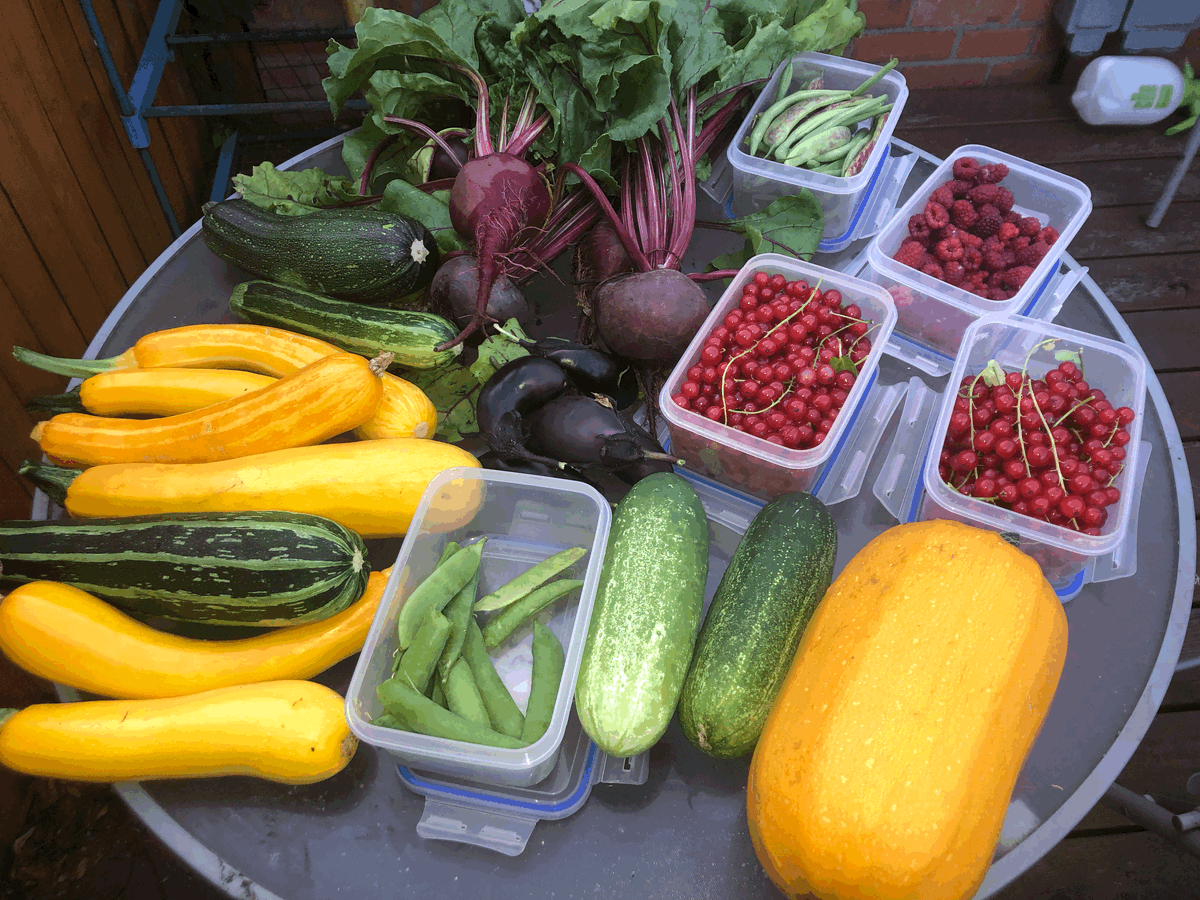
Does being prepared for emergencies mean stocking up on dismal tinned food? Not necessarily. We look at growing your own food – for emergencies, for self-sufficiency, or simply for fun.
To great media alarm, the Government recently announced a campaign to prepare the UK for emergencies. This follows a recommendation from some EU governments in March 2024 that countries should hold a 72 hour stockpile of essential goods. Food shortages due to geopolitical and economic uncertainty, as well as climate disruption, are of increasing concern.
The UK has developed a very sensible website to help with emergency preparedness. Some media outlets have condensed this message to “the UK must stock up on canned food”. But this is an oversimplification. What it actually recommends is a helpful laundry list of emergency power, first aid, bottled water, and this:
“Non-perishable food that doesn’t need cooking, such as ready-to-eat tinned meat, fruit or vegetables (and a tin opener). As with water, how much you need will vary based on your own circumstances. Don’t forget food for pets.”
So whether you are planning to stock up, have invested in bottled water, a Kelly kettle, Lifestraws, or simply wish to be a little more self sufficient, we present a local starter kit. Our resident horticulturist Amandine Lepers-Thornton teams up with Cultivate co-founder and sustainability expert Emma Burnett, plus occasional Clarion writer and home canner, forager, and experienced allotmenteer Josie Procter on how to grow, forage, and preserve foods. All in the hope that this brings you excitement around food, rather than ever seriously needing to use the skills.
Growing basics
If you’ve never grown anything before, we'd recommend starting small with microgreens, herbs, salad/leafy veg, or easy-to-grow crops like small squashes (which can be grown up a wall/fence/tree or structure in small gardens). This will help you to build up gradually. Vegetables and herbs can be included in your garden, if you have space, but if you don't, many cultivars can be grown in pots or containers inside or on a patio. For the best chances of success, check sowing/planting times as well as the best position – e.g. tomatoes and squashes in full sun, spinach and chard in part shade – see Amandine's previous guide for the Clarion about growing your own food as a starting point.
It's not a money saver if you have to buy compost, pots, and seeds, so consider sharing seeds with friends and neighbours or saving your own year-on-year, and making your own compost or sourcing compost/manure locally (e.g. from Oxford City Farm or other local farms). Some councils even give away compost for free, and if we hear about it, we'll make sure our readers know.
Foraging basics
Oxfordshire's hedgerows and common spaces are rich in forageable food. There are very useful crops all around – elder trees, apples, sloes, hops, and blackberries are all freely available. You can also find plums and cherries, as well as a variety of edible nuts. There are maps that can help you find local freebies, and an afternoon with a couple of carrier bags and maybe a small stepladder can set you up with kilos of ingredients.
Note your favourite spots for foraging, for they will be there year after year. There's a plum tree on Port Meadow that we found whilst blackberry hunting, nestled near the railway line, which we can only assume seeded itself from a stone thrown from a train window years and years ago. It delivers bags of wonderful plums each year.
A health warning: If you think it might be poisonous, don't touch it and definitely don't eat it. For that reason, we are not giving instructions on foraging mushrooms, which are the easiest to make a mistake on. We'd also suggest a rule of harvesting above 'dog wee height' for obvious reasons. And if you think it might be on someone's land or garden, rather than common land, it's good practice to ask first! You'll often get lucky, particularly if they're not inclined to harvest all their own fruit, and you can make friends by bringing back a jar of jam.
Preserving basics
Rule 1: Only preserve what you and your family will eat. It turns out Josie's family don't eat much chutney so there are jars of it dating back to 2019 in the cupboard. If jam is your jam, go for it. I now realise my family want full easy meals, so I've learnt to pressure can, but I recognise that is fairly niche, so here are some easy intros to preserving your own food, whether you have grown it, foraged it, gleaned it, or found a great deal at a shop.
Rule 2: Use fresh. For best results, preserve fresh produce, rather than freeze slightly manky 'use by' produce. Don't get me wrong, it definitely has its place, but it's better to just eat it quickly, rather than preserving for long term storage.
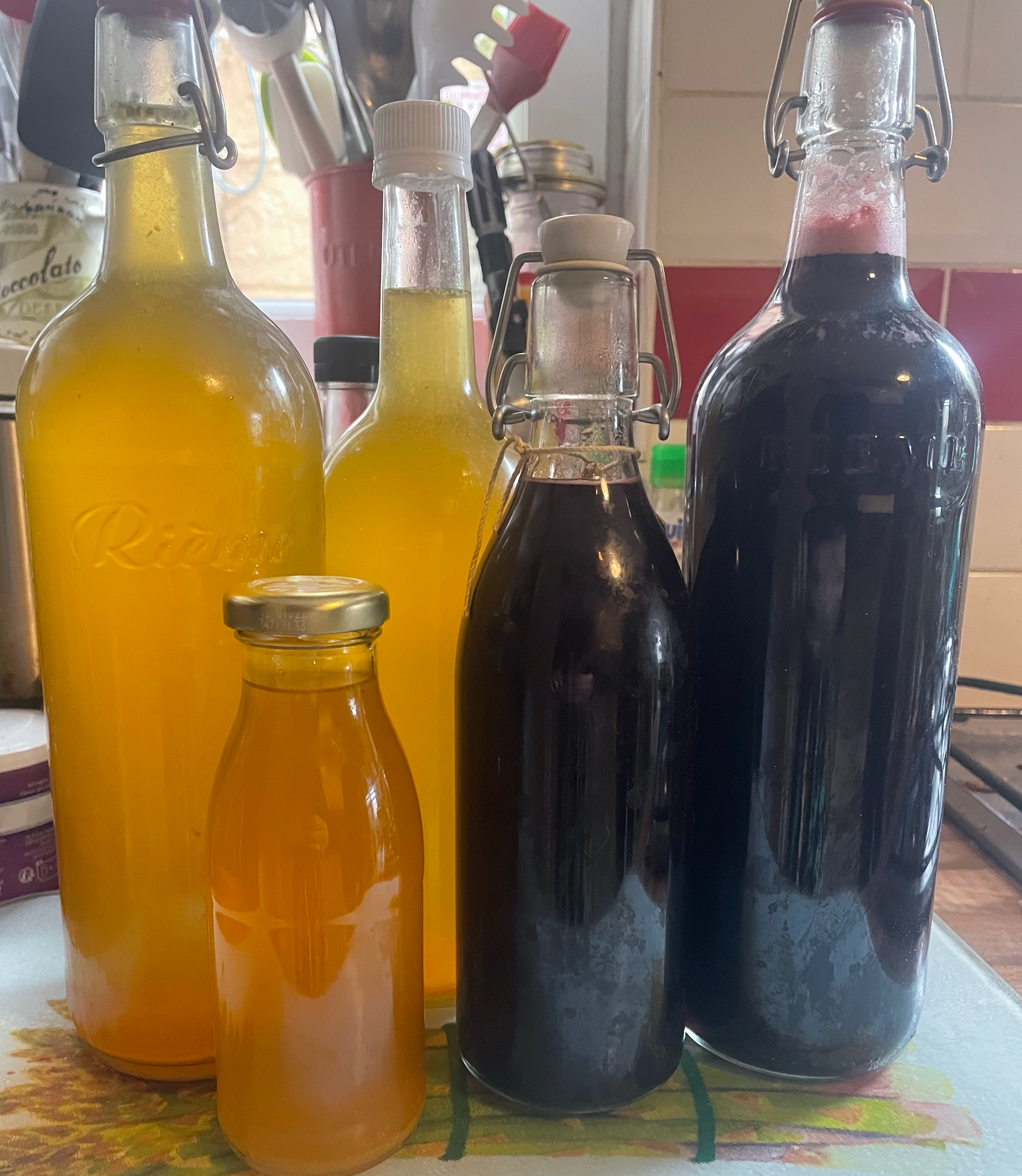
Rule 3: Label things well, with a clear date. You won't remember what that bottle, tin, or jar is full of in three years time. Trust me. I'm the parent we've all heard about, the one who accidentally made squash for my son using unlabelled sloe gin (which he spat out, wailing, "Mummy, this tastes horrible." No children were harmed in the making of this anecdote).
Freezing
The method most people are familiar with. Most foods can be frozen, though some more delicate produce like strawberries and carrots will change state, and either break apart on freezing or go mushy on defrosting. Mushy strawberries are fine for baking or smoothies or jam. If you're freezing vegetables, some need blanching before freezing, which is effectively dipping in to boiling water, then cold water, then getting in the freezer. Beans, broccoli, carrots, sweetcorn all respond well to blanching. Peppers, tomatoes, onions and leeks just need to be chopped and frozen raw.
However, freezer space is usually limited, and requires electricity for ongoing preservation. If the power goes out, a full freezer will keep food safely frozen for up to 48 hours, as long as the door is fully closed. Frustratingly, though, this means the food is not accessible.
Water bathing
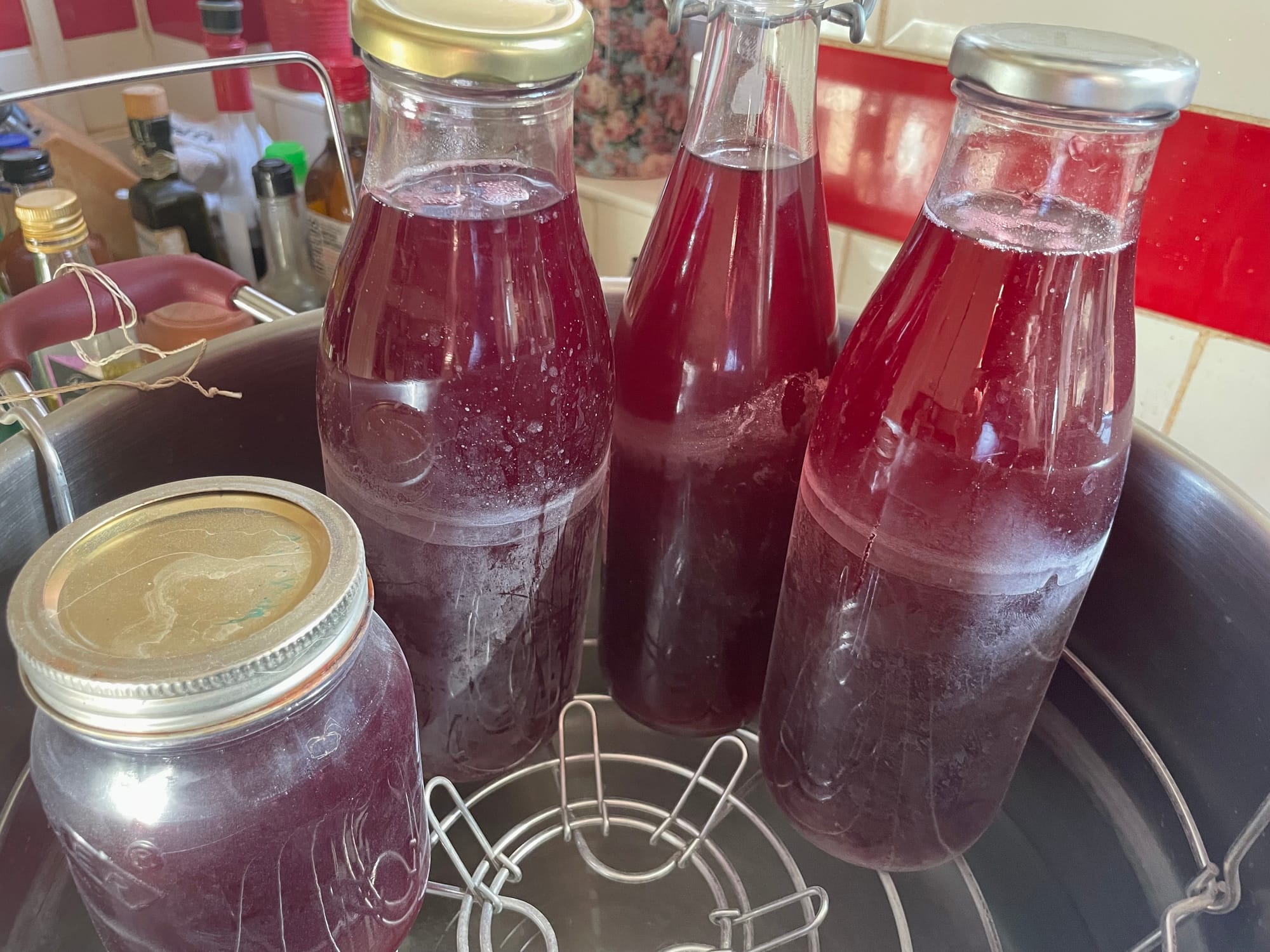
For jars storing high-acid foods, you may need to do a hot water bath. You put hot food or liquid in a sterile jar, place the jar in a pan of boiling water, to cover, and water bathe both to set the seal, and ensure heated to a high enough heat for longer term storage. Syrups, sauces, chutneys, and high acid foods like apples, plums and rhubarb can be treated this way. A note on jars – for water bathing, you can use recycled jars, and it is helpful if they have a 'pop down' button lid, so you can see that it is sealed properly.
Dehydrating
The process of drying foods so they can be safely stored at ambient temperatures. You can do this in a home oven on a low temperature, or even, according to some, an air fryer. But if you have bulk produce to preserve frequently, a dehydrator is what you'll want to do bulk batches. Good things to dehydrate include apple slices, fruit leather, tomatoes, and chilli peppers. You can read more on dehydrating here.
Pressure canning
Pressure canning is a food preservation method that uses a specialised, locked pot with pressurised steam to heat jarred food to (115°C) or higher. The video below gives an overview to canning, and the best recipe book I've found is the Canning Diva's Complete Guide to Pressure Canning. We now prepare full meals like soups and stews with garden produce – in the winter we're never more than four minutes in-the-microwave from a healthy and convenient meal. The investment of time in the summer makes for an easy winter.
You can pressure can almost anything. There's a thriving corner of the internet that makes their own canned dog food, and homesteaders in Alaska have made their own canner to preserve salmon. (Admittedly, there is also a growing section of the internet canning for 'the apocalypse', but we will gloss over that part.) Pressure canning is growing in popularity in the UK.
However, a disclaimer: canning is a skill and requires specialist kit with a significant initial outlay. That said, once set up with canner and jars, they are re-useable over and over again, simply replacing the lids. And it does mean you can take advantage of bulk buys on anything. Chicken in bulk from Aldens? Easy sandwich filling. Seen some sausages you love, or on special offer? Add to tomatoes and veg for a stew that heats up in minutes.
There are two things to consider before canning: will you and/or your family eat it? and, is the cost of the food more than the cost of the lid, which cannot be re-used?
Seasonality
The rhythm of what you can store and grow changes through the year. With changing climate patterns and complications in international trade, we may need to get used to eating more seasonal produce, along with pre-stored food. This guide gives you a sense of the changing patterns of food creation and preservation throughout the year.
Autumn
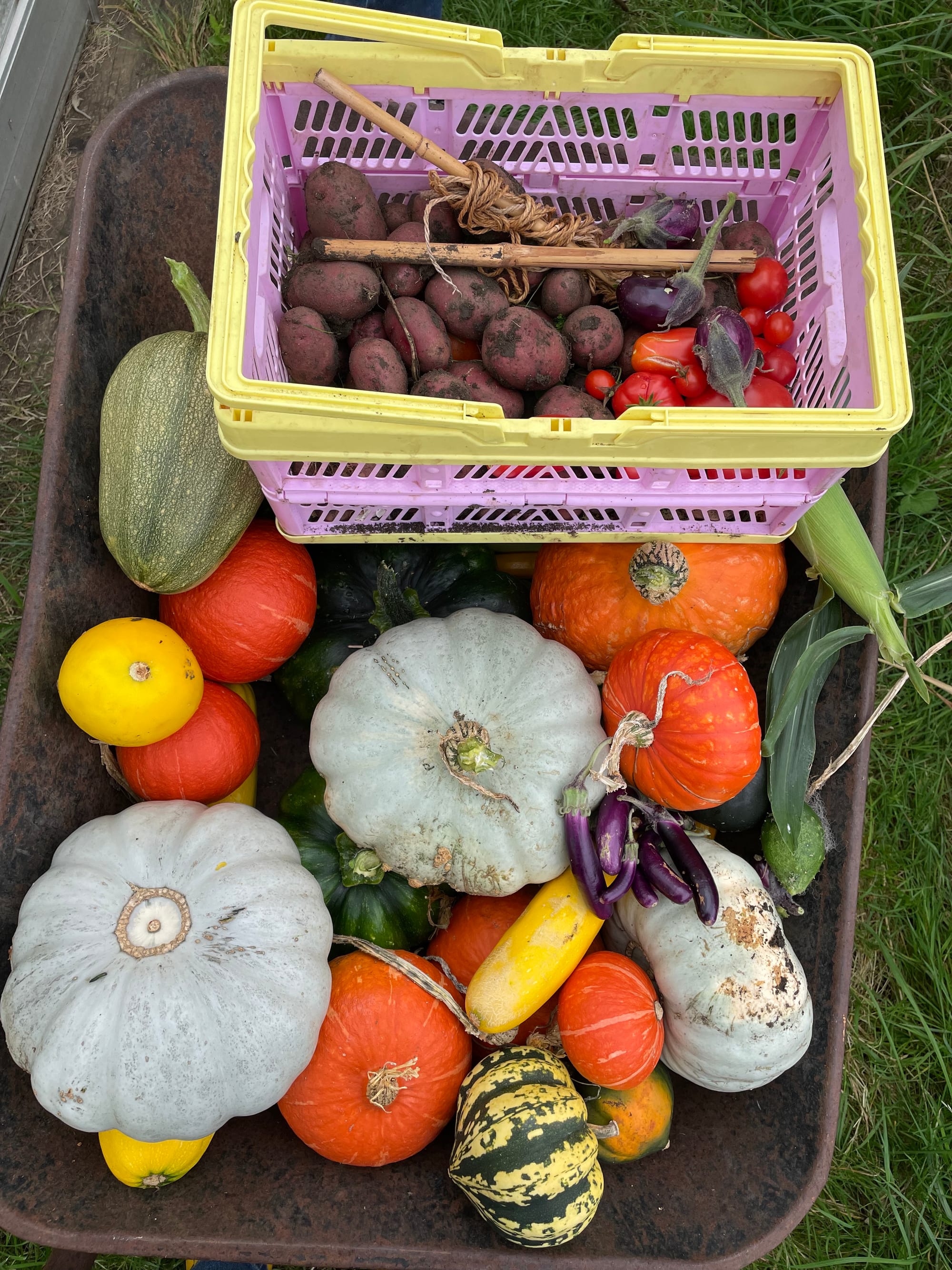
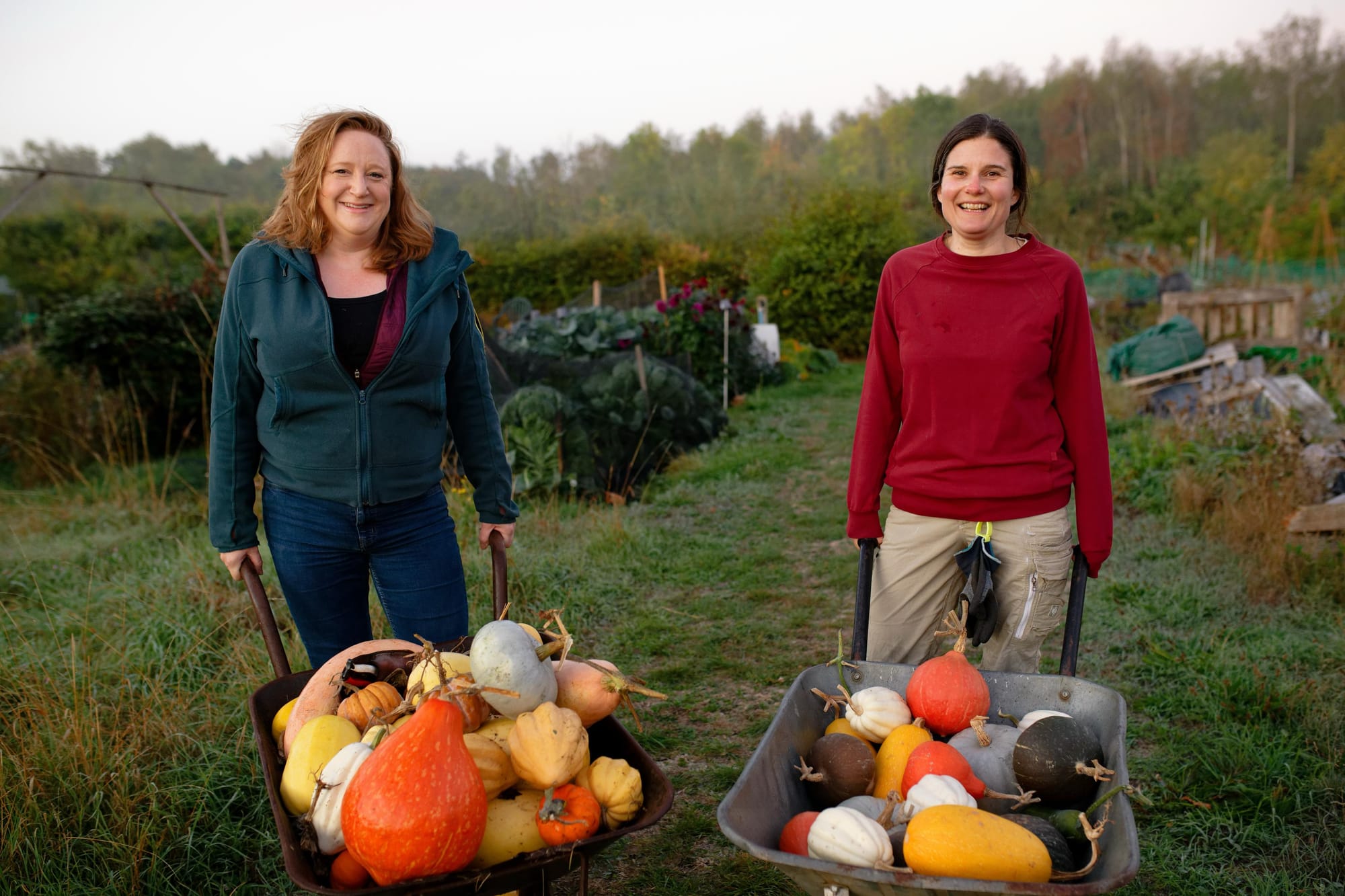
Autumn, seasons of mists, mellow fruitfulness, and gluts
Grow it
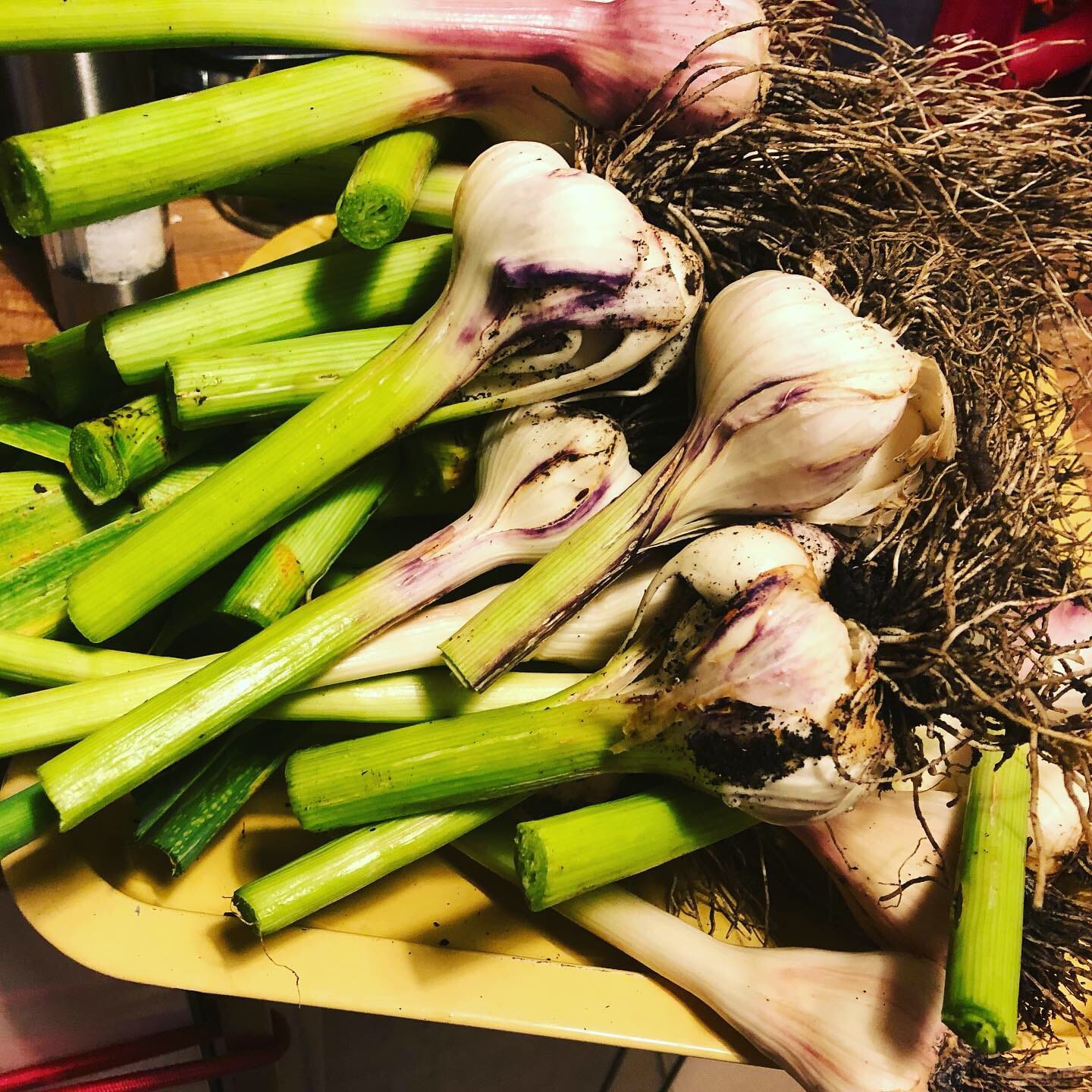
Autumn is undeniably the best time for planting overwintering crops. The soil is still warm and moisture returns with more frequent rainfall. This gives plants like garlic, onions and shallots, Christmas potatoes, peas, and broad beans a chance to germinate before the frost hits. Late autumn is also the time to plant fruit trees and bushes along with raspberry canes. £ for £ raspberries (and soft fruit generally) are the best investment you can make in a garden or allotment. They need relatively little maintenance, last for years, and the price of soft fruit in the supermarkets is high.
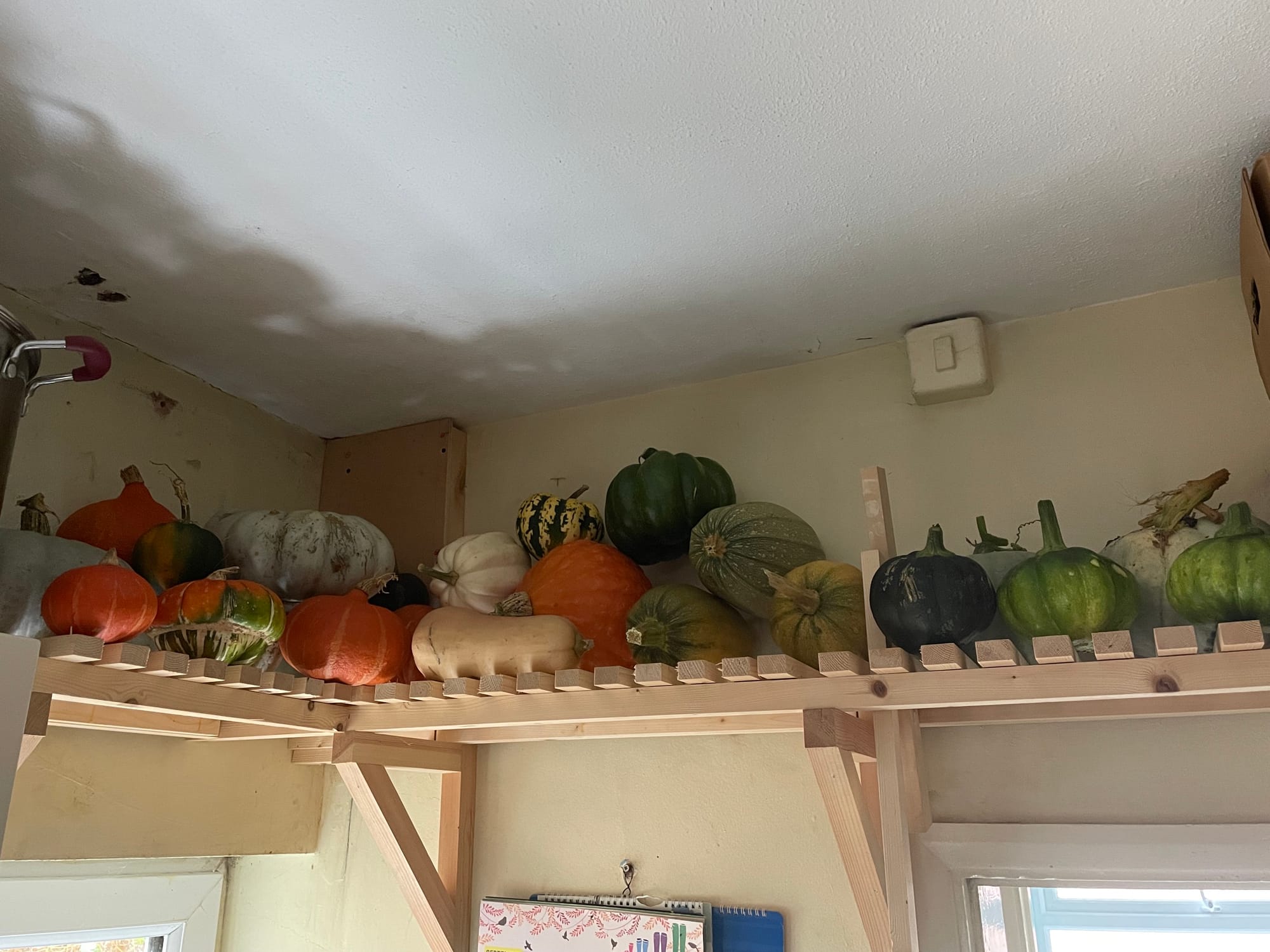
If you planted tomatoes and peppers at the start of summer (either under cover or in a sheltered spot), you may still be harvesting them until the first frosts. Herbs will continue producing if picked regularly and not allowed to go to seed. If you’ve grown winter squashes and pumpkins, you can revel in seasonal smugness – you’ll have something delicious to keep you fed throughout the winter months. Make sure you keep your squash in a cool dark place and check them regularly for signs of rot. ‘Crown Prince’, spaghetti, and Hokkaido squashes are excellent for storage and can be kept until the spring in the right conditions (be careful not to have the heating on too high or the seeds inside might start sprouting!).
Forage it
This is prime time to forage. The hedgerows are full of free food. Oxfordshire's waterways are a top hunting spot. Blackberries, sloes, hops, and elderberry grow intertwined, ripening at the same time. Apples and plums ripen from summer through autumn and roadside trees gone wild can provide a bounty. You'll be spoilt for choice!
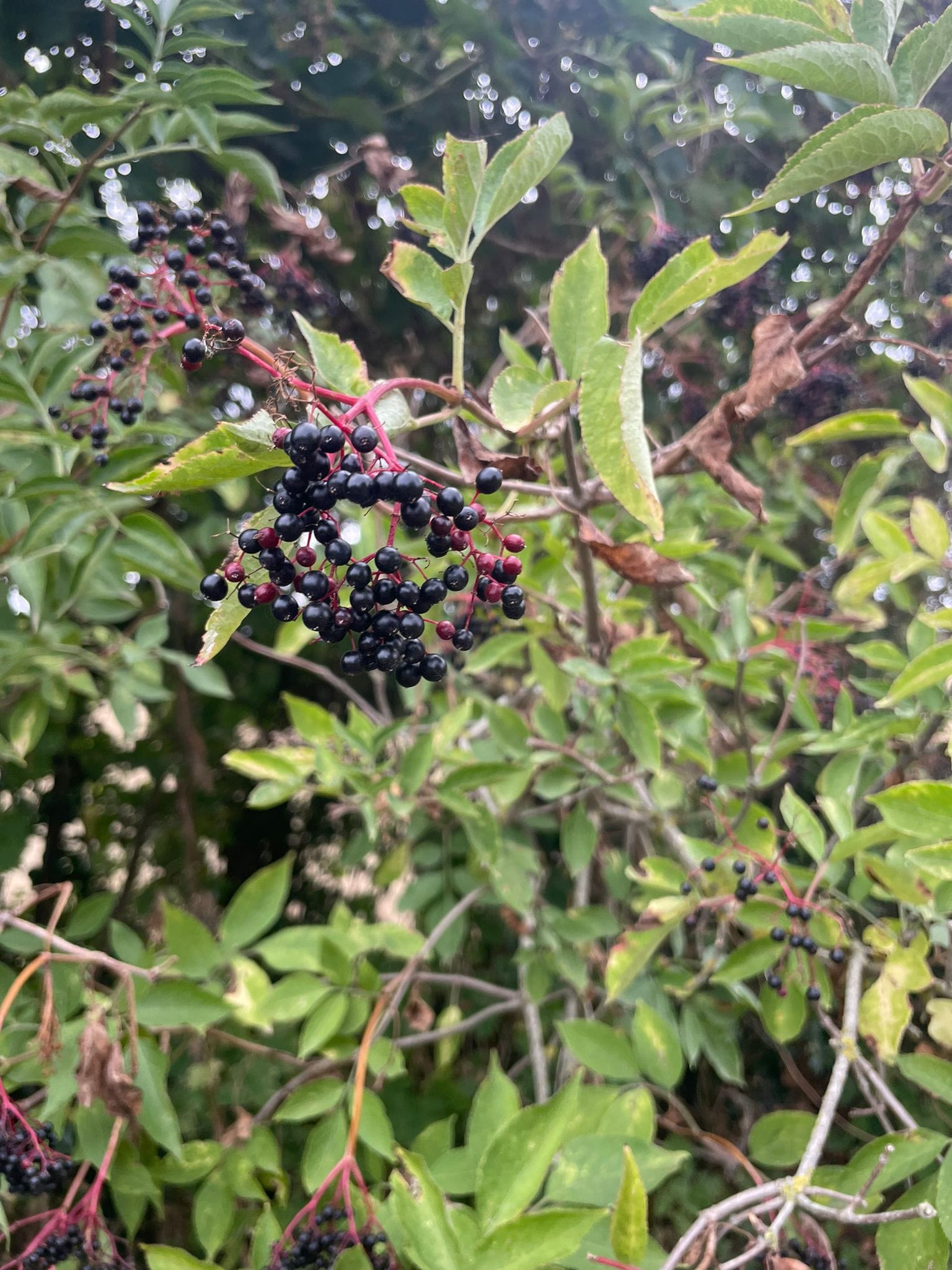
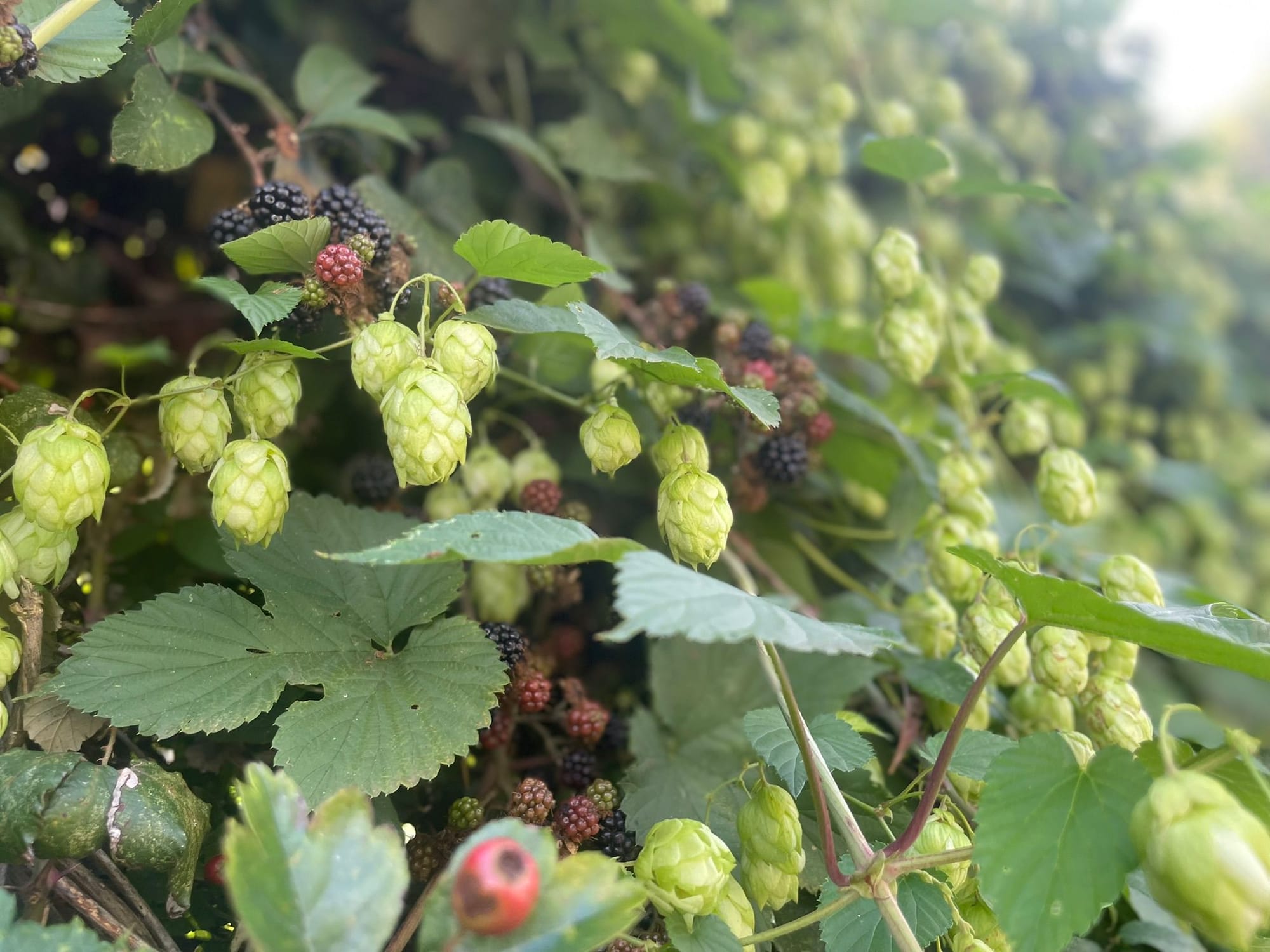
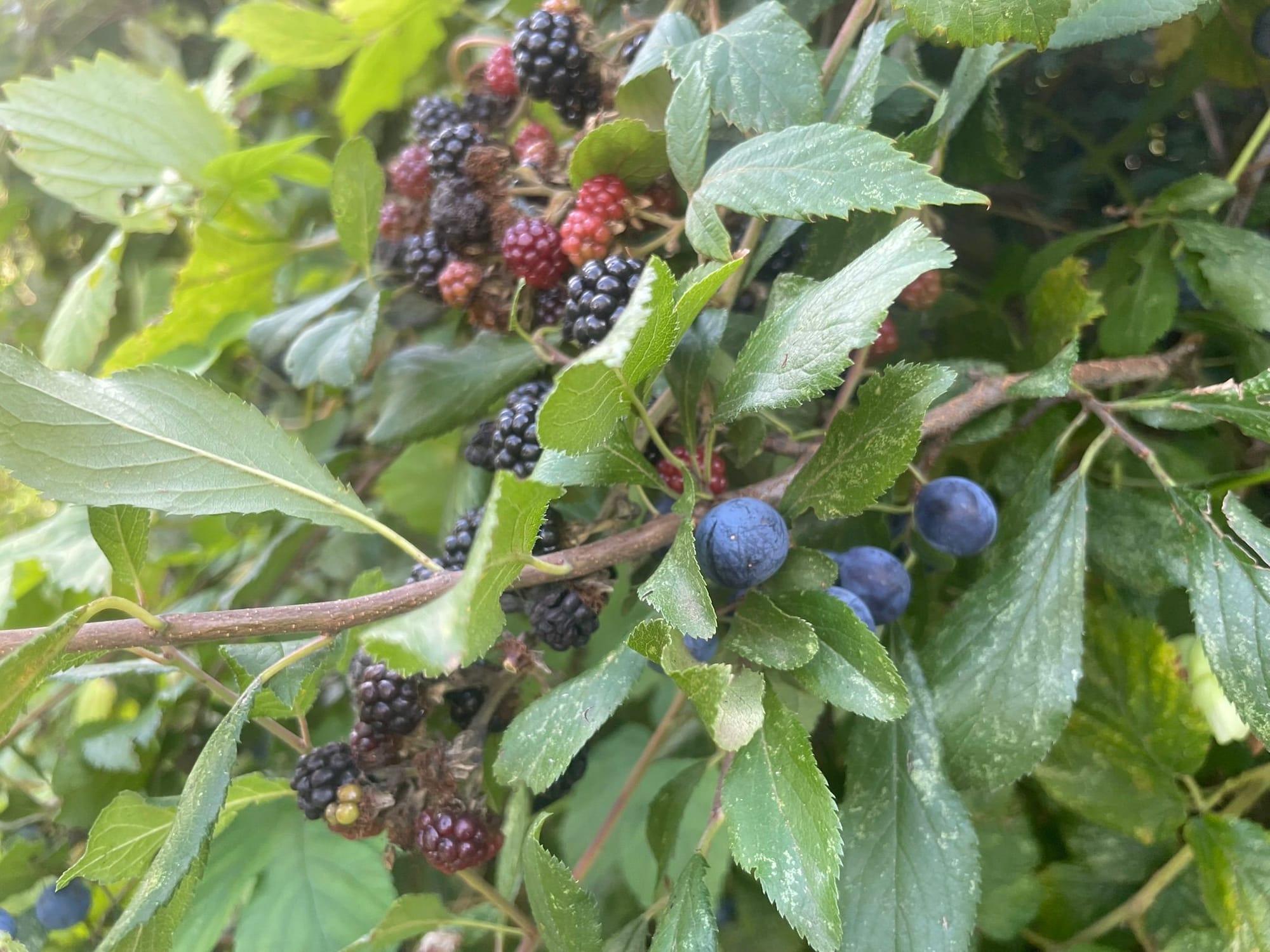
Hops, elderberries and sloes often grow close together.
Preserve it
Apples, the most versatile of fruit. Dehydrate the rings, or turn sauce into fruit leather. Applesauce can be water bathed or pressure canned in jars, and whatever you do to apples can also be done for pears, and plums. Of course, you can just juice your apples; the Oxford Farmhouse and Pasture Farm Juice will take your apples, juice, pasteurise, and bottle them for you.
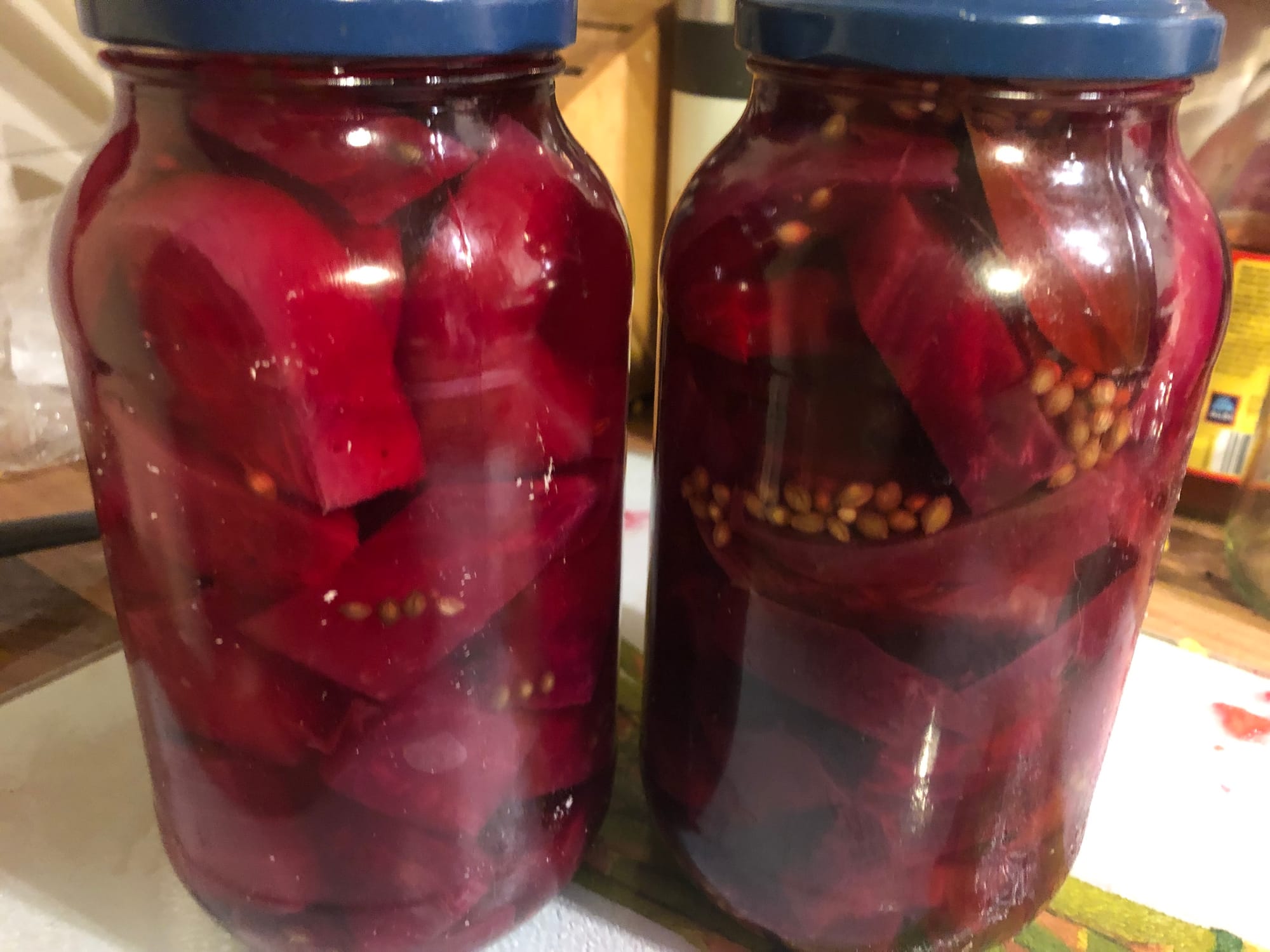
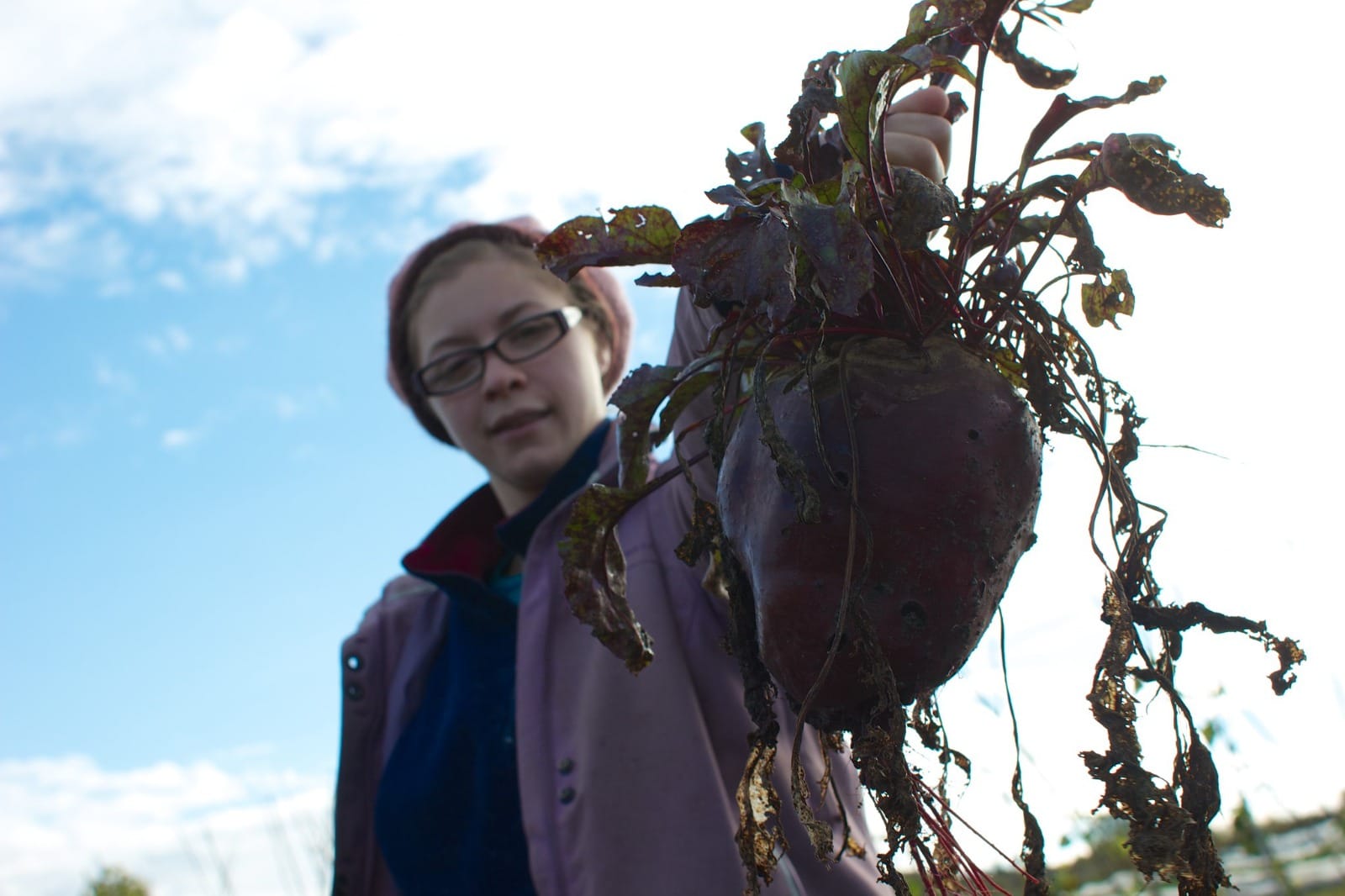
Beetroot can be pickled and waterbathed, or pressure canned, for salad beet whenever you need it.
Blackberries can be frozen, canned, turned into jam, or made into syrup. Or mix their pulp with applesauce, strain and dehydrate for fruit leather.
Elderberries can be made into a vitamin C-rich syrup which can be used as a natural cough remedy.
Hops can be dried in an airing cupboard, or at a low heat in an oven or a dehydrator. They can then be used to brew a tannic, but relaxing tea, or sewn into a pillow with lavender as a herbal remedy to aid sleep. Or, of course, used to make beer – but brewing would be a whole different article.
Pumpkins or squashes can be harvested or bought in autumn, and will keep for months in a cool place, like a porch or cool kitchen shelf. If you're buying, look for squash with a long-ish stalk.
Sloes are good for flavouring gin. I've not many other uses for them that don't involve gin at some point in the process. But if we do 'have an emergency' then probably a gin stockpile wouldn't be the worst thing?
Winter
Grow it
Winter is time for planning, but not planting, your garden, and resting up from the rigours of summer. There are some harvests that still happen. If you planned right in spring and summer, you can be harvesting Oriental greens, Broccoli, Brussels sprouts, cabbages, kale, leeks, and parsnips through the cold months. If you’ve planned well, you can also harvest tubers like Jerusalem artichokes (go easy on them though) or Christmas potatoes from a large tub in a greenhouse or polytunnel, and root veg left in the soil like beetroot and carrots.
You can grow some things under cover, like winter mix salad (my favourite winter crop for greenhouse beds is lambs lettuce, a favourite staple in France) or leafy crops such as chard, parsley and rocket which should also over-winter with a little protection. If you’re growing onions from seed, Boxing Day is traditionally the best time to get sowing. If you didn't plant them in autumn, you can plant garlic seed (i.e. garlic cloves for planting) in individual pots in a sunny spot under cover (an unheated greenhouse is best) and delay planting until the soil is no longer waterlogged.
Forage it
There are limited food crops for foraging at this time of year but if it's your bag you can find sweet chestnuts (not horse chestnuts, aka conkers), for roasting or boiling, hawthorn for jellies and ketchup, plus rosehips for wine or cordial. Outside of food, ivy and mistletoe can make lovely Christmas decorations.
Preserve it
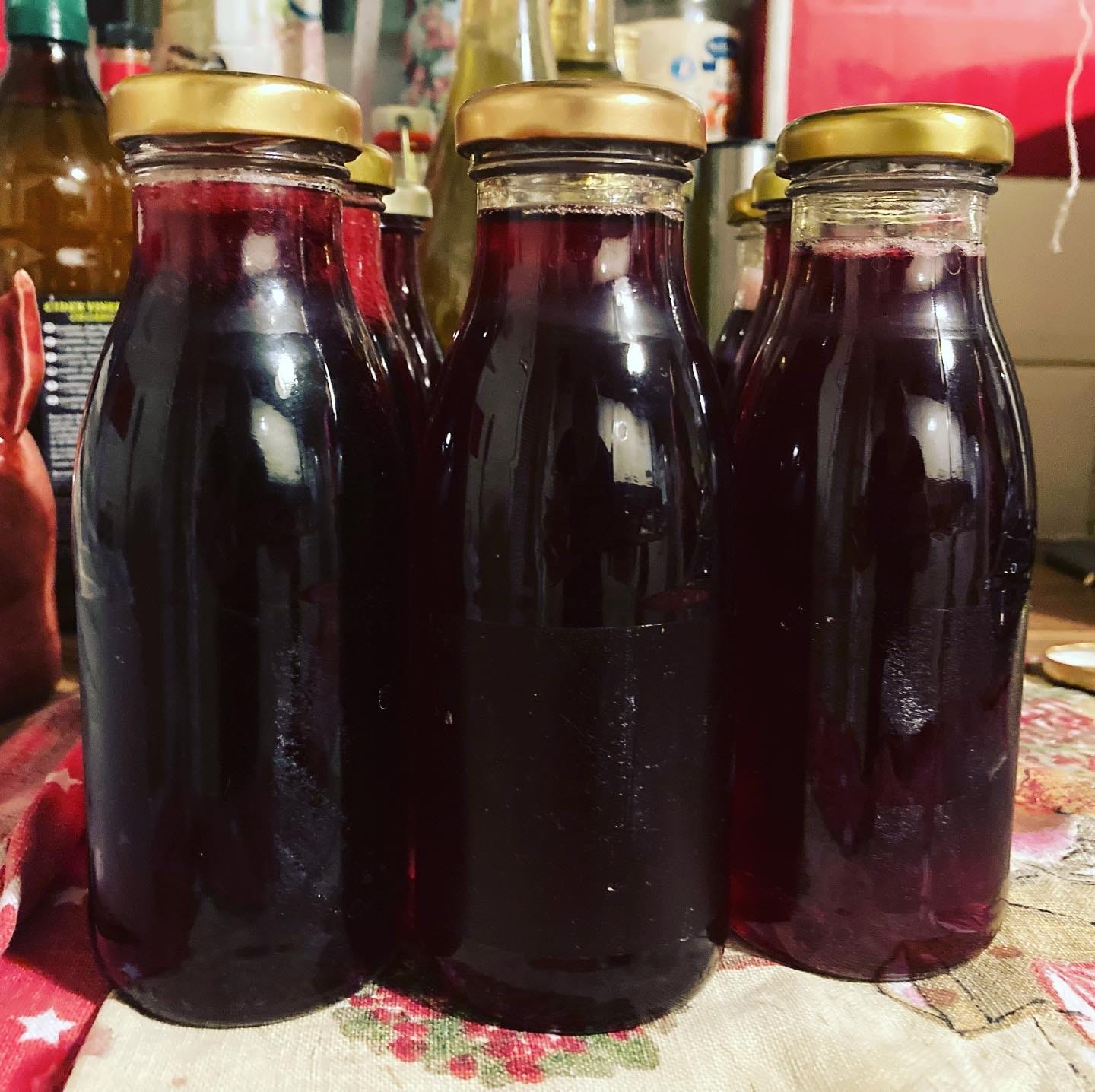
If you have time over winter, now is the time to decant your frozen summer bounty into preserving jars. Nobody needs another jam recipe, so here are some alternatives.
You have frozen plums? Try this Chinese plum sauce, or this plum syrup for pancakes. Rhubarb? Try this BBQ sauce. Redcurrants? Bright red jelly makes a lovely Christmas gift.
Spring
Grow it
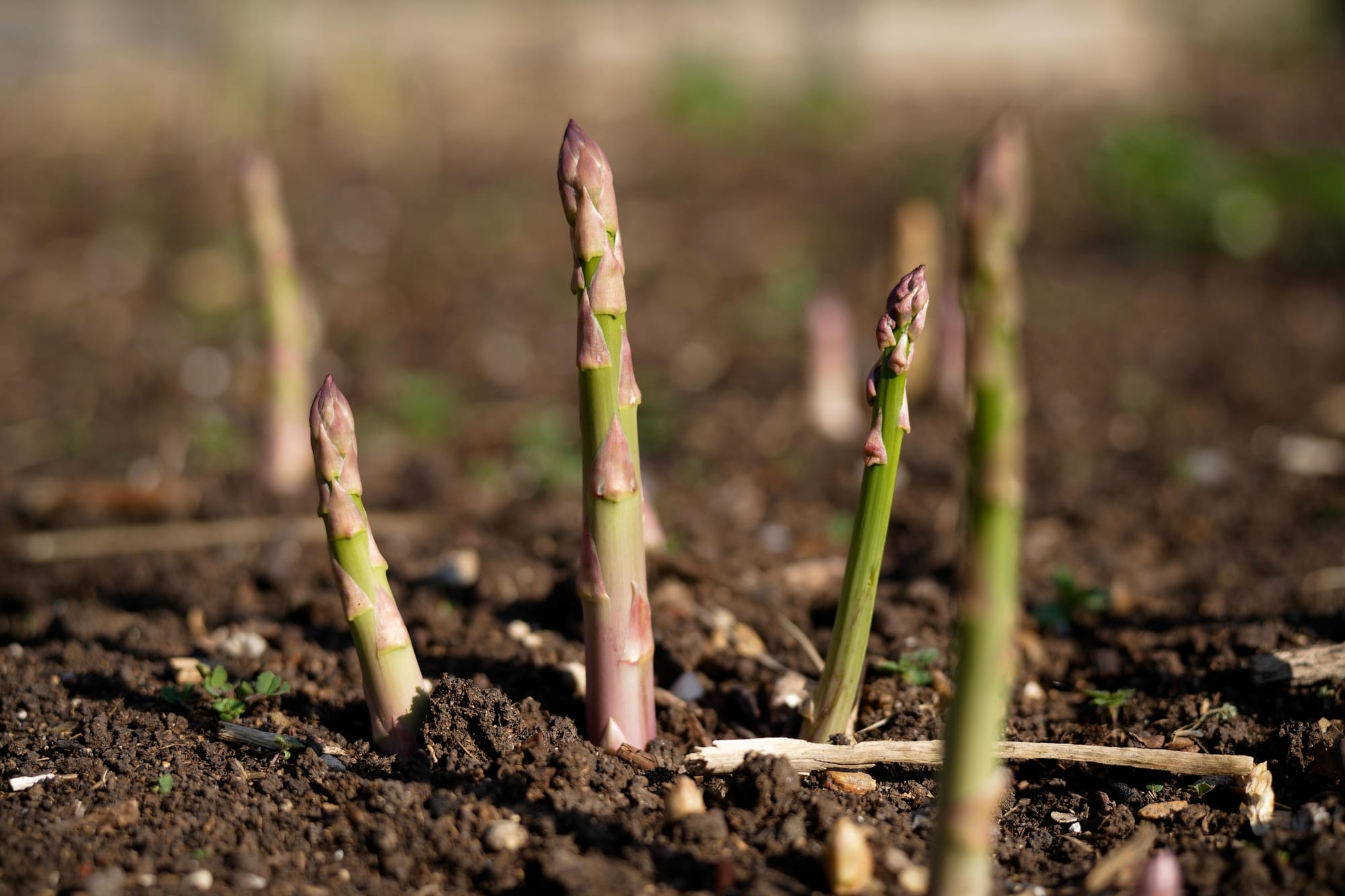
Spring is the most glorious time in the vegetable garden. It's not yet overrun with weeds, the seeds are still germinating, and optimism for the growing year is in the air. Sow tomatoes, peppers, and chillies early. Basil (and most herbs): take a cheap and cheerful supermarket plant and split it up into multiple pots. Grow it in a greenhouse if you can, or on a sunny windowsill. You will be rewarded tenfold if you keep it watered. You can also plant supermarket spring onions (after cutting it right back) in a patio container and keep harvesting as it grows.
If you planted asparagus and rhubarb the autumn before last, you can start harvesting the first spears and stems. They’ll keep producing for years and are without doubt the best spring crops as they require hardly any cleaning and preparation, unlike other popular British veg (I’m looking at you carrots and potatoes!).
Herbs and leafy greens will get going again as day length improves and the last harvests of greenhouse and polytunnel crops can be enjoyed before letting the plants go to seed for next season’s harvests (or cut back to the base – don’t pull out edible plants if you can avoid it as the roots feed soil life). Quick crops like radishes and baby carrots are also fun to grow.
Forage it
Spring is a bit of a fallow season (often called the 'hungry gap'), and there may not be that much to harvest, but there are plants to forage in spring.
Wild garlic, also known in (mainly) American recipes as ramsons, grows in shady woods and along streams. Once you've found your spot, remember it. Its leaves, flowers, and bulbs are all edible and have a delicate garlic flavour.
Elderflowers will appear in late spring, and early summer. Mark the tree position, because they will grow elderberries later on in the year, assuming you haven't harvested all the blossom of course. So make sure you leave some for the tree! Elderflowers should be harvested on a warm sunny day, when all the blossoms are out. I find elderflower trees are not all the same – some smell more fragrant than others, and some smell strangely like stinky cheese and old boots. So, remember your favourite trees!
Nettles, rich in iron and vitamins, start to appear in February. The best leaves to pick are the tips, but be sure to wear gloves! It's only the undersides of the leaves that have stinging hairs, but even if you're careful, you're likely to snag yourself. Once cooked, though, the 'prickly' effect disappears, and they have a flavour somewhere between cabbage and spinach. Treat it like spinach, or make into a soup.
Hawthorn is one of the first plants to wake up after the winter, growing in woods, and scrubland. The leaves and clusters are most tender in March and April, and have a pleasant nutty taste. These can be eaten straight from the hedgerow or add them to green salads, potato salad, or sandwiches.
Preserve it
Although newly-sown crops won't yet be ready, foraged food can provide a valuable fresh addition to your preserved food. But if you're foraging to restock the larder, keep an eye out for these.
Wild garlic can be frozen, simply chopped, or made into a pesto and frozen. Those elderflowers you foraged, assuming you have sugar available, can be made into a glorious scented cordial, or if you are feeling brave, wine. Here's a recipe for cordial that can be stored long term, and one for elderflower wine, for a bit of fun.
Summer
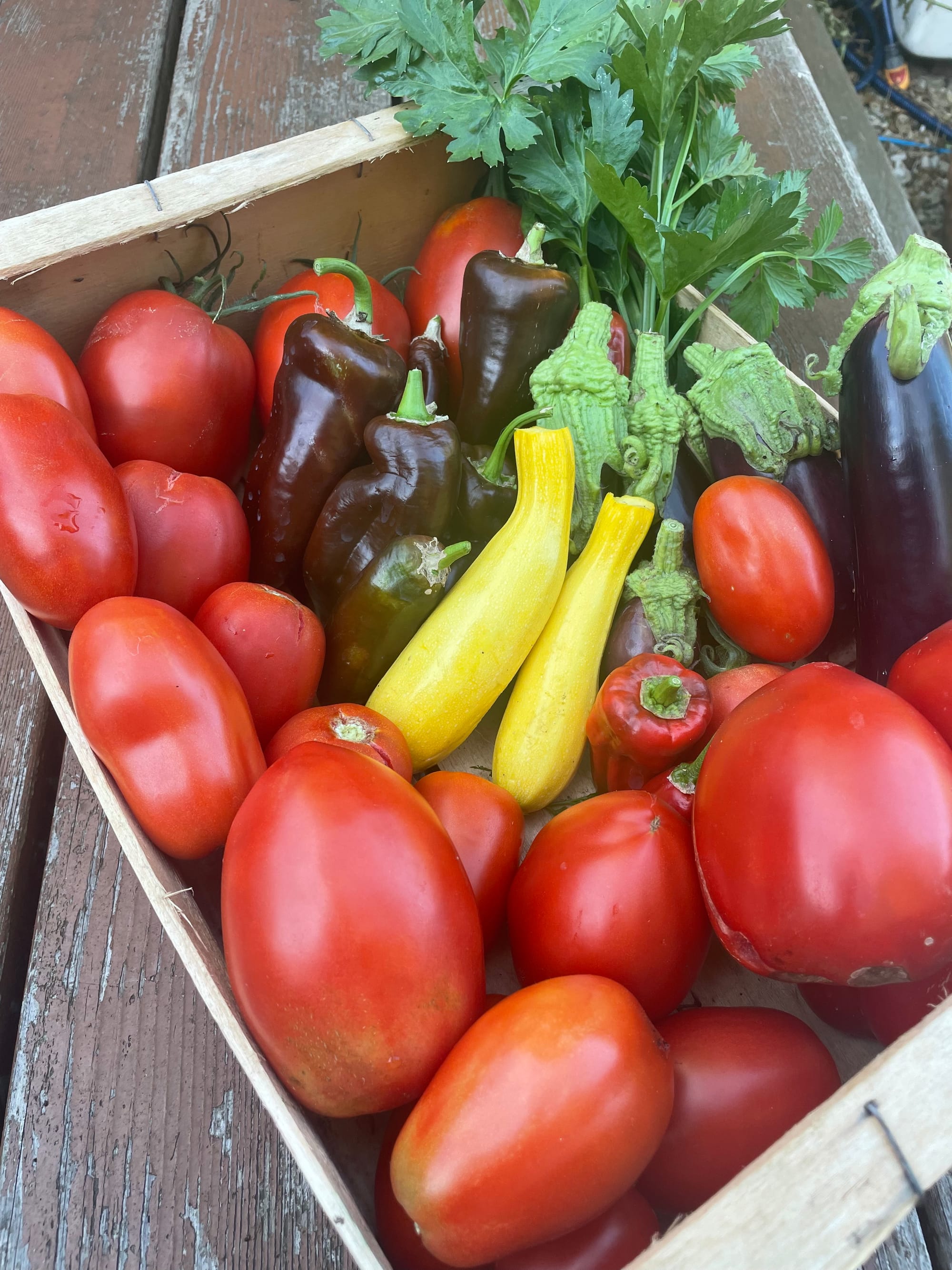
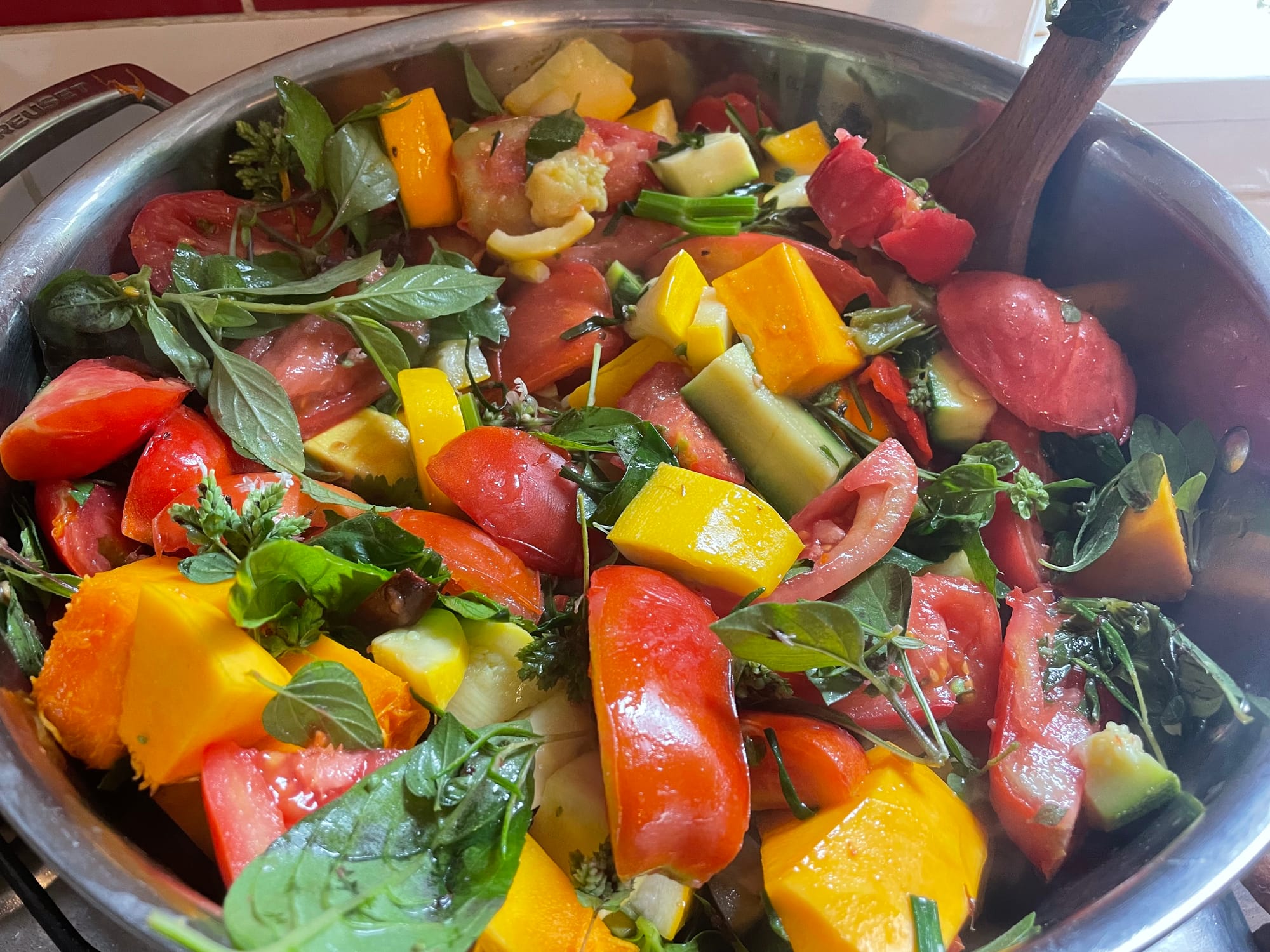
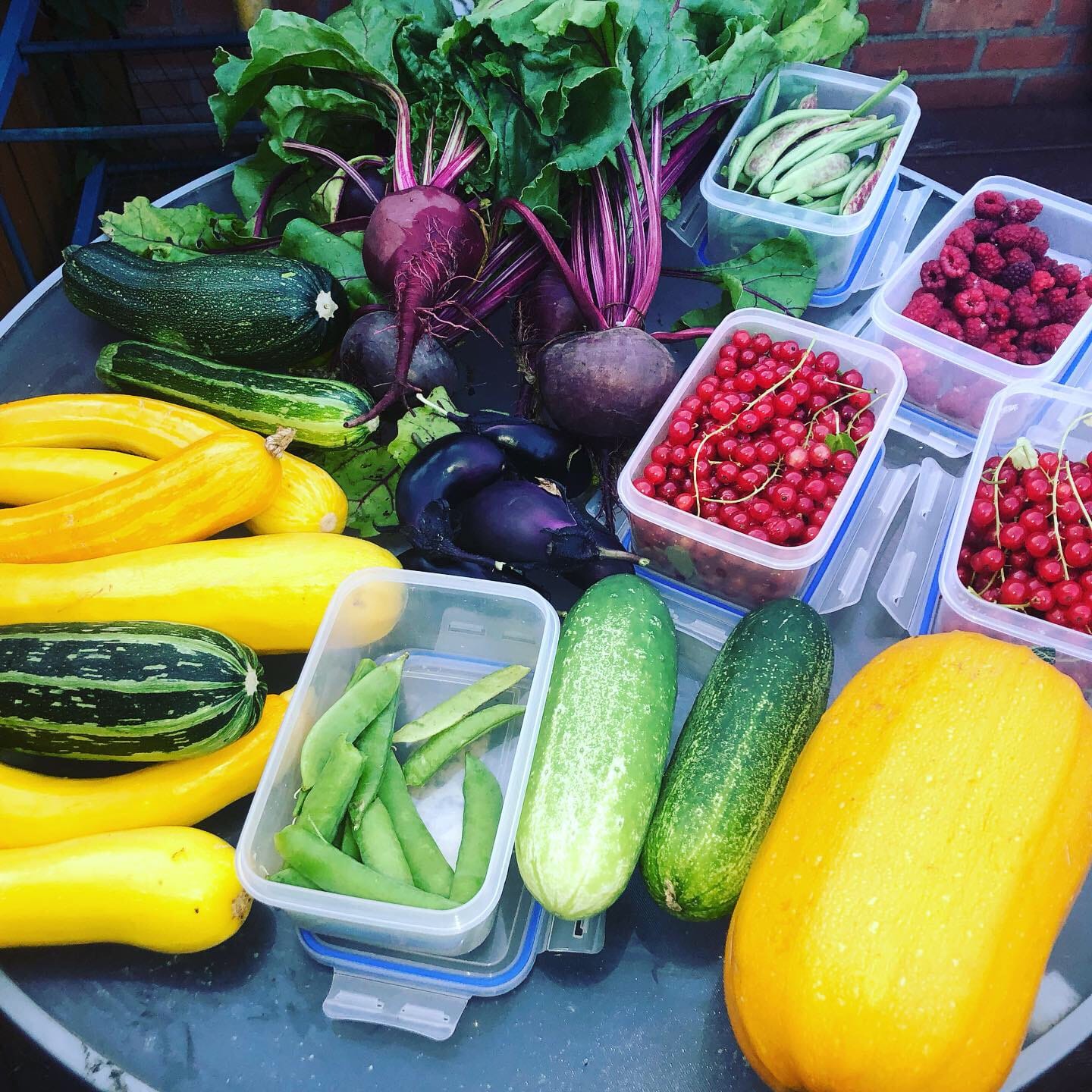
Enjoy summer's bounty, but have a plan for when it all comes in at once and you need to preserve it.
Grow it
If you want to grow a rainbow, summer is when it all happens!
Past the hungry gap, you can start harvesting broad beans, salad crops, and leafy things. In late June, you may even be rewarded with the first tiny courgettes and cucumbers from springtime sowings. And the joy of digging those first spuds! There are lots of edibles to harvest in flower beds too: violas, calendulas and nasturtiums look pretty when decorating summer cakes, or simply enjoyed fresh in salads.
There are fun things you can try, too. 'Three Sisters' is a space saving technique borrowed from the indigenous peoples in the Americas. Germinate corn and squash inside then plant it out with bean seeds. The beans climb up the corn, and leave nutrients in the soil that the squash and the corn take out. The squash trail around the beans and corn to keep the weeds down, for lower maintenance gardening. It looks really cool and colourful too! Onion squashes can be trained to grow on trellises or fencing, and you can also pop a few French bean plants with your sweet peas (don’t go mad – you only need a few handfuls of beans as they’re seriously vigorous!). Tomatoes, peppers and aubergines can be grown outside and in large pots if space is limited (check suitable cultivars) but taste out of this world when grown in a hot greenhouse or polytunnel.
We won’t lie, watering all these beautiful crops can be hard work in hot dry summers, but it will help to mulch thickly to retain moisture in the soil (and use greenhouse shading as tomatoes suffer in intense heat).
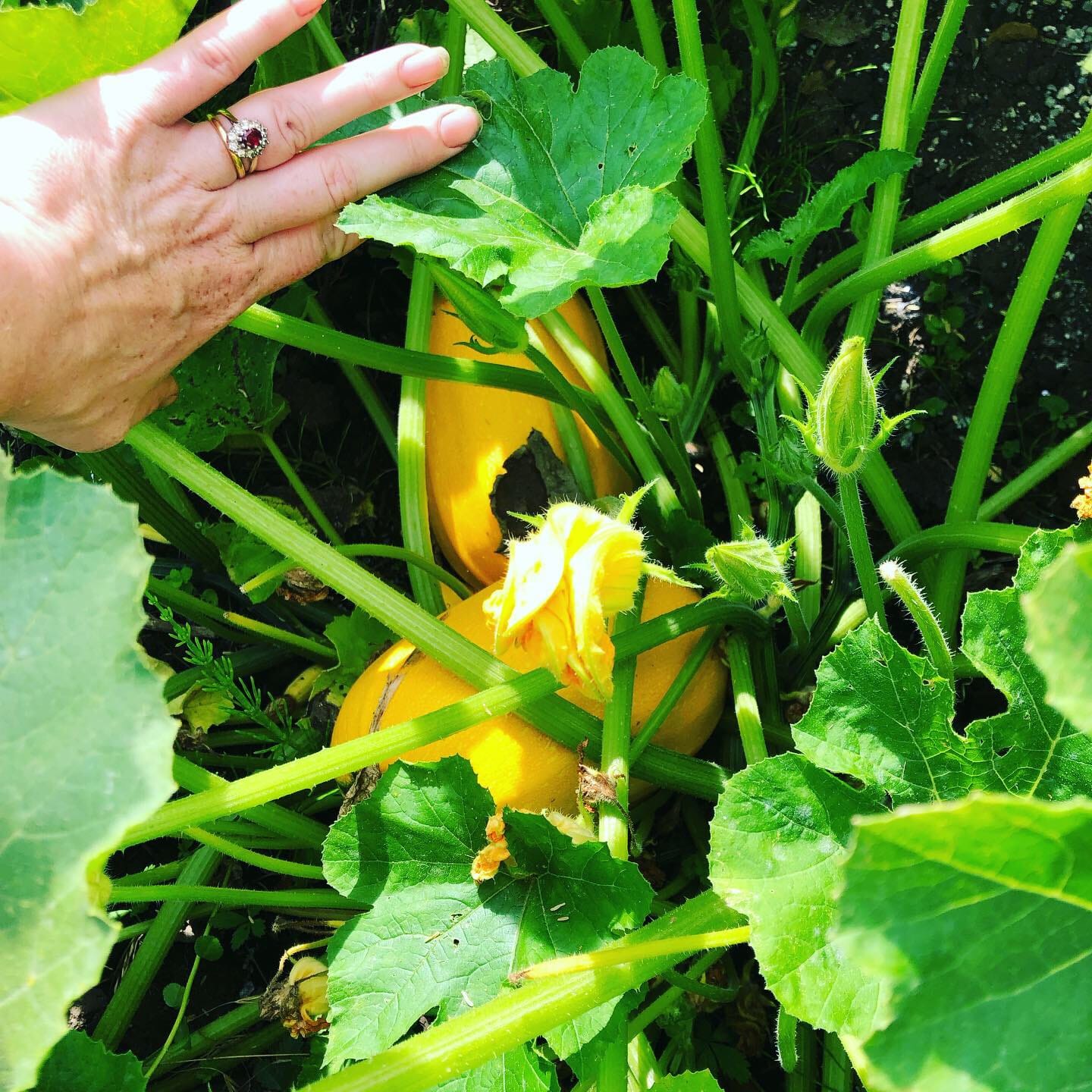
Forage it
If you're growing, then you may be fully occupied trying to grow, pick and preserver the year's harvest, but wild plants can add to your larder.
Fat hen is an allotmenteer's nightmare, as it seems to sprout everywhere. But you can turn it into a blessing by treating like spinach. Blackberries, the most recognisable of the wild plants, start to appear in late July–August, although this seems to get earlier every year with the changing climate. A walking stick or 'grabber' will help you reach the best berries which are usually, inevitably, just out of reach.
Preserve it
The challenge with preserving a summer bounty is having the time to do it as it all seems to come at once. But work in the summer means in the depths of winter you can taste the flavours of sunnier days.
Tomatoes are the backbone of a summer canner's repertoire. Think of canning tomatoes as a ladder. At their simplest, with the addition of an acid, like lemon juice, they can be made into a sauce and safely water bathed for long term storage. Without acid, they can be pressure canned. Here is a recipe for both pressure canned tomato sauce (no acid needed) and water bathed, which you can do in recycled sterilised jars, with just a large pot. If you want your sauce to look like it does in the supermarket then you can spend time skinning and food milling tomatoes, but for speed, after years of trying different ways, I simply cook the tomatoes and blend the pips and skins out. Moving further up the ladder, adding other ingredients, such as courgettes, peppers, and/or onions will decrease the level of acid, so you need to pressure can. Adding meat also means using a pressure canner. These 'add meat to home grown produce' are some of the most-used things I can through the year, and the Complete Guide to Pressure Canning is the bible for beginners here.
Peppers can be frozen of course, but you can also take a tip from the Italians who have a strong preservation culture. Pepperoni sott'olio uses acid, then oil to make a glorious treat for bruschetta or piling on pasta. They must be kept in the fridge. Or you can pickle them – but, again, beware stocking too many pickles if your family won't eat them.
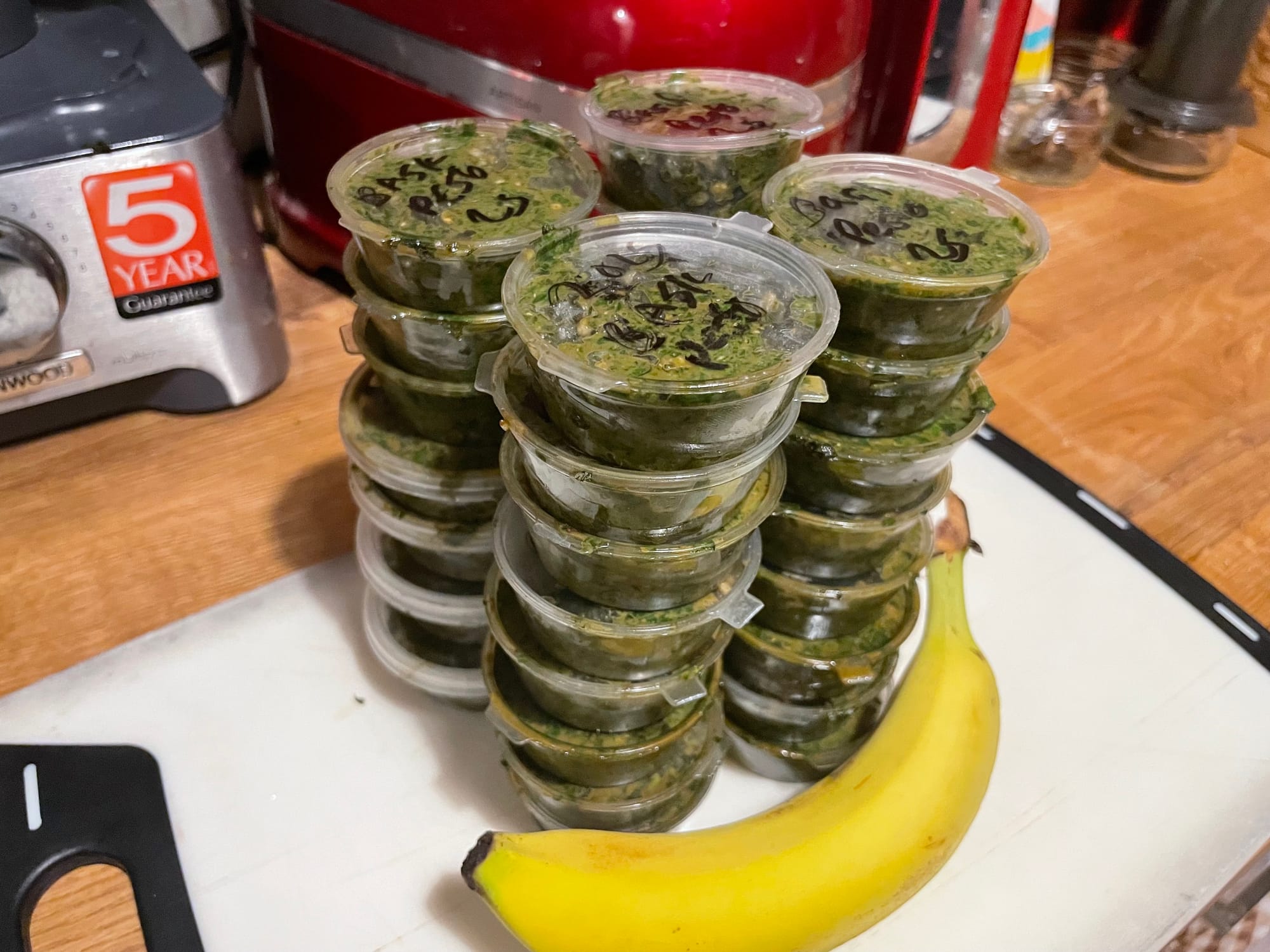
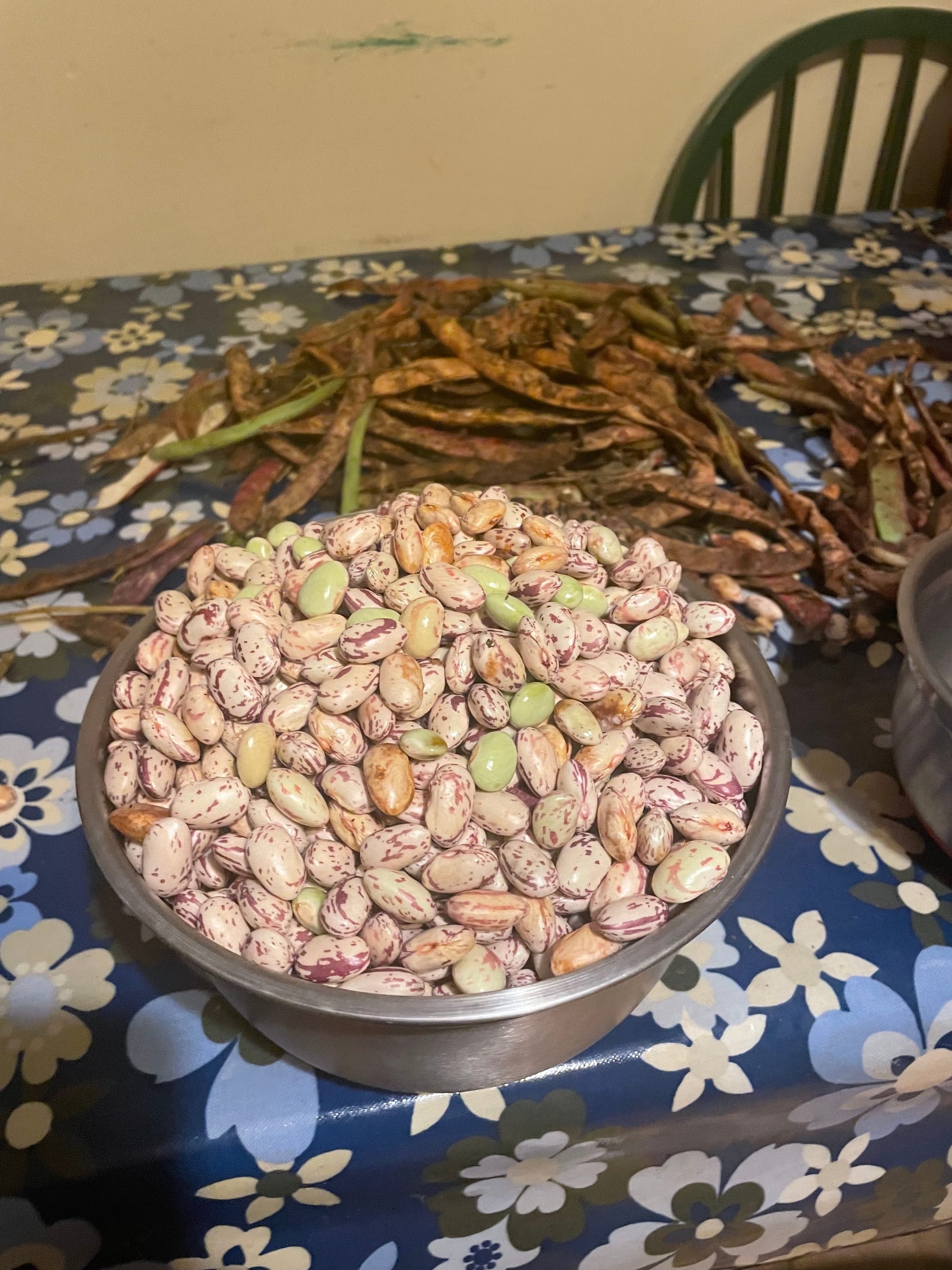
Basil pesto, with obligatory banana for scale, plus a bumper harvest of podded beans
Beans: Pressure can green beans. Or for bean seeds, rather than their pods, try podding them whilst watching your favourite show, and dehydrate. Admittedly buying dried pulses is very cheap, so this one is niche. Importantly, don't forget to save a few to start next year's crop.
Basil can be made into a pesto and frozen in portion sizes. We swapped a bucket of apples with a local takeaway for a supply of plastic pots.
Final thoughts
We haven't touched much on fermenting, but this is another way of preserving crops. Cabbages, carrots, hops, grapes, fruits... there is a world of possibilities. We'd recommend this book as a guide to simple and delicious fermentation.
Heaven forbid any of us actually need the practices we've touched on here. Very few of us want to be professional preppers. But this can be a good way of getting closer to your food, preserving what's around you, and maybe saving some money. We hope you feel empowered to try something a little bit different.
Emma Burnett co-founded Cultivate, a social enterprise working to produce and distribute food within Oxfordshire and to help the community get involved in food related issues and solutions. She has an MSc in Biodiversity, Conservation and Management from Oxford University. Emma also writes science communication and fiction, and has been published in the Conversation and Urban Food Futures and more. Her first solo book, Ex Partum, was released in June 2026.
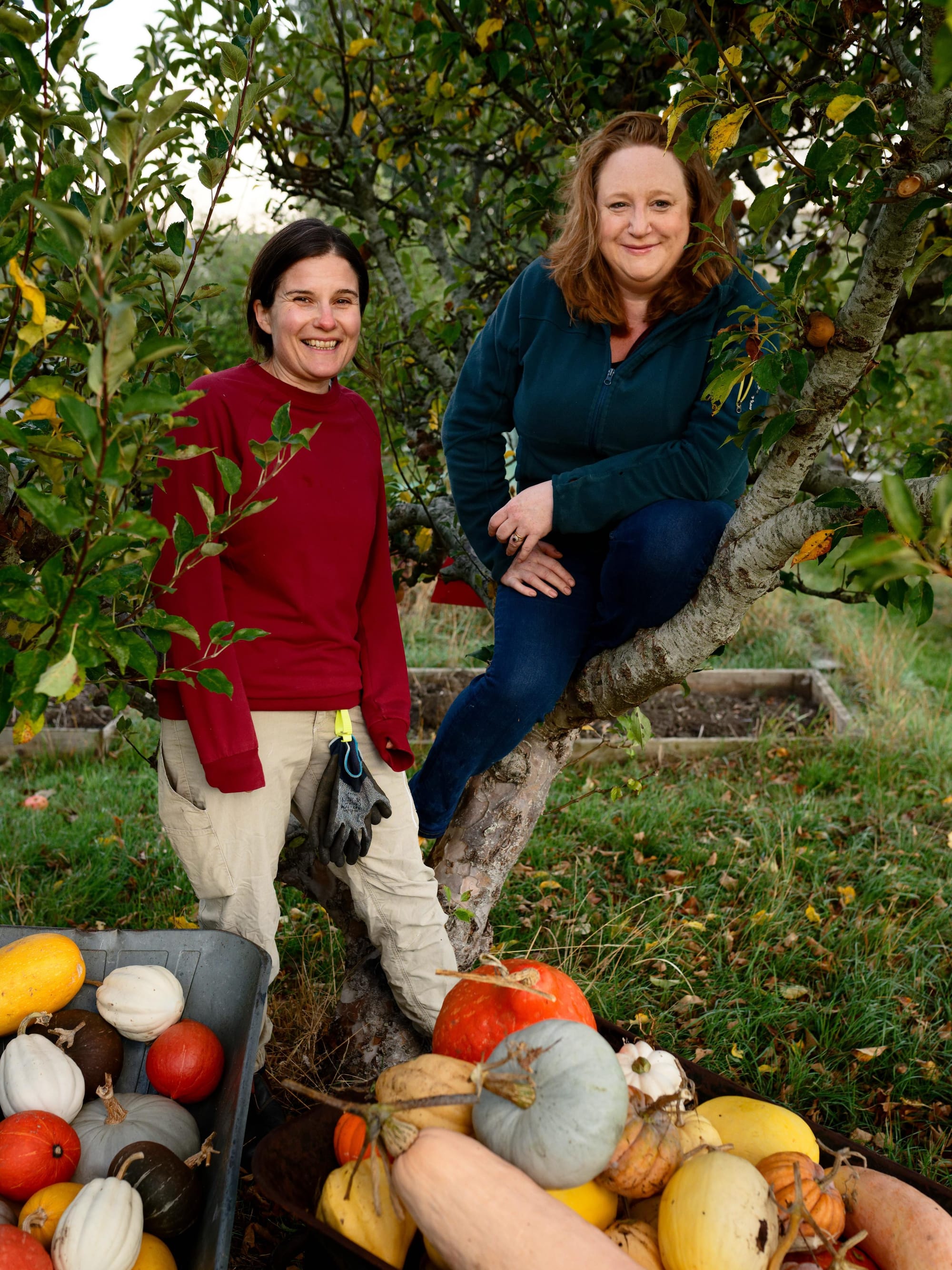
Amandine Lepers-Thornton is an RHS-qualified horticulturist based in Florence Park: her services include garden coaching, gardening classes/workshops and plant sales. She also runs Oxford Garden Club, a group for Oxford gardeners that meets once a month at Flo’s. She posts plant recommendations and gardening tips on her Facebook page (Amandine – Oxford Garden Coach) and can be contacted on amandine.oxfordgardencoach@gmail.com.
Josie Procter is a home-taught allotmenteer, canner, and forager, on top of a full time job. Family members have food intolerances, so she learned to preserve 'convenience food' in the summer for easy meals in the winter, when meetings overrun and the family still needs feeding, but a bought microwave meal isn't an option. Her kitchen is perpetually cluttered, she dreams of a smallholding with goats and chickens, she grows too many pumpkins each year, and never learns.
Further reading
Grow it
Amandine's articles for the Clarion on gardening in Oxfordshire are:
- A beginner's guide to growing your own food
- The challenges of Oxford Gardens
- Climate proofing your garden
Forage it
- Hedgerow: River Cottage guide to foraging. You'll never go on a walk without a carrier bag again.
Preserve it
- British:
- Let's Preserve It: first published in 1970, this is an old school guide to jams, jellies, and preserves.
- River Cottage Guide to Preserves: thoroughly recommended, detailed guide on preserves.
- Ferment: blending research with practical, reassuring advice and recipes, Ferment explains how small changes to what’s on your plate can make a big difference to your health.
- American:
- The Canning Diva: if you're new to food preservation, Diane Devereaux walks you through the basics. Her Complete Guide to Pressure Canning is the starting point, if you want a book not a website.
- Ball Complete Book of Home Preserving: written by the people that make canning jars, this is the American bible on home preservation, and has been for many years. They keep updating it, find the most recent version you can, secondhand copies abound.
- Eastern European: It is also interesting to look at recipes from countries where there is a culture of food preservation. In Eastern Europe there is a short season to plant, harvest and preserve before the winter wind bites. Here's a small selection:
- Beyond the North Wind / Darra Goldenstein: Russia in recipes and lore. Ignore the section on caviar, pivot to the salted cabbage.
- Summer Kitchens / Olia Hercules: recipes and reminiscences from every corner of Ukraine. It is worth finding the book for the recipe for pickled sour aubergines with mint and chilli alone.
- Polish'd / Michal Korkosz: modern vegetarian cooking from global Poland. Half-sour salt-brined dill pickles anyone?