
It's an emergency, dammit

It's getting hot in here (Oxfordshire). And while your Clarion correspondents are loosening their cravats, donning their culottes and hydrating like Poseidon and Amphitrite themselves, we recalled that our councils had declared 'Climate Emergencies' a few years ago. It felt an appropriate time to check on their progress.
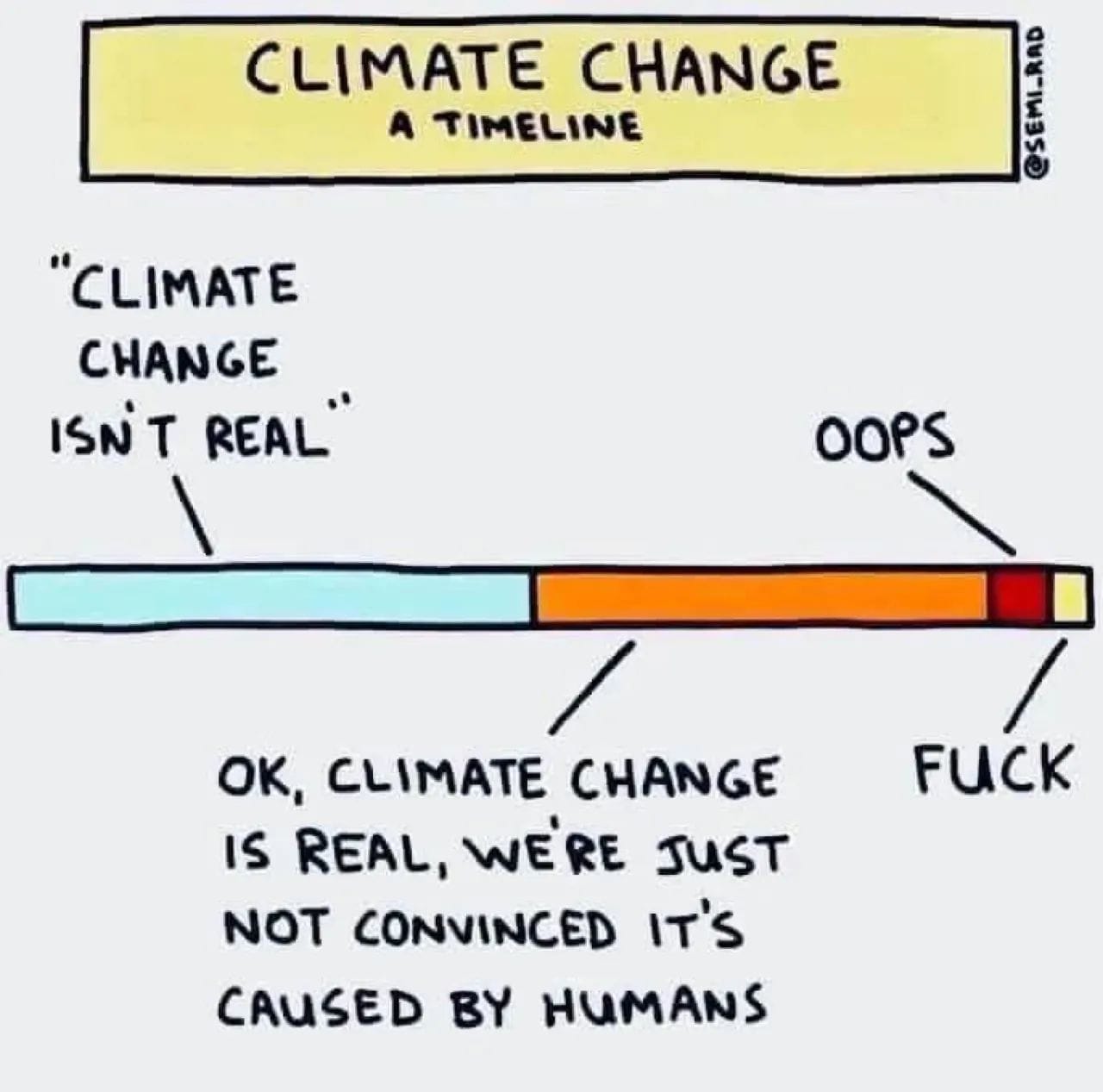
A 'Climate Emergency' is certainly upon us. 65 excess deaths in Oxfordshire were linked to high temperatures periods in 2022, which was made more likely and hotter by human-caused climate change. The world is now 1.4°C hotter than pre-industrial levels, and heading for 2°C by 2050 – possibly reaching reaching 4°C later this century depending on the level of climate action by governments, businesses and individuals. As we saw in our previous article, which traced one aspect of the history of climate science in Oxford, nature does not care for words, only the number of molecules of radiation-trapping gases in our atmosphere.
Progressive local authorities have been keen to show the way. Partly as a statement of direction, partly to demonstrate what is possible, and partly because 'every bit helps' – if you are in a leaky boat, you need to plug every hole. The County and every District Council in Oxfordshire has resolved that we are in a climate emergency and should do something about it. They may not be around in a few years, but the smouldering remnants of the climate will, so let’s take a look at their policies and their progress.
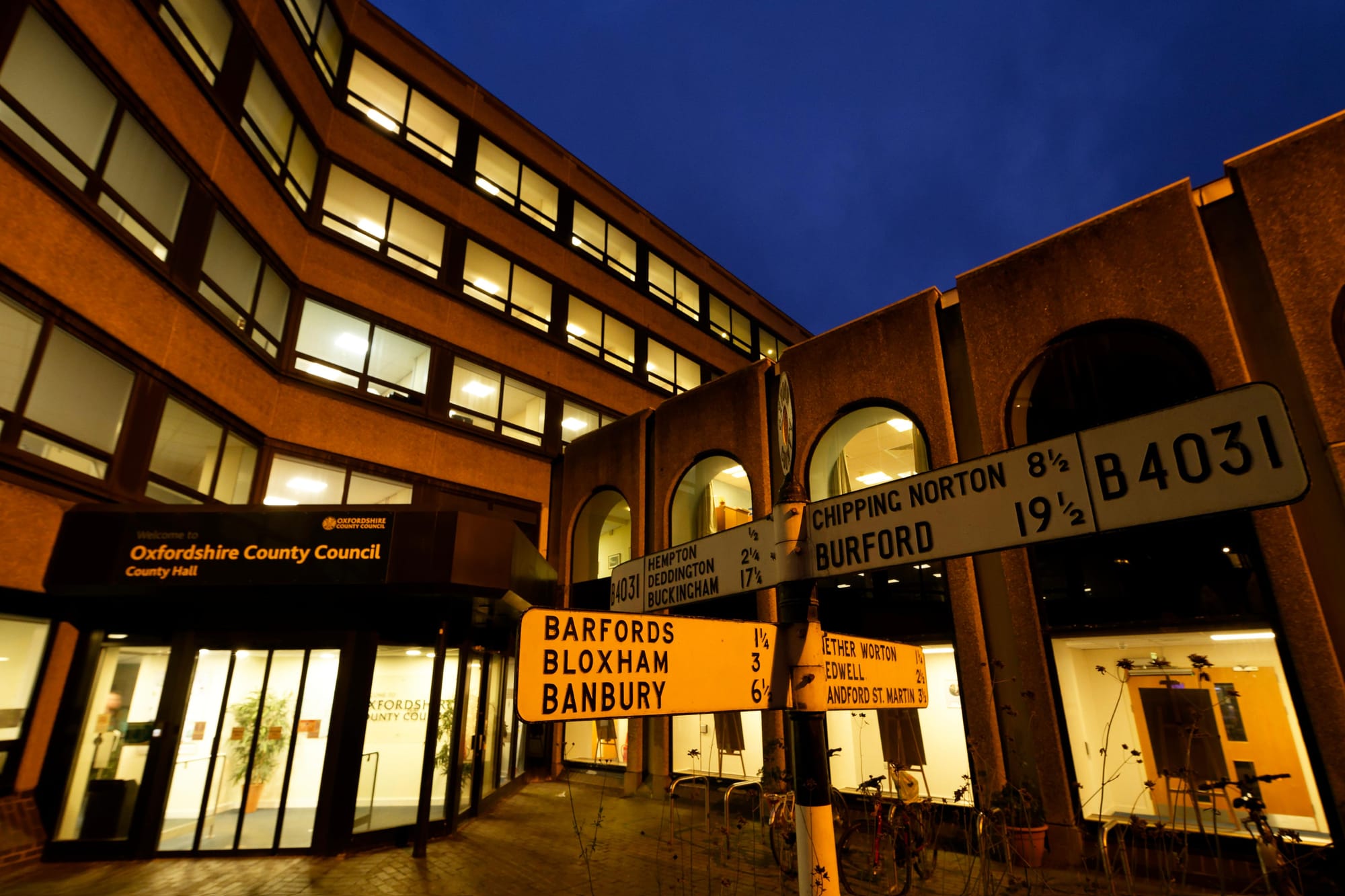
Oxfordshire County Council
Oxfordshire County Council agreed to “acknowledge a climate emergency and call for action” in April 2019, following a motion from Cllr Damian Haywood. At the time, OCC had a Conservative majority. Now the Lib Dems hold the council with the slimmest of majorities; they've been running it as a minority since 2021.
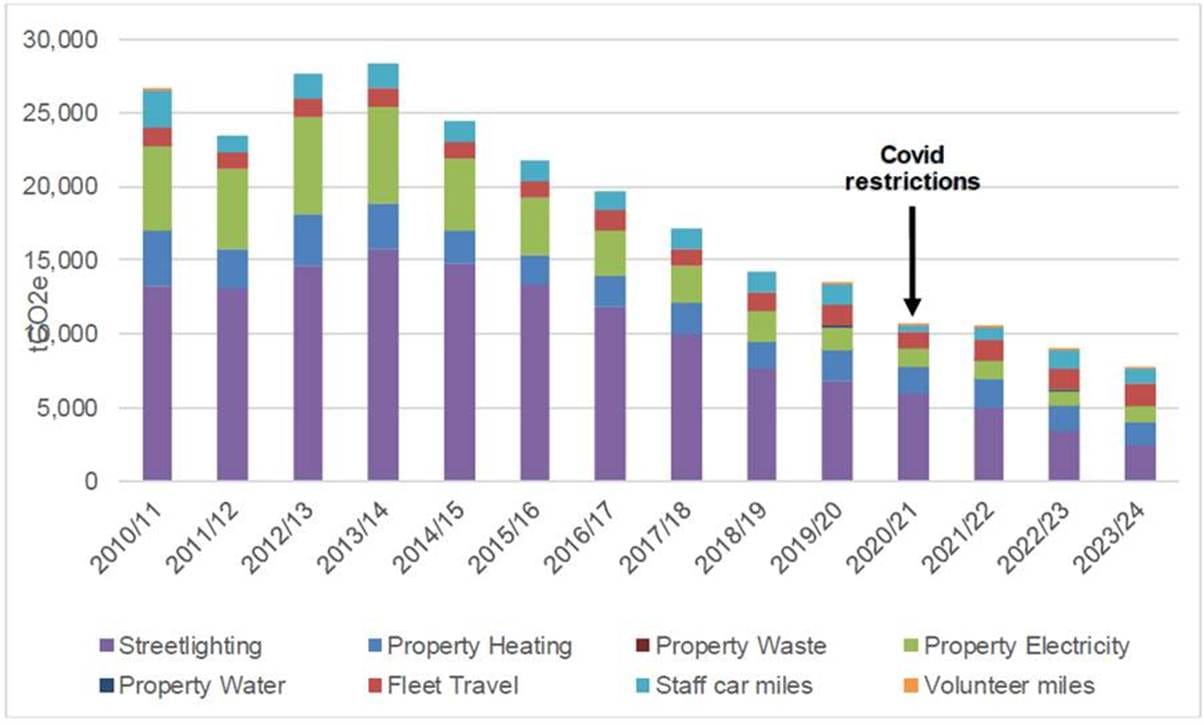
Since 2019, OCC have set out a plan to be a carbon-neutral council by 2030, and developed a Climate Action Framework for climate action across the whole county. The Carbon Management Plan for their own operations covers emissions from council buildings, streetlighting and vehicles (both the council fleet, and staff travel in their own cars).
Reductions were already underway before the declaration. Since 2010/11, the first year recorded, they have achieved a reduction of 71%, from 27,000 tonnes of carbon dioxide equivalent (CO2e) emitted per year to 8,000. (Councils of all varieties are not the easiest ships to turn around, whatever their political make-up.)
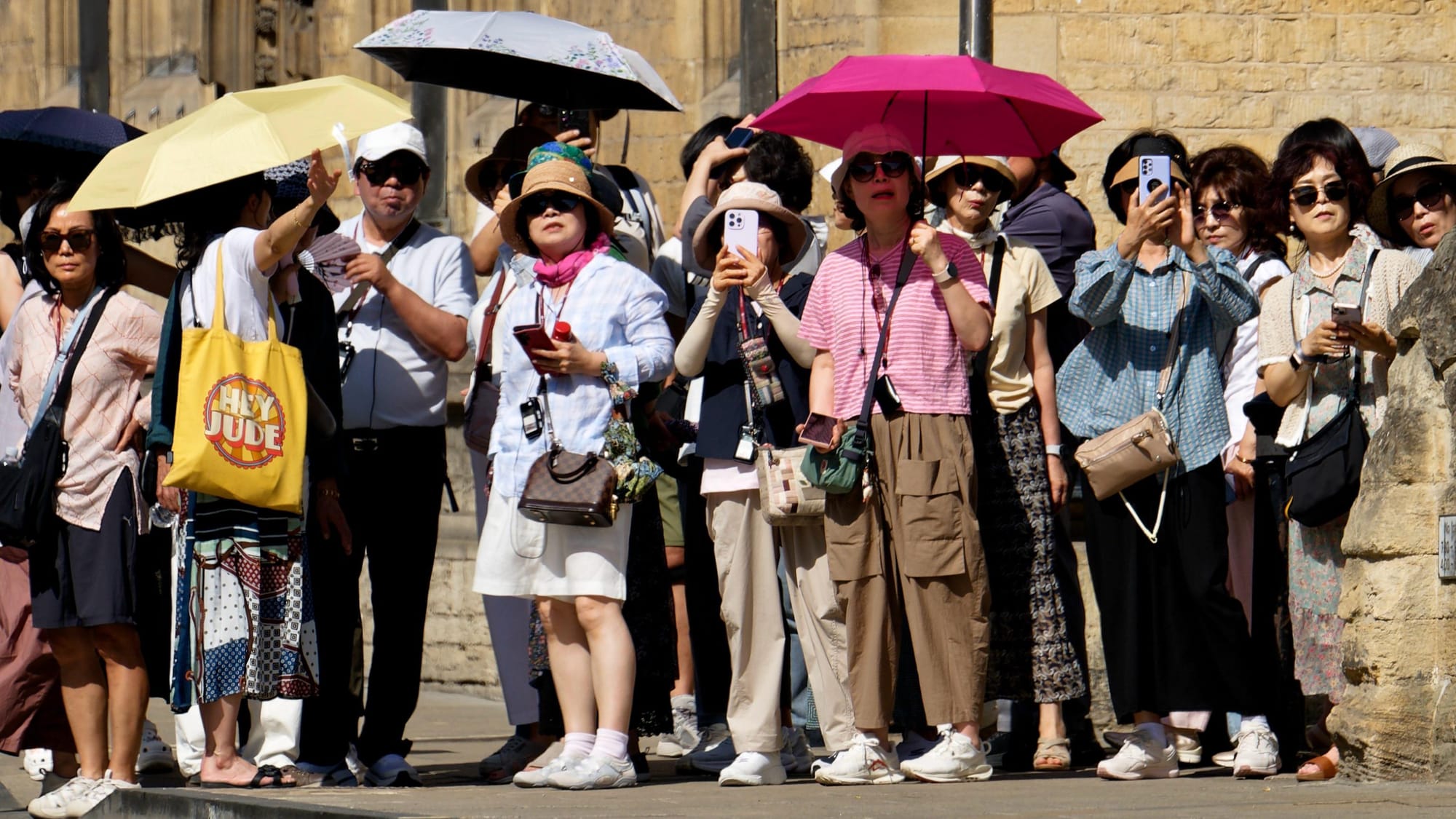
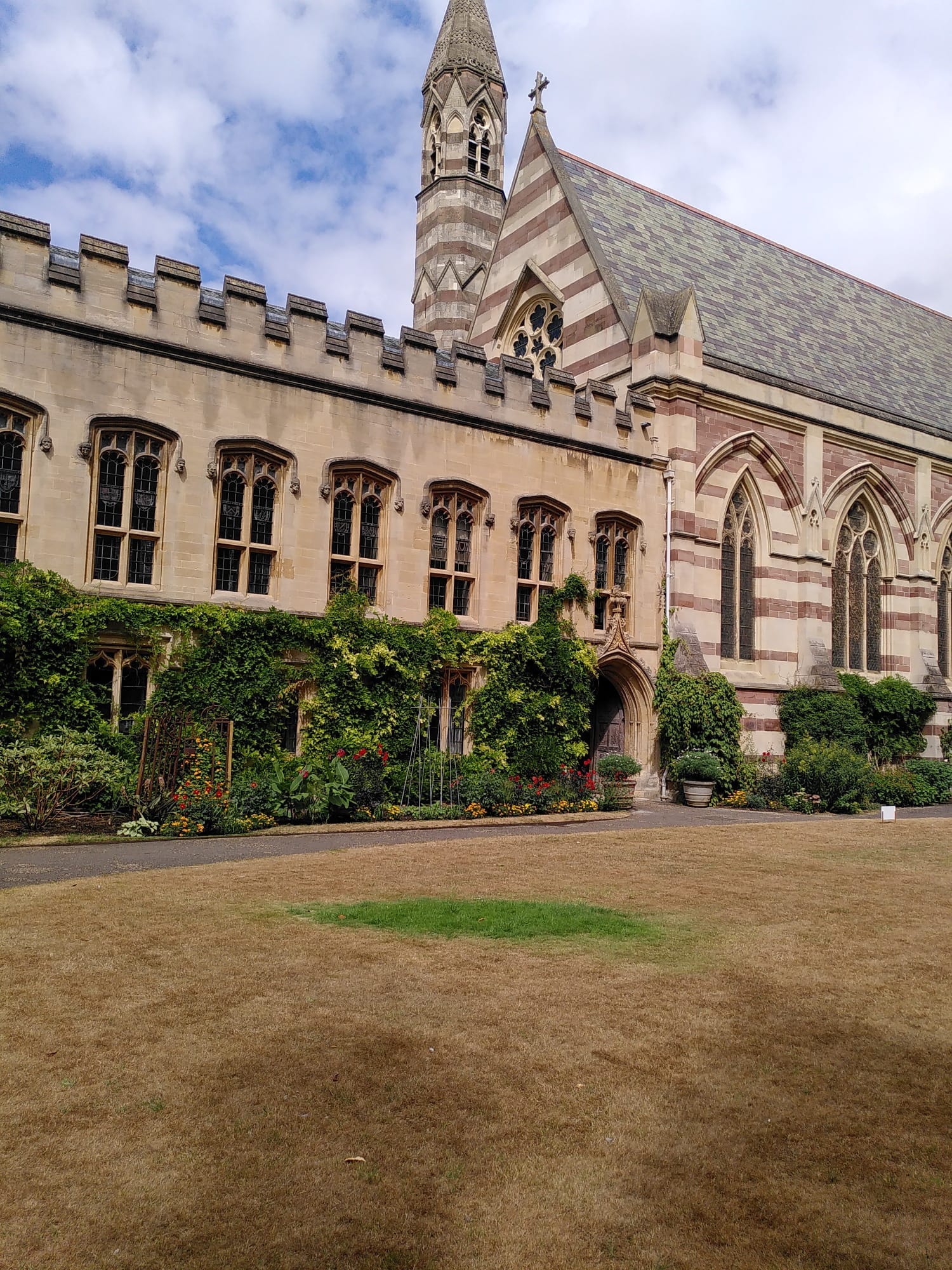
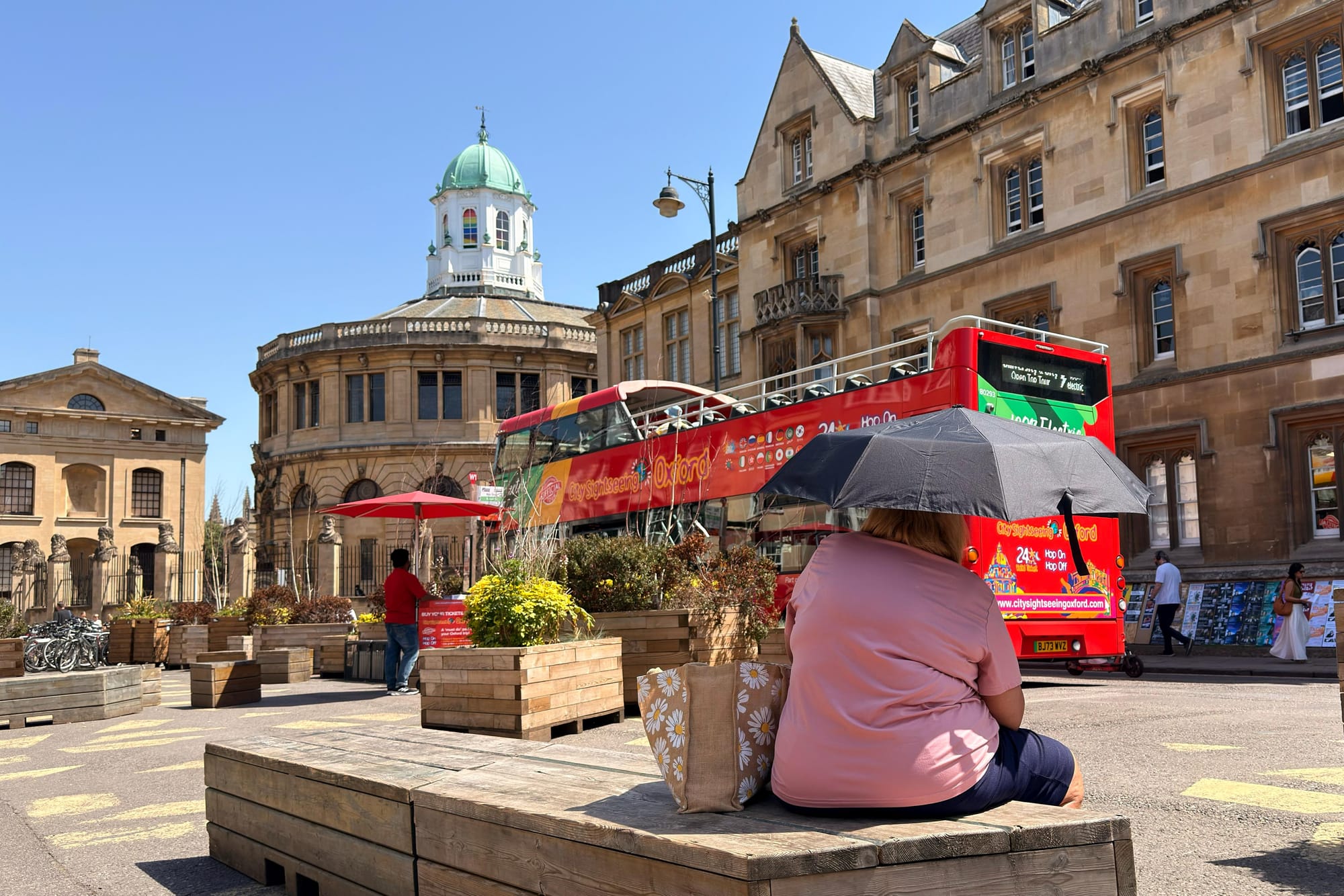
Tourists in Broad Street during the June 2026 heatwave (Roger Close), dry grass at Christ Church in 2022.
Oxford City Council
Oxford City Council declared a climate emergency in January 2019. In autumn 2019, at their instigation, Oxford became the first UK city to hold a Citizen's Assembly on Climate Change. At the time, Oxford City Council had a strong Labour majority; now it governs as a minority.
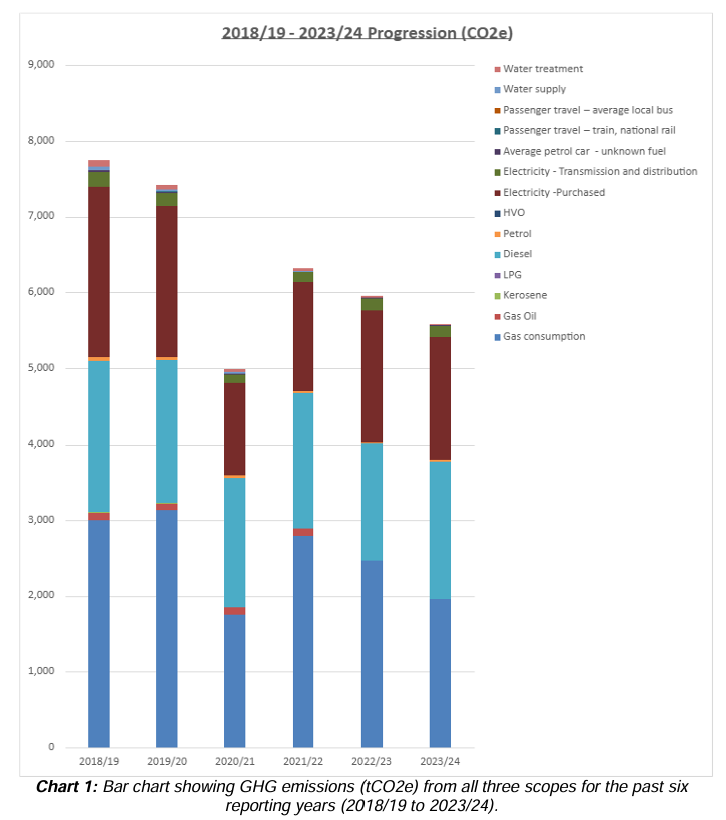
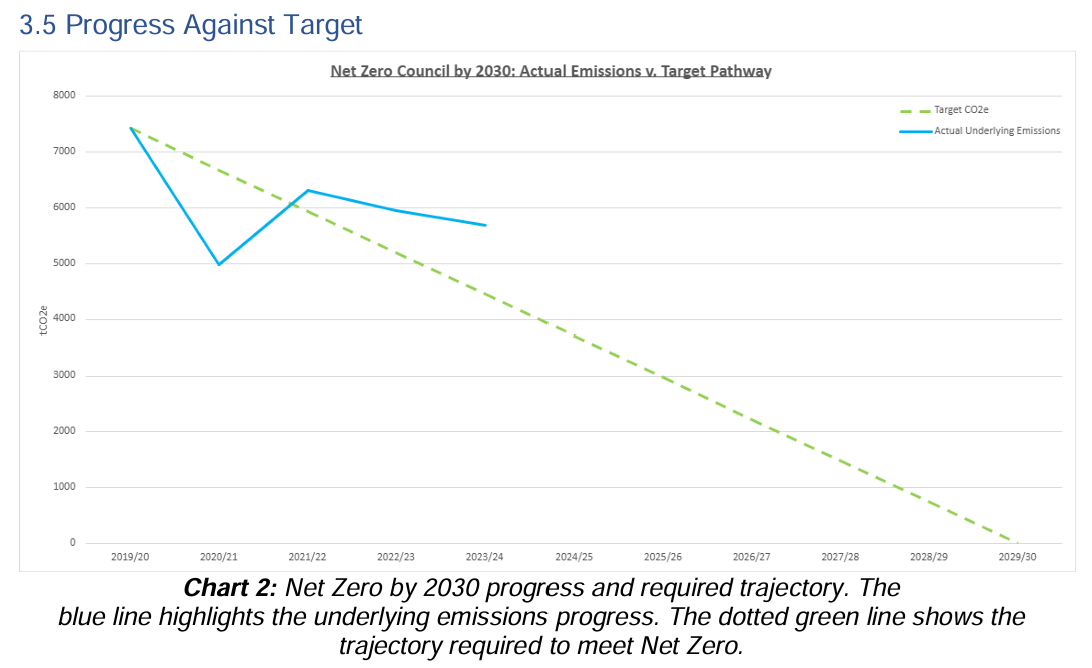
Like the County Council, its target is to become a Zero Carbon Council by the year 2030. Its latest Greenhouse Gas Emissions Report (2023-24) shows that combined Scope 1, 2 and 3 emissions have reduced from 7,741 tonnes in 2018-19 to 5,581 tonnes in 2023-24, a 28% reduction and slightly behind their target line.
For wider Oxford, the council led the formation of the Zero Carbon Oxford Partnership and a roadmap to reduce Oxford’s carbon emissions by 88% by 2040, compared with 2018. ZCOP now covers the whole of Oxfordshire, with leading institutions and businesses working together to achieve a zero carbon and resilient Oxfordshire by 2050.


Cherwell District Council
Cherwell District Council also declared a climate emergency in 2019 – another council with a Conservative majority at the time, but a LibDem/Green coalition now. They also aim to ensure their own operations are carbon net zero by 2030, and support the district to become carbon net zero.
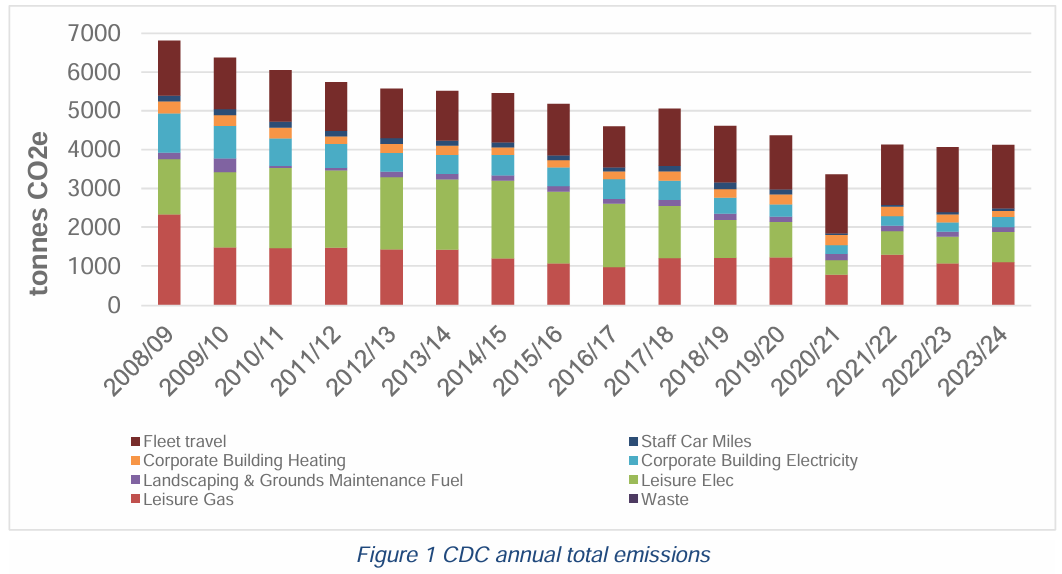
Cherwell’s emissions have reduced by only about 13% since 2018/19. They have been essentially stagnant since the pandemic, and actually increased slightly in 2023/24 due to “decarbonisation equipment installed in 2022/23 not realising reductions in gas demand”. “Immediate action must be taken to address this issue” they note in the report published in March 2025.

South and Vale District Councils
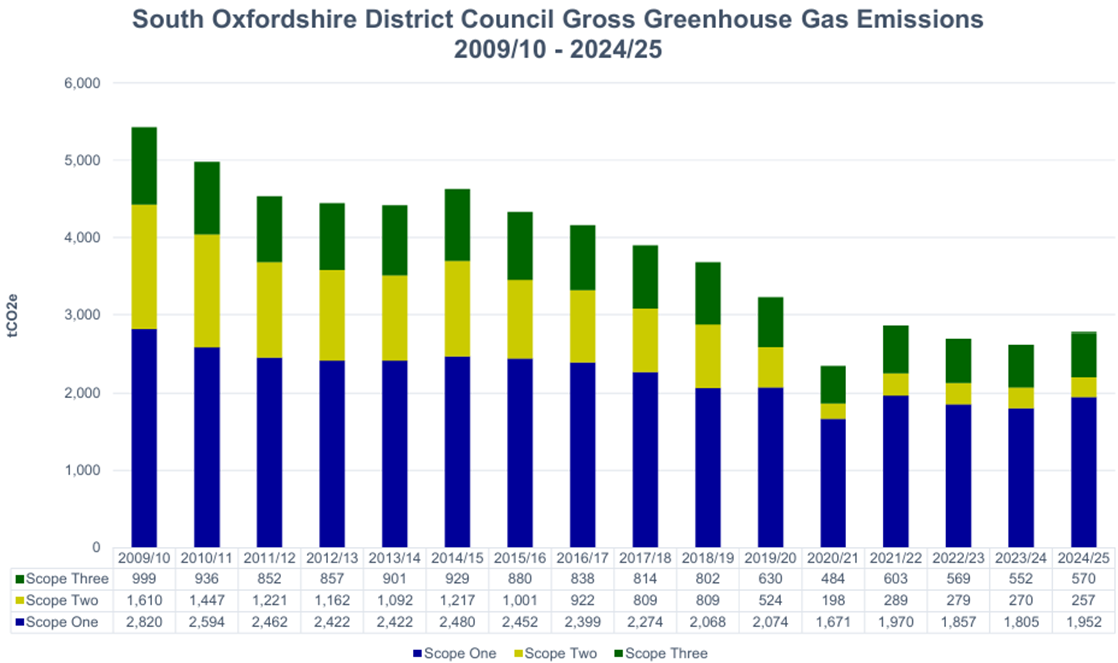
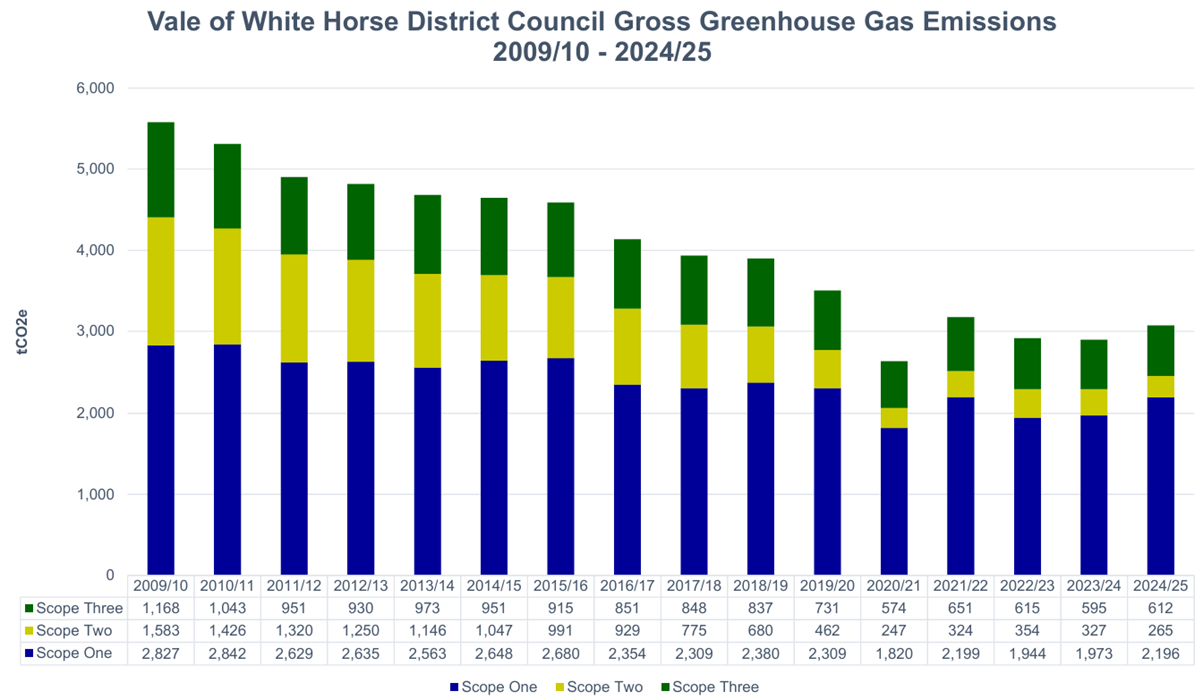
South Oxfordshire (2019-2025 LibDem / Green partnership, present day LibDem majority) and Vale of White Horse District Councils (2019 to present day a LibDem majority) both declared climate emergencies in, can you guess, 2019. Working closely together for many years, they have identical targets to become net zero in their own operations by 2030, and net zero districts by 2045 (South, Vale).
They have a joint Nature and Climate Action Plan, with actions covering council operations, district net zero, nature recovery and climate adaptation, they produce quarterly reports against this and a Climate Emergency Advisory Committee (CEAC) makes recommendations to the South and Vale Cabinets.
How’s it going? Well, their data is the most up-to-date – these are the only two councils yet to report on 2024/25 – but the recent numbers are not actually so good. Both South and Vale’s emissions were on a promising trend up to the pandemic, but seem to have flattened out and actually rose last year. The reports note that this is due to an increase in gas used in council buildings to cope with cold weather. Allowing for the number of ‘degree days’, South would have seen a slight decrease, but Vale would still have a slight increase in property gas use.

West Oxfordshire District Council
By now, you’ll be expecting West Oxfordshire District Council to have declared a climate emergency in 2019. And indeed, they declared a climate and ecological emergency in June that year with a pledge to become a carbon neutral council by 2030. (Once again, in 2019 the council was Conservative-run; it’s now a LibDem/Labour/Green coalition). They followed up with a report on Climate Action for West Oxfordshire and a Climate change strategy.
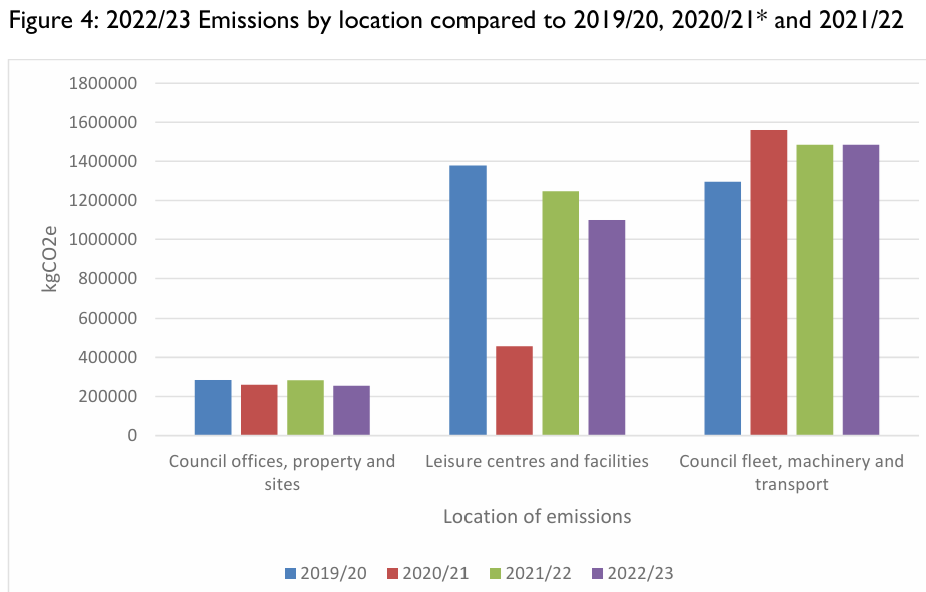
West Oxfordshire have not yet reported on 2023/24 emissions, let alone 2024/25. Their most up-to-date report, for 2022/23, does not show good progress, with only 4.2% reduction in emissions from 2019/20, an average 1.4% reduction per year. The breakdown provided shows that they have made progress reducing the emissions of leisure centres, but council vehicles and transport now emit more than the baseline year.
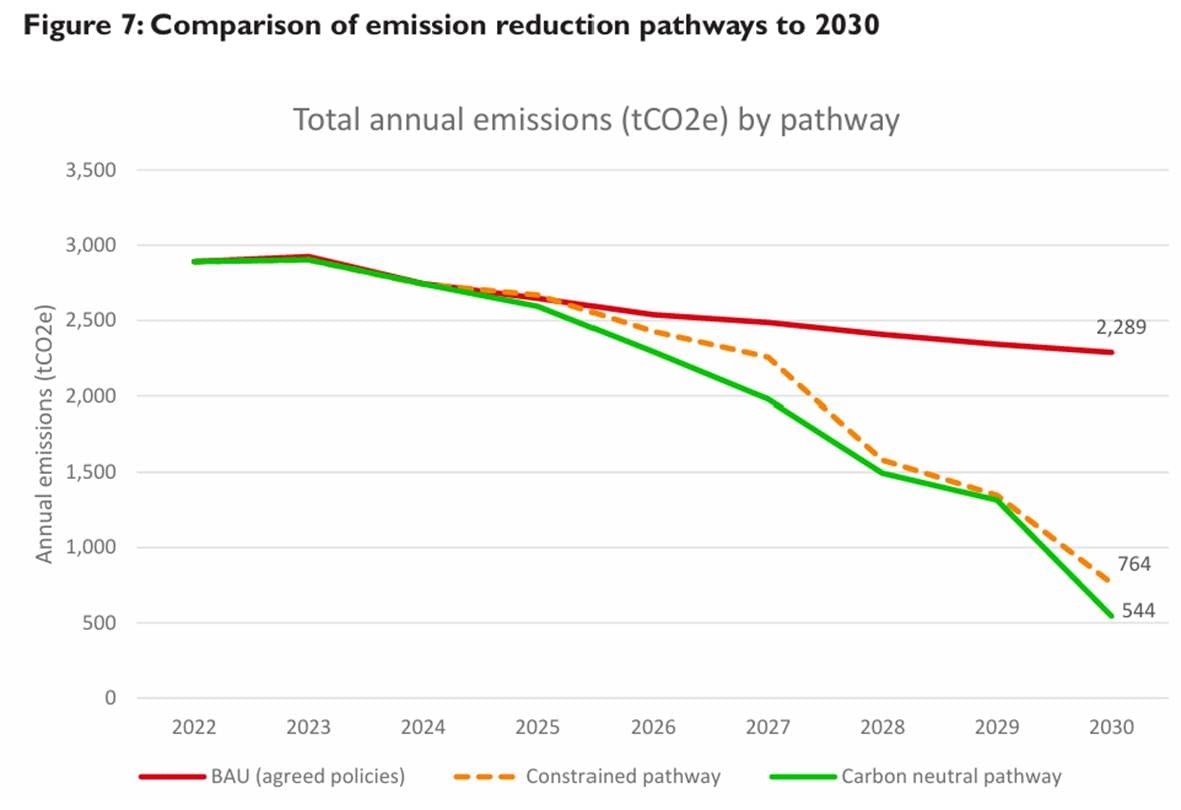
All is not lost, however. The Council’s Carbon Action Plan 2024-2030 shows that the current trajectory will not achieve the agreed target, but there is a pathway that can reduce emissions to under one-fifth of their current level, leaving a small amount of “unavoidable emissions associated with electricity and water use” to be “offset and/or inset by 2030 to reach the carbon neutral target.”
Where do we go from here?
Readers may think there is an irony in Cherwell and West Oxfordshire setting ambitious climate targets under Conservative control, and then failing to deliver them under apparently more progressive alliances. But though it may seem a distant memory, the Conservative Party of the 2010s was much keener on climate action than today’s leadership – from David Cameron’s “hug a husky” to Theresa May’s ground-breaking pledge for the UK to reduce greenhouse gas emissions to net zero by 2050, the first major economy to do so.
As we delved into this topic, we were initially pleased to see the universal commitment of our councils to climate action. After all, the threat to our health and wellbeing, and even more to our children’s wellbeing, is immense, and public bodies should be leading the way.
Going deeper, it is clear that some councils are pursuing it with more vigour than others (in Sunderland, the Reform council this week rescinded the climate emergency declaration). But then, it is also easier for some than others. Just as it is easier for you or I to replace our light bulbs with LEDs that quickly save money than to replace our gas boilers with a heat pump that has benefits over the longer run, it is easier for Oxfordshire County Council to change streetlighting to LEDs than for a district council to switch a swimming pool's heating system from gas to a heat pump. For the same reasons, it gets harder as you go along, because you'll have done the easier things first.
But our need to stabilise the climate becomes ever more clear, and nature cares only for the gases in the air, not the words spoken in council chambers. And the means are there: through existing technology and a host of innovation, some happening on our doorstep as we often chronicle. Our councils, having made the commitment to cut their emissions for sound reasons, should be leading the way.
Further reading
Flooding in Oxfordshire - what can we do - our long read on flooding in the county - because climate change is more than heatwaves.
Climate Change in Oxford - a history and primer - our long read on Oxford's role in monitoring climate change
Climate proofing your garden - Our horticultural expert shares some tips
How plants can help reduce flood risk - Our horticultural expert on how you can make a difference hyper locally.