
The Clarion, 6 October 2026

All change in Oxford city centre at the Castle and the Odeon – and will Banbury be far behind? Plus trams, new OED words, and Eminem…
This week’s long read
Does being prepared for emergencies mean stocking up on dismal tinned food? Not necessarily. We assembled some experts for a local starter kit on growing and preserving your own food – for emergencies, for self-sufficiency, or simply for fun.
 Oxford Clarion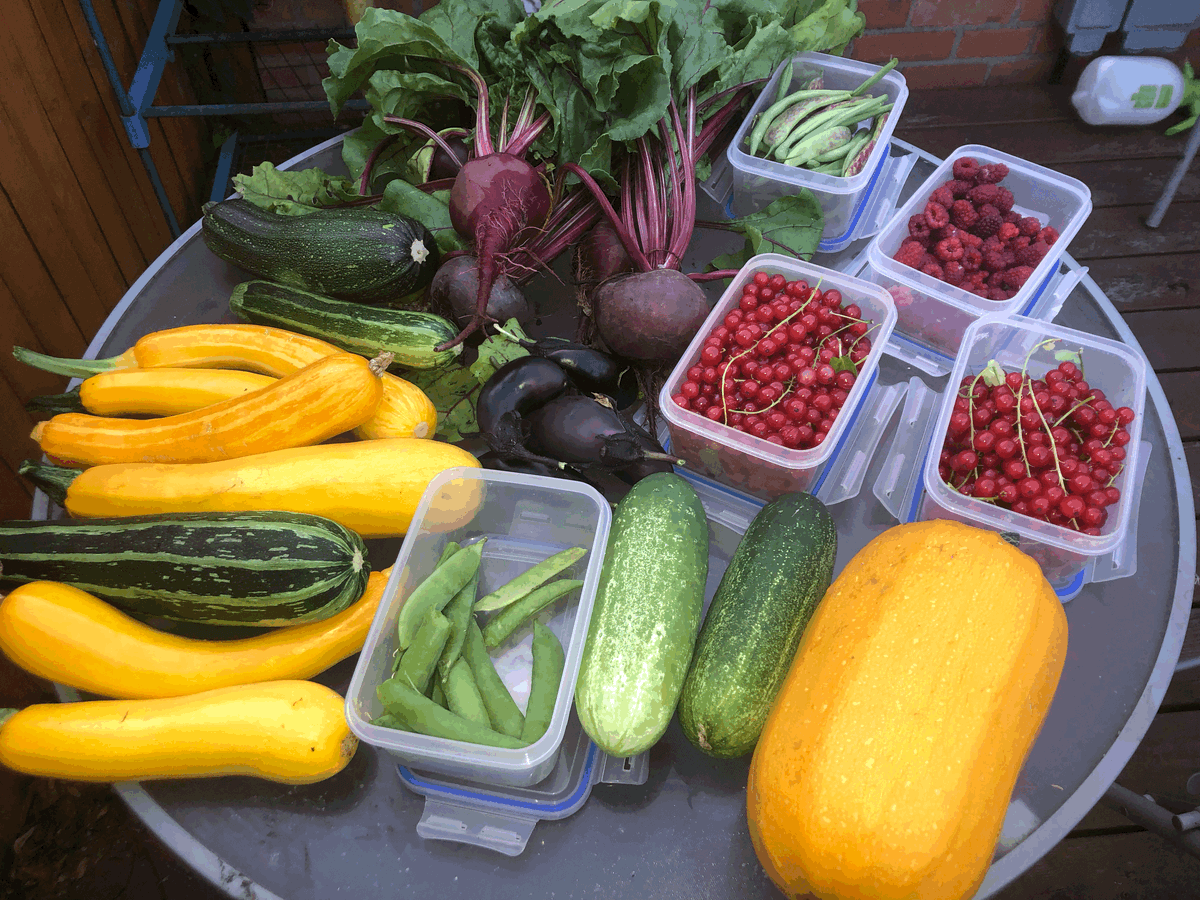

This week’s top stories
An unusual battery-powered tram could be considered as a fast link from Oxford to Witney, Carterton and other nearby towns. Oxfordshire councillors have been inspecting the Coventry Very Light Rail system, whose tracks are laid just 30cm into the road surface – greatly minimising construction cost. Oxfordshire County Council leader Tim Bearder said:
“If we are going to grow sustainably, we need to include a mass rapid transit system as part of the big picture. We can’t keep simply expanding our roads and not expect gridlock. If we’re going to have the huge amounts of growth that the Government is planning in and around Oxford, then we need to think about different ways of moving people around.
OCC councillors and officers attended a ‘Time for Trams’ conference last week where speakers included Neale Coleman, chair of the Oxford Growth Commission. As Oxford’s housing demand continues to spill into the surrounding countryside, acceptance is growing in both city and county councils that a new ‘mass transit’ system will have to be considered, over and above the existing bus network.
Previous studies in 2015 and 2025 have argued that, elsewhere in Europe, “Light Rail Transit has been instrumental in transforming city centres into pedestrian-friendly spaces”. Oxfordshire has a long history of considering but not implementing rapid transit; in 2002, OCC’s then Conservative administration rejected calls to reopen the Oxford–Witney railway, saying it wanted to build a Guided Transit Express on concrete guideways beside the A40 instead. At the time, the Oxford Mail reported: “It could be up to 15 years before the first GTE service runs.”
Oxford University has retained first place in the Times Higher Education rankings for a record 11th year. It won subject firsts in medical & health and computer science, and was ranked 2nd for social sciences and engineering.
MIT was second, Princeton and Stanford joint third, and Cambridge fifth. Imperial, UCL and Edinburgh also made the global top 30, which was dominated by US institutions. Vice-Chancellor Irene Tracey said: “What particularly pleases me is the depth and breadth of excellence this result reflects. From the quality and impact of our research to our innovation ecosystem and global networks, Oxford is performing at the highest level in an increasingly competitive space.”
An intriguing new vision has been aired for how Banbury can adapt in the age of internet shopping. Following the local councils’ announcement that they are developing a new masterplan for the town, Cllr Paul-Austin Sargent (Ind, Banbury Grimsbury & Castle) has set out an ambition to transform the town’s historic heart into “a centre of craftsmanship, creativity, independent enterprise and civic pride”.
He argues that Banbury's future success lies not in competing with online retail or larger shopping destinations, but in embracing what makes the town unique. He proposes a shift towards a ‘Maker Town’ economy, where artisans, designers, food producers, creative businesses and independent entrepreneurs become central to the town centre's identity and prosperity. This would include:
- ‘Artisanal Incubators’ in vacant or underused historic buildings to support makers, craftspeople and creative start-ups, building on the work pioneered by Makespace Oxfordshire;
- A ‘Crafted in Banbury’ accreditation mark to promote products and services with a genuine connection to the town.
- A town-wide programme of pop-up shops, markets, exhibitions and cultural events designed to activate vacant spaces;
- A new Banbury Greenway, linking the town centre, canal, railway station and surrounding neighbourhoods through attractive landscaped infrastructure.
Cllr Sargent explained the rationale behind his proposals:
“A successful 21st century town centre cannot compete with online retail on convenience, nor should it attempt to. The internet will always offer greater choice, lower prices and home delivery. Instead, Banbury should focus on the qualities that digital commerce cannot replicate: authenticity, artisanal skill, human interaction and a genuine sense of place. The Maker Town concept offers a distinctive and achievable direction.”
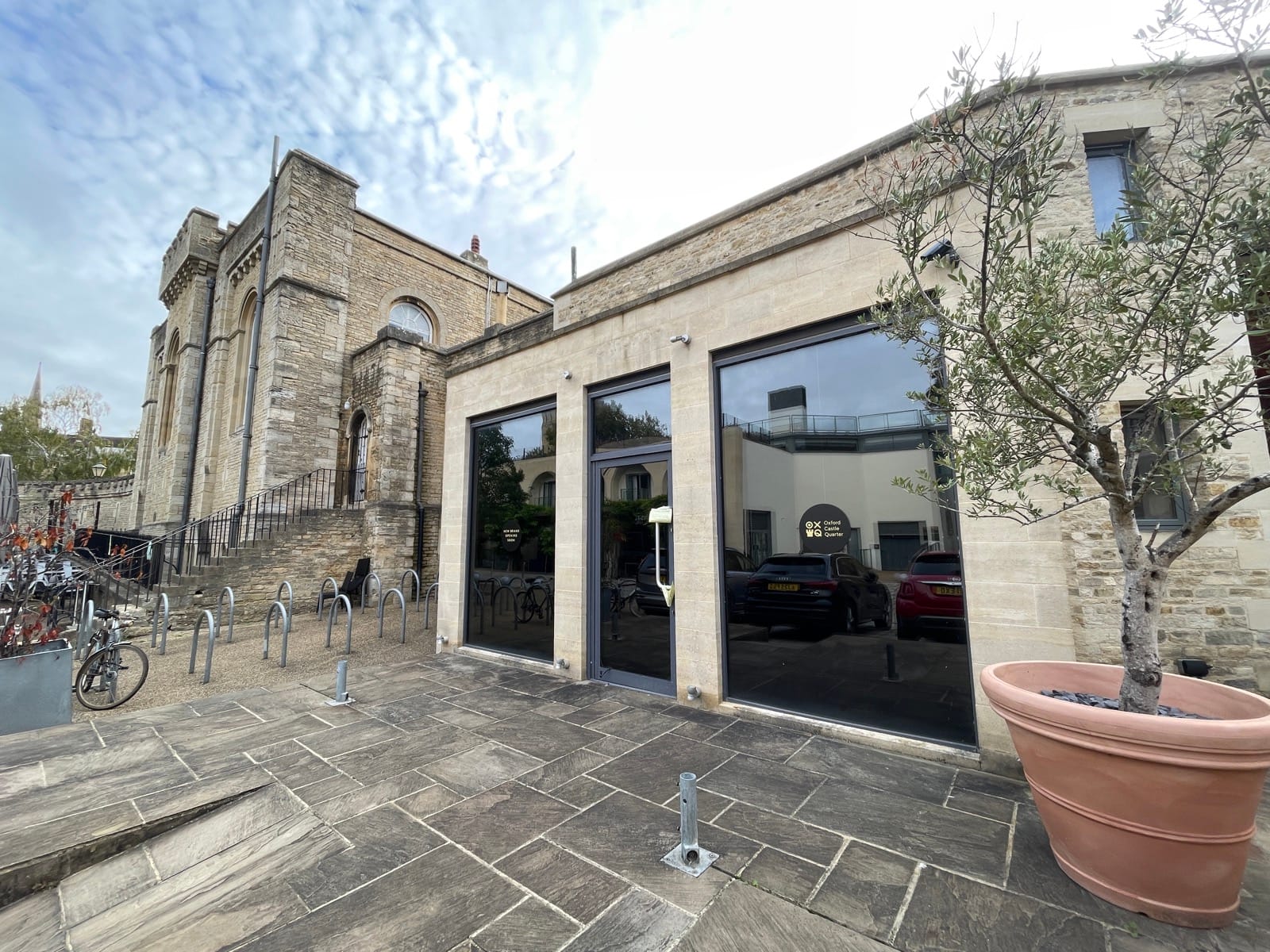
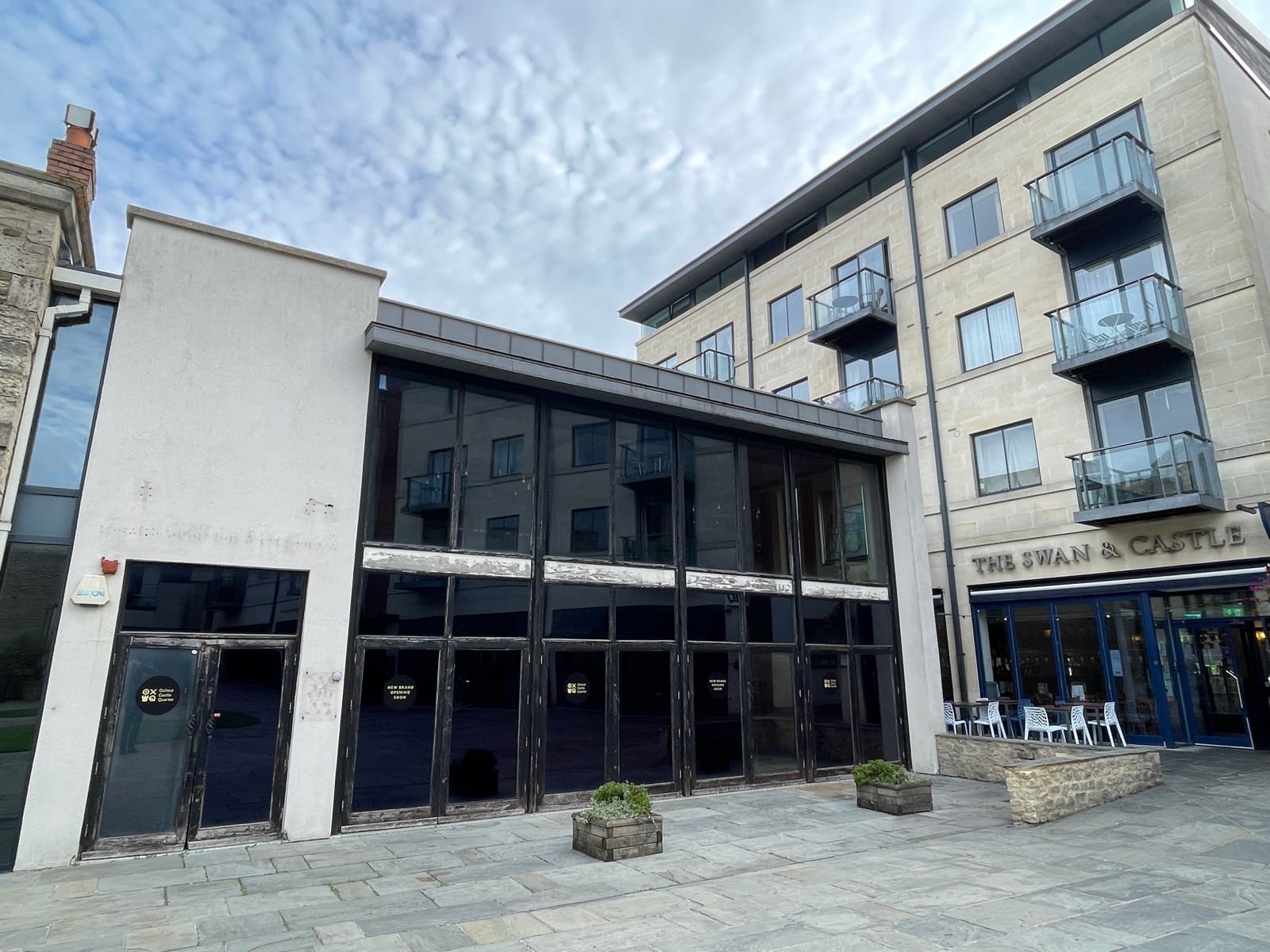
Vacant units at Oxford Castle are to become an ‘immersive’ attraction.
Around the city
- A new attraction at Oxford Castle is set to go ahead after city planners approved proposals for ‘Oxford Unwrapped’. The attraction, led by former Madame Tussauds manager Phil Pike, will combine a 360° immersive tour; a pay-to-play VR playground; motor racing simulators; and a ‘tavern’ restaurant showcasing local produce, cafe, and sports bar. It will take over units 4–6 and the Rotunda, which have been vacant since 2020 or earlier. Planners agreed it would support the “viability and vitality of the city centre”. Oxfordshire County Council recently regained the leasehold at the site.

- Demolition is underway at the Odeon cinema on Gloucester Green. The site is being redeveloped as a 145-room aparthotel, trading as ‘Wilde Oxford’, which is expected to be complete in late 2027. The ground floor will incorporate a community space, cafe and bar.
- City councillors have voted to lobby the Government to rethink legislation on trans and non-binary people. At Oxford City Council’s full council meeting yesterday, they backed a motion from Green councillors warning that “trans and non-binary people have been subjected to a manufactured moral panic which seeks to demonise their existence and undermine their rights”. It also asked the City Council, and their leisure provider More Leisure, to support trans rights “to the maximum extent permitted by law”. A second motion, brought by the LibDems, called for proportional representation and also passed.
- UN Older People’s Day will be celebrated at the Town Hall tomorrow in an event organised by older people for older people. The event aims to consult, inform and involve residents of 50 years and over on issues which are relevant and of concern and interest to them. The event will host stalls from more than 60 organisations, including advice, support, and information networks plus activities of interest to older people and their families. Talks will include ‘Scam Awareness & Prevention’ and ‘Reducing the Risk’. (That sound you hear is a couple of GenX Clarion writers anxiously shifting in their seats…)
- Oxford's Christmas Light Festival is returning, and Oxford City Council is calling for community organisations across the city to take part. Deadline to register to take part is 16 October.
Around the county
- A 213-tonne transformer (that’s 20 double-decker buses in SI units) made its way slowly to Didcot at the weekend, having been shipped from Hyundai in South Korea to Avonmouth Docks. National Grid is upgrading the substation on the former power station site to support data centre growth here and in locations like Culham.
- Two new special schools are to be built in southern Oxfordshire: one with an autism and mental health speciality, the other as a ‘Community Special School’. Artemis Academy in Faringdon, the autism/MH school, is nearing the end of construction and will open in January; now, Oxfordshire County Council is set to sign off £24m funding for the second school, in Valley Park, Didcot. It will have 120 places for pupils aged between 2 and 19, who currently have to travel to Abingdon or Wantage. Opening is targeted for September 2029.
Separately, OCC has submitted its SEND reform plan to Government, which includes more educational psychologists and therapists plus ‘inclusion support bases’ in mainstream schools. - School transport planning will start earlier next year after many pupils were left without buses at the start of the school year. OCC says that the annual review has previously taken place in May, but from 2027, it will begin work in January. It blamed high demand, late school placement decisions, and “historic data and system issues” – including a problematic data migration – for this year’s problems. In a joint statement, Labour MPs Anneliese Dodds and Sean Woodcock welcomed council officers' efforts to manage a high volume of applications, but said “families need confidence that this situation will be resolved urgently and that lessons will be learned to prevent similar disruption in future years”.

- West Oxfordshire homes, part 1: 765 homes are proposed for the northern edge of Witney, adjoining Burford Road in the space between the existing Kingfisher Meadow estate and Dry Lane (to Crawley). The site is earmarked for housing in the West Oxfordshire draft Local Plan. The development would include a sports pitch, allotments, play areas, community orchards, a shop, and a mobility hub (bus stop). 40% of homes would be affordable.
Developers Gladman call it a “sustainable and well-connected extension to Witney”. The site is only 1 mile from the town centre, but currently only 17% of central Witney residents travel to work by foot or bike, compared with over 30% in much of East Oxford. A consultation website has been set up in advance of a planning application being submitted. - West Oxfordshire homes, part 2: 163 new homes are planned for the north-western edge of Carterton, by the small village of Shilton. David Wilson Homes describe it as a “landscape-led extension to Carterton” with a green area to “preserve the soft countryside gap towards Shilton”. A planning application to West Oxfordshire District Council envisages two-storey buildings and a pedestrian/cycle route through the development. A tree-lined main street will have a “pedestrian-friendly streetscape” with a 2m cycleway and 2m footpath on each side. The development would include new pitches (on the western side) for Carterton Football Club, which is situated to the east and currently uses part of the site. They would replace existing pitches in poor condition, and a new 50-space car park would be provided.

- St Edburg’s Primary School in Bicester has been given two awards recognising its commitment to inclusion and children’s rights. It has been named a Flagship School by the Inclusion Quality Mark (IQM) and has also received the Gold Award from UNICEF UK’s Rights Respecting Schools programme.
IQM Flagship School status highlights schools with practices that support all pupils and improve inclusion in the wider community. The UNICEF UK Gold Award is the highest recognition in the Rights Respecting Schools programme, which supports schools in promoting children’s rights. Andrew Terrey, headteacher at St Edburg’s, said: “Inclusion is fundamental to who we are as a school and is at the very heart of our vision – ‘all are valued, all are loved’. We are immensely proud to have achieved Flagship School status. It is a tremendous recognition of our whole school community.” - Charlbury's town museum has gained official 'accredited' status by the Arts Council. Accreditation means that a museum meets national standards of good practice for visitors, collections, and management. The status lasts for five years.
- The spirit of the Hellfire Club lives on: Henley buys more adult toys than any town in Oxfordshire, according to online retailer Lovehoney, which has published its annual ‘study’. It came 9th out of 691 towns in the UK. Witney and Wantage have (ooh la la!) a fondness for French maid costumes; and in the only contest that really matters, Oxford came 624th out of 691 while Cambridge came 239th (and buys the most nipple tassels of any town in the UK, go figure). Readers of our Bluesky account were most amused. Yes, we did spend 45 minutes looking for Oxfordshire gags in the data, which is ironic really as gags are about the only things that don’t appear in the table.
- And in completely unrelated news, Oxford’s STI rate is 66% higher than Cambridge’s, recording 674 diagnoses per 100,000 residents, according to new data. Oxford ranked 5th overall; Manchester took the top spot. Thank you to the follower who spotted this.
Oxfordshire politics
Parliament is still in conference recess, so here’s a flash roundup of our national representatives’ local goings-on.
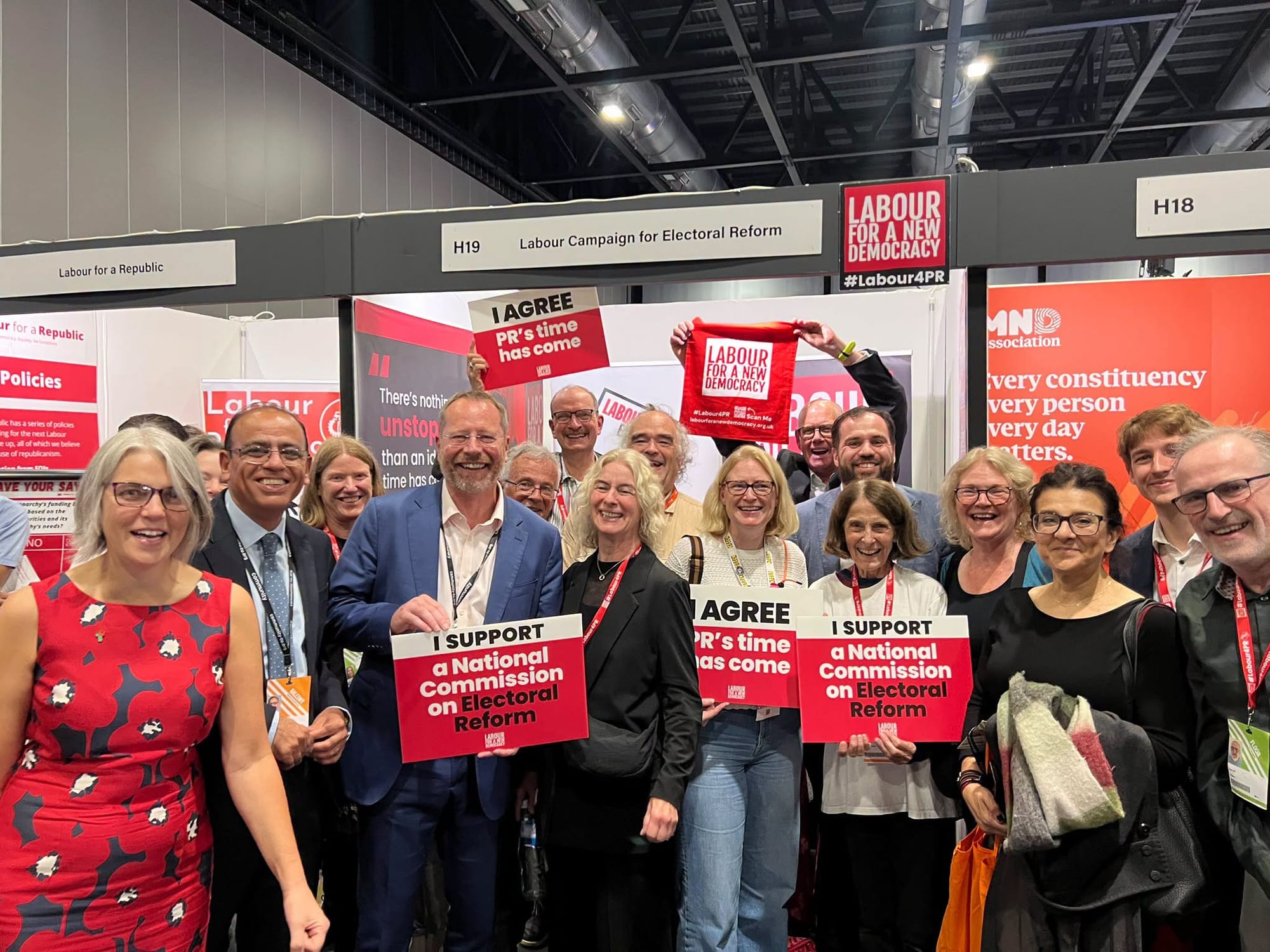
- Banbury MP Sean Woodcock (Lab) was, of course, at the Labour Party conference this week where he hailed a “brilliant speech by the Prime Minister… a conference speech that ignored other parties and focused on what we will do”. Conference for MPs is usually a lot of dashing between fringe events and meeting local interest groups: Woodcock spoke at a panel on water ownership and one on mobile connectivity as a driver for economic growth. (We guess he takes the train between Banbury and London then?) He specifically called out the need for better mobile connectivity in rural communities.

- Bicester & Woodstock MP Calum Miller (LibDem), the party’s foreign affairs spokesperson, waded in to the debate over the Green Party conference motion declaring Zionism a form of racism. The motion has attracted widespread concern for its potential to be used for anti-Semitic ends; Miller called it “wrong-headed and deeply damaging”, while endorsing a statement that welcomed climate-conscious activists to the LibDems. In local news, he visited Bletchingdon Primary School.
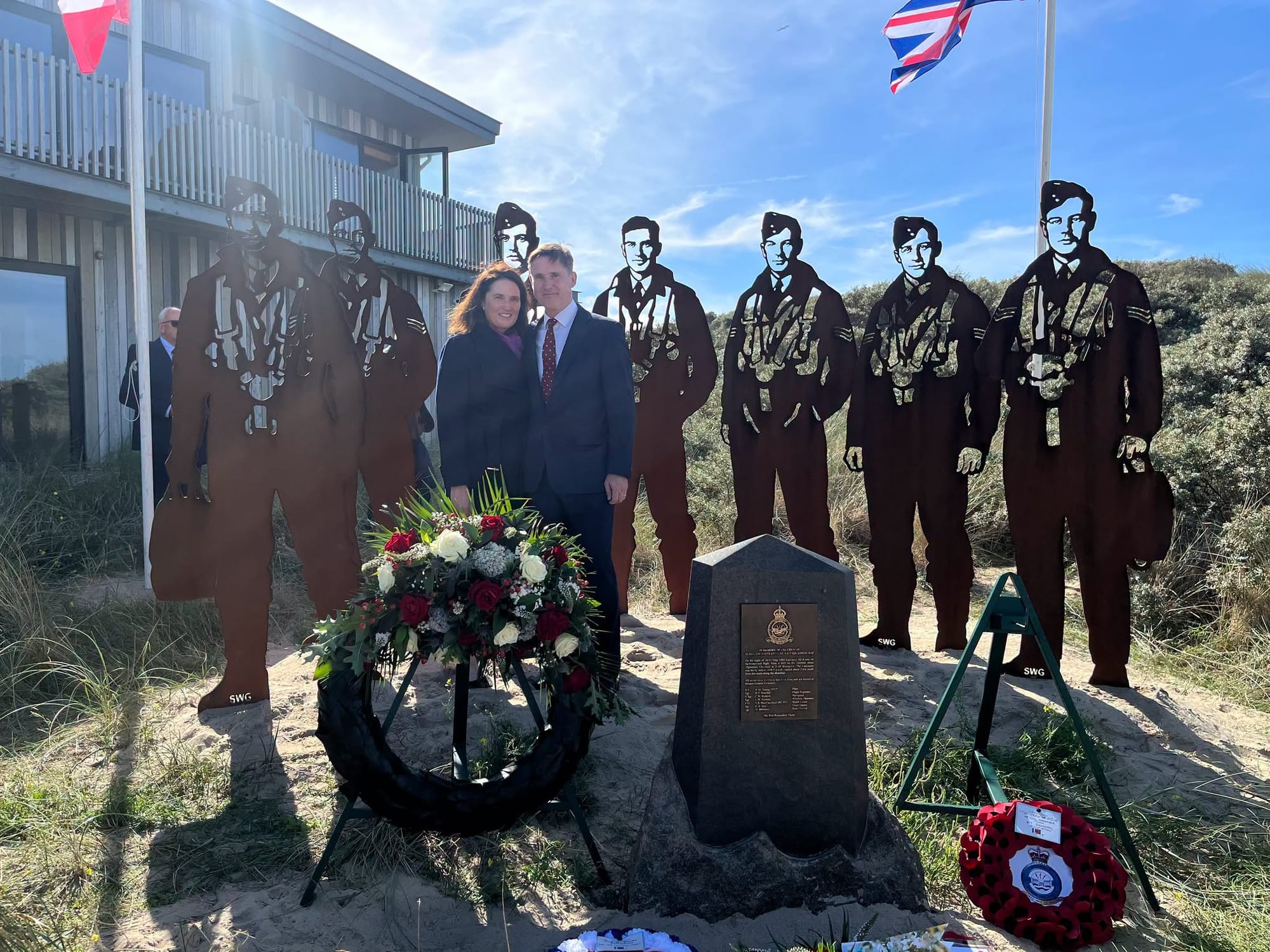
- Witney MP Charlie Maynard (LibDem) represented local charity Standing with Giants, laying a wreath in memory of the crew of the Dambusters, at a ceremony in the Netherlands. More locally he vehemently opposes the proposal to build over 1200 homes at the Witney North site on flooding grounds (…he's not best pleased with the Witney Gazette's reporting of his statement either). We are sure that Maynard does things that don't involve water sometimes, but this week he's also written to the Environment Agency to back the Upper Evenlode Natural Flood Management Project.
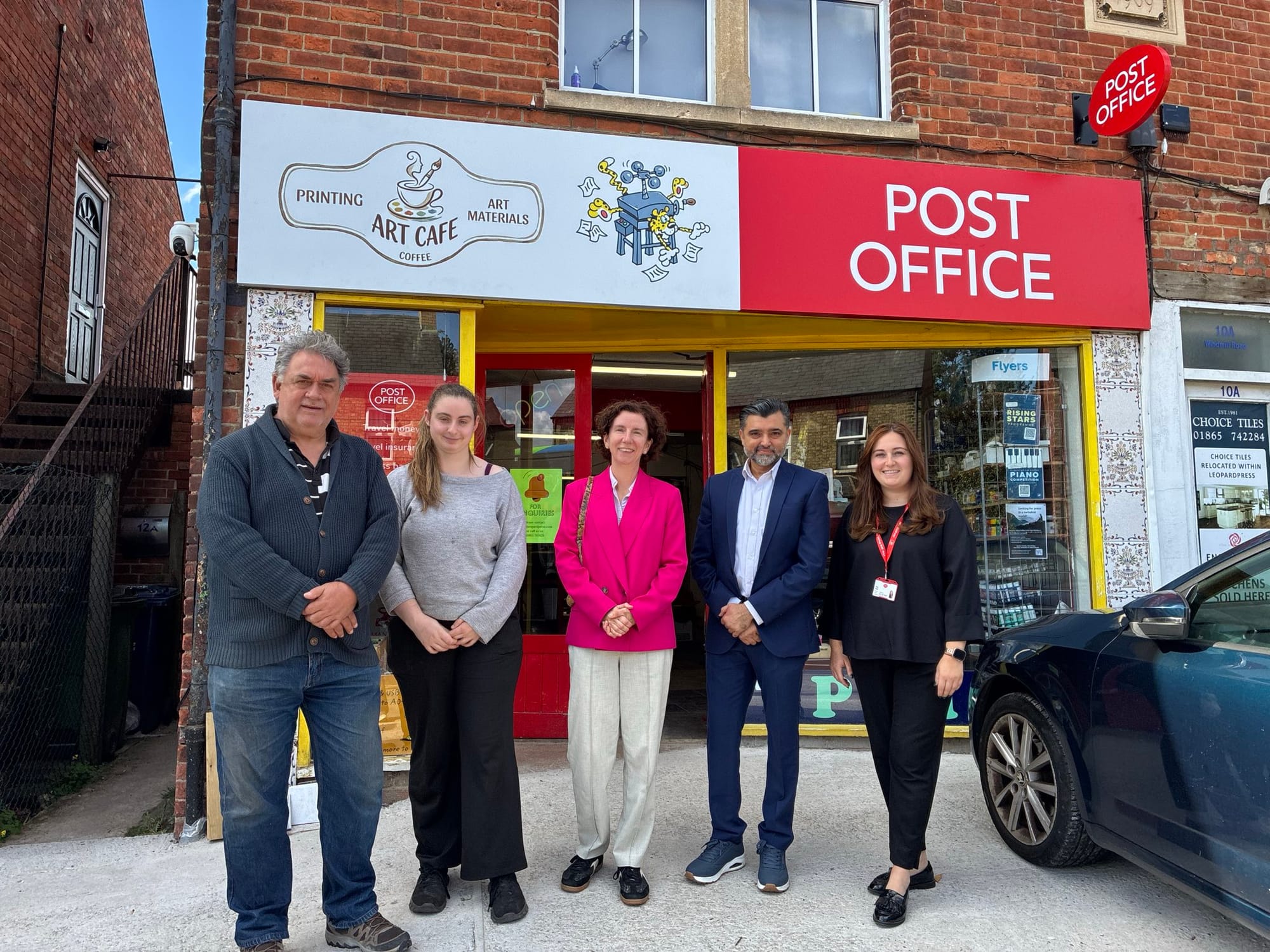
- Oxford East MP Anneliese Dodds (Lab) has done a nifty video round-up of her time at conference (filmed on a bus, if that entices you to watch it). She’s unequivocally backing Burnham and his "honesty, ideas and clear direction for our country". Away from conference, she continues to demand action from Royal Mail on delays to deliveries in her constituency.
- Oxford West & Abingdon MP Layla Moran (LibDem) marked the end of bathing water season with a post that exuded disappointment in Thames Water (shades of the ex-teacher: “you've let yourself down, you've let the school down”). “We fought hard to secure bathing water status for Wolvercote Mill Stream because we all deserve clean, safe places to swim, paddle and enjoy the river. Yet four years later, the bathing waters are still rated as poor. That's simply not good enough. We'll continue pushing the Government and water companies to clean up our rivers.”

- Didcot & Wantage MP Olly Glover (LibDem) celebrated World Space week by holding up some incredible businesses in his constituency that sit at the cutting edge of space tech, including Astroscale and the European Space Agency. (We really do need to write that article about Didcot being at the cutting edge of everything...) He welcomed the PM's announcement of a National Commission on Electoral Reform.

- Henley & Thame MP Freddie van Mierlo (LibDem) met the Fire Brigades Union to discuss the capacity and resilience of fire crews, especially with increasing trends of extreme weather events in Oxfordshire. (And possibly do a rain dance?) He was star of the show at ‘An Evening with Freddie van Mierlo MP’, a fund-raising event by Thame Players.
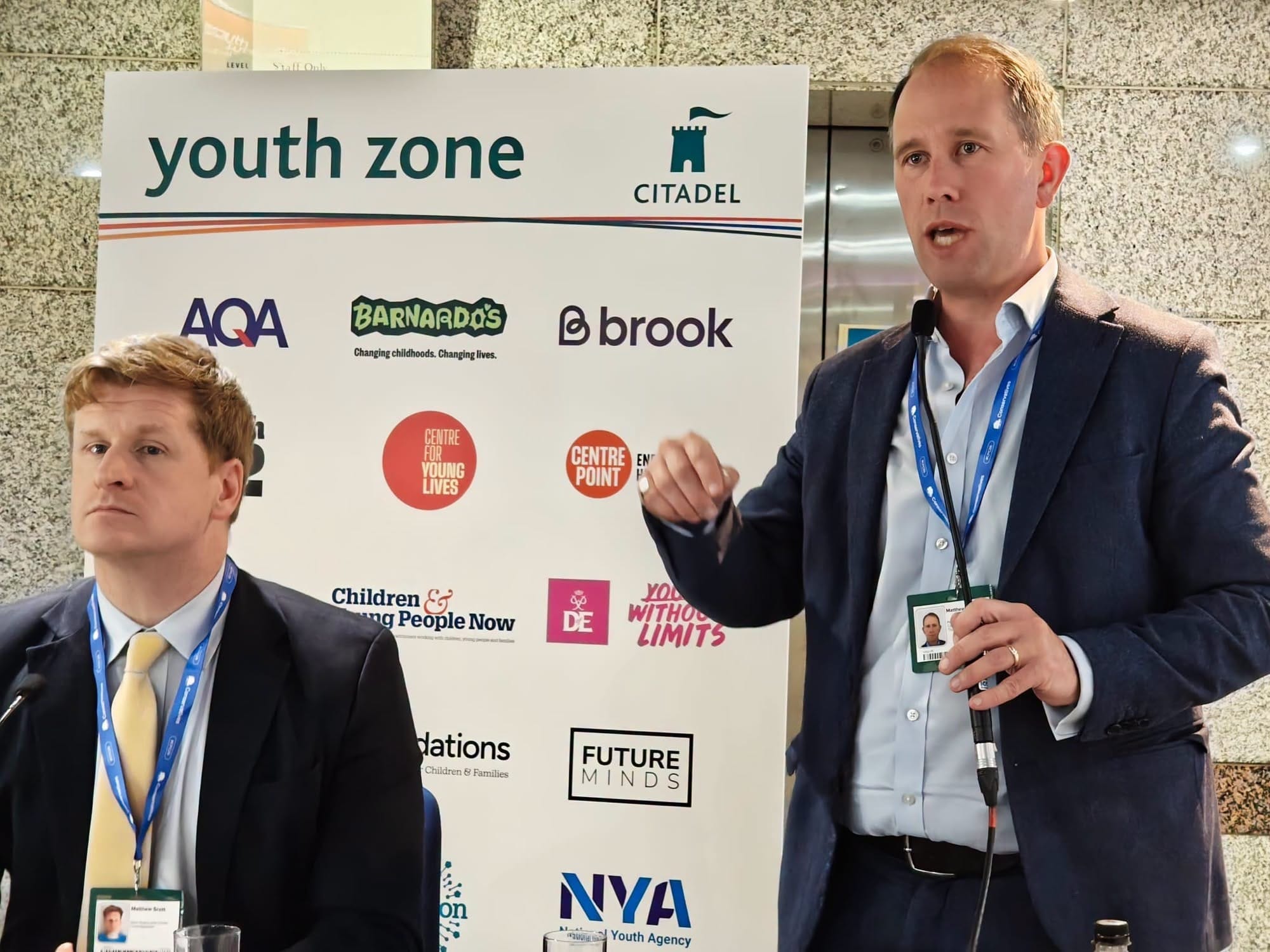
- Thames Valley Police & Crime Commissioner Matthew Barber (Con) launched a new CCTV control room in Abingdon, which he says is both lighter on the public purse and more effective. In Giant Reservoir News, he's encouraging local residents to complete surveys run by the local parish councils close to the proposed White Horse Reservoir (the reservoir formerly known as SESRO), so that local voices can be collated and heard. (The Clarion is usually sceptical of political surveys or petitions, often little more than thinly disguised data gathering exercises. But this one seems legit, so if you are local, do complete it.)
University and research
- Following criticism of the Bodleian-OpenAI partnership, the library has published its new AI policy. The Bodleian commits to “avoid reinforcing existing biases”, to find a balance between openness and the protection of authors, and to advocate for public policy reform. Oxford University has partnered with OpenAI for 5 years, effective from December 2024 and formally announced in March 2025. Although the Bodleian has no plans for further work with OpenAI, the library is investigating smaller AI projects with Oxford University Press and Harvard University.
- Oxford Brookes student India Merlin Weisser has won the prestigious AJ Student Prize, a national annual architectural award. ‘Exploring Principles of Care through an Intergenerational Women’s Co-operative’ proposed intergenerational women’s housing along the Thames in Oxford.
Seeking to tackle social isolation and gender inequality through collective forms of support, the brief brought together single mothers, ageing women and future residents. Private domestic spaces are combined with communal environments. The scheme is designed to support mothers returning to work. The jury praised the project for bringing environmental, social and urban thinking together consistently, coherently and to a high standard. Small details in the model, including laundry hangers, also caught the judges’ attention, demonstrating was rooted in the reality of everyday life. - 'Auto-reply' and 'no-platforming' have joined the half-million entries of the Oxford English Dictionary in its latest quarterly update. The social media sense of 'timeline' has been added with a citation from the first year of Twitter, 2006.
- Disease-causing bacteria behind the March 2026 Kent meningitis outbreak ‘borrowed’ genes from less harmful bacteria found in many healthy people, according to an Oxford University research collaboration. These genes meant that the Kent strain made people more ill, but also less able to spread. Scientists think that this is a recurring pattern behind rare but intense clusters of meningococcal disease, with a similar outbreak in Southampton in 1997. This pattern is unpredictable & could repeat, so rapid health responses and tracking the genetic make-up of the bacteria is important. The pattern might be associated with periods of intense social mixing (like Freshers’ Week!), so as we head into the start of term at both of Oxford's universities, a reminder to know the symptoms of meningitis and seek medical help quickly if you are concerned.

- The Bodleian Libraries have announced details of Plain Things Wonders, a new exhibition exploring how close attention to the natural world can change our understanding of our environment. It opens from 5 November at the Weston Library. Marking 400 years since the publishing of Francis Bacon’s Sylva Sylvarum – one of the most influential texts in the development of experimental science – the exhibition explores how closely observing ordinary natural phenomena has historically sparked breakthroughs across science, art and literature. Exhibition highlights include local environmental observation from a 14th-century Oxford manuscript recording monthly weather, and the chance to view the original manuscript of Gilbert White’s The Natural History and Antiquities of Selborne (1789), alongside Robert Hooke’s iconic Micrographia with its detailed microscopic engravings.
- Rapid economic growth has brought major gains in access to electricity and cleaner cooking in India, according to research led by the University of Oxford – but growing reliance on coal-fired power has contributed to worsening outdoor air pollution and a sharp rise in urban air-pollution-related deaths. The study was published in Nature Cities. Study co-author Dr Basudev Swain said: “This is not simply a story of development making pollution worse. Rising incomes have enabled a major transition towards cleaner household energy, with important health benefits. The challenge is to ensure that the electricity supporting those gains is itself generated more cleanly.”
- Reuben College, Oxford’s newest (established in 2019), has appointed its second ever president. David Gavaghan, a computational biologist, will succeed Lionel Tarassenko. He will take up the position on 1 September next year.
- Two Oxford English dons have advised on Middle English dialogue for forthcoming horror film Werwulf, set in the 13th century. Dr Eleanor Baker and Professor Daniel Wakelin acted as consultants for director Robert Eggers. Werwulf will be released on New Year's Day.
- The 2026 Nobel Prize for Medicine recognises pathbreaking work in optogenetics, a technique first pioneered at Oxford: it enables neuroscientists to ‘spark’ different cells in the brain, with Oxford University's Gero Miesenböck the first person to demonstrate optogenetic control of neural circuits. The Nobel Prize was awarded to Karl Deisseroth, Peter Hegemann and Georg Nagel, whose work now enables neuroscientists to ‘spark’ individual nerve cells and circuits in the mammalian brain with light – like an electrician testing different circuits to see what happens.
Trains and buses
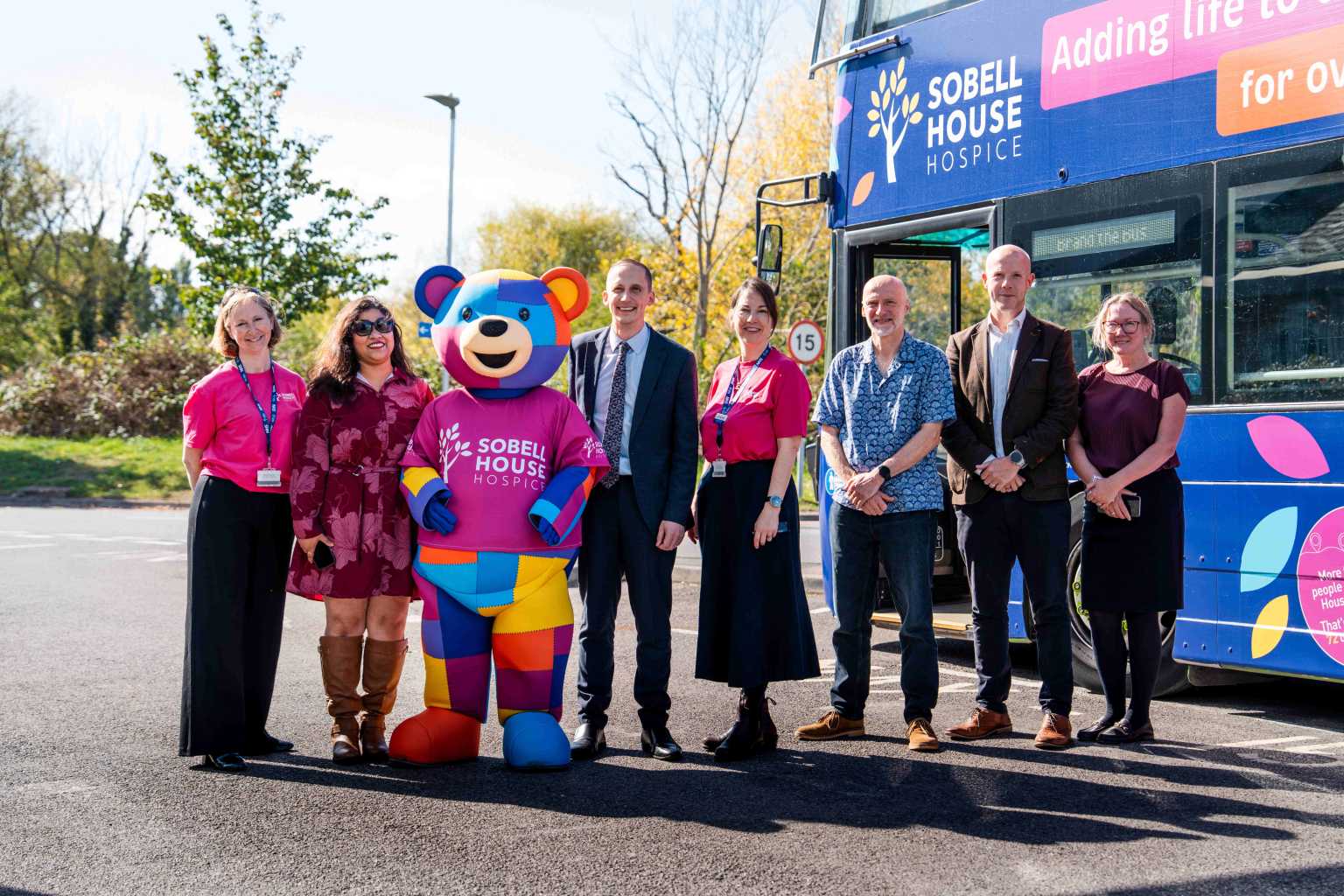
- A double-decker bus has been liveried in Sobell House Hospice colours for the winner of Oxford Bus Company’s annual Brand the Bus competition. The Oxford charity cares for more than 5,000 people with life-limiting illnesses. The bus unveiling was followed by a ‘musical singalong’ around the Churchill Hospital site, where the charity is based, and through Headington.
- Oxford’s buses are the first to be fitted with new ticket machines by operator Stagecoach. The TK300 machines have improved GPS tracking for live bus information, faster ticket issuing, and quicker contactless payment processing. One local driver said: “After trying the new machines and then going back to the old ones, it’s apparent how much of an upgrade the new ones are.” Martin Gibbon, MD of Stagecoach West, said they would make “a real difference to our colleagues' working day and help our customers board more smoothly”.
- Tourist bus parking restrictions are planned once again for Burford, with a decision set to be taken on Thursday. Several accidents have been reported outside the town’s primary school as 15m-long coaches manoeuvre on unsuitable narrow roads. Oxfordshire County Council officers had been looking for potential coach parking locations, but say “despite drafting several alternative proposals, no suitable alternatives have currently been found”.
The plans are opposed by coach operators, with Luke Marion from Pulhams Coaches (and Oxford Bus Company) taking aim at West Oxfordshire’s free, unrestricted parking:
“This location has for many years been the only recognised, or workable location for coaches visiting Burford to turn around in the town… these plans amount to a proposal to ban full-size coaches from visiting Burford.
“I would also highlight the high level of on-street parking that exists currently in Burford, and would ask the Council respectfully to consider whether the use of such a high proportion of finite available space on the public highway, for the storage of high value personal possessions belonging to local residents fits with the County’s wider travel and connectivity plans – or whether some controls on parking in the area would be useful, to ensure the unique characteristics of the town can be preserved for all to enjoy.”
- Oxford’s fastest trains are the 13.06 to Banbury, the 16.58 from Paddington, and the 11.07 to Leamington Spa, each averaging 80mph point-to-point. More impressive still, though, is the 13.11 departure from Didcot, which averages 99.9mph on its run to Swindon. Downside: you end up in Swindon. (Figures from this rather enjoyable site.)
- And finally, we were rather taken by the Guardian’s list of the best station pubs. Amid all the blueprints for a new Oxford station, this is one feature we haven’t seen mentioned – but there’s still time. See you for a pint down the Old Worse and Worse?
Show me the money
An occasional series where Clarion readers can find grants for their organisations.
- National Grid’s Didcot substation project, which we wrote about above, comes with a £530,000 community fund associated. The grid operator is carrying out works to extend the existing 400kV Didcot substation to support the new data centres, and is asking local people how the associated community benefit fund might be spent. The consultation is here, and closes on 27 October.
- Good Food Oxfordshire are offering 10 mini grants of £100 to community groups to help fund local events that encourage people to reduce pumpkin waste. Deadline 7 October (tomorrow).
Notes from Clarion HQ
Dear Secretary of State, I wrote you, but you still ain’t callin’
I left my cell, my pager, and my secure government email address at the bottom
I sent two letters back in autumn, you must not’ve got ’em
There probably was a problem at the reshuffle or somethin’
Rewriting Eminem’s Stan with Oxford city councillors cast in the role of the obsessive fan was not how we expected to spend our Tuesday. But after another brace of motions asking the council to write letters to Government, albeit very worthy ones, it seemed appropriate. Full marks to the Independent Oxford Alliance (yes, you did read that right) for using their slot to ask the City Council itself to look after vulnerable residents in heatwaves. It’s just a shame that the letter-writing motions meant there wasn’t time to debate it.
We’re a little anxious that the more edgy content in this week’s news (looking at you, Henley) will trip one or two content filters. We don't often entreat you to share the newsletter – ok, not that often – but this time we’d ask you do, or at least check with your Clarion-reading friends that they've received it! See you on Friday.