Two Councils – the Goldilocks choice
Oxfordshire’s councils are to be combined – and there are competing visions for how to do this, and a Government consultation seeks your input. In the third article of our short series, Councillor Maggie Filipova-Rivers, Leader of South Oxfordshire District Council, writes for the Clarion on why she believes the right way forward is for the county to be managed by two unitary councils.
The Goldilocks option, not too big, not too small. Two councils – striking the right balance between being large enough to be financially stable and deliver services well – but small enough to remain focused on local needs, listen to and care for their communities.
Oxfordshire, with its mix of urban and rural, is a remarkable place to live, and I’ve come to see that people don’t choose to live here because of its world-renowned university, but because of the everyday rhythms of our many communities, in our villages, in our towns and in our city. Neighbours stopping to chat outside local shops, children having places to roam freely, the sharp air on a crisp winter’s dog walk, community events bringing people together to raise money for the local school, cultural hubs and nightlife, and those familiar encounters with wildlife, hedgehogs in the garden, the occasional newt in a pond. That is what makes life here special, offering a sense of calm in an increasingly uncertain world, without ever feeling removed from it.
And yet, when people do need to turn to local government services, the system they encounter often feels far removed from the very communities it is meant to serve. People are bounced between 3 tiers of councils; county, district and parish - like a case file no one quite owns, often miles from the offices and services they’re trying to reach. We spoke extensively to our communities while building our proposal, and they were very clear; they want to see improvement to their public services – better roads, better planning for the future, better adult social care and SEND.
This need for improvement isn’t because people aren’t trying, nobody goes into local government for the glory or financial reward, it’s the result of a system stretched by growing demand, an ageing population, and years of reduced funding from central government, compounded by fragmented responsibilities and services locked into long-term outsourced contracts that limit the ability to respond quickly to changing needs. Tight funding means that services are often prioritised based on demand and population density, meaning smaller communities can find it harder to access the same level of service in a system designed around very different needs, when what’s needed is a differentiated approach that allows places to deliver services in ways that reflect their distinct demography, geography and local economies.
Do I believe Local Government Reorganisation will solve all of these structural challenges? No. But it does give us the chance to start with a blank page, drawing on what works well locally and learning from best practice across the country, to reimagine how local government operates and ensure it better reflects the people and places it serves. That is how I see it: not simply as an opportunity, but as a responsibility to shape something that not only brings clarity where there is confusion, but, more importantly, begins to restore the trust that underpins our public institutions. That understanding is grounded not just in principle, but in what residents themselves have told us. Through extensive engagement across our communities, a clear message emerged: people want to see genuine improvements to services, particularly those currently delivered at a county-wide scale. This is not a reflection on the dedication of councillors and officers who work tirelessly under immense financial pressure, but on the inherent challenge of delivering complex, high-cost services across such a large and varied area.
In my time as both a district and a county councillor, I have come to understand that: scale cuts both ways. Up to a point, economies of scale can bring efficiencies, but beyond a certain size, it can just as easily make things harder. Larger organisations are more complex to run, have more layers of management, decisions can take longer, and services become harder to adapt to the needs of different communities. And where you try to tailor them, it often comes at additional cost. Councils are not factories; public services can’t simply be standardised and delivered more effectively the bigger they become. Adult social care is a clear example. Independent modelling shows that costs per user in Oxfordshire are significantly above the national average, in part because services are delivered across too wide a catchment. A one-size-fits-all approach has too often meant paying over the odds for those with less complex needs, while still struggling to meet demand effectively.
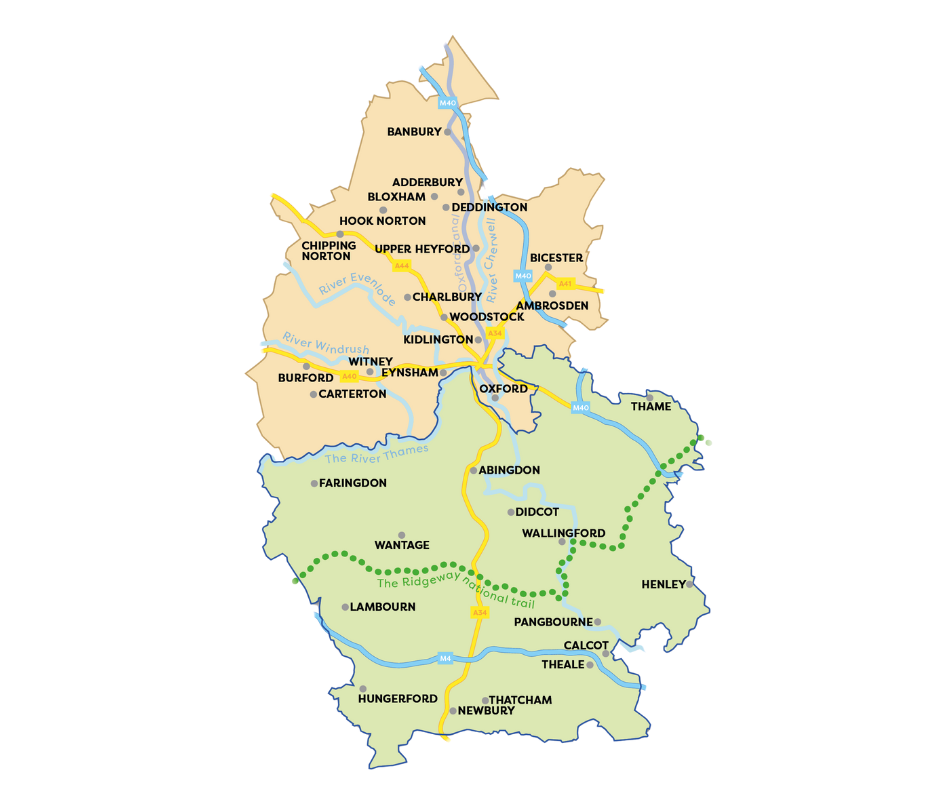
Our proposal is to create two new unitary councils: Oxford & Shires in the north of Oxfordshire (made up of the existing West Oxfordshire, Cherwell and City Councils), and Ridgeway, bringing together the south of the county (South Oxfordshire and Vale of White Horse) with West Berkshire. Each would be large enough to be financially sustainable, but not so large that they lose touch with the communities they serve. Oxfordshire’s upper-tier council services would be reimagined so they’re smaller, more manageable, resilient and effective – protecting and improving services for all their users. West Berkshire’s version of these services – like their good quality highways maintenance, social care and education services – would be reimagined onto a larger geography that allows them chance to work at a scale that is financially viable.
Independent analysis shows that the two-unitary model delivers the strongest financial resilience and has the potential to generate the greatest long-term savings of all the options, particularly when West Berkshire is included. At the same time, it reflects the Government’s direction of travel on devolution, which will see areas covered by strategic authorities responsible for transport, infrastructure, skills and economic growth, while ensuring the councils beneath them are right-sized, large enough to be sustainable, but not so large that they lose connection to the communities they serve. West Berkshire, which would sit within a Thames Valley strategic authority, is currently too small to meet that test on its own, something our proposal is designed to address.
This proposal is not about looking back. It is about building new councils that are the right size to serve their communities, and strong enough to meet the challenges of the decades ahead. Nor does it change who we are. These are administrative units, designed to make services work better, not to redefine identity or history. Just as places like Yorkshire continue to hold a strong sense of identity regardless of how local government is organised. Ultimately, this is about creating a system that fits the places it serves: one that is more responsive, more sustainable, and better able to earn back the trust of the communities it represents.
The Government’s consultation is closing soon and we encourage residents, businesses, and community groups to take part. Please do review the other two proposals being put forward for our area too – the city council is proposing three new unitary councils based around an expanded “Greater Oxford” area, and the county council is proposing a single council based on its existing footprint with “continuing authority status” which would mean the current County Council would continue as it is, while absorbing the district and city council services. Information on their proposals is available at oneoxfordshire.org.uk and 3councils.org. You can read more about our proposal at twocouncils.org
Further reading
- Our primer on local government reorganisation
- Oxford City Council leader Susan Brown writes for the Clarion setting out a competing case for three councils as the solution for Oxfordshire.
- Oxfordshire County Council leader Liz Leffman writes for the Clarion on why she believes a single unitary council is the right solution for Oxfordshire.