
The Clarion, 29 September 2026

Traffic filters, college barges, venture capital and an “innovative dog capability”. It can only be the midweek Clarion…
This week’s long reads
After a meticulous restoration and a challenging tow up the Thames, Eddy, the oldest surviving Oxford college barge, is back on the city’s waterways and in search of a permanent home. We spoke to its owner, Bruce Heagerty.
 Oxford Clarion
Oxford’s traffic filters switched on yesterday. Oxford Liveable Streets' Siobhann Mansel-Pleydell asks which will be better for the city and its commuters – the congestion charge or the traffic filters?
Clarion guest contributor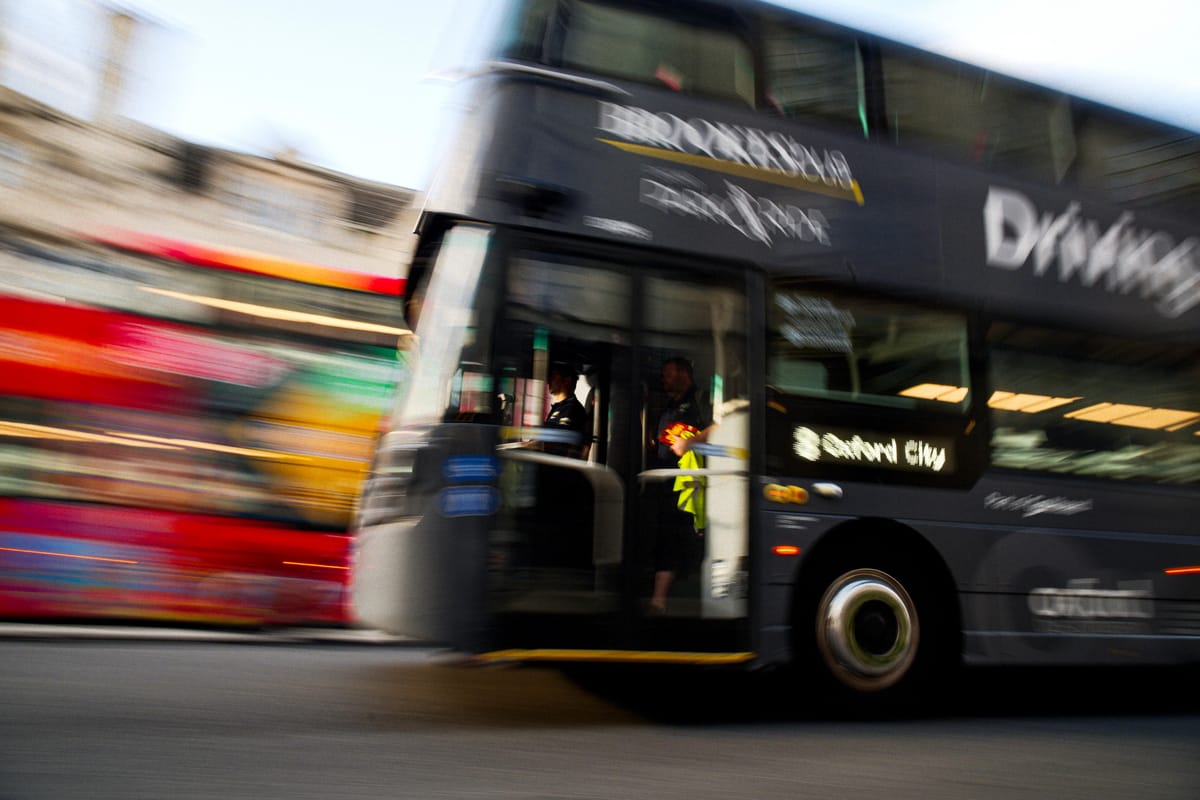
180 riders filled the streets in Oxford's most joyous bike ride, Kidical Mass. Our photographer Roger Close was there to capture the action. Can you spot yourself?
Oxford Clarion
This week’s top stories
Oxford’s traffic filters went live on Monday, replacing the congestion charge. Cars may not pass any of the six filters during their operating hours without incurring a £70 charge for the driver, unless they qualify for the (numerous) permits and exemptions. Oxfordshire County Council has opened a consultation survey to hear people’s experiences.
Want to know how to get around the city? We’ve rewritten our congestion charge article to cover all the best hacks on how you can avoid the traffic filters entirely, and still visit all your favourite places in the city centre. (Includes “Buy a hearse like in Ghostbusters.”)

Oxfordshire’s first new Quiet Lane has come into effect. Shepherd’s Pit Lane, from Oxford Crematorium to the village of Stanton St John, now has a closed gate at one end to prevent through motor traffic, making the road safer for walkers and cyclists. The parallel Bayswater Road remains open to cars and is no slower. Cllr Emily Kerr (Green), OCC’s Active Travel Champion, said:
“I'm delighted that the first of Oxfordshire's new Quiet Lanes is in place: these allow Parish Councils to protect their communities from rat-running drivers and provide safe routes for walking, cycling, and horse-riding. I cycled out to Rectory Farm's shop from East Oxford today and the route has been transformed. It's an improvement, not perfection: there's a stretch which should be 20mph and a crossing is needed before kids could safely access the lane, but it's an awful lot better and I'd highly recommend supporting our local farmers by visiting Rectory Farm’s shop and cafe – they're great.”
Medium-term plans could see a new cycleway built to link the road to Oxford’s cycle network, and provide a safe crossing of the B4027 to Stanton St John and Rectory Farm. Around 30 quiet lanes already exist in Oxfordshire with a variety of approaches. A consultation has opened on the Shepherd’s Pit Lane trial, which will last for at least 12 months.
The Oxford–Cambridge corridor is “falling behind” its global competitors, according to an influential thinktank – and poor transport links are part of the reason.
The report by Public First, produced with trade body the Oxford–Cambridge Supercluster, sets out an ambition for the area to become "a top 10 global innovation cluster". It says the region’s potential is clear, with more university spinouts than any other cluster, and a research track record which is driving AI innovation.
But Public First warns that unless the Government grasps the nettle on five real-world constraints, commercial success will remain out of reach:
- Transport: Only 400,000 people live within an hour's commute of two of Oxford, Cambridge, or Milton Keynes. In the Netherlands' Randstad conurbation, by contrast, 3.5m people live within an hour of both Amsterdam and Rotterdam – connected by intercity rail "at frequencies and speeds well beyond most UK interurban routes".
- Infrastructure: Electricity is 60% more expensive than Paris, while rents (at over 20% of average household income) are the highest of any cluster. In Seoul, a long-term electricity strategy has tied transmission investment to industrial growth.
- Talent retention: Most successful companies founded by Oxbridge alumni have left the area – with 20% leaving the UK altogether. Austin (Texas) tackled this by becoming "a place people want to move to", with an identity built around entrepreneurship, informality and live music, most famously at the South by Southwest conference and festivals.
- Commercialisation: Despite Oxbridge's track record of high quality research, it has almost the lowest rate of turning this into patented technologies. In Boston, the Massachusetts Life Sciences Initiative was set up as a first step on the ladder for start-ups, providing facilities that young biotech companies could not at first afford.
- Capital: In 2025, the Oxford–Cambridge corridor attracted $93m of late stage investment, while Austin attracted 29 times that amount. In Paris, a similar shortfall was turned around with the Tibi charter, where institutional investors committed to support innovative French companies.
The report points to tentative endeavours like East West Rail and the proposed Development Corporations, but says "none yet goes far enough or fast enough". International competitors, it warns, are moving much more quickly.
Patrick Vallance, chair of the Oxford-Cambridge Growth Corridor, said: “While Britain has a great history of innovation, I have long believed that we do not make enough of what we are good at. While the opportunity is real, so is the competition for it. We are competing with every cluster named in this report.”
Around the city

- Two climate protestors who sprayed orange paint on the Radcliffe Camera in 2023 have been given suspended sentences for criminal damage. Daniel Knorr and Noah Crane were acting in support of Just Stop Oil, which has since ended its civil disobedience campaign. Knorr and Crane were carrying an academic paper entitled ‘No research on a dead planet’, given to the jury as evidence. Supporters from Defend Our Juries held placards outside Oxford Crown Court, with the wording “Jurors have an absolute right to acquit a defendant according to their conscience.”
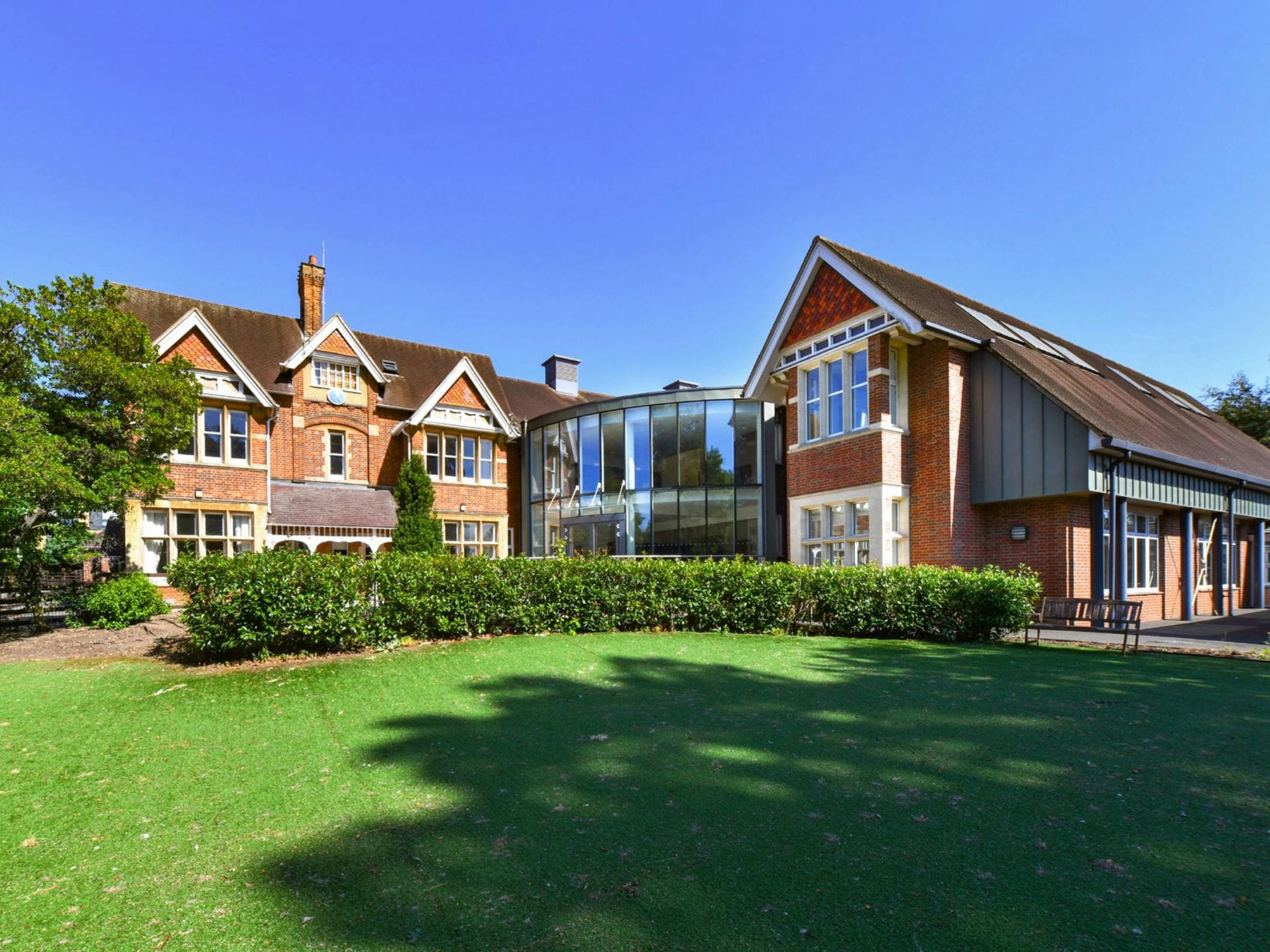
- The site of the former Headington Prep School is up for sale. Headington School merged with Rye St Antony School in 2024 to become Headington Rye. With the prep school now housed in the former Rye building, the original Headington Prep is therefore on sale. The agents say it is an ideal location for alternative uses including student accommodation, co-living, residential, medical or charitable, subject to planning. Lab space is not mentioned (nor is the price).
Elsewhere in the county, a site used by the Manor Preparatory School was recently up for sale in Shippon near Abingdon, but is now sold subject to contract. The Manor merged with Abingdon School earlier this year. The site features an orchard, some mysterious shipping containers, barns and buildings dating back to the 16th century, but is one mile from a supermarket. (The Clarion is extremely jealous of whoever managed to secure this.)
Around the county
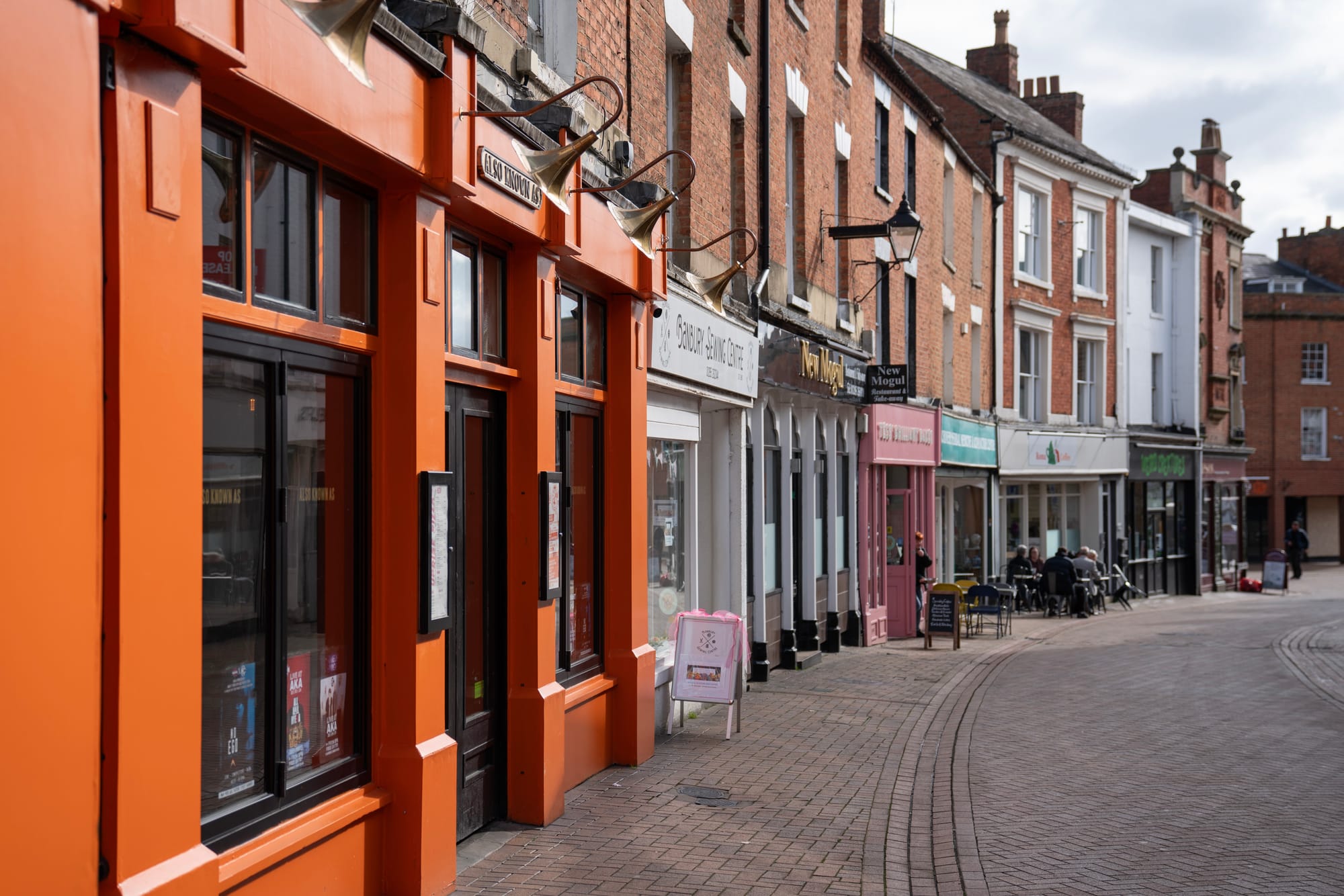
- Work has started on ambitious plans to regenerate Banbury, says Oxfordshire County Council. They have embarked on a series of meetings with local stakeholders, including businesses, employers, and transport providers to get their views. The plan is intended to help inform future investment and bring in further funding to the area. Cllr Lesley McLean from Cherwell District Council said:
“Banbury has many strengths to build on – its businesses, heritage, transport connections and strong sense of community. This masterplan will help identify new ways to attract investment, support local enterprise, create jobs and boost the town centre.”

- The perfect commute? 81 houses are proposed next to Kingham railway station in the Oxfordshire Cotswolds, 25 minutes from Oxford. The developers call Kingham Meadows “one of the few rural locations in West Oxfordshire where new homes can be delivered without placing pressure on an already car-dependent local infrastructure” and that the rural site allows them to be “more generous with its open space than planning policy requires”. A commercial development, modelled on Cotswold favourites Daylesford Organic and Dunkertons Cider, is positioned as a “station gateway… a carefully considered mix of commercial, community and enterprise uses arranged around an active, landscaped courtyard will create a place that serves residents, supports local businesses and draws visitors arriving by rail”.
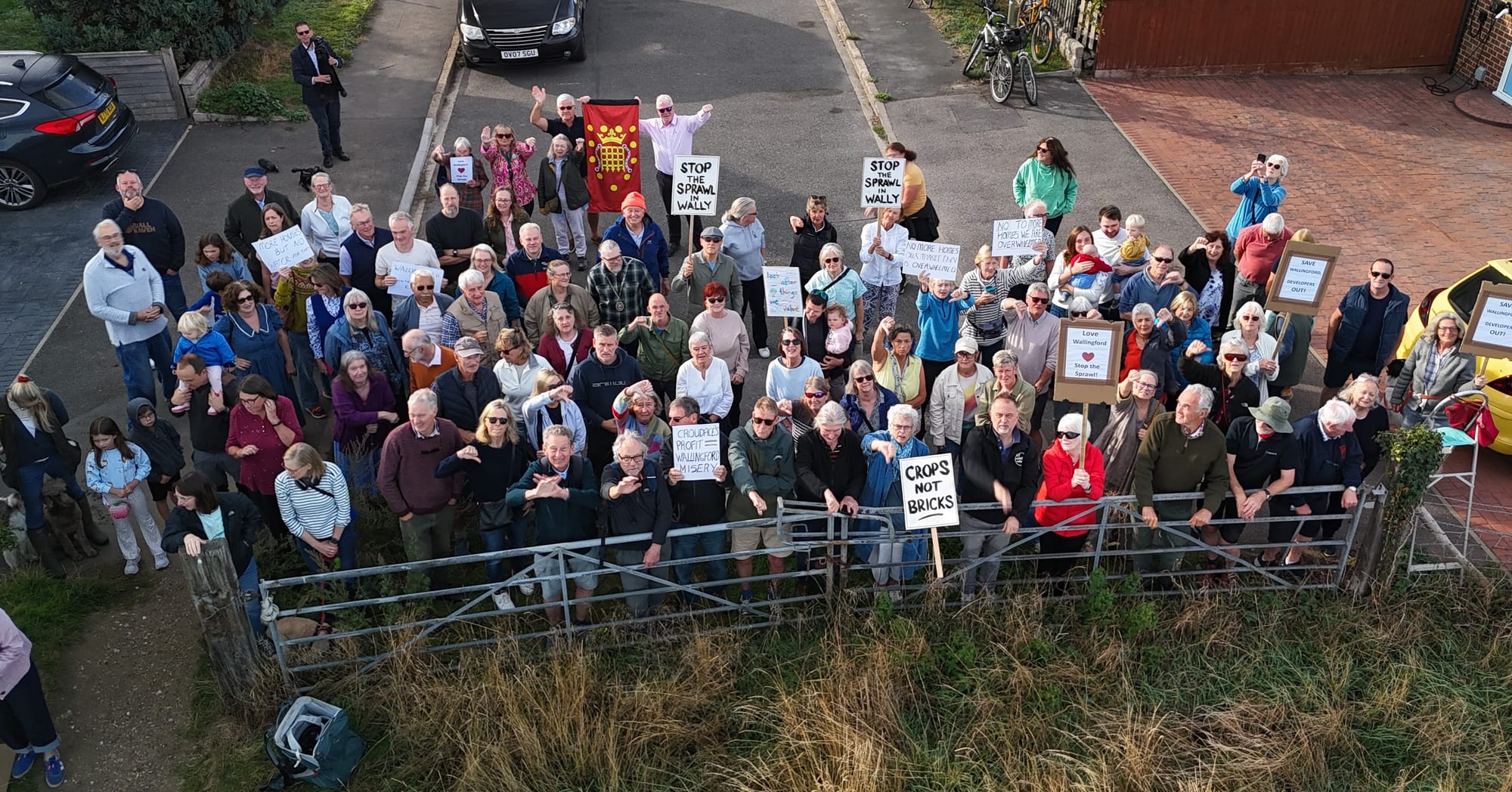
- Local opposition continues to a 480-home development by Croudace Homes on land to the north of Wallingford. Residents gathered at the weekend to protest against the development, and draw attention to the crowdfunder set up by Wallingford Town Council for legal costs to oppose a planning appeal. Dean Valler from campaign group ‘Love Wallingford, Stop the Sprawl’, said: “It’s clear that our town is fully behind opposition to this scheme which, we believe, would lead to hundreds more homes nearby. It's a ruinous prospect which would change the nature of Wallingford – a beautiful, historic market town.”

- Specially trained police dogs are working in the Thames Valley, trained to detect small quantities of substances used to spike drinks. The police say that while incidents of spiking remain low, disruption and prevention is key. Chief Constable Jason Hogg said: “Keeping people safe remains our priority, particularly within the night-time economy. This innovative dog capability provides officers with an additional tool, helping us to prevent harm before it occurs."
Oxfordshire politics
Parliament is in recess for conference season, giving MPs a chance to spend time in their constituencies while the other parties’ conferences take place. Here's a digest of what we've spotted.

- Banbury MP Sean Woodcock (Lab) has been all over the constituency meeting residents. He served food at Dashwood Academy, visited Bishop Loveday School, held a drop-in in Wroxton and visited a Parkinson's group at St Hugh's Church in Banbury.

- Bicester & Woodstock MP Calum Miller (LibDem) is a single-issue campaigner right now. Here he is demanding that the Prime Minister himself takes a look at the asylum centre proposals for MOD Bicester. Miller, who worked as a senior civil servant at the Treasury from 1999-2009 and therefore presumably knows his way around a Government calculator, looked at projected costs for the centre. Using previously published costs for asylum accommodation at MOD Bicester, he estimates that establishing the site could cost more than £250m – nearly £200,000 for each bed in the facility – while the 10 year total could exceed £1bn.
- Witney MP Charlie Maynard (LibDem) is celebrating the NHS piloting a rapid genomic test to confirm brain cancer diagnosis. A long term campaigner on the issue of rare cancers, Maynard said that we cannot stop there: “Better diagnosis is essential, yet we still have no cure for many forms of brain cancer. We urgently need greater investment in research, with a relentless focus on finding a cure.”

- Oxford East MP Anneliese Dodds (Lab) signed a joint letter to Ofcom and the Department of Business & Trade on Royal Mail delays. In ‘think global, act local’ news, she wrote to the Foreign Secretary urging him to work with Nepal on the impact of climate change. She's also been busy at the Labour Party Conference: here’s her round-up of what she's been up to at all the fringe meetings, from the UK's relationship with Europe and its impact on Plant Cowley, to Operation Bullfinch.

- Oxford West & Abingdon MP Layla Moran (LibDem) has audible anger in her voice at the mismanagement of the Botley Road saga in this TV interview, calling it “three and a half years of people's lives you can't ever get back”. As a former teacher, she's appealing for local teachers to take part in Parliament's teacher ambassador programme, exploring new ways of teaching young people about Parliament and democracy.

- Didcot & Wantage MP Olly Glover (LibDem) visited Tokamak Energy in Milton Park, who are working on delivering clean fusion energy. The Didcot area gets overlooked in the grand Oxford–Cambridge Corridor vision, perhaps because it doesn’t have a university. Should we (or a reader – we are all the Clarion) write an article on how Didcot is more than the Railway Centre but in fact the cutting edge of science, defence, space and more?
- Henley & Thame MP Freddie van Mierlo (LibDem) has written to PCC Matthew Barber about lack of enforcement of speeding offences in Oxfordshire, and specifically about TVP's decision not to co-fund a proposed average speed camera scheme on the A420, despite Oxfordshire County Council being willing to part fund the scheme. (Barber had previously complained about Oxfordshire councils being unwilling to join a TVP CCTV partnership; the scheme was confirmed in February this year.) If camera drama isn't enough for you, the Players Theatre in Thame is hosting an evening with Freddie van Mierlo tomorrow (Wednesday) where he will talk about his work as an MP and answer questions. (If only we had a theatre critic on the staff…)

- Thames Valley Police & Crime Commissioner Matthew Barber (Con) has called on the Government to provide full funding for the increased policing costs associated with the proposed asylum camp at MOD Bicester. In a letter to the Minister for Border Security & Asylum, he outlined the additional demand expected, including the need for increased neighbourhood policing once the camp is occupied and the management of protest activity – TVP estimates an annual cost of around £1.7m during the construction phase. (Given their role in whipping up tensions, we think Piddington Parish Council should contribute. Put the £1.7m on the annual precept?) On a different note, he is concerned about the proposed new Cearn Solar Farm, reflecting concerns from residents about food security and the change in village character.
University and research
- The Bodleian Libraries will publish online its rare material scanned as training data for OpenAI. Oxford aims to digitise 25% of its collections by 2030. The Guardian reports that senior Bodleian staff expressed disquiet at the reputational and environmental risk of joining OpenAI’s NextGenAI consortium. The Bodleian previously partnered with Google Books for a mass digitisation project beginning in 2004: over 300,000 19th-century books are now available through Oxford’s library catalogue.
- High-resolution 3D models of over 60 ceiling carvings in Oxford's Divinity School have been published online. The 15th century carvings include religious symbols, mythical animals, and coats of arms, but there is still debate over their interpretation. The Divinity School is the oldest university teaching space. This is the first detailed photography for over a century, part of the ARCHiOx collaboration between the Bodleian and the Factum Foundation for Digital Technology in Preservation.
- And finally, the BBC Archive turned up this half-hour black-and-white documentary about university life in 1966. Oxford students (and others) speak for themselves, some through clouds of cigarette smoke, others with cut-glass accents, but all with familiar concerns: studying, socialising, and money. As one young man puts it: “Oxford does provide the best opportunities in Britain for wasting one's time.”
Business and tech
- High energy news: The Culham-based United Kingdom Atomic Energy Authority (UKAEA) is linking its supercomputing platforms to the Princeton Plasma Physics Laboratory in the US to accelerate AI efforts and nuclear fusion energy development. At a Global Fusion Policy Summit, the two signed a declaration to link UKAEA’s Sunrise AI supercomputer with PPPL’s Stellar AI, to train AI models on each other’s experimental reactors. Sunrise is the UK’s first AI supercomputer dedicated to fusion energy, backed by £45m from the UK government. (We are sure that the combination of advanced AI computing, robotics at RACE, and fusion power at Culham in no way presages the Rise of the Machines…)
Trains and buses
- The Botley Road bridge rebuild inexplicably missed out at the National Rail Awards this month (the ‘Railway Oscars’), with the Engineering Achievement award instead going to the £23m, 16-day Severn Tunnel electrification renewal. However, Charlbury station was highly commended in the ‘Small Station of the Year’ category; on the Oxford–Worcester line, Charlbury has 343,000 passengers a year and retains its 1853 Brunel-style station building, which houses a ticket office, a coffee shop and a book stall.
- A £2m bus fleet has arrived in Bicester for the new Thames Travel services to the John Radcliffe Hospital, Upper Heyford and local villages. OCC’s Cllr Gareth Epps said: “Restoring bus services to Chesterton and restoring a bus link between Heyford Park and Oxford are improvements I’m particularly proud of.”
- The Oxford–Birmingham coach service has been rejigged. National Express’s service 160 has dropped to two per day, while Flixbus’s 025 route gains an additional each-way service in the small hours.
Notes from Clarion HQ
We don’t usually pump out three contrasting long reads in one weekend, but our pipeline is (happily!) bulging right now: big thanks to our contributors who have worked on these. We’ll have more for you on Friday – see you then.